Why sex, spies and silicon chips are a problem for Trump
19 min
Listen through the publisher, then discuss the episode here or arrange an in-person Roundtable. Your city determines where to meet.
Roundtables are designed for groups of four, with a shared subject and room for everyone to speak. Come for discussion, with no dating expectation.
Nvidia boss Jensen Huang is the most important man in AI. He's also very close to President Trump, with both men having a shared interest in not regulating AI development. He has now admitted to having had an affair, and he is supporting the Nvidia investigation into whether he was targeted by Chinese intelligence. Jensen Huang also said in his statement that "I love our country and our company." A New York Times report alleged the 63-year-old had a close relationship with Alice Huang, a former executive from Singapore-based tech company Megaspeed, who passed information to Beijing. Megaspeed have previously denied reports that they have been involved in illegal chip transfers. Niall is joined by Sky News technology correspondent Rowland Manthorpe to discuss the man behind Nvidia and how this scandal could impact the AI race. Have you got a question for Niall? Email us: [email protected]
Episode information is provided by the publisher. Listening takes place on the publisher’s service.
Jensen Huang stepped down as Nvidia CEO on November 12, 2026, after reports about an extramarital relationship with Alice Huang, a former senior executive at Megaspeed. U.S. intelligence reportedly viewed her as an asset working for Beijing. That allegation is not a conviction, and it is not the same thing as proof Nvidia secrets changed hands. Tony Brueski brings in retired FBI Special Agent Robin Dreeke, former leader of the bureau’s Counterintelligence Behavioral Analysis Program, for the question behind the headlines: how does somebody who helped build one of the world’s most important technology companies fail to recognize a possible intelligence threat in his personal life? Huang apologized to his family and Nvidia employees for infidelity. The board announced an outside investigation, while saying it knew of no reason to believe national security or proprietary information was compromised. Reuters subsequently reported that Huang had previously told Nvidia leaders his encounters
This episode is brought to you by Sarmaya Partners. Learn more about Sarmaya’s LENS ETF, their full data and comparison, including performance here: https://sarmayaetf.com/ In this episode of Other People's Money, Max Wiethe sits down with Muddy Waters Capital founder Carson Block to discuss his firm's explosive new short thesis on Nvidia. Block breaks down the alarming connections between a former Nvidia executive and a former SMCI executive recently implicated in a major chip smuggling scandal. The conversation dives deep into the national security implications of dual-use technology and how the ongoing geopolitical tug-of-war between the US and China is reshaping the semiconductor sector. Tune in to hear why Block believes this scandal goes far beyond CEO indiscretions and could trigger a massive regulatory reckoning for Silicon Valley's biggest players. Follow Muddy Waters on X: https://x.com/muddywatersre Follow Max on X: https://x.com/maxwiethe Follow Other People’s Money on: App
This week on The Necessary Conversation, it's Chad, Haley, and Mary Lou. Bob is still recovering but sent in a video message about Trump calling Putin his friend that we watch together. 🇷🇺 Trump held the first-ever three-way talks with Putin and Xi, called it a "12 out of 10," and produced nothing. Then at a press conference he called Putin his friend — and when asked if Putin is a friend to America, the president of the United States said, "I can't speak to America." That same day, Trump's friend Putin launched massive strikes into Ukraine, hit Poland with two missiles — an act of war against a NATO ally — then struck near a Ukrainian restaurant and drone-bombed the first responders, killing a 7-year-old child and a 20-year-old paramedic. We watch Bob's video and ask Mary Lou: is Russia our friend? 🇨🇳 The House Foreign Affairs Committee revealed Trump's Commerce Department approved nearly 880,000 advanced AI chips for Chinese military-linked companies including Alibaba, Tencent, a
Screen time in schools, kids and AI: why Australian students just posted their worst ever reading and maths results. The federal Education Minister says screens are part of the problem. Sweden led the world putting tablets in classrooms and is now pulling them back out. NSW will cap kindy kids at 15 minutes of screen time a day from next year. So were the "hippie" Steiner schools ahead of their time all along? Karl sits down with Andrew Hill, CEO of Steiner Education Australia, which represents 53 schools that keep screens out of early childhood classrooms. Andrew explains why some Silicon Valley tech executives sent their own kids to a screen-free Steiner school, who has profited from a laptop for every kid ("the terrible thing about handwriting is that it's free"), and why he believes Bluey's creator modelled the show's school on a Steiner school in Queensland. Karl also puts the tough questions: Will kids without screens be left behind? Is it all woo-woo? What about bullying, fees a
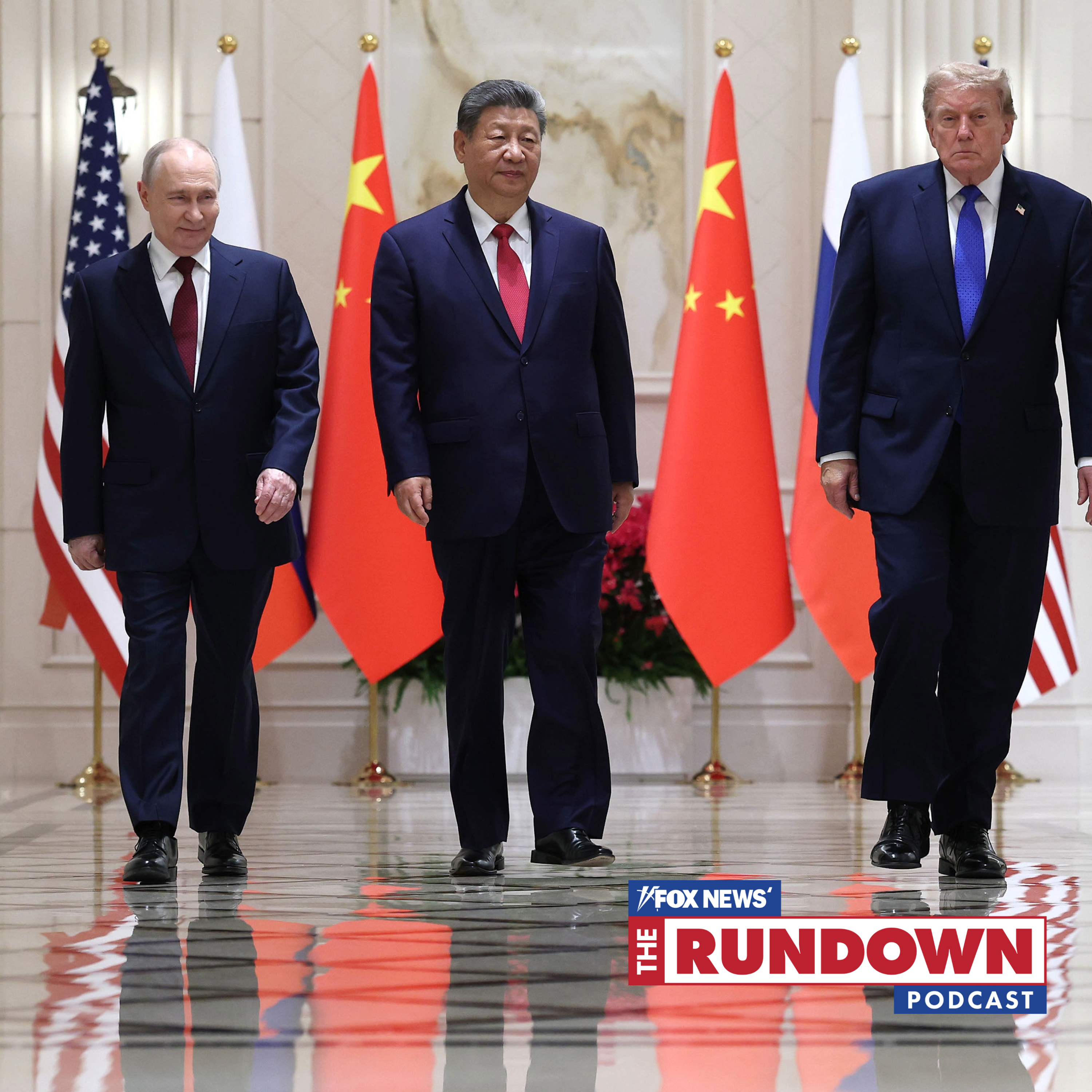
Following President Trump’s trip to Asia and a first-ever trilateral meeting with the leaders of China and Russia, foreign policy experts are weighing what was accomplished on the world stage. Former national security advisor to Vice President Dick Cheney and Heritage Foundation senior research fellow Stephen Yates joins The Rundown to analyze the summit’s outcomes on Taiwan, Ukraine, Iran, and strategic arms talks. Yates also explains how new rare-earth agreements with U.S. allies and export controls on AI chips balance Trump’s warmer rhetoric toward Beijing. Later, widespread tech outages across major platforms and government systems raise urgent questions about whether U.S. digital infrastructure is prepared for the artificial intelligence era. Former Cybersecurity and Infrastructure Security Agency (CISA) director Bridget Bean breaks down how rapid software patching can trigger cascading system failures, the growing cyber threats posed by China and Iran, and how organizations can d
Is the Republican Party heading for a major reckoning in 2028? Dave Rubin joins The Chicks on the Right for a brutally honest conversation about Trump's final two years, the future of the GOP, and the growing divisions threatening conservatives. Dave weighs in on the Republican Party's recent election losses, whether JD Vance, Marco Rubio, or Ron DeSantis can carry Trump's agenda forward, and why he's increasingly concerned about the political direction of America. The conversation heats up as Dave takes on Nick Fuentes, the rise of extremist voices on the right, and the socialist movement gaining influence within the Democratic Party. He also discusses radical Islamism, antisemitism, the dangers of online outrage, and why he believes Western civilization faces serious challenges. Plus, with cyberattacks, banking disruptions, and nationwide outages raising concerns, Dave shares his thoughts on whether Americans should be preparing for more chaos. And don't miss the lighter side of Dave
Dennis the Menace, adhesive postage stamps and a nice slice of cake – all things the Scottish city of Dundee is known for. But none have had the cultural or economic impact of Grand Theft Auto. The sixth edition of the game was launched this week, amid huge global hype. Set in the fictional Vice City (not-so-loosely based on Miami), players can roam the streets shooting and stealing to their hearts’ content. But its origins were in the offices of a small Tayside gaming studio, responsible for the slightly less controversial 90s classic, Lemmings. Little did the developers know then that, nearly 30 years later, GTA would grow into a global phenomenon worth billions of dollars. Niall Paterson is joined by Sky’s business reporter Sarah Taaffe-Maguire. Have you got a question for Niall? Email us: [email protected] You can also watch This Is Why on the Sky News app, and on YouTube (https://www.youtube.com/playlist?list=PLG8IrydigQffW6a9KQhdtl8C1DwiUD6cb).
The convicted rapist Russell Brand may be in prison, but he clearly still has a platform. A video posted on their YouTube channel by his wife Laura caused widespread condemnation for containing a written message from Brand protesting his innocence and questioning his conviction. Google, which owns YouTube (https://www.theguardian.com/technology/youtube), has reportedly rejected a UK government request, made via the Prison Service, for the video to be taken down. What are the rules about how prisoners can and can’t publicly communicate? Should the government go further in its demands for content to be taken down by social media platforms? And are there competing implications for free speech and Brand’s victims? Niall Paterson is joined by Sky’s political correspondent, Lucy McDaid. Have you got a question for Niall? Email us: [email protected] You can also watch This Is Why on the Sky News app, and on YouTube (https://www.youtube.com/playlist?list=PLG8IrydigQffW6a9KQhdtl8C1DwiUD6cb).
In a giant leap for cosmic exploration, NASA's Voyager 1 spacecraft has become the first human-made object to have reached a light-day from Earth. That's the distance that light travels in 24 hours - equal to nearly 16.1 billion miles, beyond the solar system and well into interstellar space. Now heading towards the Little Dipper constellation of stars, the Voyager probe carries a golden disc with a selection of music, sounds and images to represent our species – just in case it encounters extraterrestrial life. Niall Paterson is joined by Sky’s Science Correspondent Thomas Moore to discuss how a spacecraft designed for a five-year mission to Jupiter and Saturn is still working nearly 50 years later. Have you got a question for Niall? Email us: [email protected] You can also watch This Is Why on the Sky News app, and on YouTube (https://www.youtube.com/playlist?list=PLG8IrydigQffW6a9KQhdtl8C1DwiUD6cb).
Publicly rescued businesses should share future gains with taxpayers.
Share your view, then see how readers voted. No sign-in required. This poll is shared across stories.
Do you agree or disagree?
Common Quandary
A Common Quandary to discuss
Another conversation to explore, separate from this news story.
Your coworker's religious holiday means you work the unpopular shift again. Is that fair?
A workplace accommodates religious observances by asking other employees to cover unpopular shifts. One coworker objects that nonreligious commitments can be equally meaningful but receive less formal protection.
Does equal respect require treating every kind of commitment identically?