Listen through the publisher, then discuss the episode here or arrange an in-person Roundtable. Your city determines where to meet.
Roundtables are designed for groups of four, with a shared subject and room for everyone to speak. Come for discussion, with no dating expectation.
I don’t know about your love life, but let’s be honest; for most people having sex doesn’t work out as smoothly as what you see in the movies. Not only is the act itself idealised, but so is what comes after. On screen, you tend to see couples snuggling and drifting off in each other's arms, all cosy and serene. But what movies tend to skip over is the part where you have to slip out of bed with your legs pressed together, and waddle like a penguin to the bathroom to pee and wash up. OK, it might feel like a bit of a mood killer, but it’s actually very important for staying healthy. How does peeing stop bacteria from reaching the bladder? Do I really have to forget about post-sex cuddling? In under 3 minutes, we answer your questions! To listen to the last episodes, you can click here: Why do some people get a headache during sex? (https://originals.bababam.com/do-you-really-know/202410260300-why-do-some-people-get-headache-during-sex) Is sex without feelings ever a good idea? (https://originals.bababam.com/do-you-really-know/202410090300-sex-without-feelings-ever-good-idea) Could using lube help you get more pleasure from sex? (https://originals.bababam.com/do-you-really-know/202410020300-could-using-lube-help-you-get-more-pleasure-sex) A podcast written and realised by Joseph Chance. First Broadcast: 11/11/2024
Episode information is provided by the publisher. Listening takes place on the publisher’s service.
We all encounter challenges in our relationships, some more serious than others, but it’s how we handle them that ultimately matters.For many of us, when we feel pain, we tend to blame our partners. We criticize, close up. We avoid them, ignore them. All to play a game of who’s wrong and who’s right. But when you truly love someone – it doesn’t matter who’s wrong or who’s right. In fact, blame only takes our power away, and excuses only cause us to continue hurting each other. Uploaded 01-10-19 Welcome back to the Tony Robbins Podcast. On today’s episode of the Real Breakthrough Series, we’re taking you back to Date With Destiny where Tony is working with Teresa and John, a couple fighting their way out of a painful past and trying to figure out a path towards a healthier, happier future. While Teresa and John have made substantial progress since dealing with infidelity, they still struggle when it comes to constructive communication. They slip back into old ways, making excuses for th
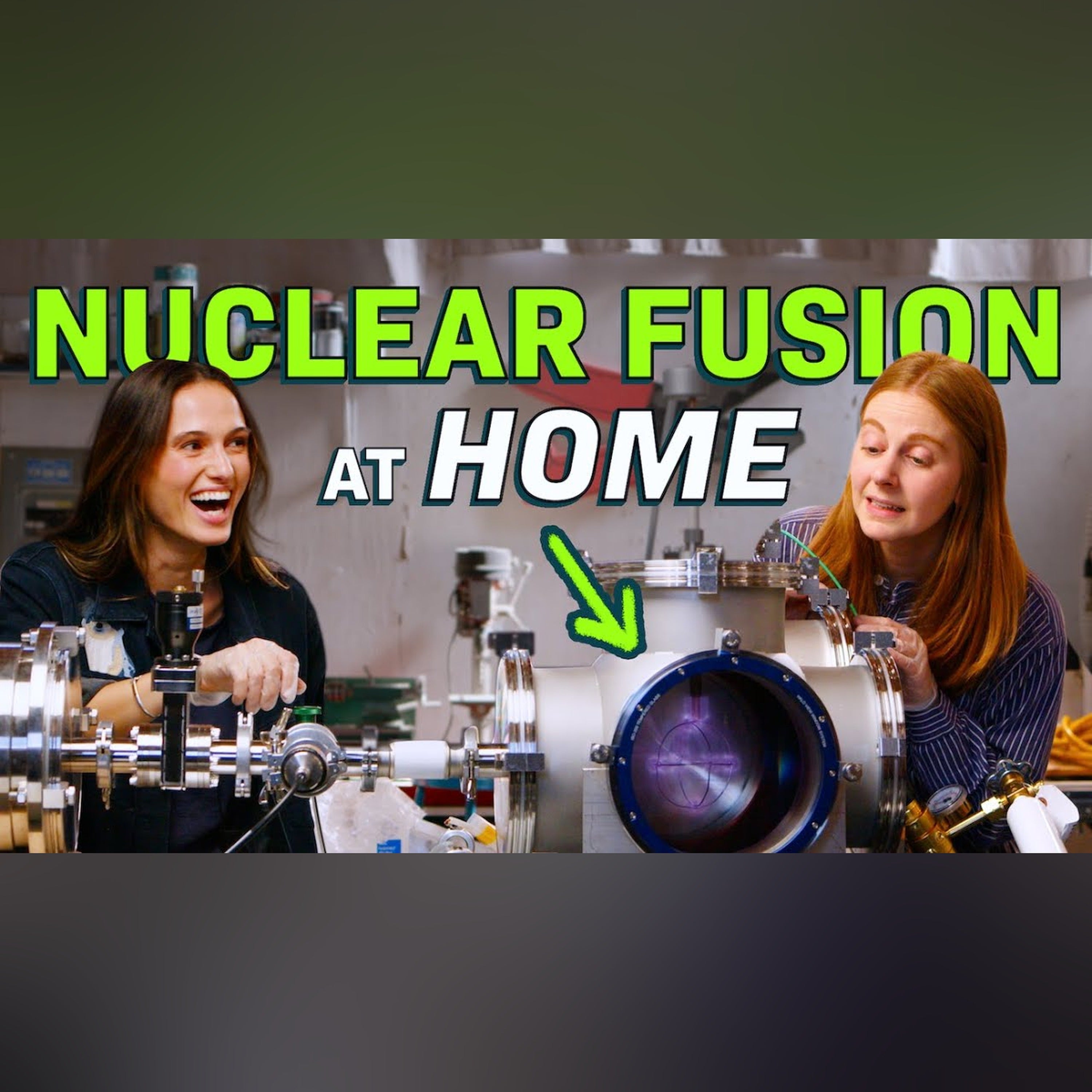
We attempted nuclear fusion. In Simone’s workshop. Disclaimer: This build was supervised by experts at Helion. Do not try this at home. I still can’t believe this video really happened. Back in May, I interviewed Helion CEO David Kirtley. I was trying to understand nuclear fusion: Is nuclear fusion possible now? How does fusion actually work? And most importantly, is nuclear fusion the future? Then, at the end of the interview, I asked David about headlines I’d seen about people building nuclear fusion devices in their backyards - what were they doing? “Oh,” David replied, “you can build one.” What followed is the biggest adventure yet on Huge If True. Together with the team at Helion and my friend fellow YouTuber Simone Giertz, we BUILT A NUCLEAR FUSION DEVICE to show how nuclear fusion works, what the big remaining challenges are, and how it might help us all in the future. Then, the last step was to try to turn it on… WATCH "FUSION, EXPLAINED: PART 1" HERE: https://youtu.be/piPbnKdv
⭕️ NCI GRAD SCHOOL: https://nci.university/home-v2 Uploaded 21-05-26 There are 17 sentence structures that make another person's brain do the persuading for you. You don't argue. You don't push. You deliver the architecture and their own neurology finishes the job. These aren't scripts or phrases. They're machines. Each one was discovered independently — by Socrates, by trial lawyers, by hostage negotiators, by cult leaders — across 2,400 years, by people who never met and never read each other's work. They all found the same invisible thing. In this lecture I break all 17 into the four families nobody has ever mapped before: — Sentences that make the listener argue your position for you — Sentences that collapse resistance without pushing through it — Sentences that install an identity the person's own brain will defend long after you leave — Sentences that make a decision feel like it already happened Not one of them tells anyone what to think. Not one argues a position. Not one pers
What if your child already loves learning... and you’re just looking for it in the wrong place? This week, I’m exploring one of the questions I get asked more than almost any other: “My child used to be so curious. What happened?” In today’s episode, I challenge one of the biggest myths in modern parenting: that a love of learning looks like a child happily reading, sitting at a desk, completing homework without complaint, and engaging enthusiastically with educational activities. I explain what the research actually tells us and walk you through the psychology of curiosity, the science of intrinsic motivation, why children become obsessed with Minecraft, dinosaurs, trains, or random facts, and why those interests may be far more important than they appear. I also unpack why children seem to have a built‑in radar for anything that feels educational, why homework battles happen so often, and what the evidence really says about homework in the primary years. If you've ever worried that y
What do you do when you feel backed into a corner, the plan you were sure was meant for you falls through, and you honestly have no idea which way to turn next? In this raw, unscripted episode of The Positive Mindset Podcast, Henry Lawrence shares from right inside that moment—speaking to anyone sitting with the question, "What do I do?" Henry opens up about walking in faith after a door he felt certain had lined up closed unexpectedly. Instead of pretending he already has the neat answer, he walks through the shift in real time: checking the ego that resists asking for help, recognizing when we're asking God to help us control an outcome versus surrendering to His will, and discovering who we really are in our core when there is nothing external left to support it. He invites you to stop carrying the weight alone, hold your head high because of who your Father is, and bring the struggle to God first—not only in crisis, and not as a last resort. He leads an opening breath and prayer, a
The Petal's New Zealand edition for Wednesday 25 November 2026 carries sixteen decisions newly reported from the High Court: eleven at the desks, four in a short registry. The thread is first moves: ask for arbitration before you argue the merits, choose the site before the planting grows, and plead the knowledge before you allege dishonesty. Practice and Procedure Desk Magwitch v Bell [2026] NZHC 3434 - a party that does not request a stay by its first statement on the substance of the dispute under art 8(1) of sch 1 to the Arbitration Act 1996 waives arbitration; a strike-out application engaging in detail with the substantive allegations and the construction of the cross-lease was that statement; unclear pleading was no excuse where the claim invoked the lease, and a later reservation in a defence did not cure the waiver; a preference for a public hearing does not make the agreement inoperative; under s 12(1)(a) an arbitrator may award any High Court remedy unless the parties agree
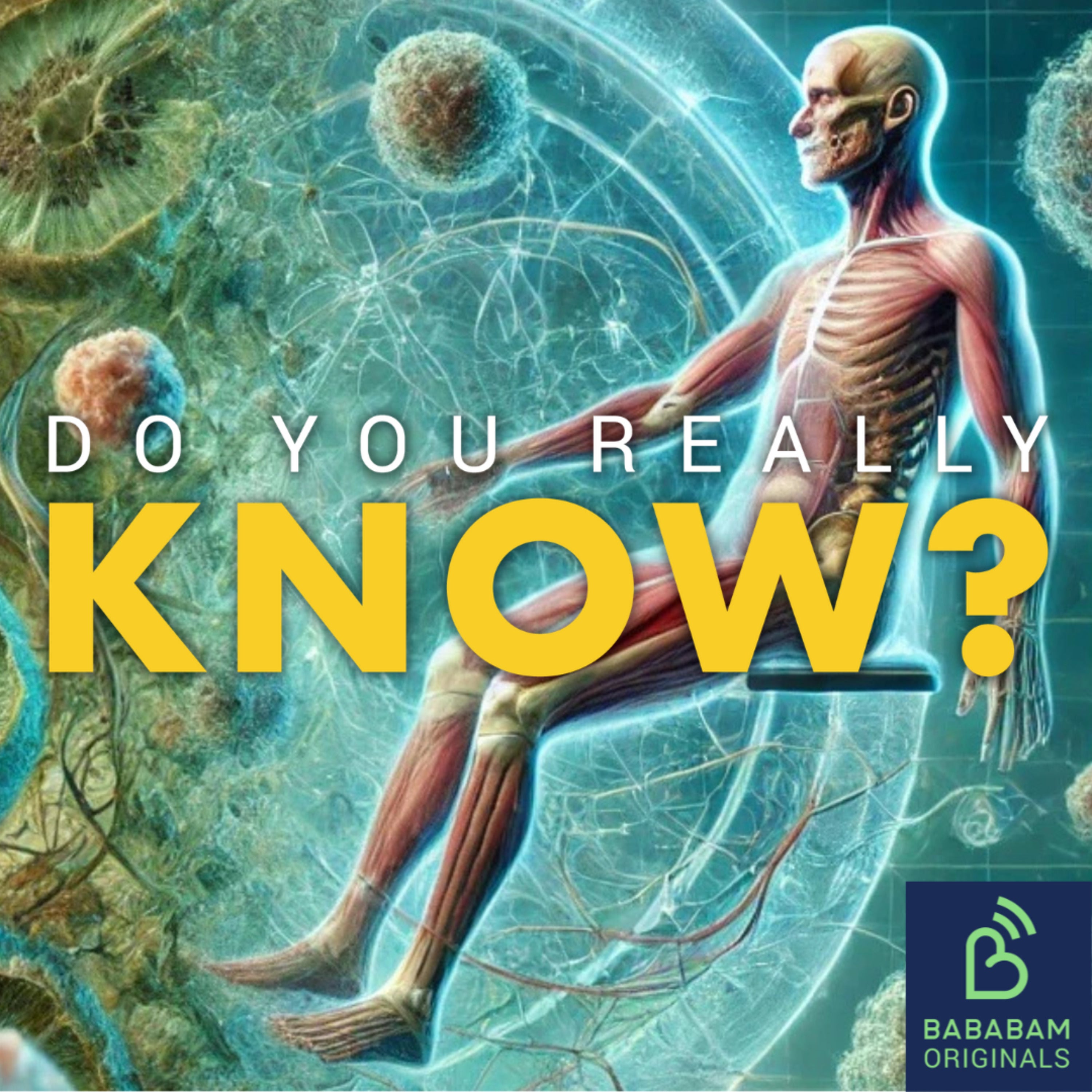
In some religions, people believe in reincarnation or an afterlife, but in medicine, life is generally considered to end when the heart stops beating. Recently though, researchers have challenged that view. In November 2024, American biologists Peter A Noble and Alex Pozhitkov published groundbreaking findings in The Conversation under the title “Biobots arise from the cells of dead organisms − pushing the boundaries of life, death and medicine.” They showed that, under certain conditions, dead cells can not only survive but also reorganise and form new multicellular structures. And that discovery suggests the existence of an intermediate state where biological organisms are neither fully alive nor completely dead. Scientists are now referring to this as the "third state." Doesn’t death occur when the brain stops functioning? How would that even be possible if the person is deceased? What are the implications of the third state? In under 3 minutes, we answer your questions! To listen t
Nitrous oxide, which is also known as laughing gas, is sold in metal canisters and is one of the most commonly used drugs by teenagers and young people. However, heavy use can lead to a host of problems. Prof Alastair Noyce, a consultant neurologist at Queen Mary University of London, told BBC News: "These are young people we are seeing - teenagers and people in their 20s. What's striking now is the severity. We've seen that increase over the last 12 months or so." Nitrous oxide is a gas that can be used for medical purposes, as an anaesthetic, and in the food industry. Why do people use Nitrous oxide? What are the dangers? What is being done about this? In under 3 minutes, we answer your questions! To listen to the last episodes, you can click here: What is a transference in psychiatry? (https://originals.bababam.com/do-you-really-know/202311130400-what-transference-psychiatry) Does cold weather really make us sick? (https://originals.bababam.com/do-you-really-know/202311120400-does-c
The number of free-to-use ATMs in the UK has been steadily declining, with a 6% drop from 2022 to mid-2023. This reflects a shift in consumer habits, as cash usage has decreased significantly. For example, weekly ATM withdrawals fell by nearly a third, from £2.2 billion in 2019 to £1.5 billion in 2023. The shift began years ago but accelerated during the COVID-19 pandemic. In 2021, cash accounted for only 15% of all payments in the UK, driven by the rise of contactless and online transactions. While 74% of adults use cash occasionally or rarely, certain groups, including older adults and those without access to digital banking, still rely heavily on it. When did we start paying less in cash? Does this mean cash payments are on their way out? Why are ATMs disappearing? In under 3 minutes, we answer your questions! To listen to the last episodes, you can click here: How can I use the 80/20 method to save money? (https://originals.bababam.com/do-you-really-know/202412050359-how-can-i-use-
Corrections should be given prominence comparable to the original reporting error.
Share your view, then see how readers voted. No sign-in required. This poll is shared across stories.
Do you agree or disagree?
Common Quandary
A Common Quandary to discuss
Another conversation to explore, separate from this news story.
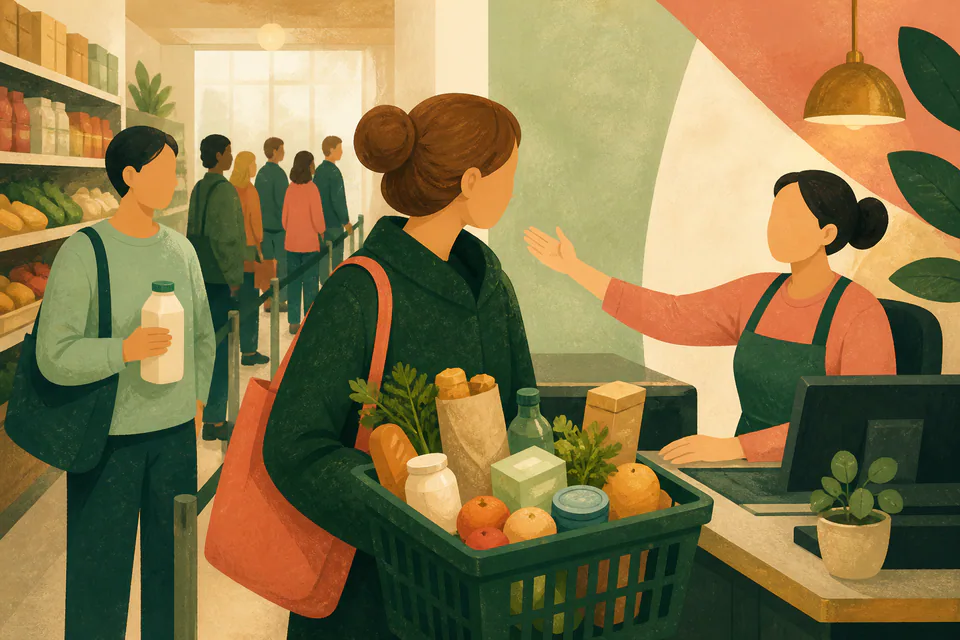
The sign says twelve items and you have fourteen. Is the express lane still yours?
The regular checkout lines are long and the express lane is empty. You count fourteen small items, two over the posted limit. A shopper approaches behind you carrying a single carton of milk as the cashier waves you forward.
Are small rules optional when enforcing them would seem fussier than breaking them?