English-language podcasts

Seen with Pandora Morris

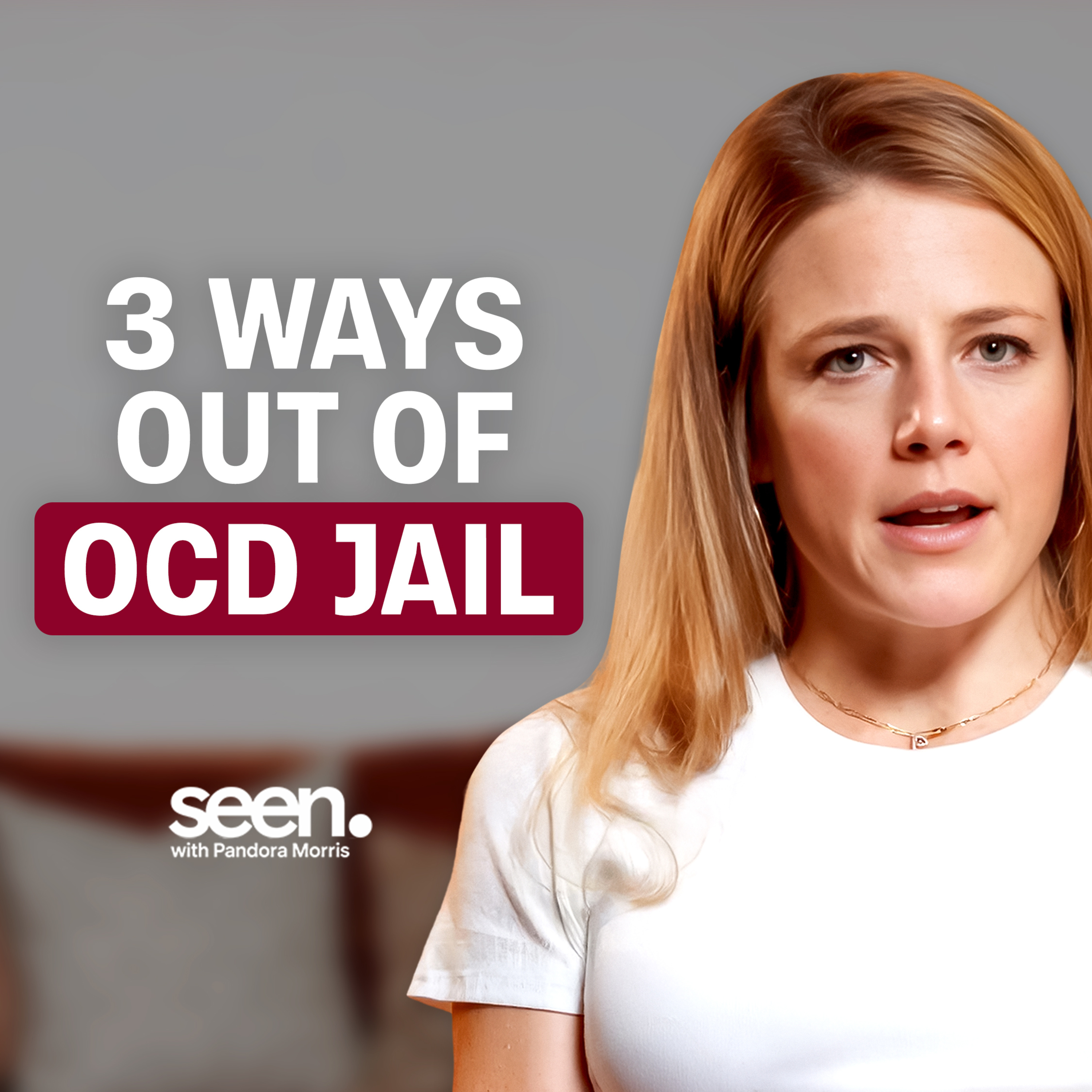
Why Understanding Your OCD Isn't Enough (3 Things That Actually Help) | Pandora Morris
9 min

Listen through the publisher, then discuss the episode here or arrange an in-person Roundtable. Your city determines where to meet.

Roundtables are designed for groups of four, with a shared subject and room for everyone to speak. Come for discussion, with no dating expectation.

Why doesn't understanding your OCD make it go away? On this episode of Seen, I'm on my own to talk about OCD and self-awareness, and why knowing exactly what you're doing doesn't stop you doing it. I've had years of treatment for my eating disorder and OCD, and I've interviewed many psychologists and therapists on this podcast. I'm not a therapist, but I've learned the hard way that understanding a problem is not the same as changing it. I share what happened when I went into inpatient treatment for anorexia in South Africa at 24 and my OCD was left untreated, the NHS OCD unit I signed up for that closed when COVID hit, and the point where I was exercising eight or nine hours a day, locked in what felt like an OCD jail, while people told me how much insight I had. Then I go through the three things that actually help. In this episode, you'll learn: - How to spot when insight has become a hiding place - What to ask a therapist, from which type of therapy they practise (CBT, EMDR, DBT, IFS) to how much of each session is practice rather than talk - Why reassurance seeking is another compulsion, and how the OCD brain loop keeps it going - How to turn insight into one daily rep, from delaying a compulsion by 10 minutes to the DBT tool of opposite action Knowing is not the change. Doing is. If you have OCD, I hope this reminds you that you're a lot stronger than you think. Chapters:Why Self-Awareness Isn't Enough To Beat OCD (00:00)Anorexia Treatment That Left My OCD Untreated (00:46)The NHS OCD Unit That Closed During COVID (01:35)When Insight Becomes A Hiding Place (02:59)CBT, EMDR, DBT Or IFS: Which Therapy Do You Need? (04:48)Is Your Therapy All Talk And No Practice? (05:23)How To Turn Insight Into One Daily Rep (06:15)Opposite Action: The DBT Tool That Disrupts OCD (07:07)Knowing Isn't The Change, Doing Is (08:24) Join the community: Never miss an episode of SEEN! Listen to the podcast anytime, anywhere.Spotify: https://open.spotify.com/show/1Ku2D90pNwBLM17HvLxlB1 Apple Podcasts:https://podcasts.apple.com/gb/podcast/seen-with-pandora-morris/id1649515453Connect with Pandora Morris Website: https://www.seenwithpandoramorris.com/ Instagram: https://www.instagram.com/seenwithpandora/ ABOUT SEENHosted by Pandora Morris, Seen is a podcast featuring bold, brave, and honest conversations about mental health, wellbeing, relationships, and the experiences that shape our lives.

Episode information is provided by the publisher. Listening takes place on the publisher’s service.

Listen at the source ↗

Featured places to meet in Palo Alto, CA

Explore these places and arrange a conversation through ThinkMatch.

City guide for Palo Alto, CA

More from Seen with Pandora Morris

Seen with Pandora Morris

Why Can’t You Just Stop? A Former Heroin Addict’s Honest Answer | Sarah Hiscox

53 min

Why does addiction so often begin with the feeling that you’re never enough? And what does it take to stop when you’ve tried, and failed, every single day? On this episode of Seen, I’m joined by author Sarah Hiscox, whose memoir The Beginning and End of Everything tells the story of her bulimia, heroin addiction and recovery. I devoured it, and I identified with so much of what she wrote. Sarah takes me back to a childhood where she never felt enough, from telling classmates that Björn Borg was her dad to being given sleeping pills at eight. We talk about how bulimia began, why it carries so much shame, and how heroin replaced it almost overnight. She is honest about pregnancy, relapse, rehab that didn’t stick, being separated from her children, and the many rock bottoms that came before recovery finally took hold. Then we get to the part I needed to hear: the voice telling you you’re not good enough isn’t the truth, and you don’t have to lose everything before you ask for help. In thi

Discuss this episode

Seen with Pandora Morris

Everyday Dissociation vs DID: What’s the Difference? | Seen Session: Sally Maslansky

9 min

What’s the difference between everyday dissociation and DID, and can you heal from trauma without ever confronting the person who caused it? In this Seen Session, I’m joined again by therapist Sally Maslansky, author of A Brilliant Adaptation, for some quick true or false questions on dissociation, what helps us feel safe after trauma, and how to let go of coping mechanisms that no longer serve us, without hating the part of you that needed them. Sally also shares her favourite piece of parenting advice, and the words that remind her it’s never too late. Join the community: Never miss an episode of SEEN! Listen to the podcast anytime, anywhere. Spotify: https://open.spotify.com/show/1Ku2D90pNwBLM17HvLxlB1?si=fbcad6ff3bb24bfa Apple Podcasts:https://podcasts.apple.com/gb/podcast/seen-with-pandora-morris/id1649515453 Connect with Pandora Morris Website: https://www.seenwithpandoramorris.com/ Instagram: https://www.instagram.com/seenwithpandora/ ABOUT SEEN

Discuss this episode

Seen with Pandora Morris

Dan Siegel: What Do All Mental Health Conditions Have in Common?

64 min

What do all mental health conditions actually have in common? On this episode of Seen, I sit down with Dr Dan Siegel, the psychiatrist who named the field of interpersonal neurobiology. He was the training director in child psychiatry at UCLA, he created the Wheel of Awareness practice, and he is the person who came up with the phrase window of tolerance. He has spent more than thirty years on one question: what actually is the mind? We go through what that looks like in real life. The Wheel of Awareness, and why uncertainty turns out to be another word for freedom. What the psilocybin research shows about a brain dropping out of its old high probability patterns. Temperament and personality, and the twelve year old client who told him OCD should really be called overactive checker deployment. Dan also explains the three things every child needs, which he calls seen, soothed and safe, and why repairing a rupture matters far more than getting it right first time. He says the research pu

Discuss this episode

Community Poll

Tax increases should include clear measures for judging whether the promised benefits occur.

Share your view, then see how readers voted. No sign-in required. This poll is shared across stories.

Do you agree or disagree?

Choose one answer

Common Quandary

A Common Quandary to discuss

Another conversation to explore, separate from this news story.

An outsider becomes famous cooking another culture's food. Appreciation or taking over?

A chef becomes known for food from a culture outside their own after years of study with respected cooks. The restaurant is successful, while small businesses run by people from that culture struggle for attention.

When does appreciation become taking opportunity from the people who created a tradition?

Explore this quandary