Listen through the publisher, then discuss the episode here or arrange an in-person Roundtable. Your city determines where to meet.
Roundtables are designed for groups of four, with a shared subject and room for everyone to speak. Come for discussion, with no dating expectation.
Grab your pickaxes and lace up your ice skates! Have you ever wondered why someone would dig a 202-kilometre ditch straight through solid rock, thick wild forests, and bug-filled swamps? We are traveling back to the early 1800s to uncover the wild history behind the Rideau Canal! After the War of 1812, the British military was terrified the Americans might invade Canada again. Their solution? Build a massive secret water highway for their supply ships! Join Mira and Finn as they explore how thousands of brave Irish and French-Canadian labourers dug this gigantic canal entirely by hand without any bulldozers or modern machines. You will meet Lieutenant-Colonel John By, the clever military engineer who led the incredible project. Plus, discover how a rough, muddy, and noisy lumberjack camp called Bytown eventually grew into the beautiful city of Ottawa! Find out why Queen Victoria chose it to be the capital of Canada, and learn all about the famous Rideau Canal Skateway—the largest naturally frozen ice skating rink in the entire world!
Episode information is provided by the publisher. Listening takes place on the publisher’s service.
Did you know your mouth is a nonstop biological water park?! Every single day, your body makes enough saliva to fill up to four whole water bottles! But spit isn't just warm water—it's a magical biological potion packed with incredible superpowers. Join Mira and Finn as they explore the wild world of saliva! Discover how a microscopic machine called amylase starts digesting your favorite foods the exact millisecond you take a bite. Find out how spit turns sharp, crunchy chips into soft, squishy balls to protect your throat! Plus, did you know saliva actually builds invisible armor for your teeth by filling in holes with special minerals like calcium and phosphate? It even works as a magical liquid key to unlock flavors—without saliva, chocolate and pizza would taste like absolute cardboard! From amazing spit factories hiding inside your cheeks to real-life birds that build entire nests out of spit, get ready for a mind-blowing biological adventure! Tune in to find out why your mouth is
Have you ever tried something so hard, failed, and then tried again anyway? Meet Tony Hawk, the boy who turned his restless energy into skateboarding history! Growing up in sunny San Diego, California, Tony was a frustrated kid until his brother gave him a scratched-up blue skateboard. It was pure magic! By age 14, he was a fearless professional skater inventing wild, sky-high tricks on massive wooden ramps. Imagine being at the 1999 X Games, watching Tony attempt the ultimate, "impossible" trick: the 900! That's two and a half dizzying spins high in the air. Crash after crash, he fell ten times. But on his eleventh try? He landed it perfectly, while the crowd went absolutely wild! That same year, his smash-hit video game made him a superstar all around the world. But Tony didn't just want fame. He wanted every kid to have a safe place to ride, fall, and get back up. Through his charity, he has helped build hundreds of free public skateparks everywhere! Grab your helmet and drop in as
Uncover the profound power of quiet discipline—the kind that shapes your identity long before anyone sees your results. Greatness doesn’t start with applause. It starts with one decision made in silence—and is reinforced through daily, unseen effort. Key Topics From This Motivational speech: Why greatness begins in silence, not in the spotlight How daily discipline builds identity and long-term success Why quiet effort matters more than early recognition How to stay grounded once attention arrives How to protect your habits, values, and energy over time This motivational speech is a masterclass in long-term greatness. It explores how champions, leaders, and peak performers build their strength not for applause but in private, behind closed doors. From morning routines to choosing patience over shortcuts, it’s a reminder that discipline without noise is where confidence and clarity are forged. And eventually, what’s built in silence will speak so loudly—it won’t need a microphone. This
Have you ever told someone, "Thanks a million!" or claimed you have "a million toys to clean up"? We use the word "million" all the time to mean "a whole lot," but have you ever stopped to wonder just how big a real million actually is? Join Mira and Finn on a mind-blowing math adventure as they discover the quiet power of giant numbers! Imagine counting one number every single second without ever stopping to eat or sleep. It wouldn't take a few hours or a long weekend—it would take you about eleven and a half days just to reach one million! And what about its giant neighbor, the billion? Counting to a billion the exact same way would take a whopping thirty-two years. That's a grown-up's whole life so far! In this amazing episode, we won't just look at numbers on a page; we’ll learn to feel their true size. Find out how much space a million grains of rice would take up, and discover exactly how far a million footsteps would carry you. Get ready to stretch your brain and learn why being
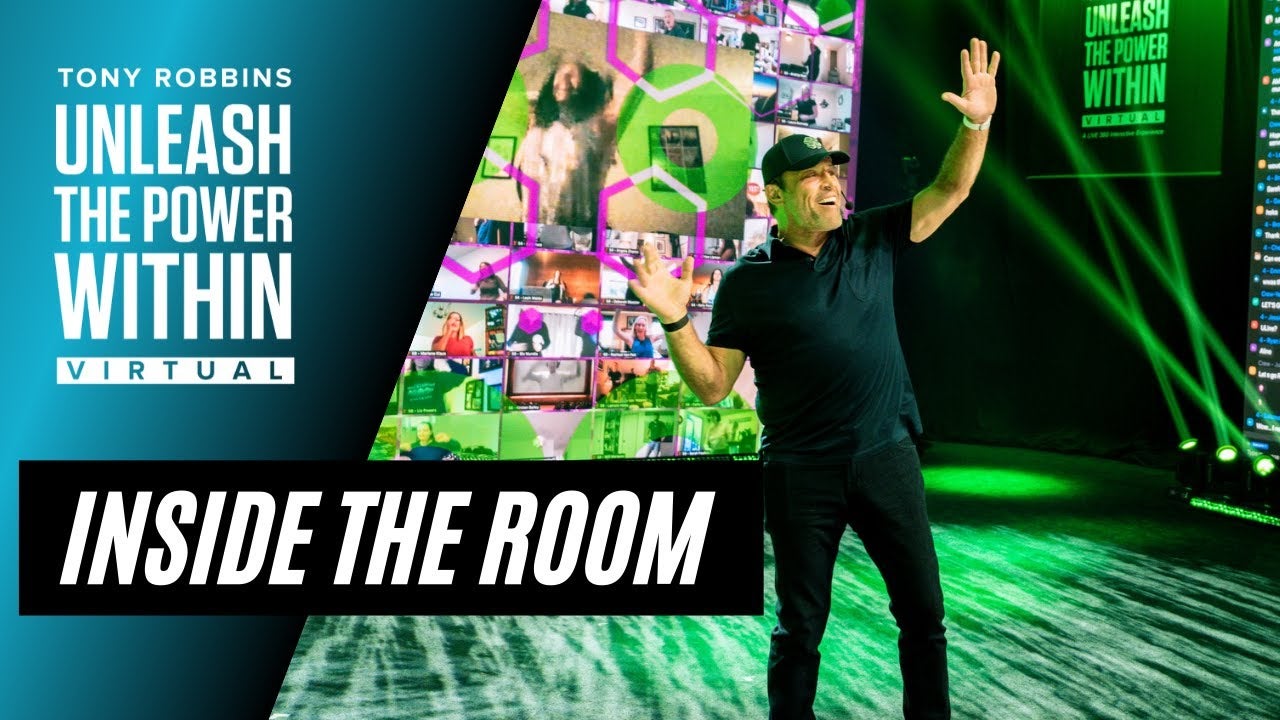
The FIRST Unleash the Power Within of 2022 just wrapped and we had 26,000 households from 151 countries around the world STEP UP and JOIN TOGETHER for one of our largest events in history! Uploaded 23-03-22 Here are some highlights from the week. Enjoy this video for a peek inside our virtual stadium It’s such a privilege to spend time with such DRIVEN, COMMITTED, LOVING SOULS all coming here with a hunger to GROW. For me, getting to hear your goals and witness each of you creating a unique life for yourselves, your loved ones, and your communities is deeply moving. We grow so we have MORE to GIVE, and the truth is, the world is a better, more beautiful and kind place because of people like YOU. If you’ve never experienced an Unleash the Power Within, it can be hard to imagine the HUMAN POTENTIAL and the RAW ENERGY⚡️ that converge over these four days and nights. It's electrifying to feel people from every walk of life, every background, every stage of life UNITE to find a deeper meani
These are more than cars. They’re science experiments. If you enjoy this episode, subscribe to support more optimistic stories about tech! I love Formula 1. This isn’t just a car race, it’s a massive group science competition. Ten teams are all fighting to be first, and on every team there are hundreds of people, spending millions of dollars, all working together to push technology to its limit. In this video, we’re gonna show you what it takes to build and drive some of the fastest and most expensive cars in the world. We’ll give you rare access into a factory in England where they build these cars and into a garage in Bahrain where they race them. This is Formula 1 cars, explained! One note because it’s important to me you never be confused about what is paid for and what isn’t: Oracle comped my flights, but didn’t have any say in the editorial and didn’t see the episode before it went live. The Red Bull F1 Team did not pay me, had no say in the editorial, and didn’t see the episode
Have you ever seen pictures of giant stone heads sitting in the grass and wondered how they got there? Get ready for a mind-blowing adventure to one of the most remote places on Earth: Rapa Nui, also known as Easter Island! About 800 years ago, expert Polynesian sailors found this tiny island in the middle of the Pacific Ocean using only the stars and ocean currents to guide them. Once there, they carved nearly a thousand massive stone statues called moai! But here is the biggest surprise: these statues aren't just heads—they have full bodies buried underground! Some weigh as much as 40 cars, and the islanders moved them without wheels, cranes, or metal tools. How did they do it? The local legends say the statues literally walked to their places, waddling side to side with the help of ropes and incredibly smart human engineering! Join Mira and Finn as they uncover the secrets of the moai, find out how the island got its English name from a Dutch captain, and learn all about the giganti
Did you know your favorite morning breakfast used to be a super-serious health food that could literally break your teeth? In the 1890s, Americans were eating huge, greasy breakfasts like half-pound steaks and heavy potatoes. People were getting terrible stomach aches! To fix this, doctors started creating healthy, meat-free alternatives. Enter the very first breakfast cereal: Granula! It was a food so rock-hard that you had to soak it overnight just to chew it! But the real magic happened in Battle Creek, Michigan, at a massive health spa. Dr. John Harvey Kellogg and his brother Will were trying to make plain health bread for their patients. One day, Will accidentally left a pot of boiled wheat out for hours. Instead of throwing it away, they rolled it out, and it magically formed hundreds of crispy flakes! The patients went wild! But Will and John had a massive fight over adding sugar, leading to a giant cereal war with rival inventors like C.W. Post! Join Mira and Finn as they crunc
Imagine running an empire of ten million people without ever writing down a single word! Welcome to Tawantinsuyu, the massive Inca Empire hidden high up in the towering Andes Mountains! In 1438, a brilliant ruler named Pachacuti transformed the mountain town of Cusco into a glittering capital city shaped exactly like a giant puma. But how did they keep track of everything without pencils or paper? They used a genius math system made of colorful knotted strings called a quipu! To send important messages, they didn't use horses or wheels. Instead, they relied on superhuman relay runners called chasqui, who sprinted across scary woven grass suspension bridges and could travel 150 miles in a single day! They even built giant green staircase farms right into the steep mountainsides to grow huge amounts of freeze-dried potatoes. And guess what? They kept a very fluffy, squeaky pet in their kitchens for dinner—guinea pigs! Although the Spanish explorer Francisco Pizarro eventually brought dow
Communities should invest in adapting to unavoidable hazards as well as preventing future damage.
Share your view, then see how readers voted. No sign-in required. This poll is shared across stories.
Do you agree or disagree?
Common Quandary
A Common Quandary to discuss
Another conversation to explore, separate from this news story.
You cannot stand your friend's partner. Do they still get a wedding invitation?
You are planning a small wedding and strongly dislike the person your longtime friend has been dating. Inviting them would make you uncomfortable, but excluding only that partner would embarrass your friend.
Whose comfort should govern a celebration centered on you?