Listen through the publisher, then discuss the episode here or arrange an in-person Roundtable. Your city determines where to meet.
Roundtables are designed for groups of four, with a shared subject and room for everyone to speak. Come for discussion, with no dating expectation.
Danny Fortson and Katie Prescott reunite in London to unpack the biggest takeaways from The Times Tech Summit 2026, with the issue of tech sovereignty taking centre stage. Against the backdrop of a scandal surrounding Nvidia chief executive Jensen Huang, the stakes of the AI race have never been higher. Katie and Danny dive into highlights – including interviews with Rory Stewart, Palantir and the UK’s Sovereign AI fund – and break down what it all means for national security and Europe’s AI future. Read more: US data centre backlash provides AI opportunity for Europe (https://www.thetimes.com/business/technology/article/democrats-midterm-victory-provides-ai-opportunity-for-europe-cmbsxdqsl) Get in touch: [email protected] Presenters: Katie Prescott, Technology Business Editor, The Times Danny Fortson, US West Coast Correspondent, The Sunday Times Producer: Marnie Duke Executive Producer: Peter Sale Video Producer: Super Llama Image: Times Tech Summit Photographer Matt Fowler Hosted on Acast.
Episode information is provided by the publisher. Listening takes place on the publisher’s service.
What NVIDIA is trying to build next… You're probably hearing a lot about AI, DeepSeek, NVIDIA and more right now. If you want the big picture (and to start from the beginning), watch this Huge Conversation with NVIDIA CEO Jensen Huang. In the last few years, NVIDIA has skyrocketed to become one of the world's most valuable companies. That's because, beginning in the 90s, they led a fundamental shift in how computers work, now unleashing the current explosion of what’s possible with technology. A huge amount of the most futuristic tech you’re hearing about - in AI, robotics, gaming, self-driving cars, breakthrough medical research - relies on new chips and software designed by him and his company. During the dozens of background interviews I did to prepare for this, what struck me most was how much Jensen Huang has already influenced all our lives over the last 30 years, and how many are saying it’s just the beginning of something even bigger… We all need to know what he’s building and
President Donald Trump's first ever trilateral summit with Vladimir Putin and Xi Jinping raises questions about the future of the war in Ukraine and whether a peace agreement could finally be within reach. Victor Davis Hanson and Sami Winc examine the summit on today’s edition of “Victor Davis Hanson: In His Own Words,” discussing Russia's declining influence, potential territorial concessions in Ukraine, and Europe's frustration over Trump's peace negotiations. Hanson criticizes Hillary Clinton's attacks on Trump's diplomacy; he also argues that European leaders have weakened their influence by neglecting defense spending and relying on American military protection. They discuss Elon Musk's shifting political allegiances, and Hanson warns that distancing himself from MAGA may not protect him from Democrat investigations. They also discuss the potential economic benefits of artificial intelligence and the challenges facing Hakeem Jeffries as Democrats prepare to take control of the Hou
After a deluge of speculation, the next James Bond has been chosen: British actor Robert Pattinson will be the next face of the franchise. The public response has been overwhelming, if somewhat divided. To celebrate, we’re revisiting an episode from June, about a behind-the-scenes David and Goliath battle between the family business which has held creative control of the franchise since the 1960s and its new owners, Amazon. It is now up to Jeff Bezos’s tech conglomerate to decide how to run the series. In an era when Hollywood studios are desperate to eke out every last dollar from movie franchises, can James Bond retain its mystique and appeal to a new generation of cinema-goers? We speak to Wall Street Journal enterprise reporter Erich Schwartzel. Producers: Xandra Ellin and Lucy Pawle Video producers: Richard Kenny and Jem Westgate Mixed by: Travis Evans Executive producers: James Shield and Martine Powers Senior news editor: China Collins Photo: Robert Pattinson as James Bond. Jaap
The Democrats swept the midterms. Donald Trump is still president. What will the next two years look like? And what can history teach us about what comes next? Martin Wolf speaks to historian Heather Cox Richardson about the cycles in the past 250 years of US politics — how renewal (and division) can both follow periods of oligarchy, and how the Democrats should react to a “constitutional crisis”. To enjoy future episodes, be sure to subscribe to ‘Martin Wolf on the World’ wherever you get your podcasts. You can also watch Martin’s podcast series on the FT’s YouTube channel here:https://www.youtube.com/@FinancialTimeshttps://www.youtube.com/@FinancialTimes Host: Martin Wolf Producer: Mischa Frankl-Duval Senior producer: Laurence Knight Video editor: Richard Topping Senior audio engineer: Breen Turner Broadcast engineer: Andrew Georgiades Podcast development: Laura Clarke FT Global Head of Audio: Flo Phillips Learn more at www.ft.com/martin-wolf-on-the-world (http://www.ft.com/martin-wo
Tonight on The Last Word: Democrats take power as voters demand economic relief. Plus, Democrats demand records from law firms who caved to Trump. Also, Trump defends Jensen Huang amid alleged Chinese spy affair. And Google sought failed airline's worker data to feed AI. Rep. Joaquin Castro, Rep. Chellie Pingree, Barbara McQuade, Tim O'Brien, and Sarah Nelson join Jonathan Capehart Hosted by Simplecast, an AdsWizz company.
Newsround Part 2. Lewis Aspinall returns for the final section of Newsround on Anfield Index, focusing on Ronald Araújo's Liverpool future and why the Reds should make his move from Barcelona permanent. With Araújo enjoying his time at Anfield, the defender has spoken positively about the welcome he has received from Liverpool's players, staff and supporters. However, the Uruguay international remains cautious about his future, admitting that any permanent transfer will depend on several parties reaching an agreement. Lewis examines Barcelona's position, including comments from sporting director Deco, and explains why Liverpool could have an opportunity to secure a defender who has quickly become an important part of Andoni Iraola's system. From his physicality and aerial dominance to his ability to operate at right-back and drop into a back three, Lewis believes Araújo offers Liverpool something their defence has been missing. But what happens when Conor Bradley returns? Lewis explain
Anthropic has raised a record-breaking sum of $81.3bn from its IPO, eclipsing the $75bn raised by Elon Musk’s SpaceX in June. Danny Fortson and Mark Sellman, Tech Correspondent for The Times, explain how Anthropic came to be one of the most highly valued companies in the world and why this is likely to become a defining moment for the next phase of AI. They are joined by Senior Analyst at Pitchbook, Harrison Rolfes, to break down what the numbers tell us and what it says about public attitudes to AI, just weeks after the US midterms. Read more: Who is cashing in from Anthropic’s historic IPO? (https://www.thetimes.com/video/business-video/article/who-is-cashing-in-on-the-artificial-intelligence-boom-blvf9q8n0) Get in touch: [email protected] Presenters: Danny Fortson, US West Coast Correspondent, The Sunday Times Mark Sellman, Tech Correspondent, The Times Producer: Marnie Duke Executive Producer: Priyanka Deladia Image: Getty Hosted on Acast.
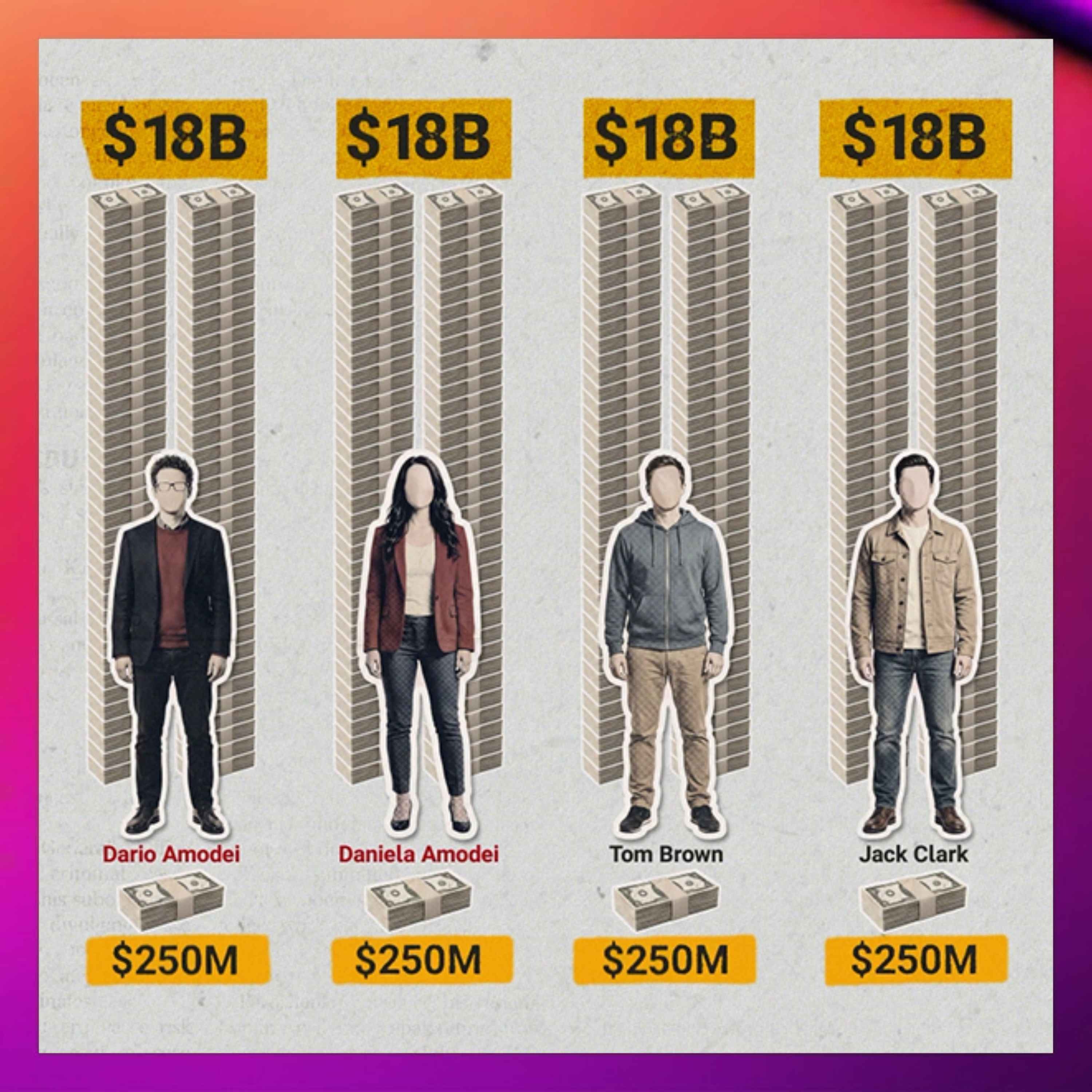
Anthropic was founded in 2021 by a group of seven former OpenAI employees. Now, the AI powerhouse behind the Claude models is selling its shares to the public for the first time. Katie explains who stands to make an absolute fortune from Anthropic’s mega-float. More from Times Video (https://www.thetimes.com/video) Get in touch: [email protected] Presenter: Katie Prescott, Technology Business Editor, The Times. Producer: Yasmin Butt Image: Times Hosted on Acast.
Evan Spiegel, co-founder and chief executive of Snap joins Danny and Katie live on stage at the Times Tech Summit to discuss why he’s spent the last 10 years investing in a new type of computer built into a pair of glasses. He explains why he thinks it’s "really weird" that Meta made ‘spy glasses’, addresses the growing wave of lawsuits against social media companies and shares his thoughts on the AI backlash currently sweeping across the United States. The Interview is our weekly conversation with the people shaping the future of technology. Read more: Snap boss takes swipe at ‘really weird’ Meta glasses (https://www.thetimes.com/us/business-us/article/evan-spiegel-snap-smart-glasses-meta-raybans-vs7lwcq2d) Get in touch: [email protected] Guest: Evan Spiegel, Co-founder and Chief Executive of Snap, Inc. Presenters: Katie Prescott, Technology Business Editor, The Times Danny Fortson, US West Coast Correspondent, The Sunday Times Producer: Marnie Duke Executive Producer: Peter Sale
Disease statistics should include context about who is affected and how counts are collected.
Share your view, then see how readers voted. No sign-in required. This poll is shared across stories.
Do you agree or disagree?
Common Quandary
A Common Quandary to discuss
Another conversation to explore, separate from this news story.
A $300 package lands at your door by mistake. Do you keep it?
A package containing expensive headphones arrives with your address but another person's name. The retailer says it has already replaced the order and does not ask you to return it.
If no one appears to lose, what still makes keeping it right or wrong?