Listen through the publisher, then discuss the episode here or arrange an in-person Roundtable. Your city determines where to meet.
Roundtables are designed for groups of four, with a shared subject and room for everyone to speak. Come for discussion, with no dating expectation.
Wow. This feels good. After years of fear, exhaustion, and wondering whether anything we do can make a difference, the American people just delivered a message. And it was LOUD. Today, we're celebrating the extraordinary blue wave that swept across the country—and digging into what it means for our democracy, our future, and our power. We're talking about: The historic victories, groundbreaking firsts, and stunning upsets that changed the political map; The unsung heroes who spent years organizing, registering voters, and building the movements that made this moment possible—even when they lost their own elections; The candidates who won, or came heartbreakingly close, despite being overlooked or opposed by the Democratic establishment; What the results mean for Trump's power, the Electoral College, and the future of American democracy; and The big question: Now that Democrats have power, what are they going to do with it? Because this election wasn't just about the people who won on Tuesday. It was about the millions of people who refused to give up long before winning seemed possible. Today, we celebrate them. We celebrate all of us. And we talk about what comes next. To listen to the episodes we reference: Stacey Abrams on Midterms: What's Going to Happen? (https://podcasts.apple.com/us/podcast/stacey-abrams-on-midterms-whats-going-to-happen/id1564530722?i=1000791042304) and The Real Minority Rule Conspiracy | Amanda with Rep. Justin J. Pearson (https://podcasts.apple.com/us/podcast/the-real-minority-rule-conspiracy-amanda-with-rep-justin/id1564530722?i=1000773832744)
Episode information is provided by the publisher. Listening takes place on the publisher’s service.
Thank you to Wren for supporting PBS. To learn more, go to https://wren.co/start/spacetime Uploaded 16-02-22 Take the Space Time Fan Survey Here: https://forms.gle/wS4bj9o3rvyhfKzUA PBS Member Stations rely on viewers like you. To support your local station, go to:http://to.pbs.org/DonateSPACE Sign Up on Patreon to get access to the Space Time Discord! Objective Collapse Theories offer a explanation of quantum mechanics that is at once brand new and based in classical mechanics. In the world of quantum mechanics, it’s no big deal for particles to be in multiple different states at the same time, or to teleport between locations, or to influence each other faster than light. But somehow, none of this strangeness makes its way to the familiar scale of human beings - even though our world is made entirely of quantum-weird building blocks. The explanations of this transition range from the mystical influence of the conscious mind to the grandiose proposition of multiple realities. But Obje
The gate doesn't have a lock. It doesn't have a key. There's nobody standing on the other side waiting to wave you through. Uploaded 09-09-26 The gate was open the whole time. You just couldn't see it, because you were staring at the ground, waiting for your feet to feel light. You've been standing there for years, warming up for a race you never run. Here is the truth: readiness is not a feeling you receive. It is a decision you make. The people who built the things you wish you'd built didn't feel more ready than you do — they just stopped waiting to feel it. This seminar unpacks the single mechanic behind why you never feel ready — and why willingness, not readiness, is what actually builds a life. CHAPTERS 0:00 Intro — The gate was open the whole time 2:04 The classroom lie: prepare, then perform 4:24 Fear wearing the mask of wisdom 6:36 Readiness is a quality you bring, not a state you arrive at 8:24 The glass never fills — skill comes from use 11:36 The cruel arithmetic of the wa
Thanksgiving is here, and some of your aunts and uncles may have softened their stances since last year. So, should you engage when politics comes up? And if so, how? Jessica Tarlov, co-host of Raging Moderates and Fox News’s The Five returns to the show to offer some tips for handling Thanksgiving (and the rest of the year), discusses her new book, and she and Sarah listen to some voters talk about how political divisions have affected their lives…and what those voters think of people who think differently. Show links: Raging Moderates with Scott Galloway and Jessica Tarlov (https://www.youtube.com/@RagingModerates) Jessica’s book, I Disagree: Winning Arguments Without Losing Friends (https://www.penguinrandomhouse.com/books/803493/i-disagree-by-jessica-tarlov/) Feeling frustrated by the state of American democracy? The Context, a podcast from the Charles F. Kettering Foundation, explores the challenges facing democracy, how to fix what’s broken, and what we can do to make it work bet
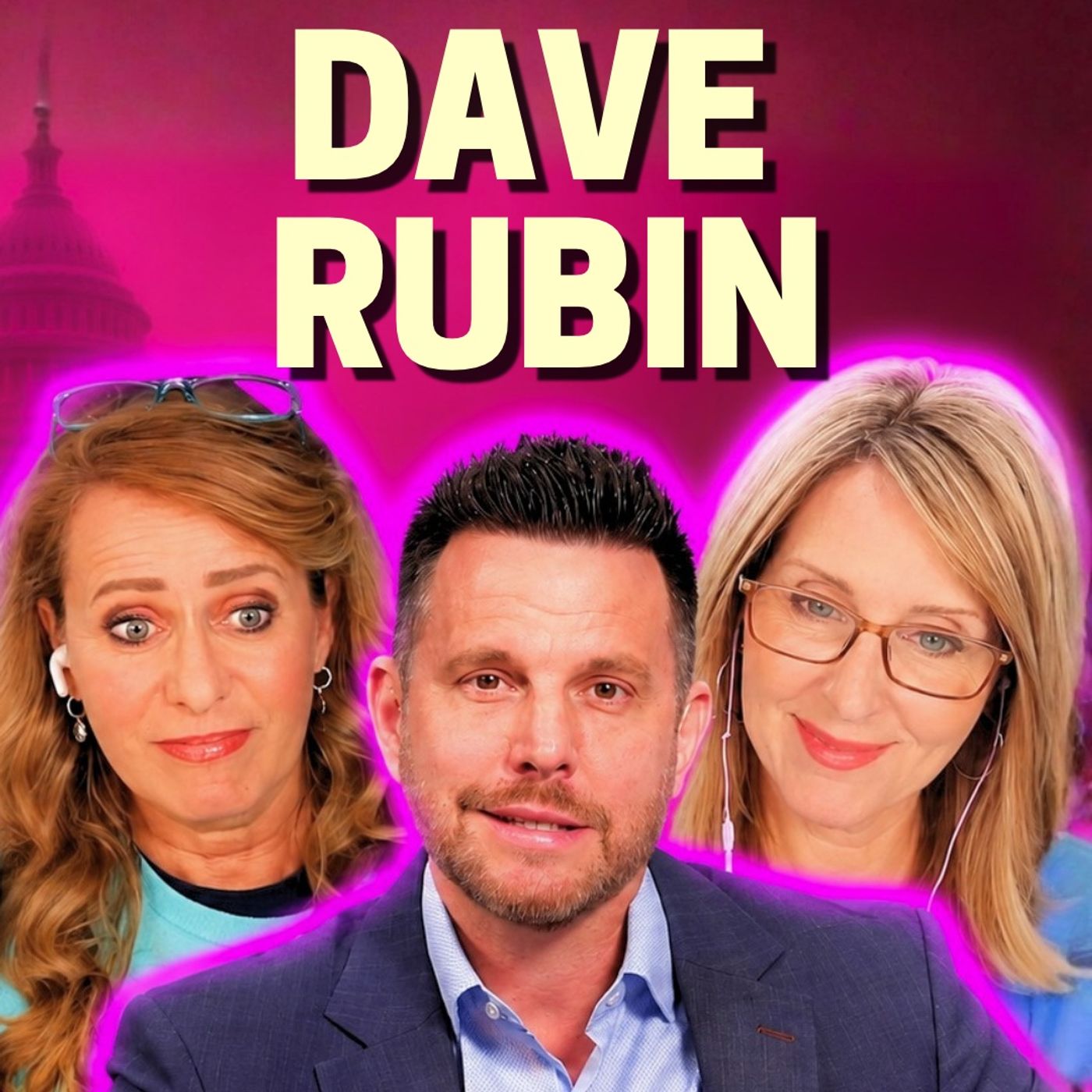
Is the Republican Party heading for a major reckoning in 2028? Dave Rubin joins The Chicks on the Right for a brutally honest conversation about Trump's final two years, the future of the GOP, and the growing divisions threatening conservatives. Dave weighs in on the Republican Party's recent election losses, whether JD Vance, Marco Rubio, or Ron DeSantis can carry Trump's agenda forward, and why he's increasingly concerned about the political direction of America. The conversation heats up as Dave takes on Nick Fuentes, the rise of extremist voices on the right, and the socialist movement gaining influence within the Democratic Party. He also discusses radical Islamism, antisemitism, the dangers of online outrage, and why he believes Western civilization faces serious challenges. Plus, with cyberattacks, banking disruptions, and nationwide outages raising concerns, Dave shares his thoughts on whether Americans should be preparing for more chaos. And don't miss the lighter side of Dave
Giouli thought alcohol was the one thing that let her stop being perfect. Hear how a 30-day break she expected to end in January led her to write the first quit lit book in Greece and help change how her country talks about drinking. What happens when a question you ask yourself one January refuses to go away? For Giouli, alcohol started as freedom from perfectionism at university. It followed her through a demanding events career and into motherhood, when wine came home every night and blackouts began to scare her. Rules and moderation only left her feeling guilty. Then, holding a glass of red wine on her balcony, she asked herself who she was without it. That question led her to write two books, become a coach, and help shift the drinking culture in Greece. Why alcohol felt like freedom from perfectionism, not a way to numb The common belief about drinking at home that kept her from questioning alcohol What moderation rules did to her guilt and her sense of control The balcony moment
Prince Harry criticizes the Trump administration’s approach to Ukraine and says he would return to military service if asked. Palace Intrigue covers his interview with The Telegraph during a visit to Lviv, his support for Ukraine, and his comments about veterans being prepared to serve again. Former royal protection chief Dai Davies argues that Harry’s public remarks could complicate his security and create difficulties for King Charles. A source close to the Duke of Sussex pushes back, questioning Davies’s decision to discuss Harry’s protection publicly. Royal writer Tom Sykes also criticizes the timing of Harry’s publicity during Prince William and Kate Middleton’s Earthshot visit to India. Plus, Harry discusses life in Britain with Meghan Markle, Prince Archie, and Princess Lilibet during an appearance on ITV’s This Morning. He shares updates on the children’s adjustment to school, Christmas plans, country walks, and pub life. The family’s Winter Wonderland visit also draws coverage
Would you send your son into a toxic waste dump? Of course not. So why are we sending our sons into fraternities? Amanda follows the research into the dark heart of fraternity history and culture and uncovers a devastating truth: Fraternities prey not only on our daughters, but just as viciously on our sons. - The shocking research linking fraternity membership to sexual assault. - How hazing turns humiliation, violence, and secrecy into “brotherhood.” - How colleges (and political powers) continue to protect the frats they know are dangerous. - Why raising “good boys” is a myth — and what we must actually do to keep our kids safe. This is not a story about bad boys. It's a story about the systems that shape them, the adults who enable those systems, and the responsibility we have to demand better. Because loving our sons means refusing to accept what trains them to hurt themselves and others. For Part One of this three-part series, listen to On Cornell: How to Protect Your Child When
Dr. Orna Guralnik of Couples Therapy joins Glennon, Abby, and Amanda to reveal what’s really underneath our most maddening relationship fights—and how the differences we keep trying to eliminate might actually be the key to growing closer. - What we’re really fighting about when we fight about the dishwasher; - Why we can stop debating whether something is a “want” or a “need”—and what to ask instead; - How to turn the thing that most frustrates you about your partner into an opportunity for growth; - Why every relationship is its own “mini political system”; and - What to do when you feel invisible to your partner. About Dr. Guralnik: Dr. Orna Guralnik is a psychoanalyst and writer, who serves on the faculty of NYU PostDoc, National Institute for the Psychotherapies, the Stephen Mitchel Center, and the editorial boards of Psychoanalytic Dialogues and Studies in Gender & Sexuality. Her writing centers on the intersection of psychoanalysis, dissociation, and cultural studies. She has co
Why do so many of us feel responsible for everyone else's happiness while struggling to believe we're enough? Psychotherapist and Father Wound author Terri Cole joins us to uncover how our relationships with our fathers shape our self-worth, relationships, and the roles we play long into adulthood—and how to finally break free. - The surprising signs you may have a father wound—even if you had a great dad. - Why perfectionism, people-pleasing, and hyper-independence may be rooted in childhood. - How we learn to earn love instead of simply receiving it. - Why so many women reach a breaking point in midlife. - How to stop managing everyone else and start living your own life. More with Terri Cole: Ep 402. Are You A High Functioning Codependent? Find Out with Terri Cole (https://podcasts.apple.com/us/podcast/are-you-a-high-functioning-codependent-find-out/id1564530722?i=1000703548035) About Terri: Terri Cole is a licensed psychotherapist and global relationship and empowerment expert and
Organizations should explain important automated decisions in language people can understand.
Share your view, then see how readers voted. No sign-in required. This poll is shared across stories.
Do you agree or disagree?
Common Quandary
A Common Quandary to discuss
Another conversation to explore, separate from this news story.
An app can text exactly like someone you lost. Would you keep talking to it?
A service can create a conversational likeness from a deceased person's messages and recordings. A grieving family member finds it comforting, although the deceased never consented to this use of their data.
Can comfort justify creating a voice the dead never authorized?