Writing in the Hour of Genocide with Lena Khalaf Tuffaha & Omar El Akkad
93 min
Listen through the publisher, then discuss the episode here or arrange an in-person Roundtable. Your city determines where to meet.
Roundtables are designed for groups of four, with a shared subject and room for everyone to speak. Come for discussion, with no dating expectation.
Today’s episode, recorded live at the 2nd annual Portland Poetry Confluence, is a conversation between two National Book Award winners, Lena Khalaf Tuffaha in poetry and Omar El Akkad in prose. We use the essay “Notes on Craft: Writing in the Hour of Genocide,” by Palestinian poet and performance artist Fargo Tbakhi, as a frame under which to look at writing at a time of great political urgency within their respective genres. Questions of audience and address, silence and silencing, gestures on the page and gestures in the world, and how to continue to make art at a time when everything is moving decidedly the wrong way. Today’s conversation was conceived by Literary Portland for Palestine and raised money for two Palestinian families supported by Creators for Gaza. If you enjoyed today’s conversation consider supporting the Portland Poetry Confluence (https://portlandpoetryconfluence.org/) and Creators for Gaza (https://creatorsforgaza.github.io/the-list/) in your holiday giving. And consider joining the Between the Covers community as a listener-supporter. One of many potential benefits and rewards of doing so is access to the bonus audio archive with contributions from Omar El Akkad, Isabella Hammad, Dionne Brand, Christina Sharpe, and Layli Long Soldier among many others. Find out more at the show’s Patreon page. (http://patreon.com/betweenthecovers) Lastly, here is the conversation-specific BookShop (https://bookshop.org/lists/books-from-lena-khalaf-tuffaha-omar-el-akkad-conversation) for today’s episode (and for your general book needs don’t miss Milkweed Editions’ own Bookshop (https://bookshop.org/shop/milkweed_books)).
Episode information is provided by the publisher. Listening takes place on the publisher’s service.
20 Questions An acerbic math tutor suddenly finds himself in a padded room in the middle of a work day. He is forced to play a children's guessing game for survival. Written by Po Carlos Narrated by Justin Fife (https://www.threads.net/@justin.fife) Produced by Georgia Triantafyllopoulou (https://www.instagram.com/audiogeekgr ) With music by Rest You Sleeping Giant (https://restyousleepinggiant.bandcamp.com/) And Mark Lingard (https://freemusicarchive.org/music/mark-lingard/) And Thom Robson (https://www.thomrobsonmusic.com/) And sound effects provided by getsoundly.com (http://getsoundly.com/) Joshua Boucher is our story programmer. Jasmine Arch manages our community. Mary Pastrano helps orchestrate the chaos. And the show would collapse into static and screams without the ongoing work of Karl Hughes, Georgia Triantafyllopoulou, and James Barnett — AKA Jimmy Horrors. Justin Fife is an audiobook narrator and voice actor, and he can be found on Threads @Justin.fife Join our communities
18th November 2026 - Papal Bean - Rich and Ally are back and now with RHLSTP over we can really concentrate on bringing you a 24 hour rolling news channel. For now it’s just the usual 5 minutes as the pair discuss the accident prone Pope in Peru and why God is letting him being mildly tormented. With a special report from the Vatican and some stuff about testicle chairs. It’s everything you want from a news show. 19th November 2026 - Three Stalins - It’s International Men’s Day so let’s celebrate the men currently carving up the world for their own brand of evil and a man show is definitely not MAGA and can’t imagine why anyone ever thought he was. Plus a report from China. This show has everything. 20th November 2026 - Knit Hat Hippo-astrophy- Final Newsround of the week and prepare yourself for some very bad news, delicately and professionally handled by a man (and a puppet) that we hope one day will be presenting all TV news. The Hippo community is in mourning and as the only news p
How do we make sense of the unseen? For centuries, the supernatural has offered ways to understand misfortune, find comfort and live with uncertainty. But its history is not simply a story of superstition giving way to reason. Why did people seek evidence in witchcraft trials? Can science and supernatural belief exist alongside one another? And what might today’s encounters with frontier technologies reveal to us about the persistence of the uncanny? In this episode, Margherita Volpato speaks with Malcolm Gaskill about his new book, Worlds of Fear and Wonder: Living with the Supernatural, Past and Present. Together, they explore the emotions behind supernatural beliefs that have shaped culture. They discuss Puritans searching for signs from God, the persistence of enchantment in the modern world and the uneasy relationship between technology and the uncanny. Malcolm Gaskill is Emeritus Professor of Early Modern History at the University of East Anglia and the author of seven books, inc
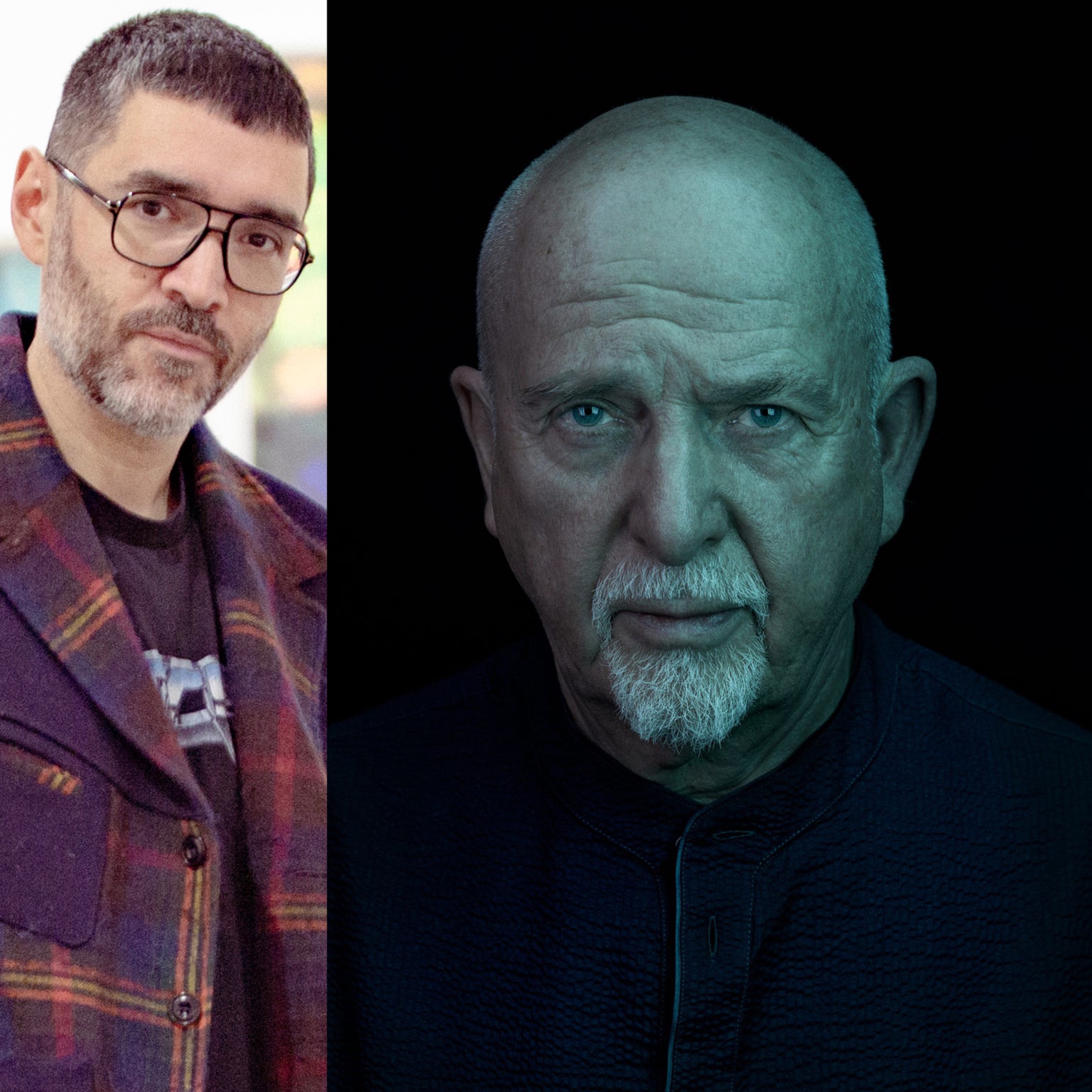
It’s episode 400 of @TalkArt podcast! To celebrate Robert meets PETER GABRIEL, singer, songwriter, producer, musician… ICON! We discuss his inspiring new album o\i and his lifelong passion for art and collaborating with visual artists across six decades including Helen Chadwick, Cathy de Monchaux, Nadav Kander, Ai Weiwei, Cornelia Parker and more. Following a year in which Peter Gabriel has released a new song on every full moon, the 27 November sees the release of his new studio album, o\i, the follow up to his critically acclaimed album of 2023, i/o, a number 1 in the UK album chart. Peter Gabriel returns with a brand-new collection of songs after a mere three years – his shortest gap between studio albums since the early 1980s. o\i is a companion piece to its reflected name-sake i/o expanding on many of the same themes: our relationship with nature, the passing of time, the increasing influence of technology in our lives and our place in the world; “Trying to get a handle on where y
In this episode, we asked Shelf Respect listeners if we could be their reading matchmakers. There was one catch: they couldn't use a book title or genre as their reference point. And they got weird, just like we hoped. The Popcast Ornament (https://knoxandjamie.shop/products/2026-popcast-holiday-ornament) and super secret snake draft episode Our Bookshop.org (https://bookshop.org/) Storefront (https://bookshop.org/shop/shelfrespect) Our Instagram: @readwithshelfrespect (https://www.instagram.com/readwithshelfrespect/) readwithshelfrespect.com (https://readwithshelfrespect.com/)
Half a light-year past the last relay beacon, where no order from home can arrive in under half a year, a planet-breaker warhead lost nine months ago with the Penrose, the ship that carried it, hangs at the center of a field, a sphere of empty space where every body that was ever born goes back to the shape it was born with. Wounds close, scars smooth away, and everything a surgeon ever did to a body is undone, down to a heart mended in a man's first week of life. The recovery squad sent after it was built for the Concord's war on the Free Worlds: legs swapped for pistons, bones sleeved in alloy, and the parts of the brain that hold fear and pity cut out and capped with steel. The warhead's fuse is set to fire it at any running drive that comes near, so the squad crosses on an unpowered sled thrown in from the carrier Thurlow, a day's coast to the center with no way back until someone safes the fuse by hand at the casing. Thirteen men ride the sled: Major Ian Ridley, eleven of his cut
Today’s conversation is an archival recording from 2021 with the Moroccan writer and filmmaker Abdellah Taïa discussing his novel A Country For Dying, translated by Emma Ramadan and winner of the 2021 PEN Translation Award. We talk about voice in relation to self, story in relation to truth, writing in one’s second language, particularly a language imposed by colonization, about making that tongue bend to one’s reality, about being both Muslim and gay (as well as being the first openly homosexual Arab writer from Morocco), about why it is important not to write characters who are good, or only so, about Isabelle Adjani, the Zulawski film Possession, the role of possession and djinns in his work, and about creating a literature that does not itself come from literature, that does not come from books or speak to them. A great complement to today’s conversation with Abdellah is the hour-long conversation with his translator Emma Ramadan which joins the Between the Covers bonus audio archi
Telling another person's difficult story carries responsibilities beyond getting the facts right.
Share your view, then see how readers voted. No sign-in required. This poll is shared across stories.
Do you agree or disagree?
Common Quandary
A Common Quandary to discuss
Another conversation to explore, separate from this news story.
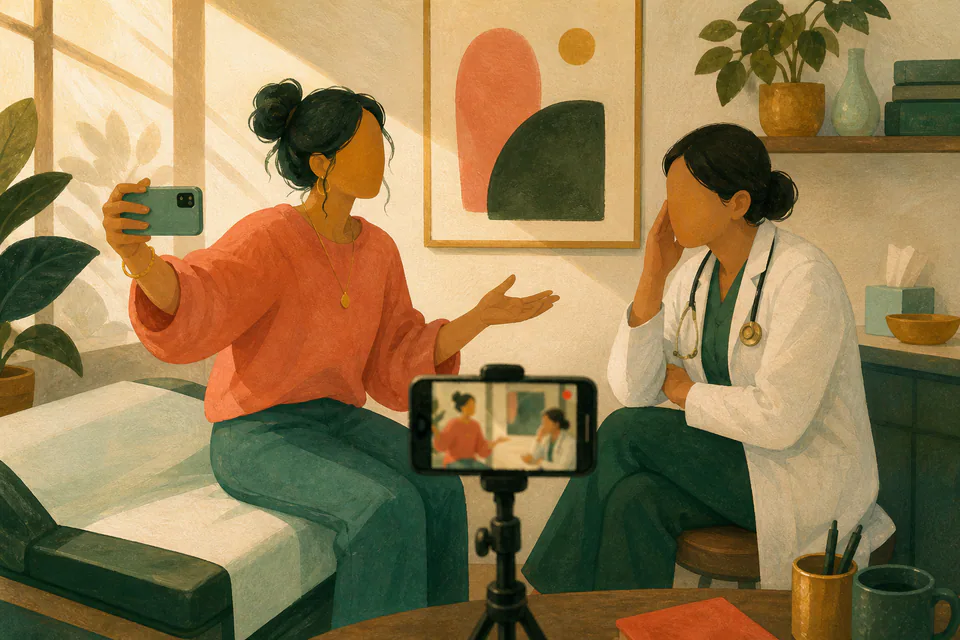
A patient records every doctor visit for their followers. Can the doctor refuse to be filmed?
A patient with a large social-media following livestreams their health journey and wants to record every appointment. They say the videos help others and keep doctors accountable. Their physician finds the camera distracting and worries that casual remarks will be edited out of context.
Whose comfort should control a conversation about one person's body and another person's work?