You Can See Everything… except the truth? - The Latest
14 min
Listen through the publisher, then discuss the episode here or arrange an in-person Roundtable. Your city determines where to meet.
Roundtables are designed for groups of four, with a shared subject and room for everyone to speak. Come for discussion, with no dating expectation.
The documentary about Elizabeth Holmes has become a box office sensation, but does it fail to adequately interrogate the disgraced founder of Theranos? While Nathan Fielder and Lance Oppenheim’s three-hour film has gripped audiences and received critical acclaim, Guardian film editor Catherine Shoard tells Michael Safi why she believes it is an insult to Holmes’s victims and the journalists who exposed her – watch on YouTube (https://www.youtube.com/@todayinfocuspodcast).
Episode information is provided by the publisher. Listening takes place on the publisher’s service.
Comedian, writer and self-proclaimed “Power Gay” Daniel-Ryan Spaulding joins Chicks on the Right for a candid, hilarious and thought-provoking conversation about woke culture, LGBTQ activism, antisemitism, Israel and the future of American politics. Daniel shares his incredible 200-pound weight loss journey, how October 7 transformed his life and comedy career, and why he became an outspoken advocate for Israel and Western values. He discusses the cultural boycott of Israel, media bias, progressive politics and how his friendships with Republicans challenged his own political assumptions. The Chicks also explore the meaning of being a “Power Gay,” Daniel's thoughts on Pride marches, the changing LGBTQ community and the exclusive brotherhood he describes with plenty of laughs along the way. Plus, Daniel weighs in on Zohran Mamdani, Donald Trump, Charlie Kirk, Tucker Carlson, Marco Rubio and what the Republican Party could look like heading into the 2028 presidential election. Youtube (h
At COP31, the Liberals sold Canada as a climate leader. Back home, a Liberal MP used the Toronto Star to warn that his own government was losing its climate credibility. Two former Liberal environment ministers publicly challenged the government’s claims about its Paris commitments. Climate creator Karishma Porwal joins Noor Azrieh to ask how Mark Carney, once billed as the climate guy, ended up defending an oil and gas agenda that his own party is struggling to sell. Plus, how stolen faces are changing our media landscape. Host: Noor Azrieh (https://www.instagram.com/noorazrieh/?hl=en) Credits: James Nicholson (Senior Producer), Julian Abraham (Producer), Noor Azrieh (Host/Producer), Caleb Thompson (Mixing & Mastering), Gökçe On (Fact Checking), Harrison Lowman (Managing Editor), Jesse Brown (Editor & Publisher) Guest: Karishma Porwal (https://www.instagram.com/karishmaclimategirl/?hl=en) Additional music by Audio Network Further reading: Finance, fossil fuels and the ‘overshoot’: six
Back in 2022, young people gathered in the Chinese city of Shanghai for a vigil. It was to mourn the deaths of 10 people who died in a fire in a high-rise residential building in Xinjiang. Many believed the victims couldn’t escape because of strict covid-19 restrictions, although Chinese authorities disputed this. The demonstrators met on Urumqi Middle Road - a place that would go on to become the focal point of protests known as the Blank Paper Movement. Demonstrations spread across China, with people holding blank white sheets which they said represented “everything we want to say but cannot say”. Four years later, the spaces young people gathered in are disappearing. Police now patrol Urumqi Middle Road. So what happened to the Blank Paper Movement? Eunice Yang from BBC Chinese breaks it down for us. Instagram: @bbcwhatintheworld Email: [email protected] WhatsApp: +44 330 12 33 22 6 Presenter: Hannah Gelbart Producers: Mollie Perella, Benita Barden and Emily Horler Editor: Ve
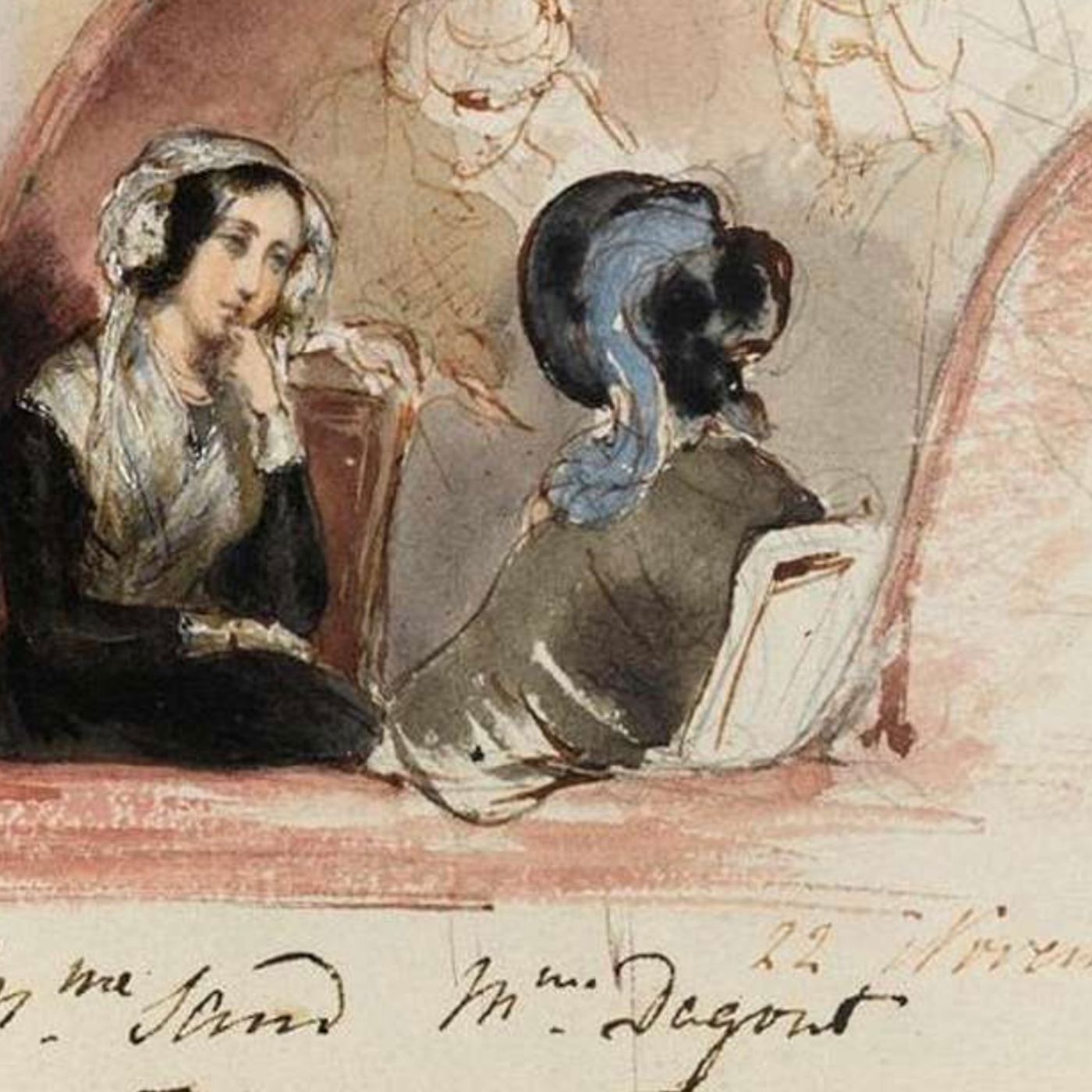
1840 Literary Debut and Rapid Fame Fiona Sampson, author of Becoming George Sand, tells John Batchelor how Aurore moved to Paris, took the male pen name George Sand and became a literary sensation with her first novel, Indiana. The book exposed the trap of arranged marriage from a woman's point of view, and its passionate style electrified readers. Her later radical novels challenged society's institutions further and made her a leading voice of French Romantic literature. Part Four. (4)
Ian Collins discusses the backlash over Andy Burnham’s EU reset, with reports claiming British taxpayers face a multimillion-pound “participation fee” for the new deal. The promised Brexit dividend? Critics say the agreement is worth just half what Burnham advertised. And Labour’s election pledge to ban foie gras imports is reportedly being dropped as part of the bargain. So much for the manifesto menu. Meanwhile, migration figures are fuelling another political row. Reports suggest 241,000 migrants were granted the right to remain last year, against 13,000 refusals. Net migration has fallen to its lowest level outside the Covid period in nearly three decades — but a reported net outflow of 137,000 British nationals adds another twist to the numbers. Ministers may welcome the headline, but the detail is anything but straightforward. There’s more unwelcome news for Labour, with the number of young people outside work, education or training reportedly climbing to 960,000. Nearly a millio
In this special episode, Sean Speer speaks with the 2026 Hunter Prize for Public Policy winner and runner-up. Colin McMahon, an intern at the Legislative Assembly of Manitoba, discusses his winning proposal (https://thehub.ca/2026/11/27/canadas-small-businesses-are-for-sale-all-they-need-are-buyers-hunter-prize-2026/) to help younger Canadians acquire existing small businesses through improved financing programs, addressing Canada’s looming succession crisis as business owners retire. Runner-up Stephen Rouse, founder of Common Sense Economics, argues (https://thehub.ca/2026/11/27/its-illegal-to-open-a-business-where-most-canadians-live-one-provincial-law-could-fix-that-hunter-prize-2026/) for reforming zoning laws to allow small-scale commercial activity in residential areas, enabling aspiring entrepreneurs to test business ideas from home before scaling up, thereby reducing barriers to entry and revitalizing neighborhoods. The Hub is Canada’s fastest growing independent digital news o
The Trump administration has approved Elon Musk’s plan to create datacentres in space. US federal regulators have authorised the launch of one million Starmind orbital satellites, which are built by Musk’s SpaceX, to process data in space. Supporters argue the project will be more energy-efficient and reduce the environmental impact of datacentres on Earth as the AI industry grows. But how realistic is the plan and what could the consequences be? Michael Safi speaks to Guardian global technology editor Dan Milmo – watch on YouTube (https://www.youtube.com/@todayinfocuspodcast).
Madrid correspondent Sam Jones and European community affairs correspondent Ashifa Kassam report on a pivotal election in Spain this weekend, which could see longtime PM Pedro Sánchez replaced by a conservative coalition including the far right.
Raheem Sterling has been handed a 12-month jail term, suspended for 18 months, for reckless driving and possession of nitrous oxide. It marks a remarkable fall from grace for the former England and Manchester City player, who was awarded an MBE in 2021. Sterling started playing professional football at 16, and his sentencing has raised questions about whether there are sufficient protections for younger players. Lucy Hough speaks to the Guardian columnist and sportswriter Jonathan Liew – watch on YouTube (https://www.youtube.com/@todayinfocuspodcast).
An essential service should remain open until a workable alternative is available.
Share your view, then see how readers voted. No sign-in required. This poll is shared across stories.
Do you agree or disagree?
Common Quandary
A Common Quandary to discuss
Another conversation to explore, separate from this news story.
Someone you love asks, “Do you think I’ll be okay?” What if you do not?
A relative with a poor prognosis asks whether you think they will recover. They seem to need reassurance, but you believe the odds are very low and do not want to spend the remaining time pretending.
Can preserving hope justify saying more than you believe?