Your Fingers Turn White in the Cold. Here's When It's Serious.
40 min
Listen through the publisher, then discuss the episode here or arrange an in-person Roundtable. Your city determines where to meet.
Roundtables are designed for groups of four, with a shared subject and room for everyone to speak. Come for discussion, with no dating expectation.
Fingers that turn white, then blue, then red in the cold. Dr. Chris Motley explains Raynaud's: what happens in the capillaries, primary versus secondary, the fingernail test (nailfold capillaroscopy) that helps spot scleroderma risk, a patient who came in for digestion, his Chinese medicine and infection-focused approach, and the fingertip warning signs that need same-day care. Affiliate disclosure: Dr. Motley earns a commission on Supreme Nutrition Products purchases made through his link: https://shop.supremenutritionproducts.com/?aff=28 Dr. Motley has an affiliate relationship with DesBio. CHAPTERS 00:00 Fingers that go white, then blue, then red 01:17 The triggers, from cold to beta blockers 03:20 Could a hidden infection be involved? 04:04 Primary or secondary: the difference that matters 05:46 She came in for digestion. He noticed her fingers. 10:46 The fingernail test that confirmed it 11:45 What Chinese medicine says about cold hands 13:56 Tick bites, eye twitches and heart flutters 18:00 Evergreen Pearls and the herbal plan 22:36 Four months, then ten 26:04 If your scleroderma test comes back negative 30:48 Fingertip warning signs: go today 31:09 Five things to do 34:39 Herbs, homeopathy and finding a practitioner 36:00 Warm your core, protect your hands DISCLAIMER: The information shared in this podcast is for educational purposes only and does not constitute the practice of medicine or the giving of medical advice. No doctor-patient relationship is formed. Use of this information is at your own risk. It is not intended to substitute for professional medical advice, diagnosis, or treatment. Our content may include sponsorship and affiliate links, through which we earn a small commission on sales made through those links.
Episode information is provided by the publisher. Listening takes place on the publisher’s service.
This episode of The 80 Million Podcast is hosted by Patti Boozang, Manatt Health Senior Managing Director and 80 Million editor. She is joined by Eric Gold, Partner at Manatt Health, and Victoria Bassetti, Senior Advisor for the States United Democracy Center, a nonprofit legal organization, to discuss the growing role of litigation in federal health policy and what ongoing legal challenges mean for Medicaid implementation. Authors: Eric Gold (https://www.manatt.com/eric-gold) and Victoria Bassetti (https://thenewpress.org/authors/victoria-bassetti/) Editors: Patti Boozang (https://www.manatt.com/patricia-m-boozang), Allison Orris (https://www.manatt.com/allison-orris) and Amanda Eisenberg (https://www.manatt.com/amanda-eisenberg) tl;dr * Federal courts are playing an increasingly significant role in shaping health policy as states challenge federal funding cuts, new grant conditions and changes to longstanding federal policies. * Three major lawsuits are challenging Medicaid work repo
Question? Ask Dr. Bikman’s Digital Mind (multilingual): Dr. Summary: In this short lecture, Dr. Ben Bikman explains why eating whole fruit and drinking fruit juice can have different metabolic effects. Although fructose produces little immediate insulin response on its own, he argues that frequent, large doses can promote inflammation and insulin resistance over time. The amount consumed, how quickly it arrives, and the food’s form are central to his explanation. Ben traces two proposed pathways: a weakened intestinal barrier that allows bacterial endotoxin into circulation, and rapid fructose metabolism in the liver that increases uric acid production. He connects both to inflammatory signaling and discusses ceramides as a link between inflammation and impaired insulin action. He draws on cell experiments, animal research, and human studies, including a ten-week trial of high-dose fructose-sweetened drinks. These different kinds of evidence help explain the mechanisms, but they should
BLACK FRIDAY — GOAL BODY COACHING Once a year - final week!! Apply to get the full details. HERE (https://goalbody-coaching.netlify.app/). FREE GIFT: HOT & HEALTHY FOR THE HOLIDAYS SURVIVAL GUIDE You think you're doing everything right. You think these strategies are HELPING you lose weight. They're actually the exact reason the scale isn't moving. Today I'm walking you through the 5 sneaky habits I was stuck in for way too long — the ones that LOOK like smart weight loss moves but are the real reason you're stuck. In This Episode: Why "saving calories for dinner out" is backfiring and costing you progress The bites, licks, and tastes math you've been pretending doesn't count (spoiler: it does) Why your exercise is NOT giving you a pass on the brownies (and why your watch is lying to you) The "I just wanna be chill about weight loss" lie that's keeping you stuck The "I'll start tomorrow" trap (and why future you isn't showing up) How to pick ONE of these and quit it this week Timestamp
Professor Clare Collins speaks with Melbourne dietitian and gut-health researcher Sarah Melton about diet stacking, which is the phenomena of combining multiple dietary strategies at the same time, often without a clear plan. Diet stacking can severely limit food choice,, increase stress and reduce the number of foods a person feels confident to eat. They discuss how 'stacked diets' risk not being nutritional adequate, how restrictions can affect nutrition, health and wellbeing, and why diagnosis and professional guidance are important - before removing foods from your usual intake. Key Topics Diet stacking is an increasing phenomenon that clinicians are seeing Gut conditions can include identifiable diseases, like coeliac disease and inflammatory bowel disease, and disorders of gut-brain interaction, like irritable bowel syndrome. The more diets that are stacked, the more food groups excluded and the greater the risk for poor nutrition, health and wellbeing Some diet combinations may
Told your blood sugar is normal, but you still can't lose weight? Could insulin resistance be hiding behind "normal" labs for years before your blood sugar ever shows it? What is a good fasting insulin level for midlife women, and why does almost no one test it? Friend, your doctor says your labs look normal. But your brain feels foggy, your midlife middle keeps growing, and your hormones feel all over the place. In this episode, I'm sharing why a normal blood sugar can hide insulin resistance for years, and the one lab test most midlife women never get. I start with the story of a young boy with type 1 diabetes, his diabetic alert dog, and what his yearly "blood sugar scorecard" teaches us about trusting just one number. Then we look under the surface at what insulin is doing, so you can catch the early warning sign while you still have plenty of room to turn things around. What You'll Learn: Why A1c is just an average, and how a normal number can hide big highs and lows The "duck on
How would you describe your 2026 year so far? Around us, there seems to be so much happening in the world today, with wars, a shaky economy, and political issues in the government. Personally, you might have had something unexpected happen like a sudden death or a serious health crisis. A friend of mine used this word to describe how things felt around her. She said things felt ‘uncertain’. I couldn’t agree more. In some ways, it seems remarkable that we have even made it this far! Well, if things have been feeling stressful and uncertain for you, let’s take a DEEP breath together now. In this episode, let’s look back on this year and have a moment of quiet reflection. I’ll also share some top thanksgivings from my clients who are eating plant-powered to inspire and encourage you. I hope you’ll see that our health doesn’t need to suffer or get sidelined, despite the external circumstances. So, if you’re ready to pause for a moment of reflection and gratitude with me, pull up a chair wi
Every code, link and end date from this episode, and more deals are on one page: doctormotley.com/black-friday Some links on that page are affiliate links, and some of these companies have sponsored the show. Everything there is something Dr. Motley uses himself or with his patients. In Chinese medicine, winter belongs to the kidneys. It's the season for storing reserves, not spending them, so this Black Friday guide starts with one question: what will this person actually use every day this winter? A gift that sits in the closet is just clutter with a receipt. Dr. Chris Motley stair-steps 14 deals, from stocking stuffers under $50 to the biggest discount he could get anyone this year: up to $2,500 off a Sunlighten infrared sauna. He covers how he uses each one, plus his rule for big purchases: if you'll use it fewer than three times a week, skip it, no matter the discount. The deals disappear in this order: Sunday, Nov 29: Sunlighten, Pique, Fringe Monday, Nov 30: Supreme Essentials,
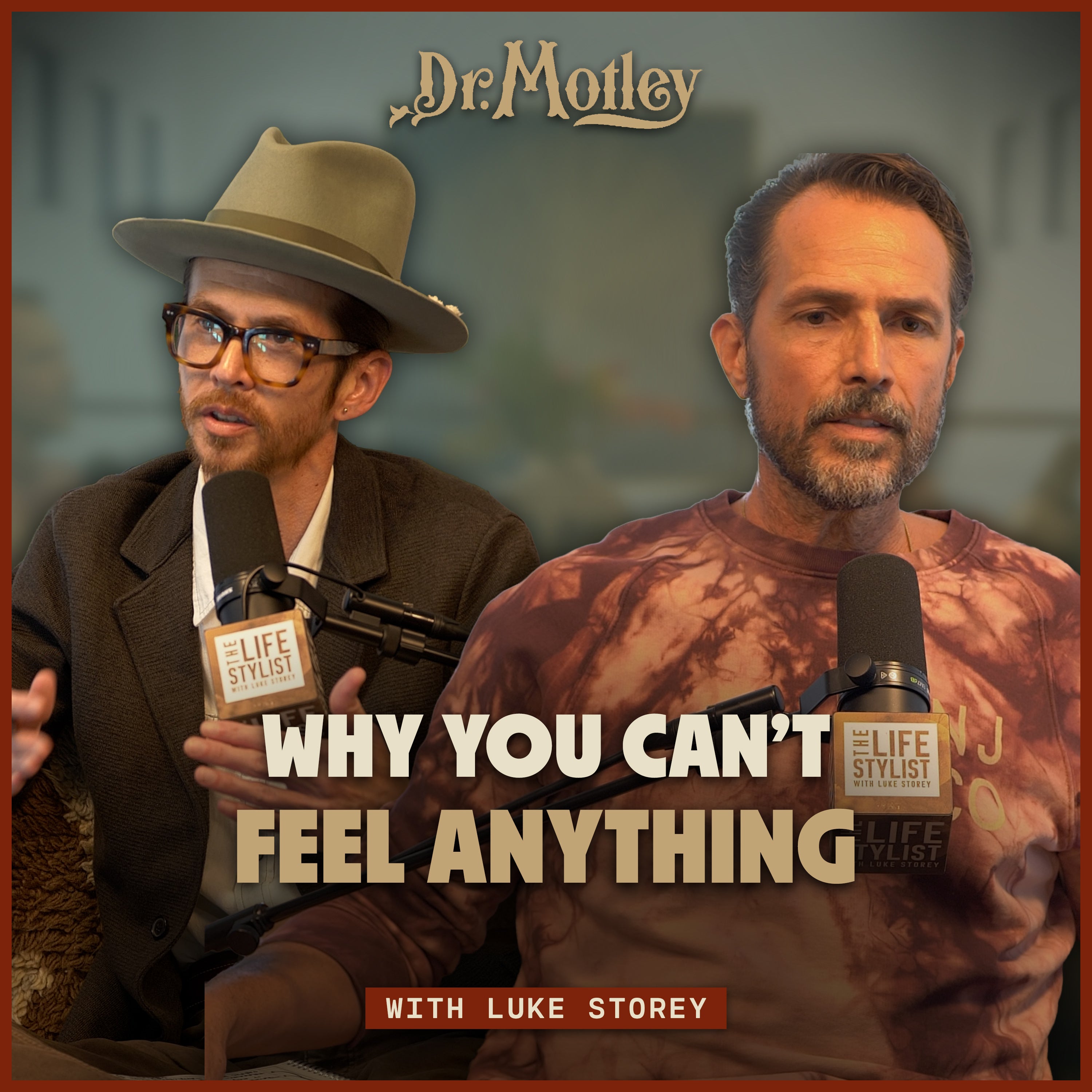
Luke Storey on Loneliness, Addiction and Coherence Dr. Motley sits down with Luke Storey, host of The Life Stylist podcast and author of the new book A Horse Named Lonesome, for a conversation about the one thing no supplement, device or protocol can fix: disconnection. This episode includes discussion of addiction and childhood sexual abuse. SAMHSA National Helpline (free, 24/7): 1-800-662-4357. RAINN: 800-656-4673. If you're struggling, call or text 988 (Suicide & Crisis Lifeline, US). Luke Storey has $200,000 of health tech in his house and still says the body doesn't want to be hacked. The Life Stylist host and author of A Horse Named Lonesome on bio-harmonizing, the rehab prayer that ended his addiction, healing by subtraction, why the ego should work for you, why stress makes his tinnitus louder (the research backs him up), and finishing his book after his father died. Includes discussion of addiction and childhood abuse; resources in the notes. A Horse Named Lonesome (https://a.
Fresh sweat doesn't smell. Dr. Chris Motley explains what does: the skin bacterium and enzyme behind the onion smell, the earwax test for the gene that decides how much odor you make, why stress sweat smells worse, what changes after 40, what your plate does to your sweat, the Chinese medicine pattern called fox odor, and the smells that mean see a doctor. 00:00 Your sweat shouldn't smell at all 02:38 The girl who changed shirts after barely playing 04:49 Ten to fifteen bathroom trips a day 09:12 It's all in the history: E. coli, staph and a hospital stay 12:56 The protocol he used 16:52 Three months later: about 90% better 18:33 What she stopped eating 22:04 "I never needed deodorant. Now I do." 23:00 Two kinds of sweat glands 23:59 The bacterium and the enzyme behind the onion smell 27:01 Why stress sweat smells worse 29:31 The earwax test 31:52 Why your scent changes after 40 33:58 What your plate does to your sweat 37:54 Deodorant, aluminum and staph 41:32 Smells that mean see a do
Documentaries should disclose editing choices that substantially affect how events are understood.
Share your view, then see how readers voted. No sign-in required. This poll is shared across stories.
Do you agree or disagree?
Common Quandary
A Common Quandary to discuss
Another conversation to explore, separate from this news story.
A stranger takes an emotional call in the quiet car. Do you shush them?
On a crowded train's designated quiet car, a passenger answers a call and begins discussing an apparent family emergency. They are speaking softly but continuously, and everyone nearby is listening despite trying not to.
Do public rules make room for private emergencies?