Your Law Class is About to Begin! Meet the UN Special Rapporteur on the Right to Development, Professor Surya Deva
60 min
Listen through the publisher, then discuss the episode here or arrange an in-person Roundtable. Your city determines where to meet.
Roundtables are designed for groups of four, with a shared subject and room for everyone to speak. Come for discussion, with no dating expectation.
One of the great achievements of the United Nations is the creation of a comprehensive body of human rights law—a universal and internationally protected code to which all nations can subscribe and all people aspire. In this episode, we get to pick the formidable brains of the Macquarie University law Professor Surya Deva, who is a former member of the UN Working Group on Business & Human Rights, and the current UN Special Rapporteur on The Right to Development. Have you heard of that? If not, you're about to! In a nutshell it's about everyone being entitled to participate in, contribute to and enjoy economic, social, cultural and political development. We talk about everything from Surya's own experience teaching at a law school on Bhopal, India, where he saw first hand the impacts of how communities can suffer when business doesn't uphold human rights, to how the fashion industry is doing on human rights, the role of international law, the changing nature of work, automation and even the question of what might happen to the right to work if there are no jobs! When a factory of 1,000 workers goes down to just 10? That is not science fiction; it's happening right now. In a future where machines take over more of the load, where does that leave us - and again, who gets to decide? OK, ready for your law class?! We hope you enjoy the latest from our series on workers' rights. Don't forget to listen to the previous episodes you may have missed & please help us share it. Find links and further reading at thewardrobecrisis.com (https://thewardrobecrisis.com/podcast) Tell us what you think. Find Clare on Instagram @mrspress (https://www.instagram.com/mrspress/) Hosted on Acast. See acast.com/privacy (https://acast.com/privacy) for more information.
Episode information is provided by the publisher. Listening takes place on the publisher’s service.
Why does losing weight feel so much harder after 50? If you're eating better, trying to exercise, and doing all the things you think you should be doing—but the scale won't budge—you're not alone. In this episode, we'll look at what's changing in your body after 50, five things worth examining when you're struggling to lose weight, and some simple places to start. I'll also share my own turning point, what I changed, and how I lost 70 pounds and have maintained that weight loss for years. You aren't too old, your body isn't hopeless, and you don't have to keep repeating the same dieting cycle. It's not too late to take a different approach! Links & Resources: Learn more & visit: https://robynpolk.com/ Ready for More Support? I’d love to help you. Work with me 1:1 Loved this episode? Email: [email protected] and tell me why! Join our Facebook community: Loved this episode?
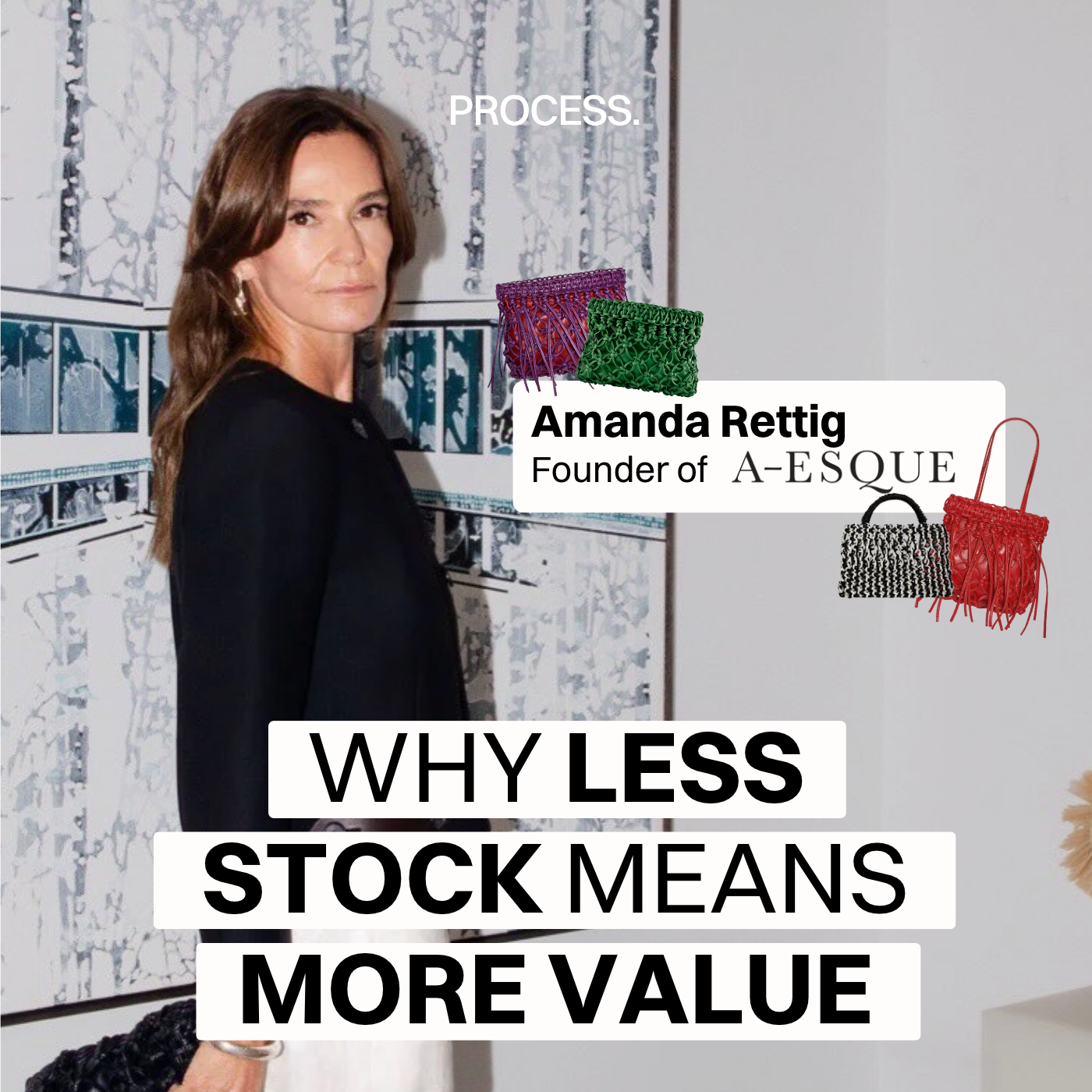
“The only time I would get scared is if I didn’t really believe in something.” - Amanda Rettig Australian designer and founder Amanda Briskin-Rettig has spent 30 years building fashion brands. She founded Mimco in 1996, sold it in 2007, and 13 years ago started A-esque, a self-funded leather goods brand handmade in small batches in Melbourne. Its philosophy is simple: build slowly, create intentionally, and make things that last. In this episode, Amanda shares how to start a fashion brand and grow it sustainably. She covers product development and product architecture, small-batch manufacturing inspired by Toyota’s lean model, and how to avoid excess inventory, deadstock and discounting. She also talks about local manufacturing, building a direct-to-consumer business, brand storytelling, collaborations, and what she learned from building and selling a business. If you want to start a handbag or accessories brand, build a sustainable fashion business, or grow a brand without compromisin
Journalist Simon Moya-Smith and Indigenous studies professor Julie Francella join John Fugelsang for a wide-ranging conversation on Indigenous rights, environmental protections, media representation, and the cost of speaking out. They explain how the proposed American Affordability and Jobs Act could weaken environmental reviews, tribal consultation, and protections for sacred sites—and why pipelines, data centers, and other development projects can bring serious risks to Indigenous communities, including threats to water, land, and safety. They also examine racist stereotypes in political and media coverage, from a cartoon targeting Deb Haaland to a U.S. attorney’s letter mocking Senator Elizabeth Warren with harmful tropes. Simon and Julie discuss why these depictions persist, how underrepresentation in newsrooms contributes to the problem, and why precise language and Indigenous voices matter. Along the way, callers share perspectives on community activism, Native traditions, and th
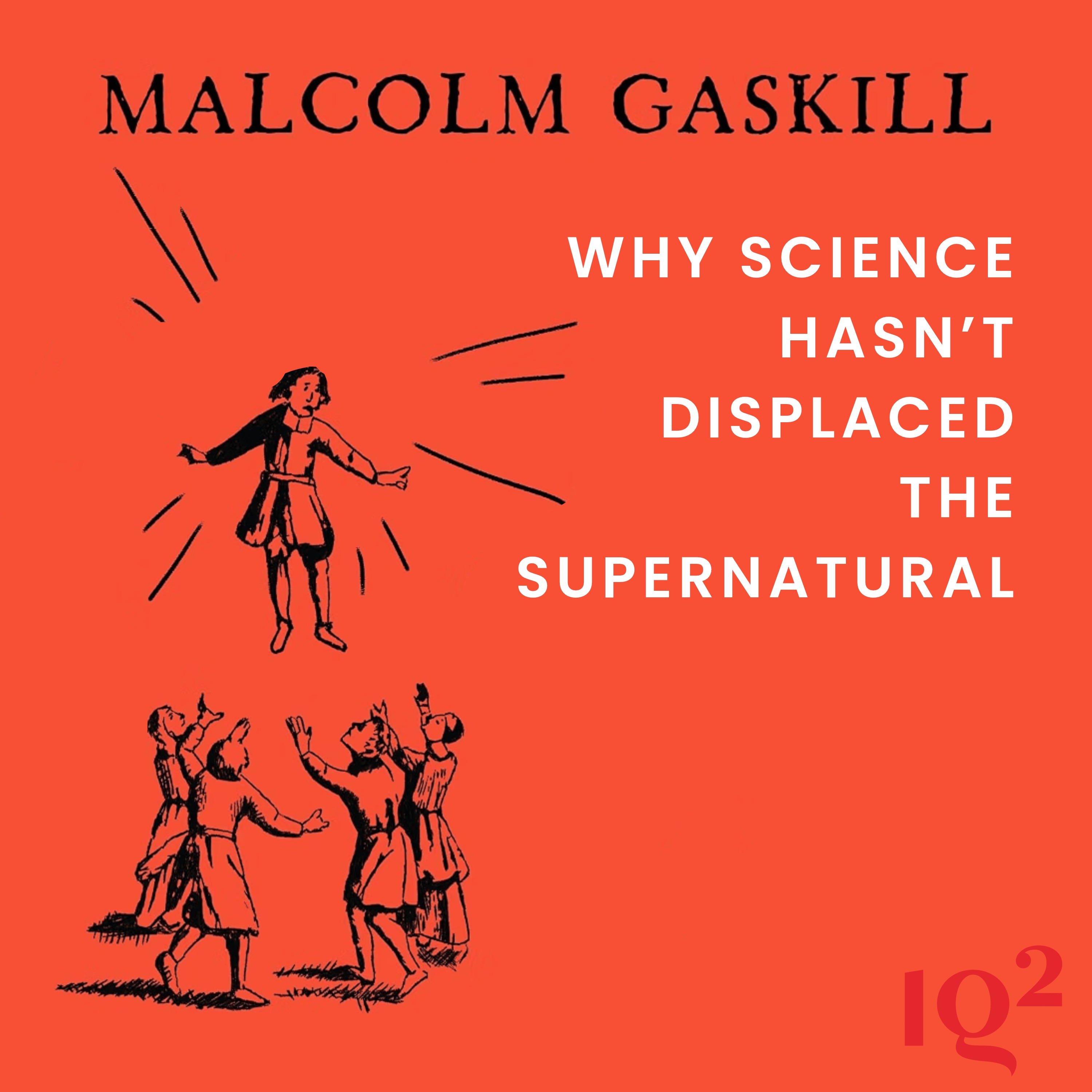
How do we make sense of the unseen? For centuries, the supernatural has offered ways to understand misfortune, find comfort and live with uncertainty. But its history is not simply a story of superstition giving way to reason. Why did people seek evidence in witchcraft trials? Can science and supernatural belief exist alongside one another? And what might today’s encounters with frontier technologies reveal to us about the persistence of the uncanny? In this episode, Margherita Volpato speaks with Malcolm Gaskill about his new book, Worlds of Fear and Wonder: Living with the Supernatural, Past and Present. Together, they explore the emotions behind supernatural beliefs that have shaped culture. They discuss Puritans searching for signs from God, the persistence of enchantment in the modern world and the uneasy relationship between technology and the uncanny. Malcolm Gaskill is Emeritus Professor of Early Modern History at the University of East Anglia and the author of seven books, inc
In spite of some significant recent success for British built musicals on Broadway, there is a conspicuous lack of forthcoming new musicals with original scores from British musical theatre composers. Venues including the National Theatre, Royal Court and more have recently announced new seasons that do not include such musicals, continuing a trend for these venues in spite of their vocal commitment to new writing. So, what's going wrong? Why does British theatre have so few discernible new musical projects in development when compared with the United States, and how can this be resolved? sign up to Mickey-Jo's weekly substack newsletter: www.mickeyjotheatre.substack.com 00:00 | introduction 03:24 | the problem 10:38 | other factors 17:31 | UK vs USA 24:23 | conclusion About Mickey-Jo: Instagram/TikTok/X: @MickeyJoTheatre Hosted on Acast.
Merriam-Webster's Word of the Day for November 21, 2026 is: meet-cute • \MEET-kyoot\ • noun Meet-cute refers to a cute, charming, or amusing first encounter between romantic partners. A meet-cute can be such an encounter as shown in a movie or television show, or one that happens in real life. // Their meet-cute felt as if it came straight out of a romantic comedy. See the entry > (https://www.merriam-webster.com/dictionary/meet-cute) Examples: “Two women, Dylan and Melanie, cross paths on an artificial beach in a near-apocalyptic meet-cute: one has emerged from the underwater pod in which she was raised, the other works at a luxury resort as a bartender… and may also be a robot.” — Natalie Zutter, Literary Hub, 2 Jan. 2026 Did you know? Isn’t it cute how two words can be introduced to each other and become an inseparable pair soon after? Well, that’s exactly what happened when meet and cute got together in the early 1950s. The duo was spotted in The New York Times Book Review in 1952
Patients should be able to compare expected treatment costs before choosing care.
Share your view, then see how readers voted. No sign-in required. This poll is shared across stories.
Do you agree or disagree?
Common Quandary
A Common Quandary to discuss
Another conversation to explore, separate from this news story.
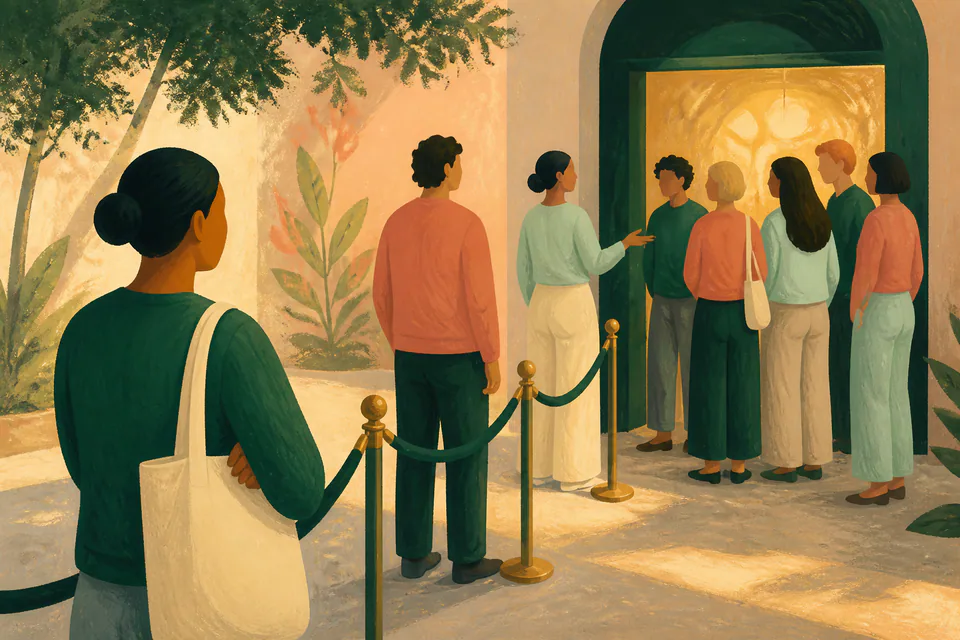
Five friends join the person ahead of you after a forty-minute wait. Do you object?
You wait forty minutes for a popular event. Just before the doors open, five friends join the person directly ahead of you, who says they have been holding everyone's place from the beginning.
What unwritten agreement does joining a line create?