We head to Nvidia's chip-making hub in Taiwan to hear reactions to the scandal engulfing Jensen Huang's crucial AI company as its shares fall further on Wall Street. Will the spy saga snuff out any hope of a tech share rebound? And while many drinkers in the West are putting a lid on their booze intake, India is toasting a world-beating rise in alcohol sales volumes and we hear from businesses in Delhi who explain how the stigma around drinking is evaporating. And who's the celebrity behind 2026's most-complained about advent calendar?
Central banks are buying physical gold at a historic pace. They're diversifying their reserves, reducing reliance on the U.S. dollar, and preparing for a financial future that looks very different from today's. In this video, Taylor Kenney connects the dots between government debt, inflation, central bank gold buying, and the changing monetary system. What happens next could have enormous consequences for anyone holding their wealth in U.S. dollars. Questions on Protecting Your Wealth with Gold & Silver? Schedule a Strategy Call Here ️ https://calendly.com/itmtrading/podcast or Call 866-349-3310 STAY IN TOUCH WITH US ⬇️ Schedule a Strategy Session: 866-349-3310 Email us at [email protected] Official Homepage http://www.itmtrading.com ITM Trading Twitter: https://twitter.com/itmtrading Facebook: https://facebook.com/ITMTrading
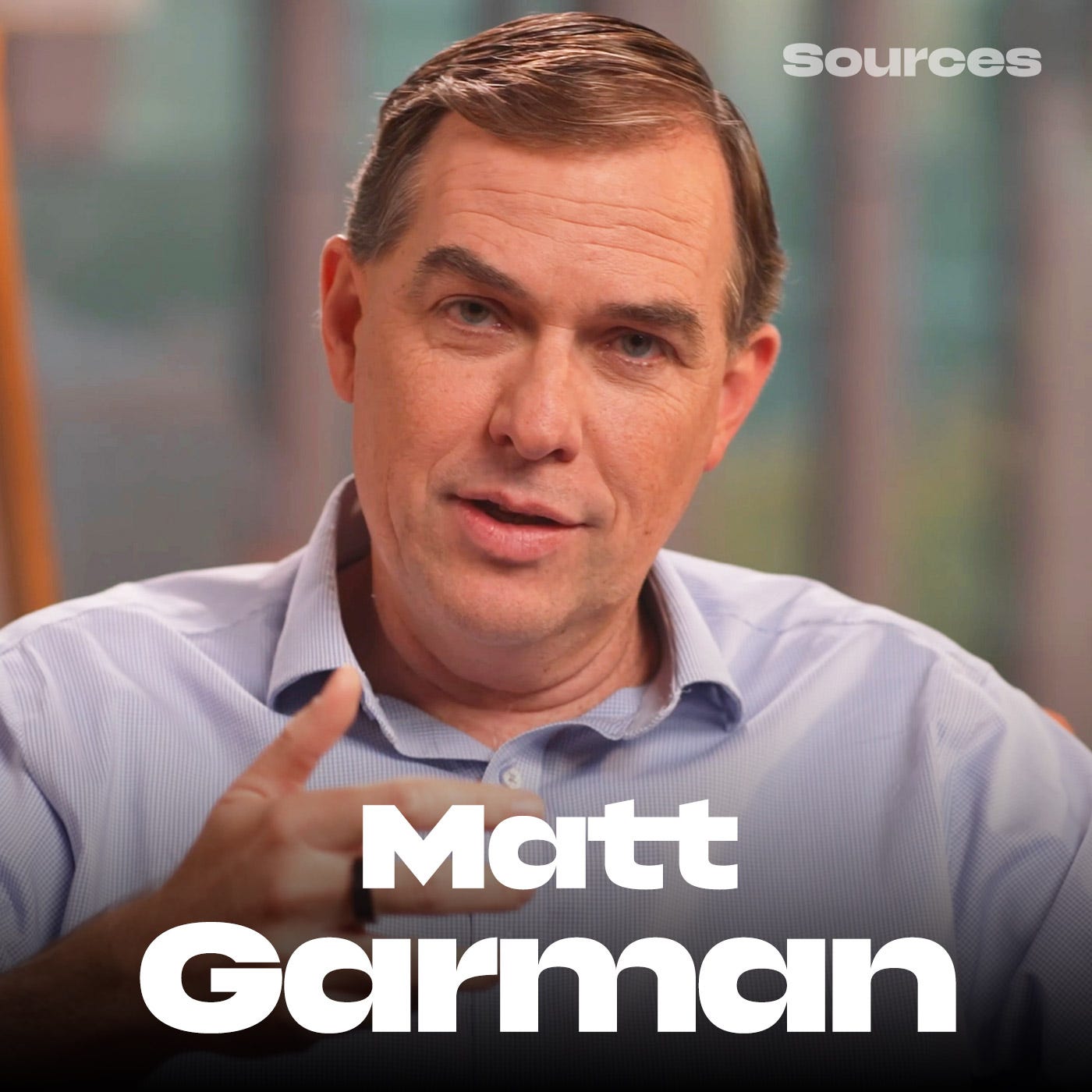
Amazon thinks its cloud business could generate $1 trillion a year within the next five to ten years. I sit down with AWS CEO Matt Garman in Seattle to understand what gives him that confidence and what could get in the way. Garman explains how AI is pushing companies to move their core operations into the cloud, accelerating the business AWS spent two decades building. We discuss why he thinks inference, the computing required to run AI models, is still below 1 percent of its eventual scale. He says AWS is adding one GPU every 14 seconds and expects capacity shortages for another couple of years. I ask how he decides who gets the GPUs, why he holds capacity back for startups that don’t exist yet, and where he sees risk in the industry’s spending. Recorded right after the midterm elections, our conversation also covers the backlash against data centers, what the industry needs to do to win over communities, and why he sees deserts as more promising than space. I also ask about the rese
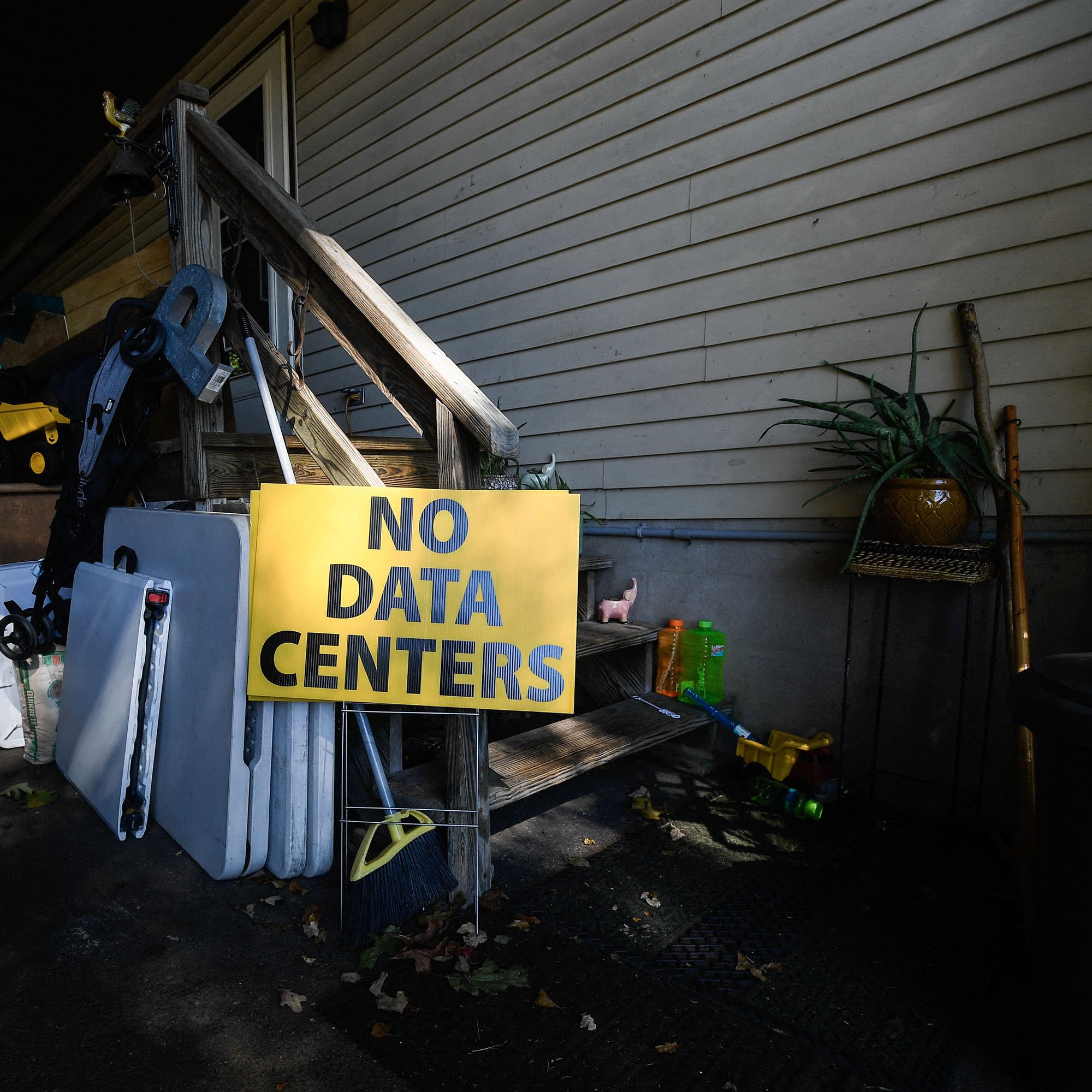
Many communities across the country voted last week to ban or limit data center development. Elsewhere, people have to rely on local elected officials to make data center decisions for them, and in many places — like Bessemer, Alabama — they’re not happy with those decisions. There, a mayor’s been ousted, a swath of local forest has been cleared, and dozens of people are debating whether to move. Also on the show: hotter-than-expected inflation and a look at debts in collections. Every story has an economic angle. Want some in your inbox? Marketplace Morning Report is more than a radio show. Stories from this podcast: Alabama residents weigh fighting or fleeing new data center (https://www.marketplace.org/story/2026/11/10/alabama-residents-weigh-fighting-or-fleeing-new-data-center)
MLB labor talks are ongoing and a prominent name to follow is Andrew Miller. A former player of mine. He’s playing an important role for the union during these round of talks. (11:10) Looking at the free agent market - we look for lefties. We’ll focus on Alex Vesia. (24:00) The Texas Rangers are looking to make moves. Could deGrom be traded? Could Seager be traded? (33:02) Rookie of the Year announcements happened. Managers happen tonight. And Wednesday we have Cy Young. (38:10) Is Seattle getting an expansion team in the NBA or not? (47:30) NBA All-Star game in Miami? It’s happening.
Many communities across the country voted last week to ban or limit data center development. Elsewhere, people have to rely on local elected officials to make data center decisions for them, and in many places — like Bessemer, Alabama — they’re not happy with those decisions. There, a mayor’s been ousted, a swath of local forest has been cleared, and dozens of people are debating whether to move. Also on the show: hotter-than-expected inflation and a look at debts in collections. Every story has an economic angle. Want some in your inbox? Marketplace Morning Report is more than a radio show. Stories from this podcast: Alabama residents weigh fighting or fleeing new data center (https://www.marketplace.org/story/2026/11/10/alabama-residents-weigh-fighting-or-fleeing-new-data-center)
How do you build a £1 billion business in the UK? James Whittaker, Deutsche Bank’s head of wealth management business in the UK and Nordics, asked two founders who succeeded – Sir Richard Harpin, founder of HomeServe and host of the Business Leader podcast, and Greg Jackson, founder and CEO of Octopus Energy. Do founders need to study at university, think globally, stay focused on the core business or even do without an HR department in order to achieve unicorn status? Jackson argues for more investment in British businesses, warns of a £2 trillion gap in pension fund investment in British companies and calls for a 100-day plan to fix it. Harpin calls for stamp duty on shares to be scrapped to revive the London Stock Exchange, explains why he refused to sue a HomeServe copycat in India, and argues for investment to help scale-ups accelerate from £100m to £1bn. Plus: why entrepreneurship “isn’t good for you” and “it’s not a rational decision”, AI’s impact on the next generation of unico
The Supreme Court struck down the IEEPA tariffs in February, so why are Americans still paying tariffs? The administration replaced them, first with temporary Section 122 tariffs and now with 10 to 12.5 percent Section 301 tariffs on nearly every US trading partner. Kyle sits down with cohost Erica York to catch up on tariff policy. Together, they look at how tariffs may cancel out the investment boost from full expensing and discuss the ongoing court cases that could still strike down the new tariffs. 0:00 Intro 0:30 Where tariffs stand after the IEEPA ruling 1:50 Industry-specific tariffs under Section 232 3:05 The trade fight with Canada and Section 338 tariffs 4:45 What could come next from China tariffs 5:10 Are importers getting IEEPA refunds? 7:50 Why consumers aren’t getting refunds 11:40 How workers pay for tariffs 12:55 Are foreign exporters paying some of the cost? 14:55 The $5,000 tariff dividend 17:10 How tariffs affect investment 20:00 Lessons from the 2018 trade war 21:3
What happens when a piece of mail or a package doesn't arrive when and where it's supposed to? In this episode of Mailin’ It!, hosts Karla and Jeff explore the fascinating world of the USPS Mail Recovery Center, where dedicated employees work to reunite undeliverable mail with its intended recipients or senders. Joining the conversation is the Executive Manager of the Mail Recovery Center, who explains their mission to “complete the delivery cycle.” From damaged labels and incomplete addresses to packages separated from their contents, the team carefully examines items, researches clues, and uses specialized technology to identify their rightful owners. The discussion also explores the center’s history, tracing its origins to the Dead Letter Office and the early days of the Postal Service. They explain how the recovery process has evolved, including computerized matching systems, missing mail search requests, and auctions for items that cannot be reunited with their owners. Listeners w
This episode was sponsored by Cardiff LightSpeed VT: https://www.lightspeedvt.com/ Dropping Bombs Podcast: https://www.droppingbombs.com/ Today's Dropping Bombs episode features Trevor Jacob, the Olympic snowboarder who went pro at 13, then jumped out of his own airplane on camera and watched it crash. What came next was worse: a 15-mile crawl through poison oak, a lawyer's advice that turned one stunt into a federal case, and a setup drug test that landed him in solitary confinement. He also shares what he experienced in that cell and how it changed what he believes. He had the money, the sponsors, and the fame, then one decision put him up against 80 years. Now he's rebuilding from zero and calls it one of the best things that ever happened to him. Press play and find out why. Connect with Trevor Instagram: https://www.instagram.com/trevorjacob YouTube: https://www.youtube.com/@trevorjacob Additional Resources Mentioned Outwitting the Devil by Napoleon Hill Curious? Check it out: Wan
Market update for November 10th In today’s episode, Zaid covers: Why a hotter-than-expected inflation report has investors bracing for a bigger Fed rate hike Anthropic’s IPO price range, and why the valuation came in lower than expected Take-Two climbs ahead of the GTA 6 launch Rocket Lab’s growing backlog and falling stock What’s behind On Holding’s post-earnings slide The $10 billion TV franchise nobody talks about
Carl Quintanilla, Jim Cramer and David Faber delved into Anthropic's updated IPO filing: The AI giant set a price range between $70 and $78 per share — and outlined plans to price the IPO and go public next week. The company could end up being worth up to $1.4 trillion on a fully diluted basis. The anchors also discussed the future for Nvidia: Shares extended Monday's losses on news of the company's investigation into CEO Jensen Huang's relationship with a suspected Chinese spy. On the inflation front: October CPI came in hotter-than-expected — and Fed Governor Christopher Waller said he supports a December interest rate hike. Also in focus: Why SoftBank shares surged 13%; Skydance tumbles after its first earnings report since the Paramount-WBD merger; CoreWeave earnings preview. Squawk on the Street Disclaimer (https://urldefense.com/v3/__https:/www.cnbc.com/squawk-on-the-street-disclaimer/__;!!HqJSLGM!uCnRzL8sw0zDv24y-5sOIFUC0pgExA9JnNMmwWkZd5mUIQJQpFQRdlNhw1zMYFFYNdQOPGVM3L-r8djVB-J
Checkout ASUS ExpertBook Series: https://www.flipkart.com/bbd-eb-intrigue-at-store Get your hand-picked playbook here: https://www.figuringout.co/pdf/fo-586 Guest Suggestion Form: Order 'Build, Don't Talk' (in English) here: https://amzn.eu/d/eCfijRu Order 'Build Don't Talk' (in Hindi) here: https://amzn.eu/d/4wZISO0 Follow Our Whatsapp Channel: https://www.whatsapp.com/channel/0029VaokF5x0bIdi3Qn9ef2J (00:00) — Intro (03:30) — What Makes High Performers Different? (17:35) — How to Stop Rumination & Find Motivation Beyond “I Should” (23:55) — Guilt, People-Pleasing & Learning to Want What You Truly Want (45:30) — How to Change Your Inner Narrative & Build Healthy Ambition (1:03:01) — How to Discover Who You Really Are (1:33:30) — Reconnecting With Your Body: Emotions, Relationships & Marriage (1:44:48) — Emotional Literacy: Understanding Anger, Sadness, Guilt & Shame (1:53:03) — How to Feel Your Emotions Without Being Controlled by Them (2:00:59) — Rejection & the Cycle of Self-Critici
As frontier AI labs expand into applications, where should startups build? a16z Partner Joe Schmidt joins HubSpot co-founder and CTO Dharmesh Shah to explore why the software opportunity is growing, and how founders can stay off the “Yellow Brick Road” the labs are racing down. Drawing on HubSpot’s evolution, Dharmesh explains why founders should start with a narrow market, learn quickly, and solve the whole customer problem. They discuss where application companies can build lasting value as models become infrastructure: workflows, customer context, and the systems where work happens. They also explore HubSpot’s AI experiments, the rise of one-person businesses, and why cheaper software creation could unlock markets that previously couldn’t support a software company. Resources: Follow Dharmesh Shah on X:https://x.com/dharmesh Follow Joe Schmidt on X:https://x.com/joeschmidtiv Read Joe’s essay, “Avoiding Death on the Yellow Brick Road”: Stay Updated: Find a16z on YouTube: YouTube (htt
Scott Melker is joined by Joseph Chalom, co-CEO of SharpLink and former head of digital assets strategy at BlackRock, to explain why Bitcoin sat out Monday's market-wide rally, from a hotter-than-expected CPI print to Bitcoin and crypto macro, ETF flows and miner selling. The panel covers rising odds of a December Fed rate hike, tokenization of stocks and stablecoins, why Bitcoin and Ethereum are trading with risk assets, ETF flows, Marathon and Riot selling Bitcoin, AI data center politics, and Charles Schwab adding prediction markets and altcoins. In this episode: 00:00 Why Bitcoin missed Monday's rally 00:50 Hot CPI print and rate hike odds 05:51 Tokenization, stablecoins and BlackRock 13:24 ETF flows and buying the dip 20:56 Miner selling and weak retail demand 25:58 Bitcoin, Ether and stock correlation 28:28 AI data centers and the midterms 40:00 Tokenized assets as collateral 43:20 Schwab prediction markets and altcoins 51:40 Automating trades on volatility Joseph Chalom on X: ht
In this episode, you'll learn Why batteries now act as capacity on the grid, with solar and wind as the fuel that refills them Why data centre developers that bet on natural gas are now paying for batteries and demand flexibility How home batteries can back up a whole grid, and why generators cost households money while solar and storage save it Why appliance makers, carmakers and tech companies want to be paid for the flexibility in the devices people already own How the Loan Programs Office picked winners, and why lasting change takes a ten-year commitment Chapters 0:00 - Energy's most disruptive year 1:16 - Energy costs on the ballot 2:53 - Why data centres are buying batteries 4:57 - Grid storage is already here 7:05 - Batteries at home 11:04 - Central power or local power? 14:40 - Every appliance wants a piece of the grid 17:16 - Lessons from the Loan Programs Office 21:35 - Where electrification goes next 23:55 - John's takeaways Previous Disruptors Episodes Powering Canada: Elec
Gold just recorded its worst month in thirteen years, falling 12 per cent, yet the largest investment banks remain positive on the metal. Felix Nikolas Prehn walks through recent research from UBS and Goldman Sachs, explaining that the sell-off was driven by a liquidity squeeze rather than deteriorating fundamentals. Hedge funds sold gold to cover leveraged losses elsewhere, while central banks continued buying for a fifteenth consecutive month. China launched a programme allowing insurance companies to allocate up to 1 per cent of assets to gold, a move UBS says has not yet been fully deployed. The reports cite stagflation risk, a weakening dollar, likely interest rate cuts and rising government deficits as structural supports for the metal. Prehn outlines a three step framework for evaluating any asset: track institutional positioning, watch for contrarian signals when the crowd panic sells, and assess whether the long term trend remains intact. In this episode: 00:00 Wall Street res
Today’s word of the day is ‘augmentation’ as in the College Football Playoff as in expansion as in ESPN as in the future. It is here. 24-team playoff. New rules. Bad for the small schools, great for the power conference schools. (9:42) NFL trade deadline is here! The Jaguars went all in on Monday with a trio of trades. All on the defensive side of the ball. Let’s talk about the idea of going all in and trading away picks for players. (26:45) Dianna Russini is back. She’s launching her own show on Wednesday. A PR blitz in People Magazine. Questions remained unanswered. But it’s her life. (37:50) Review: Charlie Harper. (39:45) NPPOD. (45:40) We need to talk about NVDIA. It’s the biggest story in the country right now.
This week we're joined by Dundee-based game developer 4J, the creators of the Minecraft: Console Edition, to discuss its new Minecraft-rival: Reforj. The team, which includes legendary Minecraft YouTuber Joseph Garrett (aka Stampy), believe that Minecraft is a genre, and that there's room for another one built for modern audiences. We also chat the arrival of AI prompt-based platforms like Meta Horizon, the state of video game financing, going from YouTube to game design, when to listen (and not listen) to the community, and a whole lot more. Enjoy! This is a public episode.
From deposits and pre-approvals to offset accounts and paying off your loan, there's no shortage of misconceptions around mortgages. On this episode of the Friends With Money podcast, Money's Tom Watson is joined by Jack Elliott, mortgage broker and national first home buyer specialist at Alcove and First Home Unlocked, to bust some of the most common mortgage myths. 00:00 Introduction 01:48 Do you need a 20% deposit to buy a home? 06:38 Does mortgage pre-approval guarantee loan approval? 10:22 Is the lowest home loan rate always the best deal? 13:36 Are offset accounts always worth it? 17:29 Should you pay off your mortgage in full if you can? 19:31 Conclusion #friendswithmoney #tomwatson #jackelliott #mortgagesPodcast Links: Listen on Apple Podcasts (https://apple.co/3mV0Cbr) Listen on Spotify (https://spoti.fi/3fSPI2h) Money Website (https://moneymag.com.au/) Email Us: [email protected]
Gold has served as money for five millennia, yet most people misunderstand its role in a modern portfolio. In this episode Felix Nikolas Prehn, economist and former investment banker, argues that gold is not an investment but a store of value, a measuring stick that exposes the declining purchasing power of fiat currencies. He traces the history from the Bretton Woods agreement through the 1971 Nixon shock, showing how the US dollar has lost roughly 93 per cent of its value since the gold link was severed. He then examines why central banks bought over 1,000 tonnes of gold in 2025, driven by de-dollarisation, sanctions risk and sovereign debt concerns. Felix concludes that gold functions as a lie detector for governments and that the current macro shift deserves serious attention. In this episode: 00:00 Why every major civilisation chose gold as money 02:00 Properties that make gold suited to be money 05:00 Gold is a store of value, not an investment 08:50 Bretton Woods and the dollar
In today's episode the boys talk about Ben's stolen BMW finally being found and the story behind getting it back. Spenny makes a big purchase and buys himself an Audi R8, while Micah adds another toy to the collection with his new buggy. Then we get into the Hoonicorn making an appearance at SEMA, the Cboys considering buying a human drone and whether it would actually be worth it, and more. Enjoy! Ridge's biggest sale of the year is here! Don't sleep on [@ultrapouches]. To watch the podcast on YouTube: https://bit.ly/LifeWideOpenYT
During the 1960s, Czechoslovak intelligence trained Karel Koecher to enter the United States and seek employment within American intelligence organizations. His eventual position as a CIA translator demonstrated how a long-term clandestine operation could exploit ordinary professional recruitment. This episode examines the strategic planning, intelligence objectives, and operational risks associated with placing an illegal intelligence officer inside an adversary’s security establishment. CIA