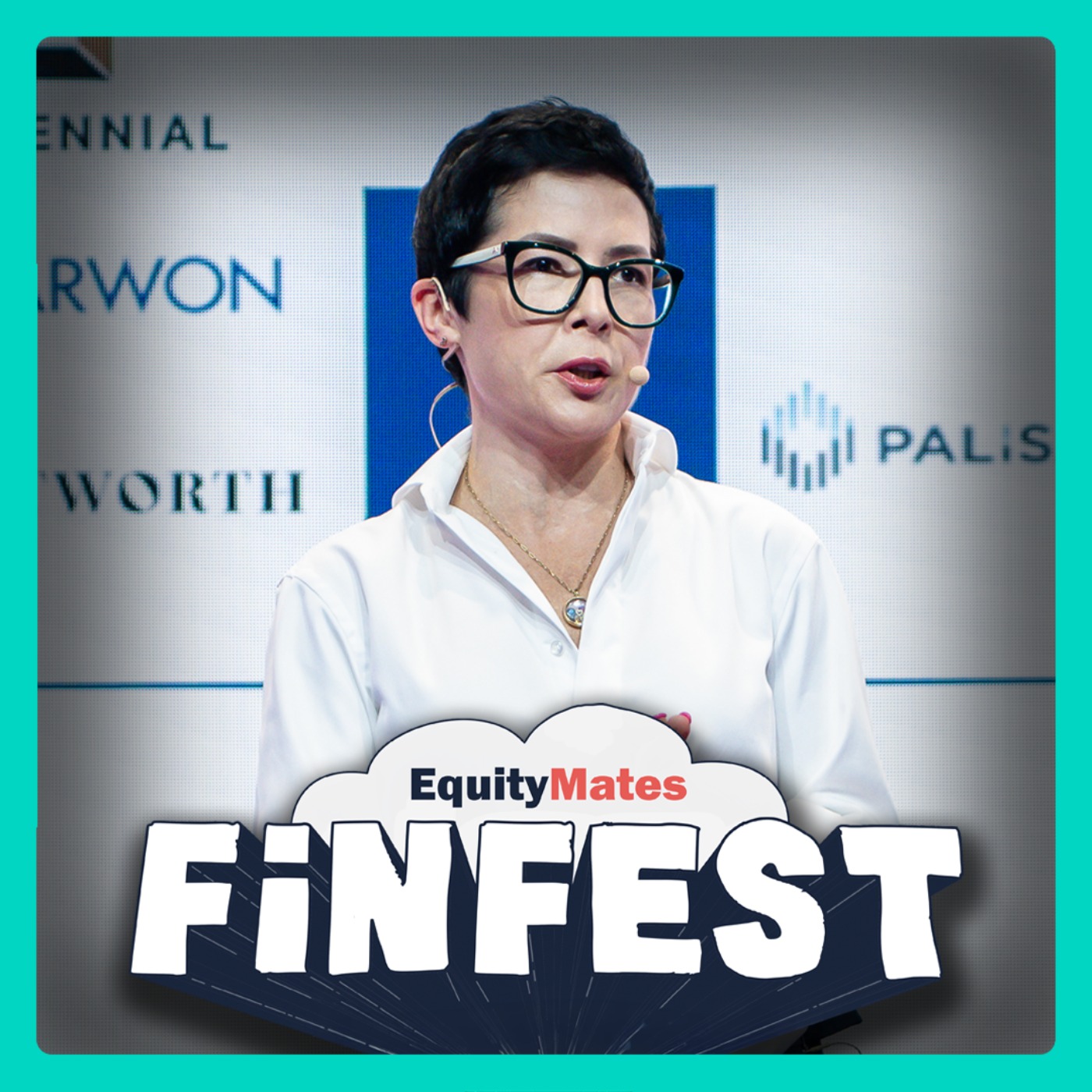
Welcome to FinFest Week 2026, proudly brought to you by Betashares. Over the coming week we’re releasing 10 of our favourite sessions, recorded live at FinFest, Australia’s largest finance festival. Next up, Alternatives: The Investments You’ve Never Considered with Dania Zinurova, Investment Committee member at WAM Alternative Assets Limited (ASX: WMA), who has spent more than 20 years investing in private markets around the world. Beyond shares and property there’s a whole world of investments like infrastructure, private equity and private debt, and Dania explains how they work. Missed a session on the day? We’re getting all 43 FinFest sessions ready to release on our YouTube channel by 30 November. Want to be there next year? Join the FinFest 2027 waitlist here (https://x40s1z0ymjt.typeform.com/to/l84UhoSZ). A big thank you to all of our FinFest partners, including this session’s stage sponsor, Sustainable Life Solutions. In this episode: 00:00 Investments You've Never Considered 0
What if your first pay cheque came straight out of the ground? Growing up in Kalgoorlie, Western Australia, today's guest Tyler Mahoney was paid in gold. As a fourth-generation gold prospector, she learnt early that making money meant working hard, and some days it was baked beans, other days it was lobster. At 19, Tyler packed up her life and moved to Melbourne to start a jewellery business. After building multiple businesses, taking on $20,000 in credit card debt and eventually finding her way back to gold, she realised something was missing from her financial future. Despite growing up surrounded by gold, Tyler knew she wanted to diversify. So in 2023, she taught herself how to invest in the share market, bought her first ETF and started building a portfolio. But Tyler's biggest motivation goes beyond building wealth. After experiencing financial control in a past relationship, she made herself a promise: she'd never let someone else have power over her financial future again. From
As buyers search for better value, regional coastal markets are gaining attention. Craig talks with Andrew Kibbis about why Clifton Springs, Curlewis and Indented Head appeal to buyers balancing location, property size and budget. The discussion explores affordability and the demand supporting coastal communities across Victoria’s Bellarine Peninsula. ► Email: [email protected]
Full post: https://natesnewsletter.substack.com/p/ai-agent-cost-worth-it?utm_source=podcast&utm_medium=podcast&utm_campaign=ai-agent-cost-worth-it-launch&utm_content=show-notes (https://natesnewsletter.substack.com/p/ai-agent-cost-worth-it) What is an AI agent’s work actually worth? An agent’s serving cost and the value it creates are different questions. In this episode, Nate looks at how to find work worth paying for: the meeting nobody can resolve, the report everyone inherits, and the internal idea that needs a small working prototype. The practical test is whether your agent creates clarity, saves meaningful effort, and produces a result you can point to. Include your own checking time and the full cost of the tools, then decide where more time or money makes sense. Hosted on Acast. See acast.com/privacy for more information. Hosted on Acast.
Canva has announced the biggest organisational shake-up in its history, with 1,271 people, or 22% of its global workforce, affected by redundancies, role changes and relocations. It comes after a brutal year for Australia's biggest private technology company. Reported internal figures suggest Canva's annualised revenue has stalled around US$3.7 billion while monthly active users have fallen by 12 million year-on-year, as increasingly powerful AI tools challenge its core design business. Adam and Adir jump on for an emergency episode to unpack what the restructure really means, why Adir thinks this could be a move for survival rather than simple cost-cutting, and how AI has changed the economics of Canva's famous freemium model. They also discuss what a major Canva downturn could mean for Australia's technology ecosystem, the dilemma facing employees holding private Canva stock, whether the company missed its "golden window", and what Mel Perkins and Cliff Obrecht need to do next. CHAPT
You can spend weeks perfecting your logo and still be forgettable. One creative consultant gets recognised for a giant napkin, while people with around 4,000 followers have written books. When it comes to building a personal brand, being memorable and being popular aren't always the same thing. So what makes people think of you when an opportunity comes up? In this episode, Emma and Tash reflect on building their own personal-brand businesses, including the parts that happened by accident. They explore how to find your perspective, test what connects with people, navigate a brand that changes as you do, and build a reputation that can open doors well beyond social media. In this episode we'll discuss: Why 18 versions of a logo can't replace having a perspective people recognise. How a creative consultant's giant-napkin project became more memorable than a list of clients. Why a finance book with a chapter on cellulite cream made sense for a millennial audience. How "spending runway" an
On episode 247 of Ask The Compound, Ben Carlson and Duncan Hill discuss: at what age would you start adding bonds to your portfolio, how to view the trade-off between simple and complex portfolios, how much should you put down for a down payment on your dream home, whether it’s possible to live off dividends without selling your stocks, how to save for a future down payment, and more! Compound Merch: https://idontshop.com/ Submit your Ask The Compound questions to [email protected]! Watch this episode on YouTube: https://youtube.com/live/XQytCd9MEcIhttps://youtube.com/live/XKCs_f3N60Ihttps://youtube.com/live/U4yAJyFix0Ahttps://youtube.com/live/Pdsz1TMqzaUhttps://youtube.com/live/yH9cacCaD-Uhttps://youtube.com/live/VwN6X_4HrCUhttps://youtube.com/live/3X7c-_oUuw4https://youtube.com/live/OvHhlBIyZg0https://youtube.com/live/6DGaiTy4CZIhttps://youtube.com/live/3k_gjvxSbHghttps://youtube.com/live/HZNW1GIw-h4https://youtube.com/live/DxGEI0P-tyghttps://youtu.be/3d9T8ySPzeMhttps://yo
Ever had a redback spider bite you on the pecker? OR maybe accidentally snacked on a fun brownie at work? Some ripper yarns today that make us have a great laugh. Enjoy legends. Bush Pig Campfire Whiskey Liqueur will be launching soon, make sure to stay connected on the socials to keep up to date: https://www.instagram.com/bushpigwhiskey/ Got a yarn for Talkback? Email it to [email protected] Ever wanted to watch the Podcast? Better Beer: Jog in a can, win in a tin, the athletes choice. Use the Punter's Toolbox for extra value and protection. Get amongst it on the Neds app. T&Cs apply see website for details https://www.neds.com.au/. You Win Some You Lose More. Portwest: Tough workwear for tough jobs. 0:00 - Intro 1:10 - Knuckles Proper True Yarn 7:00 - Carry Ons 59:00 - Winning Yarn Hosted on Acast.
Midterm election results eased uncertainty, lifting stocks while yields and oil prices declined. Blue sweep raises questions about future defense spending, energy policy, AI data center development, and potential regulatory scrutiny of Tesla and SpaceX. ARM, Qualcomm, and other major earnings. Show Notes Oil prices slide as Trump plays down prospect of Iran strikes after U.S. election rout (https://seekingalpha.com/news/4664819-oil-prices-slide-as-trump-plays-down-prospect-of-iran-strikes-after-us-election-rout?source=ie_podcast%3Auncertainty_removed_optimism_returns) Musk eyes data centers in orbit, not Texas (https://seekingalpha.com/news/4664799-hes-choosin-space-musk-eyes-data-centers-in-orbit-not-texas?source=ie_podcast%3Auncertainty_removed_optimism_returns) Blue Wave: What it means for AI, corporate oversight and U.S. fiscal outlook (https://seekingalpha.com/news/4664479-blue-wave-midterms-deep-dive?source=ie_podcast%3Auncertainty_removed_optimism_returns) Episode transcripts: s
This episode was sponsored by Cardiff & Labor to Legacy LightSpeed VT: https://www.lightspeedvt.com/ Dropping Bombs Podcast: https://www.droppingbombs.com/ "A $200K job is a prison. They pay you just enough to keep you there." This Dropping Bombs episode features Christopher and Chandler Terrell, the husband-and-wife founders of Labor to Legacy and The Co-Founder Marriage. Christopher is walking away from high-voltage power lines to chase ownership, and Chandler held down her own six-figure career while their business nearly destroyed what they thought was a perfect marriage. They break down the best friend turned employee who quit at peak season and launched a rival, the ultimatum that saved their marriage, the power struggle over who reports to whom, and why "special energy" decides whether a couple survives. Your business is either your marriage's biggest asset or its slowest killer. Find out which before your spouse does. Connect with Christopher & Chandler Co-Founder Marriage IG:
Michael Howell of CrossBorder Capital explains why slowing global liquidity could challenge stocks even as AI earnings remain strong. His concern is a growing competition for funding: money is flowing into real-world investment just as a huge wave of existing debt needs refinancing. With Jack Forehand and Justin Carbonneau, Howell walks through his liquidity cycle, the role of collateral and repo markets, and why he believes government bonds deserve another look. He also discusses the difference between declining liquidity growth and an outright contraction, the risks of financing the AI buildout, and how China's debt problems could shape the longer-term outlook for gold. Topics covered: - How Michael Howell measures global liquidity as the financial system's capacity to provide funding - Why a strong real economy can compete with financial markets for money - The four phases of the liquidity cycle and the shift from speculation toward turbulence - Why bank reserves, Treasury issuance,
Nathan sits down with investors Nathan and Annette, a couple from regional NSW who started with $200,000 and built a portfolio of eleven properties in two and a half years on combined incomes of around $80,000. They talk through how they did it, the properties they almost didn't buy, and what the journey actually looks like from the inside when you are doing it on an average wage. 00:00 - Intro: eleven properties, average income, two and a half years 04:00 - How it started: watching Facebook Lives and backing the strategy 09:00 - The broker who said don't invest during COVID and what happened next 14:00 - The Gold Coast apartment bought for $260K now worth $770K 19:00 - The property nobody wanted: three bedrooms for $163K at $400 a week 24:00 - Favourite vs least favourite property and why the numbers are all that matters 29:00 - How equity works to leapfrog the portfolio without saving harder 33:00 - The loneliness of winning when nobody around you gets it 36:00 - Getting the next gen
What happens when a Miami chef builds a successful restaurant, lands on national television, and decides it's time for something completely different? In this episode of Just the Tip, Felix Bendersky sits down with Mika Leon, the Miami-born Cuban-American chef, entrepreneur, and television personality known for her creative approach to Cuban cuisine. Mika's journey didn't start in a professional kitchen. With a background in public relations, business, and content creation, she turned her passion for Cuban cooking into a food truck and eventually a brick-and-mortar restaurant. Along the way, she landed appearances on Food Network's Beat Bobby Flay, worked on television projects, and earned an Emmy nomination. But success doesn't always mean staying on the same path. Felix and Mika discuss the realities of running a restaurant in Miami, why she stepped away from restaurant ownership, and how she's embracing a new chapter focused on family, content creation, and her cookbook, Cuban Soul.
C3 Metals CEO Dan Symons discusses the highest-grade hole yet at the Khaleesi copper project in southern Peru, 64.9 metres at 3.45% copper equivalent including 23.3 metres at 6.64%, and says holes 006 and 007 from the same pad are mineralized with assays pending. Symons says first metallurgical test work is about to begin, with results in four to six months, and will test a copper flotation flowsheet that could add an iron concentrate from the magnetite skarn. In Jamaica, a deep-drilling rig has arrived to start about 11,000 metres of Freeport-funded drilling at Bellas Gate by month end, with first assays expected late in Q1 2027, while results from the Pennants gold joint venture are due this month.
In this episode, Scott Hanselman (https://www.linkedin.com/in/shanselman/) and Mark Russinovich (https://www.linkedin.com/in/markrussinovich/) explore new AI security research revealing how smaller, unrestricted models can leverage more powerful AI systems to complete tasks those systems would normally refuse. Mark breaks down the research, its surprising results, and the potential security risks of AI models working together without understanding the bigger picture. Plus, Scott shares his approach to managing multiple AI agents, and the two discuss the challenges of keeping AI-powered development secure and efficient. Takeaways: Why breaking complex tasks into smaller pieces creates new AI security risks How Scott uses AI agents to manage development tasks and reduce workload What Mark’s latest research reveals about vulnerabilities in AI systems Who are they? View Scott Hanselman on LinkedIn (https://www.linkedin.com/in/shanselman/) View Mark Russinovich on LinkedIn (https://www.link
We break down the impact of the midterm elections on tech, banks and the health care space. Then, Circle CEO Jeremy Allaire joins us to discuss the company's latest earnings, the impact of the recent Binance heist and more. Plus, we break down why CVS is splitting into two separate companies. Squawk on the Street Disclaimer (https://urldefense.com/v3/__https:/www.cnbc.com/squawk-on-the-street-disclaimer/__;!!HqJSLGM!uCnRzL8sw0zDv24y-5sOIFUC0pgExA9JnNMmwWkZd5mUIQJQpFQRdlNhw1zMYFFYNdQOPGVM3L-r8djVB-JZ4_RPwpfewNor$) Hosted by Simplecast, an AdsWizz company.
The midterm results are in, the market has taken them in its stride, and the AI trade has been through a full washout. Is this the clearing event that sets up a bounce, or is there more pain to come? In this episode of The Long & Short, Rich McDonald joins live from Rome as he and Piers Buckworth unpack what the midterm results mean for markets, why the AI trade has moved from overbought to oversold, and what earnings from Intel, AMD, Apple and Palantir are telling us. They also explore Marvell's controversial bid for Lumentum, the stocks Piers is watching for a risk-on rally, and which of the big tech names came out of earnings season on top. In this episode: What the midterm results mean for markets, and how much was already priced in Why uncertainty is a killer for markets, and what a clearing event looks like How hedge fund liquidations have washed out the AI trade What went wrong at Intel, and whether the sell-off is now an opportunity Why AMD is winning, and the AMD vs NVIDIA pai
Luxury’s best salespeople have always been in demand, but the stakes have changed. As AI automates more of the shopping experience and price hikes strain loyalty, retailers are leaning harder on the one thing a machine can’t replicate: a human salesperson who knows exactly what their clients want. From Nordstrom’s uncapped commissions to Bloomingdale’s dedicated personal shopping suites, the perks on offer for top sellers who can single-handedly move millions of dollars in merchandise show just how valuable the talent has become. In this episode, senior correspondent Sheena Butler-Young is joined by BoF’s retail editor Cathaleen Chen to discuss why luxury’s top salespeople have become some of the industry’s most coveted talent, the lengths retailers are going to attract and retain them and what the high-profile move of stylist Catherine Bloom from Neiman Marcus to Nordstrom reveals about the increasingly competitive market for elite sellers. Key Insights: Nordstrom’s recruitment of for
How did the race to build AGI really unfold, and who made the decisions that shaped it? Tech journalist Kevin Roose interviewed 150 people at the center of the AI industry to find out. The result is The AGI Chronicles, a riveting account of how modern AI was built and the choices that will determine what comes next. On this week’s episode of The Every Podcast, Natalia Quintero sits down with Roose to talk about how he got a secretive industry to open up, how he did (and didn’t) use AI in his book writing process, and why he sees his job as explaining the “very confusing and insular” world of Silicon Valley to everyone else. Links to resources mentioned in the episode: Follow Kevin Roose: https://x.com/kevinroose Get Kevin Roose’s book, The AGI Chronicles: https://theagichronicles.com/ Machine Gods: https://www.npr.org/podcasts/g-s1-143588/machine-gods “The Big Blob of Compute Hypothesis” excerpt on Kevin’s Substack: https://kevinroose.substack.com/p/the-essay-that-started-the-ai-race P
Donald Trump's Republicans have suffered a major defeat in the US midterm elections, with Democrats taking control of both the House and Senate. But while markets initially plunged on fears over the future of the AI boom, stocks have staged a remarkable comeback. So why are investors celebrating a result that could derail Trump's economic agenda? In this episode, Anthony Cheung and Piers Curran break down the market reaction to the Democratic blue wave, explaining why US Treasury yields have fallen, Big Tech stocks are rallying and investors are increasingly viewing political gridlock in Washington as a potential positive for financial markets. We also explore what the election means for the AI infrastructure boom, including proposed restrictions on data centre construction in Texas, the surge in renewable energy stocks and the implications for oil prices as pressure mounts on Trump over the Iran conflict. Could a divided US government actually create the perfect conditions for another
“We have approximately 2% market penetration of AI tools. That was all it took to sell out the entire planet’s compute.” Harry Sudock, Chief Business Officer at CleanSpark, returns to discuss why Bitcoin miners are moving into AI and why that could make Bitcoin stronger. We get into the economics driving the shift, what it means for mining decentralisation, and why Harry believes demand for AI compute is only getting started. We also discuss the backlash against AI data centres, including concerns about electricity prices, water consumption and noise. Harry explains why he believes building more power could lower energy bills, how data centers can benefit local communities, and why he would start an energy company today. BitGo - Secure your Bitcoin with institutional grade security. AnchorWatch - Insured Bitcoin custody, security & inheritance. Book a consultation: Abundant Mines - Bitcoin mining made simple. https://abundantmines.com (https://abundantmines.com/) FOLLOW: Danny Knowles:
You want to leave your job and build something of your own. While you prepare, is your current paycheck helping you test that next chapter? In this episode of The Level Up Podcast, Paul Alex explains how to give present income a deliberate role in a business transition. He built his ATM business while he was still a detective, before resigning from law enforcement. Paul walks through protecting the money your responsibilities require, choosing a small business test, and setting a spending limit that fits your situation. He also discusses evaluating expenses, respecting your current job, and reviewing actual customer and delivery results before taking the next step. In this episode, you’ll learn: • Why the order of Paul’s transition matters. • How to separate household needs from a business experiment. • Which questions make a small test useful. • Why your next decision needs your own results and numbers. The truth is simple: Frustration with a job does not replace preparation. Know wha
Your grocery bill, insurance premium, and home maintenance costs can tell a very different story from the headline inflation rate. Don and Tom explore why rising prices hit households differently, how lifestyle creep quietly absorbs pay raises, and why a diversified investment portfolio matters when protecting long-term purchasing power. A listener nearing retirement asks whether an annuity or a change to her target-date portfolio makes more sense. Plus, why a fixed bond payment can fall behind an inflation-adjusted retirement spending plan, and what to consider when comparing international funds from Fidelity, Vanguard, and Avantis. 0:44 Christmas trees and the price of everyday life 2:18 Why your inflation may feel higher 5:30 Making sense of CPI and PCE 10:06 Lifestyle creep and long-term purchasing power 14:45 A listener weighs annuities and portfolio changes 26:07 Fixed bond income versus rising withdrawals 28:14 Comparing international funds 33:05 Big-screen bargains and the valu
This week I want to look at what the first ten months of 2026 can teach us about how we invest — and why broad diversification keeps looking like the smartest seat in the house. I start with a Ben Carlson piece from November 1. If you’ve been picking individual tech and AI stocks lately, it has felt like a bloodbath: Google down more than 30% from its highs, Intel off 54%, Netflix down more than 50%, and a long list of others in the penalty box. And yet the S&P 500 is still up almost 12% on the year, with two-thirds of stocks higher. That gap is the whole case for index funds — and the same logic applies to equity asset classes. From there I go down my favorite rabbit hole: the year-to-date numbers for Vanguard, Avantis and DFA across large, small, value, REITs, international and emerging markets — and what the differences between “traditional” cap-weighted indexing and the factor-based approach at Avantis and DFA may, and may not, be telling us. I also dig into combination funds. How