NAB'sTuesday 10th November 2026 Phil and NAB's Ray Attrill unpack a strong risk-on session across global markets, led by a sharp 2.5% rebound in the Nasdaq and a steep decline in crude oil, with Brent sliding nearly 5% toward US$93.50 a barrel as Middle East de-escalation hopes take center stage. The semiconductor space saw dramatic divergence: while Nvidia dropped almost 5% following sensational allegations involving CEO Jensen Huang, rivals AMD and Broadcom surged 12% and 9% respectively, lifting the Philadelphia Semiconductor Index more than 6%. Elsewhere, Chinese inflation prints highlighted ongoing domestic disinflation with headline CPI at 0.7% year-on-year, even as upstream PPI rose 5.7%. Domestically, the Australian dollar pushed back above 69 US cents ahead of today's key NAB Business Survey and Westpac Consumer Sentiment data for Australia, while investors globally brace for the crucial US CPI report due out later today. Meanwhile, European markets digest Dutch central banker
Episode 160 comes to you from another undisclosed location (air conditioned this time, so less sweat). Steve and Jacob make a public commitment: the TMM book is coming. Working title, Financial Fibs. It pulls together what Steve has learnt over 26 years of investing, what the finance industry tells you, and what the evidence actually shows. They walk through the big themes: why “you can’t time the market” doesn’t hold up when you look at valuations, the gap between the 8 to 10% returns you’re promised and what most investors really compound, why the stock market isn’t the economy, how incentives shape the advice you hear, and why stock picking is harder than the mainstream makes it sound. Want early chapters? Total Money Management | AFSL 568642.
Hoffmann v. WBI Energy Transmission, Inc. Docket No. 25-159 Argued: 11/9/26 Lower Court: U.S. Court of Appeals for the Eighth Circuit Cert Granted: 6/29/26 Question Presented The Natural Gas Act authorizes private companies to condemn land in order to build certain naturalgas infrastructure, but it says nothing about how to determine the amount of just compensation owed for the property taken. 15 U.S.C. § 717f. The Third, Fifth, Sixth, and Eleventh Circuits have all held that compensation awards in private condemnations under the Natural Gas Act must therefore be determined by reference to state law, which often mandates higher compensation than the floor set by the Fifth Amendment. In this case, the Eighth Circuit expressly split with its sister circuits and instead held that the Natural Gas Act permits only the constitutional minimum of compensation required by the Fifth Amendment. The question presented is: In private condemnations under the Natural Gas Act, should just compensation
Nielsen v. Watanabe Docket No. 25-417 Argued: 11/9/26 Lower Court: U.S. Court of Appeals for the Ninth Circuit Cert Granted: 6/22/26 Question Presented This case concerns the judicially created damages remedy first recognized in Bivens v. Six Unknown Named Agents of Federal Bureau of Narcotics, 403 U.S. 388 (1971). In Carlson v. Green, 446 U.S. 14 (1980), the Court extended Bivens to an Eighth Amendment claim of deliberate indifference to medical needs where prison officials failed to address an inmate’s acute asthma attack and exacerbated it, causing his death on-site within hours. Since then, this Court has emphasized that the creation of damages actions rests with Congress, not courts. The judicially created Bivens remedy thus cannot be extended to any “new Bivens context” if any “special factor counsel[s] hesitation” in doing so. Ziglar v. Abbasi, 582 U.S. 120, 139-140 (2017). “[T]he new-context inquiry is easily satisfied,” encompassing cases with “‘meaningful[ly]’” different fact
Chancellor John Healey has scrapped the planned cut to the cash ISA allowance, so savers can still put £20,000 a year into an ISA tax-free. But from April 2027, tax on savings interest outside an ISA rises to 24%, 44% and 49%. The new tax year starts on 6 April 2027. Unused ISA allowance is lost, pensions start counting towards inheritance tax, and the oldest year of unclaimed pension tax relief runs out. Edmund Greaves sets out what the Budget means for your money and what to check before April. He explains the changes for savers, pension holders and landlords, from the 64% tax that can hit an inherited pension to the rise in property income tax. He also looks at what's new for first-time buyers, pensioners, side hustles and student loans. Check your ISA allowance on GOV.UK: The full checklist, with every deadline, is on the Mouthy Money Substack: 00:00 What You Need to Know Before the New Tax Year 01:17 ISA Allowances and Savings Tax Changes 03:36 Pension Inheritance Tax Changes 05:3
Singapore’s Megaspeed in DOJ crosshairs (https://seekingalpha.com/news/4669102-commerce-dept-inquiry-into-chips-transferred-to-doj-after-nvidia-intervention-report?source=wsb_podcast%3Anvidia_spy_saga_takes_a_doj_turn). (0:15) Jersey Mike's makes London debut (https://seekingalpha.com/news/4668876-jersey-mikes-enters-europe-with-an-opening-in-london?source=wsb_podcast%3Anvidia_spy_saga_takes_a_doj_turn). (2:31) Food tech startup Wonder’s IPO (https://seekingalpha.com/news/4668782-a-major-food-delivery-shakeup-includes-new-alliances-and-wonders-ipo-bid?source=wsb_podcast%3Anvidia_spy_saga_takes_a_doj_turn). (3:07) Show Notes Poll: What will happen to Jensen Huang? (https://seekingalpha.com/community/conversations/996?source=wsb_podcast%3Anvidia_spy_saga_takes_a_doj_turn) Episode transcripts seekingalpha.com/wsb (https://seekingalpha.com/wsb?source=wsb_podcast%3Anvidia_spy_saga_takes_a_doj_turn). Sign up for our daily newsletter here (https://www.spreaker.com/cms/episodes/76209268/Newsle
November 9, 2026; 12pm: Scott Wapner and the Investment Committee debate the market rebound, NVIDIA’s board investigation and Jensen Huang succession risk, plus the ripple effects across AI chips, hyperscalers, ETFs and Anthropic’s IPO. The committee also discusses Apple, Chipotle, LVMH, cybersecurity, KKR, private credit and final trades. Halftime Report Disclaimer (https://cnb.cx/3hzqCpN) Hosted by Simplecast, an AdsWizz company.
Imagine being told that an area has a housing shortage, the vacancy rate is low, a new train line is coming, and the property you're looking at is below market value. They sound reassuring, which is exactly why they work so well. Over the years I've watched many hardworking Australians hand over their deposits on the strength of words like these, and plenty of them are still waiting for the growth they were promised a decade ago. Today my guest Dorian Traill and I are going to translate the marketing language that gets used on property investors into what it usually means in practice. By the end of this episode, you'll know how a vacancy rate can be used to mislead you, why a new housing estate can look like it's growing strongly when established homes nearby haven't moved, and what a rental guarantee really costs you. You'll also hear about the brand new sales pitch the 2026 Federal Budget has handed to the spruikers, including a detail about new-build tax concessions that I don't thi
Ray Dalio is one of the most legendary investors of our time. He built Bridgewater into the largest hedge fund in the world and now he is telling us to wake up to what could be the greatest crash of his lifetime. Ray says the U.S. is sitting on a ticking time bomb of debt. And today he joins Money Rehab to tell us how to protect ourselves if it goes off. What he calls his all weather portfolio The one number every investor should know before taking a single risk And the time even HE needed Money Rehab Terms apply. Bitcoin services by Block, Inc. See the Bitcoin disclosures at cash.app/legal/podcast. Chapters 0:00 Economic risks and debt 5:21 Understanding debt cycles 9:12 Principles of investment 14:07 Portfolio diversification 17:58 Learning from failure 20:20 Radical transparency 23:25 Defining success and money 26:59 Legacy and life principles 31:26 Final investment advice ----------------------- MORE FROM NICOLE LAPIN: Youtube: / @moneyrehabshow Instagram: / moneyrehab ️ TikTok: /
Following the recent midterm elections, Mary Walter steps in for Brian Kilmeade to break down what went wrong for Republicans nationwide, how Florida bucked the national trend, and the emerging battle lines shaping 2028. From growing friction inside the Trump-Vance coalition over foreign policy to Stephen Miller's appointment as White House Chief of Staff, top political strategists and insiders weigh in on where the conservative movement goes from here. Featured Guests Brad Herold – Top Strategist for Governor-Elect Byron Donalds & DeSantis '18 Campaign Manager Theo Wold – Former White House Deputy for Domestic Policy & Former Assistant AG Michael Goodwin – New York Post Columnist Dan Turrentine – Former Democratic Consultant
I sit down with Cody Schneider, to break down how to become a top 0.1% marketer with GrokBot, Claude Code, and the tools around them. Cody shows the environment an agent needs to do marketing work: data in a warehouse, write access to ad platforms, and API tools for images, video, and leads. We build static ads live for Idea Browser, Late Checkout, Cursor, and more, then make a UGC avatar video ad with motion graphics for about $5. I add two pieces of my own: a swipe warehouse of creative references and a creative director agent that scores every ad. If you build products and hear crickets, this episode gives you workflows you can set up today. Timestamps 00:00 – Intro 04:29 – Agents are now Marketers 09:56 – Data Pipelines & Warehouses 13:56 – Getting your agent access to data 16:15 – The tools for your agent 18:08 – Agents become .1% marketers 20:43 – Swipe Warehouse and Context 22:35 – Creating Static Ads 29:08 – Static Ads Results 30:03 – Creating UGC Avatar Ads 36:28 – Running the
Talisker Resources CEO Terry Harbort joins Mining Stock Daily to discuss recent high-grade drill results from the Bralorne Gold Project in British Columbia and the company’s ongoing production ramp-up. Harbort highlights consistent mineralization at Bralorne West, continued underground development at Mustang, and plans to increase permitted production capacity to 750 tonnes per day in 2027. He also discusses the company’s ore-sorting strategy and partnership with Ocean Partners, designed to support cash flow and future expansion. The conversation covers Talisker’s proposed acquisition of Midex Resources and its Ontario gold projects, alongside Harbort’s outlook on gold market volatility and exploration investment.
Daniel sits down with Rose Ni to explore why she left venture capital to build MossCode and what investors really look for in founders. Rose shares how her experience at Sequoia China shaped her approach to identifying meaningful problems, developing products, and building a company that can compete against established technology brands. The conversation also explores the challenges of hardware development, why consumers are overwhelmed by fitness devices, the importance of product-led marketing, and how conviction, team alignment, and endurance can help founders navigate the uncertainty of building a startup. Key Discussion Points The real reason venture capitalists reject founders: Rose explains why many startups fail to identify problems that are real, solvable, and valuable enough to justify investment. She discusses how investors evaluate founder conviction and why being passionate about technology is not the same as building a product customers actually need. Leaving Sequoia Chin
The Quick-Start Guide to Your First Property by Glen James & Rachelle Kroon is available now:https://amzn.to/4svhyoHhttps://amzn.to/4svhyoH Learn to invest with our award-winning investing book, The Quick-Start Guide to Investing:https://www.investingbook.com.au/https://www.investingbook.com.au/ In this Q&A, Glen, John and Rach chat about: moving banks when you've got a small home loan and a lot sitting in redraw reducing your loan term when refinancing building wealth while protecting yourself from the risks of a partner's gambling community question: what's a financial goal you've achieved and how? a uni student with $50K in the bank torn between a dream car and building wealth pay the large tax bill or go on an ATO payment plan? Need a system to manage your money? Check out the Glen James Spending Plan (https://education.moneypodcast.com.au/courses/the-glen-james-spending-plan) Need a mortgage broker? Need to review your personal insurances? Apply to be a guest! https://www.moneypod
What would it take to make work optional by 50? And how do you actually turn decades of investing into an income you can live on? Bryce & Ren are joined by James Wrigley, principal & financial adviser at First Financial and author of Retire Life Ready, to unpack the numbers, strategies and mindset behind early retirement. From the 20x rule, to minimising tax, managing your mortgage and protecting your portfolio from a market crash, James shares a practical roadmap to financial freedom. In this episode: 00:00 So You Want to Retire Early? Making Work Optional 03:36 The Reality of Early Retirement: Freedom, Purpose & Lifestyle 11:16 How Much Money Do You Actually Need? The 20x Rule 17:14 The Three Phases of Retirement & How Spending Changes 18:49 Building Your Portfolio: Super, ETFs & Tax-Efficient Investing 25:26 Should You Pay Off Your Mortgage Before Retiring? 28:36 Living Off Your Investments: The Three-Bucket Strategy 33:05 Where to Start & the Biggest Retirement Mistakes to Avoid If
Feeling worried about investing after five rate rises in one year? Jess certainly is. She’s learnt the best way to combat that feeling- it’s with facts. So Jess sat down with Diana Mousina, Deputy Chief Economist at AMP and asked her to explain what is going on in the economy, just like she was having coffee with a friend. Why are these rate rises still happening? What does this mean for your finances? When are the rises likely to end? Should you pause your investments for a bit and wait for things to calm down? If you’ve has any of these questions swimming through your mind recently, if you’ve been feeling out of sorts or confused; Jess and Diana break down what you should actually pay attention to and what is just noise. Chapters: 0:00 Introduction 05:06 Why Rates Keep Rising 10:00 What Causes Inflation 14:18 Who Benefits From Rate Rises 17:49 Inflation vs Jobs 21:23 Investing in Uncertain Times 26:20 Mortgages and Property 33:04 Recession Fears 37:51 When Will Prices Ease 41:49 Unde
Nothing's selling, and renting a 3-bedroom home now costs $911/month less than buying one. David Greene and real estate broker, contractor and investor Emily Lopez break down why buyers and tenants hold the leverage, how to sell when homes sit 80+ days, whether flips will flood the rental market, and why banks may start calling the loans on Subject-To deals. In this episode: Why landlords aren't raising rents (yet) Why today's sellers aren't in the 2008 position The "best house at your price point" strategy that sells when others sit Flip it or rent it, and why "lose the least" is the new strategy The 51/49 healthy market and the K-shaped market ahead Subject-To deals and the due-on-sale clause explained Follow Emily Lopez: YouTube @EmilyALopez · DIY channel @YouCanDIYHome Pillars of Wealth by David Greene Real Talk Real Estate: real investors, real advice, no constant pitches.
Craig speaks with Sam Devlin about Brisbane’s market conditions as sales activity slows and buyers reassess their options. Australian house prices fell another 1.2 per cent in October, according to Cotality, extending the downturn to seven consecutive months. Brisbane, Perth and Adelaide are experiencing widespread price declines after years of growth. ► Email: [email protected]
Robin Clevett is joined by Emily Kitchin, Richard Wagner and Jay Elliott, to discuss what makes a great carpenter. From developing skills and maintaining high standards, to learning from experience, problem-solving and passing knowledge on to the next generation, they explore what separates the good from the great and how we can all continue to improve our craft.
What does it take to grow a coffee brand across Asia and the Middle East without giving up a single share? Fresh off the plane for Coffee Weekend, Kurasu founder Yozo Otsuki came straight from the airport to the studio to tell us. With Rohan out sick, Ben holds the chair solo. We go back to Yozo’s first sip of light roast at Single O in Sydney (his verdict: “these Aussies don’t know anything about coffee”). Then we get into how a Kyoto kid raised around his family’s kissaten turned an online gear store into 23 shops, mostly through licensing. Why does he refuse to raise capital? What’s the one thing a licensing partner can never change? And when partners want to go all in on matcha, how much do you bend? We also get into Japan’s convenience-store coffee glow-up, what Blue Bottle’s path tells the rest of us, and why the matcha boom could be a lifeline for a struggling tea industry. From Kyoto kissatens to licensing deals in Dubai, this is your masterclass in growing a coffee brand on yo
It's another massive week in tech, and Adam and Adir have plenty to get stuck into. Nvidia CEO Jensen Huang is facing some uncomfortable questions following reports of a relationship with a suspected Chinese intelligence asset. Could the controversy threaten his position at one of the world's most valuable companies? Meanwhile, the AI boom is showing signs of slowing down. Spending growth is flattening, Apple is reportedly tightening its AI budgets, and investors are getting nervous about Anthropic's enormous potential IPO valuation. The boys debate whether AI companies can keep spending at this pace, and whether AI agents are actually worth all the hype. There's also a look at Atlassian's latest results, where some surprisingly strong numbers weren't enough to stop the share price taking a beating. Then, they're joined by Sam Kroonenburg, the Australian entrepreneur who co-founded A Cloud Guru and sold it for more than US$2 billion at just about the perfect time. Sam shares how he kne
There's saving money, and then there's planning your week around a discounted chia pudding, eating year-old yoghurt or hiding a MacBook down your shorts to avoid airline baggage fees. Some money hacks are genuinely clever. Others are completely unhinged. But how far is too far when it comes to saving money? In this episode, Ana and Elliott share their most unusual money-saving hacks, from supermarket bargains and free entertainment to travel tricks and frequent flyer points. Along the way, they discover that some of the strangest ideas can actually save you money, while others might be taking frugality a little too far. In this episode we'll discuss: How Elliott discovered the exact day his favourite $9 chia pudding gets marked down to $3. Taking leftover food home from work events, eating year-old yoghurt and the great debate over food expiry dates. How Too Good To Go offers discounted food, including around 12 bakery items for as little as $10. Why Ana makes herself drive to collect
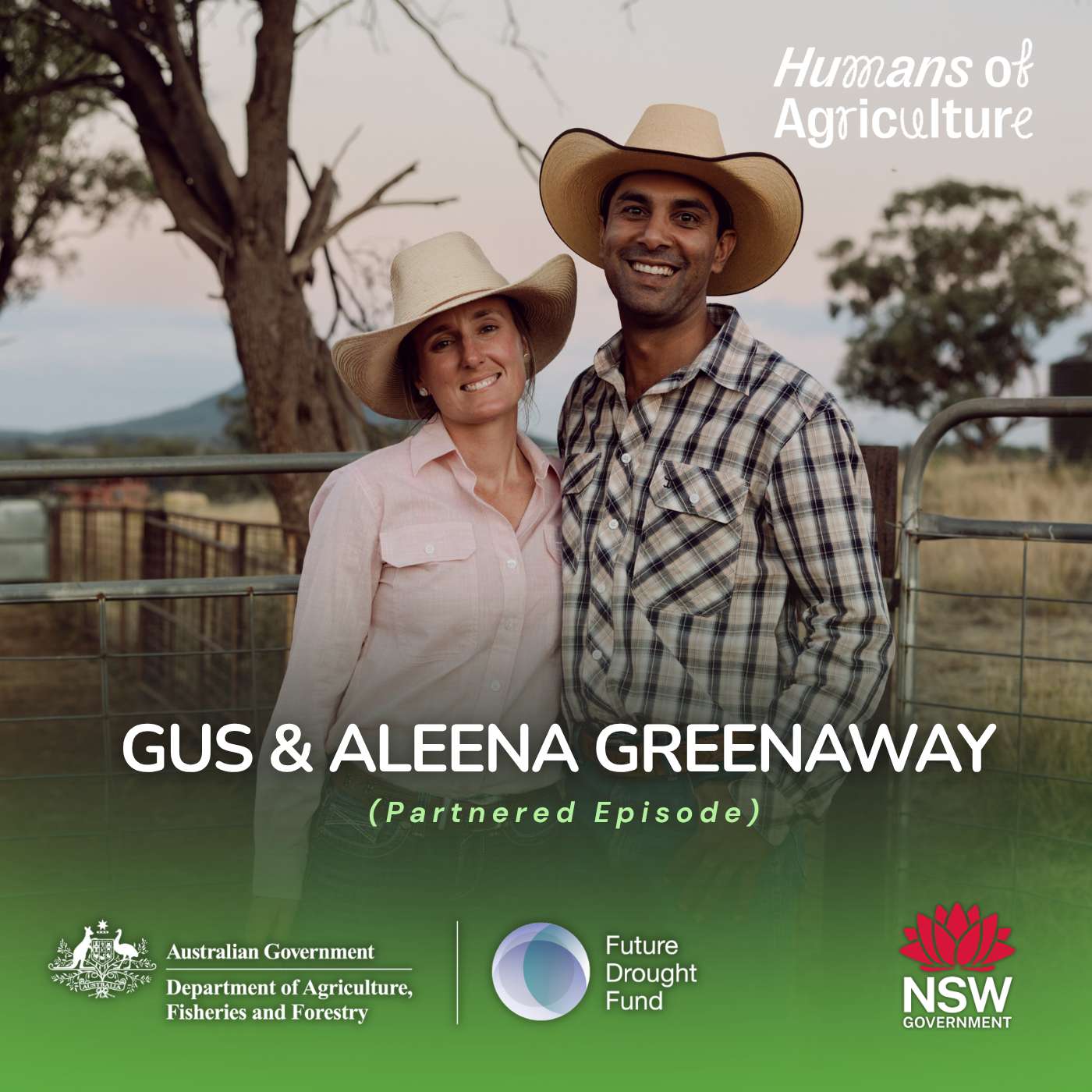
Gus and Aleena Greenaway farm fine wool Merinos between Gunnedah and Mullaley in NSW. Their experience through the 2017 to 2019 drought continues to shape how they make decisions today, from the numbers they watch and the trigger points they set to the people they bring into the business. In this episode, we discuss: How the 2017 to 2019 drought changed the way they think about risk and timing Using numbers and clear parameters to make decisions before conditions deteriorate Why making the call is only part of the challenge, and how they avoid constantly second-guessing themselves afterwards Working backwards from what they want their farm and their life to look like in five years The value of surrounding themselves with advisers, coaches and people who challenge their thinking How the Farm Business Resilience Program helped create greater clarity and confidence in decision-making Why outside perspective can be valuable even when the person advising you is not a farmer The role of vuln
I wouldn’t rush to repay an SMSF property loan before retirement. I’d switch it to interest-only and put spare cash into growth ETFs. In this listener Q&A, Gary is 56 and plans to move his property wealth into his SMSF before he retires. I explain why growth ETFs beat income ETFs when unrealised gains disappear in the pension phase. I also explain why I’m wary of a Perth medical clinic on a 5.5% cap rate, and why you shouldn’t extrapolate one good commercial property result. Dominic is 55 with $1.2 million in offset and needs to self-fund until 60. I’d draw on the offset rather than sell property into this market, and plan a window to sell rather than a date. A retiree with about $8.75 million asks what withdrawal rate is reasonable. I cover a perpetual portfolio, three years of living expenses in cash, and what I’d do if the trust tax becomes law. Finally, Angus asks about contribution splitting to even up super balances under the transfer balance cap. 00:16 Gary: moving property weal