Your past is part of your story—but it doesn’t have to write your next chapter. In this Saturday Mashup with Ed Mylett, we explore how the stories you tell yourself, the meaning you attach to your experiences, and the perspective you bring to each day can shape the direction of your life. If you’ve been feeling stuck, replaying old setbacks, questioning your potential, or letting worry take over, this episode offers encouragement and practical ideas for moving forward. It’s a reminder that growth isn’t reserved for a certain age or stage of life. You can challenge an old belief, build a new pattern, and begin creating a different future. Through personal reflections and conversations with Tom McCarthy, Dr. Caroline Leaf, and Dr. Ethan Kross—plus a featured clip of Tom Brady discussing his parents’ support—this mashup brings together lessons on identity, confidence, emotional awareness, and personal reinvention. IN THIS EPISODE: • Recognize the narrative you’ve been living—and ask wheth
David had been tempted to take justice into his own hands. Abigail reminded him to exercise restraint. Eventually, Nabal's fate was not determined by David's anger. David ultimately listens to her discernment, recognizing that anger can cloud judgment and lead to regrettable actions if one is unwilling to accept correction. The narrative concludes by showing that justice belongs to God, as Nabal suffers natural consequences for his foolishness while David is spared from taking matters into his own hands. Central message: Kindness does not mean accepting disrespect, and being provoked does not give us permission to respond foolishly. Abigail's story reveals the importance of wisdom, restraint, courage and knowing how to respond when someone else's behaviour pushes us towards a decision we may regret. Every contribution counts. Thank you for being part of our journey!
From sunsets to double rainbows, nature’s full of beautiful things. So it’s not surprising that artists have found inspiration in Mother Nature for millennia. What is surprising is the wide variety of human concerns that nature art has been used to convey. In this episode of Crash Course Art History, we’ll learn about the ways artists use nature to make arguments about the world around us, and our place within it. Introduction: The Nazca Plateau 00:00 The Hidden Meanings in Nature Art 01:04 Social Issues in Nature Art 03:39 Humans & the Environment 07:33 Review & Credits 10:16 Image Descriptions: https://docs.google.com/document/d/1ETiCxe4GrVzFii7dBhF42oHx1EUCCh5y12wbtUjsH8A/edit Sources: https://docs.google.com/document/d/1GW2NKzhpMNMmRyAFJVhFJG9cSfUOMRL-QrcWuHcWcIA/edit?usp=sharing *** Support us for $5/month on Patreon to keep Crash Course free for everyone forever! https://www.patreon.com/crashcourse Or support us directly: https://complexly.com/support Join our Crash Course email
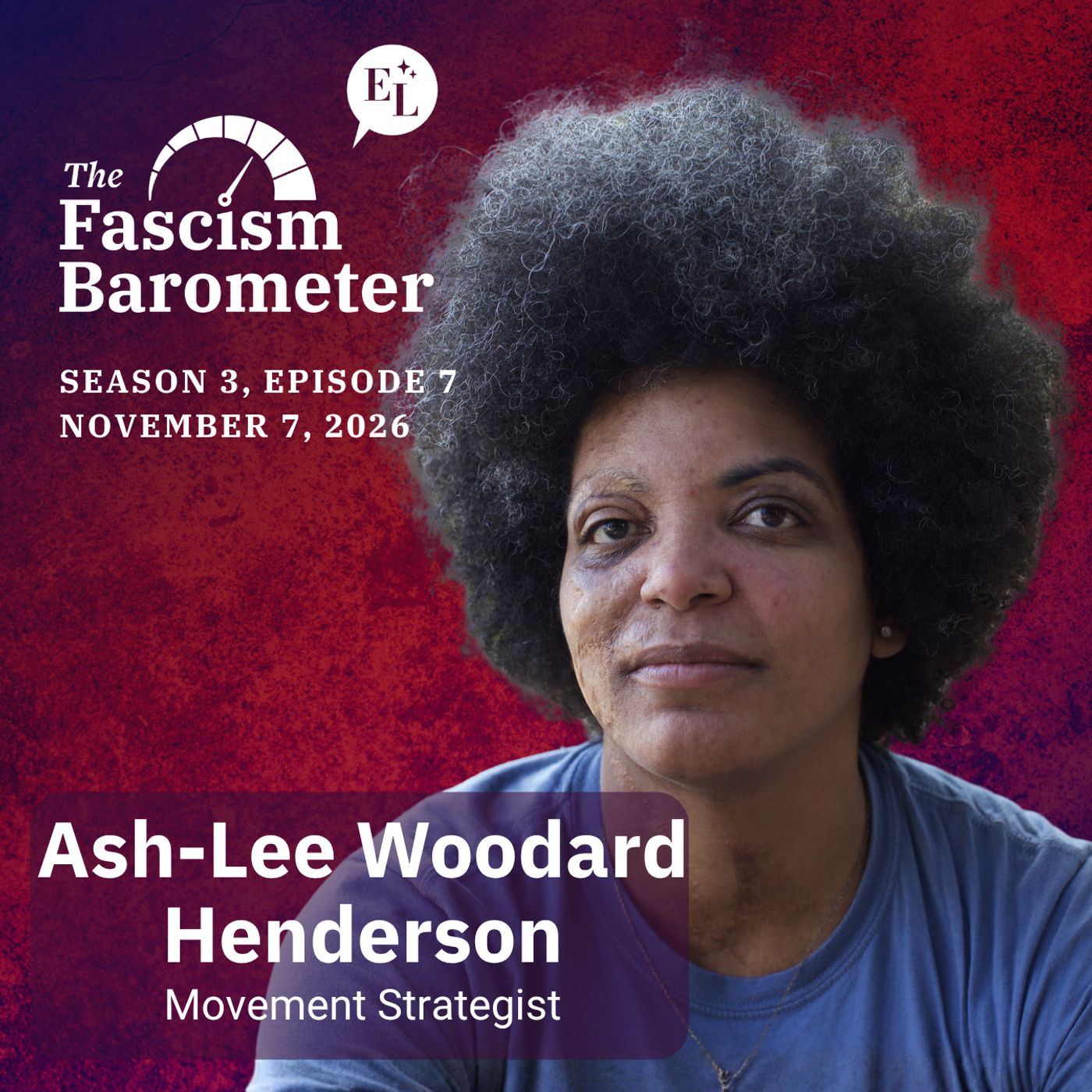
Ejeris welcomes back movement strategist, organizer, and longtime friend Ash-Lee Woodard Henderson for a necessary and informative debrief of the 2026 midterm elections. Ash-Lee offers a clear-eyed assessment of what the results tell us about grassroots organizing, particularly from the perspectives of Black, Southern, and marginalized communities that have too often been ignored and written off. Despite historic election victories, the fascism barometer remains dangerously high. Ash-Lee and Ejeris discuss what it will take to protect election results, ensure every vote is counted, and why we must resist the temptation to mistake electoral success for lasting political power. This vital conversation makes clear that the future depends on how we organize. This is an all gas, no brakes moment! You can find the tools you need to fight fascism at our Resource Hub (https://www.fascismbarometer.org/resources). Connect with Ejeris Dixon (https://www.ejeris.com/) And when you feel the pressure
Nearly 200 years ago, Alexis St. Martin was shot in the stomach. He was saved by local army doctor William Beaumont but had to live out his remaining years with a gaping hole in the stomach -- allowing Beaumont to learn a lot about how human digestion works. So today we're going to walk you through that process. We'll cover how mechanical and chemical digestion starts in the mouth and continues in the stomach, where it’s pummeled by acids and enzymes and turned into chyme. We will also go over the stomach’s cephalic, gastric, and intestinal phases of digestive regulation. Pssst... we made flashcards to help you review the content in this episode! Find them on the free Crash Course App! Download it here for Apple Devices: https://apple.co/3d4eyZo Download it here for Android Devices: https://bit.ly/2SrDulJ Chapters: Introduction: Alexis St. Martin's Stomach Hole 00:00 Digestion Starts in the Mouth 2:45 The Stomach 4:37 Stomach Acid 5:38 Phases of Digestive Regulation: Cephalic, Gastric,
What makes some art valuable enough to hang in museums? In this episode of Crash Course Art History, we’ll look at different ways we can figure out the value of art beyond the number on the price tag, and we’ll examine how culture, society, history, and storytelling influence how we evaluate artwork. Introduction: What Is "Good" Art? 00:00 Art & Beauty 00:57 Art & Innovation 02:09 Art & Lore: The Mona Lisa 04:27 Art Criticism 05:48 Clement Greenberg 07:26 Art & Museums 08:31 Review & Credits 10:23 Image Descriptions: https://docs.google.com/document/d/1ETiCxe4GrVzFii7dBhF42oHx1EUCCh5y12wbtUjsH8A/edit Sources: https://docs.google.com/document/d/1GW2NKzhpMNMmRyAFJVhFJG9cSfUOMRL-QrcWuHcWcIA/edit?usp=sharing *** Crash Course is on Patreon! Thanks to the following patrons for their generous monthly contributions that help keep Crash Course free for everyone forever: Leah H., David Fanska, Andrew Woods, DL Singfield, Ken Davidian, Stephen Akuffo, Toni Miles, Steve Segreto, Kyle & Katherine C
View full lesson: http://ed.ted.com/lessons/time-travel-and-einstein-s-special-relativity-colin-stuart Uploaded 21-10-13 Time travel is a staple of science fiction stories, but is it actually possible? It turns out nature does allow a way of bending time, an exciting possibility suggested by Albert Einstein when he discovered special relativity over one hundred years ago. Colin Stuart imagines where (or, when) this fascinating phenomenon, time dilation, may one day take us. Lesson by Colin Stuart, animation by TED-Ed.
Wake up. It’s time to change. It’s time to get on the right track. It’s time for you to come to the conclusion that you’ve got some serious work to do within yourself. Spoken by Coach Pain. Edited by Motiversity. Follow Coach Pain: YouTube: http://bit.ly/2LmRyea Instagram: http://bit.ly/2XLcLW5 Facebook: http://bit.ly/32tZdNi Website: http://bit.ly/2YTgWvq Coach Pain Academy: http://bit.ly/2XNmUfT Book Coach Pain today: http://bit.ly/2JMefFu Hosted on Acast.
Ready to retire? See what it's like to work with us → https://learn.rootfinancial.com/82eebb ======================= Most people retire afraid of running out of money. For a lot of people with $2 million or more, the bigger risk is the opposite. Running out of life before you ever spend what you worked so hard to save. The typical retired couple withdraws about 2.1% of their portfolio a year. That's less than half of what they could safely spend. This video shows you what you're actually allowed to spend, and how to spend even more without putting your retirement at risk. We're going to cover: - the exact number I'd tell you if you asked how much a $2 million portfolio can safely spend - why a 100% probability of success might be the wrong goal entirely - the person who asked us to take his 97% Monte Carlo score to 100, and the question I'd ask him instead - a client who waited to build "a little more buffer" before spending, and what happened next - the one assumption in almost every
Today’s guest is Emily Luchetti, an award-winning pastry chef, cookbook author, educator, and entrepreneur who helped shape the American pastry scene. Emily spent decades working at some of Northern California’s most celebrated restaurants, including Stars, Farallon, and Waterbar, and won the James Beard Award for Outstanding Pastry Chef in 2004. She’s also the author of several baking books, including “Stars Desserts,” “A Passion for Desserts,” and “The Fearless Baker.” Most recently, she launched Sweet Queen, a line of fruit spreads and caramel sauces. Emily joins host Jessie Sheehan to talk about her early love of sweets, how she found her way into professional kitchens, her fascination with making chocolate from scratch, and how her longtime love of jam-making inspired her latest venture. She also walks Jessie through her Cranberry Pecan Pumpkin Upside-Down Cake recipe from “A Passion for Desserts.” It’s a festive alternative to traditional pumpkin pie, featuring a moist cake with
In Episode 390 of the Counselling Tutor Podcast, your hosts Rory Lees-Oakes and Ken Kelly take us through this week's three topics: Firstly, in 'Ethical, Sustainable Practice', they explore counselling CPD - why current ethical standards matter, and why training and professional standards can no longer be separated. Then in 'Practice Matters', Rory speaks with Meg Moss about the accredited register - what it is, who oversees it, and why it matters to the public. And finally, in 'Student Services', Rory and Ken discuss what to do when client attendance doesn't go to plan - managing no-shows and the feelings they bring up.
If a dream is going to come to you, you have to be able to receive it. Today is the day you stop carrying it all alone and start asking with your full chest. In this best-of compilation from The Positive Mindset Podcast, Henry Lawrence pulls together his best moments on asking and receiving from two episodes: why the most giving people ask the least, how a giver who learns to receive gets to give even more, why the good people ask for things, believing you're worth helping, and becoming the living proof of your dream. In this episode: • "My name is Henry and I get what I ask for." • "If a dream is going to come to you, you got to be able to receive it." • "If you're a giver now, and then you learn to receive, you're actually gonna be able to give more" • "Our goal is to be able to just receive, receive from God" • "The good people ask for things." • "If you can believe that you're worth helping, that it is not a burden to support you" • "Ask for things and do good with what you receive
Today's episode dives into the HOW of enthalpy. How we calculate it, and how we determine it experimentally...even if our determinations here at Crash Course Chemistry are somewhat shoddy. Pssst... we made flashcards to help you review the content in this episode! Find them on the free Crash Course App! Download it here for Apple Devices: https://apple.co/3d4eyZo Download it here for Android Devices: https://bit.ly/2SrDulJ -- Table of Contents Hess' Law 2:30 Calorimeter 3:12 Calorimetry 3:07 Specific Heat Capacity 5:08 Calorimetry Sources of Error 10:21 Crash Course is on Patreon! Want to find Crash Course elsewhere on the internet? Facebook - http://www.facebook.com/YouTubeCrashCourse Twitter - http://www.twitter.com/TheCrashCourse Instagram - https://www.instagram.com/thecrashcourse/ CC Kids: http://www.youtube.com/crashcoursekids
♂️ Splash, wobble, tumble… and try again! Officer Doberman is ready for a brand-new adventure, but the waves might have a few surprises waiting for him! Will his determination pay off? Dive into another exciting Sheriff Labrador mystery and find out!
If you ask a linguist “How many languages are there in the world?” the answer most will give you is “around 7000”. We say “around” because there are several factors that make it difficult to determine what exactly counts as a language, including the difficulty of distinguishing between languages and dialects, various political factors, and the fact that not all languages have the same degree of resources and records. In this episode of Crash Course Linguistics, we’ll explore these 3 factors to learn about world languages and linguistic diversity, as well as the inequities that these factors can create. Want even more linguistics? Check out the Lingthusiasm podcast, hosted by the writers of Crash Course Linguistics: https://lingthusiasm.com/ *** Watch our videos and review your learning with the Crash Course App! Download here for Apple Devices: https://apple.co/3d4eyZo Download here for Android Devices: https://bit.ly/2SrDulJ Crash Course is on Patreon! Thanks to the following patrons
Molecules come in infinite varieties, so in order to help the complicated chemical world make a little more sense, we classify and categorize them. One of the most important of those classifications is whether a molecule is polar or non-polar, which describes a kind of symmetry - not just of the molecule, but of the charge. In this edition of Crash Course Chemistry, Hank comes out for Team Polar and describes why these molecules are so interesting to him. You'll learn that molecules need to have both charge asymmetry and geometric asymmetry to be polar, and that charge asymmetry is caused by a difference in electronegativities. You'll also learn how to notate a dipole moment (or charge separation) of a molecule, the physical mechanism behind like dissolves like, and why water is so dang good at fostering life on Earth. Pssst... we made flashcards to help you review the content in this episode! Find them on the free Crash Course App! Download it here for Apple Devices: https://apple.co/
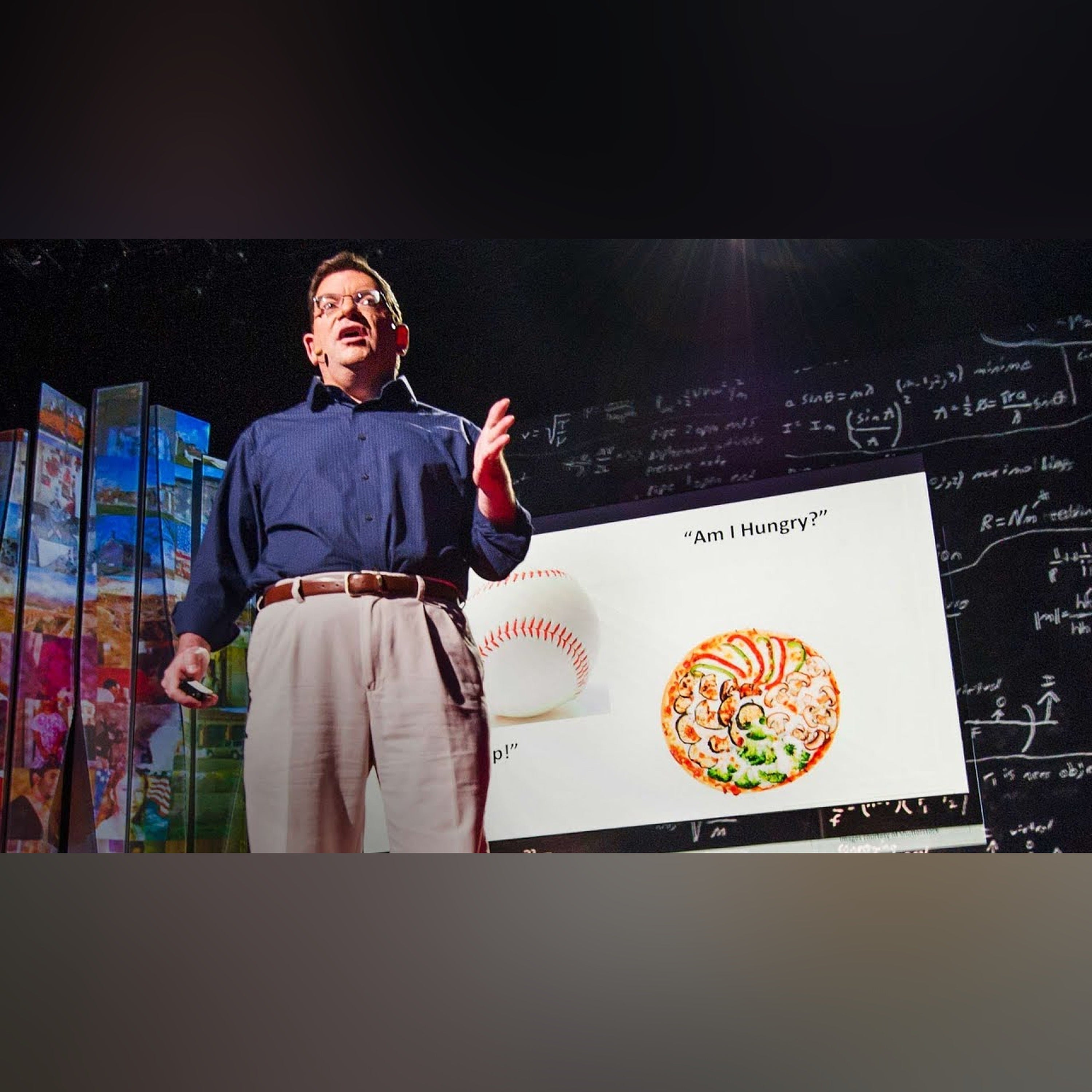
For some reason, says educator Al Vernacchio, the metaphors for talking about sex in the US all come from baseball -- scoring, getting to first base, etc. The problem is, this frames sex as a competition, with a winner and a loser. Instead, he suggests a new metaphor, one that's more about shared pleasure, discussion and agreement, fulfillment and enjoyment. Let's talk about ... pizza. Uploaded 16-08-13 Talk by Al Vernacchio.
Happy Pot Luck Saturday! Paul Lynde, the Wicked Witch of the West, Witchiepoo, Pinky Tuscadero, and KISS. We revisit The Paul Lynde Halloween Special, with Margaret Hamilton, Billie Hayes, Tim Conway, Betty White, Florence Henderson, Donny and Marie Osmond, and a young KISS making one of their earliest television appearances. We talk about Paul Lynde’s career, Hollywood Squares, Bewitched, Bye Bye Birdie, and why he was everywhere on television in the ’70s. We get into two iconic witches sharing the screen, Roz Kelly’s rise and fall as Pinky Tuscadero, Bruce Vilanch’s variety-show writing, and the days when everyone on TV was expected to sing, dance, and do a little bit of everything. Plus, the CB radio craze, Tim Conway playing a trucker, Billy Barty, old Hollywood stories, and sketches that seemed to have absolutely nothing to do with the holiday. We talk about The Star Wars Holiday Special, the golden age of ABC television, and the stars whose careers took some unexpected turns. It’
33 techniques. $29 once. Lifetime access. No subscription. You’ve heard Neville’s teachings. You’ve felt that spark of possibility. Now, what will you actually practice? Every technique includes: A clear explanation Step-by-step instructions Practical examples References to Neville’s original teachings A practice to try today Also included: Which Technique Should I Use? Find a starting point that suits you. The Seven-Day Neville Experiment. One desire. One technique. Seven days of conscious imagination. You don’t need to master all 33. Your first practice can begin tonight. ------------------------ Every Neville Goddard book. Every audiobook. One free library. ------------------------ Put Neville’s teachings into practice. Lifetime access. ------------------------ You've listened to Neville. Now put his teachings into practice. skool.com/neville (https://www.skool.com/neville) Inside the Academy, you'll find: Our philosophy is simple: Learn the Law. Practice the Law. Live the Law. Your
Does alcohol-free life get better, or does the early glow eventually fade? Martha spent 25 years in the wine business, and she's back to share why her alcohol-free life has never once felt ho-hum. Martha first shared her story on EP 267 Naked Life Story – Martha (https://thisnakedmind.com/ep-267-naked-life-story-martha/). Now she sits down with Coach Hayley to talk about what's happened since. She explains how one better question changed everything, how she brought her love of food, wine and hospitality into the world of alcohol-free drinks, and why people from inside the industry now reach out to her for coaching. She also takes us to her first all-night rave in Paris, explains why sensory pleasure turned out to be a form of mindfulness, and shares the question she'd invite anyone starting out to ask. Why losing her identity as the go-to wine resource was Martha's biggest fear The question that replaced "Do you think I drink too much?" and changed everything How she doubled down on wh
The world is full of microbes and viruses that can get us sick, but we’ve got an Avengers-style defense system ready to take them on. In this episode of Crash Course Biology, we’ll learn about an animal’s immune system, from their skin to inflammatory responses, to the adaptive immune system and all the special cells and antibodies that come with it. Introduction: Defending Against Pathogens 00:00 The Integumentary System 01:09 Internal Defenses 02:29 Asymptomatic Infections 05:52 Healing 06:31 Adaptive Immunity & Vaccines 07:05 The Lymphatic System 09:25 Review & Credits 10:32 This series was produced in collaboration with HHMI BioInteractive, committed to empowering educators and inspiring students with engaging, accessible, and quality classroom resources. Visit https://BioInteractive.org/CrashCourse (https://biointeractive.org/CrashCourse) for more information. Are you an educator looking for what NGSS Standards are covered in this episode? Check out our Educator Standards Database
In which Adriene and Jacob teach you about how and why prices rise. Sometimes prices rise as a result of inflation, which is a pretty normal thing for economies to do. We'll talk about how across the board prices rise over time, and how economists track inflation. Bubbles are a pretty normal thing for humans to do. One item, like tulips or beanie babies or houses or tech startups experience a rapid rise in prices. This is often accompanied by speculation, a bunch of outrageous profits, and then a nasty crash when the bubble bursts. People get excited about rising prices, and next thing you know, people are trading their life savings for a tulip bulb. Crash Course is on Patreon! Thanks to the following Patrons for their generous monthly contributions that help keep Crash Course free for everyone forever: Mark , Elliot Beter, Moritz Schmidt, Jeffrey Thompson, Ian Dundore, Jacob Ash, Jessica Wode, Today I Found Out, Christy Huddleston, James Craver, Chris Peters, SR Foxley, Steve Marshall
We tend to think life fits in two tidy categories: male or female, XX or XY. But it’s so much more diverse and complicated! In this episode of Crash Course Biology, we’ll discover sex and sexuality as a continuum across life. We’ll learn why humans are the only species with gender, and why same-sex mating is more common than you might think. Introduction: Sex & Gender in Humans 00:00 How Sex and Gender are different 01:15 Sex development 04:42 Differences in sex development 06:02 What is sexuality 07:46 Non-human diversity in sexuality 08:50 Review & Credits 12:12 This series was produced in collaboration with HHMI BioInteractive, committed to empowering educators and inspiring students with engaging, accessible, and quality classroom resources. Visit https://BioInteractive.org/CrashCourse (https://biointeractive.org/CrashCourse) for more information. Are you an educator looking for what NGSS Standards are covered in this episode? Check out our Educator Standards Database for Biology h