View full lesson: http://ed.ted.com/lessons/mysteries-of-vernacular-venom-jessica-oreck-and-rachael-teel How did venom get its poisonous meaning? Jessica Oreck and Rachael Teel follow venom from something to desire to explicit reasons for avoiding a snake. Lesson by Jessica Oreck and Rachael Teel, animation by Jessica Oreck.
Are the haters right about carbs, fasting, running, and weight loss meds? I went through 3 years of comments on my YouTube channel (https://www.youtube.com/@witsandweights) and grabbed some of the juciest hater comments (Mark Rippetoe Starting Strength style). Some have a kernel of truth, some haters just wanna hate, and a few truly belong in the Hater Comment Hall of Fame. I'm responding to the carnivore and keto crowd, the fasting zealots, and a longtime listener who thought we were rude to runners. I also address a commenter who blames weight loss meds for muscle loss. Then I explain why I don’t cite every study by name and what I think about clickbait titles. One commenter even counted how many times I say “right?” (right?). If you’ve ever wanted to argue with a fitness podcaster in the comments, hit play. Join the Wits & Weights Facebook group (https://www.facebook.com/groups/witsandweights) for a supportive, FRIENDLY (no haters allowed) place to ask questions, share your wins, an
Today, we’re going to take a closer look at borders and the stories they tell. When we look at a map, the shapes we’re seeing can seem so permanent, but a map is just a snapshot of the Earth at a particular time, and by looking a countries shape (and how it has changed across time) we can learn so much about how power moves and the ebb and flow of conflict. We’ll talk about the different types of borders, and power dynamics at play in Armenia and Azerbaijan and even look to the oceans as we explore conflict in the South China Sea. SOURCES General CIA Factbook: https://www.cia.gov/library/publications/resources/the-world-factbook/docs/one_page_summaries.html Getis, Bjelland, and Getis. Introduction to Geography, 15 ed. McGraw-Hill Education. 2017. ISBN: 978-1-259-57000-1 Gregory, Derek, Ron Johnston, Geraldine Pratt, Michael Watts, and Sarah Whatmore, eds. 2009. The Dictionary of Human Geography. 5th ed. Willey-Blackwell. ISBN: 978-1-4051-3288-6 For a free and open source option for Int
Responsibility does not mean doing everything yourself. Moses' encounter with Jethro reveals the danger of carrying more than you can manage and the wisdom of accepting help. After leading the Israelites out of Egypt, Moses found himself responsible for an entire nation. People came to him from morning until evening to settle disputes, seek guidance and receive judgments concerning their problems. When Jethro, Moses' father-in-law, visited him, he observed how much time and responsibility Moses was carrying. He questioned why Moses was doing everything alone while the people stood around waiting for him throughout the day. Moses explained that the people came to him to inquire of God, receive instructions and settle disputes. He had taken on the responsibility of being the primary person through whom the people received guidance and judgment Every contribution counts. Thank you for being part of our journey!
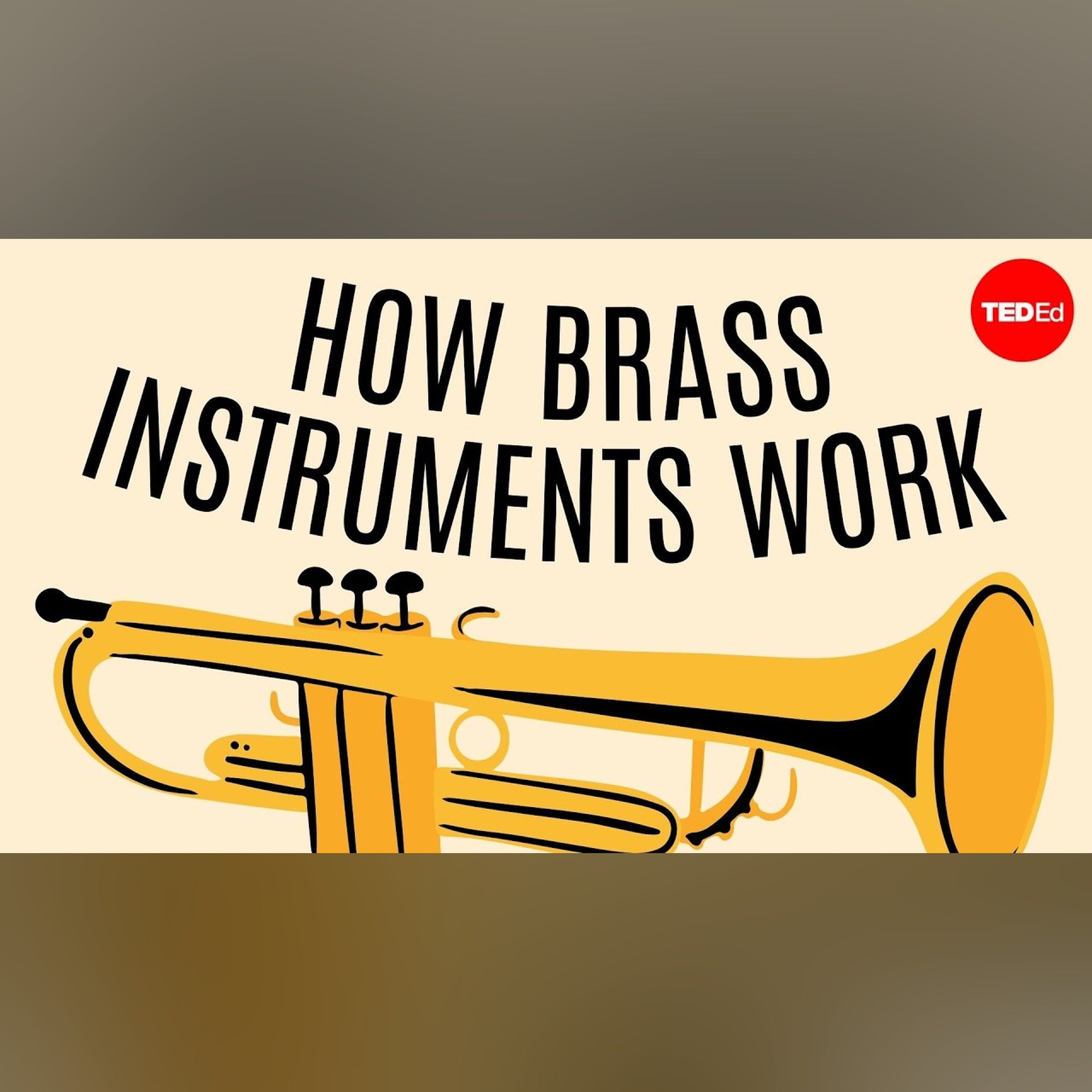
View full lesson: http://ed.ted.com/lessons/how-brass-instruments-work-al-cannon Uploaded 07-04-15 What gives the trumpet its clarion ring and the tuba its gut shaking oompah-pah? And what makes the trombone so jazzy? Al Cannon shows how these answers lie not in the brass the instruments are made of, but in the journey that air takes from the musician’s lungs to the instrument’s bell. Lesson by Al Cannon, animation by TED-Ed.
NO ONE IS SELF MADE We often talk about personal growth as though we achieved everything alone. We celebrate our discipline, our strength, our achievements, and how far we have come. But sometimes, when we look closely at our journey, we discover that some of the qualities we now carry were developed through people God placed in our lives. In 1 Samuel 20, we see an extraordinary friendship between David and Jonathan. David was in danger because King Saul wanted him dead. Jonathan, Saul's own son, had every reason to protect his father's interests and preserve his position as the future king. Yet, instead of allowing ambition or family loyalty to blind him, Jonathan chose to protect David. Jonathan knew that David was destined for something greater, even though it meant David could eventually become king instead of him. He made a covenant with David, defended him, warned him of danger, and remained committed to their friendship. This story reveals something important: genuine love does
Traditionally, geography is studied as two interconnected parts: physical geography and human geography. For the first half of this series, we will be focusing on physical geography, which is all about recognizing the characteristics of the environment and the processes that create, modify, and destroy those environments. But remember, human-environment interactions are fundamental to studying geography so we won't be ignoring human impact, it just won't be the primary lens we're using to view the world. Today, we'll explore erosional gullies in Madagascar as we discuss the world's dynamic landscape, the Great Barrier Reef as we introduce the four major earth system (the atmosphere, hydrosphere, lithosphere, and biosphere), and we'll finish with a deep dive into Iceland as we introduce the major realms of physical geography. (These are geographer specializations that you may have heard about like topography, geomorphology, pedology, hydrology, climatology, oceanography, meteorology, an
Crash Course Anatomy & Physiology continues the journey through sensory systems with a look at how your sense of hearing works. We follow sounds as they work their way into the ear where they are registered and transformed into action potentials. This mechanism not only helps you hear but also helps maintain your equilibrium. Pssst... we made flashcards to help you review the content in this episode! Find them on the free Crash Course App! Download it here for Apple Devices: https://apple.co/3d4eyZo Download it here for Android Devices: https://bit.ly/2SrDulJ Chapters: Introduction 00:00 How Sound Works 1:17 External Ear Structure & Function 2:18 Middle Ear Structure & Function 3:06 Inner Ear Labyrinth 4:12 Cochlea: Basilar Membrane 5:00 Cochlea: Organ of Corti 6:33 Equilibrium: Vestibular Apparatus 7:34 What Causes Motion Sickness? 9:04 Review 9:39 Credits 10:13 *** Crash Course is now on Patreon! Thanks to the following Patrons for their generous monthly contributions that help keep
A silkworm doesn't stay a silkworm forever, and God doesn't want us to stay the same, either. Sr. Katie Flanagan explores St. Teresa of Ávila's image of the silkworm and butterfly, reminding us that growing closer to God means being willing to change. Today, we read The Fifth Dwelling Places: Chapter 2.
Having friends is great. Paying for friendships? Not so great. Between lunches, dinners, drinks, and other get-togethers, maintaining a social life can get surprisingly expensive. And research suggests the rising cost of friendship is changing how often people see their friends and even which friendships they maintain. Listen as I explain what's happening and why it matters. https://www.badcredit.org/studies/friendship-spending-statistics/ What separates people who are remarkably successful from everyone else? Is it talent, intelligence, luck — or something much simpler? William Vanderbloemen set out to find out by studying the habits and behaviors of highly successful people. What he discovered were some surprisingly practical things almost anyone can do to stand out and get ahead. William is founder and CEO of Vanderbloemen Search Group and author of Be the Unicorn: 12 Data-Driven Habits that Separate the Best Leaders from the Rest (https://amzn.to/3CD1MD5) (https://amzn.to/3CD1MD5).
What We Spend is back for another season of diving into the financial questions you never get to ask. In Season 2 we’ll ask a brand new set of people from across the country and the financial spectrum to open their wallets — and their lives — and share what they make, what they want, and, for one week, what they spend. If you want to be on What We Spend, we’d love to hear from you. Write us at: [email protected] Available now: link.pscrb.fm/f0281/WWS_JOM (http://link.pscrb.fm/f0281/WWS_JOM)
Being successful at work doesn't mean much if you never have time for your kids. In this episode, Ryan talks with Aaron Kartchner of Stay-At-Home Woodworks (https://www.instagram.com/stayathomewoodworks/?hl=en) about the unexpected path to becoming a stay-at-home dad and building a business that allows him to prioritize his family. Follow Stay At Home Woodworks on Instagram: https://www.instagram.com/stayathomewoodworks/?hl=en Check out Stay At Home Woodworks: https://www.stayathomewoodworks.com/ Give yourself the ultimate gift of parenting tools, structure, and community. JoinThe Daily Dad Society (https://dailydad.com/society) here:https://dailydad.com/society Hosted on Acast.
Get the 200+ Page Optimal Living Daily Workbook (PDF) - Free. Want to turn today's episode into an actionable plan? Episode 3761: Jillian Rosenthal explains how to decide whether a second job will actually help your finances or just leave you overworked. She walks through six tips, from setting a clear savings or debt goal and considering a side gig instead, to weighing the commute, the industry and the pay, and suggests alternatives like cutting expenses or asking for a raise. Read along with the original article(s) here: http://moneyminiblog.com/make-money/second-job-decision/
Get to know the story of how truck driver Malcom McLean invented the shipping container, and how it transformed the global economy. -- Sometimes a single unlikely idea can have massive impact across the world. Sir Harold Evans, the author of "They Made America," describes how frustration drove Malcom McLean, a small-town truck driver, to invent the shipping container. Containerization was born, and it transformed the modern global economy. Lesson by Sir Harold Evans, directed by Sunni Brown. Support Our Non-Profit Mission ---------------------------------------------- Support us on Patreon: http://bit.ly/TEDEdPatreon Check out our merch: http://bit.ly/TEDEDShop ---------------------------------------------- Connect With Us ---------------------------------------------- Sign up for our newsletter: http://bit.ly/TEDEdNewsletter Find us on Twitter: http://bit.ly/TEDEdTwitter Peep us on Instagram: http://bit.ly/TEDEdInstagram ---------------------------------------------- Keep Learning ---
Around this time of year, Common Mergansers cross the U.S.-Canadian border on their way to wintering grounds in the Lower 48. But how do they know when to go? Ducks are well insulated against frigid winter temperatures, but mergansers can find their fishy prey only by diving below the surface of open water. So they’re doing just fine, resting and feeding in southern Canada, until a thin veneer of ice forms on their lake, signaling the time has arrived to head south! More info and transcript at BirdNote.org (https://www.birdnote.org/podcasts/birdnote-daily/common-mergansers-pushed-ice). Want more BirdNote? BirdNote is a nonprofit. Hosted by Simplecast, an AdsWizz company.
Whether you’re facing a full social calendar, interacting with challenging relatives, or missing a loved one, we share our favorite insights on navigating this sometimes-difficult season. Episode Highlights: Say yes to holiday invitations when you can [01:14] Make room for grief during the holidays[05:28] Why doing what’s right doesn’t always feel happy [09:26] Try This at Home: set a realistic holiday intention [11:49] Mentioned in this episode: The Eight Splendid Truths of Happiness (https://gretchenrubin.com/2011/11/the-eight-splendid-truths-of-happiness) The Strategy of Safeguards (https://gretchenrubin.com/articles/video-for-habits-the-strategy-of-safeguards/) Write your ownPersonal Commandments (https://gretchenrubin.com/articles/how-to-write-your-own-personal-commandments/) Connect with Us: Email: [email protected] Website: gretchenrubin.com Instagram: @gretchenrubin | @lizcraft Enjoyed this episode?
Real happiness starts the moment you stop running from the truth about your own suffering. Check out the full episode: https://lewishowes.com/podcast/krishna-ji/ Krishnaji, co-founder of One World Academy, told Lewis that all inner suffering comes from obsessive self-centric thinking. Get fired, and the real pain is rarely the job hunt. It is “who is this guy to fire me?” and dreading what you will tell your family. He shared the story of a student diagnosed with stage three cancer who kept asking why God was punishing him. Once he saw he was only thinking about himself, the suffering lifted while his family focused on his treatment. He was cured. Krishnaji says the freedom is automatic once you see the truth. Nothing else has to happen first. Next time you feel that spiral, ask yourself who you are really thinking about. You may feel lighter as soon as you answer honestly. Sign up for the Greatness newsletter:http://www.greatness.com/newsletter Hosted by Simplecast, an AdsWizz company
What does the October jobs report mean for your paycheck and your next career move? Your next raise may depend on your alternatives, not just your loyalty. Justin shows how outside offers create bargaining power, why employers can reward good work without waiting for a resignation threat, and how scarce AI skills can give you leverage. If your employer isn’t valuing you, his advice is to look elsewhere. No outside offer needed to get more economics—subscribe: on YouTube on Substack the Podcast Follow on Social Media @PlatypusEconomics and @JustinWolfers
What are the pieces of advice you find yourself coming back to again and again? Ryan talks with bestselling author and ESPN writer Seth Wickersham (https://www.youtube.com/watch?v=1ounPbCeVis) about three quotes he keeps beside his laptop and why they continue to shape the way he approaches his work and life. Books: Be On That Hill by Seth Wickersham (https://www.penguinrandomhouse.com/books/826777/be-on-that-hill-by-seth-wickersham/) It’s Better To Be Feared by Seth Wickersham (https://www.thepaintedporch.com/products/its-better-to-be-feared-the-new-england-patriots-dynasty-and-the-pursuit-of-greatness?_pos=2&_sid=d6829cf6f&_ss=r) American Kings: A Biography of the Quarterback by Seth Wickersham (https://www.thepaintedporch.com/products/american-kings-a-biography-of-the-quarterback?_pos=3&_sid=cdd9e22c5&_ss=r) Watch this episode (https://www.youtube.com/watch?v=1ounPbCeVis) on YouTube: https://www.youtube.com/watch?v=1ounPbCeVis Seth Wickersham is a senior writer at ESPN and the New Y
Get the 200+ Page Optimal Living Daily Workbook (PDF) - Free. Want to turn today's episode into an actionable plan? Episode 4216: Anthony Ongaro explains how Newton's third law of motion, that every action has an equal and opposite reaction, applies to building habits that last. He argues that extreme, all-at-once efforts like crash diets create so much resistance that they are nearly impossible to repeat, and that the pull of instant gratification works against meaningful change. His alternative is to start small and increase slowly, trading faster results for consistency that sticks, whether the goal is fitness, decluttering or creative work. Read along with the original article(s) here: https://www.breakthetwitch.com/newtons-third-law/ Quotes to ponder: "Meaningful change almost never happens quickly and we need to learn to be okay with that." "The greater the reaction, the harder it is to reliably sustain." "When you consider Newton's Third Law when it comes to building habits, the
Disclaimer: This is very different than the usual Crash Course US History episode. In which John Green lists a whole lot of the battles of the US Civil War in seven and a half minutes. We get a lot of requests for military history, so we offer a list of battle names, with some commentary about outcomes, and lots of really interesting pictures. This is a bit of a departure for Crash Course as we leave behind the world of thoughtful analysis and just list some facts. Don't worry though. We've already got our brains turned back on for the next episode. Hey teachers and students - Check out CommonLit's free collection of reading passages and curriculum resources to learn more about the events of this episode. The Battle of Gettysburg remains one of the most infamous battles of the Civil War: https://www.commonlit.org/texts/the-battle-of-gettysburg The Civil War pitted brother against brother and friend against friend, as was the case for the two warring generals in the Siege of Vicksburg:
In which John Green teaches you about Reconstruction. After the divisive, destructive Civil War, Abraham Lincoln had a plan to reconcile the country and make it whole again. Then he was shot, Andrew Johnson took over, and the disagreements between Johnson and Congress ensured that Reconstruction would fail. The election of 1876 made the whole thing even more of a mess, and the country called it off, leaving the nation still very divided. John will talk about the gains made by African-Americans in the years after the Civil War, and how they lost those gains almost immediately when Reconstruction stopped. You'll learn about the Freedman's Bureau, the 14th and 15th amendments, and the disastrous election of 1876. John will explore the goals of Reconstruction, the successes and ultimate failures, and why his alma mater Kenyon College is better than Raoul's alma mater NYU. Hey teachers and students - Check out CommonLit's free collection of reading passages and curriculum resources to learn
️ TODAY'S RESOURCE: JOURNAL: https://MorningMindsetMedia.com/journal (https://morningmindsetmedia.com/journal) TODAY'S SCRIPTURE: Leviticus 26:14–20 - But if you will not listen to me and will not do all these commandments, [15] if you spurn my statutes, and if your soul abhors my rules, so that you will not do all my commandments, but break my covenant, [16] then I will do this to you: I will visit you with panic, with wasting disease and fever that consume the eyes and make the heart ache. And you shall sow your seed in vain, for your enemies shall eat it. [17] I will set my face against you, and you shall be struck down before your enemies. Those who hate you shall rule over you, and you shall flee when none pursues you. [18] And if in spite of this you will not listen to me, then I will discipline you again sevenfold for your sins, [19] and I will break the pride of your power, and I will make your heavens like iron and your earth like bronze. [20] And your strength shall be spent
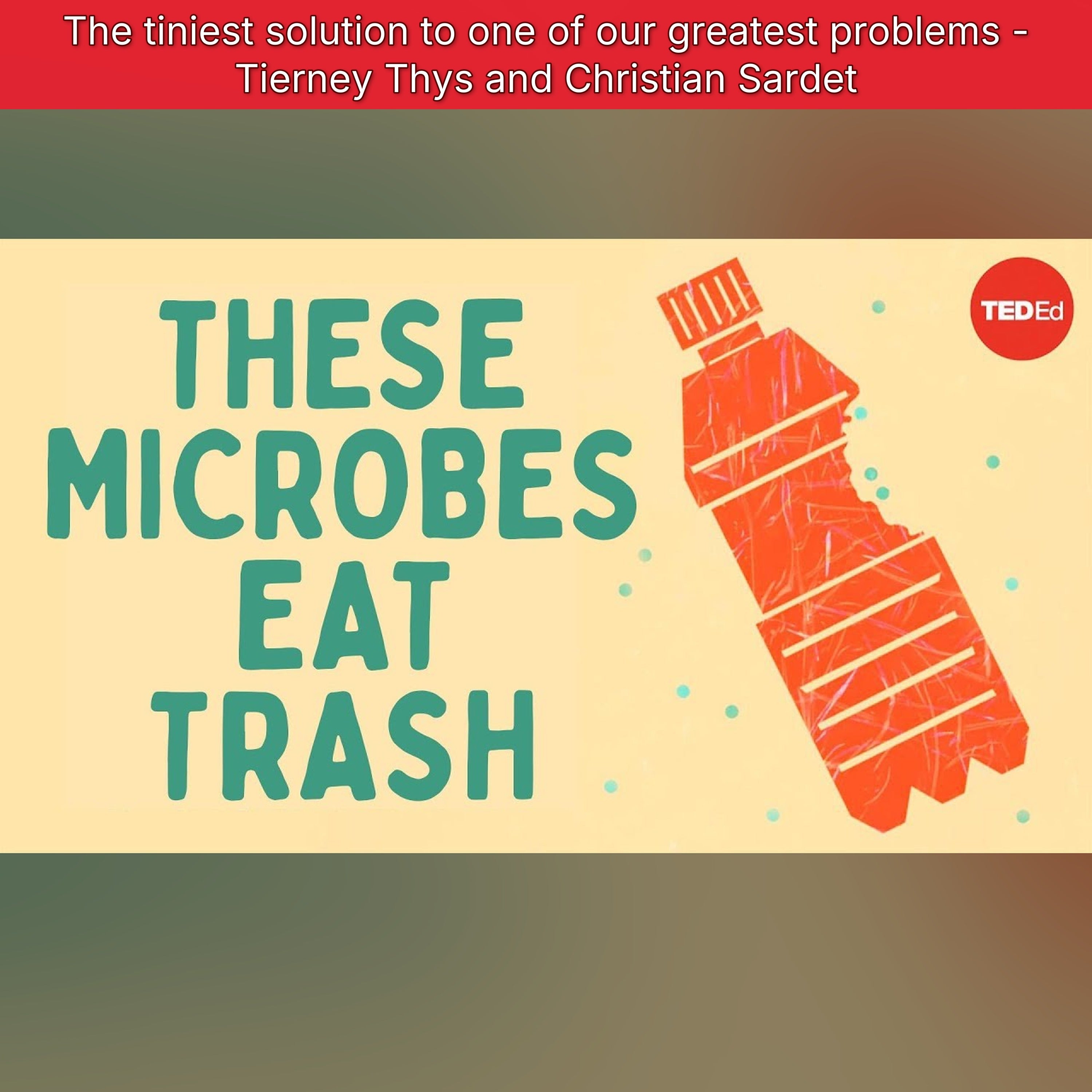
Explore the possibility of plastivores— organisms that can eat and break down plastic— helping reduce the plastic waste on Earth. -- Each year humanity produces roughly 400 million tons of plastic, 80% of which is discarded as trash. Of that plastic waste, only one-tenth is recycled. 60% gets incinerated or goes into the landfills, and 30% leaks out into the environment. Fortunately, there are microbes that may be able to take a bite out of this growing problem. Tierney Thys and Christian Sardet explore the future of recycling. Lesson by Tierney Thys and Christian Sardet, directed by Elsa Esteban. Support Our Non-Profit Mission ---------------------------------------------- Support us on Patreon: http://bit.ly/TEDEdPatreon Check out our merch: http://bit.ly/TEDEDShop ---------------------------------------------- Connect With Us ---------------------------------------------- Sign up for our newsletter: http://bit.ly/TEDEdNewsletter Find us on Twitter: http://bit.ly/TEDEdTwitter Peep us