From outbreaks of measles in the United States and cholera in Haiti to patterns of lead poisoning near gold mines in Nigeria, medical geographers play an important role in tracking disease in the landscape. Today, we're going to look at strategies medical geographers use to help as many people as possible achieve the highest level of health possible. Our sources: https://docs.google.com/document/d/1ldkfmEnwz4BCE76sxR1seA7d2L0jyVxX4Bc9YH0Tqog/edit?usp=sharing Watch our videos and review your learning with the Crash Course App! Download here for Apple Devices: https://apple.co/3d4eyZo Download here for Android Devices: https://bit.ly/2SrDulJ Crash Course is on Patreon! Thanks to the following patrons for their generous monthly contributions that help keep Crash Course free for everyone forever: DL Singfield, Jeremy Mysliwiec, Shannon McCone, Amelia Ryczek, Ken Davidian, Brian Zachariah, Stephen Akuffo, Toni Miles, Oscar Pinto-Reyes, Erin Nicole, Steve Segreto, Michael M. Varughese, Kyle
Today, Clint Smith will teach you about the legendary writer Toni Morrison. Morrison is best known for her novels which chronicle the experiences of Black Americans throughout history. She was the first Black American Woman to win a Nobel Prize for Literature. Clint's book, How the Word is Passed is available now! https://bookshop.org/books/how-the-word-is-passed-a-reckoning-with-the-history-of-slavery-across-america/9780316492935 Want to learn more about Toni Morrison's work? Check out these videos from Crash Course Literature: Slavery, Ghosts, and Beloved: Crash Course Literature 214: https://www.youtube.com/watch?v=6lQyPgaakY4 Sula: Crash Course Literature 309: https://www.youtube.com/watch?v=eAHYT5gIPZg VIDEO SOURCES Michelle Alexander, The New Jim Crow: Mass Incarceration in the Age of Colorblindness (New York: New Press, 2010). Nellie Y. McKay, ed. Critical Essays on Toni Morrison (Boston: G.K. Hall & Co., 1988). Philip Page, Dangerous Freedom: Fusion and Fragmentation in Toni Mo
In this episode of Crash Course Psychology, Hank takes a look at a few experiments that helped us understand how we develop as human beings. Things like attachment, separation anxiety, stranger anxiety, and morality are all discussed... also, a seriously unpleasant study with monkeys and fake mothers. Want more videos about psychology? Check out our sister channel SciShow Psych at https://www.youtube.com/scishowpsych! -- Chapters: Introduction: Attachment 00:00 Harlow's Monkey Mother Experiment 0:47 Touch 2:16 Familiarity 3:01 Attachment Styles: Secure, Insecure Ambivalent, & Insecure Avoidant 3:57 The Importance of Attachment Styles 5:24 Developing Self-Concept 6:45 Parenting Models: Authoritarian, Permissive, & Authoritative 7:36 Kohlberg's Theory of Moral Development 8:18 Preconventional Morality Phase 9:27 Conventional Morality Phase 9:44 Postconventional Morality Phase 10:00 Review & Credits 10:48 -- Crash Course is on Patreon! Want to find Crash Course elsewhere on the internet?
Within five minutes of meeting me, a specialist told me my weight caused my health issue and that I needed a GLP-1. She didn't ask about anything else. I felt shame rush through my whole body, and I still took back control of that conversation. In this episode, I tell you the whole story: what happened in that room, what I did with the shame, the five questions I asked, and how she responded. Then I answer the questions you sent me after I shared this on Instagram, from "my labs are fine, so why are we talking about my weight?" to "my doctor said a GLP-1 can be the first treatment." If a doctor has ever pointed to your body first, this one is for you. In this episode, you'll learn: The five questions to ask any provider who points to your weight first What a trauma response to weight stigma feels like in the body, and how to ride the wave instead of running from it Why GLP-1s are being offered for conditions that have nothing to do with weight What to ask if you're already taking a GLP
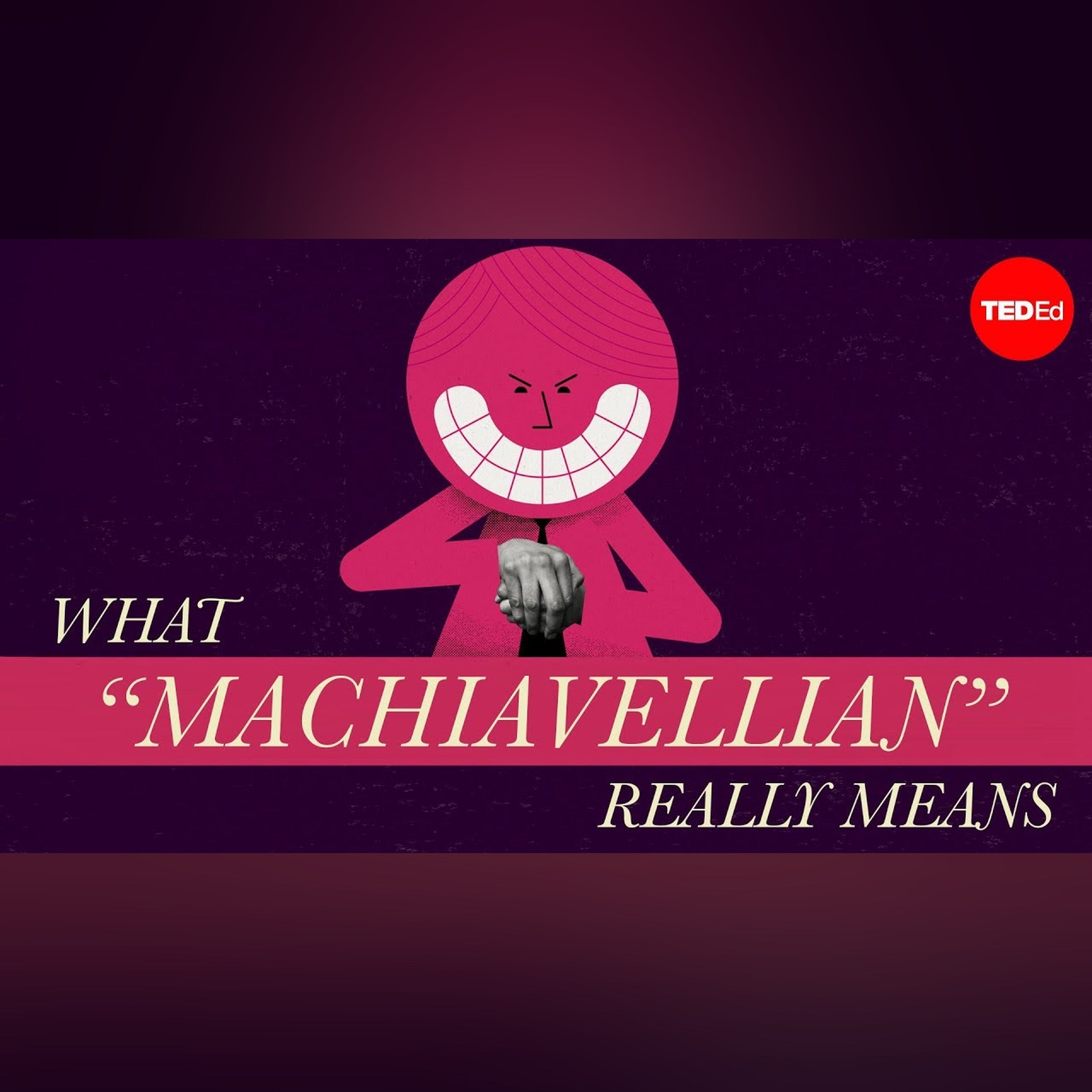
Download a free audiobook version of "The Art of War" and support TED-Ed's nonprofit mission: https://www.audible.com/ted-ed Uploaded 25-03-19 Check out our full book recommendation: https://shop.ed.ted.com/products/the-art-of-war -- From Shakespeare’s plays to modern TV dramas, the unscrupulous schemer for whom the ends always justify the means has become a familiar character type we love to hate. For centuries, we’ve had a single word to describe such characters: Machiavellian. But is it possible that we’ve been using that word wrong this whole time? Pazit Cahlon and Alex Gendler investigate the origins of the term. Lesson by Pazit Cahlon and Alex Gendler, directed by TOGETHER. Sign up for our newsletter: http://bit.ly/TEDEdNewsletter Support us on Patreon: http://bit.ly/TEDEdPatreon Find us on Twitter: http://bit.ly/TEDEdTwitter Peep us on Instagram: http://bit.ly/TEDEdInstagram View full lesson: https://ed.ted.com/lessons/what-machiavellian-really-means-pazit-cahlon-and-alex-gendle
Do I ever miss drinking? It's one of the questions I get asked most often, and after almost 13 years alcohol-free, you might be surprised by my answer. But that's just the beginning. For this episode of The Alcohol-Free Advantage, I'm doing something a little different. Instead of exploring one particular topic, I'm answering seven of your biggest questions about my alcohol-free adventure, and I'm not holding anything back. From the friendships that have changed along the way to the moments that tested my decision, I'm sharing the honest realities of life without alcohol. We'll explore the challenges, the unexpected discoveries and some of the lessons I've learned over more than a decade on the fun side of the island. I'll also share a rather amusing encounter from my Camino adventure and explain why one of the most important decisions you can make might be much simpler than you think. Because going alcohol-free isn't just about what you leave behind. It's about discovering what become
In this bonus episode, we hear from PensionBee customer James as he shares why he wants his pension to work for the planet as well as for him. From setting up his own pension to switching into the Climate Plan, James explains how he thinks about where his money is invested. We unpack James's story with pensions expert Dan Stean from PensionBee, covering: how much difference a climate-focused pension can make, and whether you have to accept lower returns; why "green" isn't always clear-cut, and how to check what your plan invests in and spot greenwashing; and what James is looking forward to in retirement, from climbing the Munros to exploring the waterways by narrowboat. Episode breakdown 00:32 Meet James 04:36 What's 'green' these days? 07:06 Staying active in retirement Further reading, listening and watching To learn more about the topics discussed in this bonus episode, check out these articles, podcasts and videos from PensionBee: Episode transcript (https://www.pensionbee.com/uk/
Kate went from $18,000 in credit-card debt and less than $1,000 in savings to having $800,000 invested with her fiancé. So how did she turn things around? Kate shares how she changed her spending habits, built a flexible money system, and made a risky career move that eventually took her income from a $90,000 base salary to $550,000 in one year. She also explains how to avoid lifestyle inflation, invest intentionally, and balance a demanding career with the goal of becoming financially independent and work optional in the next five to six years. To go beyond the podcast: Interested in working with Nectarine? Go to https://biggerpocketsmoney.com/ (https://biggerpocketsmoney.com/fipro/)nectarine Interested in Learning More About Buying a Franchise? Want to better protect your personal identity? Go to:https://incogni.com/bpmoney, code BPMONEY Connect with Kate: Website: https://www.derekateonfire.com/ Email: [email protected] Let’s get your financial house in order!
Why does every diet or protocol work for a few weeks and then stop? Dr. Meg Mill is a doctor of pharmacy who spent close to 20 years as a clinical pharmacist before moving into functional medicine. She lived in that cycle for about a decade. Her new book, The 7-Second Switch, is about the "I'm broken" belief that keeps you in it. We get into how that belief shows up even if you lift weights and track your numbers. You'll also hear why positive affirmations can make it worse (and what to say instead), plus a quick check-in to try before your next meal or workout. Meg also shares Sarah's story, a client who stopped every protocol she was on to work on this one thing. If you've jumped from one plan to the next waiting for the one that sticks, hit play. Get Meg's book, The 7-Second Switch (https://link.amazon/B00hSO4Hh) plus her free gifts for readers. Timestamps: 0:00 - Why diets stop working after a few weeks 3:00 - Spotting the "I'm broken" belief 7:05 - Tracking your thoughts for a day
Get your free personalized wealth roadmap: https://lp.acquisition.com/wealth-roadmap-b?lp_var=4080-v1-wrb-lp Alex and Leila lost millions before learning what to do with the money they made. In this episode, Sharran Srivatsaa joins them to break down the three frameworks that changed how they invest and what they keep. Alex also explains why his 100% return dreams became 0% returns, and why the most expensive hire in business is a mediocre financial executive. In this episode 00:00 Introduction 02:15 The active-passive barbell 06:59 Structuring private deals and the illiquidity premium 10:26 Millions idle in a checking account: the cost of fear 14:49 Bet sizing and the diversification trap 16:06 Minimizing personal income, and other tax reduction strategies 25:52 Hiring a tax preparer vs. tax strategist 28:35 Introducing the Wealth Workshop series More Value: Join our first-ever Wealth Workshop: https://www.acquisition.com/workshop-wealth-b?lp_var=4080-v1-wwb Download your free scaling
Join us on an exciting journey to learn about Benjamin Franklin's adventures in France! Franklin was a famous inventor and one of the Founding Fathers of the United States. In 1776, he sailed across the ocean to France to ask for help in America's fight for independence. The French people loved him and thought he was a true hero. He wore a special fur hat that made him look wise and important. Thanks to Franklin's charm and cleverness, he convinced France to help America win the Revolutionary War. Celebrate the 250th Anniversary of 1776 and checkout our newest audiobooks on Spotify (Part 1 (https://open.spotify.com/show/6qpL9aPjK2yeVdFioJXvV2?si=5d69d69feb2a4676) and Part 2) 500+ YouTube Videos (https://www.youtube.com/c/bedtimehistory)
Once again, the Story Pirates are teaching the children of the world everything they need to know, like how to escape from prison. Hold on…who approved this?! Written by a 10 year old from Missouri named Eden. Submit kids’ stories atstorypirates.com/submit-a-story (http://storypirates.com/submit-a-story) Check out Story Quest, our in-school digital creative writing program, atstorypirates.com/about-story-quest (http://storypirates.com/about-story-quest) Learn about Story Love, our corporate volunteer program, at storypirateschangemakers.org/story-love (http://storypirateschangemakers.org/story-love)
Join Anne Karber, Cameron Karber, Brittany Karber, and Thomas Carpaneto as they dive deep into the art of intergenerational communication, tackling emotionally charged topics like trans rights and abortion. This episode showcases a raw, honest family conversation, providing a blueprint for discussing sensitive issues with respect and a commitment to understanding. Discover practical strategies for navigating generational divides and fostering healing within your own relationships. Learn how to move from reactive arguments to productive dialogue, finding common ground even on the most contentious subjects. A must-watch for anyone looking to improve family communication and bridge societal divides. What You'll Learn: The importance of setting ground rules and intentions for difficult conversations. Practical tools like 'triggerfish' (to pause conflict) and 'odd man out' (to encourage self-reflection). How personal triggers and past traumas influence communication on sensitive subjects. D
1237. This week, we talk to Jeremy Butterfield, former editor in chief at Collins Dictionaries and author of “The Metaphor Zoo,” about why English loves animals. We look at how conceptual metaphors like “human is animal” shape what we say, why “the bee’s knees” had so many ridiculous cousins in the 1920s, and how “herding cats” is much newer than you’d expect. Then we look at the Order of the Pug, how Hush Puppies got their name, and the animal eggcorns that sneak into idioms. Find Jeremy at jeremybutterfield.com (https://jeremybutterfield.com/). A hearty thank you to the Keepers of the Commas one mysterious Immortal on Patreon (https://www.patreon.com/cw/grammargirl). We appreciate your support! Larry Rosenblum Mahala Russell George Wilson Laurel Paul Linda Cox Birna Anna Björnsdóttir Kate Wade Find an edited transcript (https://www.quickanddirtytips.com/transcripts/grammar-girl/1237/). Get Grammar Girl books (https://amzn.to/3LULzLb). | HOST: Mignon Fogarty Audio Engineer: Dan Feiera
In this lesson, we focus on common Italian words related to the lake and the sea. You’ll also learn the definite article, masculine or feminine, that goes with each word. Start learning Italian today! 1. Explore more simple Italian lessons: https://italianmatters.com/269 2. Download the Italian Verb Conjugation Blueprint: https://bit.ly/freebieverbblueprint 3. The goal of the Italian Matters Language and Culture School is to help English speakers build fluency and confidence to speak the Italian language through support, feedback, and accountability. The primary focus is on empowering Italian learners to speak clearly and sound natural so they can easily have conversations in Italian. Hosted on Acast. See acast.com/privacy (https://acast.com/privacy) for more information.
Humans have come up with some clever ways of keeping cool when it's warm, and staying warm when it’s cool. But unfortunately, our heating and air conditioning systems are worsening the climate crisis. In this episode of Crash Course Climate and Energy, we’ll take a look at some of the ways we might be able to decarbonize those systems to reduce the amount of greenhouse gases they produce. Chapters: Introduction: Heating Without Fossil Fuels 00:00 Fracking & Natural Gas 1:18 The Problem of Heating with Coal 4:17 Cooling Without Fossil Fuels 7:03 Heat Pumps for Heating & Cooling 8:42 Alternative Fuels for Low-Carbon Heating 10:52 Review & Credits 12:28 Sources: https://docs.google.com/document/d/1rRJ-L9TLNfPwPfzn3LdjDEw-wHtThwTfDUe2rDtFXQQ/edit?usp=sharing 2SrDulJ *** Crash Course is on Patreon! Thanks to the following patrons for their generous monthly contributions that help keep Crash Course free for everyone forever: Katie, Austin Zielman, Tori Thomas, Justin Snyder, DL Singfield, Am
In this episode, discover how to make yourself your own priority and stop living in a way that seeks to please everyone else. Through the wisdom of Stoicism, you will learn to set boundaries, stop seeking approval, manage your emotions, and focus your energy on your own personal growth. Understand that you do not need to sacrifice your well-being to earn the affection or respect of others. Choose your peace, strengthen your character, and build a life in which you, too, are important to yourself. Hosted by Simplecast, an AdsWizz company.
We don’t know what the next big scientific breakthrough is going to be or what futuristic diseases we’ll encounter. But when it comes to our health, we actually have a pretty good idea of what could be next. And we also have some ideas about what we need to do today to prepare. In this final episode of Crash Course Public Health, we’re going to take a look into the future with some roadmaps from the present. Chapters: Looking to the Future 00:00 Disease Surveillance 2:55 A Planetary Approach 5:05 Technology & Misinformation 8:12 Health Equity 10:46 Review & Credits 11:39 Check out our shared playlist with APHA: https://www.youtube.com/playlist?list=PLDjqc55aK3kywF2dd97_Jh5iP0d2ARhdo Vanessa’s channel: https://www.youtube.com/braincraft Sources: https://docs.google.com/document/d/1OHJiQ1njj5jWJC1YLDBzQgKC1QfnVgqJbbpK6qs7ekA/edit?usp=sharing *** Crash Course is on Patreon! Thanks to the following patrons for their generous monthly contributions that help keep Crash Course free for everyo
This week Craig Benzine talks about the importance of elections in the strongest branch of the U.S. Government: Congress. He'll talk about the frequency of elections in the Senate and House, the typical characteristics of a candidate, and the motivating factors our congresspeople follow to get re-elected. Produced in collaboration with PBS Digital Studios: http://youtube.com/pbsdigitalstudios Support is provided by Voqal: http://www.voqal.org (http://www.voqal.org/) Chapters: Introduction: Congressional Elections 00:00 How Congressional Elections Work 0:59 How Congressional Candidates Get Elected 2:16 Characteristics of Congressional Candidates 3:05 Incumbency Advantage 4:21 The Electoral Connection & Why Congressional Elections Matter 6:01 Credits 8:25 Crash Course is on Patreon! Want to find Crash Course elsewhere on the internet? Facebook - http://www.facebook.com/YouTubeCrashCourse Twitter - http://www.twitter.com/TheCrashCourse Instagram - https://www.instagram.com/thecrashcourse/
View full lesson: http://ed.ted.com/lessons/sunlight-is-way-older-than-you-think-sten-odenwald Uploaded 12-05-15 It takes light a zippy 8 minutes to reach Earth from the surface of the Sun. But how long does it take that same light to travel from the Sun’s core to its surface? Oddly enough, the answer is many thousands of years. Sten Odenwald explains why by illustrating the random walk problem. Lesson by Sten Odenwald, animation by TOTEM Studio.
In this REALLY IMPORTANT EPISODE of Crash Course Psychology, Hank talks about how we remember and forget things, why our memories are fallible, and the dangers that can pose. Want more videos about psychology? Check out our sister channel SciShow Psych at https://www.youtube.com/scishowpsych! -- Chapters: Introduction: The Banana Thief 00:00 How Memories are Stored 1:12 Memory Retrieval Cues 1:58 Priming & Context-Dependent Memory 2:45 State-Dependent & Mood-Congruent Memory 3:31 Serial Position, Primacy, & Recency Effects 3:52 How Information is Forgotten 4:43 Interference & Misinformation 6:21 Issues with Eyewitness Accounts 7:02 Review & Credits 9:25 -- Crash Course is on Patreon! Want to find Crash Course elsewhere on the internet? Facebook - http://www.facebook.com/YouTubeCrashCourse Twitter - http://www.twitter.com/TheCrashCourse Instagram - https://www.instagram.com/thecrashcourse/ CC Kids: http://www.youtube.com/crashcoursekids
Nearly every environment on Earth — and that includes animals — is home to some kind of parasite. Today we’re going to talk about parasites not just because they’re an essential part of their ecosystems, but also because by studying them we can learn more about their hosts and even their shared evolution and ecology. So stick with us, this one is going to get a little weird! Learn more about Rae here! https://www.raewynngrant.com (https://www.raewynngrant.com/) Watch our videos and review your learning with the Crash Course App! Download here for Apple Devices: https://apple.co/3d4eyZo Download here for Android Devices: https://bit.ly/2SrDulJ Crash Course is on Patreon! Thanks to the following patrons for their generous monthly contributions that help keep Crash Course free for everyone forever: Vincent, Emilee Murphy, Michael Wang, Jordan willis, Krystle Young, Michael Dowling, Alexis B, Rene Duedam, Burt Humburg, Aziz, Nick, DAVID MORTON HUDSON, Perry Joyce, Scott Harrison, Mark & Su
Something came up. We ran into a problem. Something went wrong. We hit a snag. It didn’t work out. These expressions are all connected to problems, but they don’t mean exactly the same thing. Some describe an unexpected situation, some describe a problem in the middle of a process, and some describe a result that wasn’t successful. So today, we’re going to look at five natural ways you can talk about problems and setbacks in everyday English. The Happy English Podcast Helping people speak English better since 2014 Over 1,000 episodes • 8 million downloads Learn more about my English lessons and courses https://www.myhappyenglish.com (https://www.myhappyenglish.com/)