Why Every Diet STOPS Working After a Few Weeks (Dr. Meg Mill)
58 min
Listen through the publisher, then discuss the episode here or arrange an in-person Roundtable. Your city determines where to meet.
Roundtables are designed for groups of four, with a shared subject and room for everyone to speak. Come for discussion, with no dating expectation.
Why does every diet or protocol work for a few weeks and then stop? Dr. Meg Mill is a doctor of pharmacy who spent close to 20 years as a clinical pharmacist before moving into functional medicine. She lived in that cycle for about a decade. Her new book, The 7-Second Switch, is about the "I'm broken" belief that keeps you in it. We get into how that belief shows up even if you lift weights and track your numbers. You'll also hear why positive affirmations can make it worse (and what to say instead), plus a quick check-in to try before your next meal or workout. Meg also shares Sarah's story, a client who stopped every protocol she was on to work on this one thing. If you've jumped from one plan to the next waiting for the one that sticks, hit play. Get Meg's book, The 7-Second Switch (https://link.amazon/B00hSO4Hh) plus her free gifts for readers. Timestamps: 0:00 - Why diets stop working after a few weeks 3:00 - Spotting the "I'm broken" belief 7:05 - Tracking your thoughts for a day 10:00 - Stress, fight or flight, and digestion 14:09 - Positive affirmations versus neutral thoughts 21:34 - The CELLYRA Method and perimenopause 29:05 - Slowing down to digest your meals 32:43 - The 7-Second Switch, step by step 39:28 - Sarah's story and stopping every protocol 42:16 - Using it before a hard squat 46:09 - Stress, absorption, and calories 50:39 - Meg's own self-doubt Episode Resources: Meg's website: megmill.com (https://megmill.com/) Meg on Instagram: @drmegmill (https://www.instagram.com/drmegmill) Women's Functional Health Institute (https://womensfunctionalhealth.org/) Episode 511 (https://witsandweights.com/511): cortisol and belly fat More from Wits & Weights: Get my free guides (http://witsandweights.com/free) Educational content only, not medical advice.
Episode information is provided by the publisher. Listening takes place on the publisher’s service.
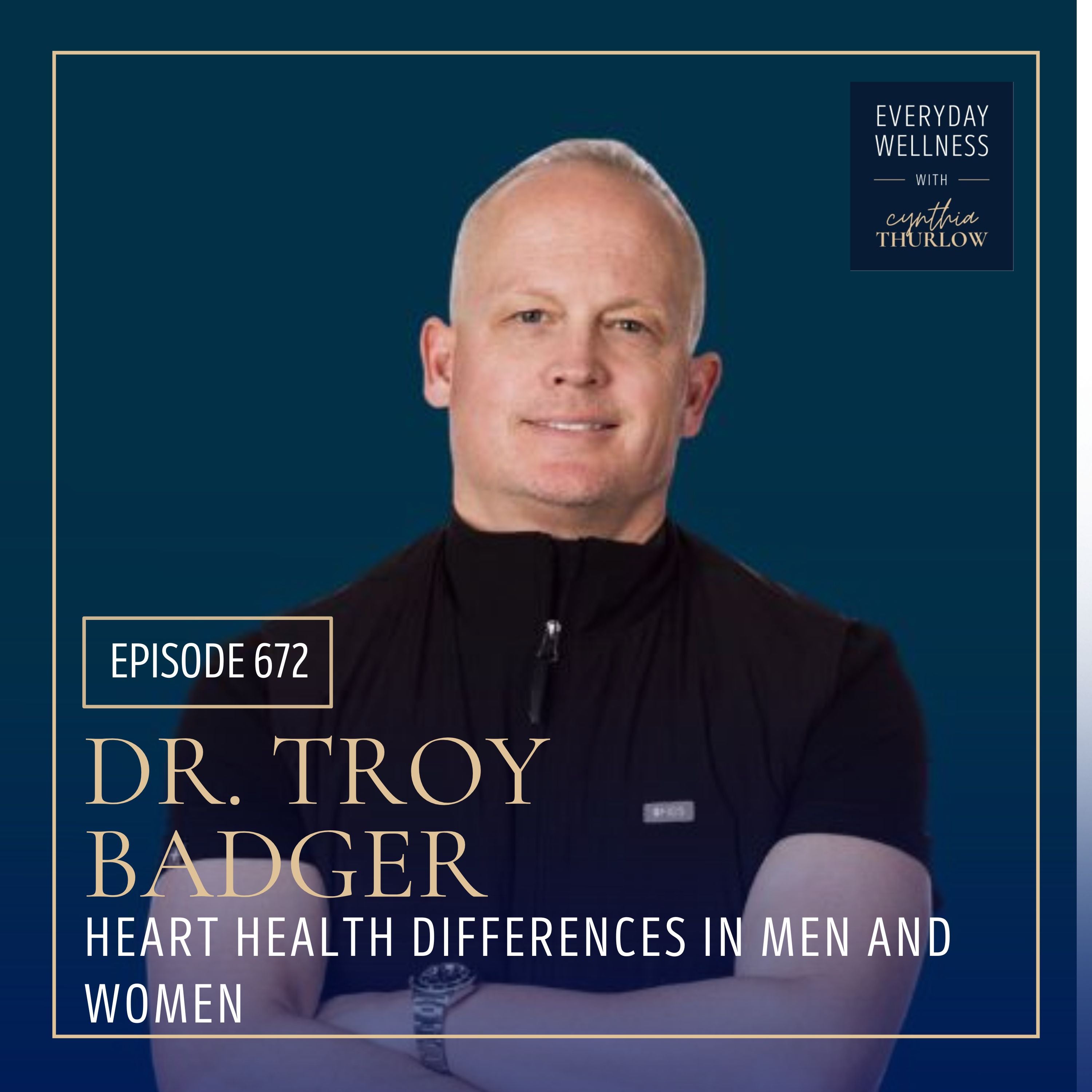
Today, I’m honored to connect with Dr. Troy Badger. He is a board-certified cardiologist and interventionalist and the founder of Cardiostrong, a concierge preventive cardiology clinic in Provo, Utah, focused on reducing cardiovascular risk, optimizing metabolic health, and improving strength and cardiorespiratory fitness for executives and athletes. In today’s conversation, we discuss Dr. Badger’s gender- and age-specific approach to heart health, including treatment differences for men and women, and diagnoses such as INOCA, SCAD, vasospastic disease, and Takotsubo. We examine emotions and their influence on heart health, coronary ischemia and cardiomyopathies, labs and diagnostics, how Dr. Badger assesses risk in his patients, and the differences between a CAC and a CCTA. Dr. Badger also shares the labs he finds essential for all patients and discusses the role of VO2 Max, cardiovascular training, and lifestyle—specifically nutrition, the use of GLP-1 drugs, and a multidisciplinary
StayCurious Newsletter on Snyder’s Fiber Randomized Controlled Trial: https://staycuriousmetabolism.substack.com/p/fiber-is-good-for-you-is-lazy-science?r=40ekz2 StayCurious Newsletter on Inulin and Fructose Resistance: https://staycuriousmetabolism.substack.com/p/the-fiber-that-fights-fat-how-inulin?r=40ekz2 Snyder Interview 1, Four Types of Diabetes: https://youtu.be/mCrc4gfbK2o Snyder Interview 2, Most Viral Aging Study: https://youtu.be/kMpGkg4zMOU Snyder Interview 3, Most Beautiful Exercise Study: https://youtu.be/_9ywulQF2Ho Why does the same food spike one person’s blood sugar while barely affecting another? In this fourth conversation with Stanford’s Professor Michael Snyder, we explore new research on individualized glycemic responses, insulin resistance subtypes, and why one-size-fits-all nutrition advice keeps failing. From rice spiking glucose more than ice cream, to the power of the grape-to-potato ratio, and beyond, this discussion reveals how metabolism, microbiome, immu
There's a pattern that has ruined more lives than almost anything else. Uploaded 02-06-26 People decide what they want. They set a goal. They write down the number. They put a date on it. They tell their friends. They make a plan. And somewhere between week 3 and week 6, the goal quietly dies. The plan falls apart. The date is going to come and go. And the person who set the goal sits in their disappointment and tries to figure out what went wrong. They blame their willpower. They blame their schedule. They tell themselves next January will be different. But that isn't what went wrong. They didn't fail because the goal was wrong. They failed because they had it backwards. They tried to install the goal before they built the habit. They built the destination before they built the road. They wrote the postcard before they laid the bricks. A goal without a habit underneath it is a wish dressed up in a deadline. It cannot survive. It was never going to survive. This seminar lays out why th
Access the masterclass instantly for free: https://nci.university/learn Uploaded 10-01-26 Your goals don’t fail because you lack discipline — they fail because they were aimed at the wrong system. Optimizing behavior without fixing brain chemistry is like issuing commands to a damaged machine. Until the chemical environment is right, effort just increases friction and burnout. All goals live in the conscious mind — but control does not. Real behavior is governed by the mammalian brain, the ancient systems that decide safety, threat, and energy allocation. Every resolution collapses when those lower systems detect risk, even if you consciously “want” the outcome. Goal-setting ignores this hierarchy — and that’s why it keeps failing. Once you target the parts of the brain actually in charge, change stops feeling like force. Discipline becomes unnecessary when the system itself is aligned. Please note that the content provided in this broadcast is for informational and educational purpose
For the days you got through and nobody saw what it took. A quiet place this evening where it counts. About 12 minutes with Steven Webb's calm voice and music underneath. Perfect for the evening. We let the body soften, from the jaw and the eyes down to the belly, because it's been on alert all day. Then we look at what today really cost. Getting up when your body said no. Being kind to someone while you were falling apart inside. Saying "yeah, fine" because where would you even start? There's an old Zen idea I keep coming back to: a thing doesn't need to be seen to be real. The rain falls on an empty field, nobody watches, and it still soaks in. We put the day down for a minute, not away, just down, and finish with three gentle wishes. May the hard days I got through be counted. I've been paralysed a long time, and I know what it can take just to get through the day. You're not doing this on your own. Treat me to a coffee, keep the podcast free, and get my Weekly Calm every Sunday. It
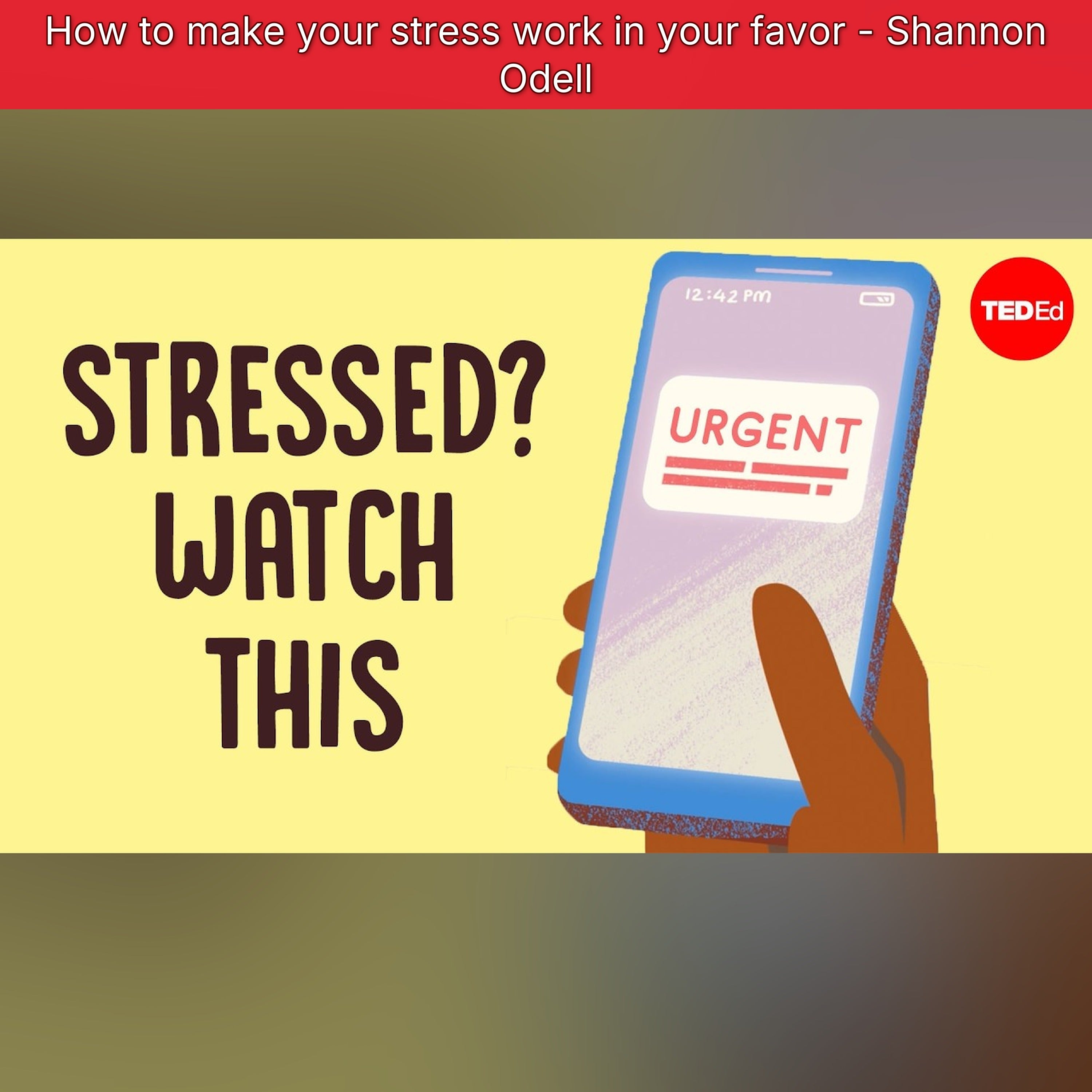
Dig into what causes your stress response to be triggered, and how you can best train your mind and body to deal with stress. -- An upcoming project deadline, a fight with a family member, or even an embarrassing moment can easily trigger our body’s stress response. While we can’t always control what life throws at us, there are ways to better prepare for stressful events we may experience. So, how can we train our minds and bodies to manage our stress response? Shannon Odell shares best practices for dealing with stress. Lesson by Shannon Odell, directed by Biljana Labović. This video made possible in collaboration with the Bezos Family Foundation Learn more about how TED-Ed partnerships work: https://bit.ly/TEDEdPartner A special thanks to David Creswell, Andrew Fuligni, Adriana Galván, and UCLA Center for the Developing Adolescent who provided information and insights for the development of this video. Support Our Non-Profit Mission ---------------------------------------------- Sup
Is your body weight stable, but you're still not eating enough to properly fuel your training, recovery, and overall health? Introducing Why Stable Weight Doesn't Always Mean You're Eating Enough from Jeff Hoehn of the Mind Muscle Connection Podcast (https://www.buzzsprout.com/1508401). Just because your weight isn't changing doesn't necessarily mean you're adequately fueled. In this episode, Jeff breaks down why maintaining a stable body weight doesn't always mean you're meeting your body's energy needs, especially if you're training hard, staying lean, or spending long periods dieting. You'll learn: Why stable body weight doesn't automatically mean adequate energy availability Who is most at risk of underfueling, even when their weight isn't changing How high training output, staying too lean, and chronic dieting can contribute to low energy availability The potential signs of underfueling, including changes in performance, recovery, hormones, and menstrual health Why spending too lo
How little can you lift and still keep your muscle over 40, especially when life gets busy? Thanksgiving is next week, and for a lot of you that's the start of 6 weeks where you might be training less. Some of you try to force your way through your program, and some of you fall off in the "mid-December fitness cliff" and plan to "start over" in January. What happens when people cut their training way down, and what changes in particular once you're over 40? You'll learn: What happened when researchers cut lifting to 1 day a week for 8 months How the maintenance research changes once you're over 60 What we know (and don't) about women in or past menopause How your step count combined with a calorie deficit affects your muscle over a busy stretch 2 versions of a "bare minimum" week to maintain your strength and muscle, and the one I'd recommend for most of you If you want to get through the holidays without losing the muscle you've built, hit play. It's my coaching built into an app, so
What changed in Fitness Lab (https://witsandweights.com/holiday) after a year of feedback from you? Fitness Lab turns 1 on November 18. You told me the app asked too much every day, the workouts felt generic, and the swaps for sore joints weren't reliable enough. I walk through what I changed because of it in this episode. That includes fewer daily tasks, 9 new programs, rest timers, Plateau Check, the Monthly Lab Report, and Holiday Mode, plus tons of “behind the scenes” improvements. If you're wondering whether Fitness Lab fits your goals, hit play! You tell it how many days and how much time you have, and it picks a program that fits: More from Wits & Weights: Get my free guides (http://witsandweights.com/free) Educational content only, not medical advice.
Wider communities should help fund hazard protection even when only some properties directly benefit.
Share your view, then see how readers voted. No sign-in required. This poll is shared across stories.
Do you agree or disagree?
Common Quandary
A Common Quandary to discuss
Another conversation to explore, separate from this news story.
Your friend is forty minutes late. Can the restaurant give away their chair?
A busy restaurant seats your group only after everyone arrives. One friend is forty minutes late and keeps texting that they are almost there. A couple waiting nearby could use the empty place, and the server asks your group to order without them.
How long should one person's delay control everyone else's evening?