In which John Green teaches you about American involvement in World War I, which at the time was called the Great War. They didn't know there was going to be a second one, though they probably should have guessed, 'cause this one didn't wrap up very neatly. So, the United States stayed out of World War I at first, because Americans were in an isolationist mood in the early 20th century. That didn't last though, as the affronts piled up and drew the US into the war. Spoiler alert: the Lusitania was sunk two years before we joined the war, so that wasn't the sole cause for our jumping in. It was part of it though, as was the Zimmerman telegram, unrestricted submarine warfare, and our affinity for the Brits. You'll learn the war's effects on the home front, some of Woodrow Wilson's XIV Points, and just how the war ended up expanding the power of the government in Americans' lives. Hey teachers and students - Check out CommonLit's free collection of reading passages and curriculum resource
Bacteria often get a bad rap, but they’re some of our best partners in science and medicine! In this episode, we’ll explore what bacteria are doing with their DNA — including how they can trade it around. We’ll learn about chromosomes and plasmids, gene expression and recombinant DNA, and how E. coli are used to make insulin. Introduction: The Microbiome 00:00 Prokaryotes & DNA 1:33 Plasmids & Horizontal Gene Transfer 2:44 Insulin 4:49 Gene Expression 6:30 Dr. Rebecca Lancefield 7:54 Review & Credits 9:05 This series was produced in collaboration with HHMI BioInteractive, committed to empowering educators and inspiring students with engaging, accessible, and quality classroom resources. Visit https://BioInteractive.org/CrashCourse (https://biointeractive.org/CrashCourse) for more information. Are you an educator looking for what NGSS Standards are covered in this episode? Check out our Educator Standards Database for Biology here: https://www.thecrashcourse.com/biologystandards Check o
We all think we’re smart. But are we really that intelligent, and why does it even matter? This episode was produced by Hady Mawajdeh, edited by Avishay Artsy, fact-checked by Melissa Hirsch, engineered by Bridger Dunnagan, and hosted by Jonquilyn Hill. A man taking an intelligence test. Photo by BSIP/UIG via Getty Images.
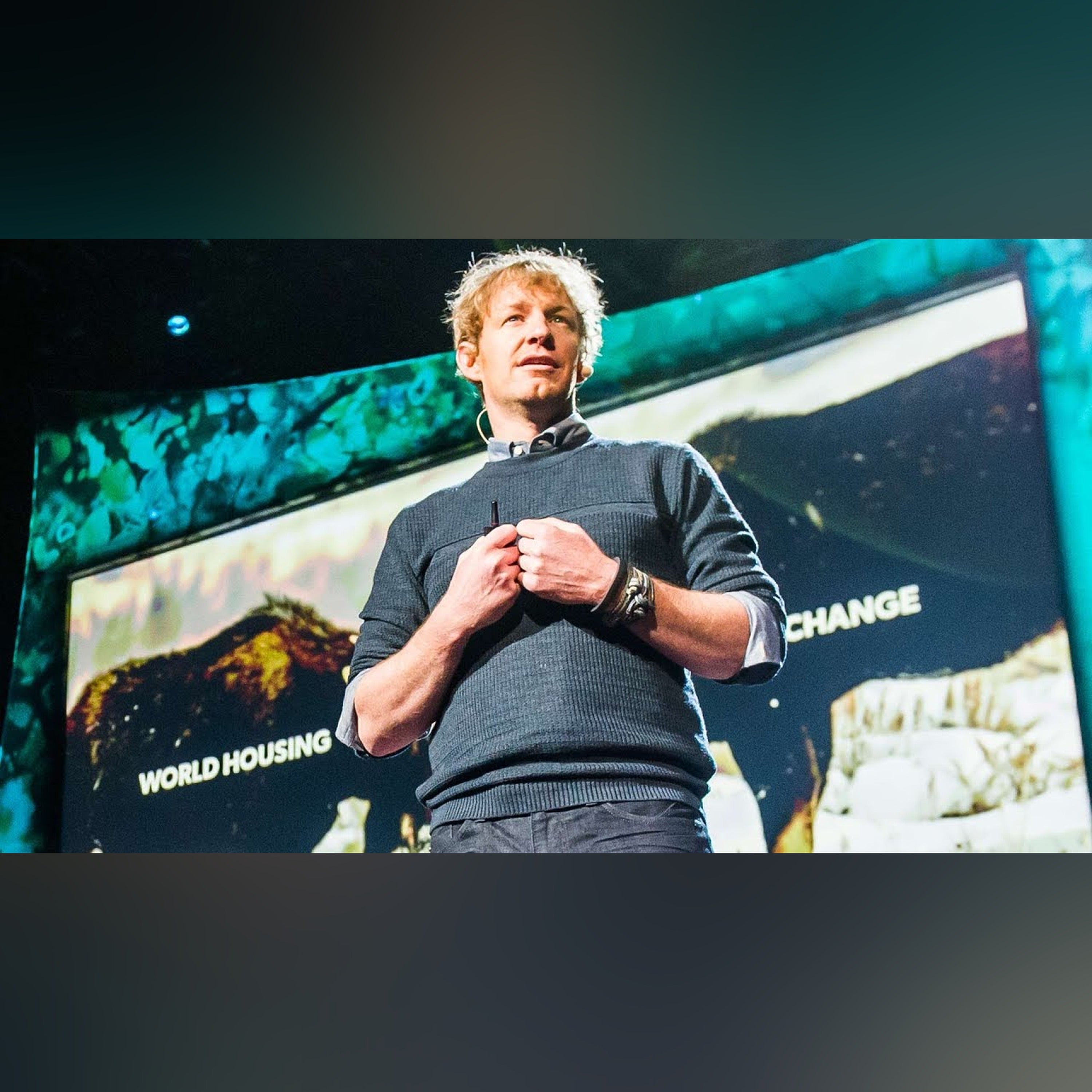
Building a skyscraper? Forget about steel and concrete, says architect Michael Green, and build it out of ... wood. As he details in this intriguing talk, it's not only possible to build safe wooden structures up to 30 stories tall (and, he hopes, higher), it's necessary. Uploaded 16-08-13 Talk by Michael Green.
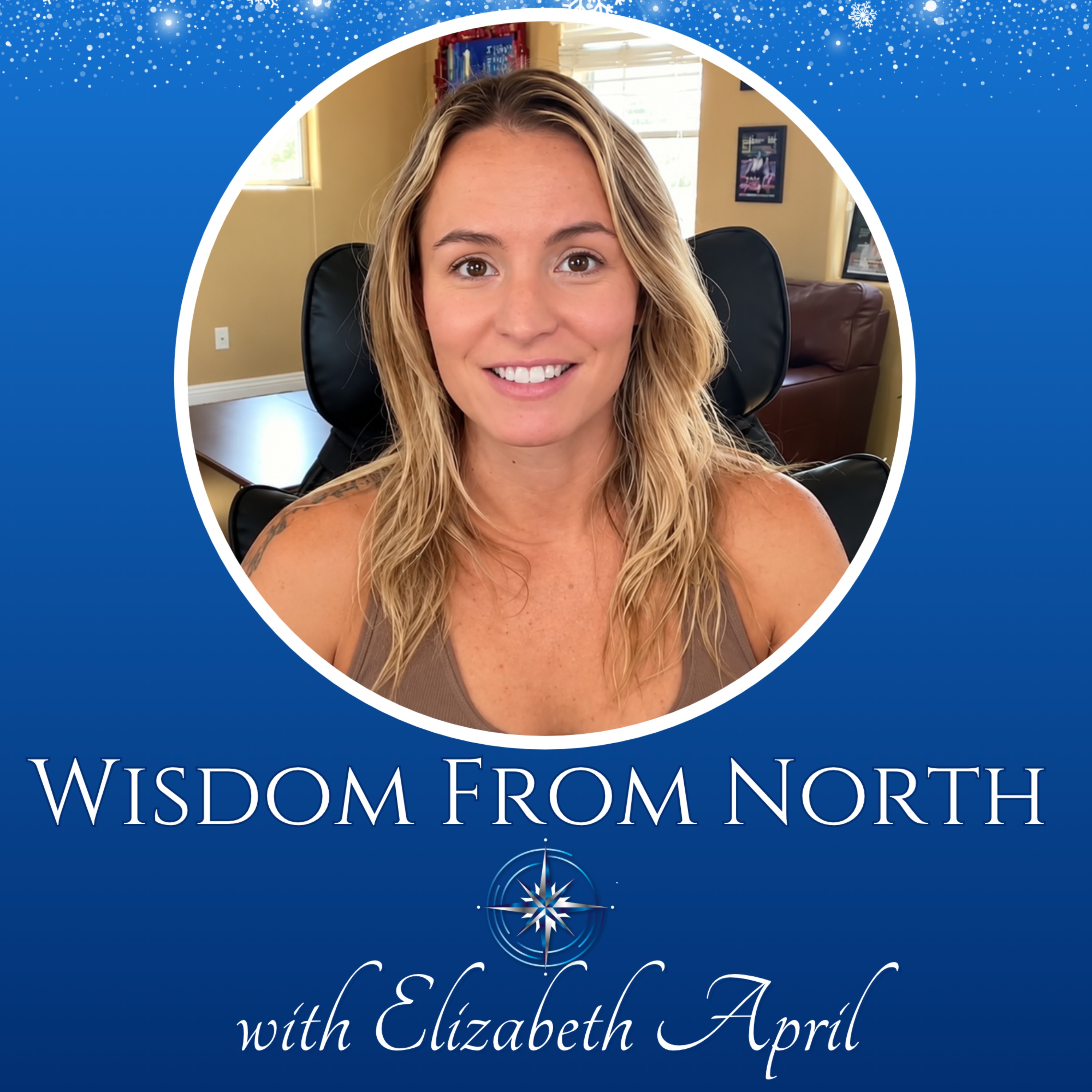
In this episode we meet renowned spiritual teacher, clairvoyant, and remote viewer Elizabeth April, who shares her extraordinary encounters with extraterrestrials and the Galactic Federation of Light. Elizabeth reveals how a mysterious Pleiadian being invited her to a Galactic Federation meeting inside the Moon, where she received messages about humanity's future and the coming ascension. What is really happening on Earth, and why could 2026–2028 be such a crucial period for humanity? Elizabeth shares her predictions about the split between 3D and 5D timelines, the New Earth, extraterrestrial disclosure, and the hidden history of humanity involving the Anunnaki and reptilian beings. We also explore the spiritual implications of artificial intelligence, the teachings of Jesus and Buddha, and what Elizabeth says Source revealed to her about the true purpose of life. Above all, how can we reclaim our power and consciously choose our future? Please enjoy our episode with Elizabeth April! D
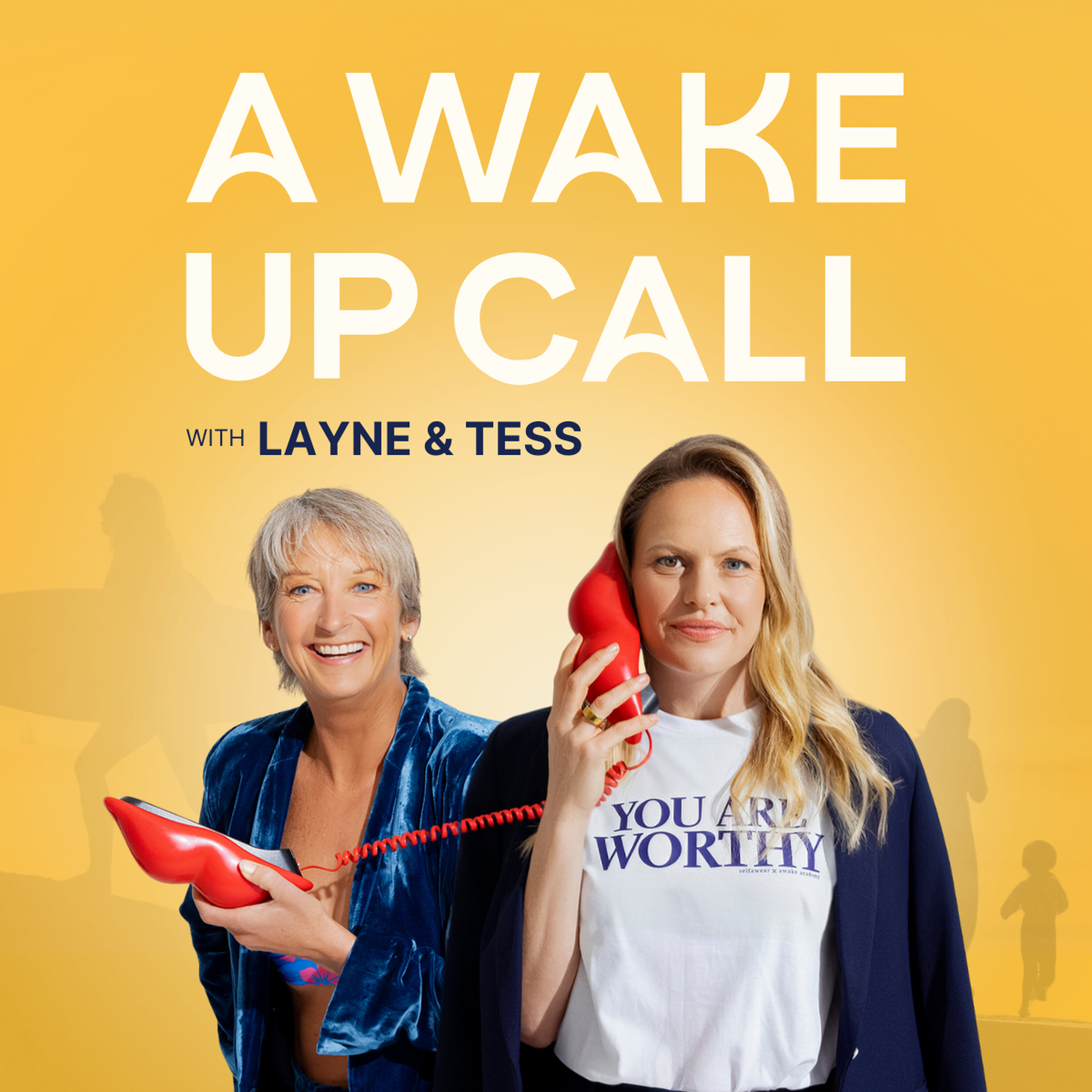
If you have ever wondered: “How do I know if the man in my life is struggling when he says he’s fine?” “Why does he get angry and short with everyone instead of just saying he’s sad?” “How do I switch off from work and actually be present with my family?” - this episode is for you. Behind a lot of anger, irritability and drinking in men, there can be a cry for help. This Movember, Dr Zac Seidler joins Layne and Tess for a candid, honest conversation about the men in our lives, the rules they inherit, and what it takes to rewrite the script for the next generation. Dr Zac Seidler is a clinical psychologist, Global Director of Men’s Health Research at Movember and an Associate Professor at Orygen and The University of Melbourne, where he leads the Young Men’s Mental Health lab. He developed Men in Mind, Movember’s training that helps clinicians work better with men. On A Wake Up Call he shares the story of his father, Sydney GP and addiction specialist Dr Raymond Seidler, and how losing
Are you self-conscious about your clutter, or are you self-aware of what's causing it? There's a big difference between feeling embarrassed about the state of your home and understanding the habits and behaviours that have contributed to it. When you're self-conscious, you might worry about what visitors think, feel overwhelmed by everything that needs doing, or blame your lack of storage, your family or your busy lifestyle. You might even feel ready to hire a skip and throw everything away! But self-awareness takes you somewhere different. Instead of focusing on how your home looks, you start asking why it looks that way. You recognise patterns of overbuying, holding onto things, accepting freebies or struggling to make decisions. You begin to understand that lasting change involves more than simply getting rid of clutter. You'll discover seven key differences between self-consciousness and self-awareness, including: - Why embarrassment doesn't always lead to action - The difference b
In which John Green teaches you about the Gilded Age and its politics. What, you may ask, is the Gilded Age? The term comes from a book by Mark Twain and Charles Dudley Warner titled, "The Gilded Age." You may see a pattern emerging here. It started in the 1870s and continued on until the turn of the 20th century. The era is called Gilded because of the massive inequality that existed in the United States. Gilded Age politics were marked by a number of phenomena, most of them having to do with corruption. On the local and state level, political machines wielded enormous power. John gets into details about the most famous political machine, Tammany Hall. Tammany Hall ran New York City for a long, long time, notably under Boss Tweed. Graft, kickbacks, and voter fraud were rampant, but not just at the local level. Ulysses S. Grant ran one of the most scandalous presidential administrations in U.S. history, and John will tell you about two of the best-known scandals, the Credit Mobilier sc
Uploaded 24-04-18 View full lesson: https://ed.ted.com/lessons/the-rise-and-fall-of-the-assyrian-empire-marian-h-feldman Before the sun never set on the British Empire; before Genghis Khan swept the steppe; before Rome extended its influence to encircle the Mediterranean Sea; there was ancient Assyria. Considered by historians to be the first true empire, Assyria’s innovations laid the groundwork for every superpower that has followed. Marian H Feldman details the rise and fall of the Assyrian Empire. Lesson by Marian H Feldman, animation by Naghmeh Farzaneh. Thank you so much to our patrons for your support! Without you this video would not be possible! Ricki Daniel Marbun, James Bruening, Ricardo Diaz, Danny Romard, Mariana Ortega, Leen Mshasha, Hector Quintanilla, Raheem , Roman Pinchuk, Soma Ali, Ai Ejima, Barbara Younker, Ojas Kapoor, Maurice Castonguay, Ryan Hooker, Benjamin Chan, Dominick Biolsi, Pi Guanghui, Terry Minion, and Rob Johnson.
In this episode, Hank talks about how nutty our world is via Buffers! He defines buffers and their compositions and talks about carbonate buffering systems in nature, acid rain, pH of buffers, and titration. Plus, a really cool experiment using indicators to showcase just how awesome buffers are. Pssst... we made flashcards to help you review the content in this episode! Find them on the free Crash Course App! Download it here for Apple Devices: https://apple.co/3d4eyZo Download it here for Android Devices: https://bit.ly/2SrDulJ -- Table of Contents Nature is Nutty 0:00 Carbonate Buffering and Acid Rain 0:35 Definition of Buffers 1:47 Composition of Buffers 2:26 pH of Buffers 3:33 Titration 7:43 Carbonate Buffering in Nature 7:12 - Crash Course is on Patreon! Want to find Crash Course elsewhere on the internet? Facebook - http://www.facebook.com/YouTubeCrashCourse Twitter - http://www.twitter.com/TheCrashCourse Instagram - https://www.instagram.com/thecrashcourse/ CC Kids: http://www.
Discover what causes acid rain, and how scientists were able to largely eliminate this major environmental threat. Uploaded 13-04-21 -- In 1963, scientists studying Hubbard Brook Experimental Forest made a shocking discovery. Their most recent rainfall samples were nearly 100 times more acidic than usual; which could destroy the area’s ecosystems in a matter of decades. What was causing this deadly rainfall? And what could be done to stop it? Joseph Goffman details how scientists transformed this major threat into a minor issue. Lesson by Joseph Goffman, directed by Nick Hilditch. Support Our Non-Profit Mission ---------------------------------------------- Support us on Patreon: http://bit.ly/TEDEdPatreon Check out our merch: http://bit.ly/TEDEDShop ---------------------------------------------- Connect With Us ---------------------------------------------- Sign up for our newsletter: http://bit.ly/TEDEdNewsletter Find us on Twitter: http://bit.ly/TEDEdTwitter Peep us on Instagram: ht
Mike grew up eating plenty of sugar. As a competitive boxer and wrestler, he would sometimes lose weight to make his target, then celebrate with a pie. It wasn't until much later, when he started having ongoing health and back problems, that he began looking more closely at his diet. Mike says that when he cut sugar, his inflammation decreased and his aches and pains started to go away. He also shares why he decided to cut sugar out of his diet and how that change affected the way he feels, particularly when it comes to pain and inflammation. Mike also shares how his interest in health and pain management led him to become involved in developing a non-invasive technology designed to help relieve pain. Find Mike here. (https://signalrelief.com/) To get personalized guidance to stop emotional eating and break free from sugar cravings, plus a year of support and accountability... join the 12-week program, Freedom from Cravings Formula TODAY. (https://sugarcravingsfree.com/book-your-call/)
Learn how to prime your metabolism now for January without restricting your favourite foods over the holidays. (Plus Free Workshop Details Below!) If your first thought about starting any new health or weight loss plan before January is “not now, it’s the busiest time of year,” this episode is for you. Joanne agrees with you, however she then shows why the last few weeks of the year are actually the best time to get ready for your new year health goals, without having to diet your way through the holiday season. Joanne shares a conversation she had this week with a new colleague who said she is interested in learning more but “now isn’t the best time,”. She also talks about a client who is planning to do a January "reset" after a great year and what Joanne told her to focus on throughout the holiday season so she could enjoy some extra treats without undoing all of her hard work. She then walks through the most common thoughts that keep women waiting until the New Year to start even th
Cotton is everywhere in our modern world, and it became a hugely important crop in the 19th century United States. Cotton was a huge economic boon to the US, and much of that wealth was built on the backs of enslaved laborers. And cotton didn't only benefit the states where slavery was legal. While cotton was mainly grown in the southern states, much of that cotton was processed in northern textile mills. Today we'll learn about the growth of the cotton industry, who benefitted from it, and who was left out. Clint's book, How the Word is Passed is available now! https://bookshop.org/a/3859/9780316492935 VIDEO SOURCES -Edward E. Baptist, The Half Has Never Been Told: Slavery and the Making of American Capitalism. New York: Basic Books, 2014. -Sven Beckert, Empire of Cotton: A Global History. New York: Penguin Books, 2014. -Eugene Dattel, Cotton and Race in the Making of America: The Human Costs of Economic Power. Lanham, MD: Ivan R Dee, 2009. -Adam Rothman, Slave Country: American Expan
Air Date: November 8th, 2026 with Barclays Hampden Hospitality and Events Hosts: Lord Willie Haughey and Sir Tom Hunter This week on the Go Radio Business Show with Hunter & Haughey, Tom Hunter and Willie Haughey tackle some of the biggest issues facing Scotland, the UK and the global economy. From US politics, interest rate fears and AI risks to Scotland's economic future, housing crisis and business growth, the pair deliver a passionate and thought-provoking discussion on leadership, investment and what needs to happen next. They ask a crucial question: Are Scotland's best days behind it, or can bold decisions unlock a brighter future? Along the way, they debate Trump, growth, manufacturing, energy costs, housing, skills, AI threats and why Scotland needs action rather than more delay. Based on Key Episode Highlights The impact of US midterm elections and global instability on the economy. Why interest rates could rise again and what it means for businesses. Tom Hunter's challenge to
This week on Crash Course Economics, we're talking about monetary policy. The reality of the world is that the United States (and most of the world's economies) are, to varying degrees, Keynesian. When things go wrong, economically, the central bank of the country intervenes to try aand get things back on track. In the United States, the Federal Reserve is the organization that steps in to use monetary policy to steer the economy. When the Fed, as it's called, does step in, there are a few different tacks it can take. The Fed can change interest rates, or it can change the money supply. This is pretty interesting stuff, and it's what we're getting into today. Crash Course is on Patreon! Thanks to the following Patrons for their generous monthly contributions that help keep Crash Course free for everyone forever: Fatima Iqbal, Penelope Flagg, Eugenia Karlson, Alex S, Jirat, Tim Curwick, Christy Huddleston, Eric Kitchen, Moritz Schmidt, Today I Found Out, Avi Yashchin, Chris Peters, Eric
Art history is much more than names, dates, and creepy babies. It helps us understand how history itself gets constructed and told. In this episode of Crash Course Art History, we’ll learn how interpreting artwork reveals connections among all of us, across cultures and across time. Introduction: The Stories Art Tells 00:00 What Is Art History? 01:33 The Medicis & Giorgio Vasari 03:17 How Art History Developed 04:43 How History Is Shaped by What Survives 08:10 Review & Credits 11:06 Image Descriptions: https://docs.google.com/document/d/1ETiCxe4GrVzFii7dBhF42oHx1EUCCh5y12wbtUjsH8A/edit Sources: https://docs.google.com/document/d/1GW2NKzhpMNMmRyAFJVhFJG9cSfUOMRL-QrcWuHcWcIA/edit?usp=sharing *** Crash Course is on Patreon! Thanks to the following patrons for their generous monthly contributions that help keep Crash Course free for everyone forever: Leah H., David Fanska, Andrew Woods, DL Singfield, Ken Davidian, Stephen Akuffo, Toni Miles, Steve Segreto, Kyle & Katherine Callahan, Laurel
When you’re working on a project, studying something new, or just trying to get through a busy day, there are lots of natural ways to talk about the progress you’re making. So today, we’re going to look at six useful expressions you can use when something is moving forward. One down, one to go. So far, so good. We’re getting there. Halfway there. Almost there. One step at a time. The Happy English Podcast Helping people speak English better since 2014 Over 1,000 episodes • 8 million downloads Learn more about my English lessons and courses https://www.myhappyenglish.com (https://www.myhappyenglish.com/)
Singer, songwriter, and producer Breland shares insights into the creative process of songwriting and how to build your skills. -- "Think Like A Musician" connects you with working musicians who want to help the music-curious and music-passionate hone and share the gift of music with the world. Part interview, part animated course, our second season "Think Like A Songwriter" features artists sharing their insight on the ins and outs of fine-tuning your songwriting and crafting timeless, memorable music. Each episode features free supplemental learning materials developed by Education Through Music (https://etmonline.org) (https://etmonline.org)/) — a nonprofit with over 30 years of experience developing classroom-adaptable curriculum for music educators. Directed by Kozmonot Animation Studio. A special thanks to Breland who provided his insights and expertise for this video. You can check out his page here: https://www.youtube.com/@UCz0Ob7eYRAKSoPQb9oKmBmg Support Our Non-Profit Missio
This Wonder Room starts with my own parenting fail, involving granola, a sarcastic reply about Cheerios and an argument I really should have walked away from. If you’ve ever been rage-baited by your teen, you’re not alone. I’m joined by Katharine Radice, teacher, author and mother of teenage boys, to take on the messy reality of living with teenagers. We cover: Why some teens seem to pick fights, and why a row can feel like a release A listener’s message about her 14-year-old, who hit and kicked her when her phone was taken away: how to help teens catch anger before it explodes, why small things are worth a conversation before they become a row, and why we shouldn’t assume a child will turn out like a difficult relative How to talk about phones with an autistic teen or one with PDA who resists conversation, including listening without words, setting a timer and using language that doesn’t feel like a demand Our response to Dr Özgür Bolat’s ideas in The Reward Trap: where we agree on pr
Your dream is already in your DNA, but your dream doesn't know who you are yet. Today is the day your Monday through Friday starts looking like the life you're dreaming of. In this best-of compilation from The Positive Mindset Podcast, Henry Lawrence pulls together his best moments on living your dream every day from two episodes: why God puts dreams in our DNA, the two questions that let your dream get to know you, the perfect day exercise, the "my name is ___ and I'm here to change the world" statement, the side effect of becoming the proof, and why we are light bringers, gratitude in the flesh. In this episode: • "Your dream doesn't know who you are." • "What can I do today so that my dream knows me?" • "Your dreams are not for you. They are you." • "They would know your dream from the work" • "My name is Henry Lawrence and I am here to change the world" • "It's so difficult to be the proof." • "I was already here the whole time. I realized I didn't need the place. That is freedom."
In this English lesson, you'll learn about typical Canadian Halloween candy! Join me as I talk about some of the most popular candies and chocolate bars that kids receive when they go trick-or-treating in Canada. We'll look at treats like Smarties, Kit Kat, Coffee Crisp, Reese's Peanut Butter Cups, Skittles, Rockets, and many more! I'll explain what each candy is, what it tastes like, and whether or not I like it. You'll also learn some useful English words to describe candy, including chewy, crunchy, sour, sweet, sticky, and chocolate-covered. You'll even discover a few interesting differences between Canadian and American candy! I hope you enjoy this fun English vocabulary lesson, and I hope it helps you learn a few new English words and phrases while discovering a little bit more about Canadian culture. Have a great day, and thanks for watching!
In which John Green teaches you about the Progressive Presidents, who are not a super-group of former presidents who create complicated, symphonic, rock soundscapes that transport you into a fantasy fugue state. Although that would be awesome. The presidents most associated with the Progressive Era are Theodore Roosevelt, William Taft, and Woodrow Wilson. During the times these guys held office, trusts were busted, national parks were founded, social programs were enacted, and tariffs were lowered. It wasn't all positive though, as their collective tenure also saw Latin America invaded A LOT, a split in the Republican party that resulted in a Bull Moose, all kinds of other international intervention, and the end of the Progressive Era saw the United States involved in World War. If all this isn't enough to entice, I will point out that two people get shot in this video. Violence sells, they say. Hey teachers and students - Check out CommonLit's free collection of reading passages and c