If life knocked you down today, this is not where your story ends. You don’t have to pretend it doesn’t hurt. You do get to decide who you become as you move through it. This episode is a compilation from past episodes of The Positive Mindset Podcast. I went back through the catalog, from 2020 to now, not only to show the growth and understanding in this teaching, but how applying these things to myself has changed me. In this episode: “It's a gift that I get to learn again.” “You're experiencing those things, but you are not those things.” “Life isn't always going to be perfect, but there's always perfection in life.” “This is a practice. It's not perfection.” “Internally, the way we succeed in failure is we show up anyway.” “You'll have that win that nobody can take away from you.” “You are absolutely worth fighting for.” “We mess up, we get knocked down, but we can get back up.” “I am the proof that the dream is still real because I'm gonna keep showing up.” “That's a lighthouse whe
We have learned over the past few weeks that gases have real-life constraints on how they move here in the non-ideal world. As with most things in chemistry (and also in life), how a gas moves is more complex than it seems at first. In this episode, Hank describes what it means when we talk about the velocity of a gas - to understand gas velocity, we have to know what factors affect it, and how. Hank also teaches you about effusion, diffusion, and concentration gradients, before showing off a cool experiment that physically demonstrates the things you have just learned. Sound exciting enough for you? Let's get started. *Special Thanks to Matt Young at the University of Montana (Geosciences Department, Environmental Biogeochemistry Lab) who helped with the chemical demonstrations.* Pssst... we made flashcards to help you review the content in this episode! Find them on the free Crash Course App! Download it here for Apple Devices: https://apple.co/3d4eyZo Download it here for Android De
Explore the similarities and differences between how your eyes see and how a video camera “sees.” Uploaded 06-04-15 -- Your eyes don’t always capture the world exactly as a video camera would. But the eyes are remarkably efficient organs, the result of hundreds of millions of years of coevolution with our brains. Michael Mauser outlines the similarities and differences between your eye and a video camera. Lesson by Michael Mauser, animation by Nick Hilditch. Support Our Non-Profit Mission ---------------------------------------------- Support us on Patreon: http://bit.ly/TEDEdPatreon Check out our merch: http://bit.ly/TEDEDShop ---------------------------------------------- Connect With Us ---------------------------------------------- Sign up for our newsletter: http://bit.ly/TEDEdNewsletter Find us on Twitter: http://bit.ly/TEDEdTwitter Peep us on Instagram: http://bit.ly/TEDEdInstagram ---------------------------------------------- Keep Learning -------------------------------------
Today, we're going to talk about how the Earth moves, but to do that, we're going to have to go way back to the early days of the galaxy! Processes that happened before the Earth even formed have led us to the geographic patterns and processes that create Earth's environments and support all living things. We'll talk about how the Earth rotates, the effects of it being slightly tilted, how events like sea ice melting impact how the Earth wobbles, and of course talk about how our elliptical orbit gives us seasons. So many of our life decisions are influenced by the motion of Earth. It guides where we decide to live, what food we eat, or even what weather we experience - which we'll talk about more next time. Watch our videos and review your learning with the Crash Course App! Download here for Apple Devices: https://apple.co/3d4eyZo Download here for Android Devices: https://bit.ly/2SrDulJ Crash Course is on Patreon! Thanks to the following patrons for their generous monthly contributio
In this episode, Katie Mack and John Green discuss the wonder keeping the stars apart... dark energy. Head to https://policygenius.com/crashcourse to get your free life insurance quotes and see how much you could save. This show is a production of Complexly. If you want to help keep Crash Course free for everyone, forever, you can join our community on Patreon at http://www.patreon.com/crashcourse Chapters 0:00 - Introduction 1:25 - Reviewing our Timeline 6:05 - Reviewing Redshift & Introducing the Hubble Tension 19:14 - Cosmic Noon & Galactic Archaeology 32:30 - The Universe's Rate of Expansion 40:29 - Dark Energy & The Cosmological Constant 55:58 - Poetry in the Astrophysics Podcast 58:07 - Outro *** Support us for $5/month on Patreon to keep Crash Course free for everyone forever! https://www.patreon.com/crashcourse Or support us directly: https://complexly.com/support Join our Crash Course email list to get the latest news and highlights: https://mailchi.mp/crashcourse/email Get ou
Learn Spanish through today’s real news. In this episode: A cyberattack affects a French blood bank, raising concerns about systems that keep blood and vaccines cold. Also: Israel's election produces no clear winner, while Arab-led parties gain a key role in forming a government. Hoy: Un ataque digital a un banco de sangre · Elecciones sin ganador claro en Israel. Today’s Spanish focus: ningún, no or not any = no or not any. Vocabulary: la sangre (blood), el frío (cold), la comida (food). Learn more from today’s episode with the full podcast transcript, English translation, vocabulary explanations, and extra learning materials: https://linguawire.com/episodes/spanish-a1-2026-11-07 Hosted on Acast.
What do the midterm election results mean for America's future, and where do Republicans go from here? Dennis Prager reacts to the election results, the growing appeal of socialism among young voters, and why he believes Americans are overlooking President Trump's accomplishments. He examines how inflation, the Iran conflict, and the administration's messaging around ICE could all have contributed to the loss of voters. Dennis also explains why he believes political setbacks are no excuse for despair. Join PragerUnited today and submit your question for Dennis to answer during an upcoming episode. What else is PragerU unpacking? Follow PragerU: YouTube: https://www.youtube.com/@PragerU Instagram: https://www.instagram.com/prageru X/Twitter: https://x.com/prageru Facebook: https://www.facebook.com/prageru Rumble: https://rumble.com/c/PragerU PragerU Español:https://www.youtube.com/@esPragerU Follow Dennis Prager: Instagram:https://www.instagram.com/thedennisprager/ X/Twitter:https://x.c
Slam the Gavel welcomes back Michael Sobota to the podcast. Michael was last on the podcast September 7th, 2025 and November 21st, 2025 (Season 6, Episode 338). Michael is updating his case. He has since moved to Maryland. His case number is: C-16-CV-26-005684. The hearing is on November 13, 2026. To Reach Michael: cell: 301-509-1211, [email protected] Maryann Petri: dismantlingfamilycourtcorruption.com TikTok: www.tiktok.com/@maryannpetri Instagram: https://www.instagram.com/guitarpeace/ Pinterest: Slam The Gavel Podcast/@guitarpeace LinkedIn: https://www.linkedin.com/in/maryann-petri-62a46b1ab/ Twitter https://x.com/PetriMaryann
View full lesson: http://ed.ted.com/lessons/the-science-of-symmetry-colm-kelleher Uploaded 13-05-14 When you hear the word symmetry, you might think generally of triangles, butterflies, or even ballerinas. But defined scientifically, symmetry is "a transformation that leaves an object unchanged." Huh? Colm Kelleher unpacks this abstract term and explains how animal's distinct symmetries can tell us more about them -- and ourselves. Lesson by Colm Kelleher, animation by Andrew Foerster.
View full lesson: https://ed.ted.com/lessons/if-molecules-were-people-george-zaidan-and-charles-morton Uploaded 23-07-13 When molecules collide, chemical reactions can occur -- causing major structural changes akin to getting a new arm on your face! George Zaidan and Charles Morton playfully imagine chemical systems as busy city streets, and the colliding molecules within them as your average, limb-swapping joes. Lesson by George Zaidan and Charles Morton, animation by Neighbor.
Social Security 2027 retirement changes are here. In this complete 2027 Social Security retirement update, Dr. Ed explains the new 3.6% COLA, maximum monthly retirement benefits, Social Security taxable earnings cap, FICA taxes, retirement earnings limits and the important rules for people who continue working while collecting benefits. Need help reviewing your Medicare plan or finding the best one for you? Contact our friends at Chapter Medicare for FREE help: 352-841-0632 Here are the major 2027 numbers covered in this video: 3.6% Social Security COLA $2,170 estimated average monthly retired-worker benefit $4,188 maximum benefit at full retirement age $3,094 maximum example for someone claiming at age 62 $5,358 maximum example for someone claiming at age 70 $192,300 Social Security taxable earnings maximum $11,922.60 maximum employee Social Security tax $25,560 annual earnings limit if you are under full retirement age $2,130 monthly earnings-test amount $67,920 earnings limit during
In which Craig Benzine teaches you about the United States Congress, why it's bicameral, and what bicameral means. Craig tells you what the Senate and House of Representatives are for, talks about some of the histories of the institutions, and reveals to you just how you can become a representative. It's not that easy. But an eagle gets punched, so there's that. Produced in collaboration with PBS Digital Studios: http://youtube.com/pbsdigitalstudios Support is provided by Voqal: http://www.voqal.org (http://www.voqal.org/) Chapters: Introduction: What is Congress? 00:00 Who makes up the House of Representatives? 1:09 Who makes up the Senate? 1:38 What does Congress do? 1:58 Powers of the House of Representatives 2:13 Powers of the Senate 3:13 Why is Congress bicameral? 3:52 What's the difference between the Senate and the House? 6:00 Credits 8:32 Crash Course is on Patreon! Want to find Crash Course elsewhere on the internet? Facebook - http://www.facebook.com/YouTubeCrashCourse Twitte
Today we're taking a break for another round of "Bad Astronomy" Crash Course Astronomy posters available at DFTBA.com music: "Batty McFaddin" - Kevin MacLeod http://incompetech.com/ -- PBS Digital Studios: http://youtube.com/pbsdigitalstudios Follow Phil on Twitter: https://twitter.com/badastronomer Want to find Crash Course elsewhere on the internet? Facebook - http://www.facebook.com/YouTubeCrashCourse Twitter - http://www.twitter.com/TheCrashCourse Tumblr - http://thecrashcourse.tumblr.com (http://thecrashcourse.tumblr.com/) Support CrashCourse on Patreon: http://www.patreon.com/crashcourse
Nov 6, 2026 – The biggest development this week wasn't the midterm elections, the collapse in oil prices, or even Thursday's 4.4% plunge in the S&P 500. It was the breakdown in semiconductor and AI infrastructure stocks, and how quickly...
Fall asleep peacefully while listening to the beautiful story of Prophet Musa (AS), one of the greatest Prophets of Allah. This relaxing Islamic bedtime story takes you on a peaceful journey through the extraordinary life of Prophet Musa (AS), from his miraculous survival as a baby on the Nile to his encounter with Allah at the sacred mountain and the unforgettable parting of the Red Sea. Through slow, calming narration, discover a timeless Quranic story filled with faith, courage, patience, divine protection, and complete trust in Allah. The life of Prophet Musa (AS) reminds us that even during our most difficult moments, we are never beyond Allah's knowledge, mercy, and care. From a mother placing her beloved child into the river while trusting Allah's promise, to a young man seeking refuge in Madyan, every chapter reveals meaningful lessons about Tawakkul, perseverance, and the wisdom of Allah's plan. Follow Prophet Musa as he receives his mission, confronts Pharaoh, witnesses the m
In which John Green teaches you that things don't always go as planned on the Crash Course set. Here we have outtakes from our Crash Course in Literature and some of the early US History episodes. Warning: there is some censored profanity in this video. It's pretty mild, you can probably handle it. Crash Course is on Patreon! Want to find Crash Course elsewhere on the internet? Facebook - http://www.facebook.com/YouTubeCrashCourse Twitter - http://www.twitter.com/TheCrashCourse Instagram - https://www.instagram.com/thecrashcourse/ CC Kids: http://www.youtube.com/crashcoursekids
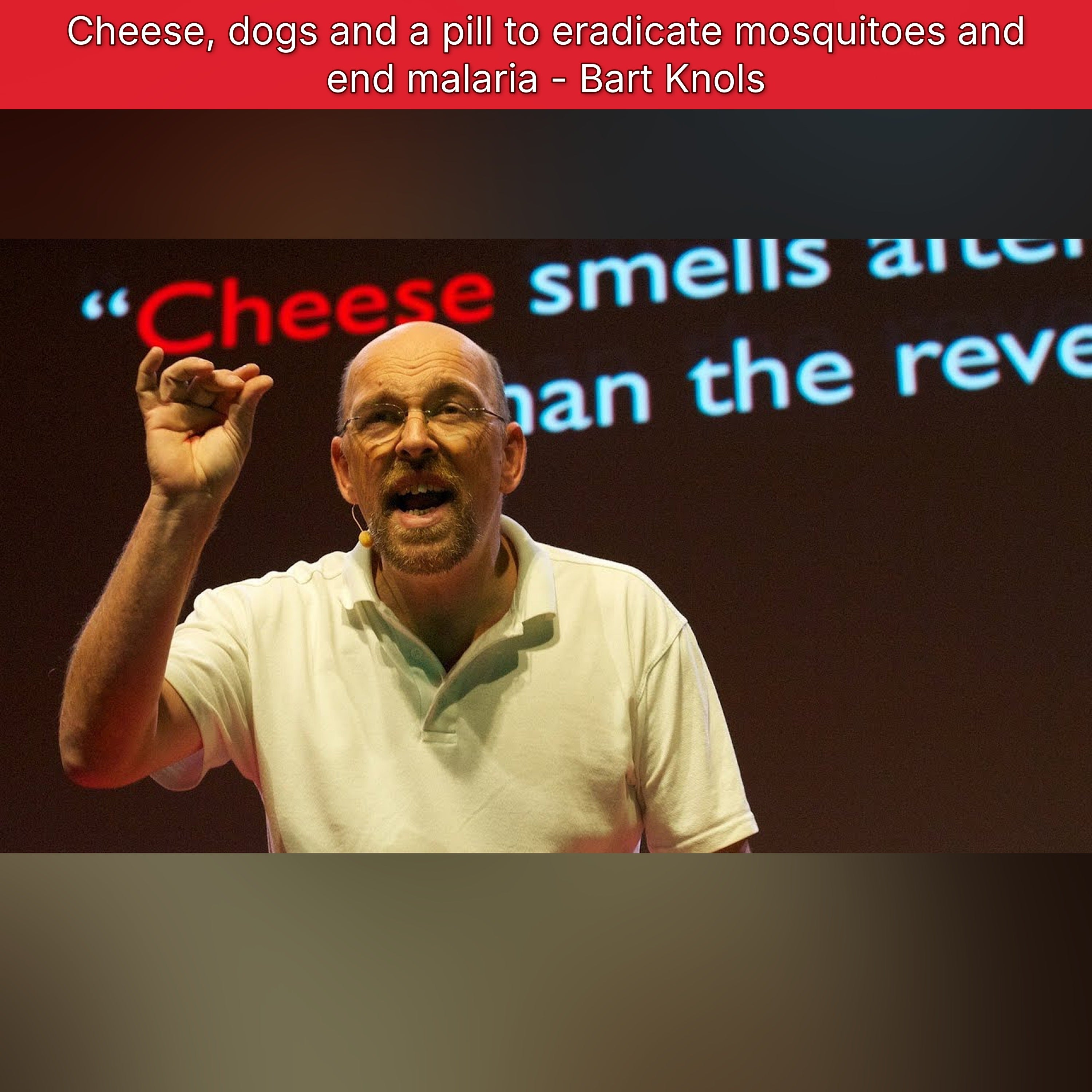
View full lesson: http://ed.ted.com/lessons/cheese-dogs-and-a-pill-to-kill-mosquitoes-and-end-malaria-bart-knols We can use a mosquito's own instincts against her. At TEDxMaastricht speaker Bart Knols demos the imaginative solutions his team is developing to fight malaria -- including limburger cheese and a deadly pill. (Filmed at TEDxMaastricht.) Talk by Bart Knols.
Get to know how a healthy marine ecosystem functions, and what creates the lethal conditions that lead to dead zones. Uploaded 18-08-20 -- For most of the year, the Gulf of Mexico is teeming with marine life, from tiny crustaceans to massive whales. But every summer, disaster strikes. Around May, animals begin to flee the area. And soon, creatures that can’t swim or can’t swim fast enough begin to suffocate and die off in massive numbers. What's going on? Kate Slabosky dives into the lethal conditions that create dead zones. Lesson by Kate Slabosky, directed by Mette Ilene Holmriis. Animator's website: http://metteilene.com/ Producer's website: https://animationworkshop.via.dk/ Sign up for our newsletter: http://bit.ly/TEDEdNewsletter Support us on Patreon: http://bit.ly/TEDEdPatreon Find us on Twitter: http://bit.ly/TEDEdTwitter Peep us on Instagram: http://bit.ly/TEDEdInstagram View full lesson: https://ed.ted.com/lessons/can-the-ocean-run-out-of-oxygen-kate-slabosky Thank you so muc
In this solo episode, Leana gets into one of the most requested topics from her community — the perfectionist mindset in faith. She opens up about her own journey with hijab, modesty, and the moments she found herself resenting religion because she was holding herself to an impossible standard. This one is honest, human, and full of grace. This one is for every woman who has ever felt like she is not doing enough, not religious enough, or not worthy enough to keep trying. Leana gets into: → Why putting on the hijab took her a year and a half — and why that timeline was exactly right for her → How the all or nothing mindset in faith can lead to burnout, resentment, and pulling away from God entirely → Why small, consistent steps in your faith journey will always outperform going full force and burning out → The difference between doing acts of worship out of fear versus doing them out of genuine love for God → Why God knows your heart and your intention — and why that matters more than
It's one of the most powerful ideas in the history of science. That a brain is, in essence, a computer. That we can look past its gelatinous flesh and see through to its underlying workings. That these workings are best described in the language of programs and computations, algorithms and representations. There's no question that this "brain as computer" analogy has been—in many ways—enormously generative. But in other ways could it be leading us astray? My guest today is Dr. Mazviita Chirimuuta (https://outsidecolour.net/). Mazviita is a Philosopher of Mind and Neuroscience at the University of Edinburgh, in Scotland. She's the author of the widely acclaimed and widely discussed 2024 book, The Brain Abstracted: Simplification in the History and Philosophy of Neuroscience (https://direct.mit.edu/books/oa-monograph/5741/The-Brain-AbstractedSimplification-in-the-History). Here, Mazviita and I talk about the early days of her career spent trying to build computational models of cells in
How can the color “red” be a global commodity? How can the way a statue stands be a sign of cultural exchange? In this episode of Crash Course Art History, we’ll explore how trade networks have moved both materials and ideas — and how art reflects a multi-directional flow of influences. Introduction: Bugs & Red Dye 00:00 The Silk Road 01:10 The Crusades 04:15 The Conquistadors 07:42 Review & Credits 09:09 Image Descriptions: https://docs.google.com/document/d/1ETiCxe4GrVzFii7dBhF42oHx1EUCCh5y12wbtUjsH8A/edit Sources: https://docs.google.com/document/d/1GW2NKzhpMNMmRyAFJVhFJG9cSfUOMRL-QrcWuHcWcIA/edit?usp=sharing *** Support us for $5/month on Patreon to keep Crash Course free for everyone forever! https://www.patreon.com/crashcourse Or support us directly: https://complexly.com/support Join our Crash Course email list to get the latest news and highlights: https://mailchi.mp/crashcourse/email Get our special Crash Course Educators newsletter: http://eepurl.com/iBgMhY Thanks to the foll
Much like a cell membrane, our atmosphere forms a protective boundary between outer space and the biosphere that allows for all life to exist on Earth’s surface. Today, we’re going to talk about its composition and layers (the troposphere, stratosphere, mesosphere, and thermosphere), follow the path of a sunbeam of light as it travels through space and (potentially) reaches Earth’s surface, and discuss how the greenhouse effect can be both a good and bad thing! Sources Bryant, R.H. 1990. Physical Geography. Rupa and Co. Christopherson, R.W. 2010: Elemental Geosystems. Prentice Hall Watch our videos and review your learning with the Crash Course App! Download here for Apple Devices: https://apple.co/3d4eyZo Download here for Android Devices: https://bit.ly/2SrDulJ Crash Course is on Patreon! Thanks to the following patrons for their generous monthly contributions that help keep Crash Course free for everyone forever: Christine Phelan, Nick, DAVID MORTON HUDSON, Perry Joyce, Scott Harris
This week we continue to spend quality time with gases, more deeply investigating some principles regarding pressure - including John Dalton's Law of Partial Pressures, vapor pressure - and demonstrating the method for collecting gas over water. Pssst... we made flashcards to help you review the content in this episode! Find them on the free Crash Course App! Download it here for Apple Devices: https://apple.co/3d4eyZo Download it here for Android Devices: https://bit.ly/2SrDulJ Table of Contents Theory of the Atom 1:48 Adding up the Pressures 2:34 Mixing Vinegar & Baking Soda 7:15 Collecting Gas Over Water 8:54 Crash Course is on Patreon! Want to find Crash Course elsewhere on the internet? Facebook - http://www.facebook.com/YouTubeCrashCourse Twitter - http://www.twitter.com/TheCrashCourse Instagram - https://www.instagram.com/thecrashcourse/ CC Kids: http://www.youtube.com/crashcoursekids
Dig into the 4 biggest existential risks that threaten the survival of humanity, and explore how we can safeguard our future. -- With the invention of the atomic bomb, humanity gained the power to destroy itself for the first time in our history. Since then, our risk of either extinction or the collapse of civilization has steadily increased. Just how likely are we to destroy ourselves? And what poses the greatest threat to our survival? Dig into four existential threats and explore how we can safeguard our future. Directed by Reza Riahi. Support Our Non-Profit Mission ---------------------------------------------- Support us on Patreon: http://bit.ly/TEDEdPatreon Check out our merch: http://bit.ly/TEDEDShop ---------------------------------------------- Connect With Us ---------------------------------------------- Sign up for our newsletter: http://bit.ly/TEDEdNewsletter Find us on Twitter: http://bit.ly/TEDEdTwitter Peep us on Instagram: http://bit.ly/TEDEdInstagram ----------------