What does Psychology mean? Where does it come from? Hank gives you a 10-minute intro to one of the more tricky sciences and talks about some of the big names in the development of the field. Welcome to Crash Course Psychology!!! Want more videos about psychology? Check out our sister channel SciShow Psych at https://www.youtube.com/scishowpsych! -- Chapters: Introduction: What is Psychology? 00:00 Early Thinkers in Psychology 0:46 Big Questions in Psychology 1:31 Sigmund Freud 2:21 Disciplines of Psychology 3:02 Structuralism 3:29 Functionalism 4:28 Psychoanalysis 4:58 Freud's Death & Legacy 7:01 Behaviorism 7:51 Psychodynamic Theories 8:21 Other Disciplines in Psychology 8:37 Credits 10:09 Crash Course is on Patreon! Want to find Crash Course elsewhere on the internet? Facebook - http://www.facebook.com/YouTubeCrashCourse Twitter - http://www.twitter.com/TheCrashCourse Instagram - https://www.instagram.com/thecrashcourse/ CC Kids: http://www.youtube.com/crashcoursekids
How can a strengths-based approach transform the way we understand and support young people receiving mental health care? In this episode of Mind the Kids, host Dr Clara Faria speaks with Dr Logan Cummings and Dr Dan Dickstein from the CARE (Child and Adolescent Routine Evaluation) Initiative at McLean Hospital and Harvard Medical School. Together, they discuss their recent JCPP Advances paper, Patterns of Psychopathology and Personal Strengths Among Youth in Psychiatric Care. The conversation explores how routine measurement-based care can help clinicians identify not only symptoms and difficulties, but also the personal strengths, social-emotional skills, and sources of resilience that young people bring to treatment. The guests discuss their innovative research, the value of strengths-based assessments, and how understanding individual profiles of strengths and challenges could help personalise interventions and improve outcomes. Topics covered include: Measurement-based care in chi
TODAY'S SCRIPTURE: Numbers 9:15–18 - On the day that the tabernacle was set up, the cloud covered the tabernacle, the tent of the testimony. And at evening it was over the tabernacle like the appearance of fire until morning. [16] So it was always: the cloud covered it by day and the appearance of fire by night. [17] And whenever the cloud lifted from over the tent, after that the people of Israel set out, and in the place where the cloud settled down, there the people of Israel camped. [18] At the command of the LORD the people of Israel set out, and at the command of the LORD they camped. As long as the cloud rested over the tabernacle, they remained in camp. (ESV) CONTACT: [email protected] (NOT a Morning Mindset resource)
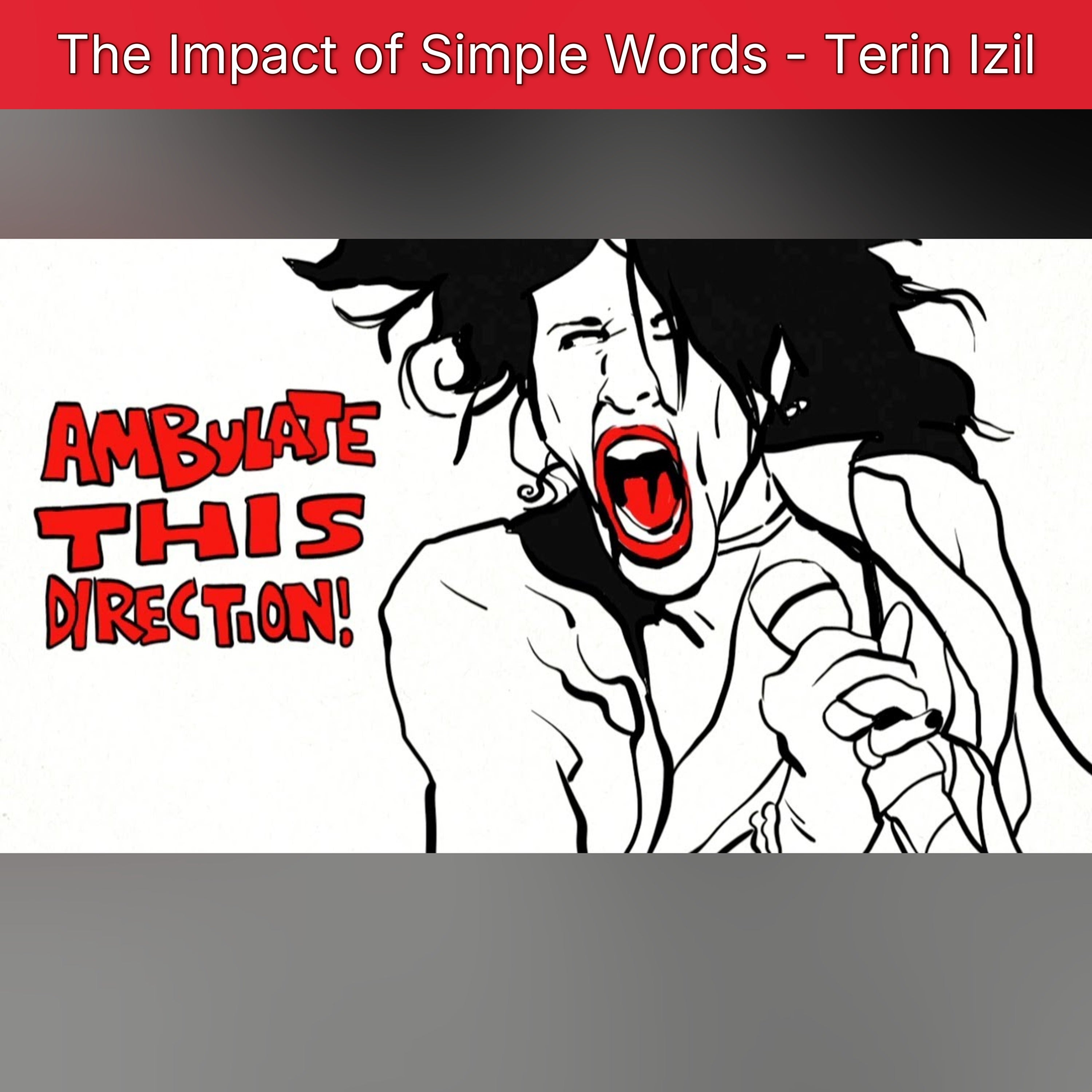
Long, fancy words designed to show off your intelligence and vocabulary are all very well, but they aren't always the best words. In this short, playful video Terin Izil explains why simple, punchy language is often the clearest way to convey a message.
The Petal's New Zealand edition for 10 November 2026 carries six decisions newly reported, all from the High Court, and all six are aired. The thread is old paper: an appeal abandoned but not finished, two family trusts and a charity brought up to date, a century-old divorce file opened, and a mortgage and a draft will that finally stopped holding two estates up. Practice and Procedure Desk (first story). Stone v Bennett [2026] NZHC 3389 - on a Registrar's referral under s 164A of the Senior Courts Act 2016, a proceeding is struck out under s 164B only if plainly abusive, a finding reserved for clear cases such as improper motive, collateral purpose or manifest unfairness; a meritless proceeding or a remediable defect is not of itself an abuse; deemed abandonment of an appeal for non-payment of security for costs under s 126(3) of the District Court Act 2016 does not end the appellant's appeal rights, so a fresh appeal with leave out of time is not necessarily relitigation, though the
Three headnoted appellate decisions from two courts in the Court of Appeal edition of Tuesday 10 November 2026, with the New South Wales, Queensland, Western Australia and ACT editions of the same day folded in. Interlocutory appeal costs payable forthwith; an anonymous tip-off that was no protected confidence; indemnity costs against a litigant in person; a request for an original that was not a call; and an unreasonable verdict ground that failed. Sexual violence and family violence are reported as legal doctrine only. Practice and Procedure Desk (opening story). Golden Rain Development Pty Ltd (ACN 166 672 537) v The Owners-Strata Plan No 97938 (No 2) [2026] NSWCA 238 - an appeal or leave application is a separate proceeding, so the 'conclusion of the proceedings' in r 42.7 Uniform Civil Procedure Rules 2005 (NSW) means the end of the appeal and interlocutory appeal costs are payable forthwith absent a contrary order; Metropolitan Petar not followed; on re-exercise below, r 42.7 app
Nine decisions in the Federal Courts edition for Tuesday 10 November 2026, all from the Federal Court of Australia. The opening story: a contingent creditor with an unliquidated damages claim has standing to seek a liquidator's removal, and a liquidator chosen by the people behind a questionable transfer of the company's only assets is removed for apprehended bias. Then the lessons for creditors, two rulings on decisions made by registrars, security for costs worked line by line, an unopposed native title determination on the papers, and the registry. Commercial Desk (opening story; lessons for creditors on the Practice and Procedure Desk). Goshawk Mining Pty Ltd v Hellyer Metals Pty Ltd, in the matter of Hellyer Metals Pty Ltd (in liq) [2026] FCA 1676 (McElwaine J, 10 November 2026) - Signal: Practice and Procedure; JL p. 9. A contingent creditor with an unliquidated damages claim provable under s 553 of the Corporations Act 2001 (Cth) is "a creditor of the company" within s 5-30 of t
Seven decisions from tribunals in the ACT, Victoria and Queensland in the Tribunals edition of Tuesday 10 November 2026, one with a headnote and three more worked examples from synopses. A medical practitioner who committed perjury and tried to pervert the course of justice, and what it takes to resist cancellation; a building claim under the consumer guarantee of fitness for a disclosed purpose; costs after a mixed result in a domestic building dispute; and sanction on agreed facts in health practitioner discipline. Tribunals Desk: recusal, cancellation and staged costs (lead; headnoted). Medical Board of Australia v KADER (No 2) (Occupational Discipline) [2026] ACAT 66 - adverse credit findings at the liability stage did not ground a reasonable apprehension of bias at penalty (the Ebner test as formulated in Sunshine Loans; no logical connection where the presiding member's view prevailed under s 52(3)); perjury and attempting to pervert the course of justice within all three limbs o
Planning for vulnerable beneficiaries can mean asking different questions about the future of someone you care about. In this episode, Pete Matthew speaks with John Brenchley of Broadshield Solutions about the challenges families can face and how this kind of planning differs from a conventional approach. They discuss the risk of exploitation, the wider needs of families and John's SAFE protocol. This conversation is for education, not personal advice, and the right approach will depend on your family's circumstances. SEND Resources - https://www.broadshield.solutions/resources Legacy Quiz - https://www.broadshield.solutions/legacy-quiz Shownotes: https://meaningfulmoney.tv/session645
In a quiet fantasy village, every adventure loses out to a good night’s sleep. This cozy sleep story is made for anyone dealing with insomnia, anxiety, or a mind that won’t stop racing at bedtime. It works like light sleep hypnosis, with slow pacing and soothing detail to help your thoughts settle. There’s a little magic, a little humour, and nothing at all to keep you awake. This sleep meditation suits both occasional restless nights and ongoing insomnia. Press play, get comfortable, and let sleep find you. Join the Snoozeville Sleep Club Want more Snoozeville? Your support keeps this show going. Join here: tickettosnoozeville.supercast.com Connect: Instagram - https://www.instagram.com/tickettosnoozeville/ Please listen in a place where you can safely go to sleep.
“You shouldn’t make decisions when you’re hungry.” Tell that to the cell that ate a bacterium 1.5 billion years ago and set in motion the evolution of all plants on Earth. In this episode of Crash Course Botany, we’ll explore how plants came to exist, the forces that drive plant evolution, and how we know what Earth’s prehistoric dystopia was like before plants came along. Chapters: A World Without Plants 00:00 Plants' Origin Story 1:09 Defining Evolution 3:06 The Five Forces of Evolution 5:15 Studying Plant Evolution 10:01 Plants' Evolutionary History 11:04 Review & Credits 13:54 Sources: https://docs.google.com/document/d/1PB6WdUJcABAccO-U-t6ic7WbfP2z0Pr5P9a8HMr6zh4/edit?usp=sharing *** Crash Course is on Patreon! Thanks to the following patrons for their generous monthly contributions that help keep Crash Course free for everyone forever: David Fanska, Andrew Woods, Tawny Whaley, Sean Saunders, Katie, DL Singfield, Ken Davidian, Stephen Akuffo, Toni Miles, Steve Segreto, Kyle & Kath
Have you ever had just one piece of your absolute favorite candy left, and a friend asks for it? It's super hard to share when you don’t have much! But what if you could just snap it in half? In this episode of Philosophy is Not Boring, Mira and Finn explore an amazing 1,700-year-old story about a Roman soldier named Martin who did exactly that—but with something way more important than candy! Martin was a cavalry soldier riding through the freezing winter snow when he spotted a shivering beggar. Since he had already given away all his extra money, all Martin had left to stay warm was his own heavy wool cloak. What did he do? He drew his huge metal sword and sliced his beautiful cloak right down the middle to share! That night, he had an incredible dream that changed his life forever. Join us as we learn how this one act of giving half became famous around the world! Discover why kids in the Netherlands, Germany, and Austria walk through the dark, cold streets every November 11th with
Did you know there are real-life dragons living on Earth right now? Join Mira and Finn as they track down the most incredible giant lizard on the planet—the Komodo dragon! These apex predators live on just a few rugged islands in Indonesia, but they absolutely rule their tropical habitat. Imagine a massive lizard that can grow as long as a small car, weigh over 150 pounds, and sprint as fast as a human! In this wild episode, you'll discover the Komodo dragon's epic superpowers. Learn how they use a bright yellow, forked tongue to taste smells from up to five miles away! Find out the shocking secret hiding in their bite—a sneaky venom that researchers recently discovered using an MRI machine. Plus, you won't believe how much they can eat in a single meal, or the gross but genius trick baby dragons use to hide from predators high up in the trees! From secret chainmail armor hiding under their scaly skin to their sixty razor-sharp teeth, these giant reptiles are packed with surprises. Get
Have you ever made a mistake while drawing on a computer tablet and hit the "undo" button? Believe it or not, that helpful little button is actually using a thousand-year-old math trick called an inverse! Join Mira and Finn as they explore the magical mathematical moves that let you rewind time and put things back exactly the way they were! From taking three steps backward to solving a messy Rubik’s cube, almost every move in math has a secret twin that undoes it. You'll travel back to the bustling city of Baghdad in the year 820 to meet a brilliant scholar named al-Khwarizmi. He figured out how to use inverses to restore balance to puzzles, calling his method "al-jabr"—which is where we get the word algebra today! Discover why algebra is really just about putting broken things back together, and find out what happens when you multiply a number by zero. (Hint: it's a lot like trying to unscramble a raw egg!). Tune in to unlock the power of the mathematical undo button!
Matt & Corisande sit down with Kirsty Gallagher, Sunday Times bestselling author of Lunar Living, to unpack why she believes New Year’s resolutions are “the worst thing we can ever do.” Kirsty’s path started with her great-great aunt Mabel’s tarot cards, ran through training as a yoga teacher in India in 2009 (back when a newspaper dubbed her “the lunatic lunar lady” for talking about the moon), and landed in a lunar system giving you up to 26 fresh chances a year to reset your life. They walk through the entire lunar cycle step by step: why the dark moon shows you what you don't want, how to set 3-5 intentions on the new moon, why you can't sleep before a full moon, and the 3am rule Kirsty swears reveals exactly what you're avoiding. Plus: reading your birth chart, why eclipses act as "course corrections from your soul," and the deceptively simple answer to what your purpose actually is. Matt & Corisande, with Kirsty discuss: Why she believes resolutions set on 1 January are doomed, a
Imagine waking up, opening the fridge, and finding absolutely nothing! No grocery stores, no farms, and no food deliveries. For almost all of human history, that was everyday life! People were "hunter-gatherers" who had to walk up to ten miles every single day just to find wild berries and animals for dinner. But about 12,000 years ago, everything changed! In a place called the Fertile Crescent, someone accidentally dropped some wild seeds, and boom—farming was born! Join Mira and Finn as they travel back in time to discover how wild grasses turned into the golden wheat we use for bread today. You'll learn how humans tamed giant, 3,000-pound monster cows called Aurochs and turned them into gentle farm animals! Plus, find out how growing food meant people could finally stop walking and build the world's very first towns. We'll even explore an ancient city with no streets where everyone had to walk on the roofs to get around! Grab your tools and get ready to dig into the fascinating hist
HOMUNCULUS! It's a big and weird word that you may or may not have heard before, but do you know what it means? In this episode of Crash Course Psychology, Hank gives us a deeper understanding of this weird model of human sensation. Want more videos about psychology? Check out our sister channel SciShow Psych at https://www.youtube.com/scishowpsych! -- Chapters: Introduction: HOMUNCULUS 00:00 Sensation vs. Perception 1:22 Sound Waves 1:48 How Human Hearing Works 2:20 How Human Taste Works 3:25 Synesthesia 4:24 How Human Smell Works 5:48 How Human Touch Works 7:23 Kinesthesis 8:34 Vestibular Sense 9:02 Credits 9:47 Crash Course is on Patreon! Want to find Crash Course elsewhere on the internet? Facebook - http://www.facebook.com/YouTubeCrashCourse Twitter - http://www.twitter.com/TheCrashCourse Instagram - https://www.instagram.com/thecrashcourse/ CC Kids: http://www.youtube.com/crashcoursekids
Acidity is a tricky concept, and it’s not always like how we see it in the movies. As organic chemists, we need to know how to predict the strength of weak acids and bases. In this episode of Crash Course Organic Chemistry, we’ll learn four key factors that we can use to predict relative acidity. This important tool will help us us to predict the products of chemical reactions. Episode Sources: Chen, J., Zhao, Y., Li, X. C., & Zhao, J. H. (2019). Pyridine alkaloids in the venom of imported fire ants. Journal of agricultural and food chemistry, 67(41), 11388-11395. Everts, S. (2014). “An Ant’s Acid Antidote” Chemical and Engineering News, 92(9), 44-45. Trummal, A., Lipping, L., Kaljurand, I., Koppel, I. A., & Leito, I. (2016). Acidity of strong acids in water and dimethyl sulfoxide. The Journal of Physical Chemistry A, 120(20), 3663-3669. Series Sources: Brown, W. H., Iverson, B. L., Ansyln, E. V., Foote, C., Organic Chemistry; 8th ed.; Cengage Learning, Boston, 2018. Bruice, P. Y., Org
Doctors Lisa and Sara are joined by Medical Microbiology and Infectious Diseases Consultant Jame for an overview of Antibiotics and Microbiology in General Practice. Doctors Callum and Jame host a podcast in Infectious Diseases called ID:IOTS. In this episode we were keen to pick Jame’s brain about some common conundrums we’ve encountered using some hypothetical cases such as a patient with recurrent UTIs and an elderly, frail patient with possible chest or urine infection. Jame was keen to spread the news about antimicrobial stewardship and highlight guidelines and useful tips for choosing antibiotics including using the AWaRe (Access Watch, Reserve) classification of antibiotics. Great to talk briefly at the end about the benefits for patients of challenging those labelled as Penicillin allergic and how this could be done. Resources: GAWaRe Classification System of Antibiotics, a summary from the ID:OIT team: https://idiots.notion.site/142-AWaRe-classification-2d76a1ea09d881338de1f99
What happens when the birth you planned isn’t the birth you have? In this episode of Anything Goes with Anna Rose, I sit down with Stevie for an honest conversation about motherhood, birth, grief and learning to trust yourself. After planning three home births and having three C-sections, Stevie shares how she processed the births she didn’t expect, let go of the idea that a C-section made her birth experience inferior, and found her own meaning in the journey. We also talk about raising three daughters, navigating postpartum, caring for yourself without guilt, and why no two women’s paths through motherhood should be compared or judged. This is a conversation about making peace with what you can’t control, staying true to your values and creating a life that feels fully yours. CONNECT WITH STEVIE Instagram: @stevie_nupier (https://www.instagram.com/stevie_nupier/) @_mothering_me (https://www.instagram.com/_mothering_me/) CONNECT WITH ANNA Anna Rose: @thereal_annarose (https://www.inst
Today we're going to tell the story of a quiet revolution in the 1960s that shifted our entire understanding of how the Earth works. We currently believe that the Earth's broken outer shell rises from the mantle and folds back in - kind of like a dance of creative destruction and reconstruction - giving us our continents and oceans, mountains and valleys, volcanoes, and earthquakes. And it would take a group of scientists all over the world to get us this grand unifying theory of plate tectonics. SOURCES Petersen, et al 2011. Fundamentals of Physical Geography. Cengage Christopherson, R.W. 2010. Elemental Geosystems. Prentice Hall. 6th edition Strahler, A. 2011. Introducing Physical Geography. Wiley and Sons. 5th Edition https://dinosaurpictures.org/ancient-earth#750 (https://dinosaurpictures.org/ancient-earth) ttps://www.ck12.org/earth-science/Ocean-Ocean-Convergent-Plate-Boundaries/lesson/Ocean-Ocean-Convergent-Plate-Boundaries-HS-ES/ Watch our videos and review your learning with th
Episode 382 came to you LIVE from Pensacola Beach, Florida! The SCRAP went to the beach during IHROC, with a rotating lineup of instructors joining me throughout the show! Tuesday, November 10th Hilton Hotel | Pensacola Beach & YouTube | Firehouse Vigilance I've done LIVE on-location SCRAPS before, but this was the first time bringing my own equipment and running the entire show with Sam's help back in Oklahoma! Not having the setup had kept me from bringing the SCRAP LIVE to more conferences in the past. Now that I've got it, it was time to put it to the test! It was exciting and a little nerve-racking, but everything went well, we learned a lot and will continue to make it better. Hopefully, this opens the door for more LIVE on-location SCRAPS from around the world in the future! We had two LIVE audiences joining the conversation: those who were there in person and everyone watching on YouTube. If you attended the CFT conference, thank you for joining us! Whether you grabbed a front-
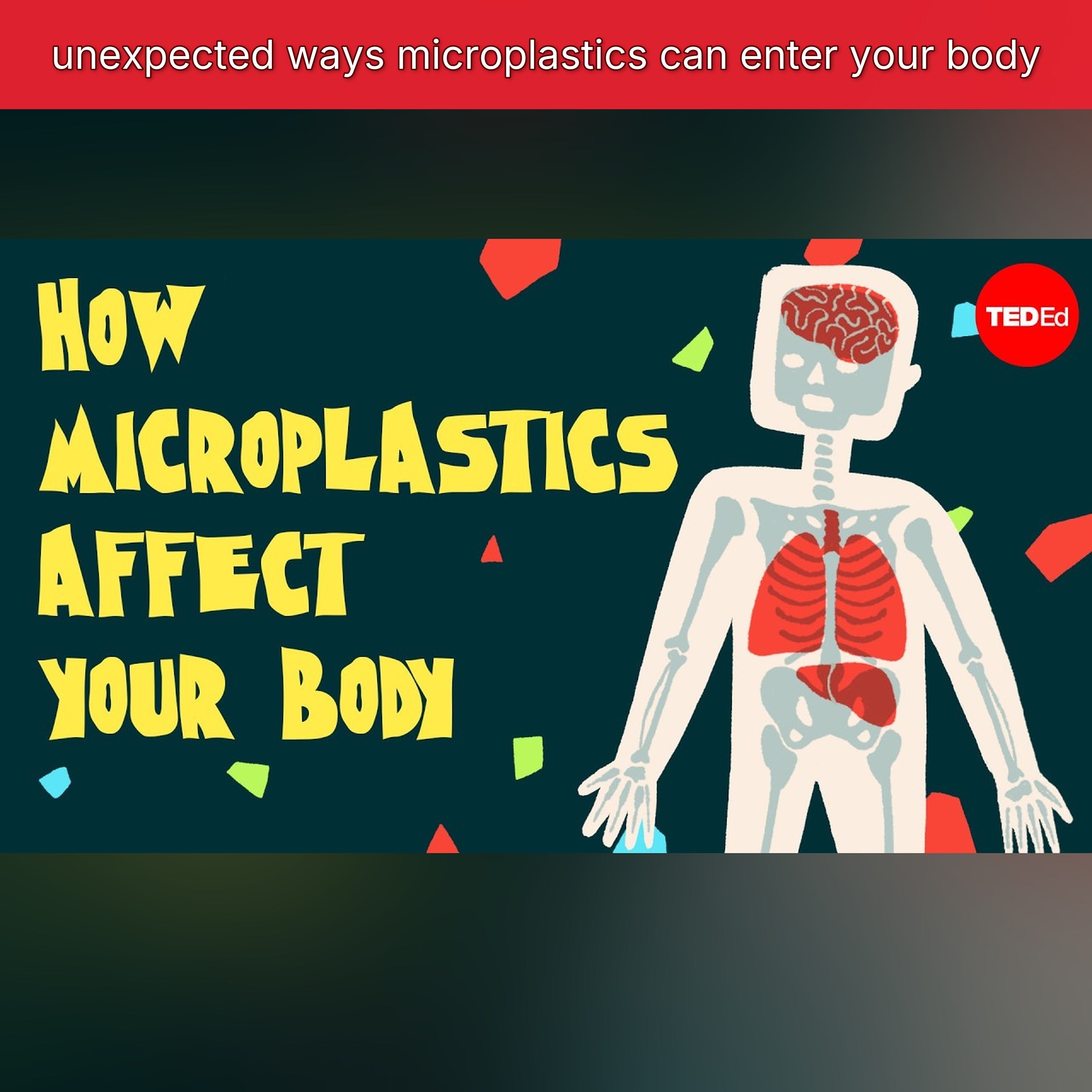
Explore how the microplastics in your body can affect your health, and how we can regulate the amount of plastic in our world. -- Plastic is everywhere. It’s in our clothes, our food, the air we breathe. And plastic is now also in our bodies. Micro and nanoplastics generally enter our bodies in one of three ways: the air, our skin, and what we eat and drink. But how exactly do these microscopic particles affect our health? Dig into how they can interrupt your body’s processes, and how we can begin to fix our plastic problem. Directed by Vicente Nirõ, AIM Creative Studios. This video made possible in collaboration with the Oceanic Preservation Society Learn more about how TED-Ed partnerships work: https://bit.ly/TEDEdPartner Support Our Non-Profit Mission ---------------------------------------------- Support us on Patreon: http://bit.ly/TEDEdPatreon Check out our merch: http://bit.ly/TEDEDShop ---------------------------------------------- Connect With Us ------------------------------
In this edition of "Ask Rach" on The Rachel Hollis Podcast, Rach answers two listener questions about navigating the challenges of parenting teenagers and overcoming the fear and stigma surrounding mental health medication. She shares her experience raising teenage boys and offers practical advice to a mother whose twin sons have suddenly started fighting, explaining how setting clear boundaries, staying calm, and consistently following through with consequences can help restore peace at home. Rachel then offers encouragement to a mother of four who is struggling with anxiety and depression but feels hesitant about starting medication, sharing personal stories about her own mental health journey and her recent decision to begin hormone replacement therapy. She discusses why seeking professional help is nothing to be ashamed of and how medication, when recommended by a healthcare provider, can work alongside lifestyle changes like mindfulness, exercise, and stress management to support