How does the information from mRNA turn into a protein? It all comes down to translation, where nucleotides are translated into a chain of amino acids. In this episode of Crash Course Biology, we’ll cover codon-reading ribosomes, tRNA delivery trucks, and scientists who are using what they know about translation to save lives. Introduction: Making Proteins 00:00 DNA & mRNA 1:13 How Translation Works 2:16 Peptides & Polypeptides 6:43 Why Proteins Matter 7:07 Dr. Katalin Karikó 9:26 Review & Credits 11:37 This series was produced in collaboration with HHMI BioInteractive, committed to empowering educators and inspiring students with engaging, accessible, and quality classroom resources. Visit https://BioInteractive.org/CrashCourse (https://biointeractive.org/CrashCourse) for more information. Are you an educator looking for what NGSS Standards are covered in this episode? Check out our Educator Standards Database for Biology here: https://www.thecrashcourse.com/biologystandards Check out
Astronomers study a lot of gorgeous things, but nebulae might be the most breathtakingly beautiful of them all. Nebulae are clouds of gas and dust in space. They can glow on their own or reflect light from nearby stars. When they glow it’s usually predominantly red from hydrogen and green from oxygen, and when they reflect and scatter light it’s from massive hot stars, so they look blue. Stars are born in some nebulae and create new ones as they die. Some nebulae are small and dense, others can be dozens or hundreds of lightyears across. Check out the Crash Course Astronomy solar system poster here: http://store.dftba.com/products/crashcourse-astronomy-poster -- Chapters: Introduction: Nebulae 00:00 Emission Nebulae 1:17 Reflection Nebulae 2:36 Molecular Clouds 3:43 The Orion Nebula 5:07 Stars Form in Nebulae 6:42 Edges of Nebulae 8:32 Viewing Nebulae in the Infrared 10:10 Review 11:04 -- PBS Digital Studios: http://youtube.com/pbsdigitalstudios Follow Phil on Twitter: https://twitter.
Sam Altman Just Admitted AI’s Favourite Metric Is Fake. Sam Altman calls tokens a questionable unit, Amazon warns against tokenmaxxing, and enterprises search for a better way to measure AI ROI. AI providers count tokens, price tokens and report tokens. Businesses then use those figures to track adoption, manage budgets and sometimes evaluate productivity. But token consumption measures computational activity, not whether the AI solved a useful problem. In this episode of A Beginner’s Guide to AI, we examine the gap between AI token pricing and AI business value. Sam Altman has called tokens “a kind of fake unit,” while also explaining why customers prefer a visible and predictable meter. Paying for results sounds more logical, but outcome-based AI pricing requires clear goals, reliable benchmarks and a way to prove what the AI actually caused. We also look at the rise and fall of tokenmaxxing. Amazon warned that token usage and AI adoption metrics become deeply flawed when they are se
In which John Green teaches you about the United States in the 1920s. They were known as the roaring 20s, but not because there were lions running around everywhere. In the 1920s, America's economy was booming, and all kinds of social changes were in progress. Hollywood, flappers, jazz, there was all kinds of stuff going on in the 20s. But as usual with Crash Course, things were about to take a turn for the worse. John will teach you about the Charleston, the many Republican presidents of the 1920s, laissez-faire capitalism, jazz, consumer credit, the resurgent Klan, and all kinds of other stuff. Hey teachers and students - Check out CommonLit's free collection of reading passages and curriculum resources to learn more about the events of this episode. The Roaring Twenties was characterized by great highs: https://www.commonlit.org/texts/the-roaring-twenties However, the Roaring Twenties ended with the country's most tragic low, the Great Depression: https://www.commonlit.org/texts/the
The National Gambling Helpline in Australia is available 24 hours a day, 7 days a week for free, confidential support and counselling: https://www.gamblinghelponline.org.au/ Tune in next Monday for another episode of Justice Matters: Conversations About Crime & Punishment! Follow Justice Matters: Instagram: instagram.com/justicematterspodcast/ TikTok: tiktok.com/@justicematterspod Subscribe on YouTube @JusticeMattersPod Listen on Apple Podcasts & Spotify! New episodes every week. Hosted on Acast. See acast.com/privacy (https://acast.com/privacy) for more information.
Explore how snakes evolved, and find out how their jaw-dropping anatomy allows them to take down prey several times their size. -- Since slithering onto the scene some 150 million years ago, evolving length and limbless-ness out of their ancestral lizard forms, snakes have diversified rapidly. Their noodly bodies and flexible heads granted them access to novel places and prey. And today, there are nearly 4,000 snake species, spanning habitats high and low. Niko Zlotnik explores how snakes evolved into incredible predators. Lesson by Niko Zlotnik, directed by Anna Benner. Support Our Non-Profit Mission ---------------------------------------------- Support us on Patreon: http://bit.ly/TEDEdPatreon Check out our merch: http://bit.ly/TEDEDShop ---------------------------------------------- Connect With Us ---------------------------------------------- Sign up for our newsletter: http://bit.ly/TEDEdNewsletter Find us on Twitter: http://bit.ly/TEDEdTwitter Peep us on Instagram: http://bit.l
Head to https://policygenius.com/crashcourse to get your free life insurance quotes and see how much you could save. Dr. Katie Mack teaches John Green about the beginning of the Universe - including that we are not just made of stardust; we are also made of Big Bang stuff, with pieces of us directly born in the vast, first cacophony. Chapters 00:00 - Introduction 4:00 - There Shouldn’t Be Stuff 8:53 - The Big Bang Theory 21:28 - We’re Not Sure About The Singularity 32:00 - Cosmic Inflation 36:26 - The First Second 38:43 - The First Two Minutes 46:48 - Outro *** Crash Course is on Patreon! Thanks to the following patrons for their generous monthly contributions that help keep Crash Course free for everyone forever: Leah H., David Fanska, Andrew Woods, DL Singfield, Ken Davidian, Stephen Akuffo, Toni Miles, Steve Segreto, Kyle & Katherine Callahan, Laurel Stevens, Burt Humburg, Perry Joyce, Scott Harrison, Mark & Susan Billian, Alan Bridgeman, Breanna Bosso, Matt Curls, Jennifer Killen,
Uploaded 23-04-18 View full lesson: https://ed.ted.com/lessons/why-can-t-you-divide-by-zero In the world of math, many strange results are possible when we change the rules. But there’s one rule that most of us have been warned not to break: don’t divide by zero. How can the simple combination of an everyday number and a basic operation cause such problems? Lesson by TED-Ed, animation by Nick Hilditch. Thank you so much to our patrons for your support! Without you this video would not be possible! Craig Sheldon, Andrew Bosco, Nik Maier, Adi V, Hiroshi Uchiyama, Chris , Vik Nagjee, Della Palacios, Alexander Walls, سلطان الخليفي, Ibel Wong, Kiarash Asar, Aliyya Rachmadi, Max Shuai Tang, Jamerson Chingapanini, Al the Scottish Wildcat, Janelle , Sabrina Gonzalez, Malcolm Callis, and Aaron Henson.
Tuberculosis is often thought of as an old-timey disease, but in reality, it continues to kill over a million and a half people per year, despite its known cure. How did we get here, to a world where decades of work toward a cure stalled in its dissemination around the globe? And how can understanding the history of TB point us toward a different future? If you’ve been following author and TB-hater John Green in any way for the last year or so, this video is the deep dive you’ve been waiting for… TB Fighters: You can learn more about the TB Fighters Community at https://tbfighters.org (https://tbfighters.org/) This lecture was produced thanks to the generosity of the Crash Course audience, including those who fund us on Patreon, who’ve purchased Crash Course coins, and who share Crash Course with others. Your support lets us experiment with new formats, cover lesser-known topics, and go deeper than we ever have before. Thank you! Sources: https://docs.google.com/document/d/1C8jRj6cE50p
In this episode of the Medical English Podcast, we do a deep dive into syncope — the medical word for fainting — unpacking why it's so often mistaken for a seizure and which red flags separate a harmless faint from a cardiac emergency. You'll learn how to: Use key vocabulary including "syncope," "prodrome," "vasovagal," "orthostatic hypotension," and "arrhythmia" Distinguish reflex, orthostatic, and cardiac syncope, and understand why cardiac causes carry the highest risk Recognise convulsive syncope and explain why brief jerking movements don't always mean a seizure Translate diagnostic terms like Holter monitor and tilt table test into language a patient can actually picture Adapt the same explanation across three different patients: a first-time fainter, a long-term vasovagal patient, and someone mid-workup for a cardiac cause We explore the clinical reasoning behind a syncope workup and how matching your language to the patient in front of you builds trust at every stage. This epis
Slam The Gavel welcomes back Julie Federico to the podcast. Julie was last on Season 5, Episodes 227 and 234. Today we discussed how the factor played out when Julie's own mother sided with her abu$er in her divorce. This happens in many families when there is a divorce. We discussed the aspects of financial and emotional abuse and what to do if you are in these situations. To Reach Julie Federico: JulieFederico.com or [email protected] Maryann Petri: dismantlingfamilycourtcorruption.com TikTok: www.tiktok.com/@maryannpetri Instagram: https://www.instagram.com/guitarpeace/ Pinterest: Slam The Gavel Podcast/@guitarpeace LinkedIn: https://www.linkedin.com/in/maryann-petri-62a46b1ab/ Twitter https://x.com/PetriMaryann
In this Think Resolution episode, Foley's List barrister David Kim speaks with Yukiho Kashimoto about her PhD research exploring the potential integration of mediation into Investor-State Dispute Settlement. They discuss how mediation could provide greater opportunities for affected local communities to participate in disputes between foreign investors and states, including the challenges of balancing competing interests, ensuring transparency and improving access to remedies.
Dig into the false cause fallacy, which assumes that one event causes another, and learn how to distinguish between correlation and causation. Uploaded 10-08-20 -- It’s 1843, and a debate is raging about one of the most common killers of women: childbed fever— no one knows what causes it. One physician has observed patients with inflammation go on to develop childbed fever, and therefore believes the inflammation causes the fever. What's the problem with this argument? Elizabeth Cox explores the false cause fallacy and how to dissect claims with skepticism. Lesson by Elizabeth Cox, directed by TOGETHER. Animator's website: https://wearetogether.ca/ Sign up for our newsletter: http://bit.ly/TEDEdNewsletter Support us on Patreon: http://bit.ly/TEDEdPatreon Find us on Twitter: http://bit.ly/TEDEdTwitter Peep us on Instagram: http://bit.ly/TEDEdInstagram View full lesson: https://ed.ted.com/lessons/can-you-outsmart-the-fallacy-that-fooled-a-generation-of-doctors-elizabeth-cox Thank you so
Twelve headnoted appellate decisions from four courts in the Court of Appeal edition of Friday 6 November 2026, with the New South Wales, Queensland and Western Australia editions of the same roll-up folded in. A Kable challenge the court declined to decide; emails as information, not property, in self-defence; a State that submitted to jurisdiction; liability now and damages later at VCAT; and duress by caveat. An abuse claim, domestic violence offending and a sexual offence are reported as legal doctrine only. Public Law Desk (opening story). Rapid Legal Solutions Pty Ltd v State of Queensland [2026] QCA 227 - a court ordinarily will not decide a constitutional challenge to provisions that do not bear on the party; the s 9 Acts Interpretation Act 1954 (Qld) severance presumption yields only to a positive all-or-nothing intention, not reduced effectiveness; severing ss 87ZM and 87ZQ(3)(b) Motor Accident Insurance Act 1994 (Qld) leaves Pt 5B's purpose intact. Appeal dismissed with cost
Twelve decisions in the Federal Courts edition for Friday 6 November 2026, all from the Federal Court of Australia, three with Judicial Ledger headnotes. The opening story: when a docket judge who has managed related proceedings, knows a contested expert report and has imposed a penalty on overlapping agreed facts should step aside for apprehended bias, and where the line stops. Then judicial advice for liquidators with a warning for next time, standing for a derivative suit, a worked example on costs after mixed success, the docket and the registry. Practice and Procedure Desk (opening story). IG Power (Callide) Ltd v CS Energy Limited [2026] FCA 1629 (Derrington J, 6 November 2026) - Signal: Practice and Procedure; Illustrative; JL p. 14. A recusal application made before pleadings close may be determined on the respondent's indication of the issues to be contested. Applying Ebner v Official Trustee in Bankruptcy (2000) 205 CLR 337, apprehended bias may arise where three conditions c
The Petal's New Zealand edition for Friday 6 November 2026 carries seven decisions newly reported, one from the Supreme Court and six from the High Court, and all seven are aired. The thread is what you have to show: a taxpayer must prove the Commissioner's decision wrong, an occupier needs an interest the owner gave, a bankrupt needs a claim worth vesting, and a restrained litigant needs a real reason to be heard. Criminal Law Desk (lead). Burns-Wong-Tung v The King [2026] NZSC 169 - persons who are sworn or affirmed but then largely refuse to answer are witnesses under the Evidence Act 2006 (Jones v R followed; Ford v R distinguished), a proposition raising no matter of general or public importance; no likelihood of error in the application of Morgan v R or in the finding that probative value outweighed the unfair prejudice under s 8; the fair trial ground fell with them; leave on sentence refused for want of detailed submissions. Extension of time granted; leave to appeal dismissed
Fourteen decisions from the Patent Office and four state tribunals in the Tribunals edition of Friday 6 November 2026, four with headnotes and four more worked examples from synopses. Whether spittle washed off at once is a bodily injury under Queensland's victims of crime scheme; how far back a tenant's mould claim can reach; two patent oppositions, one over a krill oil blend; and worked examples on land tax, a building inspector's photographs, a very big shed and teacher discipline. Tribunals Desk: spittle and bodily injury (lead; headnoted). Downey v Victim Assist Queensland [2026] QCAT 519 - spitting on an officer on duty is a crime for the scheme though no one was charged; "bodily injury" needs a physical effect on the body, harm a necessary ingredient; "directly results" means close in time, and a consensual blood test did not directly result. Decision under review confirmed. JADE (https://jade.io/article/1295865) Tribunals Desk: mould and a continuing breach (headnoted). Wang v
This week on The Necessary Conversation, it’s Chad, Haley, and Mary Lou. Bob is still out recovering but once again sent in a video rant that we watch together on air. The midterms happened. MAGA got demolished. Let’s talk about it. ️ ️ Trump’s first official act after getting crushed in the midterms wasn’t to rally his party or chart a path forward — it was to sign a proclamation designating the Oval Office as a national monument so nobody can remove his cheesecake factory golden decorations after he leaves. The day after the election, he signed his name to a metal beam at his ballroom construction site. We ask Mary Lou: is this what a president should be doing after his party just got wiped out? Trump replaced chief of staff Susie Wiles with Stephen Miller — the architect of family separation at the border whose emails were flagged by the Southern Poverty Law Center for promoting white nationalist ideas. After the Supreme Court upheld birthright citizenship this summer, Miller called
How often do you allow someone else’s behaviour, opinions or decisions to dictate how you feel? One of the most important skills you can develop in life is emotional control. Yet so many people spend their days giving other people control over their emotional state. Someone makes a comment, criticises you, disagrees with you or […] The post EP 3890: They Can’t Make You Feel Anything (https://www.thestronglifeproject.com/the-strong-life-podcast/ep-3890-they-cant-make-you-feel-anything/) appeared first on The Strong Life Project (https://www.thestronglifeproject.com/).
Things have been getting more and more complicated here in Crash Course Organic Chemistry, and as we deal with more complex molecules, parts of molecules we don’t want to react will start reacting along with the parts that we do. Luckily, we have protecting groups, which act like a chemical disguise and help us control how molecules react. In this episode, we’ll look at what makes a good protecting group, as well as identify some good protecting groups for different functional groups. We’ll also see what role protecting groups play in the synthesis of penicillin! Series Penicillin References: Nicolaou, K. C., & Sorensen, E. J. (1996). Classics in total synthesis: targets, strategies, methods. John Wiley & Sons. Sheehan, J. C. (1982). The enchanted ring: the untold story of penicillin. Primary literature for Sheehan’s penicillin synthesis: Sheehan, J.C. & Izzo, P.T. J. Am. Chem. Soc. 1948, 70, 1985; Sheehan, J.C. & Izzo, P.T. J. Am. Chem. Soc. 1949, 71, 4059; Sheehan, J.C. & Bose A.K. J
Carrots get their orange-y color from, you guessed it, an organic chemical. This chemical, called beta carotene, gets its pigment from its conjugated electron system. We’ve talked some already about conjugation, but in this episode of Crash Course Organic Chemistry we’ll go even deeper and look at how conjugation stabilizes molecules and how p orbitals can overlap to form pi molecular orbitals of different energy levels. Plus we’ll learn what UV spectroscopy can show us about conjugated molecules. Episode Sources: Semba, R.D., 2012. On the ‘discovery’ of vitamin A. Annals of nutrition and metabolism, 61(3), pp.192-198. Webbook.nist.gov. 2021. 1,4-Pentadiene. [online] Available at: https://webbook.nist.gov/cgi/cbook.cgi?ID=C591935&Units=SI&Mask=8#Thermo-React (https://webbook.nist.gov/cgi/cbook.cgi?ID=C591935&Mask=8&Units=SI) Series Sources: Brown, W. H., Iverson, B. L., Ansyln, E. V., Foote, C., Organic Chemistry; 8th ed.; Cengage Learning, Boston, 2018. Bruice, P. Y., Organic Chemistr
So, we've been putting off a kind of basic question here. What is money? What is currency? How are the two different. Well, not to give away too much, but money has a few basic functions. It acts as a store of value, a medium of exchange, and as a unit of account. Money isn't just bills and coins. It can be anything that meets these three criteria. In US prisons, apparently, pouches of Mackerel are currency. Yes, mackerel the fish. Paper and coins work as money because they're backed by the government, which is an advantage over mackerel. So, once you've got money, you need finance. We'll talk about borrowing, lending, interest, and stocks and bonds. Also, this episode features a giant zucchini, which Adriene grew in her garden. So that's cool. Special thanks to Dave Hunt for permission to use his PiPhone video. this guy really did make an artisanal smartphone! https://www.youtube.com/watch?v=8eaiNsFhtI8 Crash Course is on Patreon! Thanks to the following Patrons for their generous mon
What if you could take every Friday off without taking the hit to your bank account you've been imagining? A 4 day work week sounds pretty good, but then you think about the mortgage, how much you're putting away for retirement and whether your boss would still expect you to get the same amount done. Suddenly, four days feels like something you'll do one day. Before you put it off for another year, listen to what happened when Paul ran the numbers on a move from five days to four. The figure he landed on might change what you think a day off would cost you. And there's one conversation worth having before you agree to a smaller pay packet. Inside this episode What a 20% salary cut could actually look like in your bank account The cost of an extra day off that's easy to miss when you're doing the sums Whether working less now could change when you can afford to retire What to negotiate so you get the day off without cramming five days of work into four WANT TO KNOW IF YOU COULD AFFORD T
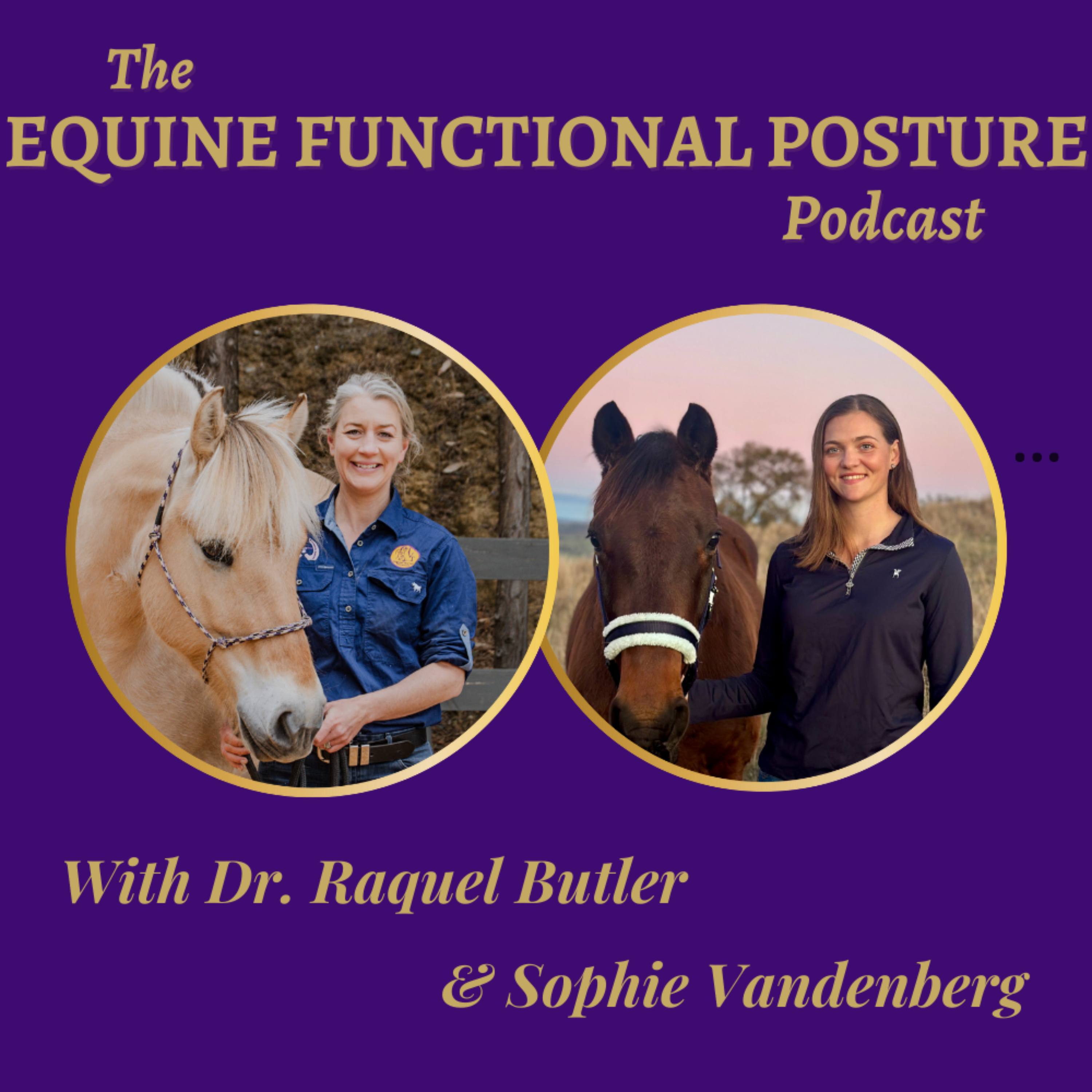
Muscle disorders in horses can be difficult to recognise, particularly when the signs are subtle, inconsistent or mistaken for training or behavioural problems. In this episode we discuss how PSSM1 differs from PSSM2, and Dr Raquel Butler shares the personal story of her warmblood, Jelly, and how his ongoing muscle challenges changed her understanding of managing muscle conditions using movement, diet and extra supplements. In this episode, we discuss: The differences between PSSM1, PSSM2 and myofibrillar myopathy (MFM). Common clinical signs and why muscle disorders can be difficult to recognise. What current research tells us about diagnosis and the limitations of commercial genetic testing. The role of nutrition, exercise and recovery in managing muscle disorders. How muscle dysfunction may influence posture, movement, behaviour and performance. We explore why looking at the whole horse, rather than individual symptoms, is so important when trying to understand movement difficulties