Listen through the publisher, then discuss the episode here or arrange an in-person Roundtable. Your city determines where to meet.
Roundtables are designed for groups of four, with a shared subject and room for everyone to speak. Come for discussion, with no dating expectation.
How often do you allow someone else’s behaviour, opinions or decisions to dictate how you feel? One of the most important skills you can develop in life is emotional control. Yet so many people spend their days giving other people control over their emotional state. Someone makes a comment, criticises you, disagrees with you or […] The post EP 3890: They Can’t Make You Feel Anything (https://www.thestronglifeproject.com/the-strong-life-podcast/ep-3890-they-cant-make-you-feel-anything/) appeared first on The Strong Life Project (https://www.thestronglifeproject.com/).
Episode information is provided by the publisher. Listening takes place on the publisher’s service.
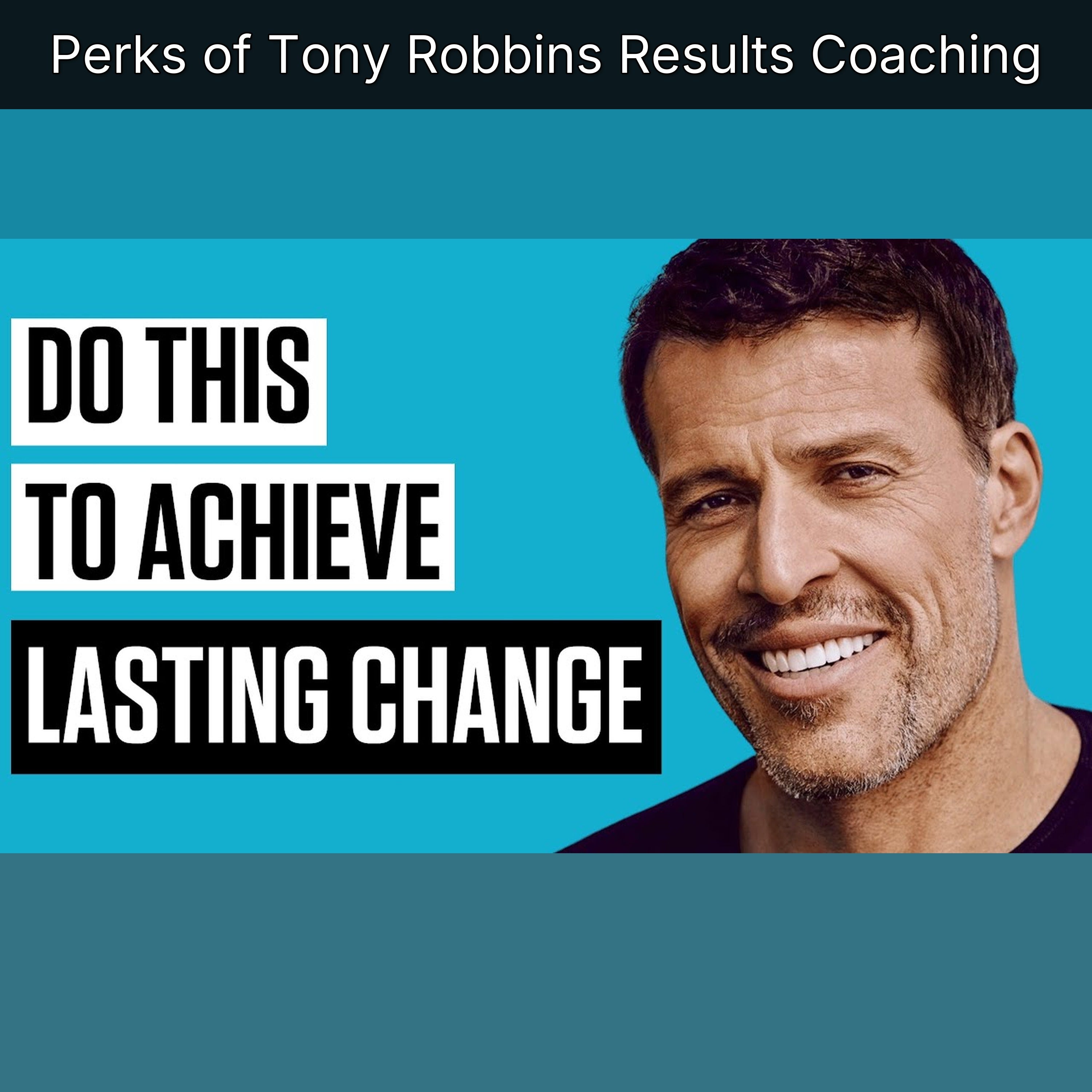
If you really want lasting change, real results that stick around, what do you have to do? Tony Robbins is asked this all the time. His answer is always the same: For your life to change, you have to change. For things to get better, you have to get better. You need to create new patterns that facilitate progress and eliminate the patterns that don’t. Your life isn’t determined by what you do some of the time. It’s determined by what you do consistently. If you’re serious about getting results, you need a system. Tony Robbins Immersion Coaching can provide that system. For three decades, Tony has built his brand based on one thing: Robbins = Results. His system of Immersion Coaching is unlike anything else in the world. He is the Father of the Coaching Industry and his coaches' standards and training for success coaching are the best in the industry. We provide general Immersion Coaching as well as Specialized Curriculum Coaching Courses on the areas of life that matter most. As Tony s
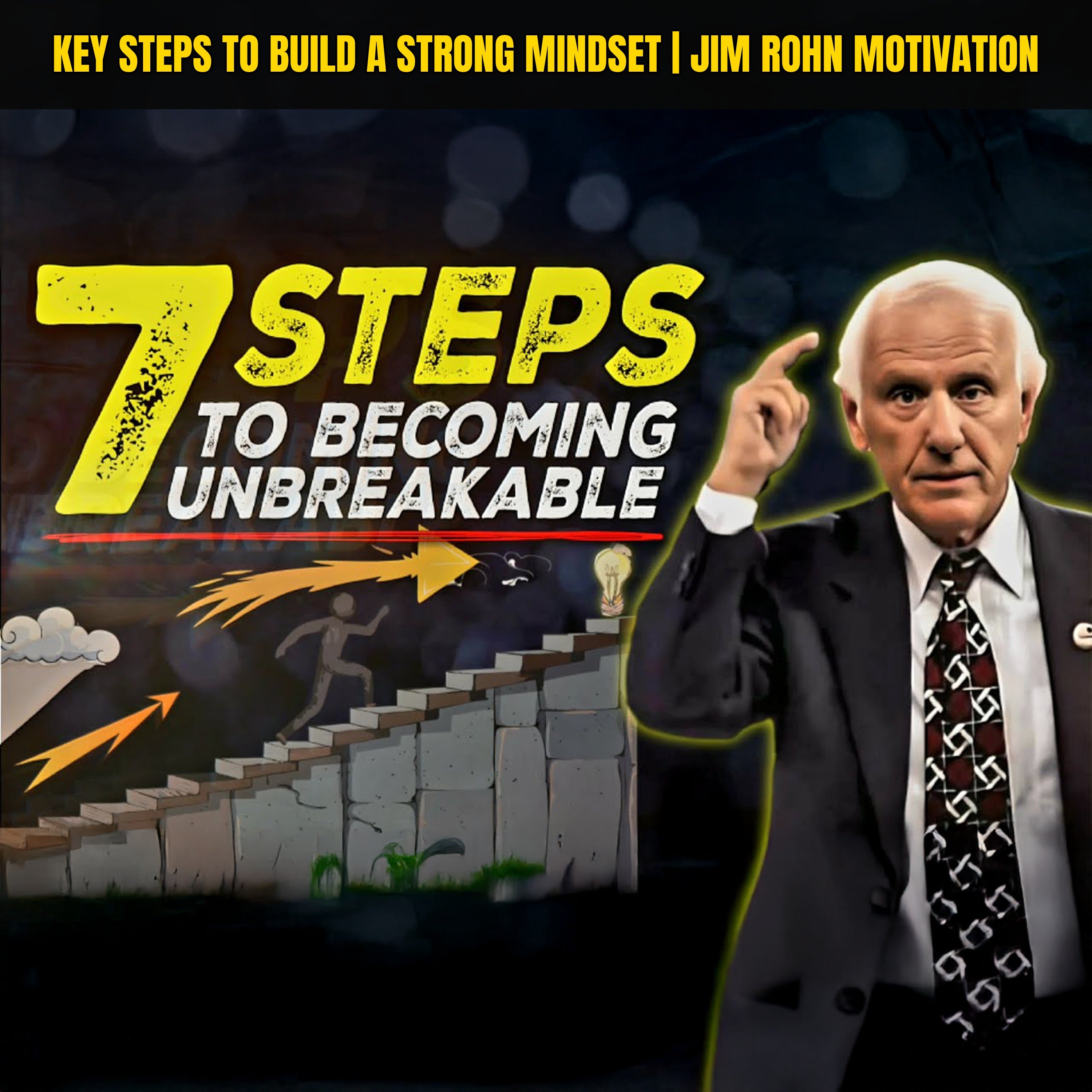
In this Jim Rohn Motivation video, we unpack the real meaning of resilience—not as something you're born with, but something you build. It’s not about pretending life is easy. It’s about developing the mindset, discipline, and strength to keep going when everything in you says stop. Key Topics From This Motivational Video: Resilience as a skill, not a trait Taking full ownership of your life and mindset Reframing adversity into growth opportunities Emotional regulation and grounded self-talk Endurance, grit, and the decision to grow daily This Jim Rohn Motivational video reminds us that resilience doesn’t come from waiting for life to calm down—it comes from training your mind to rise in the middle of the chaos. It’s a mindset built on consistent ownership, reframed challenges, and the ability to lead yourself under pressure. Strength isn’t given. It’s earned—through the unseen decisions you make when no one is watching. This Jim Rohn Motivational Video Is Perfect For: Anyone feeling o
PBS Member Stations rely on viewers like you. To support your local station, go to: http://to.pbs.org/DonateSPACE ↓ More info below ↓ Uploaded 18-11-19 Sign Up on Patreon to get access to the Space Time Discord! Check out the Space Time Merch Store The moment you started observing reality, you hopelessly polluted any conclusions you might make about it. The anthropic principle guarantees that you are NOT seeing the universe in most typical state. But used correctly, this highly controversial idea can be extremely powerful. So, how do you correctly use the anthropic principle? Hosted by Matt O'Dowd Written by Matt O'Dowd Graphics by Leonardo Scholzer and Adriano Leal Directed by: Andrew Kornhaber Executive Producers: Eric Brown and Andrew Kornhaber End Credits Music by J.R.S. Schattenberg: https://www.youtube.com/channel/UCRl6-nb4iOnsij-vnpAjp0Q Special Thanks to Dr. Flournoy!!! Check out his lectures Below: Particle Physics: https://www.youtube.com/playlist?list=PLDlWMHnDwylijo0yfs3xUN
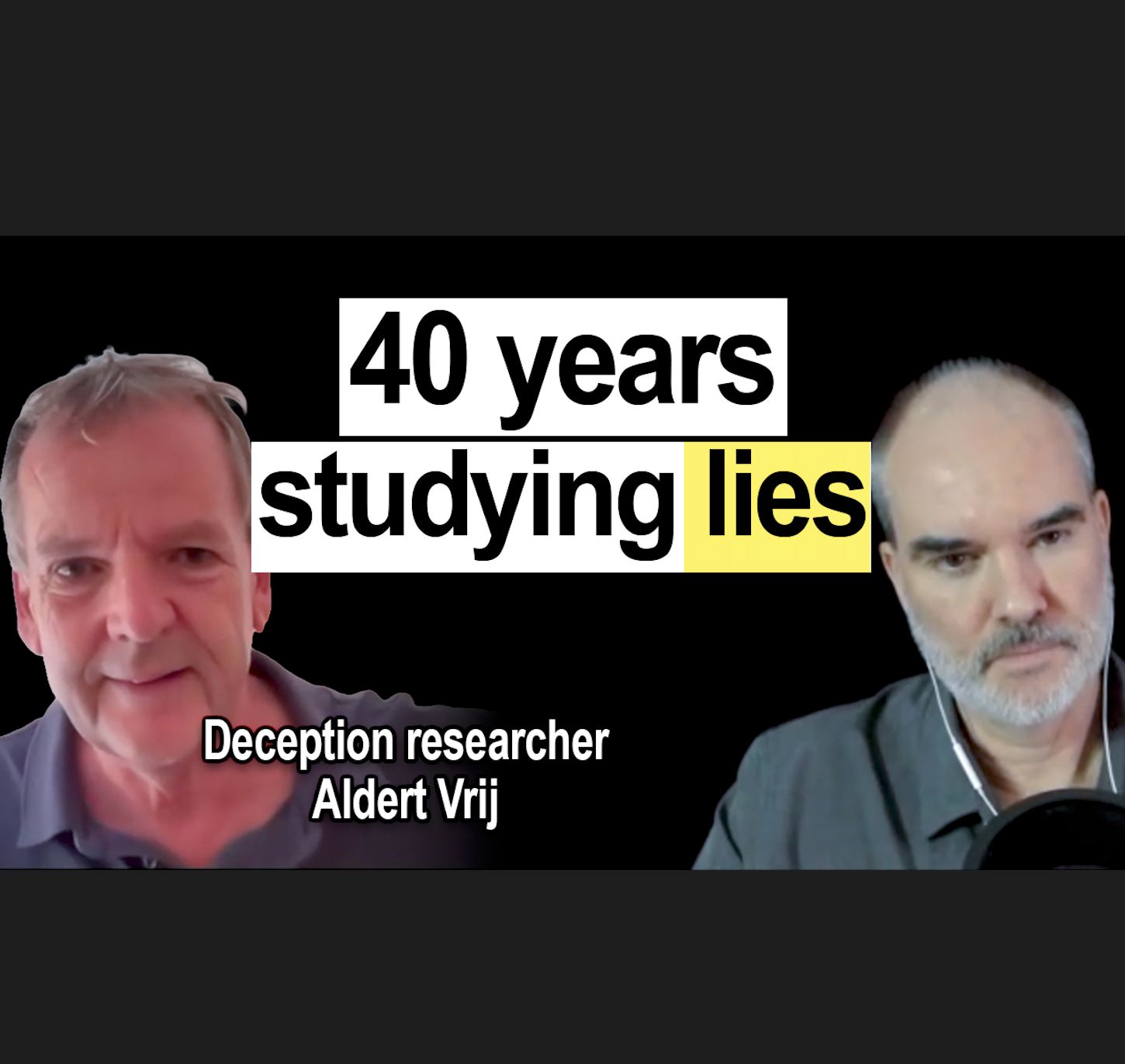
What actually works when it comes to detecting lies, and why are so many popular ideas about reading people and nonverbal behavior at odds with the scientific research? I talk with Aldert Vrij, one of the world's leading deception-detection researchers, who has spent almost four decades studying these topics. We discuss why what people say is far more revealing than their body language; why the perceived “sexiness” of reading nonverbal behavior has contributed to widespread myths and misconceptions; whether vocal behaviors like pitch, volume, and hesitation contain meaningful clues; and whether there's value in analyzing minor word choices and turns of phrase, as is done in so-called “statement analysis.” We discuss Paul Ekman's legacy as a source of faulty ideas about deception, micro-expression-based deception detection training, and the strategies that popular “body language experts” use to appear scientifically credible while simultaneously promoting ideas that conflict with the sc
Have you ever told someone, "Thanks a million!" or claimed you have "a million toys to clean up"? We use the word "million" all the time to mean "a whole lot," but have you ever stopped to wonder just how big a real million actually is? Join Mira and Finn on a mind-blowing math adventure as they discover the quiet power of giant numbers! Imagine counting one number every single second without ever stopping to eat or sleep. It wouldn't take a few hours or a long weekend—it would take you about eleven and a half days just to reach one million! And what about its giant neighbor, the billion? Counting to a billion the exact same way would take a whopping thirty-two years. That's a grown-up's whole life so far! In this amazing episode, we won't just look at numbers on a page; we’ll learn to feel their true size. Find out how much space a million grains of rice would take up, and discover exactly how far a million footsteps would carry you. Get ready to stretch your brain and learn why being
Master the skills that change lives — enroll in your free human behavior course today: https://nci.university/learn Uploaded 09-01-26 You were never reacting to chaos — you were responding to structure. Outcomes don’t appear suddenly; they’re assembled long before you notice them. Understanding how pressure is built changes how the world feels immediately. All influence follows patterns once you know where to look. Reality doesn’t break — it gets reshaped in layers. Every system depends on predictable human responses. Given the right conditions, behavior becomes almost automatic. Once you see the architecture, panic loses its leverage. Detection beats reaction — every time. Please note that the content provided in this broadcast is for informational and educational purposes only and should not be construed as legal, medical, financial, or professional advice. No material in this communication establishes any form of professional relationship that is privileged or confidential. The insi
Fear has a way of quietly taking control of your life. It convinces you to stay where you are, avoid difficult conversations, delay decisions, tolerate situations you know aren’t good for you, and settle for a life that is far smaller than the one you are capable of living. In this episode of The Strong Life Project, we explore how fear impacts your thinking, your relationships, your career, your leadership, and ultimately your ability to live a meaningful life. Fear doesn’t always look like panic. Sometimes it looks like procrastination, overthinking, making excuses, people pleasing, avoiding conflict, or constantly waiting for the perfect moment. The problem is that every time you allow fear to make a decision for you, you reinforce the belief that you are incapable of handling what comes next. Over time, this creates a pattern of avoidance that undermines confidence, resilience, emotional strength, and personal growth. Learning to manage fear doesn’t mean becoming fearless. It means
You cannot genuinely love someone while only accepting the parts of them that are convenient, comfortable, or easy to deal with. Real relationships require us to accept that people are complex, imperfect, and sometimes difficult. If we want meaningful relationships, we must learn to love people as whole human beings rather than expecting them to fit neatly into the expectations we have created for them. In this episode of The Strong Life Project, Shaun O’Gorman explores what it means to love people without constantly trying to change, control, fix, or reject the parts of them that make us uncomfortable. Too often, we tell people we love them while simultaneously criticising their personality, dismissing their emotions, or demanding they behave differently to make our own lives easier. This does not mean accepting toxic behaviour, abandoning boundaries, or tolerating disrespect. Loving someone fully and maintaining healthy boundaries can coexist. The challenge is learning the difference
There is a lot of pressure in today’s world to be someone you’re not. We spend time trying to fit in, impress people, meet expectations, and create an image of who we think we should be. In the process, we can lose sight of who we actually are. In Episode 3900 of The Strong Life Project, Shaun O’Gorman explores the power of simply being yourself and why your authenticity might have a greater impact on someone else’s life than you realise. You don’t need to have all the answers. You don’t need to be perfect. You don’t need to pretend that life has always been easy or that you have everything figured out. Sometimes the most powerful thing you can do is be honest about your experiences, your mistakes, your challenges, and the lessons you’ve learned along the way. Your willingness to be genuine can give someone else permission to do the same. Your story might help someone feel less alone. Your honesty might encourage someone who is struggling to keep going. Your ability to show up authenti
Residents' quality of life can justify caps on tourism even when businesses lose income.
Share your view, then see how readers voted. No sign-in required. This poll is shared across stories.
Do you agree or disagree?
Common Quandary
A Common Quandary to discuss
Another conversation to explore, separate from this news story.
A reserved meeting room has been empty for twenty minutes. Can your group take it?
Every library study room is occupied except one marked reserved. Its booking began twenty minutes ago and nobody has appeared. Your group has an urgent presentation to prepare, while library rules say reservations remain valid for half an hour.