Why can't you save the wounded at MSG? Who loves debating more than Ben Shapiro? What does good conservative art look like? Just how different is the right-wing internet now? And is there a different Hitler? Plus: AIPAC, Adam Friedland's wedding, fat James Franco, Ted Cruz doing "Lady Ballers"... and Zionist Quibi. • Subscribe to "TrueAnon" (https://pod.link/1474001390) • Previously on PTFO: We Survived MSG Surveillance... with Edward Snowden's Lawyer (https://pod.link/1685093486/episode/NjlmZDA1NjBkMzUyNGQyYTk4MGM2ZGEz) Further content: • Watch "Confession" (https://www.dailywire.com/videos/confession) • "Actually a Lot of People Like Dramas This Size" (https://www.patreon.com/TrueAnonPod/posts/episode-585-lot-172803701) (TrueAnon) (Pablo Torre Finds Out is brought to you by Apple Card.) Hosted on Acast.
Two weeks after the worst Republican election since 1974, Donald Trump boarded a plane for Asia to hold the first three-way summit in history with Xi Jinping and Vladimir Putin — and Chuck Todd argues he’s in the worst possible headspace to do it. A president who can’t accept blame, who vanished for a weekend while the FAA grounded every flight in the country, who surfaced to call Pete Buttigieg a moron and blame Biden, and who, per Maggie Haberman, started picking on his own chief of staff during her cancer treatment. Chuck’s read is that Putin knows he’ll never again have an American president this compliant and is calling in every chit he has left. Plus the Jensen Huang scandal and why Chuck thinks the real vulnerability was never the chips, a Politico poll showing MAGA and non-MAGA can’t agree on who lost the midterms, whether Ossoff has to break his debate-stage pledge, and Van Hollen versus Schumer. Timeline: 00:00 Mulaney’s SNL, Eddie Murphy, and Trump heading to Asia 06:00 “You
Lawfare Contributing Editor Mykhailo Soldatenko sits down with Harvard History Professor Serhii Plokhy to discuss his new book, "Killing the Pope (https://us.macmillan.com/books/9780374618827/killingthepope/)," which tells the history of an attempted assassination of Pope John Paul II during the Cold War and related investigations, trials, and propaganda battles. The book also explores who was behind the assassination, including whether there are any signs of security services or organized crime involvement. Hosted on Acast.
Just after the election, Donald Trump promised to work with Democrats. But The Atlantic reports (https://www.theatlantic.com/politics/2026/11/trump-jeffries-schumer-2027/689433/) this remarkable tidbit: “As he watched television in the days that followed and called his outside advisers, he grew steadily angrier,” and he “needed someone to blame.” That fury helped drive him to promote Stephen Miller to chief-of-staff, per The Atlantic. In short: His rage led him to double down. This comes as many of the “podcast bros” are excoriating him (https://www.nytimes.com/2026/11/14/style/after-relative-silence-joe-rogan-said-trumps-policies-have-lost-the-podcast-bros.html) over the midterms. Joe Rogan insisted (https://x.com/RichardHanania/status/2121976783717425442) Trump “lost most of the country” over mass deportations and war. Andrew Schulz tore (https://x.com/PopP0litics/status/2122383490003980685) into his broken promises as the “greatest failure” of any modern president. And Tim Dillon sa
The Commerce Department, led by Howard Lutnick, finds itself at odds over U.S. AI chip exports to China. What does this mean for Trump’s China trip. Then the other stories animating Washington: Trump defends his White House renovations amid growing fallout over the FAA crisis, JD Vance struggles to explain why the administration hasn’t fixed the system and Sen.-elect Abdul El-Sayed backs Sen. Chris Van Hollen. We want to hear from you! We have a survey out and would love to know what you like about the podcast and what we could do differently. The survey will take max five minutes: politico.com/survey (https://politico.com/survey)
Richard Masson helped shape Alberta’s oilsands royalty system nearly 30 years ago as the province’s then-director of oilsands policy and development, helping set the stage for an unprecedented era of investment and production growth that transformed the Canadian economy. Now, with Alberta offering new incentives to nearly double oil production by 2035, he joins Alberta Edge to examine whether history can repeat itself. From the economics of a new West Coast pipeline to the multibillion-dollar grand bargain involving Ottawa, Alberta, and the oilsands industry, Masson explains why unlocking the next wave of development will take much more than royalty breaks—and why some of the biggest obstacles may still lie ahead. This podcast is generously supported by Don Archibald and Mac Van Wielingen. The Hub thanks them for their ongoing support. The Hub is Canada’s fastest-growing independent digital news outlet. https://tinyurl.com/3a7zpd7e (Apple) https://tinyurl.com/y8akmfn7 (Spotify) Want mo
Lawfare Contributing Editor Mykhailo Soldatenko sits down with Harvard History Professor Serhii Plokhy to discuss his new book, "Killing the Pope (https://us.macmillan.com/books/9780374618827/killingthepope/)," which tells the history of an attempted assassination of Pope John Paul II during the Cold War and related investigations, trials, and propaganda battles. The book also explores who was behind the assassination, including whether there are any signs of security services or organized crime involvement. Hosted on Acast.
On this episode, Hunter speaks with law professor Jonathon Booth about his new article, "Police Takeovers," on state control of the St. Louis Police Department. In America, local governments usually control police departments, but for most of its history, St. Louis has been an exception to that rule, and in 2025 the state of Missouri took control again. Jonathon joins the show to explain the history behind this takeover and what we can do to ensure these takeovers don't happen for nefarious reasons. Guest:Jonathon Booth, Associate Professor of Law, University of Colorado Law School Resource:Follow Jonathon on Bluesky: https://bsky.app/profile/jboothhistory.bsky.social Request a copy of "Police Takeovers": [email protected] Jonathon's faculty page: https://www.colorado.edu/law/jonathon-booth If you are facing criminal charges, talk to a lawyer.
The Tenth Circuit hears Thomas versus Stitt, a challenge to how Oklahoma considers parole for someone imprisoned for crimes committed as a child. Dwain Thomas pleaded guilty to murders committed when he was fifteen and received life sentences with the possibility of parole. Over repeated reviews, he has never made it past the parole board's initial screening. He sued state officials, saying the system fails to give him a meaningful chance to show maturity and rehabilitation. A federal district court ruled for the officials, and Thomas appealed. Supreme Court decisions limit harsh sentences for juvenile offenders, but the parties disagree about what those decisions require during later parole reviews. Thomas will argue that his youth at the time of the crimes must meaningfully inform every stage of that process, not merely appear as dates in a file. The officials will argue that the sentencing precedents do not require those additional parole procedures, and that the existing system alr
Are you aware just how helpful the RNIB Bookshare service is for blind and partially sighted children and students? In this podcast, Hubert chats to Keira Mills about how useful RNIB Bookshare is for her, and how her use of it has changed over the years.
Hub Headlines features audio versions of the best commentaries and analysis published daily in The Hub. Enjoy listening to original and provocative takes on the issues that matter while you are on the go. 0:22 - Canada’s resources can make us wealthy—how about geopolitically powerful, too? (https://thehub.ca/2026/11/17/canadas-resources-can-make-us-wealthy-how-about-geopolitically-powerful-too/) by Heather Exner-Pirot 8:10 - For young Canadians, a degree no longer shortens the job hunt (https://thehub.ca/2026/11/16/for-young-canadians-a-degree-no-longer-shortens-the-job-hunt/), by Graeme Gordon This program is narrated by automated voices. https://tinyurl.com/3a7zpd7e (Apple) https://tinyurl.com/y8akmfn7 (Spotify) Watch The Hub on YouTube: https://www.youtube.com/@TheHubCanada The Hub on X: https://x.com/thehubcanada?lang=en CREDITS: Pouya Daneshpajooh – Producer & Editor Hosted on Acast.
Somewhere between the green bean casserole and the second glass of wine, an uncle or in-law will announce that raising the minimum wage kills jobs, that France is on fire, or that poor people shouldn’t buy big TVs. We chose a baker’s dozen dinner-table standoffs sent in by optimist listeners addressing unions, the IRS, school vouchers, the K-shaped economy, and the perennial generational debate: Did Boomers rob the Millennials? Also: how to keep from gloating about the election, and what to say when Fox News declares this the strongest economy ever. Serve up facts that make your tablemates stop chewing and think. Chapters: 00:02:11 Controlling gloating 00:04:56 Finding common ground with a MAGA voter 00:08:59 "The economy is the strongest it's ever been" 00:11:42 The minimum wage 00:18:48 Unions 00:22:48 Tax avoidance and the IRS 00:28:55 Government waste and tax revenue 00:35:19 The K-shaped economy 00:42:15 Did Boomers enrich themselves at the young's expense? 00:46:22 France and the
The Second Circuit hears New York versus Trump, a dispute over moving his state criminal case into federal court after conviction. Prosecutors said Michael Cohen paid Stormy Daniels one hundred thirty thousand dollars before the 2016 election to keep her story from becoming public. They said Trump later reimbursed Cohen, with business records falsely describing those payments as legal services. In 2024, a state jury convicted Trump on thirty-four counts of falsifying business records. Trump challenges that conviction, including the use of evidence that he says concerns official presidential acts. After the Supreme Court's 2024 presidential-immunity decision, he renewed his request for a federal forum. An earlier federal appeal sent that request back for reconsideration, but the district judge again refused removal. Trump will argue that presidential immunity and federal election-law issues justify a federal forum, and that he sought it diligently. New York will argue that he chose to l
The U.S Forest Service wants to build a road through sacred indigenous land. The Supreme Court loves a construction project! To hear this and other Premium-only episodes, access to our Slack community, and more, join at fivefourpod.com/support (http://fivefourpod.com/support). 5 to 4 is presented by Prologue Projects. This episode was produced by Allison Rodgers. Leon Neyfakh provides editorial support. Our website was designed by Peter Murphy. Our Sponsors:
Could your organisation recover from a cyber attack right now, and would your answer be honest? In this episode, we speak with Grant Dinning, Senior Manager of Sales Engineering at Rubrik, about the new rules of recovery and cyber resilience in government. Grant explains how ransomware has moved up from files and servers to the identity layer, and why attackers are no longer hacking in but simply logging in. He sets out why traditional disaster recovery plans fall apart under a real attack, what truly immutable backups look like, and why recovering identity systems is now the number one priority. He also covers the human toll on IT teams during an incident, the risks AI agents bring, and why regular recovery drills in “peacetime” are what separate a fast recovery from a slow one. Want to see how other organisations have recovered? Visit Rubrik (https://www.rubrik.com/) for case studies, or connect with Grant on LinkedIn.
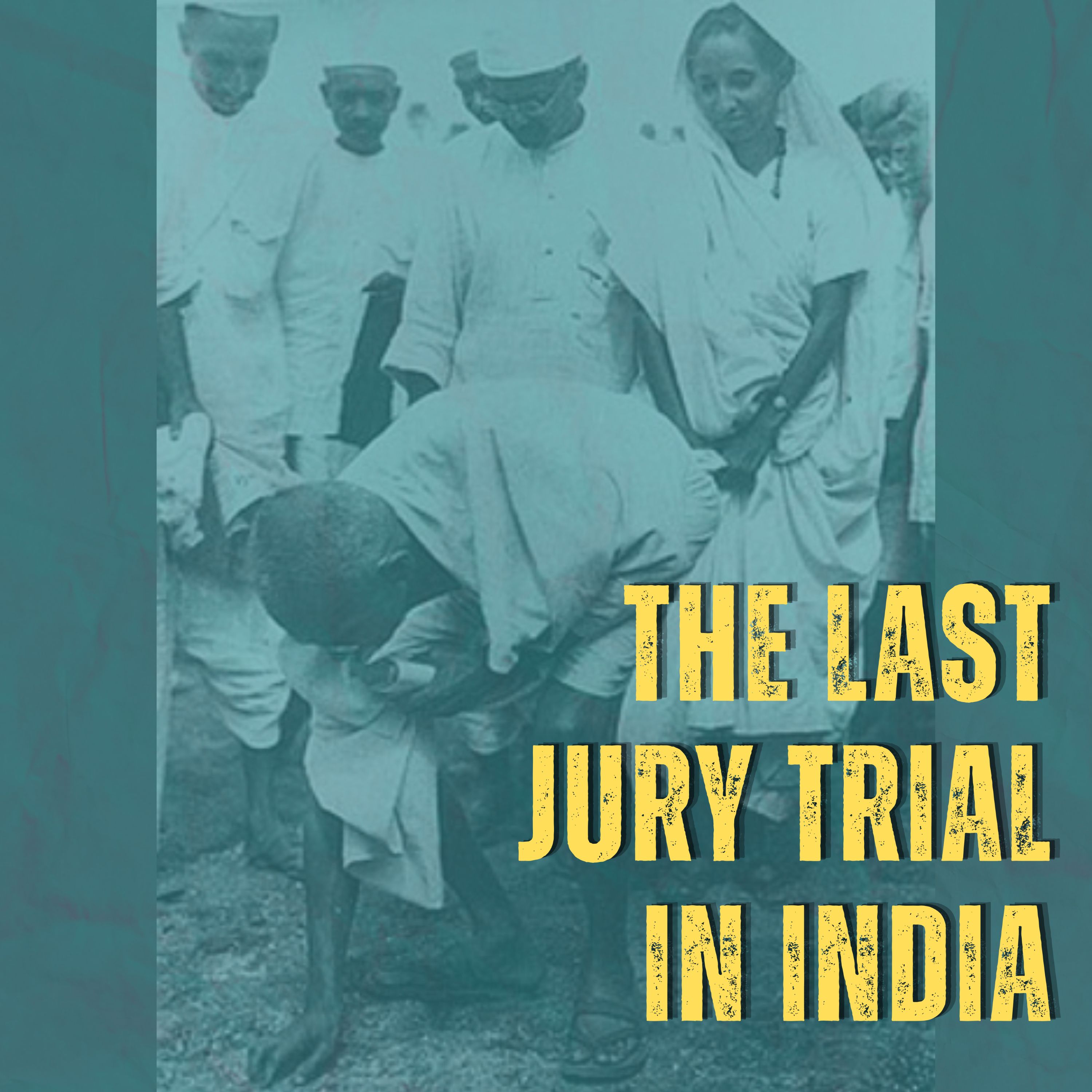
Even though jury trials were suspended for many nationalist leaders charged with political crimes, there were still moments when jurors exerted their power. One example is the trial of Communist organizer, Philip Spratt, a focus of the episode. The threat of a jury undermining the prosecution in the sprawling Meerut Conspiracy Trial also led the colonial government to take drastic action. Lastly, this episode also looks at the drafting of the 1950 Indian Constitution and asks, “Why did a country that committed to universal suffrage decide that the jury trial was not worth fighting for?” Hosted by Simplecast, an AdsWizz company.
SHE/HER, a collection of true women's stories about family, love, loss, grief and war directed by Nicole Ansari Cox and produced by Brian Cox returns to the Playground Theatre, Notting Hill London from 24 November to 5 December 2026. Blind Actor, writer, poet and stand up comedian Jasmine Thien will be bringing her story to life in SHE/HER too. RNIB Connect Radio’s Toby Davey was joined by both Nicole and jasmine to find out more about SHE/HER, how they both met, working together on the production and why SHE/HER is such an important piece of theatre at the moment too. To find out more about SHE/HER at the Playground Theatre, Notting Hill, London from 24 November to 5 December 2026 and to book your tickets do visit - https://www.theplaygroundtheatre.org.uk/projects/sheher Image shows the RNIB Connect Radio logo. On a white background ‘RNIB’ written in bold black capital letters and underline with a bold pink line. Underneath the line: ‘Connect Radio’ is written in black in a smaller fo
The Ninth Circuit hears Vickery versus Empower Finance, a dispute about small cash advances and protections for military borrowers. Two service members used Empower's cash-advance product and sued, alleging that its fees violated lending laws. Users link a bank account so the company can take repayment around payday, and they can pay for faster delivery of the money. Empower's terms also say it will not sue to collect unpaid advances. The immediate issue is where that lawsuit may proceed. Empower asked to send the dispute to arbitration, but the district judge refused under the Military Lending Act's protection against mandatory arbitration for covered consumer credit. Empower will argue that these advances are not covered credit because repayment is not legally enforceable, and that optional delivery fees are not finance charges. The borrowers will argue that the repayment mechanism creates a debt and that the faster-delivery fee counts as a finance charge. Listen for how those defini
Mike Holton felt he was called to public service and jumped at the chance to be the Treynor City Administrator. Jo Ann Beer had just moved to Fairfax and felt it was important to give back to her new home, so she ran for City Council. Now she's the Mayor. IowaLeague.org (https://iowaleague.org/) Iowa League of Cities on Facebook (https://www.facebook.com/IowaLeagueofCities/) Iowa League of Cities on YouTube (https://www.youtube.com/user/IowaLeagueOfCities) Iowa League of Cities on LinkedIn (https://www.linkedin.com/company/iowa-league-of-cities) Good Government Institute (https://www.goodgovinstitute.org/) Executive Producers: Katie Wheeler, Brad Cavanagh, David Martin, David Snyder, Jim Ludlow Hosts: Brad Cavanagh, David Martin Producers: David Martin, Jason Stershic Editor: Jason Stershic
The Tenth Circuit hears Glenwood Springs Citizens' Alliance versus the Department of the Interior, a dispute over access to federal records concerning an RMI limestone mine. The Alliance asked the Bureau of Land Management for records under the Freedom of Information Act, or FOIA. The agency produced records but withheld some information as confidential business material. The Alliance challenged the agency's handling of its requests and the adequacy of its search. A federal district court ruled for Interior and the Bureau, and the Alliance appealed. This appeal concerns public access to government-held records, rather than whether the mine may operate. One exception, known as Exemption Four, covers trade secrets and qualifying confidential commercial or financial information. Listen for arguments about confidentiality and the extent of the agency's records search. Glenwood Springs v. U.S. Department of the Interior, et al. (No. 25-1347) — U.S. Court of Appeals for the Tenth Circuit, ar
Sarah Isgur and David French discuss the vibes at this year’s Federalist Society convention, the value of congressional subpoenas, and Antonin Scalia’s misquote in the Heller opinion. The Agenda: –FedSoc is not MAGA –Mullin v. Refugee and Immigrant Center for Education and Legal Services (https://www.scotusblog.com/cases/mullin-v-refugee-and-immigrant-center-for-education-and-legal-services/) –White House warns against planned congressional subpoenas (https://d3i6fh83elv35t.cloudfront.net/static/2026/11/Garcia-Letter-Signed_11.10.2026.pdf) –Should Congress be able to sue the president? –Famous misquotes (https://www.nytimes.com/interactive/2026/11/10/us/supreme-court-guns-misquote.html) –Is Sarah still a conservative? –Audience Q&A Show Notes: –We’re hiring! –Student sponsorship signups (https://thedispatch.com/student-sponsorships/) –Trump v. Mazars (https://www.supremecourt.gov/opinions/19pdf/19-715_febh.pdf) Advisory Opinions is a production of The Dispatch (http://thedispatch.com/)
The FAA grounded every flight in America on Friday the 13th, and the guys want to know how one router could pull that off. With Tim fresh off getting stranded himself, the full crew digs into Road Rules alum Sean Duffy’s excuses (yes, he blamed Biden), the questionable Friday-afternoon system upgrade, Duffy’s own vote against FAA funding, and why Trump was talking Hollywood with Jon Voight while thousands of flights were canceled. Then the guys make the case for a stock-trading ban as the new Democratic majority’s first bill, give Abdul El-Sayed’s “Trump Care” pitch some love, and react to Trump wanting Tim Cook to run NVIDIA. Plus, a Politico poll finds 78% of MAGA Republicans think Trump can still pull off a comeback, so the crew tries (and mostly fails) to name one good thing he’s done. Also: a Mary Peltola update that somehow turns into a killer whale vs. grizzly bear debate, the very short list of animals the guys could take in a fight, Robert Pattinson as the new James Bond, and
Professor Jonathan Shepherd (https://profiles.cardiff.ac.uk/emeritus/shepherdjp) CBE is Professor Emeritus of Oral and Maxillofacial Surgery at Cardiff University. Early in his career, he found that most assaults treated in hospital were never reported to the police. He built the Cardiff Model (https://rcem.ac.uk/wp-content/uploads/2025/06/The-Cardiff-Model-explained-FINAL.pdf) to address this gap by combining anonymised A&E data with police data. This approach has helped cut violence by up to 60% across England and Wales. More recently, Professor Shepherd has focused on building the evidence ecosystem. He helped to create the What Works Centres, the College of Policing, and the Chartered College of Teaching. Three takeaways from me from this episode were: * The value of a small team: Professor Shepherd discussed the importance of having fewer people in the room, each of whom could take action and get things done. * The evidence ecosystem - a phrase he coined. His goal is to put everyt
The Tenth Circuit hears Tartt versus Unified School District Number Four Seventy-Five, a race-discrimination case from Junction City, Kansas. Ms. Tartt, a Black educator, served first as interim principal of Junction City High School and then received a regular principal's contract. After staff complained about her management, the school board voted not to renew her contract in 2022. The district says leadership and workplace problems drove that decision. Tartt contends that delayed evaluations and unequal treatment, along with statements about racial bias on the board, point to discrimination. On an earlier appeal, the Tenth Circuit directed the trial judge to reconsider parts of the human-resources director's affidavit about performance evaluations. The trial court again ruled for the district without a trial. Now Tartt will argue that a jury could find the performance reasons were a pretext: a cover for racial discrimination. The district will defend its reasons and argue that the e