Playlisters, on todays Happy Hour, Anna makes a confession: She's a really big fan of...wait for it...drumroll please...TRUMP ACCOUNTS! Like, they're fire. And everyone should get one. Just, with a different name maybe, and definitely some revamped user interface--iykyk. Michael and Anna then pivot the convo to the latest FAA shutdown and the possible improprieties surrounding how we got here. Finally, Michael fanboys out over the former Scranton PA Mayor and now Congresswoman-elect Paige Cognetti, posing the question, Is Paige the blueprint for how Dems win back Trump voters? Hosted by Simplecast, an AdsWizz company.
The Tenth Circuit considers whether an Oklahoma insurance dispute belongs in court or private arbitration. Schau submitted a claim for wind damage to commercial property in Oklahoma City. He sued his insurers, alleging they wrongfully denied coverage and handled the claim in bad faith. The insurers deny those allegations and invoke an arbitration clause in the policy. The district court refused to compel arbitration, and the insurers appealed. Oklahoma law generally excludes insurance contracts from its arbitration statute. A federal law, the McCarran-Ferguson Act, can protect state insurance rules against conflicting federal statutes not specifically about insurance. The insurers will argue that the New York Convention, an international arbitration treaty, itself requires arbitration and is not displaced by Oklahoma law. Schau will argue that the treaty needs implementing legislation, which must give way to Oklahoma's insurance rule. There is also a threshold question: should the cour
In this episode of Acquisition Talk, host Eric Lofgren debates the proposal to create Autonomous Warfare Command (AUTOWARCOM), a new four-star functional combatant command intended to accelerate the fielding of unmanned and autonomous systems. The target stand-up date is October 1, 2027, with interim work led by Project Agen Corps. Bryan Clark (Hudson Institute) argues in favor of a CYBERCOM-like model: a functional combatant command that serves as a central demand-signal and clearinghouse for the geographic combatant commands without becoming an independent service or owning its own personnel and acquisition pipelines. He contends the core problem is one of demand, not supply—the services already have funding and mature commercial technologies, but lack a clear joint customer and operational problem set to prioritize against. A focused AUTOWARCOM could help define kill chains, force packages, and concepts of employment so the services can field systems more quickly, ideally working it
The Tenth Circuit hears Red T Homes' challenge to Denver's affordable-housing permit rules. The builder sought permits for two small residential projects and faced roughly seventy thousand dollars in fees to support affordable housing. Denver denied its requests to waive the fees. Another route was to set aside homes for income-qualified households, with price limits and ninety-nine-year affordability restrictions recorded against the property. Red T sued, arguing that these conditions make builders pay for a public problem their projects do not create. The district court dismissed the case because it viewed the affordable-housing option as a permissible regulation, rather than a taking that required compensation. The appeal focuses on that alternative. Red T's lawyer will argue that forcing a developer to transfer homes or accept binding restrictions is itself a taking, so the fee demand still needs constitutional justification. Denver will argue that these are lawful housing-use rest
The News Agents have an exclusive development for you today on the fortunes of HMP Littlehey's newest inmate. Prison authorities have told Russell Brand he cannot have contact with his wife, Laura, until an investigation has been fully conducted into how she was able to broadcast his plea of innocence last weekend. The distress caused to victims by hearing his public statements pushed Number 10 to call his actions appalling and open an investigation which will currently prohibit him from contact with those who can promote him to the outside world. The Crime Agents Andy Hughes has this exclusive story. Later, Alan Milburn has signed off on what he’s calling the work of his lifetime. How to get young people back into work and training. He comes into News Agents HQ to explain. The News Agents is a Global production.
Since the dawn of American democracy, a free press has been cited as essential to its function and survival. What does it actually mean for the press to play an essential role? To serve American democracy? Is the press doing that today? Tom Rosenstiel, author of The Next Journalism, argues that the press must change in order to fulfill that responsibility. It starts with understanding what the people actually need and how to provide real tools for life in the United States.
The Tenth Circuit hears a whistleblower case over federal student-aid money paid to Stevens-Henager College and related schools. Two whistleblowers sued on the government's behalf, alleging that the schools claimed federal funds while violating rules against paying recruiters based on student enrollment. The government took over only part of the lawsuit, focusing on a bonus plan at Stevens-Henager. The whistleblowers wanted to continue other allegations, including claims against additional schools and an individual defendant. The district court struck their post-intervention complaints, reasoning that the government's complaint had replaced them. The government's narrower case later ended in a defense jury verdict. The whistleblowers now seek to revive claims the earlier rulings prevented them from pursuing. On the takeover question, the whistleblowers and the government will argue that taking over some claims does not automatically wipe out the rest. The defendants will argue that the
What does it actually mean to be working class in Britain today? And can you ever really change your class? Richie Jones, Chief Client Officer at Ipsos, joins us to unpack the findings of new research into Britain's relationship with social class, drawing on four decades of polling data. From Oxbridge and private schools to housing, regional accents, class privilege and the peculiar British habit of pretending the class system no longer exists, this is a conversation about one of the most persistent features of British society. Hosted on Acast.
Welcome 0:00-2:15 Ryan’s Marine Corps Balls 2:00-15:00 NFL on FOX Honors The Manion Family 15:00-24:30 Cons’ son hid the TV remote 24:30-25:25 Army Navy Uniform Reveal 25:25-29:26 Travis Manion Foundation Updates 30:20-33:05 Army Navy TMF Tailgate info 33:05-39:30 Nationwide Ground Stop on flights 39:30-43:00 Microsoft Outage 43:00-47:45 Hegseth awards Sentinel Guard 48:15-50:30 Interview WWP CEO Lt. Gen. (Ret.) Walt Piatt 50:30-1:47:30 Veteran Service Organizations 1:47:30-1:49:00 New TV Review 1:49:00-1:50:00 Good Bye 1:50:00-1:50:11 Prime Members can listen ad-free on Amazon Music.
The Second Circuit hears an appeal about the airline GOL's bankruptcy reorganization. The dispute is not just about what the airline owes its creditors, but which claims those creditors would give up under its plan. The plan included releases protecting other people and companies connected with the restructuring, not just the airline itself. Certain creditors received notices explaining that they would be treated as agreeing to those releases unless they opted out. The bankruptcy court approved the arrangement, but the U.S. Trustee challenged it. The district court ordered the third-party releases and the injunction enforcing them removed from the plan. GOL now seeks to restore those protections. Its lawyer will argue that clear notice and an opportunity to opt out can establish consent in bankruptcy. The Trustee will argue that silence does not amount to an agreement to surrender separate claims against other parties. Listen for the distinction between receiving adequate notice and ac
The Ninth Circuit hears a California dockworkers' class action against S S A Terminals and other port companies. The workers paid fees to obtain or renew TWIC cards so they could enter ports for work, and say they were not reimbursed. They also received wage statements with company numbers on the front and company names and addresses on the back. They sued over both the card expenses and whether those pay statements properly identified their employers. The district court ruled for the workers on the card expenses, but for the companies on wage statements. The companies appeal the reimbursement ruling; the workers cross-appeal the wage-statement ruling. The two appeals put a practical pair of workplace questions before the court: who must pay for access to the worksite, and how clearly a pay statement must identify the employer. Andrikos v. SSA Terminals (No. 25-569) — United States Court of Appeals for the Ninth Circuit, argued November 16, 2026. Sources: Official Ninth Circuit appeal
On this WPN Call #603, Dr. Jim Garlow is joined by three special guests: Pastor Kelly Lohrke, who Leads The Cure Church Network based out of Kansas City; Troy Newman, an attorney, strategist, and pro-life activist who works with Christian organizations to close abortion clinics; and Pastor Mark Creech, who has been applying biblical truths to state policy in North Carolina for decades. They discuss what it means to stand courageously for biblical truth in this time. Websites: Dr. facebook.com/wellversedworld twitter: @wellversedworld instagram: @wellversedworld www.wellversedworld.org (http://www.wellversedworld.org/)
The Tenth Circuit hears Defending Education versus Sullivan and two related appeals over Colorado's anti-discrimination law. Advocacy groups, medical plaintiffs, an athletic-clothing retailer and a Christian bookstore challenged the law after a 2025 amendment expressly included chosen names and forms of address in its protections. They want to use names and pronouns consistent with their beliefs about biological sex, including when dealing with transgender customers or members of the public. The retailers say they will serve everyone, but fear that a complaint about their speech could trigger enforcement. They sued before any enforcement against them, claiming the law chills speech and compels words they reject. The district court denied temporary injunctions, finding no sufficiently credible enforcement threat. A later ruling let several plaintiffs continue litigating, while dismissing three advocacy groups for lack of standing. Standing means the right to bring a concrete dispute int
Today's Digest covers bank and airline glitches, Optimizely/AI attacks, blackout test, tokenization, Ukraine strikes, Wildberries sanctions, nuclear bomb, Iran attacks, Hezbollah, anti-ICE protests, Peoria bomb, Nvidia exports, and the Epstein autopsy. Click Here for The Great Taking (https://peakprosperity.com/content-collection/the-great-taking/)
Gary Marcus is a professor emeritus at NYU and the author of Marcus on AI. Marcus joins Big Technology to discuss his bear case for Anthropic’s IPO and whether its business can justify its enormous valuation. Tune in to hear us debate the company’s explosive revenue growth, massive compute commitments, and prospects for turning AI into a profitable business. We also cover competition from Chinese models, Anthropic’s push into software, and why Gary is becoming more optimistic about the technology itself. Hit play for a spirited discussion about AI’s business model and what it would take to prove one of its biggest skeptics wrong. --- Enjoying Big Technology Podcast? Please rate us five stars ⭐⭐⭐⭐⭐ in your podcast app of choice. Want a discount for Big Technology on Substack + Discord?
The Eleventh Circuit hears Preston Damsky versus Chris Summerlin, a University of Florida law-school expulsion case. Damsky posted on X that Jews must be abolished by any means necessary, linking his words to another writer's call to abolish the white race. A Jewish law professor asked whether he meant murdering her and her family; his response turned back to the comparison rather than giving a direct answer. The university says this was a threat or promotion of violence, not simply an offensive viewpoint: it points to frightened students, missed classes and additional security. Damsky says the exchange was provocative off-campus speech, not a threat to carry out violence. He challenged his expulsion, and a district judge ordered temporary reinstatement. Summerlin, the dean of students, brings this appeal for the university. An earlier appellate stay put the reinstatement order on hold; the argument here concerns whether that preliminary injunction should stand. The university will arg
In 1943, Britain's Special Operations Executive coordinated one of World War II's most successful sabotage missions, sending Norwegian commandos into occupied territory to destroy a critical heavy-water production facility. This episode examines the clandestine planning, intelligence preparation, and coordination between British operatives and Norwegian resistance fighters that made the mission possible. It also explores how unconventional warfare allowed a small group of commandos to disrupt an important component of Nazi Germany's nuclear research
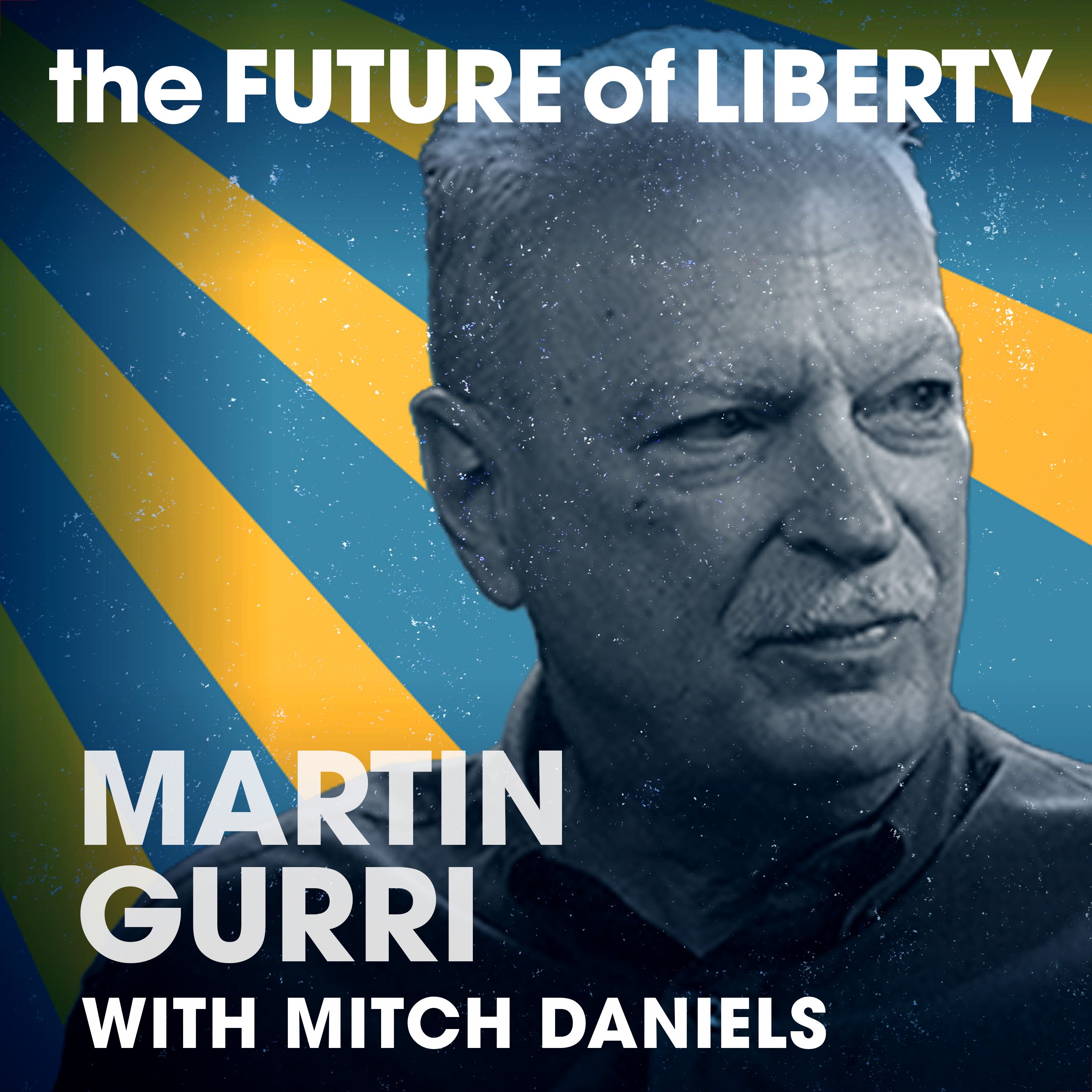
Former CIA analyst and author of The Revolt of the Public, Martin Gurri, joins Mitch Daniels to discuss how the digital information tsunami toppled institutional authority and fueled populism worldwide, and why AI, humility, and America’s Jeffersonian spirit leave him optimistic about freedom’s future. The Digital Information Tsunami and the Revolt of the Public (1:21) War Fever in Europe and Elite Self-Preservation (7:25) America's "Psychotic Episode" and Jeffersonian Resilience (17:06) Information vs. Wisdom (24:10) How AI Could Transform Government Transparency (34:09) About The Future of Liberty: Former Indiana governor and Purdue University president Mitch Daniels investigates the prospects for liberty and more through conversations with prominent thinkers and leaders across diverse fields. New episodes are available wherever you listen, including Apple Podcasts (https://podcasts.apple.com/us/podcast/the-future-of-liberty/id1754223048), Spotify (https://open.spotify.com/show/1MEIj
In September 2004, a switch at Los Angeles air traffic control that needed a reset every thirty days was forgotten, and controllers lost radio contact with hundreds of planes. Mark Atherley, flying in from Canada, diverted to San Francisco. A long-haul captain and founder of the research firm Ancieo (https://www.ancieo.ai/), he reads last Friday's nationwide ground stop the way pilots are trained to: the system caught the fault and stopped itself. He defends old, simple cockpit computers, young pilots, and a 20-year-old co-pilot whose final minutes deserve better than the commentary. In aviation, failure is assumed. That is why it so rarely wins. -- (00:00) - Intro/Welcome (02:06) - Why aviation doesn't hunt for blame (06:24) - Diverting during the 2004 Los Angeles outage (09:32) - Flying through other countries' airspace (13:39) - Politics, investment and China's upgrade (16:21) - Could AI break air traffic control? (23:04) - Floppy disks and old flight computers (27:24) - Autopilot i
The Second Circuit hears Luo versus A I K Renovation, a fired construction project manager's discrimination case. Luo, who is of Chinese origin, says race and national origin drove his dismissal. The company points instead to job performance and his handling of a worker allegedly intoxicated on the job. He also says he was not paid for his final week of work. A jury found for the defendants on discrimination, and the judge rejected the wage claim for insufficient evidence of the hours worked. The judge later denied a new trial. Luo will argue that inconsistent explanations for his firing and restrictions at trial warrant another chance to present his case. The defendants will ask the court to leave the result intact. Listen for the difference between possible contradictions in a witness's story and grounds for overturning a jury's verdict. Recording note: The official recording cuts off on the judge's trailing 'So, uh' after both sides have finished and the court has announced that it
Join Hudson Institute for the tenth United States–Republic of Korea Joint Public-Private Economic Forum on November 17. Celebrating a decade of bilateral economic cooperation, the forum will convene senior public officials, corporate executives, and leading scholars to discuss US-ROK economic security and industrial strength. Second Vice Minister Jina Kim of the ROK will deliver remarks on the evolving economic partnership with the US. Speakers will assess the impact of Korean investments in the US and discuss the essential roles both governments play in fostering a competitive, resilient economic environment. Hosted by the Asia-Pacific Security Chair, this year’s forum is made possible with support from the Ministry of Foreign Affairs of the Republic of Korea.
Two men working on behalf of China’s Ministry of State Security were sentenced to federal prison for participating in a clandestine intelligence operation targeting the United States Navy. Their activities involved cash payments through dead drops, surveillance of Naval Base Kitsap, collecting information about American sailors, and efforts to recruit military personnel as intelligence sources. This episode examines how Chinese intelligence used civilian operatives to approach American service members, the methods employed to conceal their activities, and how the FBI disrupted the operation.
Two women have reportedly reached an unprecedented point in the Navy’s notoriously demanding SEAL selection pipeline, advancing to the third week of Basic Underwater Demolition/SEAL training. One, a naval officer, withdrew from training, while an enlisted sailor was medically removed during Hell Week. This episode examines their historic progress, the physical and psychological demands of BUD/S, and what their experience reveals about the difference between reaching an elite selection milestone and earning a place in the teams.
The Ninth Circuit hears Russell versus Dave, a dispute over cash advances and access to court under military lending protections. At the center is ExtraCash, a product that provides money through Dave's app, with associated fees. The plaintiffs sued Dave and Evolve Bank and Trust, alleging that the charges and lending practices violated the Military Lending Act and other lending laws. The district court rejected the companies' request to send the dispute to arbitration, and the companies appealed. The question here is where these lending claims can be heard, not a final determination of damages. One provision of the military lending statute prohibits requiring arbitration; another says agreements to arbitrate covered credit disputes are unenforceable. Can a customer's opportunity to opt out change that result? And who decides whether the statute prevents arbitration: the judge, or the arbitrator? Listen for the distinction between deciding the underlying lending claims and deciding whe