The Ninth Circuit hears Kluwe versus the Huntington Beach Union High School District. Christopher Kluwe coached football at Edison High School. In February 2025, he protested a proposed library plaque that he viewed as promoting the Make America Great Again movement. His coaching job ended days later. He alleges retaliation for political speech. The district pointed to a social media post it said suggested violence; Kluwe says he was calling for complaints, not violence. He sued the district and school officials over his constitutional rights. The trial court dismissed the claims against the district on sovereign-immunity grounds. This appeal therefore begins with who can be sued, not whether the firing violated free-speech protections. The lawyers will debate whether the district is legally part of California itself or a separate public body. Kluwe's lawyer will seek a fresh assessment under recent Supreme Court guidance; the district will argue that older Ninth Circuit decisions stil
The Ninth Circuit hears Keene versus the City and County of San Francisco. Two city employees sought religious exemptions from the city's COVID-19 vaccination requirement. After their requests were denied, they retired rather than face termination. They sued, saying the city should have accommodated their beliefs through measures such as remote work or protective equipment. After two appeals over preliminary relief, the Ninth Circuit directed the trial court to grant an injunction. The employees now seek lost pay and related employment benefits as part of that temporary relief, not just an order restoring their jobs. Their lawyer will argue that putting them back where they were before the dispute requires that fuller remedy. The city will argue that the earlier ruling did not award back pay and that further relief can still be sought in the trial court. Listen for whether the requested relief was properly presented and supported, and why a temporary order does not finally decide the l
Who was in charge when Trump met with Xi Jinping and Vladimir Putin together for the first time? What does this meeting mean for the future of Ukraine? And, should the new chair of the House Oversight Committee, Representative Robert Garcia, pursue Trump’s inner circle for past misconduct? Give The Rest Is Politics US Club this Christmas. Treat yourself or a fellow fan to a membership: bonus episodes, ad-free listening, members’ newsletter, and more. Annual gifts come with a special edition T-shirt. (https://therestispoliticsus.com/gifts) Search etoro TRIP US. Invest two hundred dollars or more to claim your free share. As with all investing, your capital is at risk. Instagram: @RestPoliticsUS Twitter: @RestPoliticsUS Email: [email protected] Video Editor: Kieron Leslie Social Producer: Charlie Johnson Assistant Producer: Alfie Rowe Producer: India Dunkley Senior Producer: Fiona Douglas Executive Producer: Tom Whiter
The Tenth Circuit hears United States versus Ballage. Officers investigated a report that a man had struck a child with a water bottle. They stopped Ballage, used handcuffs, and searched his jacket. The distinction between two pockets matters: the officer first reached into the right pocket, while the gun was found in the left. Ballage says the first intrusion exceeded a protective weapons frisk and led to the discovery of the gun. He also challenges whether the officers had grounds for the frisk and whether their use of force turned the stop into an arrest. The lawyers will debate whether the gun should be excluded because of what happened in the other pocket. Listen for the difference between saying the officer could lawfully ask about weapons and deciding whether this particular discovery resulted from an unlawful search. United States v. Ballage (No. 25-1438) — U.S. Court of Appeals for the Tenth Circuit, argued November 18, 2026. Sources: Official Tenth Circuit oral argument: Offi
The Ninth Circuit hears Javier Vasquez-Velasco's challenge to two murder convictions. The case began with the killing of two tourists at a restaurant in Guadalajara, Mexico, in 1985. Prosecutors said cartel members mistook them for DEA agents and attacked them in retaliation for drug-enforcement operations. Vasquez-Velasco was convicted in 1990 of aiding and abetting those murders in furtherance of racketeering. His trial also included defendants accused in the separate killing of a DEA agent; he was not charged with that killing. The government has since conceded that FBI agent Michael Malone gave false hair-analysis testimony at that trial. The district judge denied relief, finding that Malone's testimony about the other killing was not material to Vasquez-Velasco's convictions. The defense will argue that the false science bolstered witnesses whose credibility tied the whole prosecution together. The government will argue that the jury could separate the cases and that other evidenc
This week, Scott was joined by his Lawfare colleagues Senior Editors Anna Bower, Michael Feinberg, and Molly Roberts to talk through the week’s big national security news stories, including: “Occam’s Router.” It’s been a rough week for the systems that keep the country running. On Friday, the FAA ordered a rare nationwide ground stop after a communications failure disrupted radar and radio links at air traffic control centers across the country—just a day after a global Microsoft outage knocked Outlook and Teams offline. On Monday, customers at Chase and other big banks found themselves unable to log in or move money. And on Tuesday, the NSA’s classified internal network went dark, forcing the agency to stagger employees’ arrivals at Fort Meade. Officials insist none of these incidents was a cyberattack, and the explanations offered so far—a misbehaving router, a latent software bug, a routine patch gone wrong—are decidedly mundane. But the clustering has fueled plenty of anxiety and s
This week, Scott was joined by his Lawfare colleagues Senior Editors Anna Bower, Michael Feinberg, and Molly Roberts to talk through the week’s big national security news stories, including: “Occam’s Router.” It’s been a rough week for the systems that keep the country running. On Friday, the FAA ordered a rare nationwide ground stop after a communications failure disrupted radar and radio links at air traffic control centers across the country—just a day after a global Microsoft outage knocked Outlook and Teams offline. On Monday, customers at Chase and other big banks found themselves unable to log in or move money. And on Tuesday, the NSA’s classified internal network went dark, forcing the agency to stagger employees’ arrivals at Fort Meade. Officials insist none of these incidents was a cyberattack, and the explanations offered so far—a misbehaving router, a latent software bug, a routine patch gone wrong—are decidedly mundane. But the clustering has fueled plenty of anxiety and s
Training Wednesday is back, and Aaron, Trent, and Peaches spend the live answering Air Force Special Warfare candidate questions — but first, there is an update from the current SWAS class. According to the numbers discussed on the live, 78 candidates failed the initial IFT and 52 still failed the refire. The guys try to understand how that happens after months of development and preparation, discuss reports that some candidates struggled with the swim and high-volume masks, and once again return to the same message they keep giving candidates: you need to arrive ready. From there, the live turns into a full candidate-training clinic. The guys talk about periodizing strength and endurance work, building Zone 2 capacity, gradually increasing mileage, why running with a weighted vest is probably not solving the problem you think it is, preparing for A&S, training with the equipment you will actually use, and why the goal is not simply to pass a minimum standard. They also answer question
Since Donald Trump started insulting Canada and challenging our sovereignty, many Canadians have stopped buying American and have cancelled trips to the U.S. Is it time to reconsider those actions? Plus the Random Ranter drops by. Hosted by Simplecast, an AdsWizz company.
The Eleventh Circuit hears Pablo Arthur-Rodger's dispute with Northern Trust and Bank of America. The background is a mortgage loan and repeated attempts to foreclose. Arthur-Rodger alleges that earlier foreclosure papers described a lost note, while later versions carried endorsements absent from the earlier copy. He contends that the documents were fraudulently altered, and has sought damages over their use. Those are allegations, not findings that the banks committed fraud. The dispute reached federal court and then this appeal. The lawyers will debate when Florida's litigation privilege prevents a separate damages suit over litigation-related conduct. Florida law protects some conduct in judicial proceedings, but does not give every related act outside court automatic absolute immunity. Listen for the distinction between allegedly creating false documents before suit and submitting them in court. You will also hear whether challenging a lender's authority to foreclose is the same a
The Ninth Circuit hears United States versus Hamalowa. A single fatal shooting led to five federal convictions against Clifton Hamalowa, including first-degree murder and two assaults. This argument focuses on whether those assault convictions can stand alongside the murder conviction. The defense will argue that the assaults were the killing itself, so keeping all three convictions punishes the same offense twice. The government will argue that murder and assault have distinct legal requirements and permit separate convictions. The judges will press both sides on whether to compare the facts of this shooting or the elements legally required for each crime. They will also consider plain-error review: the rule allowing certain errors affecting substantial rights to be considered even when they were not raised below. Listen for the difference between offering a jury alternative charges and keeping multiple convictions after the verdict. United States v. Hamalowa (No. 25-3488) — U.S. Cour
With extraordinary candour - and perhaps transparent panic - Elon Musk has admitted he feels 'foolish' for having spent $400m on midterm election races he lost and has claimed that he was “never MAGA“. It turns out that all that DOGE chainsaw work he did for Trump, all that financial support he gave, all that backing of weird nationalist 'America First' causes with accompanying Nazi salutes was just an act. He claims he was, in fact, “a moderate“. Is this the first big name trying to put distance between themselves and a now failed and weakened leader? Is he hoping to escape congressional scrutiny from Democrats as a result? And where should Trump seek his friendships now? Why, China and Russia of course... We look at Trump, Xi & Putin's controversial three-way summit in Shenzhen and discuss whether this was indeed a 'Yalta 2.0'. Later - what laws did Russell Brand actually break when he proclaimed his innocence from prison? We speak to the Justice Minister Jake Richards. The News Agen
For years, the line has been that it takes 12 to 16 firefighters to get one down firefighter out. The survey data says most maydays are mitigated by fewer than three. Orlando Lt. Bassel Ibrahim, founder of the Firefighter Mayday Survey (https://firefightermaydaysurvey.com/), shares what 348 validated surveys are showing about radio calls, command and training — and why tactics that sound good in theory don’t always hold up on the fireground. Ibrahim makes the case for sending a full mayday message the way you’d actually talk, keeping crews on one tactical channel early and making the rapid intervention team proactive instead of reactive. Read next: What 100 firefighter maydays tell us about survival, culture and training (https://www.firerescue1.com/mayday/what-100-firefighter-maydays-tell-us-about-survival-culture-and-training) More training data: What Firefighters Want 2026: Time to train (https://www.firerescue1.com/what-firefighters-want/) This episode of the Better Every Shift pod
The Tenth Circuit hears Devon Energy's royalty dispute with the Interior Department. Devon paid an outside company a bundled fee to move and treat natural gas. The government required it to separate deductible transportation costs from the costs of making that gas marketable. Devon objected that the contractor's confidential cost data was unavailable. In 2019, a Wyoming federal judge set aside the challenged transportation-deduction decisions and sent the 2005-through-2007 dispute back to the agency for more fact-finding. The judge directed Devon to try alternative cost estimates and left a due-process objection for possible later court review. That promised later review raises today's question: did the original lawsuit stay open during the remand, or did Devon need to go through agency appeals before returning to court? The lawyers will debate what the earlier court order preserved and how the royalty statute's filing deadlines affect that route. Listen for the difference between winn
Barry Snell chats to RNIB’s Policy Lead Ross Meegan, to find out about the charities response to the recent Milburn review and how it could affect young people with sight loss. Image shows the RNIB Connect Radio logo. On a white background ‘RNIB’ written in bold black capital letters and underline with a bold pink line. Underneath the line: ‘Connect Radio’ is written in black in a smaller font.
The Tenth Circuit hears Lyman versus Henderson. In 2024, Utah voter Phil Lyman asked the lieutenant governor's office for the state's full voter registration database. His request included birth years and records classified as private or withheld under state law. The office directed him to the public version, but declined unrestricted access, citing Utah's disclosure restrictions. Lyman sued under the National Voter Registration Act, arguing that federal disclosure requirements override those limits. He says he needs the records to check voter-list accuracy and propose improvements. The district court dismissed the case in January 2026 for lack of standing: it found no concrete personal harm beyond being denied the information. That ruling did not decide whether federal law actually requires disclosure of these records. Now Lyman is appealing. His lawyer will argue that denial of records required to be public is itself an injury, and that the refusal obstructs his election oversight. T
In this video, Disability Attorney Walter Hnot of the Disability Resolution Law Firm goes over Past President Bidens Bidenomics, and how they hurt social security recipients with their standard of living. America’s Most Viewed Social Security Disability Attorney Like the content? Review us here: https://g.page/r/CcwyektC7nCPEAg/review . If the link does not work, Google: Disability Resolution, P.A. Welcome to the largest Social Security Disability Tutorial Video Library On Earth. PRIVATE ONE HOUR SESSION PHONE CALL NEED MEDICARE? I don’t do it, but I trust these folks to help you. Call Chapter Medicare at 339 226 6287, or use askchapter.org/disability (* Note Below) THIS IS HOW YOU CAN GIVE BACK TO HELP GROW THE CAUSE: Option 1: Leave 5 |==================5 STAR REVIEWS==================| Google (Search Disability Resolution Orlando, FL)- https://g.page/r/CcwyektC7nCPEAg/review AVVO (Search Walter Hnot) - https://www.avvo.com/attorneys/32817-fl-walter-hnot-4523042/reviews.html BBB (Sea
Prime Minister Mark Carney holds a brief face-to-face meeting with United States President Donald Trump in China that ends without tariff relief, prompting Carney to warn Washington that Canada is moving on to new global partners. We unpack the domestic political clash over Canada's rapid pivot to Asia, track new border compliance hurdles in Montana and North Dakota, and hear from SaskPork General Manager Mark Ferguson on what China's pork tariff rollback means for prairie producers and processors.
The Tenth Circuit hears an excessive-force appeal involving the city of Cheyenne and one of its police officers. The plaintiff says a trip to the movies with her family ended in a minor parking-lot collision, which she reported to police. She says she had trouble following the officer's instructions and objected to questioning of her son-in-law. She alleges the officer pulled her from the vehicle and used a takedown that broke her ankle. She sued the officer and the city, alleging excessive force and inadequate police training. The trial judge granted judgment to both defendants without a trial, and she appealed. Her lawyer will argue that she was trying to comply, posed no immediate threat, and deserves a jury's assessment of the encounter. The officer's lawyer will argue that repeated noncompliance and resistance to handcuffing justified the force. The city's lawyer will defend the judgment and challenge the grounds for holding the city itself responsible. Listen for whether the judg
The Tenth Circuit hears Vitamins Online versus HeartWise. This began as a false-advertising suit between two companies selling vitamins and supplements online. Vitamins Online won a money judgment, and HeartWise then entered bankruptcy. About fourteen and a half million dollars was deposited with the bankruptcy court to pay that judgment. But Vitamins Online and its former law firm, MCG, each claimed the right to collect it. Their fee agreement called for payments to go through the firm, which would deduct its fees and pass the balance to the client. In 2024, the Utah district court ruled that Vitamins Online had the collection right. The firm appealed, but that same judge later vacated the challenged orders. Now the threshold question is whether this court can hear the appeal at all. The firm's lawyer will seek dismissal, arguing that later developments leave no effective relief to grant. Vitamins Online's lawyer will argue that the appeal transferred authority to this court, preventi
Today's Digest covers Anthropic's IPO, surveillance warnings, Tasty Chick'n's bankruptcy, UK request to censor Brand, Muslim demographics and attacks on Christians, US foreign-born growth, Pentagon's audit, oil price, EU cyberattack, AI-driven outages, the Xi-Putin-Trump summit, pathogen-focused medicine, and emergency food shelf-life limits. Click Here for Peak Prosperity (https://peakprosperity.com/anthropic-warns-of-high-tech-surveillance-state-as-uk-seeks-to-delete-russell-brand-from-social-media/)
The Tenth Circuit hears Osage Nation versus Taylor. The dispute began with Oklahoma's effort to collect state income taxes from Osage citizens living and working within the Nation's claimed reservation boundaries. In 2010, the Tenth Circuit upheld a judgment that the reservation had been disestablished. The Nation now seeks relief from that old judgment after McGirt, the Supreme Court decision recognizing the continued existence of the Muscogee Creek reservation. The district court denied the reopening request without deciding the Osage reservation question anew. That brings the Nation here under Rule sixty, which allows limited relief from final civil judgments. Its lawyer will argue that the old ruling continues to constrain tribal jurisdiction, and that sovereignty makes this more than an ordinary change in law. The tax commissioners' lawyer will argue that a later decision involving a different tribe does not justify reopening this final judgment. Listen for the difference between
Explore the fallout from the failed Biden-Elon deal and its implications. We delve into Frank Bisognano's surprising move to the Social Security Administration. Discover how his private sector experience could revolutionize SSA systems and improve public service. Stay informed on the latest political and economic developments! #BidenElonDeal #FrankBisognano #SocialSecurity #SSA #GovernmentTech #PoliticalAnalysis #EconomicNews #TechIndustry #PublicService #FinancialInnovation
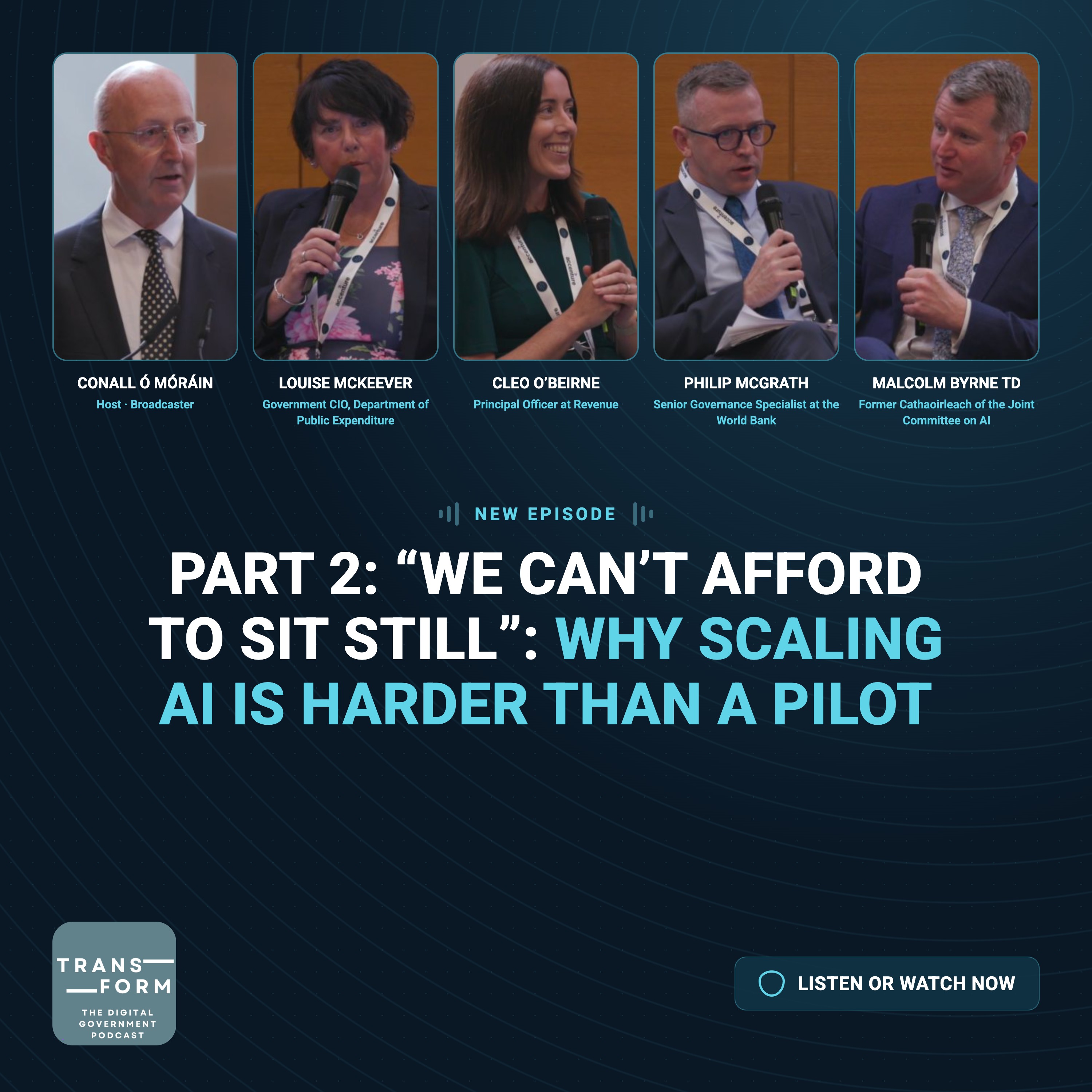
The pilot worked. Now what? In Part 2 of this panel discussion, four leaders explain how they're taking AI from pilot to scale, and what it takes to get data and governance right. This panel discussion took place at the Ireland eGovernment Awards and Leadership Summit 2026 on 24 September 2026 at UCD's O'Reilly Hall. We bring together Louise McKeever, Government CIO; Cleo O'Beirne, Principal Officer at Revenue; Philip McGrath, Senior Governance Specialist at the World Bank; and Malcolm Byrne TD, former Cathaoirleach of the Joint Committee on AI. The panel is chaired by Conall Ó Móráin. If you're taking AI beyond the pilot, here's what to do: Start small, prove it, then scale. Revenue tested agentic AI on a small application first, stage by stage. Redesign the whole process, not one stage. Individual productivity gains only go so far. Plan for lost knowledge, and recovered knowledge. As AI scales, people may know less, but AI can also capture knowledge that has already been lost. Reuse