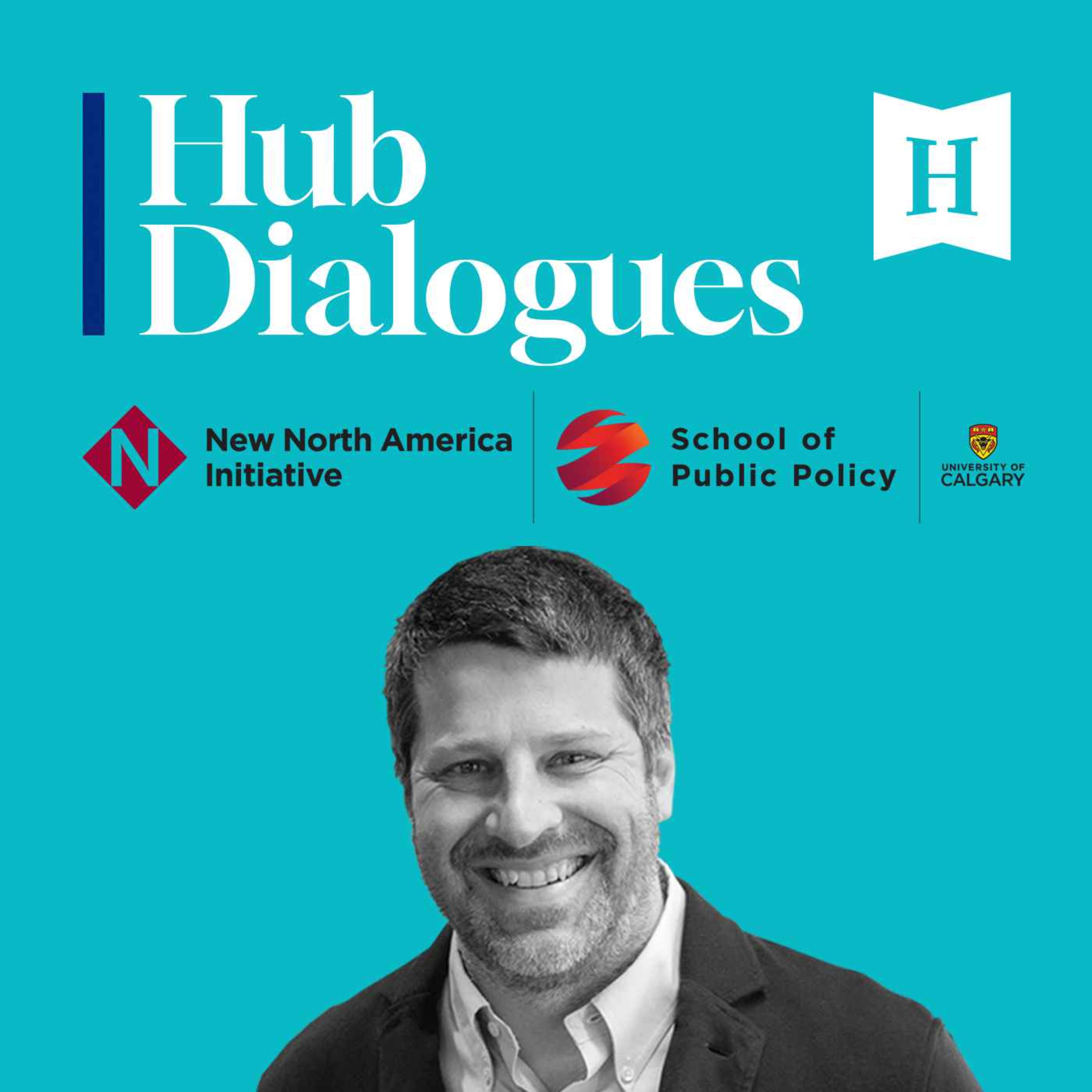
Stephanie Slade, opinion editor at Reason magazine, joins Sean Speer to discuss her book on fusionism—the idea that both liberty and virtue are necessary for human flourishing. She traces how this philosophy united American conservatism for decades before fracturing with the rise of the “New Right.” Slade argues that while cultural concerns are legitimate, using state power to impose virtue is misguided. She defends institutional neutrality, free markets, and civil society as proper spheres for moral formation, warning against abandoning classical liberal principles for right-wing progressivism. Click here to read Fusionism: Liberty, Virtue, and the Future of the American Right by Stephanie Slade: https://undpress.nd.edu/9780268211493/fusionism/ This episode is produced in partnership with the New North America Initiative at the School of Public Policy at the University of Calgary. From the shifting ideologies of the new Right and the new Left in the U.S., this multi-month series will
November 15, 2026; 12pm: A new push for immigration reform is coming to Capitol Hill – and Democrats are ready to fight for it. Andrea Flores and Chris Newman go through the obstacles those in the party will likely face with Stephen Miller in the White House and how they can persevere; Scott Colom’s Senate victory in Mississippi made history. He became the first Black Senator-elect since Reconstruction. Jacob Soboroff speaks with a voter, Vera Finley, who has a very personal connection to this win; For this week’s “Prediction Markets,” Jacob Soboroff heads to the Original Farmer's Market in LA to hear from people about the Nvidia drama, Democratic control of Congress, Cybertrucks and more. Julia Wick and Fernando Hurtado join to react. Hosted by Simplecast, an AdsWizz company.
November 15, 2026; 11am: Former Justice Department Pardon Attorney Liz Oyer explains how the current Justice Department has been set up to carry out President Trump’s "revenge agenda”; Ahmed Moor, a Pennsylvania Democratic candidate for the U.S. senate, explains his run for Senator John Fetterman’s seat and why he believes special interests are influencing our public policy decisions; Former U.S. Border Control agent Francisco Cantú explains what motivates ICE agents to do what they do. Hosted by Simplecast, an AdsWizz company.
November 15, 2026; 11am: The FAA’s nationwide ground stop this week disrupted travel for tens of thousands of passengers and the ripple effect of the delays and cancellations will last for days. Transportation Secretary Sean Duffy pointed fingers at many, but shielded the Trump administration from any blame. James Fallows explains how this major issue could have been handled much differently by our leaders; Aliya Rahman wants to unmask the ICE agents who dragged her from her car and detained. She is suing the government for abuse and wrongful imprisonment with the help of Jessica Gingold; America’s journey to become a more perfect union has been ongoing for its 250 year existence. Garrett Graff unveils his new book that shines a light on 25 different revolutions in our nation’s history that champions the regular people that changed history forever; Jacob Soboroff answers viewer questions from social media. Hosted by Simplecast, an AdsWizz company.
In an era when there is chaos coming from the failing American empire and democratic values are under constant threat from Putin, Xi, Trump and Netanyahu, it's crucial to highlight the strong stance Melanie Joli and Prime Minister Mark Carney have taken against Trump’s associates at Stelco. As European leaders unite to defend Ukraine, solidarity among Middle Power nations is more vital than ever. Canada has emerged as a beacon of strength, standing resolutely against Trump, Putin and championing our NATO allies. Join Charlie Angus, the dynamic Leader of the Resistance and Host of Meidas Canada, as he sits down with Laura Babcock for an insightful discussion on the pressing challenges facing Canada and our democracy. This is not just a conversation; it’s a call to action for all Canadians. Together, we can safeguard our values and ensure a bright, democratic future for generations to come. Let's rise to the occasion and be the change we wish to see! The fight against Fascism grows as we
Royal commissions are expensive, slow and sometimes political. They can also be the best tool we have for finding out what went wrong. In this episode of the Integrity Puzzle, Associate Professor Will Partlett speaks with Geoffrey Watson SC, a director of the Centre for Public Integrity, about what separated Robodebt and the banking royal commission from the ones that failed, and why the terms of reference and the choice of commissioner matter most. They then turn to Victoria’s Royal Commission into the Big Build: what Geoffrey found in 18 months investigating the CFMEU without the power to compel a single witness, why he called for a royal commission, and the systemic problem he sees behind both Robodebt and the Big Build.
A new Air Force Special Warfare class started — and Peaches came in pissed off. According to the information he was hearing, roughly 80 candidates failed their initial IFT, with the 500-meter swim knocking out a significant number before training had even really started. Trent and Peaches try to understand how candidates who spent months recruiting, developing, training, going through Basic Military Training, and preparing specifically for Special Warfare could arrive unable — or possibly unwilling — to pass the first physical test. The guys also talk about something candidates rarely consider: these opportunities are finite. New recruits occupy ship dates that someone else could have taken, while cross-trainees and prior-service applicants compete for an even smaller number of retraining slots. Trent gives new recruits more grace, but the conversation gets much harsher when it comes to active-duty or prior-service members who fight through the retraining process, take one of those lim
Before British special forces launched their assault against the West Side Boys, intelligence personnel had to determine where the hostages were being held and how the militia organized its defenses. This episode examines the reconnaissance, surveillance, and operational planning that preceded Operation Barras. It explores how intelligence preparation and coordination between multiple military units made a complex hostage rescue possible.
In 1963, a secret affair between Britain’s Secretary of State for War and a 19-year-old model erupted into a national security scandal when her connection to a Soviet naval attaché came to light. As Cold War tensions intensified, British intelligence faced troubling questions about political vulnerability, potential espionage, and the possibility of compromised government secrets. This episode explores the Profumo Affair, the intelligence concerns surrounding it, and how a private relationship became a political catastrophe that shook the British government, even though allegations of espionage were never substantiated.
In the British detective series Death in Paradise, murder investigations frequently unfold against a backdrop of beaches, tropical waters, and seemingly perfect opportunities to dispose of evidence. But can throwing a murder weapon into the ocean actually destroy its fingerprints? FBI research revealed that identifiable fingerprints can survive underwater for as long as 70 days. This episode explores the surprising chemistry of fingerprints, the techniques investigators use to recover submerged evidence, and why water may conceal a crime without erasing its forensic traces.
A stranger repeatedly appears near residential windows. Someone notices unfamiliar footprints, disturbed gates, or a person watching the same house on multiple evenings. When does suspicious behavior warrant greater concern? This episode explores surveillance indicators, repeated boundary violations, home security, and the importance of documenting and reporting suspicious activity without unnecessarily confronting a potential offender.
One of the most painful questions in trafficking cases is why a survivor who escapes would ever return to the person who exploited them. In this episode, we look at the psychology behind going back: trauma bonding, intermittent reinforcement, shame, and the debts traffickers use as invisible chains. We explore why leaving is a process rather than a single moment, and why judging survivors who return misses what's really happening. Most importantly, we talk about what actually helps someone leave for good.
Show Links• Get the top 80+ AI Models for $8.99 at AI Box: https://aibox.ai In this episode, we explore the recent release of Claude Fable 5.2 and the anticipated benefits of its 30% speed increase and 20% price cut. Additionally, we discuss the implications of these updates for users' workflows and how they fit into the evolving landscape of AI technologies. Chapters 00:00 Welcome and Announcements 02:00 Overview of Claude Fable 5.2 05:00 Impact on Workflows 08:00 Market Comparison and Mythos 5.2
What you will hear is a continuation, not a repetition. A considered counterpoint. A deeper reading of the question at hand, a nuance. In this episode, we feature Dr. Jakob Schaad (https://ch.linkedin.com/in/jakob-schaad)’s analysis of Episode 301 (https://podcasts.apple.com/gb/podcast/heads-talk/id1537979604?i=1000797011368) with Prof Allison Pugh (https://open.spotify.com/episode/2qCzVvd7CSnfJE0R4XjOnO?si=be6e16ba0a7a4ebc), Episode Title: 🇺🇸Meaning?!🇺🇸 Question 2: Connective Labour - Why has this work remained so persistently unappreciated, undervalued, even though it holds systems together, and are we now designing systems that quietly extract empathy and emotional labour from people, while failing to measure or even reward it? Question 3: Trust, Institutions, & Fragility - When trust in institutions begins to erode, what happens to behaviour inside organisations and across societies? Further enquiries or to connect with Dr Schaad: (https://www.schaadadvisors.ch/) jakob@schaadad
On November 2, 2026, the United States military entered a new chapter in special operations warfare with the activation of a dedicated Space Force component supporting U.S. Special Operations Command. Operating from MacDill Air Force Base in Florida, the organization brings specialized space, cyber, and intelligence expertise directly into the planning and execution of elite military missions. This episode examines the emergence of Space Special Warfare Teams, why modern commandos increasingly depend on orbital capabilities, and how the next generation of special operations may be fought simultaneously on the ground, in cyberspace, and hundreds of miles above Earth.
Just a quick announcement that we'll be dropping some episodes over the next two weeks introducing the candidates that will be representing us in the Victorian state election. And our Victorian Vice President, Heath McKenzie, would like to remind all Victorian electors that while pre poll opens on the 18th of November, on the 17th of November low sensory voting options will be made available to those who would prefer a quieter environment in which to vote. Details are available at the Victorian Electoral Commission's website here. (https://www.vec.vic.gov.au/voting/2026-state-election/low-sensory-voting)
This week, Scott and Jesse talk about new candidates for Knoxville city mayor, pay raises for Knox County employees, another alleged Heritage Hubs-related assault, a court decision allowing a religious charter school, and how a Carter subdivision has become a flashpoint in a legal battle over paying for road improvements. They also look ahead to this week's meeting of County Commission and sessions to discuss zoning for the new Farragut elementary school. Share this free service of Compassknox.com (https://www.compassknox.com/)
Today's Digest covers potential Russian threats against Zelensky, Trump-Xi-Putin talks, AI medical scores and airline bans, oil shortages, strikes and surpluses, Tether Gold audit, FISA/HMRC privacy moves, and US politics on Musk and Iran intel. Click Here for Peak Prosperity (https://peakprosperity.com/russia-reportedly-removes-ban-on-killing-zelensky-ai-outscores-real-docs-on-admissions-by-2x/)
Democrats did not just win the 2026 midterms. They won the power to rewrite state law. With new trifectas in Arizona, Michigan, Minnesota, Nevada, Pennsylvania and Wisconsin, they now control the governor's office and both legislative chambers in states covering more than 180 million Americans. This episode breaks down the legal and legislative playbook for 2027: how Democratic attorneys general are using coordinated lawsuits to block federal policies, how state legislatures plan to codify abortion and voting rights, and how new trifectas could reshape congressional maps before the 2028 election. We explain the mechanisms, the limits, and the legal battles ahead. General information only, not legal advice. Based on public records and news reports. Thanks for listening to Gavel & Gazette. Legal news, explained. General information only, not legal advice. This episode includes AI-generated content.
He’s back, and just in time to help humanity plan for the coming food uncertainty brought to us by the Globalist organizations that often role-play pandemic responses and supply chain events. Understanding their future plans for the population of the West means realizing that nothing is accidental, starvation is a feature, not a bug, and that famines are scheduled in advance in order to control the people. Now that the Ice Age Farmer has returned to discuss the direction the West is heading, what can be done to pivot into a world of abundance? The good news is that we can turn things around, but not until the West understands and is honest about what is happening, who is behind it, and what can be done to do so before society becomes unrecognizable. --- Guest: Christian Westbrook --- Charlie's Books: Activist Post: Substack: @ActivistPost (https://substack.com/@activistpost) Newsletter Sign Up (https://activistpost.kit.com/emails) Support Our Sponsors C60 Power (https://go.shopc60.com/
كيف أعاد الذكاء الاصطناعي صياغة مستقبل التقنية مع إثارة مخاوف حقيقية تمس الوجود البشري؟.. وهل يمكن أن نشهد كبحًا لجماح تطور الذكاء الاصطناعي في وقت قريب؟! لمعرفة ذلك وأكثر.. استمتعوا بـــ(ريل كاست) جديد من مركز المعلومات!
Sen. Mark Kelly (D-Ariz.) joins Dasha in San Diego for a conversation about the Iran war, the future of the Democratic Party and the possibility of a 2028 presidential run. The Arizona Democrat says voters weren’t necessarily embracing Democrats in the midterms so much as rejecting Republicans, and he argues his party needs to show it can improve people’s lives. Kelly also discusses why he’s still weighing a presidential bid and whether a quieter political style can break through in today’s attention economy. Plus: his critique of Defense Secretary Pete Hegseth and his response to President Trump’s threats against him. Have thoughts for The Conversation? Text or leave us a voicemail at 202-643-1536.
From April 21, 2021: Last week for the Michael V. Hayden Center for Intelligence, Policy, and International Security at George Mason University's Schar School of Policy and Government, David Priess moderated a virtual event called, "Spy Writing in the Real World." The event featured three authors of espionage fiction, two with previous experience working inside the U.S. intelligence community: Brad Thor, the #1 New York Times bestselling author of 21 thrillers; Karen Cleveland, a former CIA analyst and New York Times bestselling author of "Need to Know" and "Keep You Close"; and award-winning author and former NSA and CIA officer Alma Katsu, who had written five novels prior to her first new spy novel, "Red Widow." They talked about the spy thriller genre, their challenges within it, their research and their experience with prepublication classification review. To receive ad-free podcasts, become a Lawfare Material Supporter at www.patreon.com/lawfare (http://www.patreon.com/lawfare).
From April 21, 2021: Last week for the Michael V. Hayden Center for Intelligence, Policy, and International Security at George Mason University's Schar School of Policy and Government, David Priess moderated a virtual event called, "Spy Writing in the Real World." The event featured three authors of espionage fiction, two with previous experience working inside the U.S. intelligence community: Brad Thor, the #1 New York Times bestselling author of 21 thrillers; Karen Cleveland, a former CIA analyst and New York Times bestselling author of "Need to Know" and "Keep You Close"; and award-winning author and former NSA and CIA officer Alma Katsu, who had written five novels prior to her first new spy novel, "Red Widow." They talked about the spy thriller genre, their challenges within it, their research and their experience with prepublication classification review. Hosted on Acast.