Why They Go Back: The Psychology of Returning to a Trafficker
3 min
Listen through the publisher, then discuss the episode here or arrange an in-person Roundtable. Your city determines where to meet.
Roundtables are designed for groups of four, with a shared subject and room for everyone to speak. Come for discussion, with no dating expectation.
One of the most painful questions in trafficking cases is why a survivor who escapes would ever return to the person who exploited them. In this episode, we look at the psychology behind going back: trauma bonding, intermittent reinforcement, shame, and the debts traffickers use as invisible chains. We explore why leaving is a process rather than a single moment, and why judging survivors who return misses what's really happening. Most importantly, we talk about what actually helps someone leave for good.
Episode information is provided by the publisher. Listening takes place on the publisher’s service.
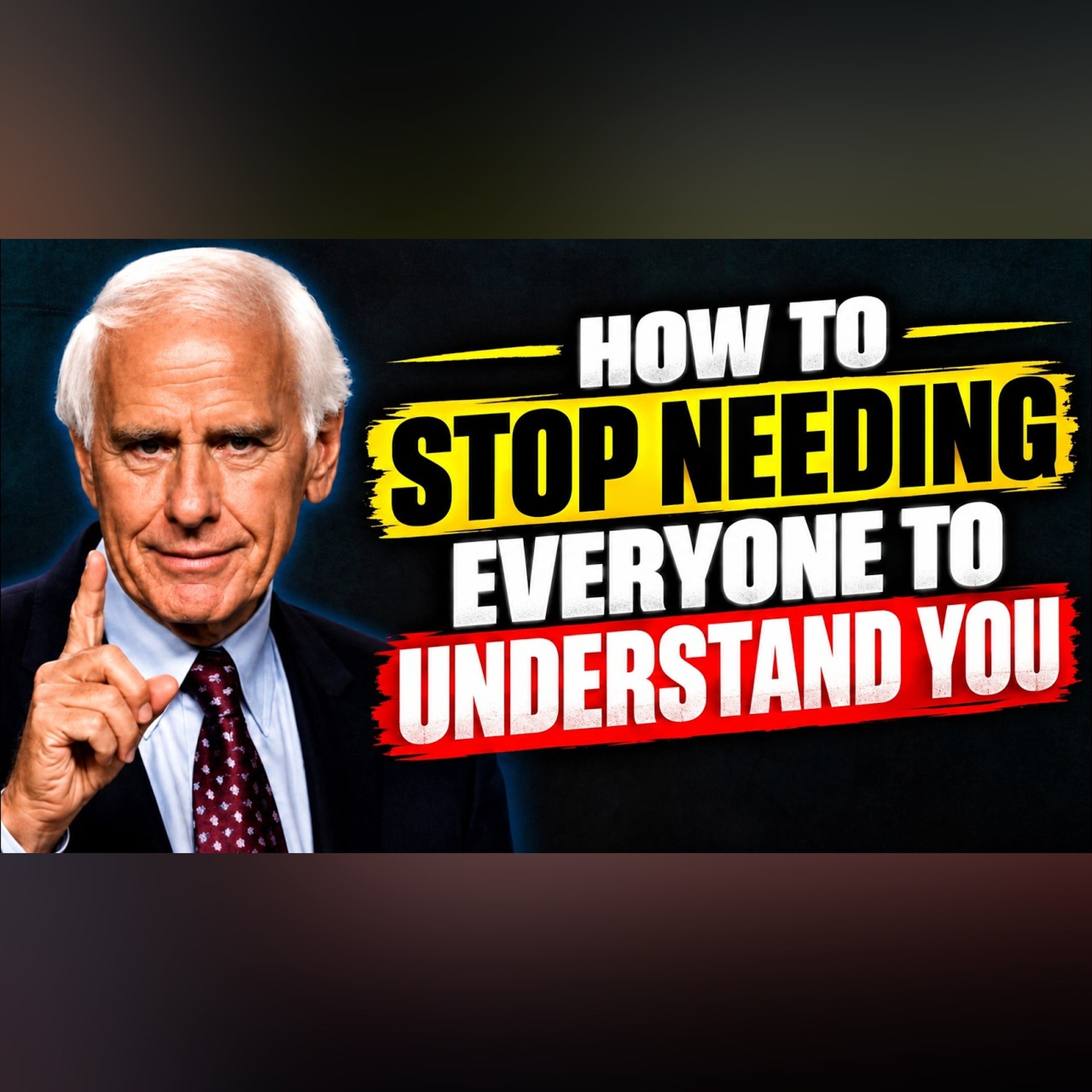
You went back. Maybe not to the same person, but to the idea of them. You rehearsed the conversation again in your mind. You thought of better words, sharper examples, a clearer way to say the thing you'd already said. You kept trying to win an argument that was already over, with a person who had already walked away. Uploaded 13-10-26 That hunger to be understood is one of the most natural things in the world. And it is also one of the quietest thieves of a person's peace that I know of. You explain yourself to one person, feel relief for a day, and then someone else shakes their head, and you're back building the case for your own life all over again. Here is the truth: it is not another person's job to understand you. It is your job to understand yourself. And once you've done that interior work, the opinions of people who don't understand you go from feeling like a verdict to feeling like weather. This seminar unpacks the single mechanic behind why you keep over-explaining your lif
This interview with Peter Mallouk, global finance expert and co-author of The Path, pulls the curtain back on what’s really happening in today’s marketplace – and shows you how to leverage it to build true financial independence. It’s a sneak peek of what’s in the book, packed with valuable advice from one of the greatest minds in finance: Mallouk has been ranked the #1 financial advisor by Barron’s and grew his wealth management firm, Creative Planning, from managing $30 million in assets to more than $50 billion. Uploaded 18-10-20 From financial principles like inflation, bear markets and taxes to the psychology of success, in this video Mallouk shares a few of the most essential concepts from the book. He’ll go over the importance of getting laser-focused on your goals, an idea that Tony Robbins himself also champions. As Peter explains, superstar athletes didn’t just wake up one day and start working out. They know their sport and they know what they have to do to win. This applies
House Republicans have apparently decided to stop showing up for work, leaving Mike Johnson begging his members to return as a government shutdown looms. Catherine Rampell and Joe Perticone discuss the GOP’s disappearing majority, Trump’s trouble getting his nominees confirmed, and a new executive order that Joe calls “mafia-esque” as the White House tries to get ahead of congressional investigations.
Your body doesn't work like you think... Take your personal data back with Incogni. How and when people are having kids is changing, but our bodies aren't. As we get older, it can get harder to have kids when we want to. So smart people figured out it’s possible to remove eggs, freeze them, and unfreeze them to use later. They can even fertilize those eggs to make embryos and freeze those. Basically, humans invented cryosleep! … Just for tiny cells. It’s totally sci-fi - and you need to know about it. This is a level of control over our bodies no species has ever had before. It’s already changing people’s lives - and how our species can reproduce. But there are real concerns about whether it’s worth it. Because let me tell you, the process is not easy. I’ve been taking medication for two weeks. And at the same time, I’ve been doing research, talking to doctors, and learning as much as I can about the cutting edge of fertility tech. In this video, I'm going to take you behind the scenes
Explore what makes polio so dangerous, what is causing the 21st century resurgence of cases, and how we can eradicate the disease. -- In 1952, polio was everywhere: killing or paralyzing roughly half a million people annually. Yet just 10 years later, paralytic polio cases in the US dropped by 96% and we were on track to get rid of polio for good. But in recent years, the virus started striking back. So, what’s behind these recent spikes? Explore the dangers of poliovirus and the possibility of eradicating this deadly disease. Directed by Anton Bogaty. This video made possible in collaboration with Gates Ventures Learn more about how TED-Ed partnerships work: https://bit.ly/TEDEdPartner A special thanks to Ananda Bandyopadhyay, Amber Zeddies, and Kathleen O'Reilly who provided information and insights for the development of this video. Support Our Non-Profit Mission ---------------------------------------------- Support us on Patreon: http://bit.ly/TEDEdPatreon Check out our merch: htt
🇺🇸 TWO NAVY SEALS. TWO INCREDIBLE JOURNEYS. ONE POWERFUL MISSION TO TRANSFORM YOUR FINANCIAL FUTURE! Michael Jaco welcomes fellow former Navy SEAL Larry Yatch, founder of TruPath Mastery, for an eye-opening conversation about success, leadership, financial trauma, and the hidden subconscious patterns that can keep even the most accomplished people from reaching their full potential. With 24 years as a Navy SEAL and 11 years as a CIA security operative, Michael shares the powerful lessons of mental discipline, intuition, and personal transformation that shaped his extraordinary journey. Larry brings 10 years of Navy SEAL service and an impressive career advising Fortune 50 executives. But despite achieving tremendous professional success, he discovered that the survival patterns that once made him successful were also keeping him trapped in his own business. THE BIG REVELATION: YOUR MONEY HABITS MAY HAVE VERY LITTLE TO DO WITH MONEY! From childhood programming and fear of scarcity to
Former Washington State Patrol detective and supervisor Carlos Rodriguez spent years on the front lines of some of the darkest cases in law enforcement, investigating child exploitation, human trafficking and online predators with the Missing and Exploited Children Task Force. He walks us through his path from state trooper to undercover operations, and then into the sting operations built to catch people trying to buy access to children. He shares the cases that stayed with him and explains how traffickers are actually brought to justice. He also speaks candidly about the PTSD, burnout and compassion fatigue that investigators carry, which he explores in his book The Ugly Underneath.
We picture trafficking as a stranger in a van, but many child victims are trafficked by the people who are supposed to protect them: a parent, an uncle, a grandparent. In this episode, we look at how familial trafficking works, why it stays hidden for years, and why victims so rarely identify what happened to them as trafficking. We explore the psychology of loyalty, shame, and survival that keeps children silent. We also cover the warning signs teachers, doctors, and neighbors miss, and what it takes to finally break the cycle.
Expanding universities should help pay for the pressures they create on surrounding neighborhoods.
Share your view, then see how readers voted. No sign-in required. This poll is shared across stories.
Do you agree or disagree?
Common Quandary
A Common Quandary to discuss
Another conversation to explore, separate from this news story.
You inherit a fortune made in ways you despise. Can you keep it?
You inherit a substantial sum from a relative who accumulated it through practices you consider exploitative. Keeping it would improve your family's security; donating it could support people harmed by similar practices.
Can ownership be morally clean when its history is not?