When the Trafficker Is Family: The Hidden Face of Child Sex Trafficking
3 min
Listen through the publisher, then discuss the episode here or arrange an in-person Roundtable. Your city determines where to meet.
Roundtables are designed for groups of four, with a shared subject and room for everyone to speak. Come for discussion, with no dating expectation.
We picture trafficking as a stranger in a van, but many child victims are trafficked by the people who are supposed to protect them: a parent, an uncle, a grandparent. In this episode, we look at how familial trafficking works, why it stays hidden for years, and why victims so rarely identify what happened to them as trafficking. We explore the psychology of loyalty, shame, and survival that keeps children silent. We also cover the warning signs teachers, doctors, and neighbors miss, and what it takes to finally break the cycle.
Episode information is provided by the publisher. Listening takes place on the publisher’s service.
You've gotten very good at pretending you don't feel it. Uploaded 21-08-26 Maybe it's a conversation with someone you love. Someone you work for. A partner, a parent, a friend who's been quietly taking more than they give. Or the hardest one of all — a conversation with yourself, the one where you finally admit something you've refused to say out loud for years. You know exactly which one I'm talking about. You felt it the moment I said the word. A name came up, or a face, and your stomach did something small and unpleasant, and you pushed it back down where it's been living. That flinch is the most honest thing that's happened to you all day. Here is the truth: the life you say you want — the freedom, the peace, the relationship, the income, the respect — there's a very good chance it's on the other side of one conversation you keep refusing to have. Not ten. One. This seminar unpacks the single mechanic behind a stuck life: the necessary conversation you keep treating like a locked d
Charlie Kirk’s assassination will dominate the headlines—but before the truth is even clear, the disinformation machine is already spinning. This video exposes how suppression, radicalization, and division are weaponized—not by ideology, but by systems designed to keep you outraged, divided, and distracted. Uploaded 11-09-25 We’ll reveal: • Why suppression is the biggest red flag in history—and why it always signals weakness, not strength. • How highly suggestible people are radicalized—not by one side or the other, but through media outrage loops, algorithmic echo chambers, and deliberate manipulation. • The illusion of “left vs. right”—a distraction designed to pit neighbors against each other while corruption, corporate power, and elites escape untouched. • The common ground we all share: freedom, safety, stability, fairness—and what none of us want: corruption, endless wars for profit, elites with different rules, surveillance states, and justice systems that bend for the powerful
My guest today David Williams is a counselor at Jesuit College Preparatory School of Dallas, where he has spent 30 years working with adolescent boys including my own. He's also someone I've learned so much from over the years. I've shared things he's taught me in other podcast conversations, but I decided it was time to bring him on for an entire episode. Raising teenage boys comes with its own set of challenges in a world that constantly tells them to be faster, stronger, smarter, and better. In this conversation, David shares what boys are really navigating beneath the surface, why so many struggle to express emotions or ask for help, and how parents can create a home where they feel safe. We talk about breaking out of the expectations of the "act like a man box," knowing when to step in and when to give them room to grow, and how to raise boys with both high expectations and high support. We also explore the growing pressures of AI, social media, and gambling, and why our ultimate
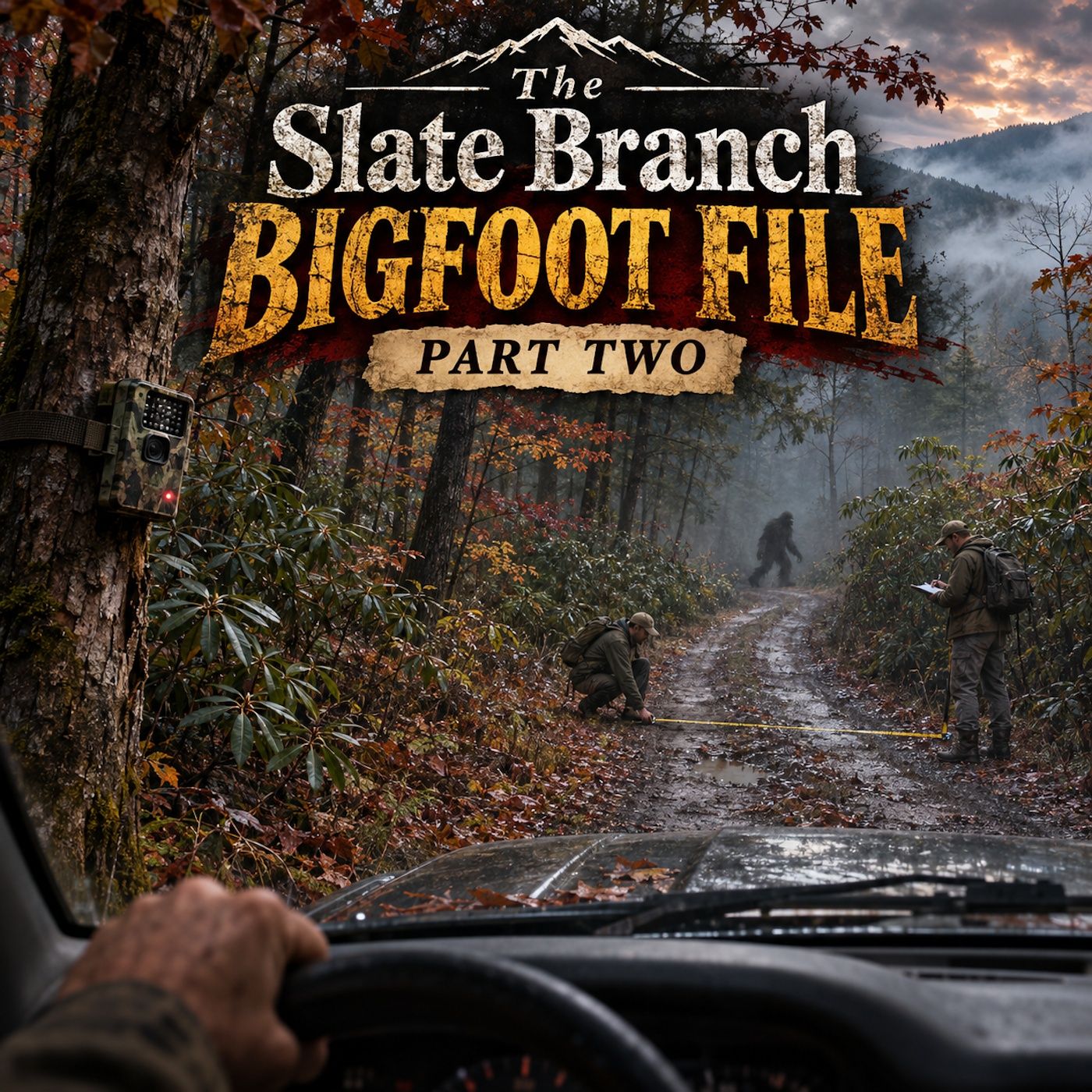
On October 7, 2017, Tom Rigsby watched something large, dark, and walking upright cross a remote logging road in western North Carolina. The encounter lasted less than five seconds. Tom waited two days before reporting it, and when he finally put his experience in writing, he never once used the word Bigfoot. In Part Two of The Slate Branch File, Brian takes a closer look at the encounter that started it all. Drawing from the field notebooks of former wildlife survey technician Nate Calder, Brian examines Tom’s credibility, his years of experience working in bear country, and the details he initially refused to include in his official statement. When Nate and Evan Harlan return to the crossing site to recreate the encounter, their measurements raise more questions than answers. Meanwhile, a mysteriously repositioned trail camera, an overlooked access route through the surrounding national forest, and troubling gaps in the crew’s assumptions suggest the remote property may not have been
Happy Sunday! Welcome to Heal Squad’s The Sunday Set Up. Life lessons to help you start the week. How much of success comes down to simply showing up? This week, we talk keeping an open mind, taking chances, and recognizing the doors that open along the way. From Olympic athletes appearing on national television alongside Mercedes Moné to performers who keep showing up week after week hoping for their big break, we explore why success isn't always about talent or luck. Sometimes it's about making connections, putting in the effort, and being willing to try without knowing what we'll get in return. We talk knowing when to stop investing time in people who aren't willing to help themselves, and why even experiences that don't work out can teach us something valuable. The takeaway: don't wait for the perfect moment or expect someone else to make things happen. Be willing to take a chance, walk through the doors that open, and remember that half of life is just showing up. Plus, a little b
We attempted nuclear fusion. In Simone’s workshop. Disclaimer: This build was supervised by experts at Helion. Do not try this at home. I still can’t believe this video really happened. Back in May, I interviewed Helion CEO David Kirtley. I was trying to understand nuclear fusion: Is nuclear fusion possible now? How does fusion actually work? And most importantly, is nuclear fusion the future? Then, at the end of the interview, I asked David about headlines I’d seen about people building nuclear fusion devices in their backyards - what were they doing? “Oh,” David replied, “you can build one.” What followed is the biggest adventure yet on Huge If True. Together with the team at Helion and my friend fellow YouTuber Simone Giertz, we BUILT A NUCLEAR FUSION DEVICE to show how nuclear fusion works, what the big remaining challenges are, and how it might help us all in the future. Then, the last step was to try to turn it on… WATCH "FUSION, EXPLAINED: PART 1" HERE: https://youtu.be/piPbnKdv
One of the most painful questions in trafficking cases is why a survivor who escapes would ever return to the person who exploited them. In this episode, we look at the psychology behind going back: trauma bonding, intermittent reinforcement, shame, and the debts traffickers use as invisible chains. We explore why leaving is a process rather than a single moment, and why judging survivors who return misses what's really happening. Most importantly, we talk about what actually helps someone leave for good.
Former Washington State Patrol detective and supervisor Carlos Rodriguez spent years on the front lines of some of the darkest cases in law enforcement, investigating child exploitation, human trafficking and online predators with the Missing and Exploited Children Task Force. He walks us through his path from state trooper to undercover operations, and then into the sting operations built to catch people trying to buy access to children. He shares the cases that stayed with him and explains how traffickers are actually brought to justice. He also speaks candidly about the PTSD, burnout and compassion fatigue that investigators carry, which he explores in his book The Ugly Underneath.
Communities should invest in adapting to unavoidable hazards as well as preventing future damage.
Share your view, then see how readers voted. No sign-in required. This poll is shared across stories.
Do you agree or disagree?
Common Quandary
A Common Quandary to discuss
Another conversation to explore, separate from this news story.
One sibling did years of caregiving. Should they get more of the inheritance?
One sibling lives near an aging parent and handles appointments, errands, and emergencies. The others live far away, call regularly, and assume the nearby sibling will receive the same inheritance despite years of unpaid work.
When does family care become labor that should be repaid?