The Fifth Circuit considers Nathan Reis's sentence for pandemic-relief loan fraud. Reis co-founded Blueacorn, a service provider that helped applicants obtain loans through the federal Paycheck Protection Program. The company earned money as loans were funded. Reis and others used false applications to obtain money for borrowers who did not qualify. He pleaded guilty to joining the fraud conspiracy. The district judge sentenced him to ten years in prison and ordered more than sixty-six million dollars in restitution. The argument you are about to hear concerns the loss calculation behind that punishment, not whether Reis participated in fraud. How much loan money was actually lost through conduct for which he can be held responsible? Listen for the difference between a warning sign that a loan might be fraudulent and evidence that it was fraudulent. The lawyers will discuss loan spreadsheets, individual applications and the scale of the wider scheme. Keep two consequences in mind: the
Federal employees who automatically renew their benefits may be overlooking changes that will affect their households throughout the next year. Greg Klingler, President & CEO of GEBA, says open season should begin with a deliberate review of coverage, costs, and family needs. In his conversation with Francis Rose on Fed Gov Today, Klingler describes inertia as a major influence on plan selection. A familiar plan may feel like a safe choice, especially when it has worked well during the current year. But satisfaction with past coverage does not establish whether next year's benefits will offer the same value.
The U.S. Space Force now has a formal component inside U.S. Special Operations Command, and Aaron, Trent and Peaches break down what that actually means for SOF. The new relationship is not about creating “Space Force commandos.” It is about putting Guardians who understand satellite communications, ISR, navigation, electronic warfare and space effects directly alongside the people planning and executing special operations. Instead of SOCOM requesting support from outside the organization every time a problem appears, the expertise is already inside the command and looking at the mission from the beginning. That integration could matter more than most people realize. Aaron argues that simply having Guardians in the room allows them to recognize problems other components may not even know can be solved with space capabilities. The guys also discuss the growing Space Force budget, commercial innovation from companies like SpaceX and Anduril, and why space and cyber are becoming increasin
In this episode, Major General Joseph “Solo” Kunkel, military deputy to the Defense Innovation Unit, discusses how operational problems in the Pacific are driving a new approach to force design and acquisition. He explains the Mission Area 1/2/3 framework (and the emerging “Edge force”), why Collaborative Combat Aircraft are better understood as extensions of the traditional force rather than pure Edge capabilities, and how smaller, posturable systems change basing and partner relationships. Solo outlines the thinking behind an Autonomous Warfare command focused on rapid adaptation cycles measured in days and weeks rather than years, its nesting relationship with the Direct Reporting Program Manager for Unmanned Systems and DIU, and why decisive mass requires deep integration with the services rather than a pure SOCOM-style model. He also covers DIU’s deliberate shift to carry promising capabilities past the prototype stage into LRIP—until a service can absorb them in its own budget—an
The Seventh Circuit hears Brandon Johnson's challenge to a police search of his girlfriend's home. In January 2020, Chicago officers were investigating a woman's report that Johnson had threatened her with a gun. His girlfriend let them into the home, where children were present, and gestured toward the stairs while discussing whom they could speak to. Some officers went upstairs with her; others went to a rear room on the first floor and found Johnson. A gun was recovered during a later patdown. Johnson asked that the gun evidence be excluded from his federal prosecution, but the district judge refused. The key question here is whether officers could enter that downstairs room in the first place. Johnson's lawyer will argue that the permission covered going upstairs to speak with people there, not searching the first floor. The government's lawyer will argue that she gave broader permission, and that the gun report and music from the back room justified a limited officer-safety sweep.
Back-and-forth arguments over the Agriculture Department’s mass reorganization plans are intensifying. The American Federation of Government Employees is seeking to stay a pending appeal motion from USDA. That’s as USDA is attempting to reverse a court injunction that’s been blocking the reorganization effort. Despite a federal judge ordering USDA to halt its plans, Agriculture Secretary Brooke Rollins says USDA is “full-bore ahead” on the reorganization. AFGE has been suing USDA over the plans, calling them an unlawful attempt at a reduction in force.
The Seventh Circuit considers where Elizabeth Coffey's securities-fraud suit against Kerrisdale Capital Management can be heard. Coffey and another investor sold shares of C3.ai after reading a letter from Kerrisdale, a short-selling investment fund, accusing the company of deceptive accounting. Short sellers can profit when a stock's price falls. The investors accuse the fund and its chief of deliberately misleading the market for profit. Those are allegations, not findings of fraud. The letter appeared online, and the fund's chief discussed it on television. Coffey received the letter in Illinois, and the investors sued there. But the district judge dismissed the case for improper venue: the rules about which federal district is a proper place to bring a lawsuit. The judge did not decide whether the letter was fraudulent. The investors' lawyer will argue that the report's broad distribution and an investor's receipt and reliance in Illinois connect the alleged violation to that distr
Technology has long been the one part of the economy that never hit a wall. No society has ever run out of ideas. Joel Mokyr, the Northwestern economic historian who won the 2025 Nobel Prize for identifying what makes growth self-sustaining, believes all of that and is frightened anyway. What worries Mokyr is not new technology like AI, but the social and political institutions it sits inside of: the tolerance for heretical ideas that invention depends on, the contestability that keeps dominant firms honest, and the public bodies that decide which claims about the world are established and which are not. Mokyr’s prescription is not caution. He thinks the money going into AI looks like a bubble, that a reckoning is likely, and that the right response is to move faster anyway, because demography and climate are not waiting for anyone. Connect with us: Follow Capitalisn’t on Instagram (https://www.instagram.com/capital_isnt/) & TikTok (https://www.tiktok.com/@capital_isnt) ️ Email your qu
Andrew and Joe dissect the historic 2026 midterms, including what to expect in the outstanding Senate races in Alaska and (shockingly) Mississippi; what it all means; why winning state legislatures and governorships may be as important as winning the House and Senate; and how we can start to forge a new way forward. Show Links: BlueSky: @LawAndChaosPod Threads: @LawAndChaosPod Twitter: @LawAndChaosPod
The Eleventh Circuit hears an appeal by two overseas online sellers in a trademark case brought by Adidas. Adidas accused the websites of selling counterfeit products bearing its marks. The district court authorized Adidas to serve the lawsuit by email and by posting documents on a notice website. The sellers' lawyer appeared before judgment, but they did not defend the claims before the court entered a default judgment. About five months later, they asked to set it aside, challenging service and offering settlement negotiations as a reason for the delay. The district judge upheld service and refused to reopen the judgment. Their lawyer will argue that the Hague Service Convention, which governs delivery of lawsuit papers abroad, did not permit this method and left the court without jurisdiction. He will say their settlement efforts justify the time they took to challenge the judgment. The lawyer for Adidas will argue that the electronic service was permissible and that the sellers wai
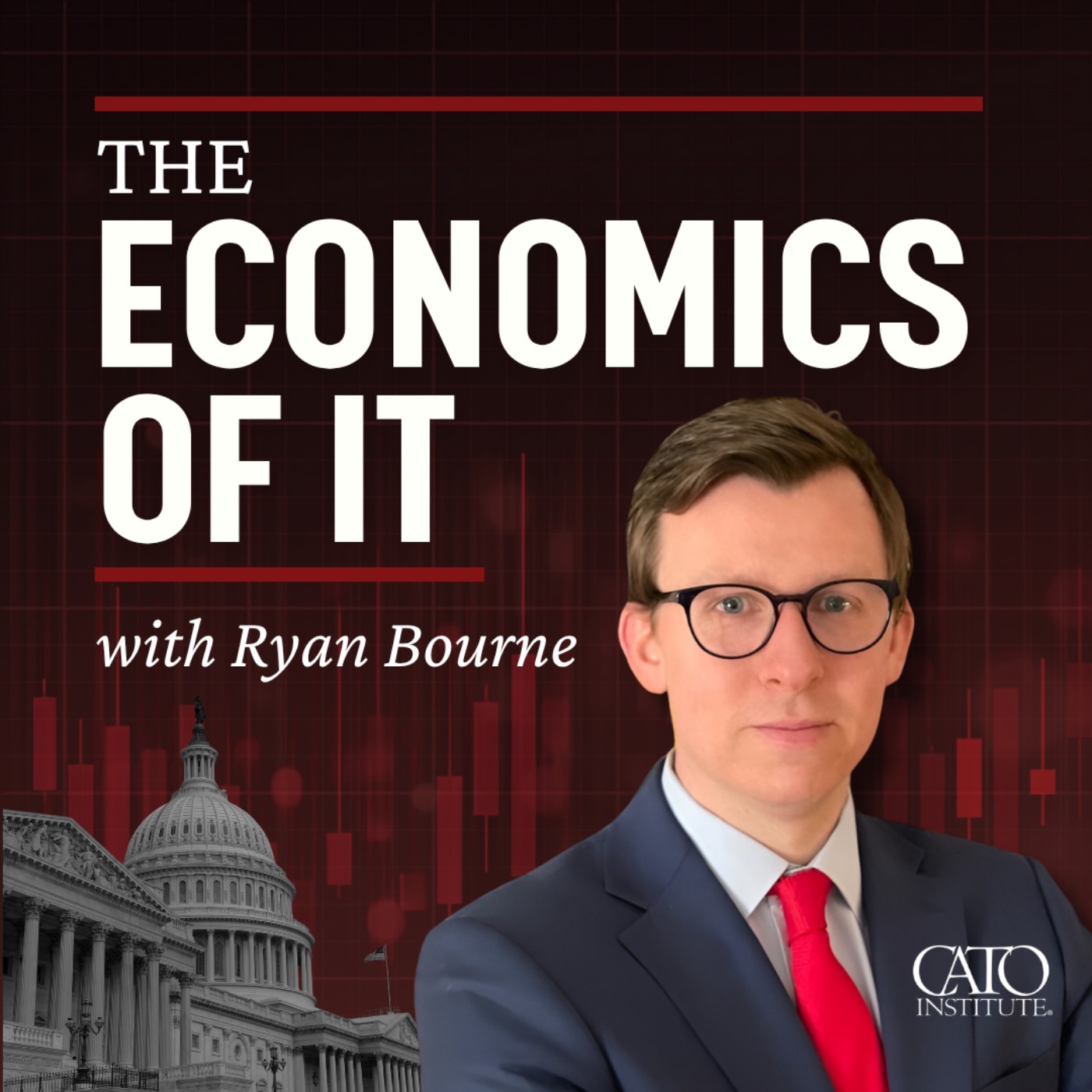
Who are the rich in America? Tech billionaires and Wall Street financiers dominate the headlines, but roughly three million private-business owners are worth at least $5 million each, scattered right across the country. Economists Eric Zwick and Owen Zidar, the authors of The Everywhere Millionaire, join host Ryan Bourne to explain who these “Main Street Millionaires” are, how they got rich, and what their stories tell us about the health of the American Dream. More on this topic: Angus Deaton Inadvertently Shows Why We Shouldn’t Care about Economic Inequality Stats: https://www.cato.org/commentary/angus-deaton-inadvertently-shows-why-we-shouldnt-care-about-economic-inequality-stats Failures of Wealth Taxation: https://www.cato.org/policy-analysis/failures-wealth-taxation Exploring Wealth Inequality: https://www.cato.org/policy-analysis/exploring-wealth-inequality Host & Producer: Ryan Bourne Senior Producer: Barbara Galletti Video Editor: Lena Popilieva Audio Engineer: Sedona LaMarre
Can a company charge you half of your remaining payments to cancel a subscription you thought was monthly? That is the question behind the legal fight over Adobe's Creative Cloud plans, which include Photoshop. In March 2026, Adobe agreed to pay $150 million, half in penalties and half in free services, to settle claims brought by the federal government that it hid an early termination fee and made cancellation hard. This week, a federal judge revived a separate class action over the same kind of subscription terms. This episode explains the 2010 online shopping law behind the FTC case, what the 50 percent fee was alleged to be, what the settlement means for customers, and what comes next. Nothing in these cases ends Photoshop. The fight is over how it is sold and canceled. General information only, not legal advice. Based on public records and news reports. Thanks for listening to Gavel & Gazette. Legal news, explained. General information only, not legal advice. This episode includes
The Seventh Circuit hears Michael Melgaard's retaliation case against Wisconsin's Department of Natural Resources and two supervisors. Melgaard was a conservation warden who supported a colleague's discrimination complaint against the department. He says supervisors then singled him out for sharing a work vehicle with another warden, contrary to pandemic safety rules. The department investigated, decided no formal discipline was needed, then issued a letter of expectations and a partly negative performance review. Melgaard says those actions, taken together, were retaliation for supporting the complaint. He sued the department under federal employment law and the supervisors personally for alleged First Amendment violations. The district judge dismissed the constitutional claims on sovereign-immunity grounds, treating them as effectively against the state. The judge also rejected the employment claim because the conduct was not sufficiently severe or pervasive to change working conditi
The Seventh Circuit hears TK Elevator challenge Church Mutual over who must defend it in lawsuits arising from an elevator accident. An employee at an Illinois senior-living facility alleged that she was injured when an elevator fell while she was riding it. She sued the elevator maintenance company, TK Elevator. The maintenance contract called for the property's insurance to cover TK first, without drawing on the company's own insurance. But TK was not named on Church Mutual's primary liability policy. It qualified for coverage under Church Mutual's umbrella policy, which generally sits above other insurance. TK also had coverage from HDI. The district judge held that the remaining HDI coverage had to be exhausted before Church Mutual had a duty to defend TK. The company's lawyer will argue that an endorsement in the HDI policy, read with the maintenance agreement, reverses that order and puts Church Mutual first. Church Mutual's lawyer will argue that a promise to obtain insurance do
First, they came for the conspiracist Alex Jones — and won. Now, "America's Finest News Source" is trying to make The Onion Sports Bowl a real thing, on ESPN, in the name of (satirical) journalism. CEO Ben Collins takes Pablo behind the scenes of an uphill battle, a ridiculous writers' room and a last-ditch effort... with some demanding star power. • Subscribe to The Onion (https://membership.theonion.com/) • Subscribe to PTFO on YouTube (https://www.youtube.com/@PabloTorreFindsOut/) • Previously on PTFO: How The Onion Finally Shut Up Alex Jones for Good (https://pod.link/1685093486/episode/NjllNjUzYTI5M2ZkMGY1ZGUwZjMyYWRh) (Pablo Torre Finds Out is brought to you by Apple Card.) Hosted on Acast.
The midterm elections brought historic victories, jaw dropping flips from red to blue, and a resounding rejection of Trumpism. This week Alex speaks to Jamie Ager, the first Democrat to win in North Carolina’s 11th congressional district in 15 years. Then, she talks to Brian Tyler Cohen about the energy a new set of leaders could bring to the Democratic party, and the importance of embracing the big tent and broad range of views they represent. Finally, she hears from Senator Bernie Sanders on what message American voters sent to Washington on November 3rd, and what Democrats can realistically achieve with a majority in Congress while lame duck Trump is still in office. Order Alex's new book, The Steal: Four Right-Wing Hard-Liners, One Republican Presidency, and The Raid On America's Courts (https://bookshop.org/p/books/the-steal-four-right-wing-hard-liners-one-republican-presidency-and-the-raid-on-america-s-courts-alex-wagner/79e2bee385d4c18b) and subscribe to her Substack here (https
In part one of Red Eye Radio with Gary McNamara and Eric Harley, we begin by recognizing the accomplishments of President Trump in his two terms in office, particularly in the second term by fixing all the Biden administration had destroyed. Some of his ideas and efforts never materialized, but his war efforts and international relations are unprecedented. As the GOP suffered a massive blow last night, we discuss what happened and how Republicans can galvanize their coalition moving forward. Also how the economy and affordability impacted Americans during Trump's second term / how the GOP can rebound in the next two years / populist economics split the Republican party / recovering from the blue wave and how to move the party forward / legalizing marijuana now that Texas is blue / an op-ed by Jim Garrity on the President's obsession with minutia and White House aesthetics / and the tribal effect on the President's base.
In part two of Red Eye Radio with Gary McNamara and Eric Harley, we wrap up our election autopsy by observing President Trump's delusional statements coming off the mid term losses. The "sore loser" comments reflect an attitude that have concerned us as he has served the office and how it has effected his voter base. We recognize it's part of his unique personality that has been somewhat enjoyable and greatly appreciate all of his effective actions, yet wincing at some of the comments made out of frustration or anger. Our wish is for the President to maintain his dignity and not be demonized for an off-beat narrative. Also the political idolatry of past Presidents / audio from comedian Jim Breuer being willfully ignorant / and how our listeners respond and cope with the mid term losses.
The Fifth Circuit hears Vistra and other electricity producers challenge a federal rule ending certain payments for reactive power. Unlike the real power that runs appliances, reactive power supports the voltage needed to deliver electricity reliably. Some grid operators separately paid generators for that support within a standard operating range, often called the dead band. Order 904 from FERC ends those charges in transmission rates; payments outside that range are not eliminated by this rule. FERC reaffirmed the rule after rehearing, and the generators sought judicial review. The generators' lawyers will argue that equipment costs and lost opportunities to sell electricity make the rule unreasonable. They will also argue that long-term contracts and investments relied on revenues the rule removes. The lawyer for FERC will argue that this is a normal obligation of connecting to the grid, with little or no additional cost. She will say generators can recover costs through electricity
Democrats have won the House and Senate. What will it take to turn that victory into lasting checks on presidential power? Corey Brettschneider and John Fugelsang examine the laws and reforms needed to hold presidents accountable, including reviving the independent counsel, protecting civil servants from political retaliation, and curbing abuse of the pardon power. But first, Corey and John break down the ballot battles in California, the fight over election certification in Alaska, and the Justice Department’s demands on states. They also examine the Houston indictment and accountability for ICE and federal law enforcement, asking whether judges can still provide an effective check on presidential power. Support our sponsor today at https://FFRF.us/office 01:12 – Intro: The Tide Is Turning 03:20 – SCOTUS Won’t Let Trump Set Aside 20,000 Ballots 13:44 – The Two Dan Sullivans 22:30 – Five States Were Pressured to Remove Ballots 27:14 – An ICE Agent Indictment in Texas 41:00 – What Do We
Send us Fan Mail (https://www.buzzsprout.com/1962410/fan_mail/new) In this episode of CitiesSpeak, Clarence E. Anthony sits down with Irma Esparza Diggs, NLC’s Director and Senior Executive for Federal Advocacy, to unpack the latest election results and what it means for cities, towns, and villages. The conversation explores voter sentiment, potential shifts in Congress, key federal priorities affecting local governments, and how local leaders can prepare for the next congressional session. For more information, visit us at nlc.org (http://nlc.org/).
A decade after Sen. Bernie Sanders nationalized his brand of economic populism, Democrats are winning on his message. What lessons have they learned since 2016 and could a new progressive movement carry that momentum into 2028? Then the other stories animating Washington: President Donald Trump is taking the GOP's midterm drubbing in a surprisingly Zen fashion, while Vice President JD Vance points the finger at the Iran war, with Trump's blessing. For more news and analysis, subscribe to the Playbook newsletter: politico.com/playbook (https://www.politico.com/playbook)
Harry gathers Emily Bazelon, Jonathan Lemire, and Mike Murphy to pick through the political wreckage left after a historic Democratic deluge. The panel tackle the causes and implications of the country's momentous swing against Donald Trump. Together, they break down the Tuesday's biggest surprises, how long Trump will continue to accept the results, and what Democrats’ top priorities should be as they take command in Congress. Mentioned in this episode: Emily’s reporting (https://www.nytimes.com/by/emily-bazelon). Emily’s Political Gabfest (https://slate.com/podcasts/political-gabfest). Jonathan’s reporting (https://www.theatlantic.com/author/jonathan-lemire/). Mike’s podcast Hacks on Tap (https://podcasts.apple.com/us/podcast/hacks-on-tap/id1467297559). Harry’s column (https://harrylitman.substack.com/p/where-to-begin) on what Democrats’ accountability agenda should look like.
On this episode, Hunter talks with Erin George, National Director of Policy at The Bail Project. Few topics in criminal legal policy have drawn more attention in recent years than bail reform. Erin explains what drives the intense, polarizing debates around bail reform and the policy changes we can fight for to eliminate cash bail. Guest: Erin George, National Director of Policy, The Bail Project Resources: Learn more about The Bail Project: https://bailproject.org/ https://www.instagram.com/bailproject/ https://www.facebook.com/bailproject/ https://www.youtube.com/channel/UC-49-TzVvamru9KecPuSYKw https://www.tiktok.com/@bailproject https://www.linkedin.com/company/the-bail-project/ https://x.com/bailproject If you are facing criminal charges, talk to a lawyer.