This is a Grave Talks CLASSIC EPISODE! A quiet walk through the woods on a crisp fall day shifted into something far more unsettling for Ryan Edward when the sounds in the distance stopped resembling wildlife. The movement was deliberate. Heavy. Aware. It wasn’t a deer. It wasn’t a bird. And it didn’t feel human. As the rustling grew closer, instinct overrode logic. The atmosphere changed in a way that’s difficult to explain but impossible to ignore — the sense that something unknown was present and possibly watching back. Fear took control, driving him out of the forest and into safety. Only afterward did the second wave hit: how do you explain an encounter with something that doesn’t fit into accepted categories? Cryptid encounters carry more than adrenaline; they carry the weight of disbelief. Ryan’s account explores that moment when the wilderness feels occupied by something unidentified — a presence that doesn’t belong in any field guide, but leaves a mark just the same. #TheGrave
Today we're going to take a closer look at ecosystems -- which are communities of living organisms in an area interacting with their environment -- and how this relationship between the amount of energy a place receives and the movement of nutrients is what makes the incredible diversity of life possible. We'll also take a look at the patterns we see in the main global biomes, show you why some biomes (like tropical rainforests) are so productive, and discuss an agricultural practice some farmers have employed to help preserve their local ecosystems. Watch our videos and review your learning with the Crash Course App! Download here for Apple Devices: https://apple.co/3d4eyZo Download here for Android Devices: https://bit.ly/2SrDulJ Crash Course is on Patreon! Thanks to the following patrons for their generous monthly contributions that help keep Crash Course free for everyone forever: Alexis B, Rene Duedam, Burt Humburg, Aziz, Nick, DAVID MORTON HUDSON, Perry Joyce, Scott Harrison, Mar
How does education work? Where does the money come from? Who pays for it? Is going to college a good investment? Adriene and Jacob are talking today about the economics of education. Most countries require that their citizens get some education, and most countries pay for basic education, but the quality of education can vary widely. And in the US, post-secondary education can come with a lot of costs. Crash Course is on Patreon! Thanks to the following Patrons for their generous monthly contributions that help keep Crash Course free for everyone forever: Mark, Eric Kitchen, Jessica Wode, Jeffrey Thompson, Steve Marshall, Moritz Schmidt, Robert Kunz, Tim Curwick, Jason A Saslow, SR Foxley, Elliot Beter, Jacob Ash, Christian, Jan Schmid, Jirat, Christy Huddleston, Daniel Baulig, Chris Peters, Anna-Ester Volozh, Ian Dundore, Caleb Weeks -- Want to find Crash Course elsewhere on the internet? Facebook - http://www.facebook.com/YouTubeCrashCourse Twitter - http://www.twitter.com/TheCrashCo
In 1688, in Pennsylvania, a group of four men created the Germantown Petition, which made the case that slavery was immoral and that it was inconsistent with Christian beliefs in general, and Quaker beliefs specifically. While the petition wasn't ultimately adopted by the Quaker hierarchy, examining the document and its authors' goals gives us a better insight into slavery in the colonies and some of the earliest organized attempts at abolition. Clint's book, How the Word is Passed is available now! https://bookshop.org/a/3859/9780316492935 Sources and References Ira Berlin, “Slavery, Freedom, and Philadelphia’s Struggle for Brotherly Love, 1685 to 1861” in Richard Newman and James Mueller, eds., Antislavery and Abolition Philadelphia: Emancipation and the Long Struggle for Racial Justice in the City of Brotherly Love (Baton Rouge: Louisiana State University Press, 2011). Ira Berlin, Many Thousands Gone: The First Two Centuries of Slavery in North America (Cambridge: Belknap Press of H
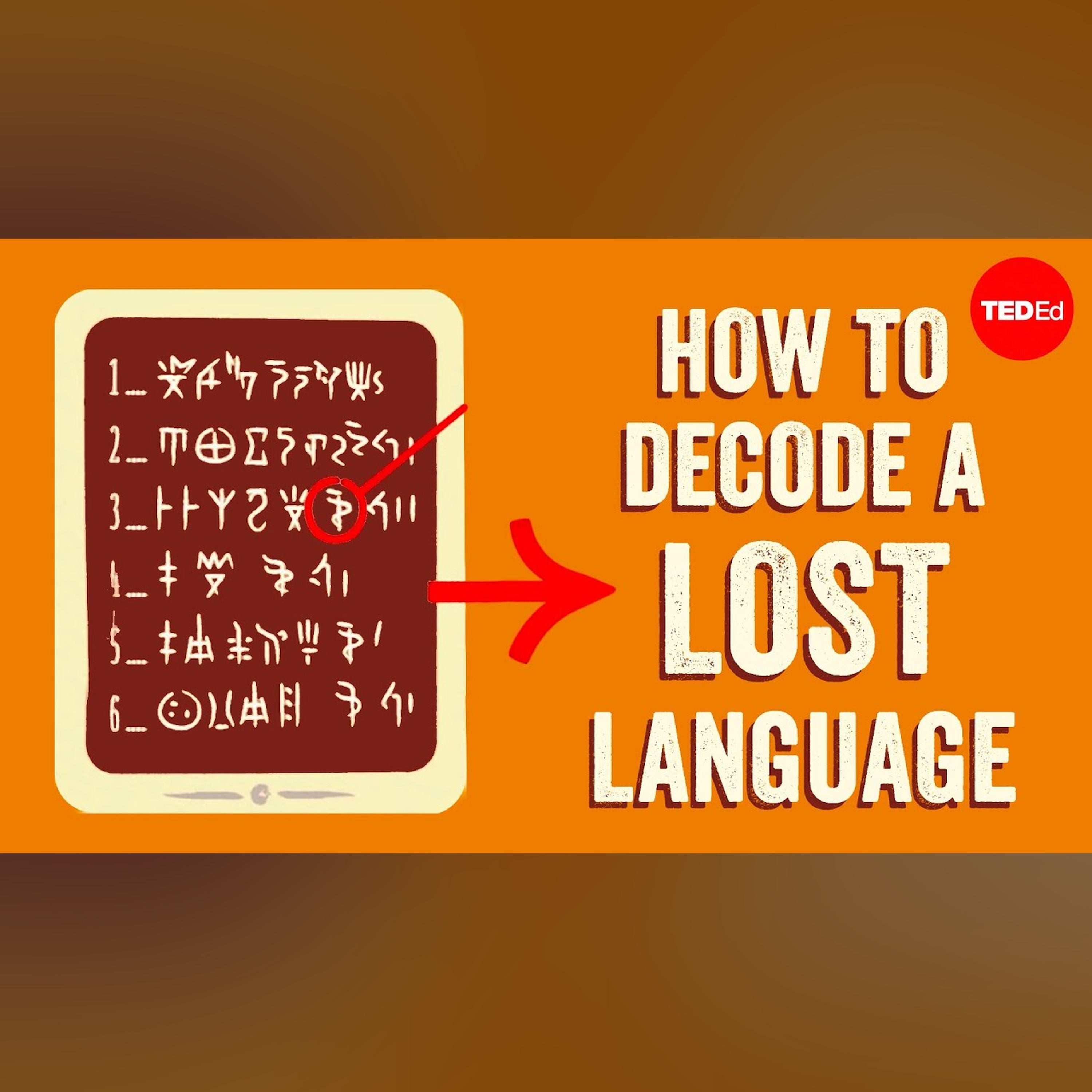
Dig into the mysterious Linear B symbols, found on ancient tablets on the island of Crete, which took scholars nearly 50 years to decode. Uploaded 14-07-20 -- In the early 1900s, archaeologist Sir Arthur Evans uncovered nearly 3,000 tablets inscribed with strange symbols. He thought the script, dubbed Linear B, represented the Minoan language, while others came up with their own theories. Was it the lost language of the Etruscans? Or an early form of Basque? Its meaning would elude scholars for 50 years. Susan Lupack explores the mysterious inscriptions. Lesson by Susan Lupack, directed by Movult. Educator's website: https://bit.ly/SusanLupack Animator's website: https://www.movult.com/ Sign up for our newsletter: http://bit.ly/TEDEdNewsletter Support us on Patreon: http://bit.ly/TEDEdPatreon Find us on Twitter: http://bit.ly/TEDEdTwitter Peep us on Instagram: http://bit.ly/TEDEdInstagram View full lesson: https://ed.ted.com/lessons/the-race-to-decode-a-mysterious-language-susan-lupack
The U.S. government built houses, dressed pigs in military clothing, and detonated atomic bombs to see what would survive. Jon H. Else, director of The Day After Trinity and author of Frenchman Flat: The Rise and Fall of Atomic Bombs, joins Michael Shermer to discuss the extraordinary history of nuclear testing in America's backyard. Jon H. Else is a documentary filmmaker and professor emeritus at the UC Berkeley Graduate School of Journalism. He holds an MA from Stanford University. A MacArthur Fellow, he has won five Emmy Awards and received two Academy Award nominations. His new book is Frenchman Flat: The Rise and Fall of Atomic Bombs.
View full lesson: http://ed.ted.com/lessons/the-battle-of-the-greek-tragedies-melanie-sirof Uploaded 01-06-15 The world of modern theater owes its roots to the tragedians of Ancient Greece. As far back as the 5th Century BCE, actors and playwrights were entertaining the masses with intriguing stories. Melanie Sirof unveils the ancient theatrical innovations that made the way for Broadway. Lesson by Melanie Sirof, animation by Andrew Foerster.
How did over one billion years of history go missing? In this episode of Crash Course Geology, we’ll tour the Grand Canyon and discover how geologists read its rocky layers like chapters in Earth’s biography. We’ll also explore theories about why some of those chapters have disappeared. Introduction - The Grand Canyon 00:00 Strata and Sediment 0:30 Understanding Earth’s Geological Record 3:39 Unconformities 7:30 Review & Credits 10:08 Sources: https://docs.google.com/document/d/1RpwM8ZQPFk_DkzMJjMdtRrNGrJSNJ7FbgmQybSZ2Cqo/edit?tab=t.0 Check out our CC Geology Extracurricular Playlist here: https://www.youtube.com/playlist?list=PL8dPuuaLjXtOmqnkvEtNVOrm0eaIjFjJ7 *** Support us for $5/month on Patreon to keep Crash Course free for everyone forever! https://www.patreon.com/crashcourse Or support us directly: https://complexly.com/support Join our Crash Course email list to get the latest news and highlights: https://mailchi.mp/crashcourse/email Get our special Crash Course Educators newsl
In 19th century Europe, with nation building well under way, thoughts turned outward, toward empire. This week, we're looking at how Europeans expanded into Africa, Asia, and Oceania during the 1800s. You'll learn about China and the Opium War, British India, and the Scramble for Africa. SOURCES -Hunt, Lynn. Making of the West: Peoples and Cultures. Boston: Bedford St. Martin’s, 2019. -Hunt, Nancy Rose. A Nervous State: Violence, Remedies, and Reveries in Colonial Congo. Durham: Duke University Press, 2015. -Smith, Bonnie G. Modern Empires. A Reader. New York: Oxford University Press, 2018. -Streets-Salter, Heather, and Trevor R. Getz. Empires and Colonies in the Modern World: A Global Perspective. New York: Oxford University Press, 2015. Crash Course is on Patreon! Thanks to the following patrons for their generous monthly contributions that help keep Crash Course free for everyone forever: Eric Prestemon, Sam Buck, Mark Brouwer, Indika Siriwardena, Avi Yashchin, Timothy J Kwist, Bria
Today we're talking about the heart and heartthrobs -- both literal and those of the televised variety. Hank explains how your heart’s pacemaker cells use leaky membranes to generate their own action potentials, and how the resulting electricity travels through the cardiac conduction pathway from SA Node to Purkinje fibers, allowing your heart to contract. He's also going to make you better able to spot inaccuracies in medical dramas by explaining how defibrillators work to reset the rhythm of your heart. Pssst... we made flashcards to help you review the content in this episode! Find them on the free Crash Course App! Download it here for Apple Devices: https://apple.co/3d4eyZo Download it here for Android Devices: https://bit.ly/2SrDulJ Chapters: Introduction: Cardiac Arrest 00:00 Cardiac Muscle Tissue Structure 1:24 Pacemaker Cells - The Brain of Your Heart 2:49 The Intrinsic Cardiac Conduction System 3:56 How Defbrilators Work 6:46 Review 8:33 Credits 9:07 *** Crash Course is now o
We all know the words around electricity, "charge," "positive," "battery", and more. But where do they come from and what do they really mean? Let the history of these words illuminate the physics of electric phenomena. Lesson by James Sheils, animation by TED-Ed. View the full lesson: http://ed.ted.com/lessons/electric-vocabulary
For 381 days in 1955 and 1956, the Black citizens of Montgomery, Alabama boycotted the city bus system. Black riders had been mistreated on public transit all over the country for decades, and the national coverage of the Montgomery Bus Boycott intensified the public conversation about Civil Rights. By the time the Supreme Court decided that discrimination on buses was a violation of the 14th amendment, boycott leaders like Rosa Parks and Martin Luther King Jr were household names and the Civil Rights movements were on the national stage. Clint's book, How the Word is Passed is available now! https://bookshop.org/a/3859/9780316492935 Sources and References Jo Ann Robinson, The Montgomery Bus Boycott and the Women Who Started It (Knoxville: University of Tennessee Press, 1987). Jeanne TheoHarris, The Rebellious Life of Mrs. Rosa Parks. (Beacon Press, 2015) Daina Ramey Berry and Kali Nicole Gross, A Black Women’s History of the United States (Boston: Beacon Press, 2020). Martin Luther Ki
Today Hank begins to teach you about Philosophy by discussing the historical origins of philosophy in ancient Greece, and its three main divisions: metaphysics, epistemology, and value theory. He will also introduce logic, and how you’re going to use it to understand and critically evaluate a whole host of different worldviews throughout this course. And also, hopefully, the rest of your life. -- Images and video via VideoBlocks or Wikimedia Commons, licensed under Creative Commons by 4.0: -- Produced in collaboration with PBS Digital Studios: http://youtube.com/pbsdigitalstudios Crash Course Philosophy is sponsored by Squarespace. -- Want to find Crash Course elsewhere on the internet? Facebook - http://www.facebook.com/YouTubeCrashCourse Twitter - http://www.twitter.com/TheCrashCourse Tumblr - http://thecrashcourse.tumblr.com (http://thecrashcourse.tumblr.com/) Support CrashCourse on Patreon: http://www.patreon.com/crashcourse CC Kids: http://www.youtube.com/crashcoursekids
Check out Otherwords on Storied!: https://www.youtube.com/watch?v=d2UccTPnl4w One of the most common adaptations seen in the animal kingdom is vision. Nearly 96% of all animals have some kind of eyes and they've proven so evolutionary advantageous that they've evolved multiple times in multiple ways and in a surprisingly short amount of time! So today, we'll walk you through the different types of eyes, show you how they work, and even take you on the day in the life of one of the most complex visual systems ever discovered in the mantis shrimp! Learn more about Rae here! https://www.raewynngrant.com (https://www.raewynngrant.com/) Watch our videos and review your learning with the Crash Course App! Download here for Apple Devices: https://apple.co/3d4eyZo Download here for Android Devices: https://bit.ly/2SrDulJ Crash Course is on Patreon! Thanks to the following patrons for their generous monthly contributions that help keep Crash Course free for everyone forever: Alexis B, Rene Dued
What if the key to understanding ancient Egypt has been standing in plain sight for thousands of years? Who built the Great Sphinx of Giza, when was it carved, and why does its head appear disproportionate to its body? On Earth Ancients, host Cliff Dunning welcomes licensed architect Steven McCaffrey Lloyd, author of Echoes of Stardust: Upon This My Heart, to explore the Sphinx, the pyramids, and the religious ideas that shaped Egypt’s monumental architecture .Drawing on more than two decades of architectural practice, Lloyd introduces Architectural Forensic Cosmology, his approach to examining sacred geometry, astronomical orientation, spatial relationships, and Egyptian iconography alongside the Pyramid Texts, Coffin Texts, and Book of the Dead. He proposes that these sources preserve a coordinated understanding of divine kingship, resurrection, and the soul’s journey into eternity. The conversation examines Lloyd’s identification of the Sphinx with Shu, the Egyptian god associated w
A shooting star crashes onto Earth and unleashes a hideous, rampaging blob. Can you stop it from destroying the planet? Uploaded 18-03-19 -- A shooting star crashes onto Earth and a hideous blob emerges. It creeps and leaps, it glides and slides. It’s also unstoppable: no matter what you throw at it, it just re-grows and continues its rampage. The only way to save the planet is to cut the entire blob into precise acute triangles while it sleeps, rendering it inert. Can you stop the blob from destroying the planet? Dan Finkel shows how. Lesson by Dan Finkel, directed by Artrake Studio. Sign up for our newsletter: http://bit.ly/TEDEdNewsletter Support us on Patreon: http://bit.ly/TEDEdPatreon Find us on Twitter: http://bit.ly/TEDEdTwitter Peep us on Instagram: http://bit.ly/TEDEdInstagram View full lesson: https://ed.ted.com/lessons/can-you-solve-the-unstoppable-blob-riddle-dan-finkel Thank you so much to our patrons for your support! Without you this video would not be possible! Anna-Pi
Why do people sometimes do bad things just because someone else told them to? And what does the term Groupthink mean? In today's episode of Crash Course Psychology, Hank talks about the ideas of Social Influence and how it can affect our decisions to act or to not act. Want more videos about psychology? Check out our sister channel SciShow Psych at https://www.youtube.com/scishowpsych! -- Chapters: Introduction 00:00 Milgram's Obedience Experiment 0:31 Social Influence & Conformity 3:22 Asch's Conformity Experiment 4:08 Cultural Expectations & Normative Social Influence 5:21 Social Facilitation 5:59 Social Loafing 6:19 Deindividuation & Group Polarization 6:51 Groupthink 7:58 Review & Credits 9:06 -- Crash Course is on Patreon! Want to find Crash Course elsewhere on the internet? Facebook - http://www.facebook.com/YouTubeCrashCourse Twitter - http://www.twitter.com/TheCrashCourse Instagram - https://www.instagram.com/thecrashcourse/ CC Kids: http://www.youtube.com/crashcoursekids
This episode is near the end of this series, but entrepreneurship isn’t a linear journey. You might need funding to accomplish any of the steps to build a business, not just when you’re ready to take a product or service to market. Some people look for money for their minimum viable product. Some market their product or service once everything is set up. And if you believe Silicon Valley legends, a few people get funding with just an idea. But where should we look? *** Crash Course is on Patreon! Thanks to the following patrons for their generous monthly contributions that help keep Crash Course free for everyone forever: Eric Prestemon, Sam Buck, Mark Brouwer, Efrain R. Pedroza, Matthew Curls, Indika Siriwardena, Avi Yashchin, Timothy J Kwist, Brian Thomas Gossett, Haixiang N/A Liu, Jonathan Zbikowski, Siobhan Sabino, Jennifer Killen, Nathan Catchings, Brandon Westmoreland, dorsey, Kenneth F Penttinen, Trevin Beattie, Erika & Alexa Saur, Justin Zingsheim, Jessica Wode, Tom Trval, Jaso
Today, Craig Benzine is going to dive into the factors that influence judicial decisions. As you may have noticed, the Supreme Court recently handed down some pretty big decisions on same-sex marriage (in Obergefell v Hodges) and the Affordable Care Act (in King v. Burwell). Now, it's important to remember that these decisions are not made in a vacuum, but influenced by the other branches of government, political affiliations, and past court decisions. We’re also talk about a judge’s judicial philosophy - that is their relative restraint or activism in making decisions on laws. Judicial restraint is often equated with conservatism, but as we’ll show you, this is not always the case. Produced in collaboration with PBS Digital Studios: http://youtube.com/pbsdigitalstudios Support is provided by Voqal: http://www.voqal.org (http://www.voqal.org/) All attributed images are licensed under Creative Commons by Attribution 2.0 Want to find Crash Course elsewhere on the internet? Facebook - htt
Featuring perspectives from Prof Chan Chea and Dr Matthew Matasar, including the following topics: Introduction (0:00) Prologue: Saturday Night Fever (1:35) Baby Boomers' Guide to Mechanisms of Action (3:07) Second-Line Treatment (12:36) Complications Associated with Bispecific Antibodies (23:41) Case Presentations (25:52) New Bispecific T-Cell Engagers — Surovatamig (26:24) Other Novel Agents (50:05) CME information and select publications (https://researchtopractice.com/BispecificsFL2026)
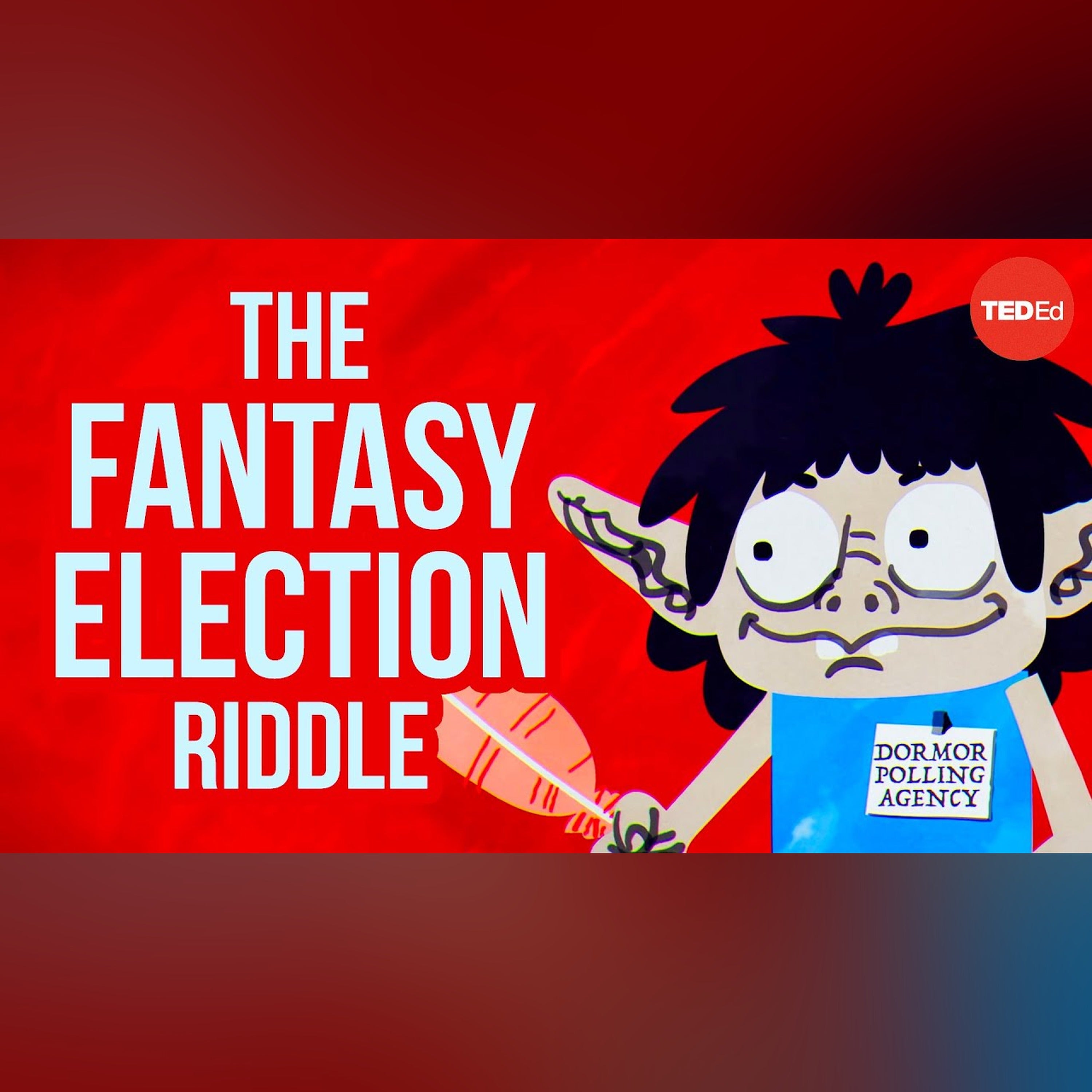
Practice more problem-solving at https://brilliant.org/TedEd Uploaded 25-03-21 -- After much debate, the realm has decided dragon jousting may not be the best way to choose its leaders, and has begun transitioning to democracy. Your company was hired to survey the citizens of the land and predict which candidate will win. There’s a lot riding on this: if you get it wrong, heads— well, your head— will quite literally roll. Can you predict the winner? Dennis Shasha shows how. Lesson by Dennis E. Shasha, directed by Igor Coric, Artrake Studio. Support Our Non-Profit Mission ---------------------------------------------- Support us on Patreon: http://bit.ly/TEDEdPatreon Check out our merch: http://bit.ly/TEDEDShop ---------------------------------------------- Connect With Us ---------------------------------------------- Sign up for our newsletter: http://bit.ly/TEDEdNewsletter Find us on Twitter: http://bit.ly/TEDEdTwitter Peep us on Instagram: http://bit.ly/TEDEdInstagram --------------
So Long Patrick Stewart; News Items: NASA's New Moon Schedule, Australia Social Media Ban, Where to Blast an Asteroid; Special Report: The Definition of Biological Sex; Who's That Noisy; Your Questions and E-mails: AI Consciousness; Science or Fiction
Featuring perspectives from Prof Chan Chea and Dr Matthew Matasar, including the following topics: Introduction (0:00) Prologue: Saturday Night Fever (1:35) Baby Boomers' Guide to Mechanisms of Action (3:07) Second-Line Treatment (12:36) Complications Associated with Bispecific Antibodies (23:41) Case Presentations (25:52) New Bispecific T-Cell Engagers — Surovatamig (26:24) Other Novel Agents (50:05) CME information and select publications (https://researchtopractice.com/BispecificsFL2026)
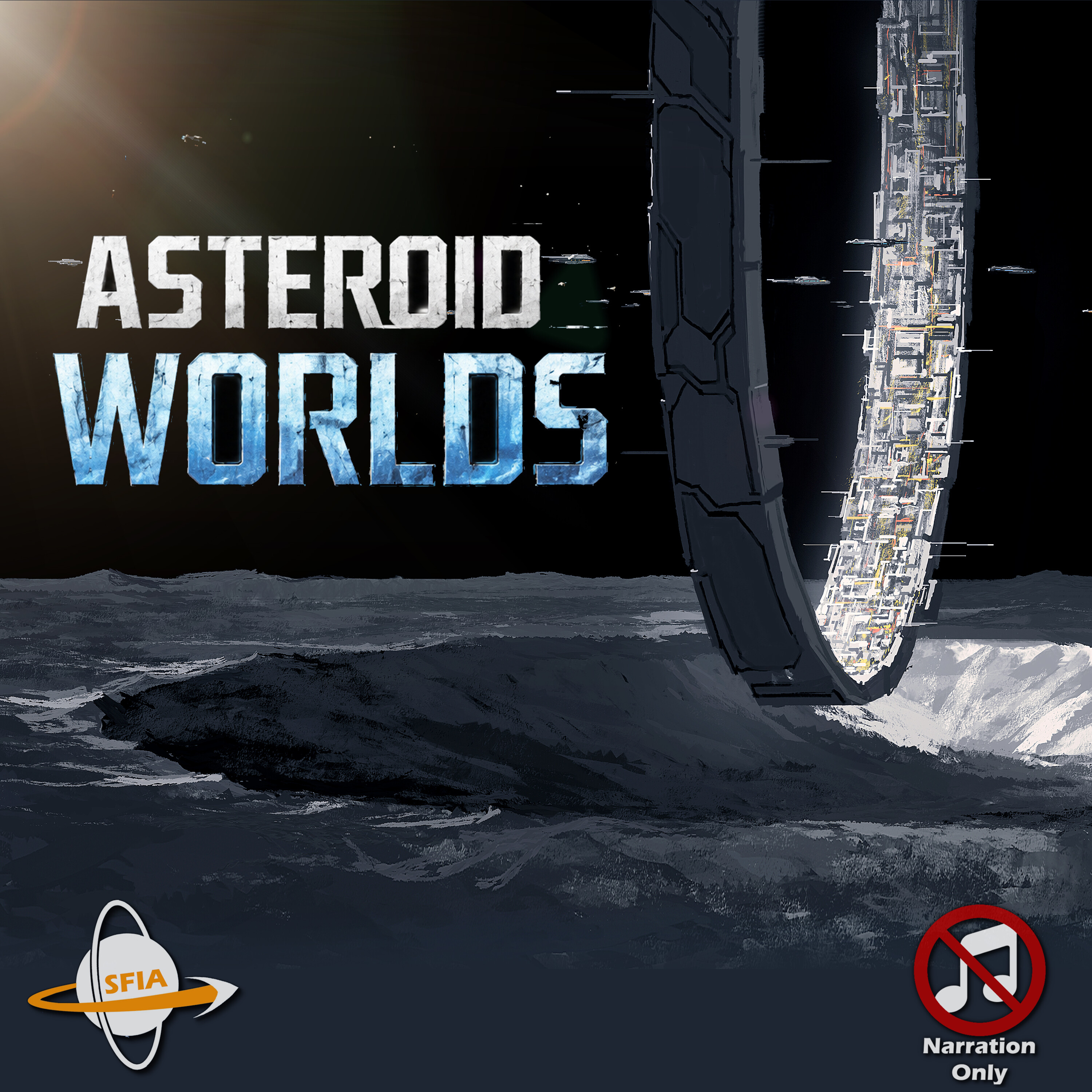
What if humanity's first terraformed worlds aren't planets at all? Discover how tiny asteroids could become vast habitats, thriving ecosystems, and entire civilizations built among the stars. Checkout Self-Replicating Spacecraft and our Space Industry Collection: https://nebula.tv/isaacarthur/space-industry-collection SFIA Merchandise: https://isaac-arthur-shop.fourthwall.com/ ️ Support us on Patreon: https://www.patreon.com/IsaacArthur Reddit Community: https://www.reddit.com/r/IsaacArthur/ Follow on Twitter / X: https://twitter.com/Isaac_A_Arthur SFIA Discord Server: https://discord.gg/53GAShE Credits: Terraforming the Asteroids Turning Rubble into Worlds Written, Produced & Narrated by: Isaac Arthur Graphics from: Fishy Tree, Ken York, Sergio Botero, Jeremy Jozwik, and Bryan Versteeg Music by Epidemic Sound: http://nebula.tv/epidemic Select imagery/video supplied by Getty Images Chapters 0:00 Intro 3:59 The Raw Material of Worlds 9:46 Engineering a Micro-World 22:11 Space Industry 2