In this third and final conversation, Jiang and Robinson discuss artificial intelligence, the AI investment bubble, Silicon Valley, and Jiang’s claims about occult beliefs and the ambitions of technology executives. They talk about Sam Altman, Mark Zuckerberg, data centers, surveillance, religion, and the limits of current AI systems.Jiang’s YouTube: https://www.youtube.com/@PredictiveHistoryJiang’s Substack: https://predictivehistory.substack.com/OUTLINE00:00:00 Introduction 00:03:14 How Does AI Work? 00:13:45 How Will AI Companies Make Money? 00:18:04 Is the AI Boom a Bubble? 00:22:32 Why Does Jiang Think AI Companies Want a Crash? 00:24:31 Could AI Become a Surveillance State? 00:27:06 What Does AI Reveal About the Elites? 00:34:30 Jiang’s Theory of Kabbalah and Freemasonry 00:47:45 Profit—or a New God? 00:52:38 What Does the New Yorker Quote Actually Say? 00:56:37 Can We Disagree Without Being Disrespectful? 01:02:15 Can AI Replace Skilled Workers? 01:08:36 Silicon Valley vs. Wall
From shipping routes to airplane traffic to even the Internet, transportation planning is all about designing optimal transportation networks to move goods, information, and people around the globe. Today, we're going to discuss industrial geography by tracing the story of the automotive landscape as it formed across the manufacturing belt of the Upper Midwest of the United States, and show how it wasn't just a coincidence that it overlapped with transportation routes and access to raw materials like coal and iron. We'll show you how Least Cost Theory has been used to explain the location of certain industries and how it no longer seems to be holding due to the rise of globalization. Sources: https://docs.google.com/document/d/1O3fLHL7-J1g_eWAMY9JQ910zEGXDsGTnOgJTdDnl_hg/edit?usp=sharing Watch our videos and review your learning with the Crash Course App! Download here for Apple Devices: https://apple.co/3d4eyZo Download here for Android Devices: https://bit.ly/2SrDulJ Crash Course is
Today, we’re going to wrap up our discussion of economic policy by looking at government regulation. We're going to talk about the government's goals for the U.S. economy and the policies it employs to achieve those goals. Ever since the New Deal, we've seen an increased role of the government within the economy - even with the deregulation initiatives of President Carter and Reagan in the 80's. Now this is all pretty controversial and we're going to talk about it, as this is a long way from the federal government handed down by the framers of the constitution. Produced in collaboration with PBS Digital Studios: http://youtube.com/pbsdigitalstudios Support is provided by Voqal: http://www.voqal.org (http://www.voqal.org/) All attributed images are licensed under Creative Commons by Attribution 4.0 Want to find Crash Course elsewhere on the internet? Facebook - http://www.facebook.com/YouTubeCrashCourse Twitter - http://www.twitter.com/TheCrashCourse Tumblr - http://thecrashcourse.tumbl
The legal system can seem like a complicated tangle of arcane rules and loopholes, and it can sometimes seem like it is designed to confuse. But it is possible, with the right application, for the legal system to rectify injustices. Today we're going to tell you about one instance of this, the story of Elizabeth Key, who in 1665 won her freedom in a court in Virginia. Clint's book, How the Word is Passed: https://bookshop.org/books/how-the-word-is-passed-a-reckoning-with-the-history-of-slavery-across-america/9780316492935 VIDEO SOURCES Ira Berlin, Many Thousands Gone: The First Two Centuries of Slavery in North America (Cambridge: Belknap Press, 1998). TAUNYA LOVELL BANKS, Dangerous Woman: Elizabeth Key’s Freedom Suit - Subjecthood and Racialized Identity in Seventeenth Century Colonial Virginia (2008), https://papers.ssrn.com/abstract=672121 (last visited Aug 20, 2020). Leslie Harris, In the Shadow of Slavery of Slavery: African Americans in New York City, 1629-1863 (Chicago: Universi
View full lesson: http://ed.ted.com/lessons/how-to-speed-up-chemical-reactions-and-get-a-date The complex systems of high school dating and chemical reactions may have more in common than you think. Explore five rules for speeding up chemical reactions in the lab that might just land you a date to a dance! Lesson by Mark Paricio & Aaron Sams, animation by Cognitive Media.
Nutritional Supplementation: What the Evidence Says to Consider for Overall Health and Feeling Your Best Michael T. Murray, N.D., William Grant, PhD., and Dr. Joe Pizzorno examine what the evidence says about nutritional supplementation for overall health. Learn how to choose supplements wisely, avoid common mistakes, and support energy, immunity, and long-term wellbeing. #Supplements #Nutrition #Wellness
In which John Green teaches you about population. So, how many people can reasonably live on the Earth? Thomas Malthus got it totally wrong in the 19th century, but for some reason, he keeps coming up when we talk about population. In 1800, the human population of the Earth passed 1 billion, and Thomas Malthus posited that growth had hit its ceiling, and the population would level off and stop growing. He was totally right. Just kidding, he was totally wrong! There are like 7 billion people on the planet now! John will teach a little about how Malthus made his calculations, and explain how Malthus came up with the wrong answer. As is often the case, it has to do with making projections based on faulty assumptions. Man, people do that a lot. Crash Course is on Patreon! Want to find Crash Course elsewhere on the internet? Facebook - http://www.facebook.com/YouTubeCrashCourse Twitter - http://www.twitter.com/TheCrashCourse Instagram - https://www.instagram.com/thecrashcourse/ CC Kids: htt
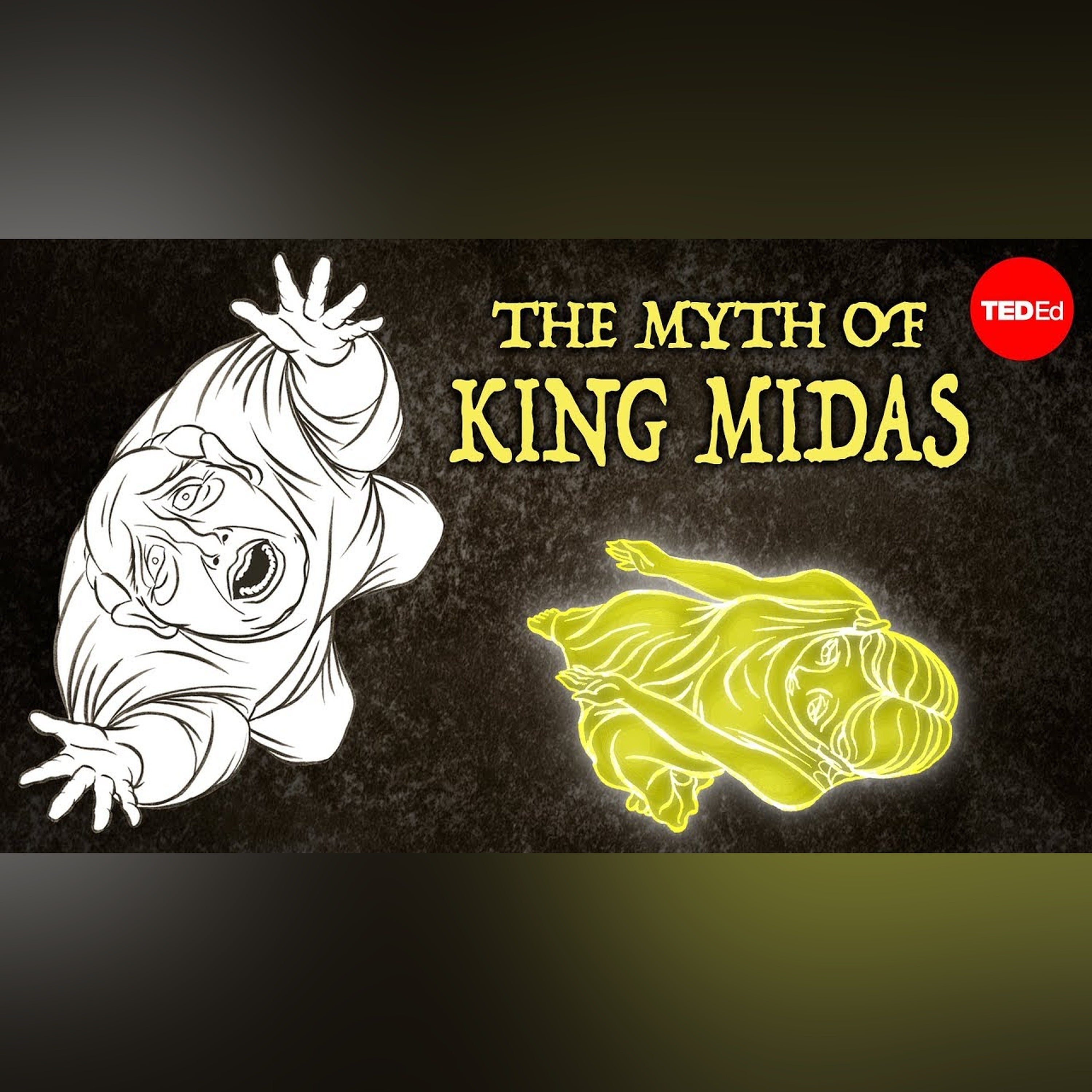
Uploaded 05-03-18 View full lesson: https://ed.ted.com/lessons/the-myth-of-king-midas-and-his-golden-touch-iseult-gillespie In Greek mythology, King Midas is known as a rogue ruler whose antics bemused his people and irritated the Gods. Many know the classic story of Midas's golden touch, but the foolish king was also known for his unusual pair of ears. Iseult Gillespie shares the myth of King Midas. Lesson by Iseult Gillespie, animation by TED-Ed. Thank you so much to our patrons for your support! Without you this video would not be possible! Milad Mostafavi, Rob Johnson, Singh Devesh Sourabh, Ashley Maldonado, Clarence E. Harper Jr., Bojana Golubovic, Mihail Radu Pantilimon, Sarah Yaghi, Benedict Chuah, Karthik Cherala, haventfiguredout , Violeta Cervantes, Elaine Fitzpatrick, Lyn-z Schulte, Sharon Chou, Henrique 'Sorín' Cassús, Tim Robinson, Kiarash Asar, Jun Cai, Paul Schneider, Amber Wood, Ophelia Gibson Best, Cas Jamieson, Michelle Stevens-Stanford, Phyllis Dubrow, Andreas Voltio
Today we’re going to talk about search engines, which are just AI systems that try to help us find what we’re looking for. Search engines can be the sort that serve up a list of results, like during a Google or Bing search, using web crawlers, an inverted index, and measuring stuff like click through and bounce back to figure out what you want to see. They can also be the kind that give you answers, like when you ask Siri or Alexa a question, relying on knowledge bases. Admittedly, these systems aren’t perfect so next week we’ll talk about bias in AI systems like this. Crash Course is produced in association with PBS Digital Studios: https://www.youtube.com/pbsdigitalstudios Crash Course is on Patreon! Thanks to the following patrons for their generous monthly contributions that help keep Crash Course free for everyone forever: Eric Prestemon, Sam Buck, Mark Brouwer, Efrain R. Pedroza, Matthew Curls, Indika Siriwardena, Avi Yashchin, Timothy J Kwist, Brian Thomas Gossett, Haixiang N/A
The resignation of Nvidia CEO Jensen Huang is a major setback for the US development of an open model ecosystem. Nvidia still has the financial interests in supporting open models, which are to avoid concentration in power among a few customers who would develop their own chips and reduce Nvidia’s profits, but supporting the open ecosystem is a tricky puzzle more than an engineering problem to grind out a solution on. Nvidia’s business operations are famously extremely dependent on Jensen as an operator, so it is a consensus opinion that there are challenges ahead (or even more high-profile departures through chip-smuggling investigations or plain-old sharks circling more poachable talent). Nvidia’s number one goal is to stabilize the ship, deliver to customers in the next 24 months, and prevent implosion. Open models have been one of Jensen’s more ambitious, founder-style bets. He has been flooding the zone with funding in a way that will very likely dry up. Interconnects AI is a read
In order to understand how we study the universe, we need to talk a little bit about light. Light is a form of energy. Its wavelength tells us its energy and color. Spectroscopy allows us to analyze those colors and determine an object’s temperature, density, spin, motion, and chemical composition. Check out the Crash Course Astronomy solar system poster here: http://store.dftba.com/products/crashcourse-astronomy-poster -- Chapters: Introduction 00:00 Light is a Wave 0:31 Electromagnetic Spectrum 1:32 How is Light Made? 3:19 Atomic Structure 4:47 Spectroscopy 7:14 Redshift vs Blueshift 8:26 Review 9:50 -- PBS Digital Studios: http://youtube.com/pbsdigitalstudios Follow Phil on Twitter: https://twitter.com/badastronomer Want to find Crash Course elsewhere on the internet? Facebook - http://www.facebook.com/YouTubeCrashCourse Twitter - http://www.twitter.com/TheCrashCourse Tumblr - http://thecrashcourse.tumblr.com (http://thecrashcourse.tumblr.com/) Support CrashCourse on Patreon: http:/
The Woman That Walked Down The Street And Never Came Back Unlock The Vault: Hundreds of ad-free, uncensored episodes. The truth is out there. So is your coffee. ☕ Mysterious Grounds: Bold coffee for strange minds. Violations will be reported to federal authorities.
Being observant is an important part of being a gardener and the more we observe, the more we learn! Hear about visual signs to look for on your plants to determine their health and help solve issues.
What aspects of religion should atheists (respectfully) adopt? Alain de Botton suggests a "religion for atheists" -- call it Atheism 2.0 -- that incorporates religious forms and traditions to satisfy our human need for connection, ritual and transcendence. Uploaded 26-07-13 Talk by Alain de Botton.
A private chef who had never believed in ghosts accepted a job cooking for a family on a remote Wyoming ranch. He and another chef were given accommodations in an old guest cabin, where a painting of a weathered cowboy caught his attention. As the week went on, he learned more about the property's history, including an old feud that had ended in murder. A local man had been accused of the crime but was ultimately acquitted. And as it turned out, that man had a connection to the painting hanging in the guest cabin. The chef wasn't particularly frightened by the stories. But one night, he woke to find himself face-to-face with someone he couldn't possibly have expected to see. The encounter left a lifelong skeptic shaken. Had he simply experienced an unusually vivid dream—or had someone from the ranch's troubled past come back for a visit? #RealGhostStoriesOnline #TrueGhostStories #WyomingGhostStories #HauntedRanch #GhostlyApparitions #OldWestGhosts #ParanormalEncounters #HauntedCabin #H
This is a Grave Talks CLASSIC EPISODE! PART TWO An out-of-body experience in childhood marked the beginning of Stephen Williams’s lifelong sensitivity to the unseen. What began as a deeply personal and confusing moment evolved into a focused pursuit of understanding spirits and the environments they inhabit. Over time, that sensitivity became structured investigation. Stephen and his team explore reported hauntings with the belief that not every spirit lingers by choice. Some, he believes, are confused, attached, or unaware they’ve passed. Their work extends beyond documentation into what they call “spirit rescues” — helping restless souls move on while bringing peace to the living affected by their presence. His experiences raise larger questions about the relationship between the living and the dead. If some spirits remain earthbound, do they require guidance? And if so, who is responsible for providing it? Stephen’s accounts highlight the tension between skepticism and experience, f
In the outer reaches of our Solar System, beyond the orbit of Pluto, NSF–DOE Vera C. Rubin Observatory has spotted 2026 ED138 — a large, bright trans-Neptunian object that scientists have identified as a dwarf planet candidate. If confirmed, ED138 would be among the largest dwarf planets ever discovered in this region of the Solar System. In this podcast, Dr. Matt Holman discusses the discovery of this interesting object, what we currently know about it and the future of dwarf planet science with the Rubin Observatorty. Bios: Dr. Matthew Holman studies the dynamics of the solar system and of planetary systems, and he build the methods that find and track small bodies in large surveys. He is a Senior Astrophysicist at the Smithsonian Astrophysical Observatory and a Lecturer on Astronomy at Harvard. From 2015 to 2021 he was Director of the Minor Planet Center. Rob Sparks is in the Communications, Education and Engagement group at NSF's NOIRLab in Tucson, Arizona. Every bit helps! Thank y
My special guest tonight is author Joy Elaine who's here to discuss how she believes humanity is headed for another state of existence. Joy Elaine has a master's degree in music and is a professional violinist living in Bloomington, Indiana. She grows orchids as a hobby, enjoys walks in the woods and playing as well as listening to classical music. The adventures in The Joy Chronicles are an everyday experience for Joy, as she lives and breathes her sacred service in these transitional times. Her passion and dedication light the way for each and every reader to catch on the waves of change that the councils sponsor and gracefully ride them along with Gaia to a new tomorrow that is bigger and better than any dreamer can imagine. Unlock The Vault: Hundreds of ad-free, uncensored episodes. The truth is out there. So is your coffee. ☕ Mysterious Grounds: Bold coffee for strange minds. Violations will be reported to federal authorities.
You're already learning on YouTube — why not get college credit for it? https://link.gostudyhall.com/my1 In this episode of Crash Course: How to College, Erica helps us think about how to best choose the right school for us. There's a lot to think about, like: what kind of learner you are, what kind of environment you like, how to know if your school is looking out for your success, what kinds of support do different schools offer, and of course what do you want to study? Crash Course: How to College is part of Study Hall, a partnership between ASU and Crash Course. Head over to our new Study Hall channel to check out our Fast Guide series which break down different college majors. *** Now you can take top-tier college courses with Study Hall! Study Hall videos are available to watch at no cost, and first-year courses are $25 to sign-up and begin coursework. Sign up at https://link.gostudyhall.com/my1 Follow Study Hall on socials! Twitter: https://twitter.com/gostudyhall Instagram: htt
Today, we’re going to take a look at how the government plays a role in the economy. Specifically, the way the government creates and maintains our market economic system. Now sure, the government’s role in the economy can be controversial, some may even say completely unnecessary. But there are some deficiencies in a free market, and we’re going to look at those, and the tools the government uses to combat those issues in maintaining a healthy and stable economy. Produced in collaboration with PBS Digital Studios: http://youtube.com/pbsdigitalstudios Support is provided by Voqal: http://www.voqal.org (http://www.voqal.org/) All attributed images are licensed under Creative Commons by Attribution 4.0 Want to find Crash Course elsewhere on the internet? Facebook - http://www.facebook.com/YouTubeCrashC... Twitter - http://www.twitter.com/TheCrashCourse Tumblr - http://thecrashcourse.tumblr.com (http://thecrashcourse.tumblr.com/) Support Crash Course on Patreon: http://patreon.com/crashco
Have you ever wondered why the gas station has “unleaded fuel” but there isn’t a “leaded” option? The answer has to do with a chemical called tetraethyl lead, which is an organometallic compound, or an organic compound with a carbon-metal bond. In this episode of Crash Course Organic Chemistry, we’ll learn all about organometallic compounds, including what they are and what kind of reactions we see them in. But beware! This class of compounds may be super useful, but also has a dark side. Episode Sources: Lowe, D., 2009. Things I Won't Work With: Straight Dimethyl Zinc. [online] In the Pipeline. Available at: https://blogs.sciencemag.org/pipeline/archives/2009/10/23/things_i_wont_work_with_straight_dimethyl_zinc [Accessed 4 November 2020]. Gilman, H., Jones, R.G. and Woods, L.A., 1952. The preparation of methylcopper and some observations on the decomposition of organocopper compounds. The Journal of Organic Chemistry, 17(12), pp.1630-1634, DOI: 10.1021/jo50012a009 Series Sources: Brow
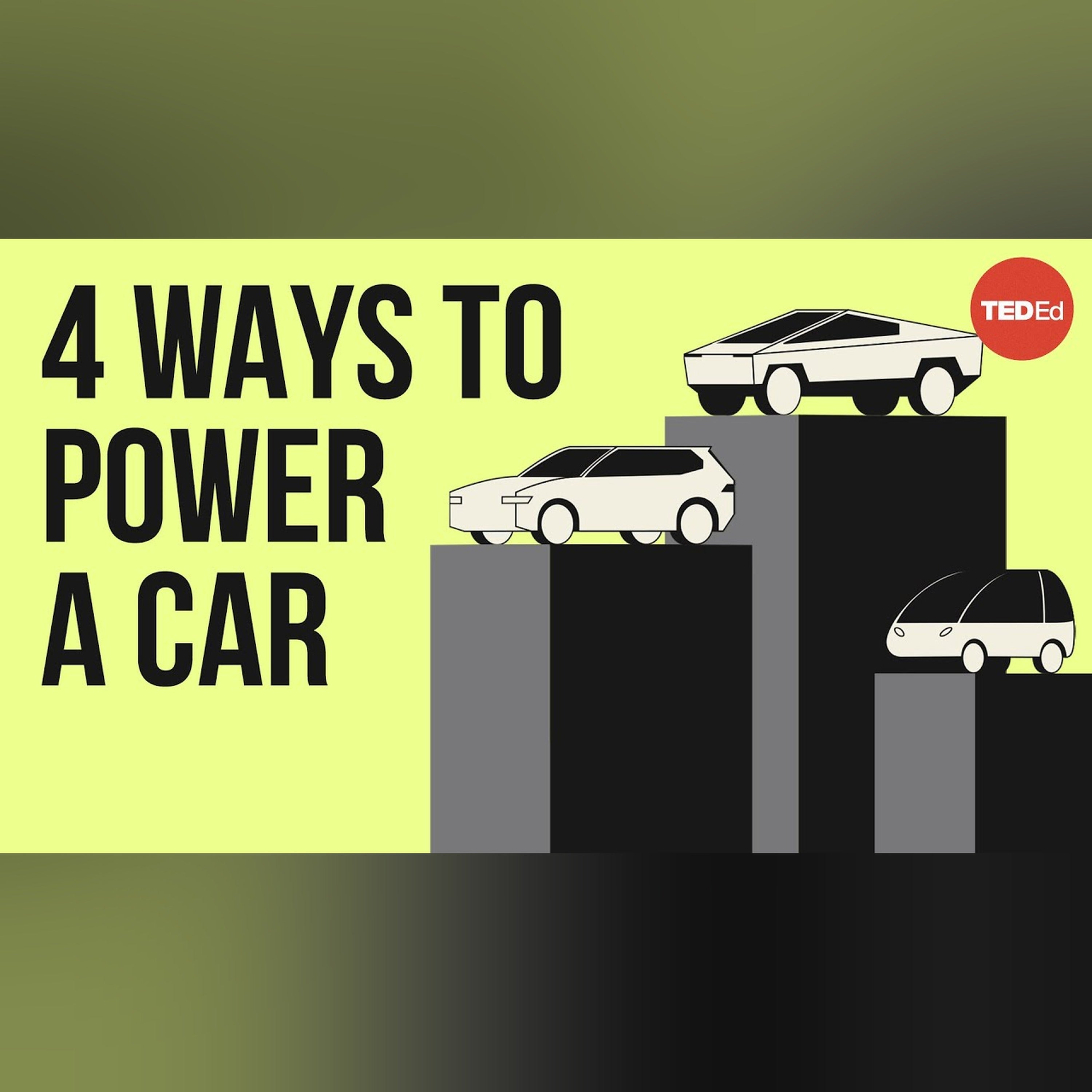
Dig into which fuel— gasoline, electric, biofuels, or electrofuels— is both affordable for consumers and sustainable for the planet. Uploaded 22-03-21 -- Historically, most cars have run on gasoline, but that doesn’t have to be the case in the future: other liquid fuels and electricity can also power cars. So what are the differences between these options? And which one’s best? Dig into which fuel— gasoline, electric, biofuels, or electrofuels— is both affordable for consumers and sustainable for the planet. Directed by Lisa LaBracio. Animation and art direction by Kevin Herrmann, AIM Creative Studios. In partnership with Bill Gates, inspired by his book "How To Avoid A Climate Disaster": http://bit.ly/PlanForZero Support Our Non-Profit Mission ---------------------------------------------- Support us on Patreon: http://bit.ly/TEDEdPatreon Check out our merch: http://bit.ly/TEDEDShop ---------------------------------------------- Connect With Us ----------------------------------------
James Gleick — acclaimed science writer and bestselling author of Chaos: Making a New Science as well as biographies on polymaths Isaac Newton and Richard Feynman — joins Sonal Chokshi and Robert Hackett to discuss his new book, The Telephone: A New History. It is a story of a device — who really invented it, how? — of a network, of a lab, and of how innovation happens. The telephone was dismissed as a toy or a frivolity — at best, something people could use to listen to concerts or sermons from home. Even with a working invention, everyone was still trying to figure out what a telephone was for, using the framework of what they already knew. Then its users started finding their own answers. Farmers built their own decentralized networks using barbed-wire fences — the “devil’s rope” — and, over time, research at a company built around phone calls helped lay the foundations of modern computing. This conversation explores the nuances of building at the frontier: competing inventors, the
Now that we’re done with the planets, asteroid belt, and comets, we’re heading to the outskirts of the solar system. Out past Neptune are vast reservoirs of icy bodies that can become comets if they get poked into the inner solar system. The Kuiper Belt is a donut shape aligned with the plane of the solar system; the scattered disk is more eccentric and is the source of short-period comets, and the Oort Cloud which surrounds the solar system out to great distances is the source of long-period comets. These bodies all probably formed closer to the Sun and got flung out to the solar system’s suburbs by gravitational interactions with the outer planets. Check out the Crash Course Astronomy solar system poster here: http://store.dftba.com/products/crashcourse-astronomy-poster -- Chapters: Introduction: Where Do Comets Come From? 00:00 Kuiper Belt, Scattered Disk, and Oort Cloud 2:52 Long-Period Comets come from the Oort Cloud 4:03 Short-Period Comets come from the Scattered Disk 4:27 Pluto