Between 1840 and 1914, an estimated 40 million people left Europe. This is one of the most significant migrations in human history. So, who was leaving Europe? And why? Crash Course is on Patreon! Thanks to the following patrons for their generous monthly contributions that help keep Crash Course free for everyone forever: Eric Prestemon, Sam Buck, Mark Brouwer, Efrain R. Pedroza, Matthew Curls, Indika Siriwardena, Avi Yashchin, Timothy J Kwist, Brian Thomas Gossett, Haixiang N/A Liu, Jonathan Zbikowski, Siobhan Sabino, Jennifer Killen, Nathan Catchings, Brandon Westmoreland, dorsey, Kenneth F Penttinen, Trevin Beattie, Erika & Alexa Saur, Justin Zingsheim, Jessica Wode, Tom Trval, Jason Saslow, Nathan Taylor, Khaled El Shalakany, SR Foxley, Yasenia Cruz, Eric Koslow, Caleb Weeks, Tim Curwick, DAVID NOE, Shawn Arnold, William McGraw, Andrei Krishkevich, Rachel Bright, Jirat, Ian Dundore -- Want to find Crash Course elsewhere on the internet? Facebook - http://www.facebook.com/YouTubeCr
This week Craig Benzine explores the leadership structure of congress. We’ll break out the clone machine to examine the responsibilities of the speaker of the house, the majority and minority leaders, and the majority and minority whips in both the Senate and the House. As the leadership heavily influences assignments to committees and acts as the primary point of contact with the media, they wield significant power in influencing public dialog. Produced in collaboration with PBS Digital Studios: http://youtube.com/pbsdigitalstudios Support is provided by Voqal: http://www.voqal.org (http://www.voqal.org/) Chapters: Introduction: Leadership Structure of Congress 00:00 Leadership in Congress 0:22 Speaker of the House 0:50 Majority & Minority Whips & Leaders 1:20 Senate leadership 2:05 How congressional leaders exercise power 3:03 Who controls the congressional agenda? 3:28 Access to press 4:13 Fundraising 4:43 Why political parties matter in Congress 5:26 Understanding congressional lea
Sleep better with Pillow: https://pillow.app/bettersleep Immerse yourself in a soothing verdant ambient soundscape designed to enhance sleep, relaxation, and meditation with calming nature sounds that promote deep rest and peaceful focus. Perfect for reducing stress, easing insomnia, or creating a tranquil atmosphere anytime. This episode includes AI-generated content.
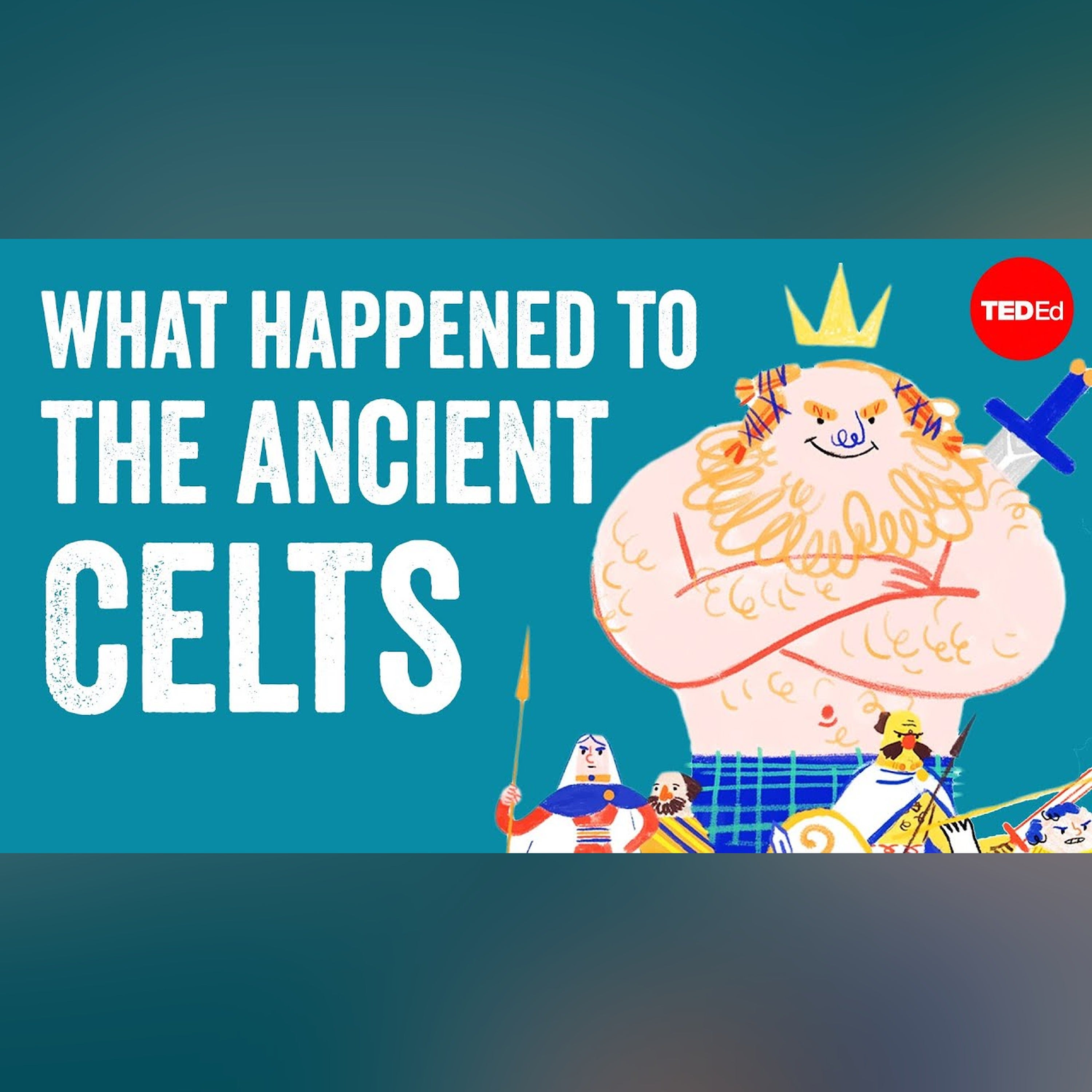
Trace the rise and fall of the ancient Celts, a group of hundreds of independent warrior tribes defeated by the Roman Empire. Uploaded 20-07-20 -- One summer evening in 335 BCE, Alexander the Great was resting by the Danube River when a band of strangers approached his camp. Alexander had never seen anything like these tall, fierce-looking warriors with huge golden neck rings and colorful cloaks. They were Keltoi or Celts— a collection of independent tribes spread across Europe. Philip Freeman details the rise and fall of the ancient Celts. Lesson by Philip Freeman, directed by Paper Panther. Animator's website: https://www.paperpanther.ie/ Sign up for our newsletter: http://bit.ly/TEDEdNewsletter Support us on Patreon: http://bit.ly/TEDEdPatreon Find us on Twitter: http://bit.ly/TEDEdTwitter Peep us on Instagram: http://bit.ly/TEDEdInstagram View full lesson: https://ed.ted.com/lessons/the-rise-and-fall-of-the-celtic-warriors-philip-freeman Thank you so much to our patrons for your su
In April 1980, Peruvian Air Force pilot Lieutenant Óscar Santa María Huertas was ordered to intercept an unidentified object hovering near La Joya Air Base in southern Peru. The encounter would become one of the most unusual incidents involving a military aircraft and an unidentified aerial phenomenon. This week I'm talking about the Peruvian Air Force pilot who fired on a UFO. Flying a Soviet-built Sukhoi Su-22, Santa María approached the object and opened fire with his 30-millimetre cannon. He reportedly fired 64 rounds, some of which appeared to strike the target, without causing visible damage. The pilot continued his pursuit, eventually reaching an altitude of approximately 63,000 feet, where he was able to observe the object at close range. In this episode, I examine the circumstances surrounding the interception, Santa María's detailed description of the object and the difficulties he encountered while attempting to carry out his orders. His account offers a rare perspective on
In which Jacob Clifford and Adriene Hill launch a brand new Crash Course on Economics! So, what is economics? Good question. It's not necessarily about money, or stock markets, or trade. It's about people and choices. What, you may ask, does that mean. We'll show you. Let's get started! Crash Course is now on Patreon! Thanks to the following Patrons for their generous monthly contributions that help keep Crash Course free for everyone forever: Mark Brouwer, Jan Schmid, Anna-Ester Volozh, Robert Kunz, Jason A Saslow, Christian Ludvigsen, Chris Peters, Brad Wardell, Beatrice Jin, Roger C. Rocha, Eric Knight, Jessica Simmons, Jeffrey Thompson, Elliot Beter, Today I Found Out, James Craver, Ian Dundore, Jessica Wode, SR Foxley, Sandra Aft, Jacob Ash, Steve Marshall TO: My Students FROM: Mrs. Culp Culpzilla's students are amazing! You guys rock! TO: Everyone FROM: Pankaj DFTBA and keep being the exception like the Mongols. Thank you so much to all of our awesome supporters for their contrib
One last round of laughs with Phil as he struggles through some Bad Astronomy. -- Crash Course Astronomy Poster: http://store.dftba.com/products/crashcourse-astronomy-poster -- "Quirky Dog" Kevin MacLeod (incompetech.com) Licensed under Creative Commons: By Attribution 3.0 -- PBS Digital Studios: http://youtube.com/pbsdigitalstudios Follow Phil on Twitter: https://twitter.com/badastronomer Want to find Crash Course elsewhere on the internet? Facebook - http://www.facebook.com/YouTubeCrashCourse Twitter - http://www.twitter.com/TheCrashCourse Tumblr - http://thecrashcourse.tumblr.com (http://thecrashcourse.tumblr.com/) Support CrashCourse on Patreon: http://www.patreon.com/crashcourse
In which John Green and Hank Green teach you about how human primates moved out of Africa and turned Earth into a real-life Planet of the Apes. And the apes are people! John and Hank teach you about how humans evolved, and the sort of tricks they picked up along the way like complex tool use, big brains, and fighting. Our ancestors adapted to the grasslands of Africa and went through several iterations including Australopithecus, homo habilis, and homo ergaster/erectus. Our ancestors tamed fire, made pressure flake tools, and eventually smartphones. Learn more: http://www.bighistoryproject.com (http://www.bighistoryproject.com/) Crash Course is on Patreon! Want to find Crash Course elsewhere on the internet? Facebook - http://www.facebook.com/YouTubeCrashCourse Twitter - http://www.twitter.com/TheCrashCourse Instagram - https://www.instagram.com/thecrashcourse/ CC Kids: http://www.youtube.com/crashcoursekids
Scientists aboard China's Tiangong space station have achieved a remarkable milestone in quantum physics, cooling rubidium atoms to an extraordinary 9.7 picokelvin. By creating an ultra-cold quantum state in microgravity, the team gained unprecedented opportunities to observe atomic behavior and explore new precision experiments in orbit. The breakthrough could help shape the future of space-based quantum research. This episode includes AI-generated content.
The James Webb Space Telescope has revealed 104 magnified stellar events in a distant galaxy, using gravitational lensing to uncover details otherwise hidden from view. Beyond offering a glimpse into an actively evolving stellar population, the observations may provide intriguing clues about the mysterious nature of dark matter.
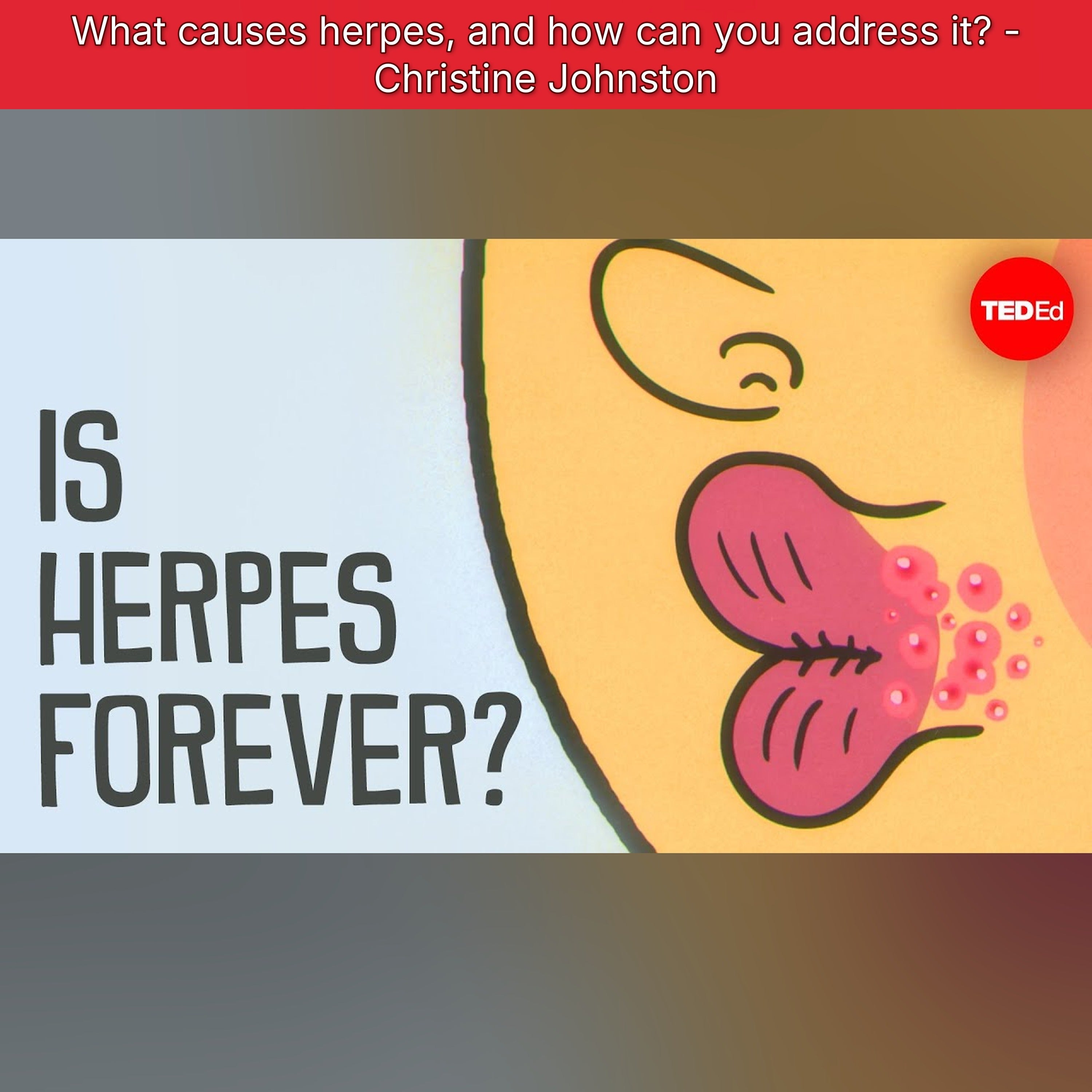
Explore the viruses which can cause herpes, how the infection affects your body, and what makes it so hard to prevent and cure. -- In the 1st century CE, Emperor Tiberius made an unprecedented decision: banning kissing at all public events. This move was aimed at thwarting a puzzling outbreak, which many historians believe was an epidemic of oral herpes. Today, more than half the population is infected with herpes simplex virus. So, what causes herpes? And how can we treat it? Christine Johnston examines this stealthy virus. Lesson by Christine Johnston, directed by Igor Ćorić, Artrake Studio. Support Our Non-Profit Mission ---------------------------------------------- Support us on Patreon: http://bit.ly/TEDEdPatreon Check out our merch: http://bit.ly/TEDEDShop ---------------------------------------------- Connect With Us ---------------------------------------------- Sign up for our newsletter: http://bit.ly/TEDEdNewsletter Find us on Twitter: http://bit.ly/TEDEdTwitter Peep us on
Speech is unprecedented in the natural world. Yet human infants can learn the grammar of their native tongue so quickly, it is as if they knew the basics already. How did such a unique ability evolve, and what does it reveal about the nature of our species? The story of the social and sexual revolution responsible for the emergence of our most prized skill—the ability to speak. Drawing on evolutionary and social anthropology, behavioural ecology, archaeology, and linguistics, Professors Chris Knight and Jerome Lewis unearth the political and social origins of our capacity to speak. What they discover points to the revolutionary role played by women at every stage. It seems that formidable coalitions of women used laughter, song, and dance to restrain the male potential for violence. In so doing, women established extraordinary levels of community-wide trust—precisely what was needed for linguistic creativity to flourish. The Revolutionary Origins of Language (https://bookshop.org/a/123
Reconceiving AI: The World as an Apple or a Blue Orange (https://bookshop.org/a/12343/9781041033417) (CRC Press, 2026) is Muhammed Hasan’s interdisciplinary exploration of Artificial Intelligence from philosophical, computational, linguistic and engineering perspectives. Using analogies and metaphors of Apple and Orange, the author conveys complex concepts about human perception and language limitations, as well as his perception of modern AI systems. He also holds that true visual intelligence would involve constructing a visual world similar to how humans do, rather than just analysing pixel-level information. Referencing Paul Cézanne’s philosophy, the author illustrates how language creates division between symbolic identity and personal experience, resulting in an inherent gap that leads to endless desire for new expression. The book discusses three dimensions of moral intelligence: temporal consciousness—an understanding causality and counterfactual reasoning; self-reflection—the
Today we're going to talk about what an ear even is, how ears have evolved, how they work, and some of the cool ways animals have tweaked their ears to work for their lifestyle. So perk up whatever you use for hearing because we're going to be sending vibrations your way for the next 10ish minutes! Learn more about Rae here! https://www.raewynngrant.com (https://www.raewynngrant.com/) Watch our videos and review your learning with the Crash Course App! Download here for Apple Devices: https://apple.co/3d4eyZo Download here for Android Devices: https://bit.ly/2SrDulJ Crash Course is on Patreon! Thanks to the following patrons for their generous monthly contributions that help keep Crash Course free for everyone forever: Alexis B, Rene Duedam, Burt Humburg, Aziz, Nick, DAVID MORTON HUDSON, Perry Joyce, Scott Harrison, Mark & Susan Billian, Junrong Eric Zhu, Alan Bridgeman, Jennifer Smith, Matt Curls, Tim Kwist, Jonathan Zbikowski, Jennifer Killen, Sarah & Nathan Catchings, Brandon Westmo
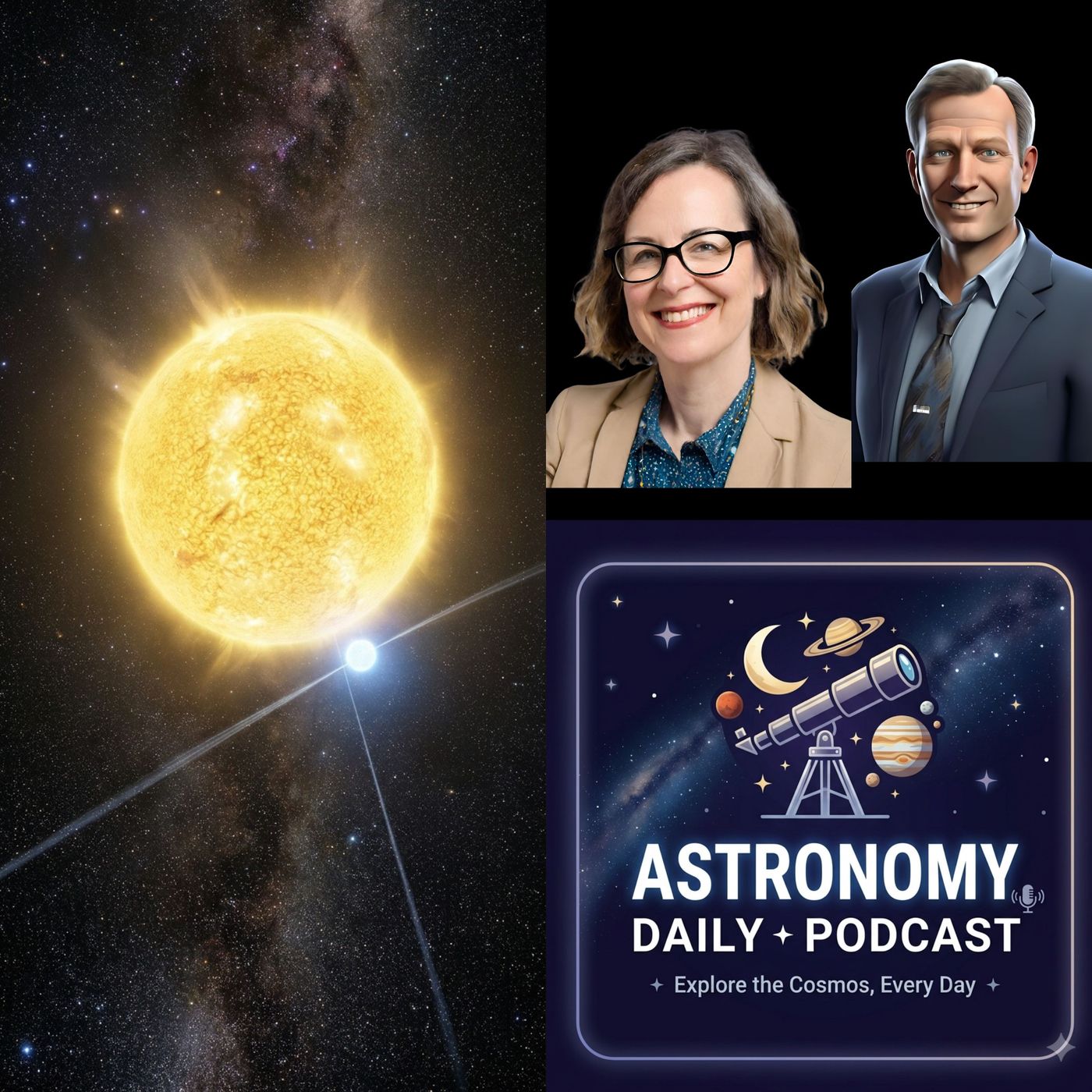
Every 7.9 minutes a radio pulse arrives from Canis Major. This week astronomers at ICRAR-Curtin in Perth traced it to a white dwarf orbiting a star like our Sun, the first pairing of its kind, and found that the pulses carry the weather of the companion star with them. We unpack how the timing gives away which star is talking, and everything this result is not. Then: how the LISA gravitational-wave observatory could find planets around pairs of white dwarfs. In The Week That Was: NASA's nuclear Moon rover built from Curiosity's twin, the hot Jupiter that stopped transiting, Euclid's first big data release, and Starship Flight 15, in orbit with its catch attempt still to come at the time of recording. Plus Mars and Jupiter 1.2 degrees apart, and the Leonids, from both hemispheres. In this episode · Lead: GPM J071507−114153, a long-period radio transient made of a white dwarf and a Sun-like star (McSweeney, Hurley-Walker et al., Nature Astronomy, 12 Nov 2026). · Fresh item: LISA as a pla
View full lesson: http://ed.ted.com/lessons/will-future-spaceships-fit-in-our-pockets-dhonam-pemba Uploaded 28-05-15 When you picture a rocket, you might imagine a giant ship carrying lots of fuel, people and supplies. But what if the next wave of spacecraft were small enough to fit into our pockets? Dhonam Pemba details the future of microspacecraft, and how scientists at NASA are hoping to use micropropulsion to launch these tiny vessels outside of Earth’s orbit. Lesson by Dhonam Pemba, animation by Qa'ed Mai.
In business, growth basically means making a company more successful in some way: finding a new revenue stream, revamping the cost structure to minimize expenses and increase profit, or adding new people and knowledge to the team. Our options for growth are usually tied to the type of business model we started with. There actually is a difference between a startup and a small business. *** Crash Course is on Patreon! Thanks to the following patrons for their generous monthly contributions that help keep Crash Course free for everyone forever: Eric Prestemon, Sam Buck, Mark Brouwer, Efrain R. Pedroza, Matthew Curls, Indika Siriwardena, Avi Yashchin, Timothy J Kwist, Brian Thomas Gossett, Haixiang N/A Liu, Jonathan Zbikowski, Siobhan Sabino, Jennifer Killen, Nathan Catchings, Brandon Westmoreland, dorsey, Kenneth F Penttinen, Trevin Beattie, Erika & Alexa Saur, Justin Zingsheim, Jessica Wode, Tom Trval, Jason Saslow, Nathan Taylor, Khaled El Shalakany, SR Foxley, Yasenia Cruz, Eric Koslo
From towering skyscrapers covered in trees to zero carbon smart cities, there are so many ways to imagine what a sustainable city of the future might look like. But what does it really mean to be sustainable anyway? Today, we’re going to look at environmental planning and how it intersects with people and the communities they form. Further Reading: Corkscrew Samp Sanctuary - https://corkscrew.audubon.org (https://corkscrew.audubon.org/) AJLC at Oberlin - https://www.oberlin.edu/ajlc La Borda Co-Op - http://www.laborda.coop/en/ Sources: https://docs.google.com/document/d/1YQOomMFWqS1JdbnxYpY9VQgoq4r7Gue7x-rdskSshyE/edit?usp=sharing #CrashCourse #Geography #UrbanPlanning Watch our videos and review your learning with the Crash Course App! Download here for Apple Devices: https://apple.co/3d4eyZo Download here for Android Devices: https://bit.ly/2SrDulJ Crash Course is on Patreon! Thanks to the following patrons for their generous monthly contributions that help keep Crash Course free for
Some would say he had it coming. Others that it gives an evolutionary advantage. MinuteEarth is produced by Neptune Studios LLC https://neptunestudios.info (https://neptunestudios.info/) If you like what we do, you can help us! - Become our patron: https://patreon.com/MinuteEarth - Buy our merch: http://dftba.com/minuteearth - Buy our book: https://minuteearth.com/books - Share with your friends and family - Leave us a comment (we read them!)
If your doctor wears a necktie, you might want to keep your distance from it. Research has found that doctors' ties can harbor some pretty nasty germs — and those ties can come awfully close to patients during an examination. So just how much of a problem is this, and should doctors stop wearing ties altogether? https://pmc.ncbi.nlm.nih.gov/articles/PMC1382570/ English is a strange language. Why do tough, through, and dough look so similar but sound completely different? Why do some words break every rule, and why do familiar words sometimes change their meanings? It can all seem maddeningly inconsistent. But it turns out that many of these oddities have fascinating explanations. Linguist Arika Okrent, author of Highly Irregular: Why Tough, Through, and Dough Don't Rhyme—And Other Oddities of the English Language (https://amzn.to/3CWVCsQ), (https://amzn.to/3CWVCsQ) joins me to reveal the surprising stories behind the quirks of English and why our language is so wonderfully weird. Do yo
Researchers have used a hybrid trapped-ion quantum computer to recreate a fundamental phenomenon in quantum physics: the Aharonov–Bohm effect. By controlling magnetic flux in a carefully designed quantum system, they observed how invisible fields can dramatically influence particle motion. The experiment opens new possibilities for simulating the complex interactions that govern the subatomic world. This episode includes AI-generated content.
Could enormous primordial black holes make up the universe's mysterious dark matter? New calculations suggest that these colossal objects would leave cosmic fingerprints that astronomers have not observed. The findings place important new limits on dark matter theories and bring scientists closer to understanding what truly makes up the invisible matter shaping our universe. This episode includes AI-generated content.
View full lesson: http://ed.ted.com/lessons/calculating-the-odds-of-intelligent-alien-life Could there be intelligent life on other planets? This question has piqued imagination and curiosity for decades. Explore the answer with the Drake Equation -- a mathematical formula that calculates the possibility of undiscovered life. Lesson by Jill Tarter; Animation by TED-Ed
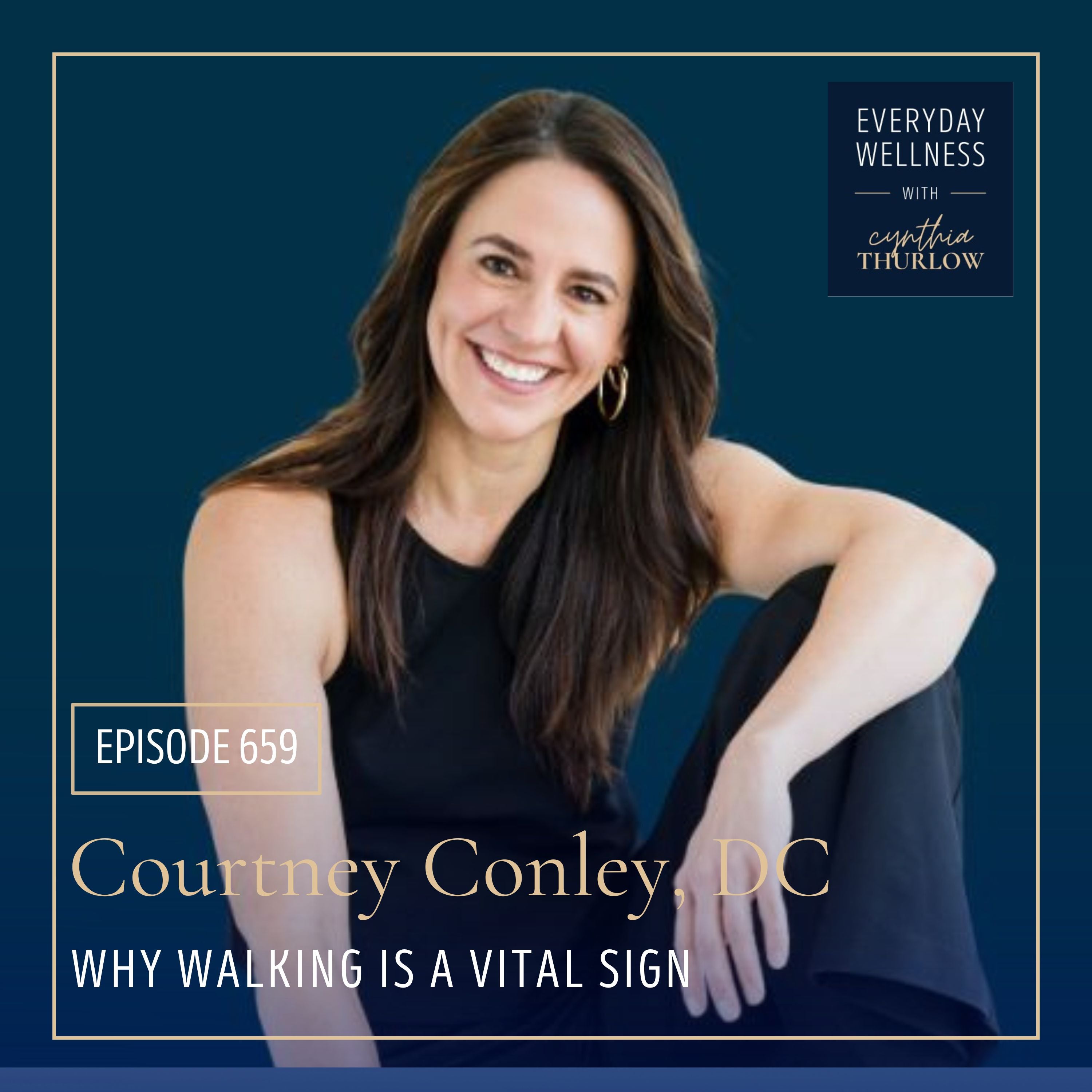
Today, I am delighted to connect with Courtney Conley, a chiropractor and movement specialist with more than 20 years of experience helping patients improve foot function, mobility, and movement. Based in Lakewood, Colorado, Courtney is passionate about educating people on the importance of foot health, proper footwear, and maintaining strength and independence as we age. She also provides educational resources and training for healthcare and movement professionals and wrote a book exploring the essential role of walking and foot health in overall well-being. In our conversation, we discuss why walking should be considered a vital sign, alongside essential functions like breathing and sleeping, and how walking speed can offer valuable insights into our cardiovascular, neurological, metabolic, and musculoskeletal health. Courtney explains the importance of maintaining lower-body strength and power, particularly as women transition through perimenopause and menopause, and why the feet ar