View full lesson on TED-Ed BETA: http://ed.ted.com/lessons/the-real-origin-of-the-franchise One of the most successful business models is the franchise, but it didn't originate with McDonald's. Sir Harold Evans, the author of They Made America, describes the remarkable story of a beauty salon that allowed hundreds of women to own their own businesses. Lesson by Sir Harold Evans. Animation by Sunni Brown.
In 2011, a magnitude 9.1 earthquake struck off the coast of Japan, unleashing a tsunami up to 40m high - far larger than any model had predicted. It caused untold damages including the Fukushima Daiichi nuclear disaster. For more than a decade, scientists have been trying to explain why. But now, thanks to a record-breaking ocean drilling expedition and a new study published in Science in December 2025, we may finally have the answer…This is the real geological story of why the 2011 tsunami was so devastating - and what it means for predicting the next one.▀▀▀▀▀▀ ▀▀▀▀▀▀
On today’s episode, we’re talking about the Common Cold, one of the worst experiences known to humans! Today we get into how to treat your hellish symptoms using only research and science based techniques and products which include; how to shorten the duration of your infection and how to ease symptoms. Grab a tissue and listen! To leave us a message on podcast topics or anything, Sidenote by AsapSCIENCE, please visithttps://www.asapscience.com/chat Sources: Hosted on Acast.
Humans love to play with their food—in fact, we’ve been doing it for thousands of years. In this episode of Crash Course Botany, we'll explore how we’ve learned to manipulate plant genetics, from breeding tastier fruits and veggies to directly editing plant genes that help crops survive climate change. And if you’ve ever wondered what GMOs are or if they’re safe, we’ve got you covered. Chapters: Playing With Our Food 0:00 Plant Genetics & Breeding 1:04 What Are GMOs? 4:15 How GMOs Are Made 5:01 Ancient GMOs 6:33 Are GMOs Safe? 8:30 Concerns About GMOs 9:31 Types of GMOs 11:33 Review & Credits 12:59 Sources: https://docs.google.com/document/d/1PB6WdUJcABAccO-U-t6ic7WbfP2z0Pr5P9a8HMr6zh4/edit?usp=sharing Crash Course is on Patreon! Thanks to the following patrons for their generous monthly contributions that help keep Crash Course free for everyone forever: David Fanska, Andrew Woods, Tawny Whaley, Sean Saunders, DL Singfield, Ken Davidian, Stephen Akuffo, Toni Miles, Steve Segreto, Kyle
We talk a lot about Keynesian economics on this show, pretty much because the real world currently runs on Keynesian principles. That said, there are some other economic ideas out there, and today we're going to talk about a few of them. So, if you've been aching to hear about socialism, communism, the Chicago School, or the Austrian School, this episode is for you. Crash Course is on Patreon! Thanks to the following Patrons for their generous monthly contributions that help keep Crash Course free for everyone forever: Fatima Iqbal, Penelope Flagg, Eugenia Karlson, Alex S, Jirat, Tim Curwick, Christy Huddleston, Eric Kitchen, Moritz Schmidt, Today I Found Out, Avi Yashchin, Chris Peters, Eric Knight, Jacob Ash, Simun Niclasen, Jan Schmid, Elliot Beter, Sandra Aft, SR Foxley, Ian Dundore, Daniel Baulig, Jason A Saslow, Robert Kunz, Jessica Wode, Steve Marshall, Anna-Ester Volozh, Christian, Caleb Weeks, Jeffrey Thompson, James Craver, and Markus Persson Want to find Crash Course elsewhe
A biologist’s natural habitat is anywhere questions about life are being asked—whether the subject is a nematode or a narwhal, a single cell, or a whole ecosystem. In this episode of Crash Course Biology, we’re flipping the microscope around to show how biologists’ work goes down. Along the way, we’ll learn why zebrafish and fruit flies are some of biology’s next top models. Chapters: Studying Life 00:00 Your Local Biologist 1:20 Biologists At Work 3:05 Real Life Biologists 5:17 Model Organisms 8:49 Review & Credits 11:10 This series was produced in collaboration with HHMI BioInteractive, committed to empowering educators and inspiring students with engaging, accessible, and quality classroom resources. Visit https://BioInteractive.org/CrashCourse (https://biointeractive.org/CrashCourse) for more information. Are you an educator looking for what NGSS Standards are covered in this episode? Check out our Educator Standards Database for Biology here: https://www.thecrashcourse.com/biology
The CEO of the Gradient Institute on the emerging risks of agentic AI and how playing dumb might be the smartest move. Regular panellists Digital Rights Watch chair Lizzie O’Shea, Health Engine CEO Dan Stinton and Per Capita’s Peter Lewis also discuss: should we get AI out of schools? what do the big Canva job cuts mean? will the US midterms impact AI in Australia? For show notes go to: https://burningplatforms.substack.com/ Join us in Canberra on November 25 - https://events.humanitix.com/what-s-your-poison-live-show-last-drinks-for-2026? Celebrate Digital Rights Watch’s 10th birthday on December 9 - https://events.humanitix.com/digital-rights-watch-10th-birthday-party
Scientists at CERN have found initial evidence of an extraordinarily rare particle decay, marking a major milestone after more than 40 years of searching. Using upgraded detectors at the Large Hadron Collider, researchers are investigating a process involving beauty quarks and muons that could provide a powerful test of the Standard Model. Further measurements may reveal whether nature holds forces and particles beyond our current understanding of physics. This episode includes AI-generated content.
Unexpected gas emissions detected near Mars' Alba Mons volcano are raising questions about the planet's geological activity. Scientists are investigating what these mysterious signals reveal about hidden heat beneath the Martian surface and whether underground environments could offer conditions suitable for microbial life. This episode includes AI-generated content.
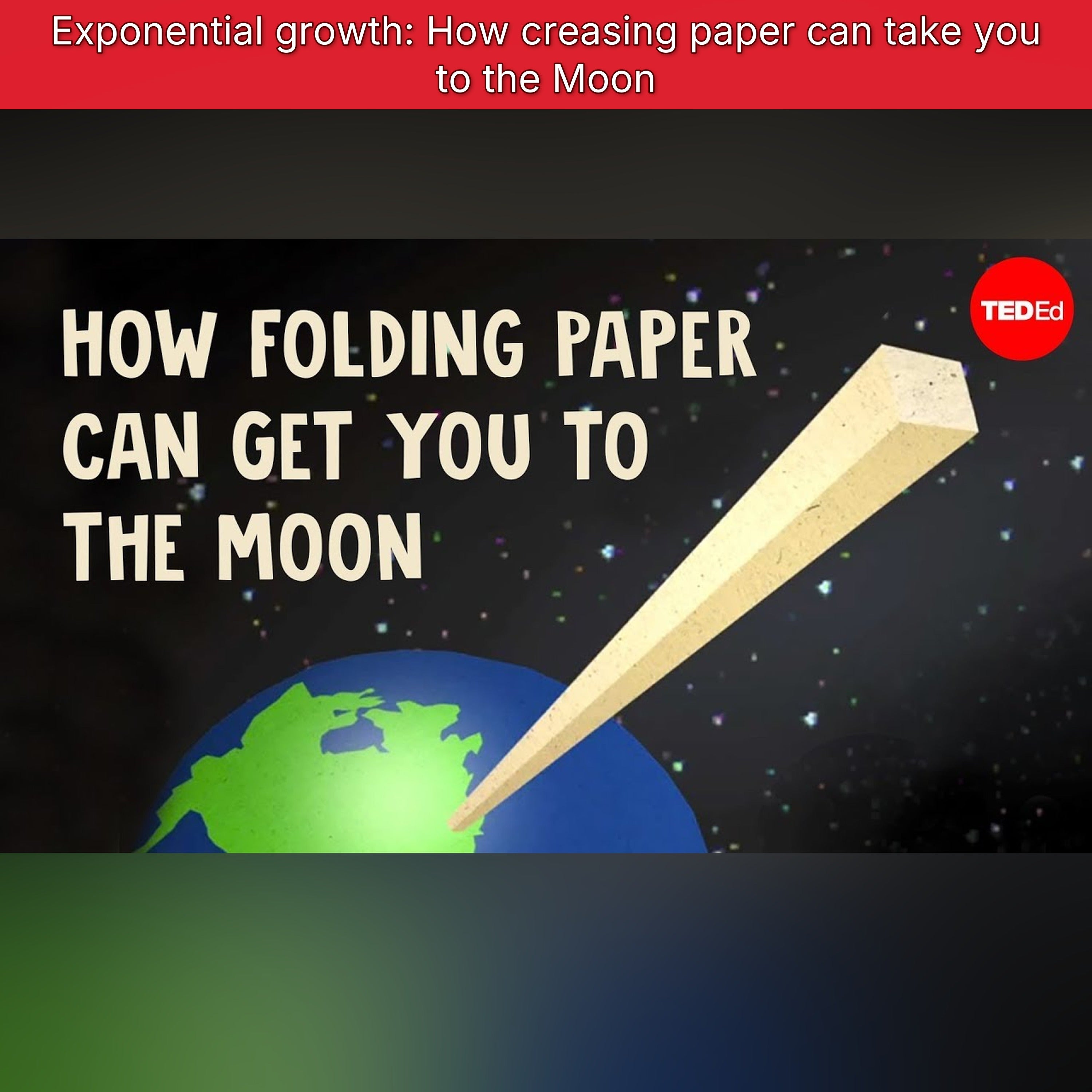
Can folding a piece of paper 45 times get you to the moon? By seeing what happens when folding just one piece of paper, we see the unbelievable potential of exponential growth. This lesson will leave you wanting to grab a piece of paper to see how many times you can fold it! Lesson by Adrian Paenza, animation by TED-Ed.
Youth workers are essential to the fabric of society. Schools, families, and many of our social institutions rely heavily on their work, yet their contributions often go unrecognized. Laboring in the Shadows: Precarity and Promise in Black Youth Work (https://bookshop.org/a/12343/9781503644908) (Stanford UP, 2026) explores the critical role of Black youth workers, especially in the lives of vulnerable youth, and the challenges they face in their unstable, underappreciated position. Bianca J. Baldridge situates the experiences of Black youth workers within the broader context of anti-Blackness and historical inequities. Drawing on rich interview data from across the United States, Baldridge offers a nuanced analysis of how the precarity of this work—marked by high turnover rates, low wages, and housing insecurity—compounds the challenges these workers face. She highlights how Black youth workers resist these structural harms by adopting and implementing innovative pedagogical practices
More than 1 million people are estimated to die from drug-resistant infections every year, and that number is rising. But there are some surprising potential solutions in soil, viruses, and even... world peace? Guest: Muhammad Zaman (https://www.bu.edu/zaman/profile/muhammad-zaman/), author of Biography of Resistance (https://www.harpercollins.com/products/biography-of-resistance-muhammad-h-zaman?variant=32205527679010) And please email us! [email protected] We read every email. Thank you!
To hear an ad-free version of this episode, join our Patreon (http://patreon.com/cw/outsideinradio)! When it comes to the environment, are natural fabrics better than synthetics? The answer might surprise you. In this episode we compare the carbon footprints of polyester versus cotton, ask the experts whether our waterproof clothes are killing us, and talk about the number one thing you can do to make more sustainable clothing choices. This episode was first published in June 2023. Featuring Lucy Allosso, Jessian Choy, Joel Svedlund, and Akiera Charles. Produced by Felix Poon. For full credits and transcript, visit outsideinradio.org (https://outsideinradio.org/shows/living-in-a-material-world-the-search-for-sustainable-clothing) CONNECT WITH US Outside/In is made possible with listener support. No question is too serious or too silly. ADDITIONAL MATERIALS Our colleagues at NHPR’s Document team made a whole series about PFAS called Safe to Drink (https://play.megaphone.fm/montsjagqx6cc
In this episode, I speak with Ross Edgley, the ultra-endurance swimmer and sports scientist who was the first person to swim around Great Britain and around Iceland, and who holds the world record for the longest assisted adventure swim, 510 kilometers nonstop down Canada’s Yukon River. We discuss the science: what these swims do to the body, from rhabdomyolysis and heatstroke to hypothermia, and why Ross’s team has to make decisions for him once the brain stops protecting the body. Ross explains how he fuels nonstop versus months-long swims, from 120 grams of carbohydrate per hour to sticks of butter and grams of caffeine, and why he deliberately gained fat for insulation. We also discuss why a heavy pull-up matters for a distance swimmer, how he uses reflexive eccentrics and strength reserve to build durable shoulders, his 80/20 “cruise and kill” approach to training, and the special forces lesson of learning to lose. This episode is for any endurance athlete, coach, or anyone curiou
In 1979, Dr. Raphael Osheroff admitted himself to Chestnut Lodge, a prestigious psychiatric hospital in Rockville, Maryland, expecting world-class care for his severe depression. Instead, he was confined to a locked ward, denied medication, and subjected to seven months of talk therapy. The experience rendered him physically frail and emotionally devastated before his parents secured his transfer to a hospital willing to prescribe the antidepressants he desperately needed. But the damage was done: his marriage, his practice, and his reputation all lay in tatters. Then he did something unprecedented. He sued Chestnut Lodge. When Healing Harms: The Doctor Who Put a Hospital on Trial—and the Case That Shook Psychiatry (https://bookshop.org/a/12343/9780520409170) (U California Press, 2026) excavates the long-buried story behind one of the most consequential—and most misunderstood—malpractice cases in modern psychiatry and surfaces its impact that persists to this day. Drawing on thousands
Take another breather from all the anatomy and physiology terminology to watch Hank struggle with words. Music: Kevin MacLeod - "Run Amok" http://incompetech.com/ *** Crash Course is on Patreon! Want to find Crash Course elsewhere on the internet? Facebook - http://www.facebook.com/YouTubeCrashCourse Twitter - http://www.twitter.com/TheCrashCourse Instagram - https://www.instagram.com/thecrashcourse/ CC Kids: http://www.youtube.com/crashcoursekids
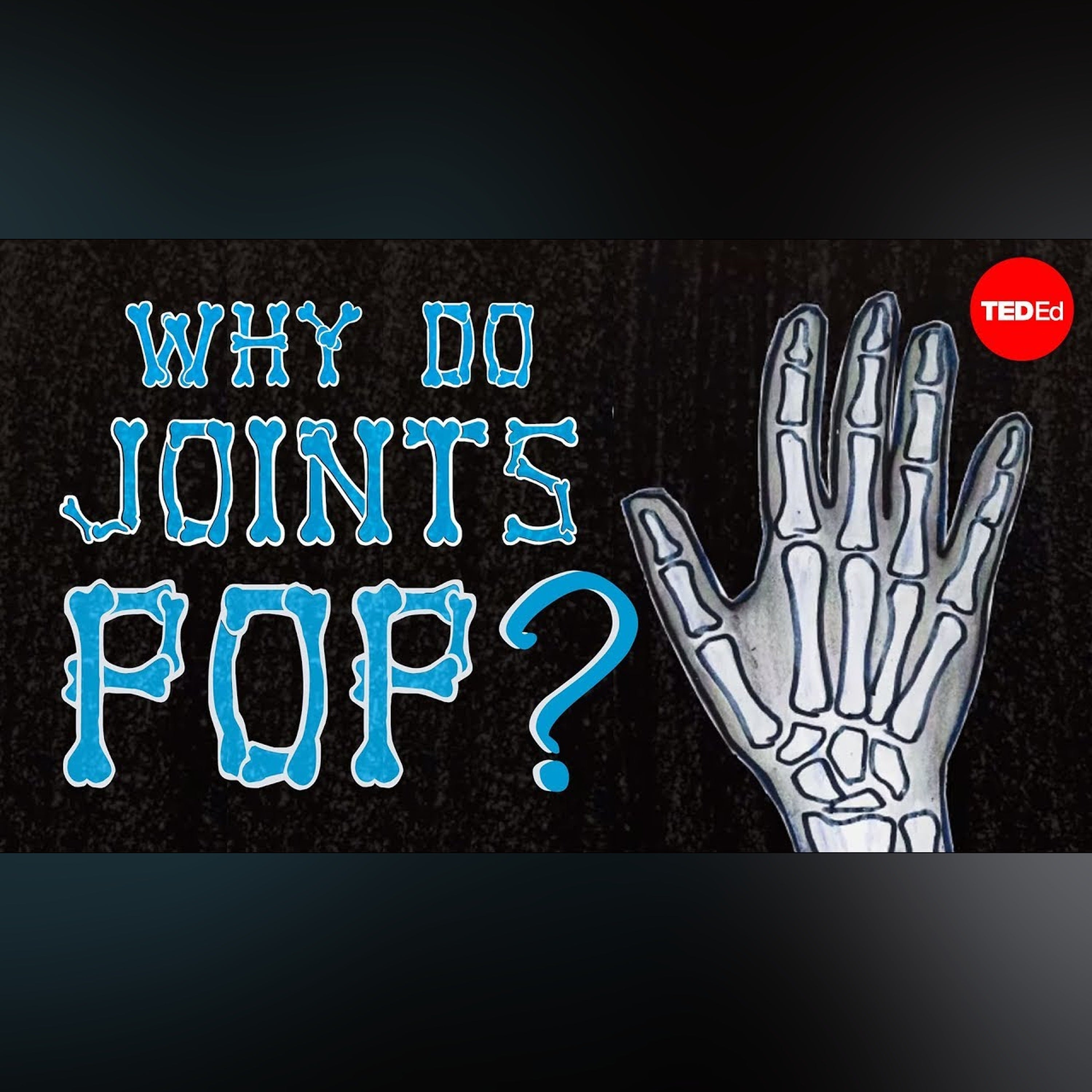
View full lesson: http://ed.ted.com/lessons/why-do-your-knuckles-pop-eleanor-nelsen Uploaded 05-05-15 Some people love the feeling of cracking their knuckles, while others cringe at the sound. But what causes that trademark pop? And is it dangerous? Eleanor Nelsen gives the facts behind joint popping. Lesson by Eleanor Nelsen, animation by Steve Belfer Creative.
In 1959, the WHO set out to eradicate smallpox, an ambitious goal that was achieved by 1980. But this goal wouldn't have been possible without coordination on all levels of society. In this episode of Crash Course Outbreak Science, we'll look at cooperation on the individual, community, and national scale and see how by working together we can improve outcomes during an outbreak, prevent future outbreaks, and even eradicate disease. This episode of Crash Course Outbreak Science was produced by Complexly in partnership with Operation Outbreak and the Sabeti Lab at the Broad Institute of MIT and Harvard—with generous support from the Gordon and Betty Moore Foundation. Episode Sources: https://journals.plos.org/plosone/article?id=10.1371/journal.pone.0016085 (https://journals.plos.org/plosone/article?id=10.1371%2Fjournal.pone.0016085) *** Watch our videos and review your learning with the Crash Course App! Download here for Apple Devices: https://apple.co/3d4eyZo Download here for Android
Scientists have demonstrated a promising new way to make quantum information more stable using specially engineered molecules. By combining extremely low temperatures with precise laser and microwave control, the team achieved unusually consistent quantum behavior. The results could bring molecular qubits closer to practical applications in quantum optics and next-generation communication networks. This episode includes AI-generated content.
Using South Africa’s MeerKAT radio telescope, an international team of astronomers has achieved a major breakthrough in mapping the universe’s hidden structure. By detecting faint signals from cosmic hydrogen across vast regions of space, researchers can trace the cosmic web billions of years into the past. This achievement opens new possibilities for studying how the universe evolved and how its largest structures took shape. This episode includes AI-generated content.
Cases of Lyme disease have increased year by year due to climate change and expanding tick habitats. Unfortunately, this also means an increase in a condition known as post-treatment Lyme disease, where the illness persists after the initial infection is gone. Not a lot is known about post-treatment Lyme, but there is headway being made on how to treat it. To discuss his work in the field, host Dr. Samantha Yammine speaks with Dr. John Aucott, the director of the Johns Hopkins Lyme Disease Research Center. Before that, Sam looks into a study that explores a unique way of treating cancer in a hard-to-reach part of the eye. Later, she explores new research explaining why Mercury is much smaller than previously thought and why it’s still shrinking. Link to Show Notes HERE (https://docs.google.com/document/d/16JMsjmwjTEWYzffBhgSZQcZelwrLmAWlrl_LM9wJCHI/edit?usp=sharing) Still curious? Terms apply. Hosted on Acast.
Learn how to identify, develop, and share your best ideas with TED Masterclass: http://bit.ly/tedmasterclass Uploaded 23-07-20 -- The average 20-year-old knows between 27,000 and 52,000 different words. Spoken out loud, most of these words last less than a second. With every word, the brain has a quick decision to make: which of those thousands of options matches the signal? And about 98% of the time, the brain chooses the correct word. How is this possible? Gareth Gaskell digs into the complexities of speech comprehension. Lesson by Gareth Gaskell, directed by Art Shot. Sign up for our newsletter: http://bit.ly/TEDEdNewsletter Support us on Patreon: http://bit.ly/TEDEdPatreon Find us on Twitter: http://bit.ly/TEDEdTwitter Peep us on Instagram: http://bit.ly/TEDEdInstagram View full lesson: https://ed.ted.com/lessons/how-do-our-brains-process-speech-gareth-gaskell Thank you so much to our patrons for your support! Without you this video would not be possible! Sydney Evans, Latora Slyde
Today, I’m delighted to connect with Chloe Melas, an entertainment correspondent at NBC News, former CNN reporter, and co-author of The Girl's Guide to Guts. Chloe is also the co-founder of the gut health brand Bio.me and has spent more than 15 years navigating inflammatory bowel disease. In our conversation, Chloe shares her deeply personal journey with ulcerative colitis, from initially dismissing blood in her stool to living with years of debilitating digestive symptoms. We discuss why so many women feel embarrassed to talk about bowel habits, the differences between irritable bowel syndrome (IBS) and inflammatory bowel disease (IBD), and why persistent symptoms should never be dismissed as simply part of being a woman. We explore the importance of colorectal cancer screening, practical strategies for tolerating colonoscopy preparation, and the connection between stress, the vagus nerve, and digestive health. Chloe also shares how lifestyle changes, mindfulness, nutrition, and fiber
We’re back for Part 2! If you missed Part 1, start there for the chicken basics and then come back for the weird stuff like chickens eating chickens, why chickens bother laying unfertilized eggs, rooster gossip, fairy eggs, nest abominations, bird grief, beak accessories, soft burbling chicken sounds, spicy chicken feed, safe corners of the internet, multicolored eggs and the big questions: SHOULD YOU GET A CHICKEN OR WHAT. We help you decide. Buy Tove’s book: Under the Henfluence: Inside the World of Backyard Chickens and the People Who Love Them (https://bookshop.org/p/books/under-the-henfluence-inside-the-world-of-backyard-chickens-and-the-people-who-love-them-tove-danovich/18670810?ean=9781572843219) Visit Tove’s website (https://www.tovedanovich.com/) and follow her on Instagram (https://instagram.com/tovekdanovich) and Bluesky (https://bsky.app/profile/tkdano.bsky.social) Follow Tove’s chickens on Instagram (https://www.instagram.com/bestlittlehenhouse/) A donation went to Second