Listen through the publisher, then discuss the episode here or arrange an in-person Roundtable. Your city determines where to meet.
Roundtables are designed for groups of four, with a shared subject and room for everyone to speak. Come for discussion, with no dating expectation.
Cases of Lyme disease have increased year by year due to climate change and expanding tick habitats. Unfortunately, this also means an increase in a condition known as post-treatment Lyme disease, where the illness persists after the initial infection is gone. Not a lot is known about post-treatment Lyme, but there is headway being made on how to treat it. To discuss his work in the field, host Dr. Samantha Yammine speaks with Dr. John Aucott, the director of the Johns Hopkins Lyme Disease Research Center. Before that, Sam looks into a study that explores a unique way of treating cancer in a hard-to-reach part of the eye. Later, she explores new research explaining why Mercury is much smaller than previously thought and why it’s still shrinking. Link to Show Notes HERE (https://docs.google.com/document/d/16JMsjmwjTEWYzffBhgSZQcZelwrLmAWlrl_LM9wJCHI/edit?usp=sharing) Still curious? Terms apply. Hosted on Acast.
Episode information is provided by the publisher. Listening takes place on the publisher’s service.
This new tech is changing how movies get made. So @mkbhd and I tested it out... Watch MKBHD's video: https://youtu.be/RM7SobH8ZO0 I’ve been obsessed with sci-fi movies since I was a kid. I love being transported to another world. But lately, I’ve been wondering: How do those worlds look so… REAL? The tech behind movies has exploded in complexity and realism, changing how stories come to life on screen. Luckily, at the same time, those tools are becoming more and more available to more people telling stories. It’s not just blockbusters like Avatar 2 or Avengers or Dune. It’s also smaller budget films like Everything Everywhere All at Once or even… YouTube creators? In this video, Marques Brownlee and I test out 3 movie-making tools that are changing how movies, shows, and maybe even YouTube videos (??) get made. We’re at ZeroSpace Studios in New York to show you how each of these crazy technologies work - and how you might be able to use them. Along the way, we hit big questions like: W
Viewers like you help make PBS (Thank you ) . Support your local PBS Member Station here: https://to.pbs.org/DonateSPACE Uploaded 25-04-18 It’s been conjectured that the center of the Milky Way is swarming with tens of thousands of black holes. And now we’ve actually seen them. You can further support us on Patreon at https://www.patreon.com/pbsspacetime Get your own Space Time t-shirt at http://bit.ly/1QlzoBi Tweet at us! @pbsspacetime Facebook: facebook.com/pbsspacetime Email us! pbsspacetime [at] gmail [dot] com Comment on Reddit: http://www.reddit.com/r/pbsspacetime Help translate our videos! Previous Episode: Using Stars to See Gravitational Waves This episode of Space Time Journal Club looks at the paper: A density cusp of quiescent X-ray binaries in the central parsec of the Galaxy by Hailey, Mori, Bauer, Berkowitz, Hong and Hord (2018) The core of our galaxy is a wild place. The stars are so densely packed that the night sky would be 500 times brighter. A supermassive black ho
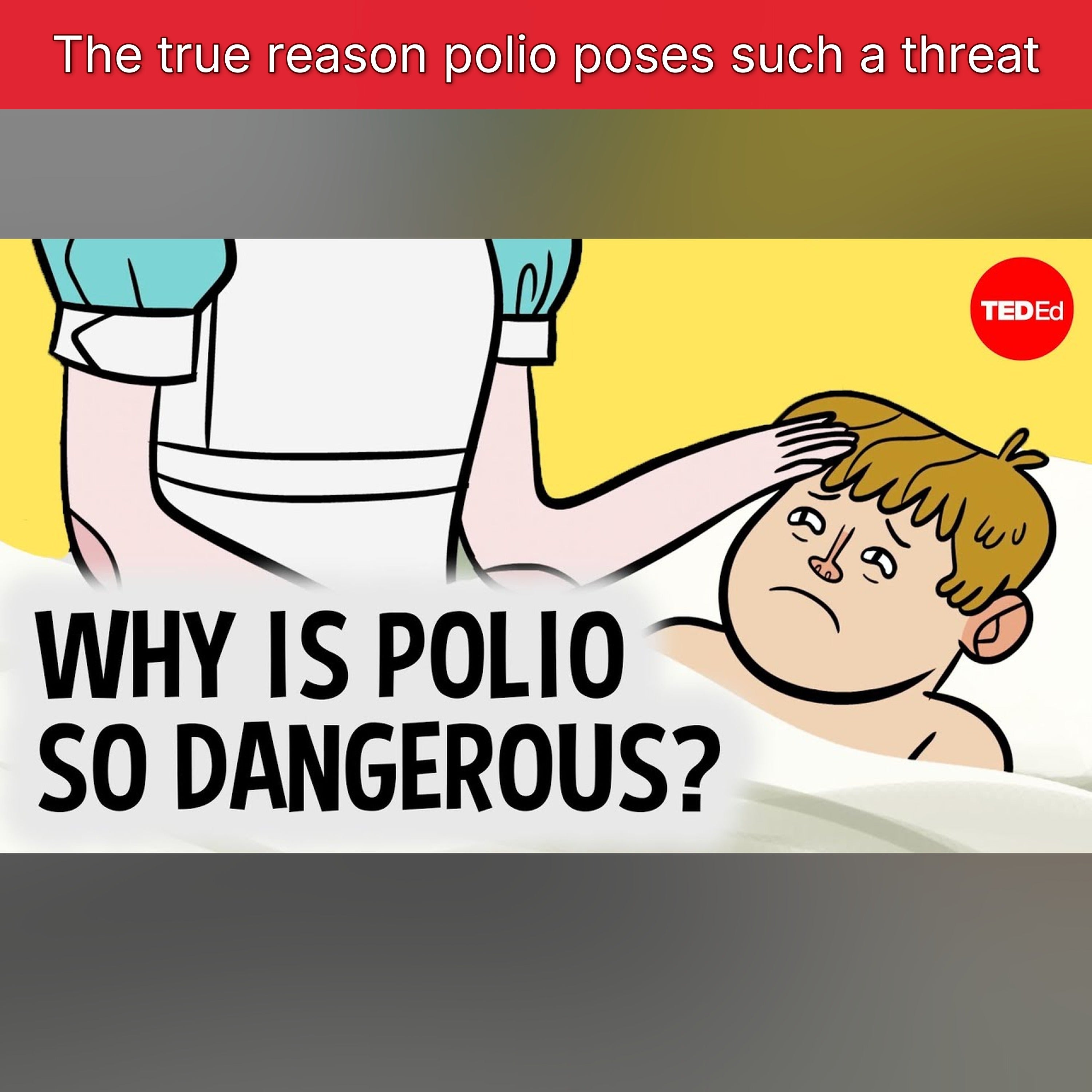
Explore what makes polio so dangerous, what is causing the 21st century resurgence of cases, and how we can eradicate the disease. -- In 1952, polio was everywhere: killing or paralyzing roughly half a million people annually. Yet just 10 years later, paralytic polio cases in the US dropped by 96% and we were on track to get rid of polio for good. But in recent years, the virus started striking back. So, what’s behind these recent spikes? Explore the dangers of poliovirus and the possibility of eradicating this deadly disease. Directed by Anton Bogaty. This video made possible in collaboration with Gates Ventures Learn more about how TED-Ed partnerships work: https://bit.ly/TEDEdPartner A special thanks to Ananda Bandyopadhyay, Amber Zeddies, and Kathleen O'Reilly who provided information and insights for the development of this video. Support Our Non-Profit Mission ---------------------------------------------- Support us on Patreon: http://bit.ly/TEDEdPatreon Check out our merch: htt
I Ate 1000 Sardines in a Month, Video: https://youtu.be/_Th54GWd8WY How Sardines Supercharged my Metabolism, Letter: https://staycuriousmetabolism.substack.com/p/the-weird-anti-insulin-hormone-that?r=40ekz2 Omega-6/3 Ratio Can Be Misleading, Letter: https://staycuriousmetabolism.substack.com/p/how-we-got-omega-fat-wrong-this-will?r=40ekz2 Best Omega-3 for the Brain, Letter: https://staycuriousmetabolism.substack.com/p/why-omega-3-supplements-dont-work?r=40ekz2 If you want to get your Omega-3 via Omega Quant, click on this link: https://omegaquant.com/ref/864 Fatty Acid Research Institute: https://www.faresinst.org (https://www.faresinst.org/) Description: In this conversation, I sit down with Professor William Harris, one of the world’s leading experts on omega-3 and omega-6 fatty acids, to cut through confusion around fish oil, seed oils, cardiovascular health, and brain health. We break down what omega-3 and omega-6 fats actually are, why their chemistry matters, and how they’re conv
After her father died suddenly, she inherited more than the family farm. She inherited the responsibility of keeping it running without the man who had spent nearly his entire life there. Then the longtime farmhands began quietly sharing strange experiences. One heard her father whistling outside the machine shed. Another heard his familiar footsteps in an empty barn. Someone else saw a man wearing his old brown work jacket standing beside a gate—only to look again and find no one there. She told them grief and memory could make familiar sounds feel more meaningful than they were. Then one evening, while working alone after everyone else had gone home, she heard three notes outside the barn. It was a whistle she had known since childhood. And nobody else on the farm would have understood what it meant. #GhostStories #FamilyGhost #SpiritVisit #HauntedFarm #Afterlife #SignsFromBeyond #Paranormal #FatherAndDaughter #Unexplained #Signs Love real ghost stories? Want even more? Want even mor
In Brought to You By: How Corporations Warped the Truth, Conned the Public, and Broke Democracy (https://bookshop.org/a/12343/9781639736331), Amy Westervelt exposes the plot hidden within the familiar story of science denial. Over the last century, Big Industry has built a vast apparatus of think tanks, lobbyists, sponsored university labs, and obliging news networks to con the public and fool decision-makers, poisoning the informational ecosystem and warping the nature of truth along the way. With her signature wit and incisiveness, Westervelt introduces the masterminds of corporate misinformation: Herb Schmertz, the public relations pioneer who made Mobil “the thinking man's oil company;” Richard Edelman, the PR guy who helped the dairy industry vilify oat milk; David Petraeus, the disgraced spy chief using counter-insurgency tactics to discredit climate science; and many more. She shows how these company men have worked to usher in an era of unprecedented corporate control. Only by
It’s Nobel Prize season here on Curiosity Weekly, and we are ready to break down the science behind this year’s winners! This episode, host Dr. Samantha Yammine digs into what research received the prize for medicine and physiology, physics, and chemistry. Joining her is neuroscientist and pain specialist Dr. Lindsay Ejoh. Together, they discuss how optogenetics has shifted how we study the brain and why it was so deserving of this year’s award. Link to Show Notes HERE (https://docs.google.com/document/d/1Xw1EvHb9D-OYMi1A8HM8c7U01G9MD-eVv1aJFFd0ge8/edit?usp=sharing) Still curious? Terms apply. Hosted on Acast.
We encourage you to check out It Turns Out, a podcast hosted by award-winning journalist Kara Miller that explores surprising research and the big questions behind how our world really works. We hope you enjoy it as much as we do!
For millenia, curious minds have been trying to find a universal piece of evidence that tells us someone is lying. From polygraph tests to studies examining eye contact and body language - it seems like science has come close, but decoding lies from truth remains complicated. This episode, host Dr. Samantha Yammine welcomes Dr. Leanne ten Brinke who runs the Truth and Trust Lab and specializes in research about lies and deception. Sam also responds to a listener request to explain why this years’ El Niño is set to cause intense weather across the planet and she breaks down a new study showing how neuroplasticity leads to an increased level of eyesight for those who are profoundly deaf. Link to Show Notes HERE (https://docs.google.com/document/d/1BMoQRTyUFRi4YCa0HoPPaDracVLQhzmE9p18Z7PcDc0/edit?usp=sharing) Still curious? Terms apply. Hosted on Acast.
Courts should protect careful consideration even when this slows case processing.
Share your view, then see how readers voted. No sign-in required. This poll is shared across stories.
Do you agree or disagree?
Common Quandary
A Common Quandary to discuss
Another conversation to explore, separate from this news story.
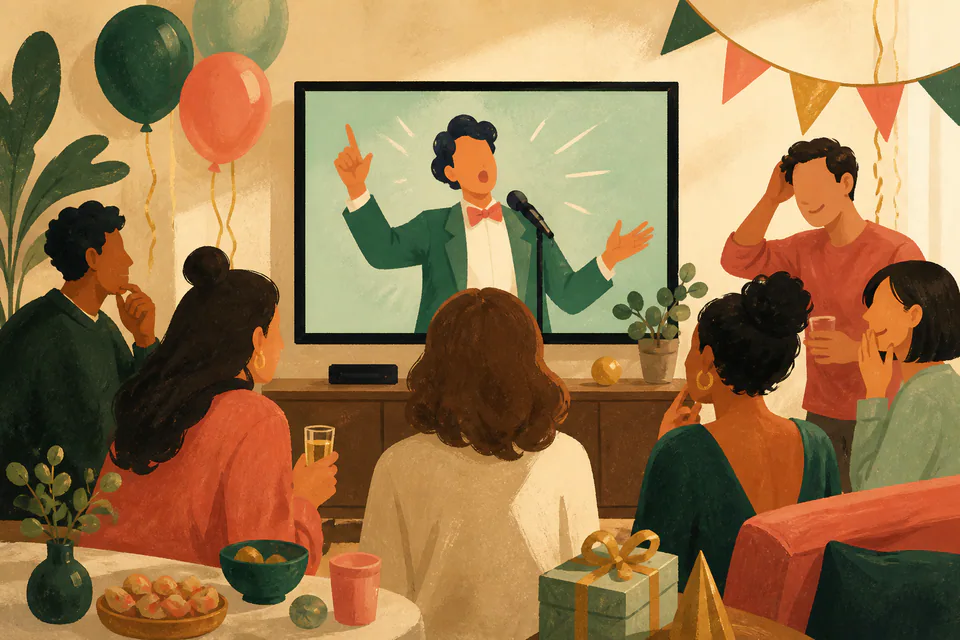
You make a hilarious deepfake of a friend for their birthday. Must you ask first?
For a private birthday party, someone creates a convincing video of a mutual friend delivering an absurd speech. Everyone, including the subject, will immediately understand that it is fake.
Does obvious fiction eliminate the need for consent?