Listen through the publisher, then discuss the episode here or arrange an in-person Roundtable. Your city determines where to meet.
Roundtables are designed for groups of four, with a shared subject and room for everyone to speak. Come for discussion, with no dating expectation.
It’s Nobel Prize season here on Curiosity Weekly, and we are ready to break down the science behind this year’s winners! This episode, host Dr. Samantha Yammine digs into what research received the prize for medicine and physiology, physics, and chemistry. Joining her is neuroscientist and pain specialist Dr. Lindsay Ejoh. Together, they discuss how optogenetics has shifted how we study the brain and why it was so deserving of this year’s award. Link to Show Notes HERE (https://docs.google.com/document/d/1Xw1EvHb9D-OYMi1A8HM8c7U01G9MD-eVv1aJFFd0ge8/edit?usp=sharing) Still curious? Terms apply. Hosted on Acast.
Episode information is provided by the publisher. Listening takes place on the publisher’s service.
Explore how pulling an all-nighter can impact your cognitive function, and find out what happens to your brain when you don't sleep. -- You’re just one history final away from a relaxing spring break. But you still have so much to study! You decide to follow in the footsteps of many students before you, and pull an all-nighter. So, what happens to your brain when you stay up all night? And does cramming like this actually help you prepare for a test? Anna Rothschild explores how a sleepless night impacts your cognitive function. Lesson by Anna Rothschild, directed by Biljana Labović. Animation by Noam Sussman & Ali Kellner, Homework Studio. This video made possible in collaboration with the Bezos Family Foundation Learn more about how TED-Ed partnerships work: https://bit.ly/TEDEdPartner A special thanks to Dr. Mathias Basner, Andrew Fuligni, Adriana Galván, and UCLA Center for the Developing Adolescent who provided information and insights for the development of this video. Support Ou
I Ate 1000 Sardines in a Month, Video: https://youtu.be/_Th54GWd8WY How Sardines Supercharged my Metabolism, Letter: https://staycuriousmetabolism.substack.com/p/the-weird-anti-insulin-hormone-that?r=40ekz2 Omega-6/3 Ratio Can Be Misleading, Letter: https://staycuriousmetabolism.substack.com/p/how-we-got-omega-fat-wrong-this-will?r=40ekz2 Best Omega-3 for the Brain, Letter: https://staycuriousmetabolism.substack.com/p/why-omega-3-supplements-dont-work?r=40ekz2 If you want to get your Omega-3 via Omega Quant, click on this link: https://omegaquant.com/ref/864 Fatty Acid Research Institute: https://www.faresinst.org (https://www.faresinst.org/) Description: In this conversation, I sit down with Professor William Harris, one of the world’s leading experts on omega-3 and omega-6 fatty acids, to cut through confusion around fish oil, seed oils, cardiovascular health, and brain health. We break down what omega-3 and omega-6 fats actually are, why their chemistry matters, and how they’re conv
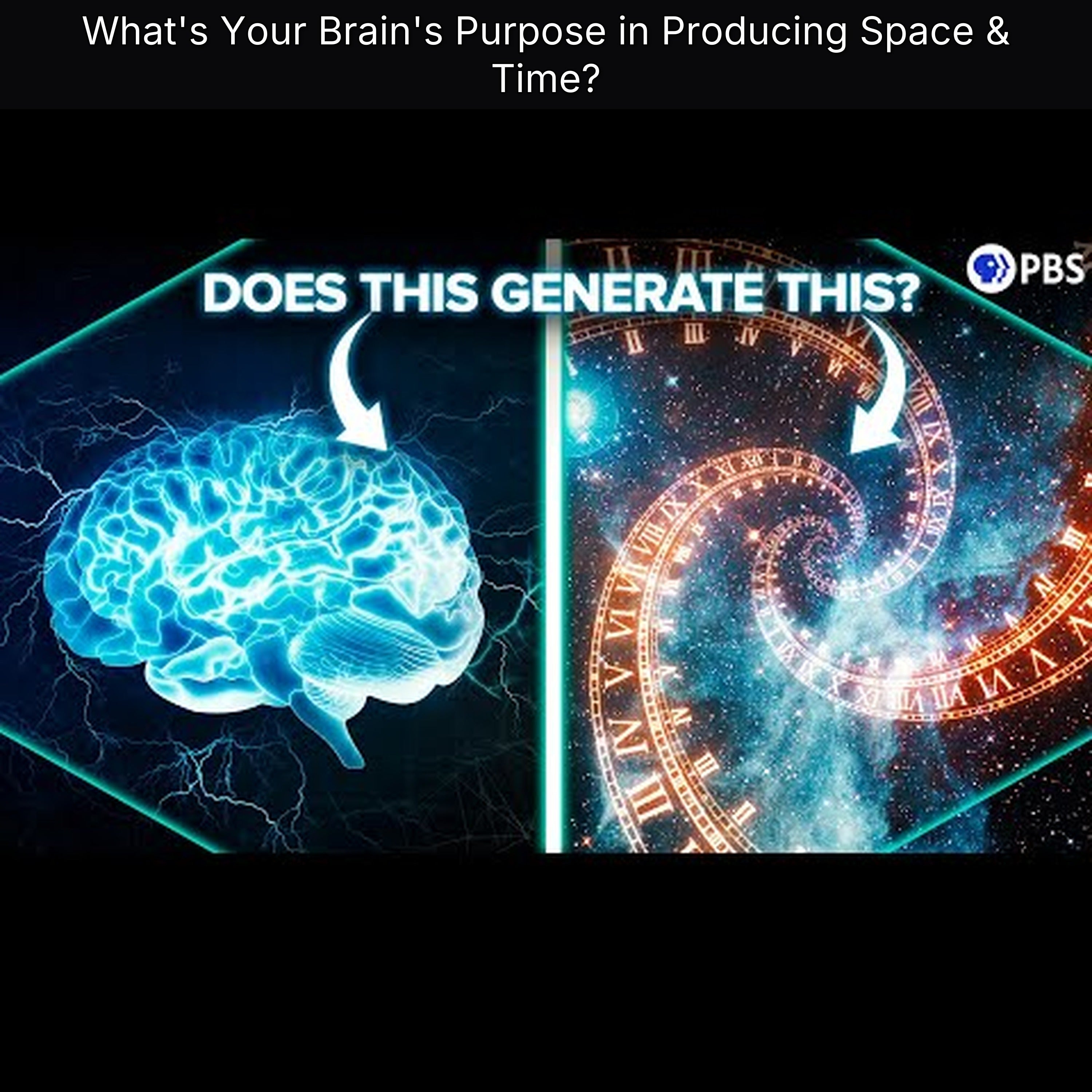
PBS Member Stations rely on viewers like you. To support your local station, go to:http://to.pbs.org/DonateSPACE Sign Up on Patreon to get access to the Space Time Discord! Physics is the business of figuring out the structure of the world. So are our brains. But sometimes physics comes to conclusions that are in direct conflict with concepts fundamental to our minds, such as the realness of space and time. How do we tell who’s correct? Are time and space objective realities or human-invented concepts? Episode Companion Playlist Check out the Space Time Merch Store Search the Entire Space Time Library Here: https://search.pbsspacetime.com/ Hosted by Matt O'Dowd Written by Bahar Gholipour & Matt O'Dowd Post Production by Leonardo Scholzer, Yago Ballarini, Pedro Osinski, Caique Oliveira, Adriano Leal & Stephanie Faria Directed by Andrew Kornhaber Associate Producer: Bahar Gholipour Executive Producers: Eric Brown & Andrew Kornhaber Executive in Charge for PBS: Maribel Lopez Director of P
AI is here. Now what? Everyone’s talking about artificial intelligence and machine learning. There are lots of names thrown around - OpenAI’s ChatGPT and DALLE-2, Google’s Bard, Meta’s LLaMa 2, Midjourney, AlphaFold… Right now, we’re in this weird moment where lots of smart people agree we’re on the cusp of a truly world-changing technology. But some seem to be saying it's going to lead to human extinction while others are saying it’s “more profound than fire.” But it all feels so VAGUE. I want to know: How specifically would AI kill me? Or totally transform my life for the better? In this video, that’s what I’m going to try to learn. We dive into what the most extreme bad and good AI futures actually look like, so that you and I can get ready. And more importantly, so we can make sure that we get our real future RIGHT. Chapters: 00:00 Why is AI so confusing? 1:13 What is AI? 2:37 Why is everyone talking about AI now? 5:12 Why is AI dangerous? 6:22 How would AI kill me? 8:08 Should we
This is a Grave Talks CLASSIC EPISODE! Preserving history is one thing. Preserving it while uncovering ghostly activity is something else entirely. Saving the Old Properties is a nonprofit dedicated to rescuing endangered historic buildings across Indiana. Founded by Richard Allen and Dann Allen, the organization restores architectural treasures that might otherwise be lost to time. But as walls are opened and floors are lifted, something else often emerges—stories, energy, and sometimes spirits that never left. Joining us are Richard Allen, General Manager Kate Thornberg, and Historian Ted Martin, who share what it’s like to breathe life back into centuries-old structures—while encountering unexplained phenomena within their walls. From shadow figures and strange sounds to the emotional weight that lingers in historic spaces, this conversation explores where preservation meets the paranormal—and how history and hauntings often occupy the same foundation. For more information on Saving
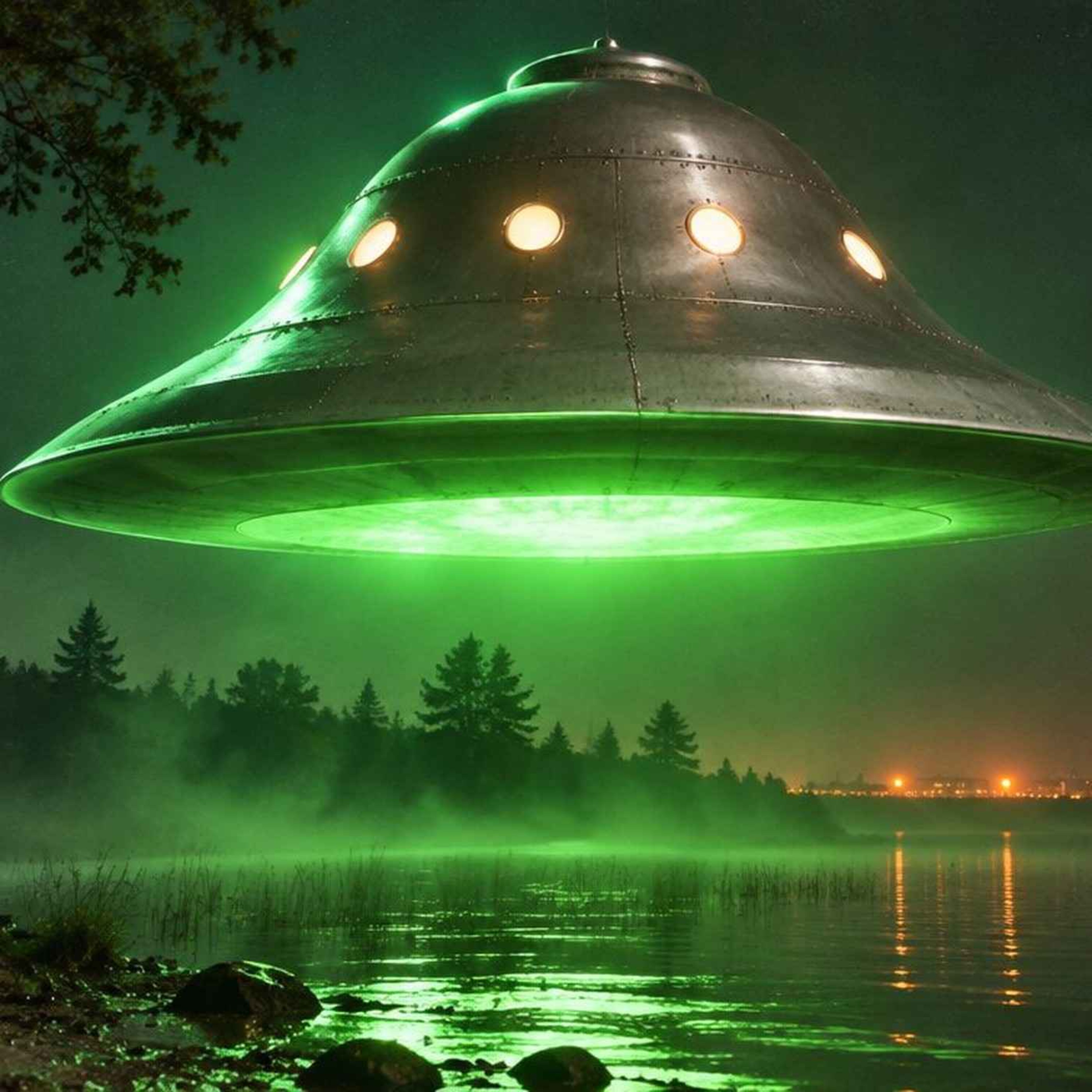
In today's brief: Lake Erie, 1957: a newly released Air Force report says two boys saw a humming, bell-shaped craft near the Enrico Fermi Atomic Plant. Skinwalker Ranch: owner Brandon Fugal calls the new files landmark and recalls a daylight saucer over the mesa. Warship footage: a 20-second 2020 infrared clip shows a light crossing a US Navy ship in the Middle East, with no Pentagon assessment. Martha's Vineyard, 1957: a spiked, nickel-coloured object that the Air Force put down to a radar-reflector balloon. Loch Ness: reported sightings jump to 15 this year, up from six in 2025. The Book of Miracles: a 16th-century manuscript of comets, blood rain and multiple suns heads to auction at Christie's. Quick hits: a 1952 file blames the saucer wave on temperature inversions; more Pentagon UFO files are on the way. Every story and source: https://believepod.com/ufo-paranormal-news-22-november-2026/ New episodes every morning. Keep your eyes on the sky. Sources: FOX 2 Detroit: https://www.fo
We encourage you to check out It Turns Out, a podcast hosted by award-winning journalist Kara Miller that explores surprising research and the big questions behind how our world really works. We hope you enjoy it as much as we do!
Cases of Lyme disease have increased year by year due to climate change and expanding tick habitats. Unfortunately, this also means an increase in a condition known as post-treatment Lyme disease, where the illness persists after the initial infection is gone. Not a lot is known about post-treatment Lyme, but there is headway being made on how to treat it. To discuss his work in the field, host Dr. Samantha Yammine speaks with Dr. John Aucott, the director of the Johns Hopkins Lyme Disease Research Center. Before that, Sam looks into a study that explores a unique way of treating cancer in a hard-to-reach part of the eye. Later, she explores new research explaining why Mercury is much smaller than previously thought and why it’s still shrinking. Link to Show Notes HERE (https://docs.google.com/document/d/16JMsjmwjTEWYzffBhgSZQcZelwrLmAWlrl_LM9wJCHI/edit?usp=sharing) Still curious? Terms apply. Hosted on Acast.
For millenia, curious minds have been trying to find a universal piece of evidence that tells us someone is lying. From polygraph tests to studies examining eye contact and body language - it seems like science has come close, but decoding lies from truth remains complicated. This episode, host Dr. Samantha Yammine welcomes Dr. Leanne ten Brinke who runs the Truth and Trust Lab and specializes in research about lies and deception. Sam also responds to a listener request to explain why this years’ El Niño is set to cause intense weather across the planet and she breaks down a new study showing how neuroplasticity leads to an increased level of eyesight for those who are profoundly deaf. Link to Show Notes HERE (https://docs.google.com/document/d/1BMoQRTyUFRi4YCa0HoPPaDracVLQhzmE9p18Z7PcDc0/edit?usp=sharing) Still curious? Terms apply. Hosted on Acast.