Native American history didn’t begin in 1492, and it didn’t end in 1900. It stretches back thousands and thousands of years and extends into the present – and the future – of the United States. In our first episode of Crash Course Native American History, we’ll explore why and how we plan to tell this history. Introduction: A Winter Count 00:00 Scope of the Series 0:53 Terminology 1:46 Settler-Colonialism 5:04 Race & Native Identity 7:28 Why Native American History Matters 9:16 Review & Credits 11:42 Sources: Want to know more about how this series was made? Learn more here: https://docs.google.com/document/d/17yp3u28s40TdjyrJniIf4U9YA8wPtvQ1g1B-HSHQ2Q4/edit?tab=t.0#heading=h.6vtzps565m2 (https://docs.google.com/document/d/17yp3u28s40TdjyrJniIf4U9YA8wPtvQ1g1B-HSHQ2Q4/edit?tab=t.0) *** Support us for $5/month on Patreon to keep Crash Course free for everyone forever! https://www.patreon.com/crashcourse Or support us directly: https://complexly.com/support Join our Crash Course email lis
In which John Green teaches you about China's Revolutions. While the rest of the world was off having a couple of World Wars, China was busily uprooting the dynastic system that had ruled there for millennia. Most revolutions have some degree of tumult associated with them, but China's 20th-century revolutions were REALLY disruptive. In 1911 and 1912, Chinese nationalists brought 3000 years of dynastic rule to an end. China plunged into chaos as warlords staked out regions of the country for themselves. The nationalists and communists joined forces briefly to bring the nation back together under the Chinese Republic, and then they quickly split and started fighting the Chinese Civil War. The fight between nationalists and communists went on for decades and was interrupted by an alliance to fight the invading Japanese during World War II. After World War II ended, the Chinese Civil War was back on. Mao and the communists were ultimately victorious, and Chiang Kai-Shek ended up in Taiwan
Most sex ed tells you how not to get pregnant… but what if you want to? In this episode of Crash Course Sex Ed, we’ll traverse the complex journey of getting pregnant, being pregnant, and going through childbirth—with all the strange symptoms and fascinating science that entails. Introduction: Want to Get Pregnant? 00:00 Getting Pregnant 0:39 Infertility & Pregnancy Loss 1:18 Being Pregnant 2:50 Giving Birth 5:45 The Fourth Trimester 8:18 Review & Credits 9:05 Sources: For more information on the topics in this episode, check out this resource from our partners at the Kinsey Institute (https://kinseyinstitute.org/): https://drive.google.com/drive/folders/1mSu0MerCwVUmNpya61JVIE4Wdsdkrgbk Read more about these topics here: Planned Parenthood - https://www.plannedparenthood.org/learn/pregnancy Cleveland Clinic - https://my.clevelandclinic.org/health/articles/9676-labor-delivery *** Support us for $5/month on Patreon to keep Crash Course free for everyone forever! https://www.patreon.com/
November 1, 2026 edition — delayed release. This recap covers October 26–30; its dated week-ahead items reflect preparation-time previews, not subsequently reported results. The FDA removed the cardiovascular disease, breast cancer and probable dementia risk statements from the boxed warnings on the Minivelle, Vivelle and Vivelle-Dot estradiol patches; Minivelle keeps its endometrial cancer box, and all three remain prescription products. Novartis took a $1.94 billion partial, noncash impairment on del-desiran after September's HARBOR miss, and Acumen ended sabirnetug after its Phase 2 Alzheimer's trial reduced plaque but missed on cognition and function. We also cover the FDA approval of Talzenna (talazoparib) plus Xtandi (enzalutamide), Lilly's retatrutide head-to-head against Ozempic (semaglutide), Genmab's petosemtamab survival result, Ilumya's psoriatic arthritis approval and Agios's new mitapivat decision date. Then the dated week ahead: Pfizer, Novo Nordisk, Recursion, SITC and
Our guest for this episode is Darryl Plummer, programmes director at Groundwork Five Counties. The charity works with local authorities and social housing providers across the East Midlands to help residents stay warm, healthy and safe in their homes through energy advice and support. Darryl discusses the growing pressures facing households as energy costs continue to rise and explains how many people are still being forced to choose between heating and other essential living costs. He shares insights from the charity's work visiting homes, supporting vulnerable residents and tackling issues such as fuel poverty, damp and mould. The conversation explores the charity's Green Doctor service, which provides free, tailored energy advice to households. Darryl explains how simple measures such as reviewing energy tariffs, improving heating controls, installing draught-proofing and switching to LED lighting can help residents reduce energy costs and improve comfort in their homes. He also hig
Hank introduces us to nonvascular plants - liverworts, hornworts & mosses - which have bizarre features, kooky habits, and strange sex lives. Nonvascular plants inherited their reproductive cycle from algae, but have perfected it to the point where it is now used by all plants in one way or another and has even left traces in our own reproductive systems. Table of Contents 1) Key Traits of Nonvascular Plants 01:42 2) 3 Phyla of Bryophytes 02:52 3) Alternation of Generations 04:33 a) Gametophyte Generation 05:04 b) Sporophyte Generation 05:25 c) In Vascular Plants 07:48 References: Crash Course is on Patreon! Want to find Crash Course elsewhere on the internet? Facebook - http://www.facebook.com/YouTubeCrashCourse Twitter - http://www.twitter.com/TheCrashCourse Instagram - https://www.instagram.com/thecrashcourse/ CC Kids: http://www.youtube.com/crashcoursekids
This week Craig looks at the expressed powers of the President of the United States - that is the ones you can find in the Constitution. From appointing judges and granting pardons, to vetoing laws and acting as the nation’s chief diplomat on foreign policy, the Commander in Chief is a pretty powerful person, but actually not as powerful as you might think. The Constitution also limits presidential powers to maintain balance among the three branches of government. Next week we'll talk about the President's powers NOT mentioned in the Constitution - implied powers. Support is provided by Voqal: http://www.voqal.org (http://www.voqal.org/) This episode is sponsored by Squarespace: http://www.squarespace.com/crashcourse Chapters: Introduction: Presidential Power 00:00 Qualifications to become President 1:41 Presidential powers 2:33 Commander-in-Chief 3:26 Diplomatic powers of the President 4:11 State of the Union 4:38 Other formal powers of the President 5:03 Credits 5:56 Crash Course is
What happens when the cameras stop rolling and real life keeps going? In this episode of Get Obsessed, Julie Lokun and Mika Altidor sit down with David Toborowsky and Annie Suwan of TLC’s 90 Day Fiancé for an honest conversation about love, resilience, and building a family far beyond the reality TV spotlight. Few couples in the franchise faced more doubt from the start. Between their age difference, money struggles, and cultural divide, viewers questioned whether their relationship would last. Years later, David and Annie are still together, still growing, and now raising their daughter in Thailand. David and Annie talk candidly about what it takes to make a cross-cultural marriage work, how they handle online criticism and public scrutiny, and why they chose to share their IVF journey with fans. They also reflect on becoming parents later in life, the lifestyle shift that came with leaving the United States, and what commitment really looks like through every season of a relationship
Dive into the stories of horror savant H.P. Lovecraft, whose fantastical tales, such as “The Call of Cthulhu,” created a new era of Gothic horror. Uploaded 23-04-19 -- Arcane books of forbidden lore, disturbing secrets in the family bloodline, and terrors so unspeakable the very thought of them might drive you mad. These have become standard elements in modern horror stories. But they were largely popularized by a single author: H.P. Lovecraft, whose name has become synonymous with the terror he inspired. Silvia Moreno-García dissects the “Lovecraftian” legacy. Lesson by Silvia Moreno-García, directed by Globizco Studios. Sign up for our newsletter: http://bit.ly/TEDEdNewsletter Support us on Patreon: http://bit.ly/TEDEdPatreon Find us on Twitter: http://bit.ly/TEDEdTwitter Peep us on Instagram: http://bit.ly/TEDEdInstagram View full lesson: https://ed.ted.com/lessons/titan-of-terror-the-dark-imagination-of-h-p-lovecraft-silvia-moreno-garcia Thank you so much to our patrons for your su
How do the amino acids in a soy patty and a beef patty compare once they reach your blood? In a trial he helped design, Dr. David Church matched a 4-ounce beef patty against a soy-based burger. He had to double the soy to roughly match the single beef patty in essential amino acids. The blood amino acid levels shocked him. David joins me at Protein Summit 3.0 to explain what happened. He also tells me why muscle protein breakdown is so much harder to measure than synthesis, and shares insights from his 21-day testosterone study, where the men on testosterone lost all of their weight as fat while the placebo group lost about half of theirs as fat-free mass. Thank you to our sponsors: Find Dr. David Church at: - UAMS profile: https://uams-triprofiles.uams.edu/profiles/profile/5838748 - Instagram: https://www.instagram.com/dr.myohead - LinkedIn: https://www.linkedin.com/in/david-church-6b0662280 - X (Twitter): https://x.com/DrMyohead Find Dr. Gabrielle Lyon at: - Instagram: https://www.in
What is tribal sovereignty? In this episode of Crash Course Native American History, we’ll explore how tribes can and can’t govern themselves, and why sovereignty isn’t something the U.S. ever gave to tribes — it’s an inherent right they already had. Introduction: The Chinook 00:00 What is tribal sovereignty? 0:42 Tribal sovereignty in the US 1:57 Plenary power 3:23 The benefits of tribal sovereignty 5:39 The limitations of tribal sovereignty 8:16 Review & Credits 9:59 Sources: Want to know more about how this series was made? Learn more here: https://docs.google.com/document/d/17yp3u28s40TdjyrJniIf4U9YA8wPtvQ1g1B-HSHQ2Q4/edit?tab=t.0#heading=h.6vtzps565m2 (https://docs.google.com/document/d/17yp3u28s40TdjyrJniIf4U9YA8wPtvQ1g1B-HSHQ2Q4/edit?tab=t.0) *** Support us for $5/month on Patreon to keep Crash Course free for everyone forever! https://www.patreon.com/crashcourse Or support us directly: https://complexly.com/support Join our Crash Course email list to get the latest news and hig
In which John Green teaches you about the war that was supposed to end all wars. Instead, it solved nothing and set the stage for the world to be back at war just a couple of decades later. As an added bonus, World War I changed the way people look at the world, and normalized cynicism and irony. John will teach you how the assassination of an Austrian Archduke kicked off a new kind of war that involved more nations and more people than any war that came before. New technology like machine guns, airplanes, tanks, and poison gas made killing more efficient than ever. Trench warfare and modern weapons led to battles in which tens of thousands of soldiers were killed in a day, with no ground gained for either side. World War I washed away the last vestiges of 19th-century Romanticism and paved the way for the 20th-century modernism that we all know and find to be cold and off-putting. While there may not be much upside to WWI, at least it inspired George M. Cohan to write the awesome song
In this episode of Crash Course, Hank introduces you to the complex history and terminology of Anatomy & Physiology. Pssst... we made flashcards to help you review the content in this episode! Find them on the free Crash Course App! Download it here for Apple Devices: https://apple.co/3d4eyZo Download it here for Android Devices: https://bit.ly/2SrDulJ Chapters: Introduction 00:00 History of Anatomy 2:34 Physiology: How Parts Function 3:48 Complementarity of Structure & Function 4:09 Hierarchy of Organization 4:20 Directional Terms 7:27 Review 10:24 Credits 10:59 Crash Course is on Patreon! Want to find Crash Course elsewhere on the internet? Facebook - http://www.facebook.com/YouTubeCrashCourse Twitter - http://www.twitter.com/TheCrashCourse Instagram - https://www.instagram.com/thecrashcourse/ CC Kids: http://www.youtube.com/crashcoursekids
Abortion is complicated. In this episode of Crash Course Sex Ed, we’ll cover what happens during abortions, why people get them, and what people actually think about the topic. Introduction: Abortion Is Complex 00:00 What Is Abortion? 0:28 Is Abortion Safe? 2:22 Who Gets Abortions? 2:49 Why Do People Get Abortions? 3:27 What Do People Think About Abortion? 6:12 Review & Credits 8:05 Sources: For more information on the topics in this episode, check out this resource from our partners at the Kinsey Institute (https://kinseyinstitute.org/): https://drive.google.com/drive/folders/1mSu0MerCwVUmNpya61JVIE4Wdsdkrgbk Read more about these topics here: Planned Parenthood - https://www.plannedparenthood.org/learn/abortion Cleveland Clinic - https://my.clevelandclinic.org/health/treatments/21899-medical-abortion Bedsider - https://www.bedsider.org/pregnancy_options/abortion *** Support us for $5/month on Patreon to keep Crash Course free for everyone forever! https://www.patreon.com/crashcourse
Hank veers away from human anatomy to teach us about the (mostly) single-celled organisms that make up two of the three taxonomic domains of life, and one of the four kingdoms: Archaea, Bacteria, and Protists. They are by far the most abundant organisms on Earth and are our oldest, oddest relatives. References: :http://www.ucmp.berkeley.edu/protista/basalprotists.html Table of Contents 1) Archaea 03:23 a) Methanogens 04:02 b) Extremophiles 04:24 2) Bacteria 05:24:2 3) Gram Positive 06:50 a) Proteobacteria 07:15 b) Cyanobacteria 07:30 c) Spirochetes 07:42 d) Chlamydias 07:52 4) Protists 08:12 a) Protozoa 09:03 b) Algae 09:54 c) Slime Molds 11:13 Crash Course is on Patreon! Want to find Crash Course elsewhere on the internet? Facebook - http://www.facebook.com/YouTubeCrashCourse Twitter - http://www.twitter.com/TheCrashCourse Instagram - https://www.instagram.com/thecrashcourse/ CC Kids: http://www.youtube.com/crashcoursekids
Christina grew up exploring the woods of North Carolina. Now living off Highway 11 in upstate South Carolina, she regularly sees wildlife around her home—but some of her experiences have been much harder to explain. In this episode, Christina recounts a missing dog, deer remains her dogs brought home, and two humanlike footprints she discovered and photographed in January. She describes finding more tracks in the red clay, setting up trail cameras, and noticing tree breaks pointing in different directions. Her account also includes the unsettling feeling of being watched, an alert puppy, and two incidents when something appeared to be thrown at her. For a time, the experiences kept her from venturing into the woods. Then there were the sounds: strange owl calls, a loud crack followed by a falling tree, and an unknown vocalization Christina describes as three different tones in one. Listen as Christina shares what she witnessed, what she heard, and the questions that remain about the wo
Cross-country skier Janine Shepherd hoped for an Olympic medal -- until she was hit by a truck during a training bike ride. She shares a powerful story about the human potential for recovery. Her message: you are not your body and giving up old dreams can allow new ones to soar. Talk by Janine Shepherd.
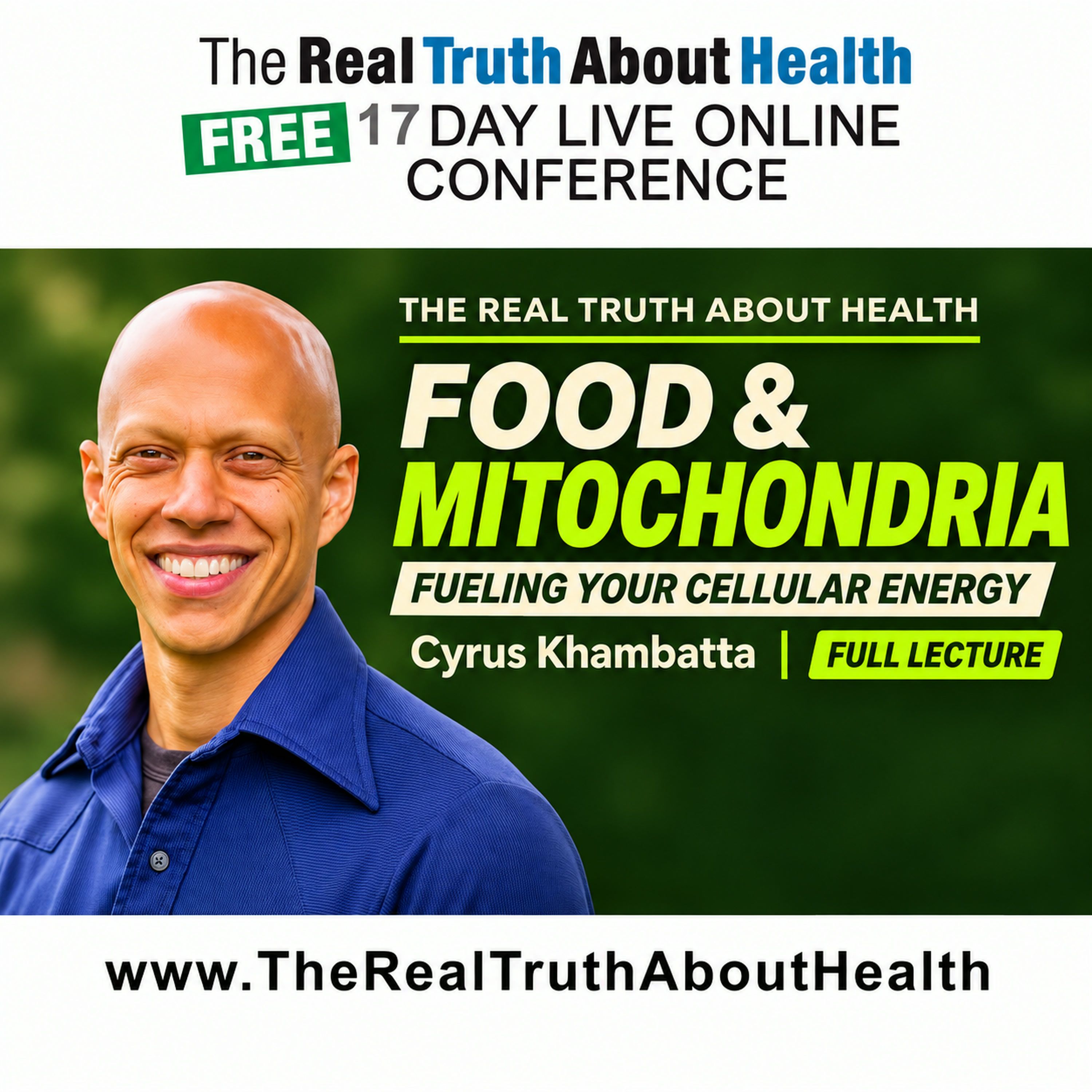
Foods to Make New Mitochondria Cyrus Khambatta, Ph.D., explains how food choices can support the creation of new mitochondria and improve metabolic health. Discover how plant-based nutrition, insulin sensitivity, and energy-producing cells work together to power the body and reduce chronic disease risk. #Mitochondria #MetabolicHealth #PlantBased
We take it for granted that society gets better at tackling infectious disease over time, but when you really think about it the progress we’ve made in the last century is pretty amazing. How does that much progress happen so quickly? That’s what we’ll set out to answer in this episode of Crash Course Outbreak Science as we look at the theory of epidemiological transition. This episode of Crash Course Outbreak Science was produced by Complexly in partnership with Operation Outbreak and the Sabeti Lab at the Broad Institute of MIT and Harvard—with generous support from the Gordon and Betty Moore Foundation. Sources: https://www.ncbi.nlm.nih.gov/pmc/articles/PMC2690264/#:~:text=The%20classical%20model%20describes%20the,modernization%20in%20most%20western%20European (https://www.ncbi.nlm.nih.gov/pmc/articles/PMC2690264/) *** Watch our videos and review your learning with the Crash Course App! Download here for Apple Devices: https://apple.co/3d4eyZo Download here for Android Devices: http
Consent seems as simple as “yes” or “no” — but is it? In this episode of Crash Course Sex Ed, we’ll explore how affirmative consent reframed the conversation, why context matters, and the importance of checking in with your partner — and yourself! Introduction: Just a Yes or No? 00:00 No Means No 0:30 Affirmative Consent 1:25 Sexual Scripts 4:22 Alcohol & Consent 5:54 Consent is Sexy 7:21 Review & Credits 8:33 Sources: For more information on the topics in this episode, check out this resource from our partners at the Kinsey Institute (https://kinseyinstitute.org/): https://drive.google.com/drive/folders/1mSu0MerCwVUmNpya61JVIE4Wdsdkrgbk Read more about these topics here: Planned Parenthood - https://www.plannedparenthood.org/learn/relationships/sexual-consent Bedsider - https://www.bedsider.org/sex-and-relationships/boundaries-and-consent *** Support us for $5/month on Patreon to keep Crash Course free for everyone forever! https://www.patreon.com/crashcourse Or support us directly: h
Find out how smallpox became the first (and only) disease to be permanently eradicated through the use of vaccination and isolation to prevent transmission. Uploaded 10-03-15 -- For most of human history, we have sought to treat and cure diseases. But only in recent decades did it become possible to ensure that a particular disease never threatens humanity again. Julie Garon and Walter A. Orenstein detail how the story of smallpox – the first and only disease to be permanently eliminated – shows how disease eradication can happen, and why it is so difficult to achieve. Lesson by Julie Garon and Walter A. Orenstein, animation by TOGETHER. Sign up for our newsletter: http://bit.ly/TEDEdNewsletter Support us on Patreon: http://bit.ly/TEDEdPatreon Find us on Twitter: http://bit.ly/TEDEdTwitter Peep us on Instagram: http://bit.ly/TEDEdInstagram View full lesson: http://ed.ted.com/lessons/learning-from-smallpox-how-to-eradicate-a-disease-julie-garon-and-walter-a-orenstein
In which John Green teaches you about European Imperialism in the 19th century. European powers started to create colonial empires way back in the 16th century, but businesses really took off in the 19th century, especially in Asia and Africa. During the 1800s, European powers carved out spheres of influence in China, India, and pretty much all of Africa. While all of the major (and some minor) powers in Europe participated in this new imperialism, England was by far the most dominant, once able to claim that the "sun never set on the British Empire." Also, they went to war for the right to continue to sell opium to the people of China. Twice. John will teach you how these empires managed to leverage the advances of the Industrial Revolution to build vast, wealth-generating empires. As it turns out, improved medicine, steam engines, and better guns were crucial in the 19th-century conquests. Also, the willingness to exploit and abuse the people and resources of so-called "primitive" na
From sports mascots to “the First Thanksgiving,” bland representations of Native Americans are everywhere. In this episode of Crash Course Native American History, we’ll tackle common myths and misconceptions about Native people and uncover the truth behind tribal casinos, government handouts, and more. Introduction: Super Bowl XXVI 00:00 "The First Thanksgiving" 0:38 Westerns & Native Invisibility 4:20 Native Mascots 5:28 Casinos & Government Handouts 8:26 Review & Credits 11:13 Sources: Want to know more about how this series was made? Learn more here: https://docs.google.com/document/d/17yp3u28s40TdjyrJniIf4U9YA8wPtvQ1g1B-HSHQ2Q4/edit?tab=t.0#heading=h.6vtzps565m2 (https://docs.google.com/document/d/17yp3u28s40TdjyrJniIf4U9YA8wPtvQ1g1B-HSHQ2Q4/edit?tab=t.0) *** Support us for $5/month on Patreon to keep Crash Course free for everyone forever! https://www.patreon.com/crashcourse Or support us directly: https://complexly.com/support Join our Crash Course email list to get the latest n
Microplastics are everywhere. Tiny fragments we can’t see, taste, or smell and yet they’ve been found in our water, our food, and even our brains. Emerging research has linked microplastic exposure to hormone disruption, chronic inflammation, and a higher risk of cardiovascular disease. But with plastics embedded in almost every aspect of modern life, is there anything we can realistically do to reduce our exposure? Today, Dr Sabine Donnai and Dr Federica Amati separate the fear from the facts. They explain where our biggest sources of microplastics come from, which everyday habits may be increasing our risk, and the simple, practical swaps that can meaningfully reduce the amount entering our bodies. Get our brand-new app and Gut Health Test designed by world-leading gut health and nutrition scientists to build healthy eating habits Join ZOE (https://zoe.com/buymembership) Follow ZOE onInstagram (https://www.instagram.com/zoe/). Books by our ZOE Scientists The Food For Life Cookbook (h