Today we’re learning about Marsha P. Johnson and the Stonewall rebellion. Serving as a pivotal moment in the modern Gay Rights Movement, Stonewall began on June 28th, 1969, and lasted six days in New York City’s Greenwich Village. And even though the rebellion lasted less than a week, the reverberations lasted for generations. Out of Stonewall emerged the establishment of one of the first gay pride parades, increased activism and organizing on behalf of gay people, and greater attention paid to the rights and needs of LGBTQ+ communities. Clint's book, How the Word is Passed is available now! https://bookshop.org/books/how-the-word-is-passed-a-reckoning-with-the-history-of-slavery-across-america/9780316492935 Sources and References David Carter, Stonewall: The Riots That Sparked the Gay Revolution (New York: St. Martin’s, 2004). Martin Duberman, Stonewall: The Definitive Story of the LGBTQ Rights Uprising that Changed America (New York City: Plume, 2019). Crash Course is on Patreon! Tha
In the penultimate episode of Crash Course Anatomy & Physiology, Hank explains your adaptive immune system. The adaptive immune system's humoral response guards extracellular terrain against pathogens. Hank also explains B cells, antibodies, and how vaccines work. Pssst... we made flashcards to help you review the content in this episode! Find them on the free Crash Course App! Download it here for Apple Devices: https://apple.co/3d4eyZo Download it here for Android Devices: https://bit.ly/2SrDulJ Chapters: Introduction: Adaptive Immune Responses 00:00 How B Cells Identify Antigens 2:14 B Cells Become Effector Cells & Memory Cells 4:05 How Antibodies Fight Antigens 5:22 Active and Passive Humoral Immunity 6:03 How Vaccines Work 6:27 Review 8:30 *** Crash Course is on Patreon! Thanks to the following Patrons for their generous monthly contributions that help keep Crash Course free for everyone forever: Mark, Eric Kitchen, Jessica Wode, Jeffrey Thompson, Steve Marshall, Moritz Schmidt, R
In this episode of Crash Course Psychology, Hank takes a look at WAIS and WISC intelligence tests and how bias can really skew both results and the usefulness of those results. Want more videos about psychology? Check out our sister channel SciShow Psych at https://www.youtube.com/scishowpsych! -- Chapters: Introduction 00:00 WAIS & WISC Tests 1:09 Standardized Tests 2:08 Reliability & Validity 3:46 Twin & Adoption Studies - Genetics of Intelligence 4:40 Environmental Influences on Intelligence 6:55 Testing Bias 8:05 Stereotype Threat 8:57 Review & Credits 10:16 -- Crash Course is on Patreon! Want to find Crash Course elsewhere on the internet? Facebook - http://www.facebook.com/YouTubeCrashCourse Twitter - http://www.twitter.com/TheCrashCourse Instagram - https://www.instagram.com/thecrashcourse/ CC Kids: http://www.youtube.com/crashcoursekids
🇺🇸 THE 2026 ELECTION SHOWDOWN — WILL THE RESULTS STAND? Michael Jaco is back with a powerful solo episode of Unleashing Intuition, examining the future of America's elections, global political tensions, financial uncertainty, and the importance of protecting your health and wealth! WILL THE 2026 MIDTERM ELECTIONS BE OVERTURNED? Michael delivers his perspective on allegations of election manipulation, voting machine vulnerabilities, and the possibility of another election conducted without electronic voting machines. He discusses President Trump's warnings about election integrity, potential investigations, and why he anticipates major developments surrounding the certification process. ⚡ A NEW ELECTION. A NEW SYSTEM. A POLITICAL SHOWDOWN. Michael also explores the history of Islamic expansion, contemporary religious and political tensions, immigration policy, and his concerns about the changing balance of power around the world. GOLD, SILVER & THE FUTURE OF MONEY! With economic uncer
Dig into the history of Election Day in the United States, and how voting on Tuesdays affects voter turnout. -- Since 1845, Americans have been voting on Tuesdays — but why? In this humorous talk, Jacob Soboroff shares the history of Election Day and shows how voting on a Tuesday affects voter turnout. Lesson by Jacob Soboroff. Support Our Non-Profit Mission ---------------------------------------------- Support us on Patreon: http://bit.ly/TEDEdPatreon Check out our merch: http://bit.ly/TEDEDShop ---------------------------------------------- Connect With Us ---------------------------------------------- Sign up for our newsletter: http://bit.ly/TEDEdNewsletter Find us on Twitter: http://bit.ly/TEDEdTwitter Peep us on Instagram: http://bit.ly/TEDEdInstagram ---------------------------------------------- Keep Learning ---------------------------------------------- View full lesson: http://ed.ted.com/lessons/why-do-americans-vote-on-tuesdays Dig deeper with additional resources: https:/
BONUS STORY STARTS AT 16:56 Watch here (with no ads) or on YouTube: https://youtu.be/L1JF3JJHIbU Voyager 1 is almost one light day away, blue Origin is making its main engine lighter, good news and bad news for Mars Dust. And on Space Bites+, measuring the cosmic web. Vote for the best story here: https://www.youtube.com/@frasercain/posts 00:00 Intro 00:15 One Light Day Away https://www.universetoday.com/articles/big-bang-fix-puts-voyager-across-the-one-light-day-mark 02:40 Our Sun’s Undiscovered Stellar Nemesis https://www.universetoday.com/articles/our-suns-undiscovered-stellar-nemesis-is-still-out-there-says-physicist 05:29 Big Updates for Big Blue https://www.blueorigin.com/news/new-glenn-expands-reach-with-gs3 https://www.blueorigin.com/news/introducing-northstar-new-booster-engine 07:19 Magma Chambers on Mars https://www.universetoday.com/articles/mars-molten-heart-is-long-gone-but-some-magma-chambers-may-persist 09:50 Perseverance Experiment https://www.universetoday.com/article
In which Stan Muller subs for John Green and teaches you about energy and humanity. Today we discuss the ideas put forth by Alfred Crosby in his book, Children of the Sun. Historically, almost all of the energy that humans use has been directly or indirectly generated by the sun, whether that be food energy from plants, wind energy, direct solar energy, or fossil fuels. Stan looks into these different sources and talks about how humanity will continue to use energy in the future as populations grow and energy resources become more scarce. Reference: Children of the Sun by Alfred Crosby: https://bit.ly/3jIbdEU Crash Course is on Patreon! Want to find Crash Course elsewhere on the internet? Facebook - http://www.facebook.com/YouTubeCrashCourse Twitter - http://www.twitter.com/TheCrashCourse Instagram - https://www.instagram.com/thecrashcourse/ CC Kids: http://www.youtube.com/crashcoursekids
⚡ CRAZY TIMES CALL FOR A STRONG MIND — THE MITOCHONDRIA CONNECTION! Michael Jaco welcomes Patty Greer and Penny Kelly for a fascinating conversation about brain health, cellular energy, mitochondria, and the importance of protecting our physical and mental well-being in an increasingly chaotic world! YOUR BRAIN NEEDS ENERGY — AND YOUR MITOCHONDRIA ARE AT THE CENTER OF IT! With stress, uncertainty, and constant distractions surrounding us, maintaining mental clarity, vitality, and a healthy body has never felt more important. Michael, Patty, and Penny explore the extraordinary role mitochondria play in cellular function, why the brain has such demanding energy needs, and how supporting cellular wellness may contribute to overall health. ⚡ THE POWER OF C60 EVO & ESS60! The conversation also explores C60 EVO's proprietary ESS60 carbon molecule, its antioxidant properties, and its formulation with extra virgin olive oil. Patty shares insights into C60 EVO, while Penny and Michael bring the
Organic chemistry is pretty much everywhere! In this episode of Crash Course Organic Chemistry, we’re talking about the amazing diversity among organic molecules. We’ll learn about the origins of organic chemistry, how to write Lewis structures, condensed structures, and skeletal formulas, and what gross organic compound the Romans used to dye their fabrics pretty colors. Episode Sources: Dean, J., Casselman, K. D., Wild Color, 1st ed.; Potter Craft, New York, 2010. Formula for indigo dyeing with urine. http://www.wildcolours.co.uk/html/urine_indigo_vat.html From Gunpowder to Teeth Whitener: The Science Behind Historic Uses of Urine https://www.smithsonianmag.com/science-nature/from-gunpowder-to-teeth-whitener-the-science-behind-historic-uses-of-urine-442390/ Tie-Dye Instructions. https://www.dharmatrading.com/techniques/tiedye/tie-dye-instructions.html, last accessed 12/12/2019. (Retinal) Clayden, J., Greeves, N., Warren, S., & Wothers, P. Organic Chemistry. New York 2001. Oxford Univ
Today, we are going to begin our discussion on the determinants of health which are all of the conditions we are born, live, and work in that have an influence on our overall wellbeing. Now these determinants can span everything from your education level to income level to genetic code, so today we're just going to focus on the biological factors like our age, genes, and sex, and take a closer look at their impacts. Check out our shared playlist with APHA: https://www.youtube.com/playlist?list=PLDjqc55aK3kywF2dd97_Jh5iP0d2ARhdo Vanessa’s channel: https://www.youtube.com/braincraft Sources: https://docs.google.com/document/d/1OHJiQ1njj5jWJC1YLDBzQgKC1QfnVgqJbbpK6qs7ekA/edit?usp=sharing Chapters: Introduction: Biological Determinants 00:00 Behavioral & Biomedical Approach 01:27 Social Approach 02:44 Determinants of Health 04:11 Biological Determinants 05:42 Epigenetics 09:16 Review & Credits 11:33 *** Crash Course is on Patreon! Thanks to the following patrons for their generous monthly
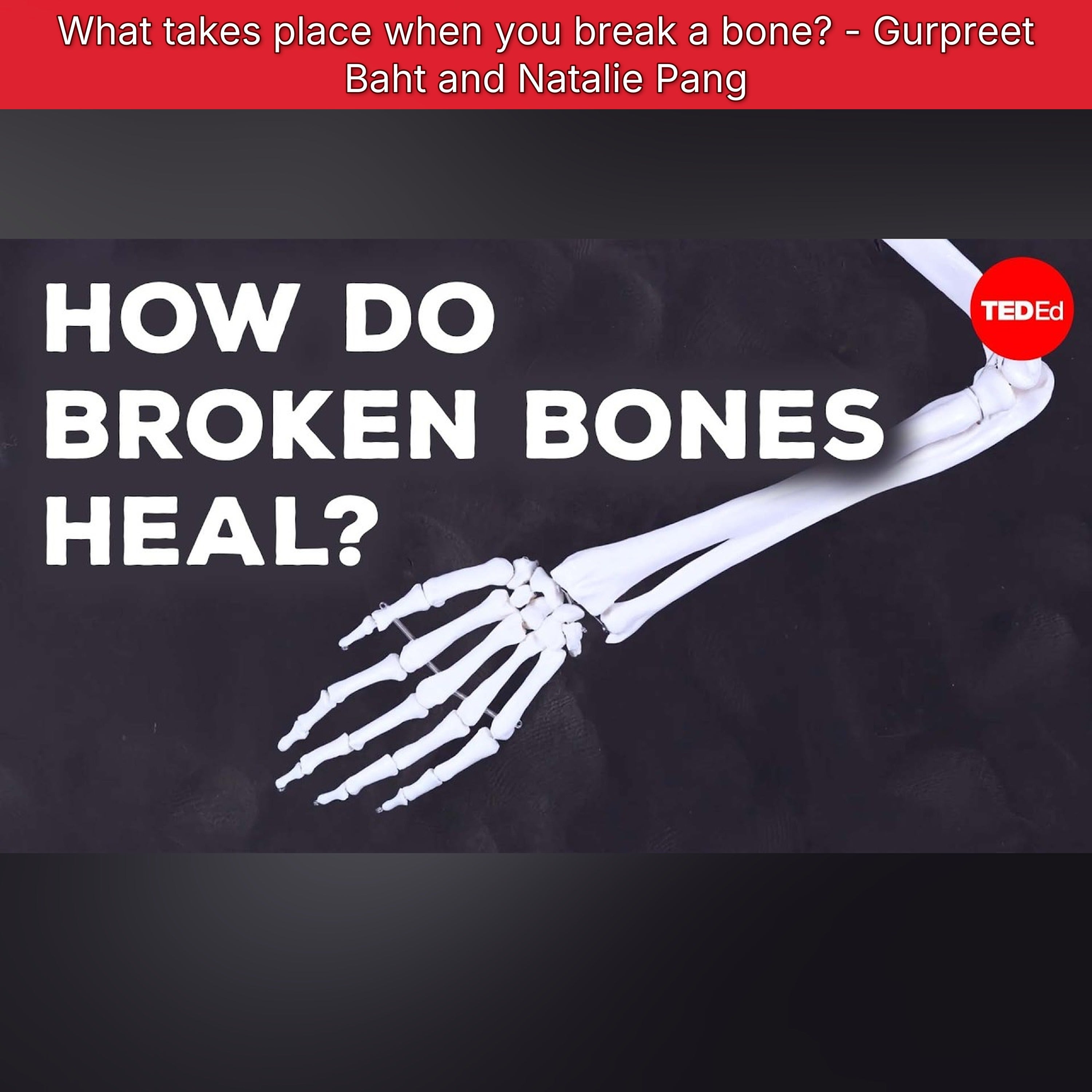
Dig into the body's biological process that heals a broken bone, and find out how different kinds of fractures are mended. -- The human body’s 206 bones come in many shapes and sizes: short bones, long bones, flat bones, irregular bones. Roughly 50% of people will break a bone at some point in their lives. But whether the cause is as mundane as a slip on the ice or as dramatic as a tightrope-walking accident, how do our broken bones heal? Gurpreet Baht and Natalie Pang dig into the incredible biological process. Lesson by Gurpreet Baht and Natalie Pang, directed by Eliška Oz, Lee Oz, Oz Animation. Support Our Non-Profit Mission ---------------------------------------------- Support us on Patreon: http://bit.ly/TEDEdPatreon Check out our merch: http://bit.ly/TEDEDShop ---------------------------------------------- Connect With Us ---------------------------------------------- Sign up for our newsletter: http://bit.ly/TEDEdNewsletter Find us on Twitter: http://bit.ly/TEDEdTwitter Peep us
Megan Baer is a lifelong Christian with no occult past, no dabbling, nothing weird in her history. Then she gets married at nineteen, comes home from the honeymoon, and on the first morning alone in the apartment, the lights will not turn on, and an ancient, hateful voice begins speaking over her in a language she doesn't know. For the next seventeen years, she is pulled out of her body, levitated, thrown against walls, and choked by something she can feel but rarely sees, an entity that behaves as though she belongs to it. The attacks come only when her husband leaves for work, and no one at her church will even return the call. The answer, when it finally comes, runs back four generations to a 33rd-degree Freemason great-grandfather, the lodge's oaths and dedications, and a ceremony that hands a child over to an entity as a spirit spouse. Megan walks Luke and Nate through the whole seventeen-year ordeal, the ancestral prayers that began to break it, the night it came for her daughter
You're already learning on YouTube — why not get college credit for it? https://link.gostudyhall.com/my1 So, you did it! You're done and now you need to look beyond college. What's next? How do you know what's next? Do you want to go to grad school? To work? In this episode, Erica talks about how to think about what comes after college. *** Now you can take top-tier college courses with Study Hall! Study Hall videos are available to watch at no cost, and first-year courses are $25 to sign-up and begin coursework. Sign up at https://link.gostudyhall.com/my1 Follow Study Hall on socials! Twitter: https://twitter.com/gostudyhall Instagram: https://Instagram.com/GoStudyHall (https://instagram.com/GoStudyHall) Facebook: https://www.facebook.com/GoStudyHall Learn more about Federal Student Aid: https://studentaid.gov/h/understand-aid _______________________________________________ Chapters: 0:00 - Introduction 0:36 - Planning Your Transition 5:50 - Managing Priorities 8:59 - Conclusion _____
LAHAINA: THREE YEARS LATER — WHAT REALLY HAPPENED IN MAUI? Three years after the devastating Lahaina fires, the questions surrounding the destruction, the future of Maui, and the people who lost everything remain at the center of a growing controversy. Michael Jaco welcomes Michelle Melendez and Elle Cochran for a powerful conversation examining the Lahaina disaster, allegations of directed-energy weapons (DEWs), weather warfare theories, disputed political outcomes in Hawaii, and the battle over Maui's land and future. Elle Cochran, a lifelong Lahaina resident, former Maui County Council member, and retired Hawaii State House representative, brings a firsthand perspective on the community, its history, and the ongoing struggle to preserve what remains. As founder of the Save Honolulu Coalition and caretaker of Hawaiian monarchy graves in Lahaina, Elle is committed to protecting Hawaii's heritage and perpetuating the Spirit of Aloha for future generations. Michelle Melendez, freedom ac
This week Jacob and Adriene teach you about marginal analysis, which you're using RIGHT NOW! The video is coming from inside the house! Or something. You'll learn how marginal analysis guides the decision making if cities, nations, companies, and amusement park enthusiasts. We'll also look at the idea of elasticity, and what people are willing to pay for certain stuff based on the supply. Why is a Van Gogh worth more than an OBEY poster? (hint: it's because they're still cranking out the OBEY posters, and Vincent is dead) All this and more on Crash Course Economics! *** Crash Course is on Patreon! Thanks to the following Patrons for their generous monthly contributions that help keep Crash Course free for everyone forever: Mark, Eric Kitchen, Jessica Wode, Jeffrey Thompson, Steve Marshall, Moritz Schmidt, Robert Kunz, Tim Curwick, Jason A Saslow, SR Foxley, Elliot Beter, Jacob Ash, Christian, Jan Schmid, Jirat, Christy Huddleston, Daniel Baulig, Chris Peters, Anna-Ester Volozh, Ian Dun
In this episode of Crash Course Psychology, Hank takes a look at how the treatment for psychological disorders has changed over the last hundred years and who is responsible for getting us on the path to getting us here. Want more videos about psychology? Check out our sister channel SciShow Psych at https://www.youtube.com/scishowpsych -- Chapters: Asylums 00:00 David Rosenhan's Pseudopatient Experiments 0:43 How do we classify psychological disorders? 2:29 Psychological Disorders 3:26 Deviant Thoughts & Behaviors 4:06 Distress & Dysfunction 4:53 Medical Model of Psychological Disorder 5:20 Biopsychological Approach to Psychological Disorders 6:12 The DSM-5 7:09 Review & Credits 9:25 -- Crash Course is on Patreon! Want to find Crash Course elsewhere on the internet? Facebook - http://www.facebook.com/YouTubeCrashCourse Twitter - http://www.twitter.com/TheCrashCourse Instagram - https://www.instagram.com/thecrashcourse/ CC Kids: http://www.youtube.com/crashcoursekids
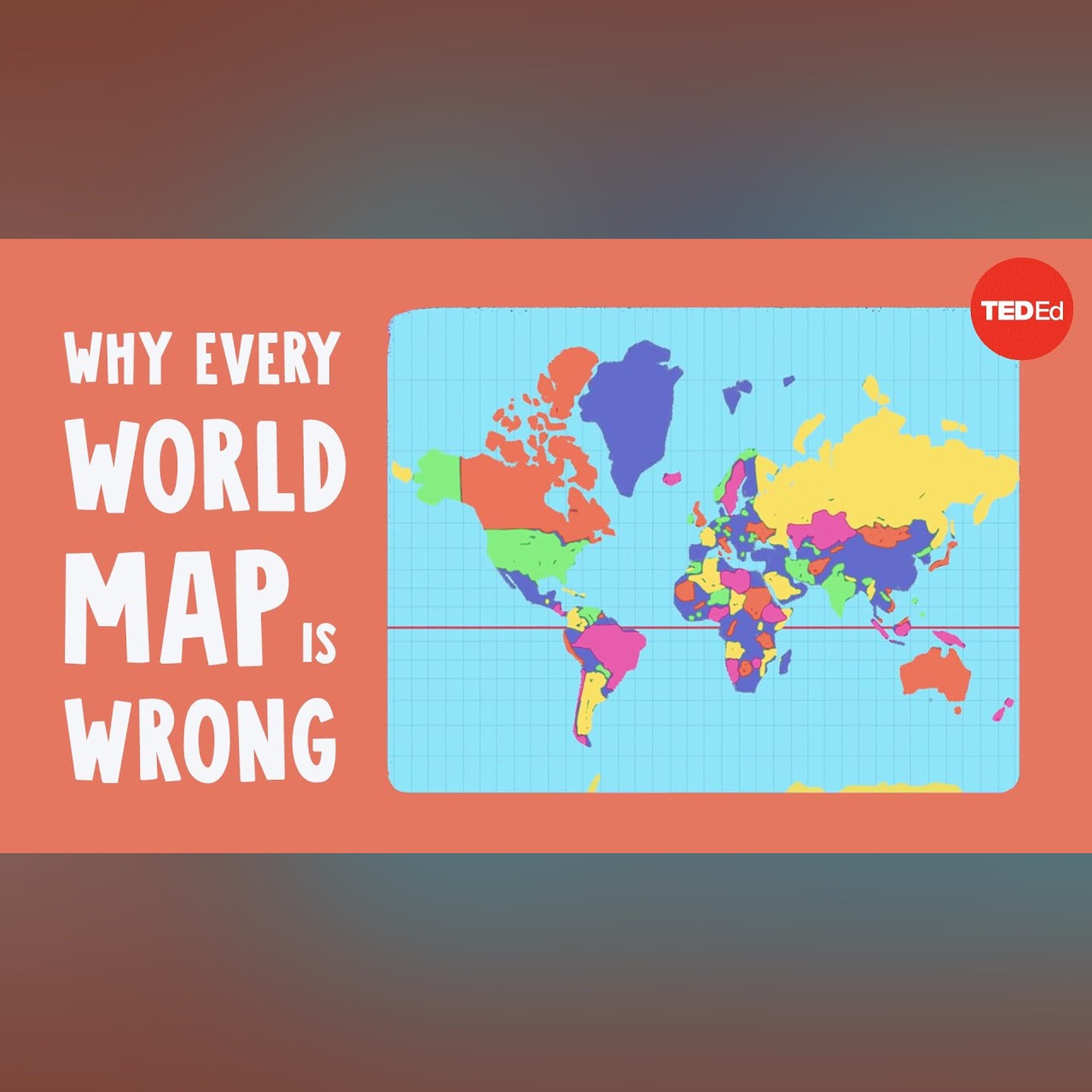
Dig into the inaccuracies of flat maps and how different map designs can shift our point of view. Uploaded 29-03-21 -- Fourteen Greenlands could fit in Africa— but you wouldn’t guess it from most maps of the world. The fact is, every world map humans have ever made is wrong. Actually, it’s impossible to make a flat map of the whole spherical world 100% right. So why do we bother with these inaccurate maps at all? Kayla Wolf explores how even the simplest changes in map design can shift our point of view. Lesson by Kayla Wolf, directed by Hernando Bahamon, Globizco Studios. Support Our Non-Profit Mission ---------------------------------------------- Support us on Patreon: http://bit.ly/TEDEdPatreon Check out our merch: http://bit.ly/TEDEDShop ---------------------------------------------- Connect With Us ---------------------------------------------- Sign up for our newsletter: http://bit.ly/TEDEdNewsletter Find us on Twitter: http://bit.ly/TEDEdTwitter Peep us on Instagram: http://bit
In which John Green teaches you about disease and the effects that disease has had in human history. Disease has been with man since the beginning, and it has shaped the way humans operate in a lot of ways. John will teach you about the Black Death, the Great Dying, and the modern medical revolution that has changed the world. Crash Course is on Patreon! Want to find Crash Course elsewhere on the internet? Facebook - http://www.facebook.com/YouTubeCrashCourse Twitter - http://www.twitter.com/TheCrashCourse Instagram - https://www.instagram.com/thecrashcourse/ CC Kids: http://www.youtube.com/crashcoursekids
Practice more problem-solving at https://brilliant.org/TEDEd/ Uploaded 22-03-18 View full lesson: https://ed.ted.com/lessons/can-you-solve-the-buried-treasure-riddle-daniel-griller After a massive storm tears through the Hex Archipelago, you find five grizzled survivors in the water. As an act of gratitude for saving them, they reveal a secret – the island they were just on holds some buried treasure. But when the sailors try to describe the island, something seems off. Can you find the booty despite their strange instructions? Daniel Griller shows how. Lesson by Daniel Griller, animation by Patrick Smith. Thank you so much to our patrons for your support! Without you this video would not be possible! Cailin Ramsey, Seung Hoon Shin, John Saveland, Nicolle Fieldsend-Roxborough, Venkat Venkatakrishnan, Sandy Nasser, CG Nobles, Yoga Trapeze Wanderlust, Jaron Blackburn, Alejandro Cachoua, Thomas Mungavan, Elena Crescia, Edla Paniguel, Anna-Pitschna Kunz, Tim Armstrong, Alessandro , Erika B
Apple Devices: https://apps.apple.com/us/app/crash-course-watch-and-study/id1505594172 Android Devices: https://play.google.com/store/apps/details?id=com.complexly.thecrashcourse&hl=en_US (https://play.google.com/store/apps/details?hl=en_US&id=com.complexly.thecrashcourse) Today we're so excited to announce the free Crash Course App! (Available now for Apple and Android phones and tablets.) The app is a portal to find all of our thousands of videos and a platform to help you review what you've learned in those videos. At the heart of the app are decks which are essentially really beautiful flashcards that transform into multiple choice questions in quiz mode. The app currently supports decks for all episodes of Anatomy & Physiology, Chemistry, and Organic Chemistry, and we'll be continually adding more content. So please download the app and let us know what you think! Crash Course is on Patreon! Thanks to the following patrons for their generous monthly contributions that help keep Cr
You're already learning on YouTube — why not get college credit for it? https://link.gostudyhall.com/my1 If you've taken out student loans, graduation can start a ticking clock in terms of when your first payments will come due. So it's important to know how to navigate those loan payments and your own finances so you can make sure you're on the path to get your loans paid off and you don't have any negative effects on your finances and credit. *** Now you can take top-tier college courses with Study Hall! Study Hall videos are available to watch at no cost, and first-year courses are $25 to sign-up and begin coursework. Sign up at https://link.gostudyhall.com/my1 Follow Study Hall on socials! Twitter: https://twitter.com/gostudyhall Instagram: https://Instagram.com/GoStudyHall (https://instagram.com/GoStudyHall) Facebook: https://www.facebook.com/GoStudyHall Learn more about Federal Student Aid: https://studentaid.gov/h/understand-aid _______________________________________________ Ch
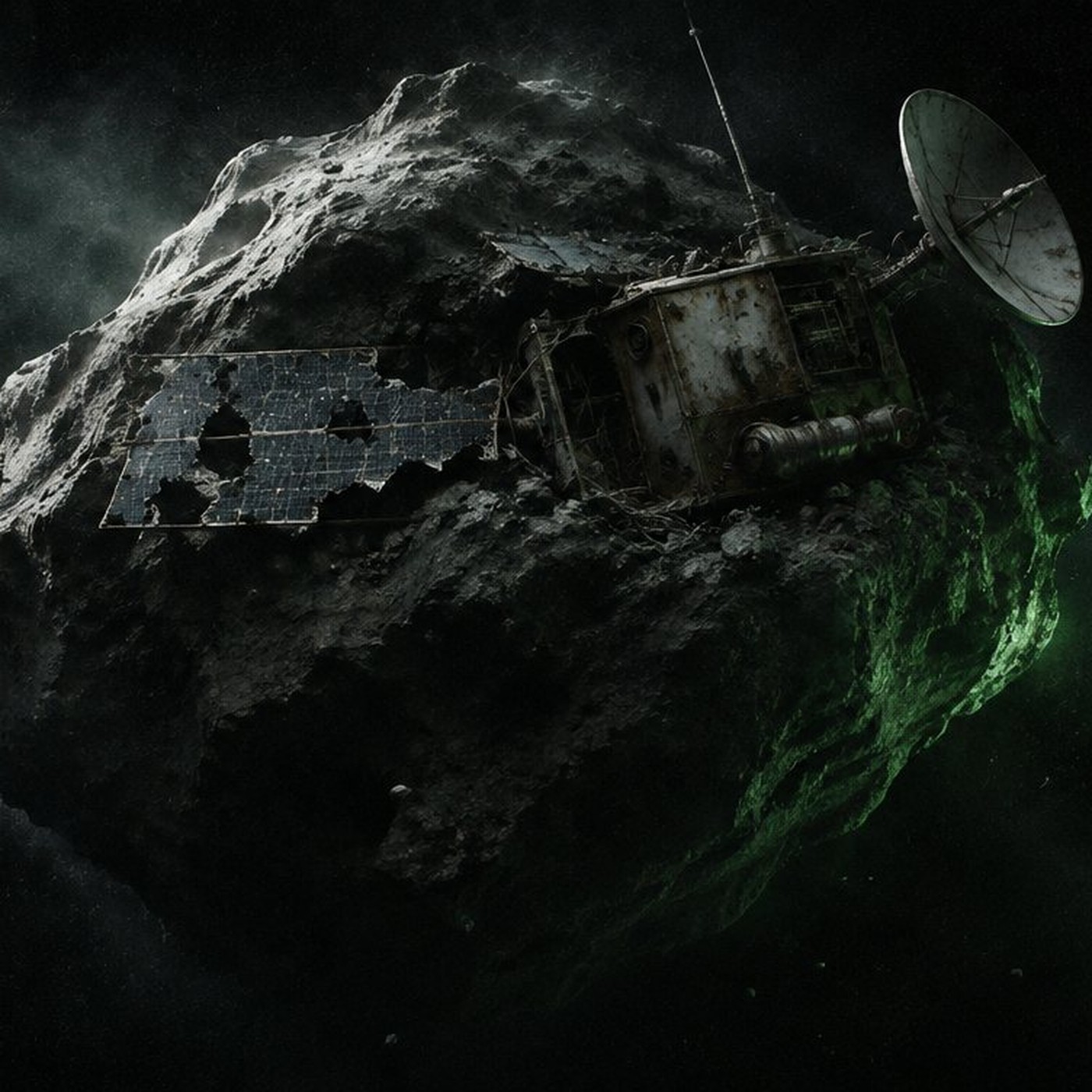
In today's brief: Asteroid or Soviet probe: Avi Loeb's team says odd-moving asteroid 1998 KY26 could be Phobos 1, a Soviet Mars probe lost in 1988, while NASA says it is just an asteroid. A disclosure Hail Mary: UFO researcher Jon Stewart predicts President Trump could reach for an alien announcement after the midterms, with no evidence offered. UAP observatory at Carl Sagan's old house: the Galileo Project plans passive radar and a metre-class telescope in Ithaca, New York. Haunted open house: a Chicago woman says doors shut and a sink ran by itself at a new build on an old church site. Gloucester Prison possession: a ghost hunter tells the BBC he still has nerve damage from a 2019 investigation. It's a stick: a Specsavers survey says most Brits have mistaken everyday things for monsters, ghosts or UFOs. Quick hits: alien technology fragments in Moon dust, an airline captain films repeated lights over Europe, and a UK ruling on paranormal council records. Every story and source: https
In this calm and sleepy facts episode, we set out on a slow and peaceful grand tour of our solar system, visiting each planet one by one as we drift outward from the Sun into the quiet dark. We begin with tiny Mercury, where a single day lasts longer than its entire year, and then glide past Venus, a world wrapped in thick golden clouds that spins so slowly backward the Sun rises in the west. From there we return to our own pale blue Earth before traveling on to Mars, home to a volcano nearly three times taller than Mount Everest and a canyon that could stretch across a continent. Along the way, we visit mighty Jupiter with its giant swirling storm and moons hiding oceans beneath their ice, pass gently by the glowing rings of Saturn, and meet Uranus, which rolls through space on its side, and deep blue Neptune, a world discovered through mathematics before anyone ever saw it. We end beyond Neptune with Pluto and the distant icy worlds of the Kuiper Belt, following the Voyager spacecraf
"You're a fishmonger!" By taking a closer look at Shakespeare's words--specifically his insults--we see why he is known as a master playwright whose works transcend time and appeal to audiences all over the world. Lesson by April Gudenrath, narration by Juliet Blake, animation by TED-Ed. View the full lesson: http://ed.ted.com/lessons/insults-by-shakespeare