In which John Green teaches you about various reform movements in the 19th century United States. From Utopian societies to the Second Great Awakening to the Abolition movement, American society was undergoing great changes in the first half of the 19th century. Attempts at idealized societies popped up (and universally failed) at Utopia, OH, New Harmony, IN, Modern Times, NY, and many other places around the country. These utopians had a problem with mainstream society, and their answer was to withdraw into their own little worlds. Others didn't like the society they saw and decided to try to change it. Relatively new Protestant denominations like the Methodists and Baptists reached out to "the unchurched" during the Second Great Awakening, and membership in evangelical sects of Christianity rose quickly. At the same time, Abolitionist societies were trying to free the slaves. Americans of the 19th century had looked at the world they were living in and decided to change it. Hey teach
Why are some countries rich? Why are some countries poor? In the end it comes down to Productivity. This week on Crash Course Econ, Adriene and Jacob investigate just why some economies are more productive than others, and what happens when an economy is mor productive. We'll look at how things like per capita GDP translate to the lifestyle of normal people. And, there's a mystery. Crash Course is on Patreon! Thanks to the following Patrons for their generous monthly contributions that help keep Crash Course free for everyone forever: Mark, Jan Schmid, Simun Niclasen, Robert Kunz, Daniel Baulig, Jason A Saslow, Eric Kitchen, Christian, Beatrice Jin, Anna-Ester Volozh, Eric Knight, Elliot Beter, Jeffrey Thompson, Ian Dundore, Stephen Lawless, Today I Found Out, James Craver, Jessica Wode, Sandra Aft, Jacob Ash, SR Foxley, Christy Huddleston, Steve Marshall, Chris Peters Want to find Crash Course elsewhere on the internet? Facebook - http://www.facebook.com/YouTubeCrashCourse Twitter - h
The fourth planet from the sun and the outermost of the terrestrial planets, Mars has long been a popular spot for missions and imagination. Phil walks you through the planet's topography, core, and features. We'll take a look back at Mars's past and makes predictions for its future, including the possibilities for human life. Check out the Crash Course Astronomy solar system poster here: http://store.dftba.com/products/crashcourse-astronomy-poster -- Chapters: Introduction: Mars 00:00 Mars is Red, Rusty, and Dusty 1:19 Surface Features of Mars 2:01 Mars's Polar Ice Caps 3:29 Martian Atmosphere 3:50 Martian Moons: Deimos and Phobos 5:09 Is There Water on Mars? 6:03 Was There Life on Mars? 7:09 Martian Missions 8:01 Review 9:26 -- PBS Digital Studios: http://youtube.com/pbsdigitalstudios Follow Phil on Twitter: https://twitter.com/badastronomer Crash Course is on Patreon! Want to find Crash Course elsewhere on the internet? Facebook - http://www.facebook.com/YouTubeCrashCourse Twitter -
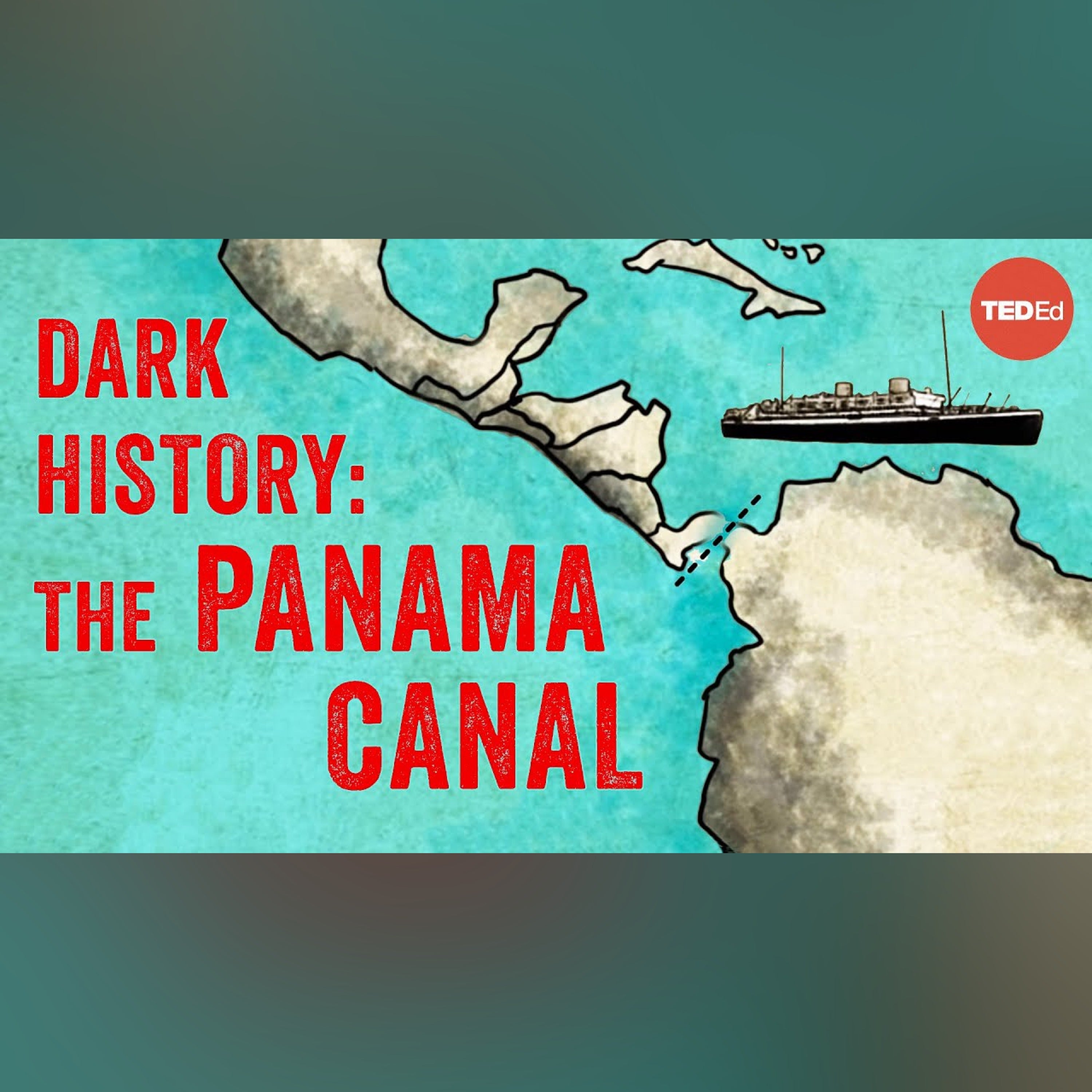
Discover what it took to build the Panama Canal, and how this colossal construction project changed the region. Uploaded 27-04-21 -- In the 19th century, the California gold rush brought thousands of settlers to America's west coast. But finding gold may have been easier than transporting it back east. The only hope for avoiding a grueling six month wagon journey was to travel the narrowest portion of the continent — the 48-kilometer Isthmus of Panama. Alex Gendler details the creation of the Panama Canal. Lesson by Alex Gendler, directed by Cabong Studios. Support Our Non-Profit Mission ---------------------------------------------- Support us on Patreon: http://bit.ly/TEDEdPatreon Check out our merch: http://bit.ly/TEDEDShop ---------------------------------------------- Connect With Us ---------------------------------------------- Sign up for our newsletter: http://bit.ly/TEDEdNewsletter Find us on Twitter: http://bit.ly/TEDEdTwitter Peep us on Instagram: http://bit.ly/TEDEdInstagr
What's it like to be pals with a genius? Onstage, physicist Leonard Susskind spins a few stories about his friendship with the legendary Richard Feynman, discussing his unconventional approach to problems both serious and ... less so. (Filmed at TEDxCaltech.) Uploaded 15-08-13 Talk by Leonard Susskind.
Australian UFO researcher Rhys Dalton-Morgan joins Andy to explore Australia's remarkable UFO history, government secrecy and the stranger side of the phenomenon. Rhys shares his investigation into his grandfather, a decorated RAF fighter ace who reportedly witnessed an extraordinary UFO at the classified Woomera rocket testing range, alongside new revelations about his family's experiences. They discuss the famous Westall encounter, the 1971 Harry Turner intelligence document, historical antigravity research and Australia's role in UFO disclosure. The conversation also tackles David Grusch's controversial claims, recovered craft and bodies, and the proposed Reality Transparency Act. Finally, Rhys explores his fascinating work *UFOs: The Psychic Truth*, asking whether UFO encounters could be influencing human consciousness and challenging our understanding of reality. Spotify: https://open.spotify.com/show/7wnXUAQ3vwdsX1BoyaEvjZ Buy Me a Coffee: https://www.buymeacoffee.com/ThatUFOPodc
Practice more problem-solving at https://brilliant.org/TedEd/ Solution to the bonus riddle mentioned at the end: https://brilliant.org/tededprobabilitypairs/ Uploaded 08-05-18 Mining unobtainium is hard work – the rare mineral appears in only 1% of rocks in the mine. But your friend Tricky Joe has something up his sleeve. The unobtainium detector he’s been perfecting for months is finally ready, and it returns accurate readings 90% of the time. But can it really be trusted? Alex Gendler explains the false positive paradox. Lesson by Alex Gendler, animation by Artrake Studio. Thank you so much to our patrons for supporting us on Patreon! Without you this video would not be possible! Tan YH, Brittiny Elman, Mayra Urbano, Ruth Fang, Kostadin Mandulov, Alex Schenkman, Sdiep Sriram, Ivan Todorović, Antero Semi, Yanuar Ashari, Mrinalini, Anthony Kudolo, Scott Gass, Querida Owens, Hazel Lam, Manav parmar, Dwight Tevuk, Stephen A. Wilson, Siamak H, Dominik Kugelmann, Katie Winchester, Mary Saw
Our cultural perspectives shape how we perceive art, including who we see as contributing to its most important movements. In this episode of Crash Course Art History, we’ll get to the truth behind the creation of modernism and bust the myth of its European beginning. We’ll show how modernism was a truly global movement, in which far-flung artists responded to a rapidly changing world. Crash Course Art History #15 Introduction: "The Comedian" 00:00 How Modernism Started 00:54 Modernism's Influences 04:10 Decentering Europe 06:55 Multiple Modernisms 09:23 Review & Credits 10:47 Image Descriptions: https://docs.google.com/document/d/1ETiCxe4GrVzFii7dBhF42oHx1EUCCh5y12wbtUjsH8A/edit Sources: https://docs.google.com/document/d/1GW2NKzhpMNMmRyAFJVhFJG9cSfUOMRL-QrcWuHcWcIA/edit?usp=sharing *** Support us for $5/month on Patreon to keep Crash Course free for everyone forever! https://www.patreon.com/crashcourse Or support us directly: https://complexly.com/support Join our Crash Course email
We’ve spent the last few episodes talking about substitution reactions, but now it’s time to talk about a related type of reaction: elimination reactions! Elimination reactions are super important because they are the main way we can make compounds with double and triple bonds in organic chemistry. In this episode of Crash Course Organic Chemistry we’re going to cover… a lot, including a review of substitution reactions, E1 and E2 mechanisms, Zaitsev’s rule, and more. And of course, we’ll finish with some practice problems. Episode Sources: Chemguide.co.uk. Dehydration Of Ethanol To Give Ethene. [online] Available at: https://www.chemguide.co.uk/mechanisms/elim/dhethanol.html [Accessed 21 September 2020] Hornback, J. M. (1998). Organic Chemistry, Brooks. Series Sources: Brown, W. H., Iverson, B. L., Ansyln, E. V., Foote, C., Organic Chemistry; 8th ed.; Cengage Learning, Boston, 2018. Bruice, P. Y., Organic Chemistry, 7th ed.; Pearson Education, Inc., United States, 2014. Clayden, J., G
Is history repeating itself? In Ninjas Are Butterflies episode 219, the crew explores an eerie cycle linking the American Revolution, Civil War, and World War II—and predictions surrounding 2027. Plus, a calendar rabbit hole involving the Book of Enoch, 10 missing days in 1582, and the Catholic Church, followed by Mao Zedong’s rise to power and unsettling warning signs. NEW EPISODES EVERY FRIDAY @ 11:15AM EST! Ninja Merch: https://www.sundaycoolswag.com/ Thanks to our sponsors: Get $10 Off at BRUNT with code NINJAS at https://www.bruntworkwear.com/NINJAS #Bruntpod #ad Ridge’s biggest sale of the year is here! Download Cash App today and make your money work for you.
We don't live in a perfect world, and neither do gases - it would be great if their particles always fulfilled the assumptions of the ideal gas law, and we could use PV=nRT to get the right answer every time. Unfortunately, the ideal gas law (like our culture) has unrealistic expectations when it comes to size and attraction: it assumes that particles do not have size at all and that they never attract each other. So the ideal gas "law" often becomes little more than the ideal gas estimate when it comes to what gases do naturally. But it's a close enough estimate in enough situations that it's very valuable to know. In this episode, Hank goes through a bunch of calculations according to the ideal gas law so you can get familiar with it. Pssst... we made flashcards to help you review the content in this episode! Find them on the free Crash Course App! Download it here for Apple Devices: https://apple.co/3d4eyZo Download it here for Android Devices: https://bit.ly/2SrDulJ Table of Conten
In this episode: 00:27 The snake that rolls at the first sign of danger Tiktok: This snake does cartwheels (https://www.tiktok.com/@nature/video/7703623495195970838) Research article: Kojima et al. (https://www.sciencedirect.com/science/article/pii/S0960982226011085) 05:10 Evidence of ancient blood cells in a dinosaur fossil Science: Did scientists just find 115-million-year-old dinosaur blood? (https://www.science.org/content/article/did-scientists-just-find-115-million-year-old-dinosaur-blood) Nature: Patrick Stewart dies: how Captain Picard inspired today’s science leaders (https://www.nature.com/articles/d41586-026-03543-9) Hosted on Acast.
Discover the shortcomings of using GDP to measure a country’s well-being, and what alternatives can be used to gauge quality of life. -- What’s the best country to live in? Is it the one with the best food? The longest life expectancy? The best weather? For the past 70 years, most governments have relied heavily on a single number: the Gross Domestic Product, or GDP. But it was never intended for its current purpose; and some argue that we are addicted to making it grow. Explore the different ways countries measure quality of life. Directed by Xenia Galchin, AIM Creative Studios. This video made possible in collaboration with World Economic Forum Learn more about how TED-Ed partnerships work: https://bit.ly/TEDEdPartners Support Our Non-Profit Mission ---------------------------------------------- Support us on Patreon: http://bit.ly/TEDEdPatreon Check out our merch: http://bit.ly/TEDEDShop ---------------------------------------------- Connect With Us ---------------------------------
The public is losing faith in democracy, says British MP Rory Stewart. Iraq and Afghanistan's new democracies are deeply corrupt; meanwhile, 84 percent of people in Britain say politics is broken. In this important talk, Stewart sounds a call to action to rebuild democracy, starting with recognizing why democracy is important -- not as a tool, but as an ideal. Talk by Rory Stewart.
JAMA Medical News Director Jennifer Abbasi and Associate Managing Editor Kate Schweitzer discuss "Waist Circumference Adds to BMI, but Will Clinicians Adopt It?" Related Content: Waist Circumference Adds to BMI, but Will Clinicians Adopt It? (https://jamanetwork.com/journals/jama/fullarticle/10.1001/jama.2026.18249)
Hear the latest on SGLT2 inhibitors, potassium binders, pregnancy after kidney donation, and more from Kidney Week 2026 with Keisha Gibson, MD, MPH, cochair of the Kidney Week education committee. Related Content: SGLT2 Inhibitors, Potassium Binders, Pregnancy After Kidney Donation, and More From Kidney Week (https://jamanetwork.com/journals/jama/fullarticle/10.1001/jama.2026.19959)
In the early modern period, it was common practice to praise the mathematical sciences, a typical example being Martinus Hortensius’ Inauguration Speech on the Dignity and the Usefulness of the Mathematical Sciences (Amsterdam 1634). This lecture explains how "mathematical sciences" were understood in the 17th century, before exploring the arguments which were used to advocate for the use of the mathematical sciences, using visual materials such as title engravings of 17th century publications. Can previous answers to the question “What do you need a mathematician for?” help us understand our need for mathematicians today? This lecture was recorded by Volker Remmert on the 7th of October 2026 Volker Remmert has been trained as mathematician and historian. He teaches history of science and technology at the University of Wuppertal, Germany. His research interests are in the history of early modern science, with a focus on the mathematical sciences (Picturing the Scientific Revolution: T
This week we build on our naked eye observations from last week and take a look at the cyclical phenomena that we can see at work in the universe. Check out the Crash Course Astronomy solar system poster here: http://store.dftba.com/products/crashcourse-astronomy-poster -- Chapters: Introduction 00:00 Cycles in the Sky 0:42 The Zodiac 2:10 Planetary Movement 2:59 The Earth's Axis 3:36 Precession 6:09 Things We've Learned From Naked Eye Observations 7:09 Review 8:40 -- PBS Digital Studios: http://youtube.com/pbsdigitalstudios Follow Phil on Twitter: https://twitter.com/badastronomer Crash Course is on Patreon! Want to find Crash Course elsewhere on the internet? Facebook - http://www.facebook.com/YouTubeCrashCourse Twitter - http://www.twitter.com/TheCrashCourse Instagram - https://www.instagram.com/thecrashcourse/ CC Kids: http://www.youtube.com/crashcoursekids -- PHOTOS http://en.wikipedia.org/wiki/Right_ascension#mediaviewer/File:Stars_and_ra.png (http://en.wikipedia.org/wiki/Right_a
In which John Green teaches you about the presidency of Andrew Jackson So how did a president with astoundingly bad fiscal policies end up on the $20 bill? That's a question we can't answer, but we can tell you how Jackson got to be president, and how he changed the country when he got the job. Jackson's election was more democratic than any previous presidential election. More people were able to vote, and they picked a doozie. Jackson was a well-known war hero, and he was elected over his longtime political enemy, John Quincy Adams. Once Jackson was in office, he did more to expand executive power than any of the previous occupants of the White House. He used armed troops to collect taxes, refused to enforce legislation and supreme court legislation, and hired and fired his staff based on support in elections. He was also the first president to regularly wield the presidential veto as a political tool. Was he a good president? Watch this video and draw your own conclusions. Hey teach
What is turbulence and why does it happen? Explore the phenomenon that has perplexed physicists for over a century. Uploaded 15-04-19 -- You’re on an airplane when you feel a sudden jolt. Outside your window nothing seems to be happening, yet the plane continues to rattle you and your fellow passengers as it passes through turbulent air in the atmosphere. What exactly is turbulence, and why does it happen? Tomás Chor dives into one of the prevailing mysteries of physics: the complex phenomenon of turbulence. Lesson by Tomás Chor, directed by Biljana Labovic. Animated by Hippolyte Cupillard, http://www.studiotabassco.com (http://www.studiotabassco.com/) 1:46 - Original footage by Think Twice: https://www.youtube.com/watch?v=d0Z8wLLPNE0&t=2s (https://www.youtube.com/watch?t=2s&v=d0Z8wLLPNE0) 2:17 - Original footage by 3Blue1Brown: https://www.youtube.com/watch?v=_UoTTq651dE 4:14 - Original footage by VERIFI: https://www.youtube.com/watch?v=1o3PpYvZVa8&t=2s (https://www.youtube.com/watch?
Discover how chemotherapy drugs use cytotoxic agents to attack cancer cells and the impact they have on your body. Uploaded 05-12-19 -- During World War I, scientists were trying to develop an antidote to the poisonous yellow cloud known as mustard gas. They discovered the gas was irrevocably damaging the bone marrow of affected soldiers. This gave the scientists an idea: cancer cells and bone marrow both replicate rapidly. Could mustard gas be used to fight cancer? Hyunsoo No details the discovery and development of chemotherapy. Lesson by Hyunsoo Joshua No, directed by Artrake Studio. Animator's website: https://www.artrake.com (https://www.artrake.com/) Sign up for our newsletter: http://bit.ly/TEDEdNewsletter Support us on Patreon: http://bit.ly/TEDEdPatreon Find us on Twitter: http://bit.ly/TEDEdTwitter Peep us on Instagram: http://bit.ly/TEDEdInstagram View full lesson: https://ed.ted.com/lessons/how-does-chemotherapy-work-hyunsoo-joshua-no Thank you so much to our patrons for yo
Live from the Wu Tsai Neurosciences Institute 2026 Symposium, and in partnership with the institute’s podcast From Our Neurons to Yours, hostRuss Altman (https://bioengineering.stanford.edu/people/russ-altman) talks with brain development researchersKaren Parker (https://med.stanford.edu/profiles/karen-parker) andJason Yeatman (https://ed.stanford.edu/faculty/jyeatman). Parker studies autism at the molecular level, translating those findings to clinical trials. Yeatman studies dyslexia, deploying assessment tools to 1.2 million students at nearly 3,000 schools. While their individual work is different in approach, the conversation sheds light on the similar obstacles both face in turning scientific discovery into real-world impact. Their mutual takeaway is that scientific breakthroughs are increasingly the work of diverse teams, not lone investigators. “The magic happens at the interdisciplinary boundaries,” Parker tells Altman on this episode of Stanford Engineering’s The Future of Ev
This week, we’re replaying the inaugural episode of More Perfect (first aired in 2016) we explore three little words embedded in the 8th Amendment of the U.S. Constitution: “cruel and unusual.” America has long wrestled with this concept in the context of our strongest punishment, the death penalty. A majority of “we the people” (61 percent, to be exact) are in favor of having it, but inside the Supreme Court, opinions have evolved over time in surprising ways. And outside of the court, the debate drove one woman in the UK to take on the U.S. death penalty system from Europe. It also caused states to resuscitate old methods used for executing prisoners on death row. And perhaps more than anything, it forced a conversation on what constitutes cruel and unusual punishment. In this episode, we also include a new conversation with Harvard law professor Carol Steiker and former death-row inmate Damien Nichols about the moment the death penalty finds itself in now. After the botched executio
Fabian Theis has been one of the key players in the various iterations of the Virtual Cell concept and initiatives. It is not hyperbole at all to say that his lab has been pushing the frontier of algorithms to understand multi-scale, multi-modal (”mult... Full show notes and links (https://lspace.beehiiv.com/podcast/s/latent_space_the_ai_engineer_podcast/controlling_biology_-_fabian_theis_helmholtz_munich_1)