From giant rock sculptures to Confederate statues, there’s something about public art that cranks up the temperature of debate. In this episode of Crash Course Art History, we’ll learn about public art’s diversity of media, how it shapes collective identity, and why it seems to cause such intense controversy. Crash Course Art History #16 Introduction: Confederate Monuments 00:00 What is Public Art? 1:13 Political Public Art 2:33 Public Art & Social Change: 06:38 Review & Credits 10:28 Image Descriptions: https://docs.google.com/document/d/1ETiCxe4GrVzFii7dBhF42oHx1EUCCh5y12wbtUjsH8A/edit Sources: https://docs.google.com/document/d/1GW2NKzhpMNMmRyAFJVhFJG9cSfUOMRL-QrcWuHcWcIA/edit?usp=sharing *** Support us for $5/month on Patreon to keep Crash Course free for everyone forever! https://www.patreon.com/crashcourse Or support us directly: https://complexly.com/support Join our Crash Course email list to get the latest news and highlights: https://mailchi.mp/crashcourse/email Get our speci
There's an invisible force shaping our lives, affecting the weather, climate, land, economy, and just whether a flag looks majestic or not - we're talking about the wind! Today we’re going to go into the science of where the wind comes from and take a closer look at the major wind systems and pressure belts across the globe. We'll explain how the Coriolis effect causes the winds to curve (and makes air travel a bit more complicated), explore the doldrums and horse latitudes that could stall ships for days, and show the enormous impact the trade winds had on European colonization of the Americas. Sources Bryant, R.H. 1990. Physical Geography. Rupa and Co. Christopherson, R.W. 2010: Elemental Geosystems. Prentice Hall Strahler, A. Introducing Physical Geography. 5th Edition.Wiley and Sons. Petersen, J. et al. 2011. Fundamentals of Physical Geography. Cengage. Watch our videos and review your learning with the Crash Course App! Download here for Apple Devices: https://apple.co/3d4eyZo Dow
The Arab-Israeli Conflict, which is the ongoing political tensions and military conflicts between Arab nations and Israel, is one of the longest and most complex disputes in the world. Today, we're going to focus on more recent events, and look specifically at the role groundwater plays in preventing a pathway to peace between Israelis and Palestinians. Groundwater makes up the largest portion of available fresh water on Earth, but as we'll see, access isn't always fair and its availability doesn't always line up neatly with political borders. *** Watch our videos and review your learning with the Crash Course App! Download here for Apple Devices: https://apple.co/3d4eyZo Download here for Android Devices: https://bit.ly/2SrDulJ Crash Course is on Patreon! Thanks to the following patrons for their generous monthly contributions that help keep Crash Course free for everyone forever: Toni Miles, Oscar Pinto-Reyes, Erin Nicole, Steve Segreto, Michael M. Varughese, Kyle & Katherine Callaha
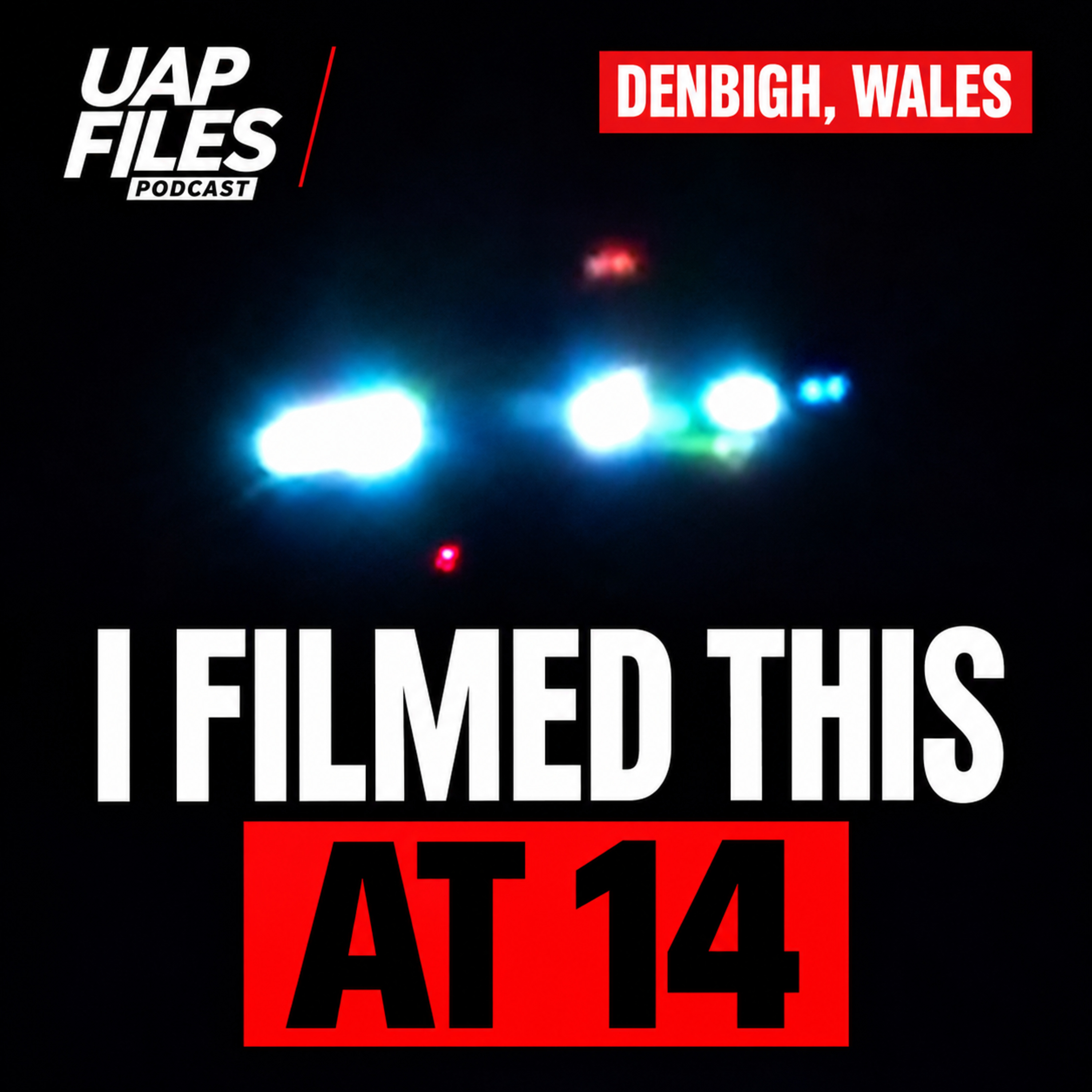
In 2012, a teenager called Nathan Thomas filmed a formation of strange lights from his bedroom window in Denbigh, North Wales, in the early hours of the morning. The footage went everywhere, and Nathan became known, sometimes mockingly, as “the UFO kid.” For over a decade he stayed silent. In this clip from UAP Files Podcast S3E40, I finally sit down with him and we talk through the night he captured it. In this clip: • How it started: a windy night, bins blowing over, and a light he first thought was a reflection off the TV • Waking his brother Alex, then his niece and his mum, and filming it on a camera he’d only just got for Christmas • The police visit, the “lampers” and golf cart explanations, and filmmaker Peter Glynn’s 2012 interview • What it was like being 14 and getting stick at school every single day, and why he still keeps it quiet at work • My analysis so far: the object appears to be above the horizon, which makes the ground-based explanations hard to fit • Why, after al
LCC in Spanish: ESMO 2026 Highlights En este episodio en español de Lung Cancer Considered, la Dra. Narjust Florez conversa con la Dra. Ana Velázquez Mañana sobre los principales avances en la investigación del cáncer de pulmón presentados en ESMO 2026 en Madrid. Destacan los resultados de los estudios DeLLphi-305, SAFFRON y Krascendo 1, explorando los avances en el tratamiento del cáncer de pulmón de células pequeñas y las terapias dirigidas para el cáncer de pulmón de células no pequeñas con mutaciones de EGFR y KRAS G12C. La conversación también aborda el estudio MOIO y sus implicaciones para los intervalos de administración de la inmunoterapia, la seguridad de los tratamientos y la práctica clínica. In this Spanish-language episode of Lung Cancer Considered, host Dr. Narjust Florez welcomes Dr. Ana Velázquez Mañana to discuss key lung cancer research presented at ESMO 2026 in Madrid. They highlight findings from the DeLLphi-305, SAFFRON, and Krascendo 1 trials, exploring advances i
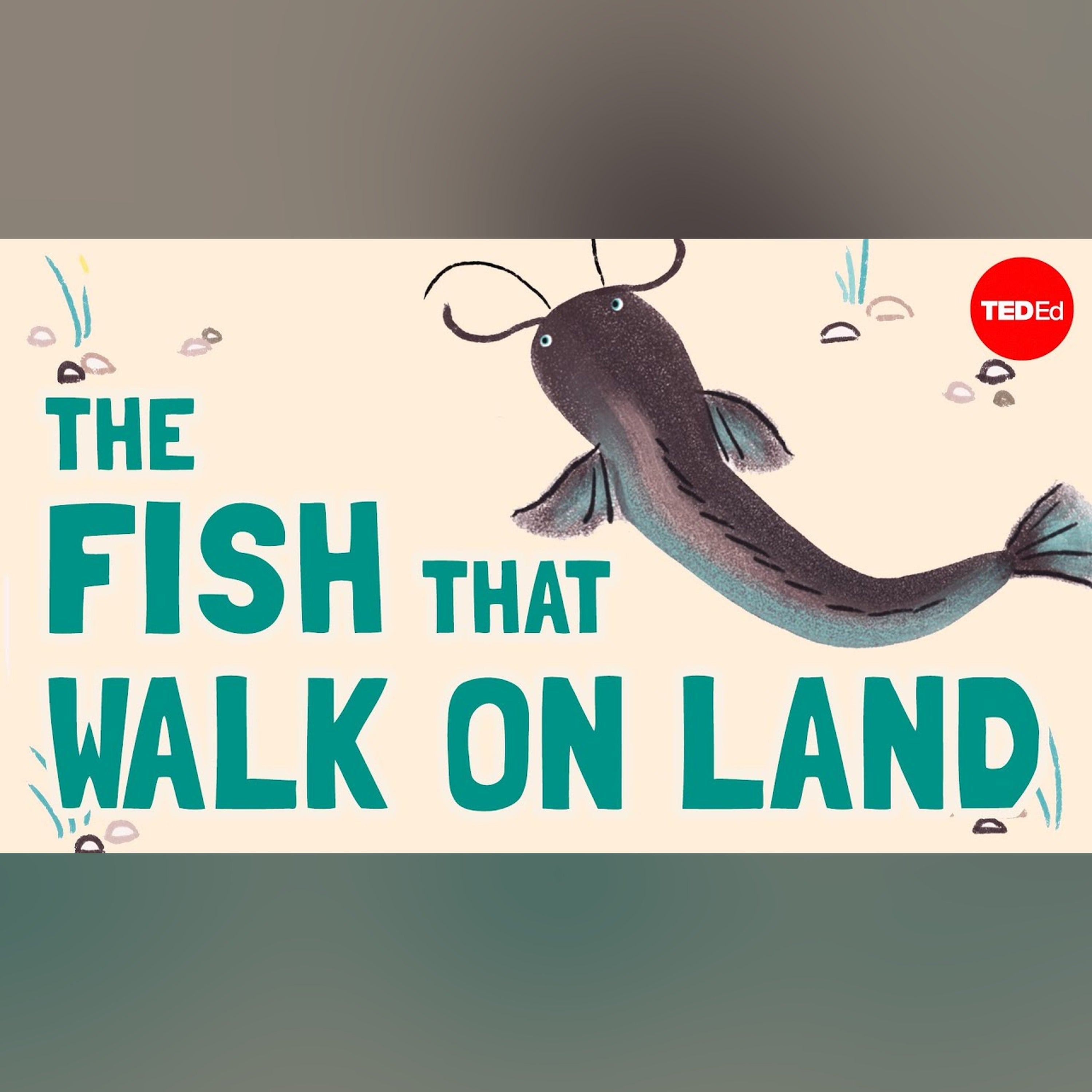
Explore the challenges facing amphibious fish when they leave water and the ingenious ways they survive on land. Uploaded 31-08-20 -- We think of fish as completely aquatic animals. But there are actually hundreds of fish species that are amphibious, meaning that they possess adaptations that enable them to survive on land. Once on land, however, they face suffocation, drying up, and being hunted by land predators. So why do fish make the exodus from water to land? Noah R. Bressman explores the ingenious ways these fish survive. Lesson by Noah R. Bressman, directed by Anna Benner. Animator's website: https://annabennerstudio.com/ Sound designer's website: http://www.tschernuth.com/ Sign up for our newsletter: http://bit.ly/TEDEdNewsletter Support us on Patreon: http://bit.ly/TEDEdPatreon Find us on Twitter: http://bit.ly/TEDEdTwitter Peep us on Instagram: http://bit.ly/TEDEdInstagram View full lesson: https://ed.ted.com/lessons/the-fish-that-walk-on-land-noah-r-bressman Thank you so mu
View full lesson: http://ed.ted.com/lessons/what-s-wrong-with-our-food-system-birke-baehr Uploaded 16-08-13 11-year-old Birke Baehr presents his take on a major source of our food -- far-away and less-than-picturesque industrial farms. Keeping farms out of sight promotes a rosy, unreal picture of big-box agriculture, he argues, as he outlines the case to green and localize food production. (Filmed atTEDxNextGenerationAshevillen.) Talk by Birke Baehr.
Featuring an interview with Dr Matthew Lunning, including the following topics: Bispecific antibody/antibody-drug conjugate combinations (0:00) A man in his late 90s with mantle cell lymphoma — Ann LaCasce, MD, MMSc (8:07) CME information and select publications (https://researchtopractice.com/ASCO2026/NHL/Micro/2)
EP 3888: There’s No Substitute for Hard Work Success rarely happens by accident. Whether you want to build a successful career, become a better leader, improve your physical health, strengthen your relationships or create a life you are proud of, there is one principle that remains constant. There is no substitute for hard work. We […] The post EP 3888 There’s no substitute for hard work (https://www.thestronglifeproject.com/the-strong-life-podcast/ep-3888-theres-no-substitute-for-hard-work/) appeared first on The Strong Life Project (https://www.thestronglifeproject.com/).
Gases are everywhere, and this is good news and bad news for chemists. The good news: when they are behaving themselves, it's extremely easy to describe their behavior theoretically, experimentally, and mathematically. The bad news is they almost never behave themselves. In this episode of Crash Course Chemistry, Hank tells how the work of some amazing thinkers combined to produce the Ideal Gas Law, how none of those people were Robert Boyle, and how the ideal gas equation allows you to find out pressure, volume, temperature, or number of moles. You'll also get a quick introduction to a few jargon-y phrases to help you sound like you know what you're talking about. Pssst... we made flashcards to help you review the content in this episode! Find them on the free Crash Course App! Download it here for Apple Devices: https://apple.co/3d4eyZo Download it here for Android Devices: https://bit.ly/2SrDulJ Table of Contents Ideal Gas Law Equation 0:50 Everyone But Robert Boyle 1:35 Ideal Gas L
So we all know that breathing is pretty important, right? Today we're going to talk about how it works, starting with the nameless evolutionary ancestor that we inherited this from, continuing to the mechanics of both simple diffusion and bulk flow, as well as the physiology of breathing, and finishing with the anatomy of both the conducting zone and the respiratory zone of your respiratory system. Pssst... we made flashcards to help you review the content in this episode! Find them on the free Crash Course App! Download it here for Apple Devices: https://apple.co/3d4eyZo Download it here for Android Devices: https://bit.ly/2SrDulJ Chapters: Introduction: The First Air-Breathers 00:00 Simple Diffusion 2:44 Bulk Flow 3:59 Mechanics of Breathing 4:30 Anatomy of the Conducting Zone 5:47 Anatomy of Respiratory Zone 7:07 Review 8:33 Credits 8:56 *** Crash Course is on Patreon! Thanks to the following Patrons for their generous monthly contributions that help keep Crash Course free for every
This week, Nate offers a reflection on the U.S. midterm elections, separating the relief of a clear outcome from the deeper questions that remain unsolved. He considers what has changed politically and what hasn't through a transpartisan lens, highlighting a growing disconnect between political institutions and the biophysical reality shaping our future. While the election has changed the occupants of some government positions, the Carbon Pulse continues, planetary boundaries remain in overshoot, and the global economic Superorganism carries on at its established pace. Nate also explores how the election itself may be revealing a signal that the political system has yet to recognize – rising energy costs, shrinking household surplus, and growing affordability pressures have contributed to electoral losses for both parties. He sees this as evidence of a problem upstream of conventional politics, rooted in the diminishing surplus that once made cheap food, cheap credit, and cheap energy
Independent public art like graffiti and street art often gets a bad rap, thanks to its legal classification as vandalism. But these art forms have much to offer as a means for people to speak truth to power and take ownership of community spaces. In this episode of Crash Course Art History, we’ll explore the various ways artists have used illicit public art to express themselves. Crash Course Art History #17 Introduction: Ancient Graffiti 00:00 Independent Public Art 01:01 Impermanent Art 02:29 Public Art as Political Expression 04:11 Jean-Michel Basquiat 06:40 Review & Credits 09:12 Image Descriptions: https://docs.google.com/document/d/1ETiCxe4GrVzFii7dBhF42oHx1EUCCh5y12wbtUjsH8A/edit Sources: https://docs.google.com/document/d/1GW2NKzhpMNMmRyAFJVhFJG9cSfUOMRL-QrcWuHcWcIA/edit?usp=sharing *** Support us for $5/month on Patreon to keep Crash Course free for everyone forever! https://www.patreon.com/crashcourse Or support us directly: https://complexly.com/support Join our Crash Cours
South Korea emerged from the devastation of the Korean War as one of the world's poorest countries. Within a generation, it had become an industrial powerhouse, mastering nuclear technologies originally imported from the United States and Canada. Today, Korean firms are among the world's most capable nuclear constructors, having delivered four APR1400 reactors at the UAE's Barakah nuclear power plant. Now the tables may be turning. With Washington pursuing an ambitious nuclear revival, the United States is looking to South Korea for the manufacturing expertise, skilled workforce and construction capabilities needed to turn its nuclear ambitions into reality.Chris Keefer is joined by Eun Jung Lim, professor at Kongju National University and visiting scholar at Stanford's Asia-Pacific Research Center, to explore Korea's extraordinary nuclear odyssey. They trace its origins in the developmental state of Park Chung-hee, the unlikely collaboration with North Korea through KEDO, and the indu
In this episode, Shawn from Florida shares unusual experiences from his years working in wooded areas. With a BA in anthropology, he brings a curious perspective to the tree arches, X formations, twisted trunks, and unexplained sounds he has encountered. Shawn works for the government; we’re keeping the details of his work private. He recounts what he believes was a Dogman encounter in early fall 2022 at a farm east of Parkersburg, West Virginia. What began as small tapping sounds escalated into heavy knocks and bangs. Around the property, he noticed unusual tree formations, a chewed tree, and strange canine tracks. Then came the sighting that sent him running indoors to lock the door. Shawn also describes a separate encounter that same year in Northwest Florida, where he and a friend fled after seeing a large hand emerge from the water. Listen to Shawn’s account and decide what you make of these encounters. IHEART RADIO - https://iheart.com/podcast/195559529 INSTAGRAM - https://www.in
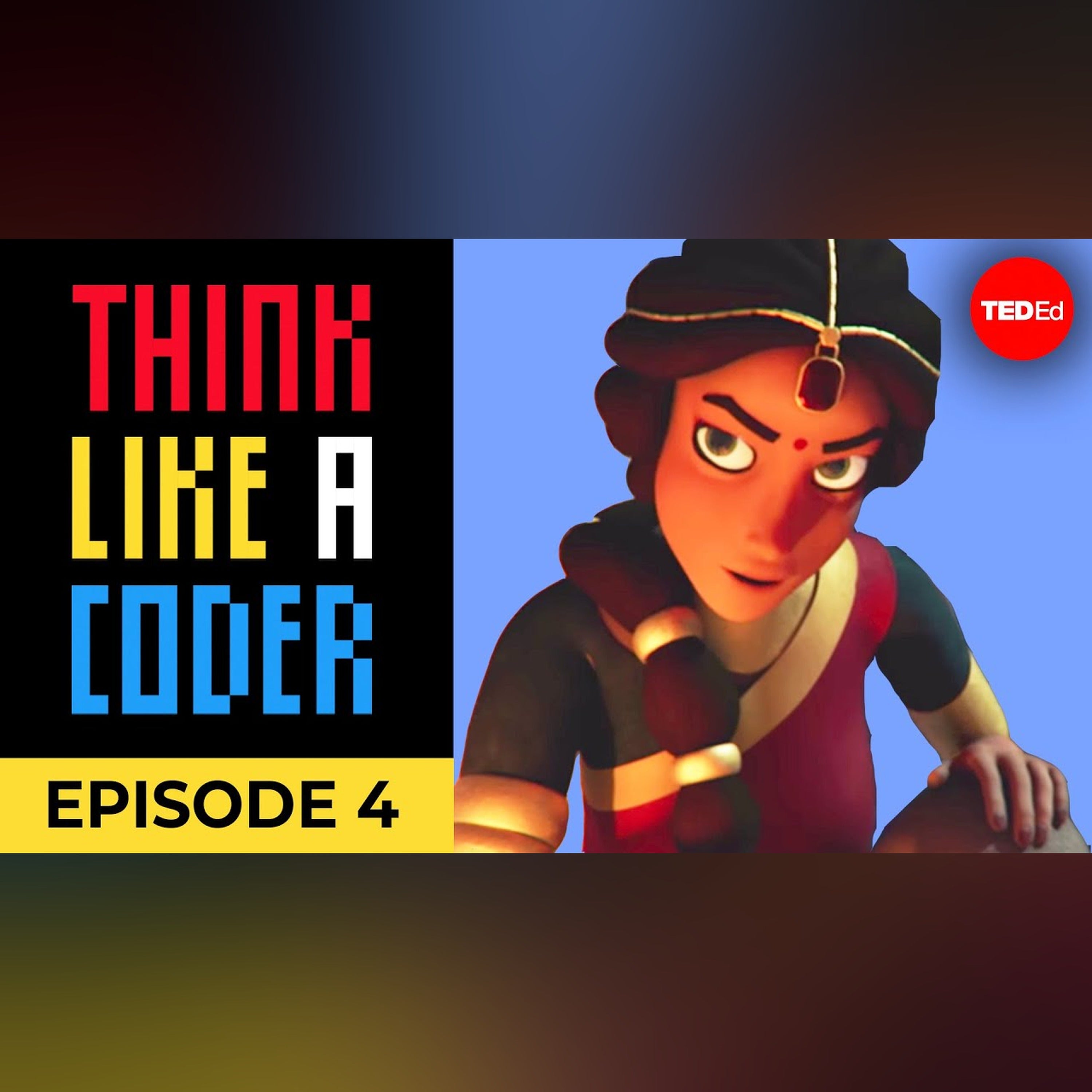
The adventure continues! Episode 4: The trio plot how they can steal the first artifact— the Node of Power. Can they take it without being discovered? Uploaded 09-12-19 -- This is episode 4 of our animated series “Think Like A Coder.” This 10-episode narrative follows a girl, Ethic, and her robot companion, Hedge, as they attempt to save the world. The two embark on a quest to collect three artifacts and must solve their way through a series of programming puzzles. Lesson by Alex Rosenthal, directed by Kozmonot Animation Studio. Supported by Endless: https://endlessnetwork.com (https://endlessnetwork.com/) A special thank you to the programmers who assisted in the development of this series: Eric Wastl, Sara Kladky, Ryan Harvey, Dan Bernier, Eden Girma, Matt Gruskin, and James Griffith. And thanks to Eric Wastl, whose puzzle from the 2015 Advent of Code inspired the challenge in this episode. http://bit.ly/AdventOfCode1 Sign up for our newsletter: http://bit.ly/TEDEdNewsletter Support
Trace the diverse and delicious history of dumplings, from their first recorded origins to their spread across the Asian continent and beyond. -- As archaeologists pored over ancient tombs in western China, they discovered some surprisingly well-preserved and familiar relics. Though hardened over 1,000 years, there sat little crescent-shaped dumplings. So who invented these plump pockets of perfection, and how did they spread across the world? Miranda Brown traces the tangled, mysterious historical web of dumplings. Lesson by Miranda Brown, directed by Léon Moh-Cah, Andi Concha. This video made possible in collaboration with Marriott Hotels Learn more about how TED-Ed partnerships work: https://bit.ly/TEDEdPartners Support Our Non-Profit Mission ---------------------------------------------- Support us on Patreon: http://bit.ly/TEDEdPatreon Check out our merch: http://bit.ly/TEDEDShop ---------------------------------------------- Connect With Us ---------------------------------------
On today’s show, something special: a conversation we recorded live at our 13th Annual Symposium on “Building the Brain”. The event featured experts at the frontiers of brain development research asking questions like how much of our brain wiring is driven by genetics versus experience and whether we could use AI to understand the way infants naturally learn about the world around them. You can see some of these talks on our YouTube channel (https://www.youtube.com/@stanfordbrain). Each year at the Symposium we also host a fireside chat where leading Stanford researchers help us take a step back and look at the state of the field as a whole. This year, we collaborated with The Future of Everything (https://engineering.stanford.edu/news/collection/future-everything-podcast) podcast and its host, bioengineer Russ Altman, to bring that conversation to you. Russ spoke onstage with Karen Parker, who studies how our brains – and those of other primates – develop socially. She’s been studying
Evidence that higher vitamin D levels reduce the risk of nine of the top ten causes of death in the U.S. William B. Grant, Ph.D., reviews evidence linking higher vitamin D levels with reduced risk for many leading causes of death in the U.S. Explore how vitamin D may influence immunity, inflammation, chronic disease prevention, and long-term public health outcomes. #VitaminD #DiseasePrevention #PublicHealth
In which John Green teaches you about America's "peculiar institution," slavery. I wouldn't really call it peculiar. I'd lean more toward a horrifying and depressing institution, but nobody asked me. John will talk about what life was like for an enslaved person in the 19th century United States, and how enslaved people resisted oppression, to the degree that was possible. We'll hear about cotton plantations, the violent punishment of enslaved people, the day-to-day lives of enslaved people, and slave rebellions. Nat Turner, Harriet Tubman, and Whipped Peter all make an appearance. Slavery as an institution is arguably the darkest part of America's history, and we're still dealing with its aftermath 150 years after it ended. Hey teachers and students - Check out CommonLit's free collection of reading passages and curriculum resources to learn more about the events of this episode. Memoirs from former slaves like abolitionist Frederick Douglass provide insightful context on the harsh re
View full lesson: http://ed.ted.com/lessons/what-causes-bad-breath-mel-rosenberg Uploaded 31-03-15 Halitosis is a curse that has plagued humanity since ancient times. But what causes it, and why is it so universally terrifying? Mel Rosenberg outlines the basics of bad breath — and what you can do when it strikes you. Lesson by Mel Rosenberg, animation by Andrew Foerster.
Today, we're going to take a closer look at how the oceans circulate by following the life of a discarded water bottle as it gets snagged in the North Pacific Garbage Patch. We'll talk about what causes the movement of water, called current, both near the surface and much deeper in the oceans, and we'll show how they follow similar (but not identical) paths to the winds. Ocean circulation plays a huge role in cycling vital nutrients within the seas and helps us transport goods on ships across the globe and it's up to us to protect it. Watch our videos and review your learning with the Crash Course App! Download here for Apple Devices: https://apple.co/3d4eyZo Download here for Android Devices: https://bit.ly/2SrDulJ Crash Course is on Patreon! Thanks to the following patrons for their generous monthly contributions that help keep Crash Course free for everyone forever: Aziz, Christine Phelan, Nick, DAVID MORTON HUDSON, Perry Joyce, Scott Harrison, Mark & Susan Billian, Junrong Eric Zhu
In this episode, Dr. Katie Mack gives John Green an idea of what to expect for the future of our universe. Head to https://policygenius.com/crashcourse to get your free life insurance quotes and see how much you could save. *** Support us for $5/month on Patreon to keep Crash Course free for everyone forever! https://www.patreon.com/crashcourse Or support us directly: https://complexly.com/support Join our Crash Course email list to get the latest news and highlights: https://mailchi.mp/crashcourse/email Get our special Crash Course Educators newsletter: http://eepurl.com/iBgMhY Thanks to the following patrons for their generous monthly contributions that help keep Crash Course free for everyone forever: Emily Beazley, Brandon Thomas, Forrest Langseth, oranjeez, Rie Ohta, Jack Hart, UwU, Leah H., David Fanska, Andrew Woods, Ken Davidian, Stephen Akuffo, Toni Miles, Steve Segreto, Kyle & Katherine Callahan, Laurel Stevens, Krystle Young, Burt Humburg, Scott Harrison, Mark & Susan Billia
The shadowy world of wildlife crime is estimated to be one of the four biggest illegal trades in the world. It runs the gamut from the international smuggling of ivory and exotic pets to hare coursing and badger baiting. The impacts of wildlife crime vary - in some cases it means a threat to endangered species, in others it takes the form of cruelty to individual animals. Could the unregulated world of social media make it easier than ever for wildlife criminals to evade the authorities? Or will advances in tech - including exciting forensic breakthroughs - be enough to stop them in their tracks? With panellists: - Fiona Howie, wildlife veterinary pathologist at Scotland's Rural College - Neil D’Cruze, UK Director of international animal welfare organisation Four Paws - Christian Plowman, Program Manager - Wildlife Cybercrime at the International Fund for Animal Welfare Presented by Tom Heap & Helen Czerski Producer - Beth Sagar-Fenton Assistant Producer - Georgia Graham Editor - Alasd