Respiratory System, Part 1: Crash Course Anatomy and Physiology #31
15 min
Listen through the publisher, then discuss the episode here or arrange an in-person Roundtable. Your city determines where to meet.
Roundtables are designed for groups of four, with a shared subject and room for everyone to speak. Come for discussion, with no dating expectation.
So we all know that breathing is pretty important, right? Today we're going to talk about how it works, starting with the nameless evolutionary ancestor that we inherited this from, continuing to the mechanics of both simple diffusion and bulk flow, as well as the physiology of breathing, and finishing with the anatomy of both the conducting zone and the respiratory zone of your respiratory system. Pssst... we made flashcards to help you review the content in this episode! Find them on the free Crash Course App! Download it here for Apple Devices: https://apple.co/3d4eyZo Download it here for Android Devices: https://bit.ly/2SrDulJ Chapters: Introduction: The First Air-Breathers 00:00 Simple Diffusion 2:44 Bulk Flow 3:59 Mechanics of Breathing 4:30 Anatomy of the Conducting Zone 5:47 Anatomy of Respiratory Zone 7:07 Review 8:33 Credits 8:56 *** Crash Course is on Patreon! Thanks to the following Patrons for their generous monthly contributions that help keep Crash Course free for everyone forever: Mark, Jan Schmid, Simun Niclasen, Robert Kunz, Daniel Baulig, Jason A Saslow, Eric Kitchen, Christian, Beatrice Jin, Anna-Ester Volozh, Eric Knight, Elliot Beter, Jeffrey Thompson, Ian Dundore, Stephen Lawless, Today I Found Out, James Craver, Jessica Wode, Sandra Aft, Jacob Ash, SR Foxley, Christy Huddleston, Steve Marshall, Chris Peters -- Want to find Crash Course elsewhere on the internet? Facebook - http://www.facebook.com/YouTubeCrashCourse Twitter - http://www.twitter.com/TheCrashCourse Tumblr - http://thecrashcourse.tumblr.com (http://thecrashcourse.tumblr.com/) Support Crash Course on Patreon: http://patreon.com/crashcourse CC Kids: http://www.youtube.com/crashcoursekids
Episode information is provided by the publisher. Listening takes place on the publisher’s service.
Best books for Prompt Engineering with GPT-3 and LLMs - Crash Course in AGIEpisode release date: 27 Dec 2022Spreading awareness about the works of some of the leading educators in the AI revolution. Core Ideas: Metamodernism: Narratives and emergence view of reality - Reduce suffering - Increase prosperity - Increase understanding mantra: Seek knowledge. ELABORATE: Add depth and detail to understanding, weaving comprehensive and nuanced explanations.DISCLAIMER: This is a community-driven show. ----------------Best books for Prompt Engineering with GPT-3 and LLMs - Crash Course in AGIEpisode release date: 27 Dec 2022Spreading awareness about the works of some of the leading educators in the AI revolution. Core Ideas: Metamodernism: Narratives and emergence view of reality - Reduce suffering - Increase prosperity - Increase understanding mantra: Seek knowledge. ELABORATE: Add depth and detail to understanding, weaving comprehensive and nuanced explanations.DISCLAIMER: This is a community
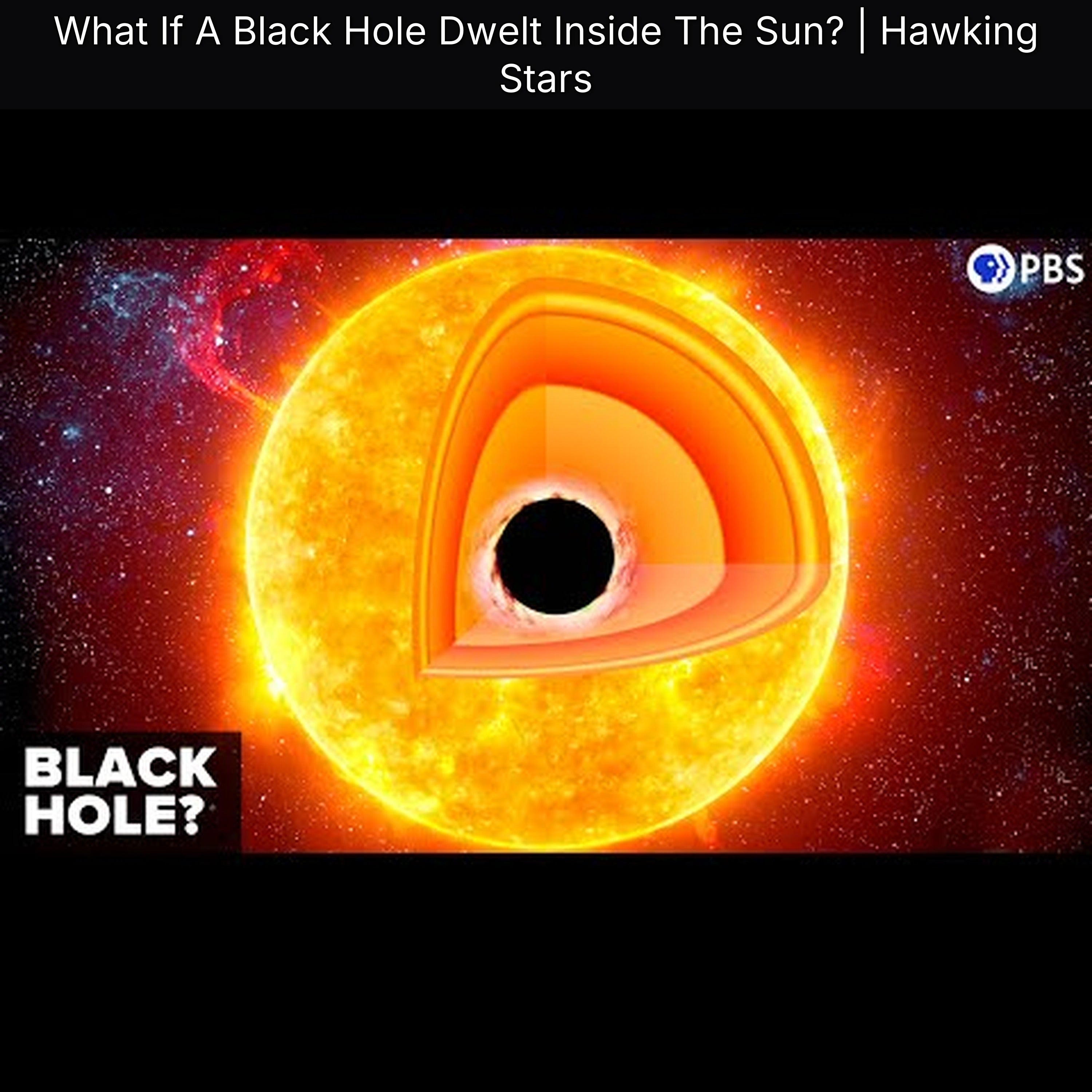
PBS Member Stations rely on viewers like you. To support your local station, go to:http://to.pbs.org/DonateSPACE Sign Up on Patreon to get access to the Space Time Discord! A fun nightmare sci-fi scenario is the sun being consumed by a black hole. Fortunately the chance of a black hole randomly wandering into our solar system is pretty tiny. That’s good news. But what if it’s already here, hiding in the core of the Sun and slowly eating it from the inside out? Hawking Stars Journal Papers: Search the Entire Space Time Library Here: https://search.pbsspacetime.com/ Hosted by Matt O'Dowd Written by Matt Caplan & Matt O'Dowd Post Production by Leonardo Scholzer, Yago Ballarini & Stephanie Faria Directed by Andrew Kornhaber Associate Producer: Bahar Gholipour Executive Producers: Eric Brown & Andrew Kornhaber Executive in Charge for PBS: Maribel Lopez Director of Programming for PBS: Gabrielle Ewing Assistant Director of Programming for PBS: John Campbell Spacetime is produced by Kornhaber
What is the Apple Vision Pro actually for? THIS… Get better sleep with $200 off your Eight Sleep Pod Cover using my code CLEO: https://www.eightsleep.com/cleo/ If you want to feel more optimistic about the future, consider subscribing. You’ve seen the Apple Vision Pro. But this isn’t a product review. In this video, @mkbhd and I take a dive into what the future might actually look like with this category of tech - and why you should care. (With a cameo from @ryan !) Honestly, with all the jargon and hype (VR! AR! Spatial computing! Metaverse!), I’ve been tuning out the news about these devices for a while. But now, I think it’s time to turn the volume back up and pay attention. There is a deeply optimistic future that’s possible here. Not Ready Player One, but something else entirely. I’m going to try to show you what it might really look and feel like. If the Apple Macintosh helped unlock personal computing, and the iPhone unlocked computers in our pockets, what is this device suppose
For a written breakdown, early access to content like this, and extra nuances, see the associated StayCurious Metabolism newsletter: https://staycuriousmetabolism.substack.com/p/why-you-need-to-track-your-heart?r=40ekz2 If you want to try the omega supplement I use, Accentrate Omega Max, here’s the link: https://www.fenixhealthscience.com/staycurious Heart rate variability (HRV) is more than just a number, it’s a real-time window into how well your brain, heart, and nervous system are working together. In this video, we break down what HRV actually measures, why it’s such a powerful predictor of mortality and heart attack risk, and how it reflects something deeper: your body’s ability to adapt, recover, and respond to stress. We walk through landmark studies showing that low HRV is associated with significantly higher risk of death and first cardiac events—even after controlling for traditional risk factors. But this isn’t just about risk. HRV is something you can measure today and act
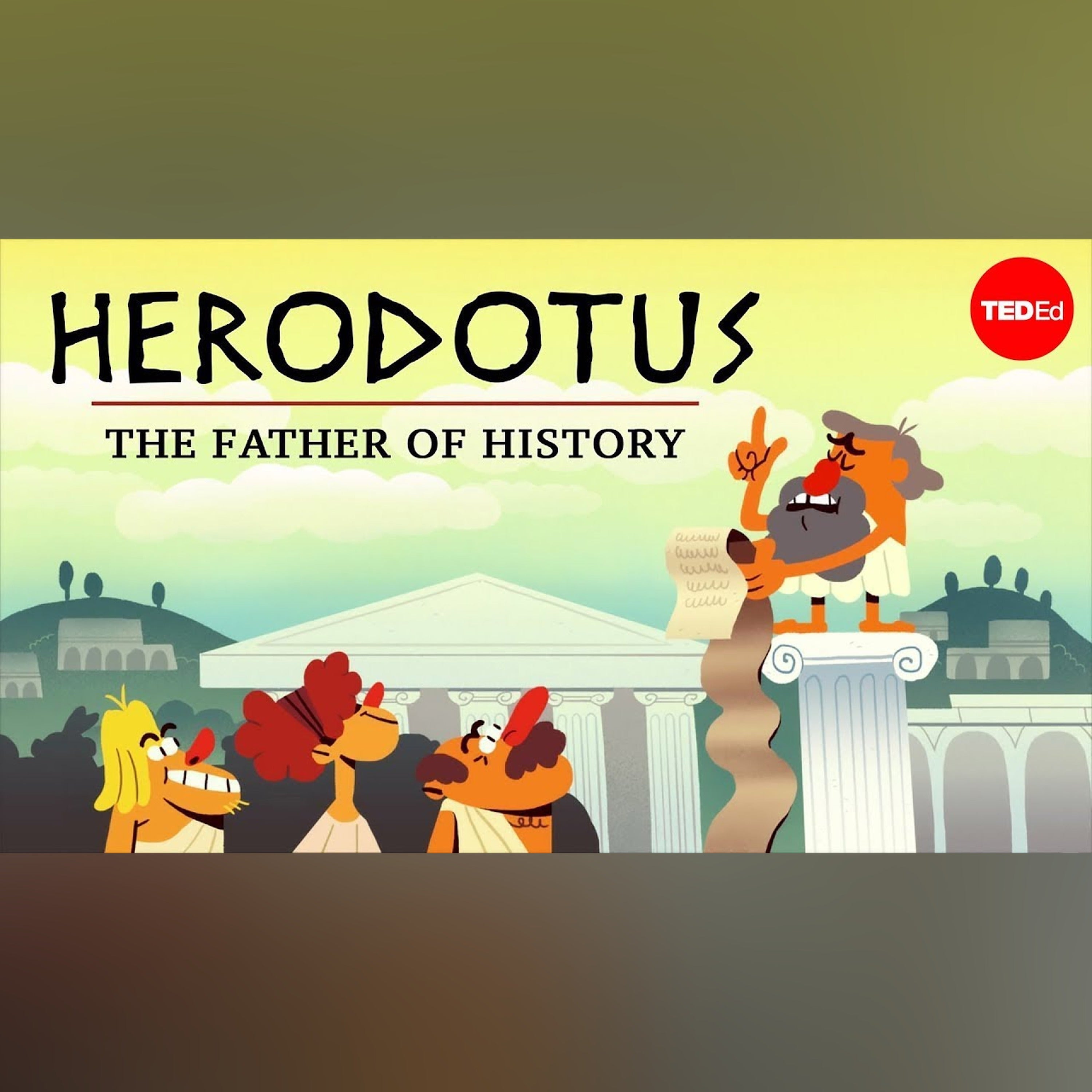
Uploaded 11-12-17 View full lesson: https://ed.ted.com/lessons/why-is-herodotus-called-the-father-of-history-mark-robinson 2,500 years ago, the writing of history as we know it didn’t exist. The past was recorded as a list of events, with little explanation for their causes beyond accepting things as the will of the gods. Herodotus wanted a deeper understanding, so he took a new approach: looking at events from both sides to understand the reasons for them. Mark Robinson explains how “history” came into being. Lesson by Mark Robinson, directed by Remus and Kiki Thank you so much to our patrons for your support! Without you this video would not be possible! Daniel Day, Nick Johnson, Bruno Pinho, Javier Aldavaz, Rodrigo Carballo, Marc Veale, Boytsov Ilya, Bozhidar Karaargirov, Darren Toh, ilya bondarik, maxi kobi einy, Runarm , Misaki Sato, Peter Koebel, Levi Cook, Alex Kongkeo, Craig Sheldon, Andrew Bosco, Catherine Sverko, Nik Maier, Robert Sukosd, Mark Morris, Tamás Drávai, Adi V, Pet
Get the 200+ Page Optimal Living Daily Workbook (PDF) - Free. Want to turn today's episode into an actionable plan? Episode 3779: Joshua Fields Millburn and Ryan Nicodemus of The Minimalists explain the first steps they took to regain control of their money after years of six-figure debt. It starts with a written monthly budget that sorts every expense into essentials, nonessentials and junk, plus a small safety net for emergencies, and then reframes investing as simply paying your future self, automated so you never miss the money. Read along with the original article(s) here: https://www.theminimalists.com/freedom/ Quotes to ponder: "Most of us have no idea where our money is going. We think we know, but we don't really know." "The stricter you are, the sooner you'll be free." "Right now is the best time to start planning for your future." Airwallex is a financial technology company, not a bank. Services in the US are provided by Airwallex US, LLC, a licensed money transmitter (NMLS
The majority of the universe is made up of a currently mysterious entity that pervades space: dark energy. We don’t know exactly what it is, but we do know that dark energy accelerates the expansion of space. We think this means the Universe will expand forever, even as our view of it shrinks while space expands faster all the time. Check out the Crash Course Astronomy solar system poster here: http://store.dftba.com/products/crashcourse-astronomy-poster If you want to learn more about the creation and death of the universe, watch Crash Course Big History here: https://youtube.com/playlist?list=PL8dPuuaLjXtMczXZUmjb3mZSU1Roxnrey -- Chapters: Introduction: The Expanding Universe 00:00 The Expansion of Space is Accelerating 2:17 What is Dark Energy? 4:19 Will the Universe Expand Forever? The Geometry of the Universe 5:20 The Cosmic Horizon of the Observable Universe 6:50 Review 10:20 -- GEOMETRY OF THE UNIVERSE RESOURCES Geometry: Expanding faster than light: General expansion: -- PBS Di
Have you ever wondered where cured meats like salami or pepperoni get their bright red color? Of course its from organic chemistry! A chemical called nitric acid gives them that bright color, while also increasing their shelf. It's also involved in some other interesting reactions. In this episode of Crash Course Organic Chemistry we'll see how nitrous acid reacts with primary amines to form diazonium salts, we'll learn about alkyldiazonium salts and aryldiazonium salts, and see what conditions are necessary for nucleophilic aromatic substitutions. Series Sources: Brown, W. H., Iverson, B. L., Ansyln, E. V., Foote, C., Organic Chemistry; 8th ed.; Cengage Learning, Boston, 2018. Bruice, P. Y., Organic Chemistry, 7th ed.; Pearson Education, Inc., United States, 2014. Clayden, J., Greeves, N., Warren., S., Organic Chemistry, 2nd ed.; Oxford University Press, New York, 2012. Jones Jr., M.; Fleming, S. A., Organic Chemistry, 5th ed.; W. W. Norton & Company, New York, 2014. Klein., D., Organ
Like a trendy dance, a fighting combo, or a secret handshake, organic reactions can be broken down into simpler steps. In this episode of Crash Course Organic Chemistry, we’ll specifically be looking at alkene addition reactions, and with each new reaction ask ourselves three questions to help us puzzle through the mechanism and understand what’s going on. Episode Sources: Le Couteur, P, Burreson, J. Napoleon’s Buttons: 17 molecules that changed history., Penguin, New York, 2004, Chapter 1. Whipps, H., “How the Spice Trade Changed the World,” https://www.livescience.com/7495-spice-trade-changed-world.html Last accessed, 3/28/2020. Henriques, Martha, “How spices changed the ancient world,” http://www.bbc.com/future/bespoke/made-on-earth/the-flavours-that-shaped-the-world/ Last accessed, 3/28/2020. Hashimoto, K., Yaoi, T., Koshiba, H., Yoshida, T., Maoka, T., Fujiwara, Y., Yaamoto, Y, Mori, K., “Photochemical Isomerization of Piperine, a Pungent Constituent of Pepper”, Food Sci. Technol.
Public projects should publish comparisons of promised and actual outcomes.
Share your view, then see how readers voted. No sign-in required. This poll is shared across stories.
Do you agree or disagree?
Common Quandary
A Common Quandary to discuss
Another conversation to explore, separate from this news story.
You find a wallet full of cash. Can you take a finder’s fee before returning it?
You find a wallet containing identification and several hundred dollars. Returning it will require a detour and some effort. The owner would probably never know if a small amount were missing.
Can an unrequested good deed entitle someone to compensation?