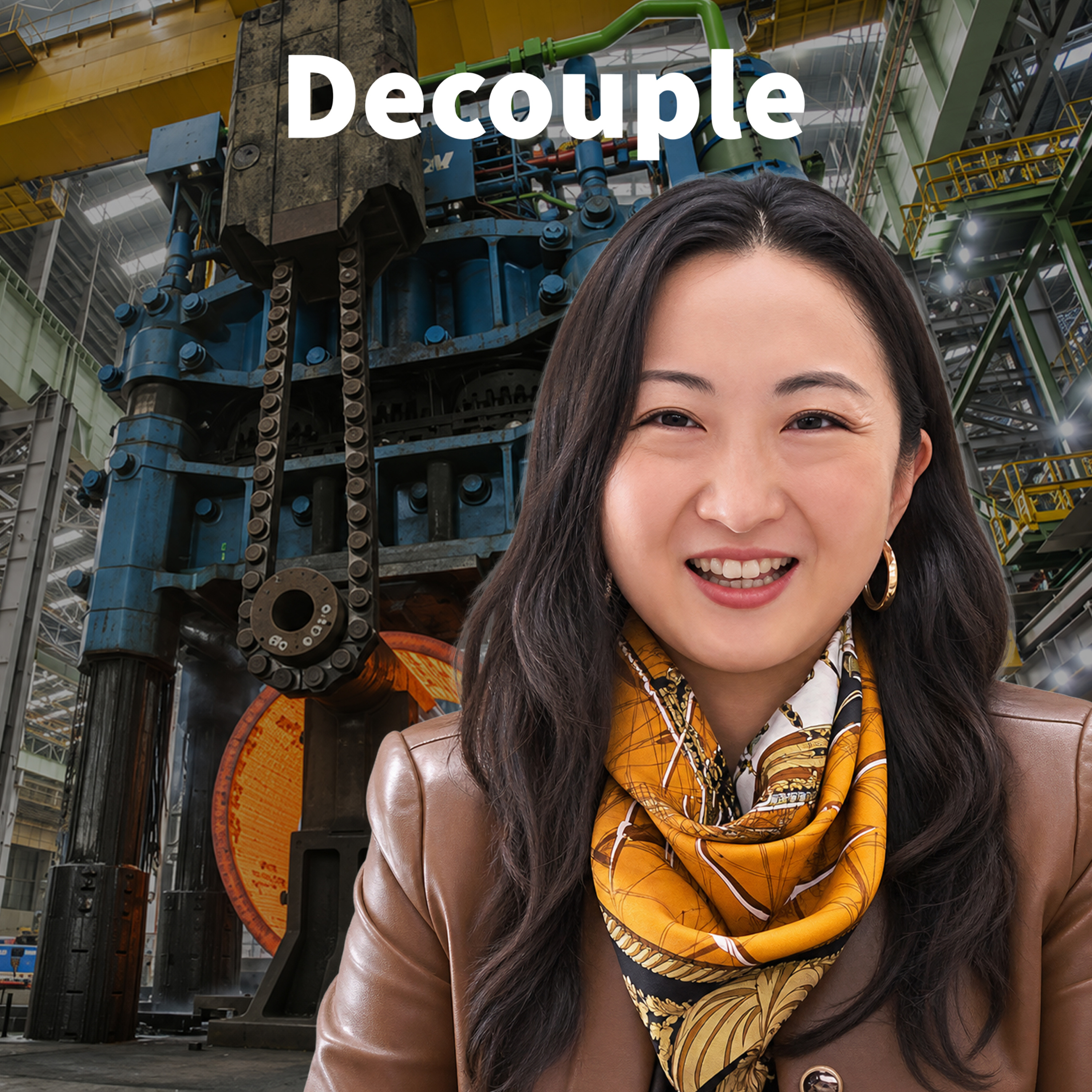
Can South Korea Rescue America's Nuclear Renaissance? w/ Dr. Eunjung Lim
70 min
Listen through the publisher, then discuss the episode here or arrange an in-person Roundtable. Your city determines where to meet.
Roundtables are designed for groups of four, with a shared subject and room for everyone to speak. Come for discussion, with no dating expectation.
South Korea emerged from the devastation of the Korean War as one of the world's poorest countries. Within a generation, it had become an industrial powerhouse, mastering nuclear technologies originally imported from the United States and Canada. Today, Korean firms are among the world's most capable nuclear constructors, having delivered four APR1400 reactors at the UAE's Barakah nuclear power plant. Now the tables may be turning. With Washington pursuing an ambitious nuclear revival, the United States is looking to South Korea for the manufacturing expertise, skilled workforce and construction capabilities needed to turn its nuclear ambitions into reality.Chris Keefer is joined by Eun Jung Lim, professor at Kongju National University and visiting scholar at Stanford's Asia-Pacific Research Center, to explore Korea's extraordinary nuclear odyssey. They trace its origins in the developmental state of Park Chung-hee, the unlikely collaboration with North Korea through KEDO, and the industrial achievements that made Barakah possible. They also examine the controversial intellectual property dispute and global settlement between Westinghouse and KEPCO, the proposed $120 billion Korean investment in American nuclear projects, and whether demographic decline threatens Korea's hard-won industrial advantage. Can the former apprentice help rebuild the nuclear industry of its American teacher?Listen to Decouple on:• Spotify: https://open.spotify.com/show/6PNr3ml8nEQotWWavE9kQz• Apple Podcasts: https://podcasts.apple.com/us/podcast/decouple/id1516526694?uo=4• Overcast: https://overcast.fm/itunes1516526694/decouple• Pocket Casts: https://pca.st/ehbfrn44• RSS: https://anchor.fm/s/23775178/podcast/rssWebsite: https://www.decouple.media
Episode information is provided by the publisher. Listening takes place on the publisher’s service.
What’s really going on with nuclear fusion?? @simonegiertz and I try to explain... PART 2 COMING SOON. You’ve probably heard about nuclear fusion. Maybe you've heard recent news about the Livermore National Lab achieving a nuclear fusion breakthrough called "ignition" - meaning it produced more energy than it took to start the reaction. That's a huge deal! But it leaves other questions unanswered. I wanted to know more. I started by asking the CEO of the nuclear fusion company Helion all my big questions: What is nuclear fusion, really? I know it happens on the sun, but how can we do it on earth? Are we doing it already? Then, I ask one last question: “I’ve heard about kids building fusion reactors in their moms’ garage… if fusion is so hard… what are THEY doing?” The answer sets off the most fun and ambitious Huge If True episode yet. It turns out that you can actually BUILD a nuclear fusion device. So I team up with my friend Simone Giertz to try. When something goes wrong, it turns
For extra nuances and all the references, please see the newsletter: https://staycuriousmetabolism.substack.com/p/can-we-become-like-captain-america?r=40ekz2 The StayCurious Human Enhancement Series We're launching a new series at StayCurious Metabolism called Peptides Plus, where we'll explore the most promising tools available today—and the innovations that may shape tomorrow. We have dozens of deep dives planned, covering everything from emerging therapeutics to cutting-edge performance and longevity interventions. GO HERE: https://staycuriousmetabolism.substack.com/p/peptides Chapters 0:00 — Superhuman Biology Is Already Starting 2:40 — Beyond GLP-1: Fat Loss Without Muscle Loss 7:28 — Gene Editing, CRISPR, and the Future of Disease Cure 14:57 — Cellular Reprogramming and Biological Age Reset 18:49 — MicroRNAs, Mitochondria, and What Comes Next Video Description What if the idea of “superhuman biology” isn’t science fiction anymore—but early-stage reality? From drugs that selective
In 1620, a small ship called the Mayflower crossed the Atlantic carrying English settlers in search of a new life. Their arrival in North America became one of the most familiar stories in American history, but the reality behind the legend was far more complicated than the traditional Thanksgiving tale suggests. Discover why the Pilgrims left England, what their dangerous voyage was really like, and how they survived their first winter in an unfamiliar land. Explore their encounters with the Wampanoag people, the role of Tisquantum, also known as Squanto, and the assistance that helped the struggling settlers establish their colony. Uncover what happened at the harvest gathering of 1621, who actually attended, what was served, and how this event became connected to the modern Thanksgiving holiday. Follow the history beyond the familiar celebration and discover the people, cultural encounters, and historical realities behind the Mayflower story. Boring History for Sleep — Soft stories
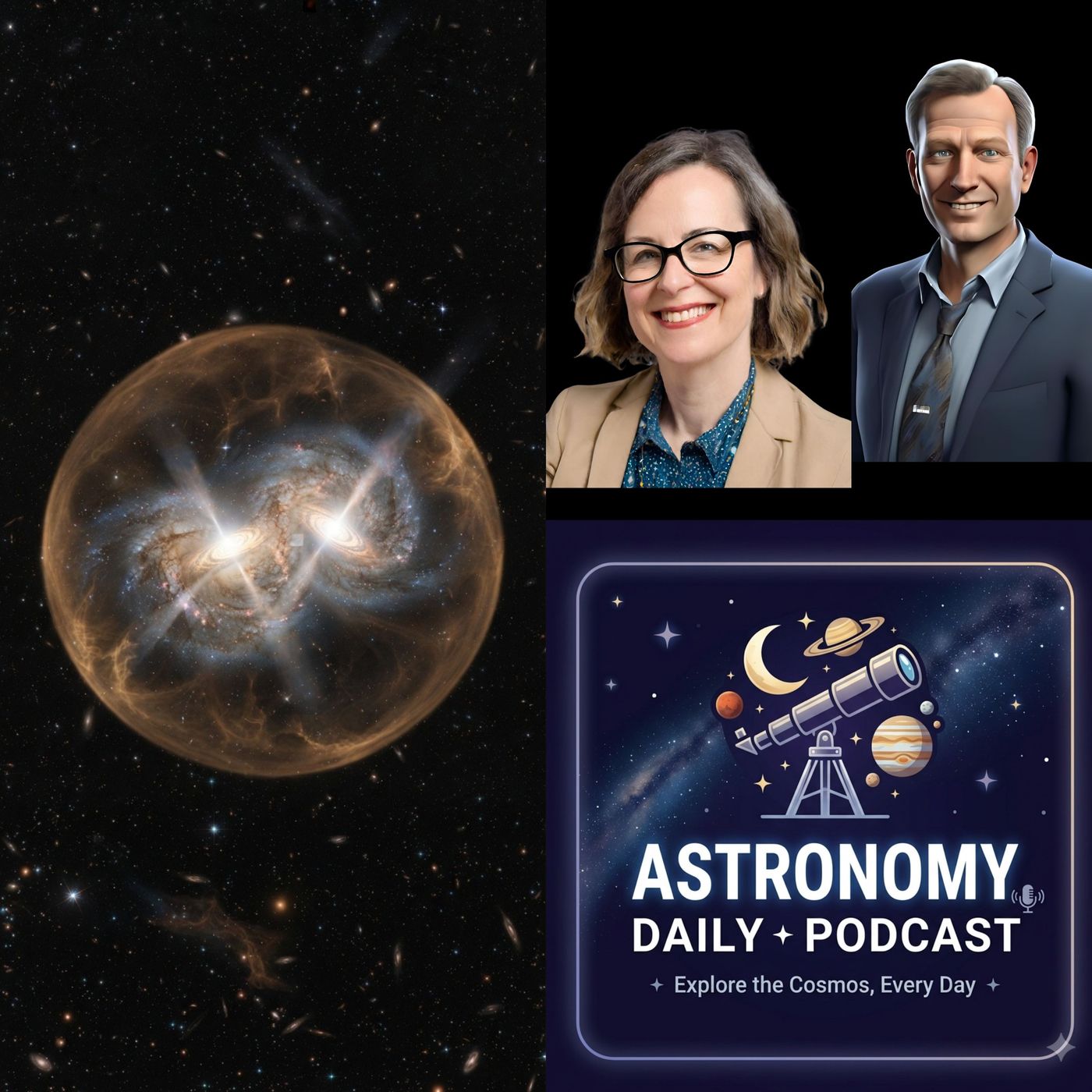
Eleven billion years ago two quasars blazed side by side, and this week astronomers weighed the invisible gas around them by the shadow it casts on the cosmic microwave background. There is 3.6 times more heat in it than gravity can explain. Plus a triple star 28 light-years away that 'should not exist', a pulsar found in ten hours with an algorithm borrowed from cryptography, The Week That Was, and the weekend sky from both hemispheres. In this episode Lead: Hot bubble around the dual quasar J1549+1245 at z = 2.37, measured with ALMA via the thermal Sunyaev–Zel'dovich effect (Hall, Zakamska et al., Nature Astronomy, 18 Nov 2026). Fresh item: Welopōʻai, the closest known triple with two white dwarfs, 28 light-years away (Artigau et al., A&A, 19 Nov 2026). Week That Was: Starship Flight 15 ship catch, CSIRO GenDIReCT and M87, SN 2026ahvu, failed supernovae in gravitational waves (E230); Voyager 1 one light-day, Beta Pictoris ices, heavy-oxygen water, Roman alignment (E231); Terra ends,
Dr. Al Grauer hosts. Dr. Albert D. Grauer ( @Nmcanopus (https://twitter.com/Nmcanopus) ) is an observational asteroid hunting astronomer. Dr. Grauer retired from the University of Arkansas at Little Rock in 2006. travelersinthenight.org (http://travelersinthenight.org/) From June & July, 2026. Today's 2 topics: - My Catalina Sky Survey teammate Josh Hogan has discovered a 2 football field diameter asteroid that was placed on NASA's Sentry list because it has a tiny minuscule but non-zero chance of impacting our home planet. With this motivation my team the Catalina Sky Survey, the Pan STARRS group in Hawaii, the ATLAS group with telescopes Hawaii, Chile, and South Africa , the Vera C. Rubin telescope in Chile, will be soon joined NASA's NEO Surveyor and groups world wide in a planet wide defense network. - The visually stunning Lunar Crater Pierazzo, named for the late Planetary Scientist Elizabeth "Betty" Pierazzo was observed by the Artemis II Crew as they passed over the Moon's far
PBS Member Stations rely on viewers like you. To support your local station, go to: http://to.pbs.org/DonateSPACE ↓ More info below ↓ Uploaded 18-11-19 Sign Up on Patreon to get access to the Space Time Discord! Check out the Space Time Merch Store The moment you started observing reality, you hopelessly polluted any conclusions you might make about it. The anthropic principle guarantees that you are NOT seeing the universe in most typical state. But used correctly, this highly controversial idea can be extremely powerful. So, how do you correctly use the anthropic principle? Hosted by Matt O'Dowd Written by Matt O'Dowd Graphics by Leonardo Scholzer and Adriano Leal Directed by: Andrew Kornhaber Executive Producers: Eric Brown and Andrew Kornhaber End Credits Music by J.R.S. Schattenberg: https://www.youtube.com/channel/UCRl6-nb4iOnsij-vnpAjp0Q Special Thanks to Dr. Flournoy!!! Check out his lectures Below: Particle Physics: https://www.youtube.com/playlist?list=PLDlWMHnDwylijo0yfs3xUN
Nuclear reactors are among the most sophisticated machines ever built, yet remarkably few countries possess the technological independence necessary to design, manufacture and export them without foreign permission. In this episode of Decouple, Chris Keefer is joined by Michael Seeley of The Atomic Blender to explore the extraordinary difficulty of mastering nuclear technology. From the American origins of commercial pressurized water reactors to the successful indigenization of reactor designs in France and Germany, they trace how nuclear expertise spreads between nations and why decades of engineering experience, research infrastructure and accumulated intellectual property make genuine technological independence so difficult to achieve.At the centre of the discussion is South Korea's remarkable nuclear industry, which has become one of the world's most accomplished reactor builders while remaining dependent on Westinghouse intellectual property and engineering expertise. Why did Fra
In the aftermath of the Fukushima disaster, when much of the world was turning away from nuclear energy, Leigh Curyer made a contrarian bet on uranium. He founded NexGen Energy and began exploring the largely overlooked western Athabasca Basin in Saskatchewan. The result was Arrow, one of the world's most extraordinary high-grade uranium discoveries. Now, NexGen is attempting to turn that geological prize into a producing mine capable of supplying roughly 20% of global mined uranium and more than half of Western production. With an estimated annual output of 30 million pounds of uranium from a remarkably small underground mining operation, Arrow could fundamentally reshape the global uranium market.Decouple host Chris Keefer speaks with NexGen founder and CEO Leigh Curyer about the discovery of Arrow, the unusual geology that makes it so valuable, and the formidable challenge of bringing a new uranium mine into production. They examine construction risks, engineering and labour constra
Schools should be judged on student wellbeing as well as academic results.
Share your view, then see how readers voted. No sign-in required. This poll is shared across stories.
Do you agree or disagree?
Common Quandary
A Common Quandary to discuss
Another conversation to explore, separate from this news story.
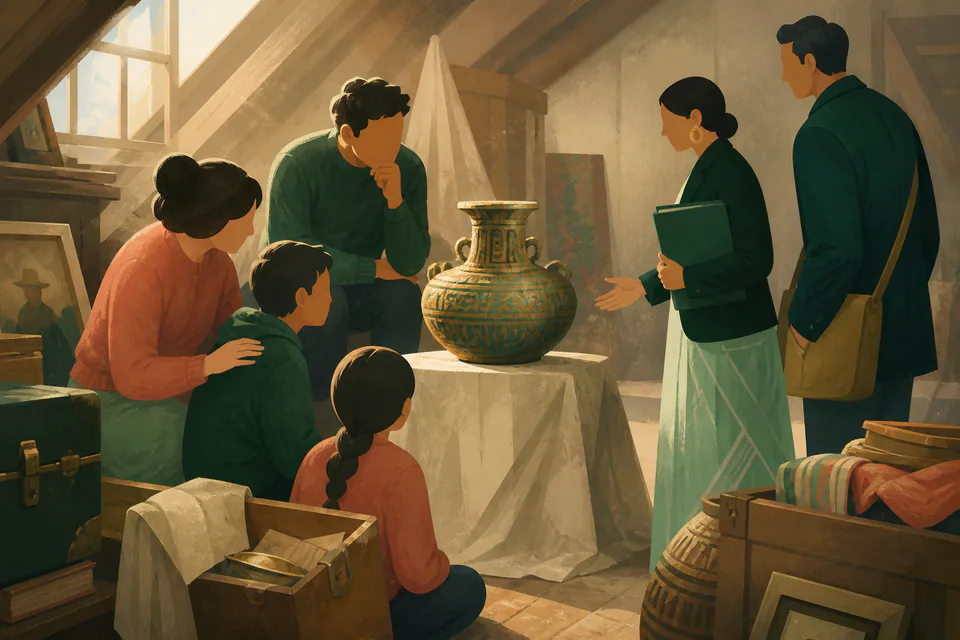
Your grandfather brought home an ancient artifact. A museum wants it back. Do you surrender it?
In your grandfather's attic you discover a beautiful ancient object he brought home while working overseas decades ago. Your family treasures it and his papers suggest the rules were murky. A museum from that country says it belongs to their collection and asks for its return.
Can a family inherit clear ownership of something acquired through unclear power?