The Race to Build the World's Next Great Uranium Mine w/ Leigh R. Curyer
57 min
Listen through the publisher, then discuss the episode here or arrange an in-person Roundtable. Your city determines where to meet.
Roundtables are designed for groups of four, with a shared subject and room for everyone to speak. Come for discussion, with no dating expectation.
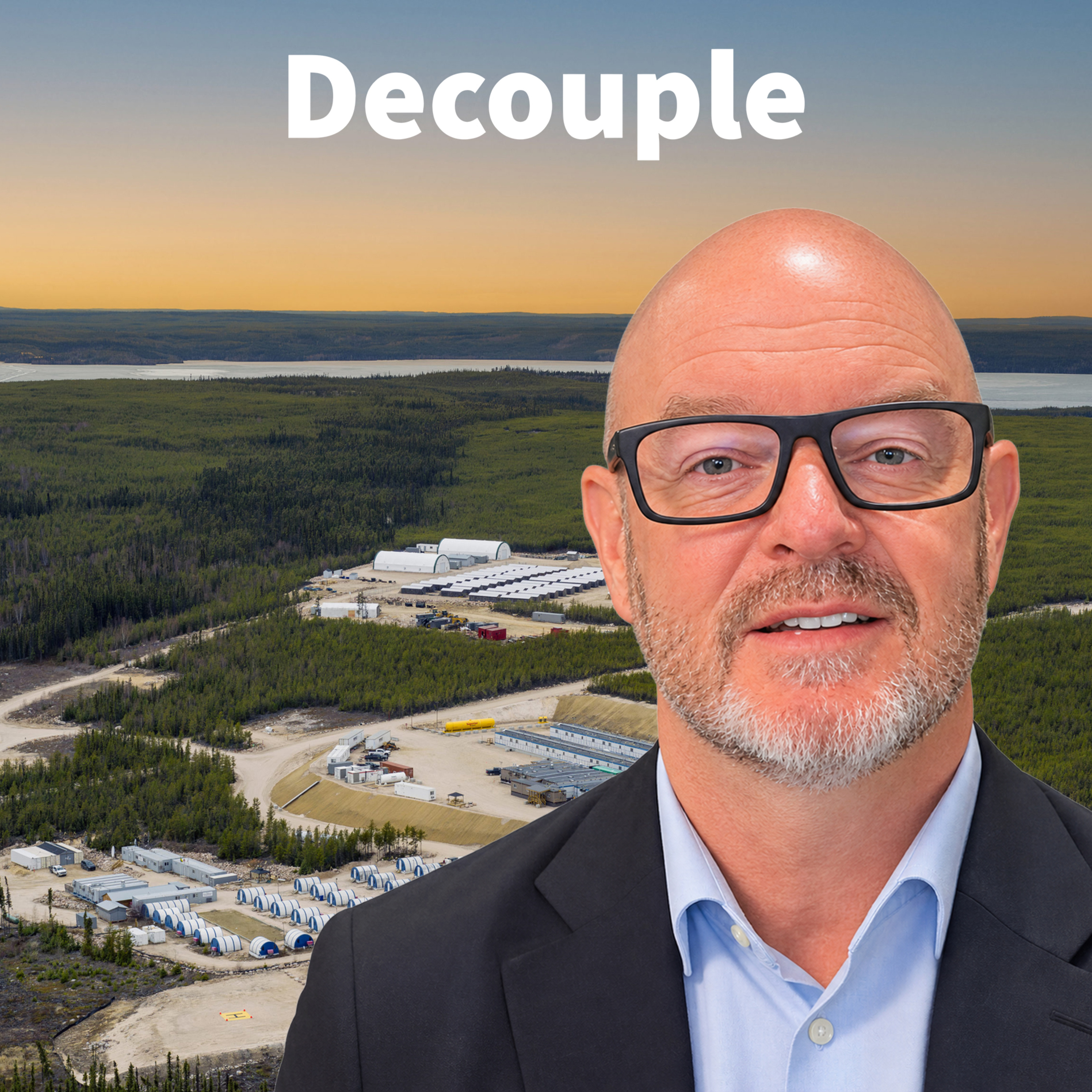
In the aftermath of the Fukushima disaster, when much of the world was turning away from nuclear energy, Leigh Curyer made a contrarian bet on uranium. He founded NexGen Energy and began exploring the largely overlooked western Athabasca Basin in Saskatchewan. The result was Arrow, one of the world's most extraordinary high-grade uranium discoveries. Now, NexGen is attempting to turn that geological prize into a producing mine capable of supplying roughly 20% of global mined uranium and more than half of Western production. With an estimated annual output of 30 million pounds of uranium from a remarkably small underground mining operation, Arrow could fundamentally reshape the global uranium market.Decouple host Chris Keefer speaks with NexGen founder and CEO Leigh Curyer about the discovery of Arrow, the unusual geology that makes it so valuable, and the formidable challenge of bringing a new uranium mine into production. They examine construction risks, engineering and labour constraints, escalating capital costs, and the lessons of troubled megaprojects. Curyer also explains his unconventional approach to uranium contracting, his expectations for future uranium prices, and why he believes NexGen can succeed where established producers have struggled. With nuclear power expanding and concerns mounting over future uranium supplies, the stakes extend well beyond a single mining project.Listen to Decouple on:• Spotify: https://open.spotify.com/show/6PNr3ml8nEQotWWavE9kQz• Apple Podcasts: https://podcasts.apple.com/us/podcast/decouple/id1516526694?uo=4• Overcast: https://overcast.fm/itunes1516526694/decouple• Pocket Casts: https://pca.st/ehbfrn44• RSS: https://anchor.fm/s/23775178/podcast/rssWebsite: https://www.decouple.media
Episode information is provided by the publisher. Listening takes place on the publisher’s service.
We’re about to time travel into the future Sam Altman is building… I interviewed Sam Altman, the CEO of OpenAI, the company behind ChatGPT. They’re trying to build a “superintelligence” that could far exceed humans in almost every field – and they just released their most powerful tool yet, GPT-5. A few years ago, that would’ve sounded like science fiction! Not anymore. In fact, they’re not alone. We’re in the middle of the most high stakes global race any of us have ever seen. Hundreds of billions of dollars and an unbelievable amount of human work… It’s a profound moment. Most people never see a huge technological shift like this in their lives and it’s happening all around us right now. So in this conversation, I’m going to try to time travel into the future with Sam Altman, to see what he’s trying to build… so you and I can really understand what’s coming. Welcome to HUGE* Conversations. Chapters: 0:00 What future are we headed for? 2:06 What can GPT-5 do that GPT-4 can’t? 6:57 Wha
🇺🇸 TWO NAVY SEALS. TWO INCREDIBLE JOURNEYS. ONE POWERFUL MISSION TO TRANSFORM YOUR FINANCIAL FUTURE! Michael Jaco welcomes fellow former Navy SEAL Larry Yatch, founder of TruPath Mastery, for an eye-opening conversation about success, leadership, financial trauma, and the hidden subconscious patterns that can keep even the most accomplished people from reaching their full potential. With 24 years as a Navy SEAL and 11 years as a CIA security operative, Michael shares the powerful lessons of mental discipline, intuition, and personal transformation that shaped his extraordinary journey. Larry brings 10 years of Navy SEAL service and an impressive career advising Fortune 50 executives. But despite achieving tremendous professional success, he discovered that the survival patterns that once made him successful were also keeping him trapped in his own business. THE BIG REVELATION: YOUR MONEY HABITS MAY HAVE VERY LITTLE TO DO WITH MONEY! From childhood programming and fear of scarcity to
For a written breakdown and key references, see the associated letter: https://open.substack.com/pub/staycuriousmetabolism/p/the-carb-loading-myth-is-finally?r=40ekz2&utm_campaign=post&utm_medium=web&showWelcomeOnShare=true (https://open.substack.com/pub/staycuriousmetabolism/p/the-carb-loading-myth-is-finally?r=40ekz2&showWelcomeOnShare=true) Paper: https://academic.oup.com/edrv/advance-article/doi/10.1210/endrev/bnaf038/8432248?login=false Description: Do you really need to carb-load for peak performance, or is that just sports nutrition inertia? In this conversation, Nick sits down with Dr. Andrew Koutnik to break down a new meta-analysis of randomized controlled trials challenging the classic “you need carbs for performance” narrative. The key twist is that the strongest predictor of fatigue across studies isn’t muscle glycogen, but a subtle drop in blood glucose and overall brain fuel. You’ll learn where the carb-loading doctrine came from, what the original studies missed, why gl
In the winter of 1944, as Nazi Germany was losing ground on every front, Hitler launched one final attempt to turn the war around. Through the dense forests of the Ardennes, German forces launched a massive surprise attack against the Allied armies, triggering one of the largest and most dramatic battles of World War II. Discover why the Allies were caught off guard, explore the harsh winter conditions that shaped the fighting, and follow the events surrounding the desperate defense of Bastogne. Learn about the German strategy, the Allied response, and the soldiers who endured weeks of uncertainty, snow, and exhaustion. Uncover how the Ardennes Offensive unfolded, why the German advance ultimately failed, and how this battle weakened Germany's ability to continue the war in Western Europe. Boring History for Sleep — Soft stories about forgotten battles, extraordinary events, and the people who shaped history.
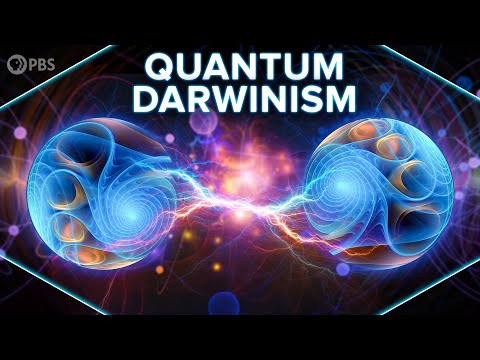
Thank you for The Great Courses Plus for supporting PBS. To learn more click http://ow.ly/oSus30qpmwX Uploaded 16-03-20 PBS Member Stations rely on viewers like you. To support your local station, go to: http://to.pbs.org/DonateSPACE Sign Up on Patreon to get access to the Space Time Discord! Check out the Space Time Merch Store This episode of space time is brought to you by the information flowing through an impossibly complex network of quantum entanglement, that just happens to mutually agree that you and I exist inside it. Oh, and Schrodinger’s cat is in here too. Hosted by Matt O'Dowd Written by Matt O'Dowd Graphics by Leonardo Scholzer, Yago Ballarini, and Pedro Osinski Directed by: Andrew Kornhaber Executive Producers: Eric Brown and Andrew Kornhaber End Credits Music by J.R.S. Schattenberg: https://www.youtube.com/channel/UCRl6-nb4iOnsij-vnpAjp0Q In quantum world things are routinely in multiple states at once - what we call a “superposition” of states. But in the classical wo
For some reason, it did not stop him.Now I just want to ask you something real quick to put you in the mind of a bear. If you found some of your favorite food just left out and you somehow, like me most of the time, just couldn’t resist the temptation. Bears live and eat by what is detected by their noses, so logically, after eating its fill, a proper expectation would be that the bear would go sleep off a large meal upwind of where its food was cached. The wind carries both scent and sound to the bear as it rests and acts as an alarm to it to defend its cache. The hide was still up in the birch, untouched. He dropped his packboard at the base of the tree and glanced up to see where he would need to climb. Movement in the brush, some three hundred feet away, caught his eye. Two bears, roughly thirty feet apart, moved through the brush. From their color and build, he identified them as grizzlies, also called coastal brown bears.Up to that day, every bear he had met in the wild had chose
Nuclear reactors are among the most sophisticated machines ever built, yet remarkably few countries possess the technological independence necessary to design, manufacture and export them without foreign permission. In this episode of Decouple, Chris Keefer is joined by Michael Seeley of The Atomic Blender to explore the extraordinary difficulty of mastering nuclear technology. From the American origins of commercial pressurized water reactors to the successful indigenization of reactor designs in France and Germany, they trace how nuclear expertise spreads between nations and why decades of engineering experience, research infrastructure and accumulated intellectual property make genuine technological independence so difficult to achieve.At the centre of the discussion is South Korea's remarkable nuclear industry, which has become one of the world's most accomplished reactor builders while remaining dependent on Westinghouse intellectual property and engineering expertise. Why did Fra
South Korea emerged from the devastation of the Korean War as one of the world's poorest countries. Within a generation, it had become an industrial powerhouse, mastering nuclear technologies originally imported from the United States and Canada. Today, Korean firms are among the world's most capable nuclear constructors, having delivered four APR1400 reactors at the UAE's Barakah nuclear power plant. Now the tables may be turning. With Washington pursuing an ambitious nuclear revival, the United States is looking to South Korea for the manufacturing expertise, skilled workforce and construction capabilities needed to turn its nuclear ambitions into reality.Chris Keefer is joined by Eun Jung Lim, professor at Kongju National University and visiting scholar at Stanford's Asia-Pacific Research Center, to explore Korea's extraordinary nuclear odyssey. They trace its origins in the developmental state of Park Chung-hee, the unlikely collaboration with North Korea through KEDO, and the indu
Customers should receive compensation for prolonged failure of essential paid online services.
Share your view, then see how readers voted. No sign-in required. This poll is shared across stories.
Do you agree or disagree?
Common Quandary
A Common Quandary to discuss
Another conversation to explore, separate from this news story.
A pill can erase your most painful memory without changing anything else. Do you take it?
A safe new treatment can remove the emotional pain attached to one chosen memory while leaving the factual memory intact. Losing the pain might bring enormous relief, but the experience shaped your relationships, choices, and sense of who you are.
Are painful memories injuries to heal or parts of ourselves to keep?