How Do Quantum States Manifest In The Classical World?
25 min
Listen through the publisher, then discuss the episode here or arrange an in-person Roundtable. Your city determines where to meet.
Roundtables are designed for groups of four, with a shared subject and room for everyone to speak. Come for discussion, with no dating expectation.
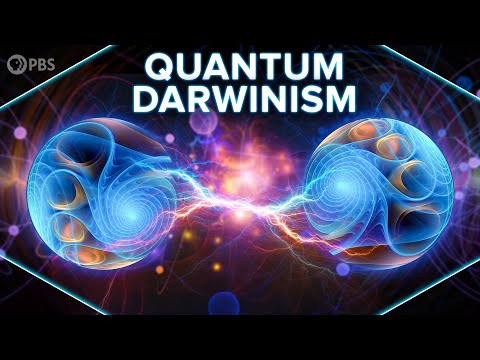
Thank you for The Great Courses Plus for supporting PBS. To learn more click http://ow.ly/oSus30qpmwX Uploaded 16-03-20 PBS Member Stations rely on viewers like you. To support your local station, go to: http://to.pbs.org/DonateSPACE Sign Up on Patreon to get access to the Space Time Discord! Check out the Space Time Merch Store This episode of space time is brought to you by the information flowing through an impossibly complex network of quantum entanglement, that just happens to mutually agree that you and I exist inside it. Oh, and Schrodinger’s cat is in here too. Hosted by Matt O'Dowd Written by Matt O'Dowd Graphics by Leonardo Scholzer, Yago Ballarini, and Pedro Osinski Directed by: Andrew Kornhaber Executive Producers: Eric Brown and Andrew Kornhaber End Credits Music by J.R.S. Schattenberg: https://www.youtube.com/channel/UCRl6-nb4iOnsij-vnpAjp0Q In quantum world things are routinely in multiple states at once - what we call a “superposition” of states. But in the classical world of large scales, things are either this or that. The famous thought experiment is Schrodinger’s cat - in which a cat is in an opaque box with a vial of deadly poison that’s released on the radioactive decay of an atom. Quantum mechanics tells us that the atom’s wavefunction can be in a superposition of states - simultaneously decayed or not decayed. So is the cat’s wavefunction also in a superposition of both dead and alive. Special Thanks to Our Patreon Sponsors Big Bang Sponsors Alexander Tamas David Nicklas Fabrice Eap Juan Benet Morgan Hough Radu Negulescu Quasar Sponsors Christina Oegren Mark Heising Vinnie Falco Hyper Nova Sponsors Chuck Zegar Danton Spivey Donal Botkin Edmund Fokschaner Hank S John Hofmann John Pollock John R. Slavik Jordan Young Joseph Salomone Julian Tyacke Justin Ash Mathew Matthew O'Connor Matthew Ryan Syed Ansar Timothy McCulloch Gamma Ray Burst Sponsors A G Adrian Hatch Adrien Molyneux AlecZero Andreas Nautsch Angela Prigge Arefa Ahmad Bradley Jenkins Brandon labonte Brandon Lattin Brian Blanchard Craig Stonaha Dan Warren Daniel Lyons David Bethala DFaulk Douglas Cantrell Eric Kiebler Frederic Simon Geoffrey Short Graydon Goss Greg Smith John Funai John Robinson Jonathan Nesfeder Josh Thomas Kevin Lee Kevin Warne Kyle Hofer Malte Ubl Michael Conroy Nick Virtue Nick Wright Nickolas Andrew Freeman Patrick Sutton Paul Rose Protius Protius Randall Sylvia Robert Ilardi Scott Gossett Sean Warniaha Shane Calimlim Sipke Schoorstra Steve Bradshaw Tatiana Vorovchenko Tim Stephani Tonyface Tybie Fitzhugh Yannick Weyns Yurii Konovaliuk
Episode information is provided by the publisher. Listening takes place on the publisher’s service.
Download a free audiobook version of "Circe" and support TED-Ed's nonprofit mission: https://www.audible.com/ted-ed Uploaded 27-08-19 Check out our full book recommendation: https://shop.ed.ted.com/collections/ted-ed-book-recommendations/products/circe -- Hercules, the strongest man alive with a mighty heart to match. Orpheus, charmer of nature and master of music. Castor and Pollux, the twin tricksters. The Boreads, sons of the North Wind who could hurtle through the air. Brought together by a young man’s call for help, these heroes joined forces and named themselves the Argonauts. Iseult Gillespie traces their quest to steal the Golden Fleece. Lesson by Iseult Gillespie, directed by Kozmonot Animation Studio. Sign up for our newsletter: http://bit.ly/TEDEdNewsletter Support us on Patreon: http://bit.ly/TEDEdPatreon Find us on Twitter: http://bit.ly/TEDEdTwitter Peep us on Instagram: http://bit.ly/TEDEdInstagram View full lesson: https://ed.ted.com/lessons/the-myth-of-jason-and-the-ar
In Part 2 of my conversation with manifestation researcher, coach and bestselling author Matt Cooke, we explore destiny, reincarnation and the nature of consciousness. Matt explains why the quality of our consciousness shapes how we experience life and why we do not manifest what we want - we manifest who we are being. We also discuss our relationship with money, becoming conscious of limiting beliefs and the importance of rehearsing who we are becoming by thinking, feeling, acting and behaving like the person already living the life we want to create. Matt also shares the practices he believes are non-negotiable for manifestation. Visit Matt's Instagram (https://www.instagram.com/mattcookecoach/) Matt's Website (https://www.mattcooke.me/) Beyond Wanting - Matt's Book (https://www.amazon.ie/Beyond-Wanting-Art-True-Manifestation/dp/059385330X) Follow The Beyond Podcast here (https://www.instagram.com/beyondpodcast333/). Join The Beyond Community here (https://the-beyond.mn.co/landing/).
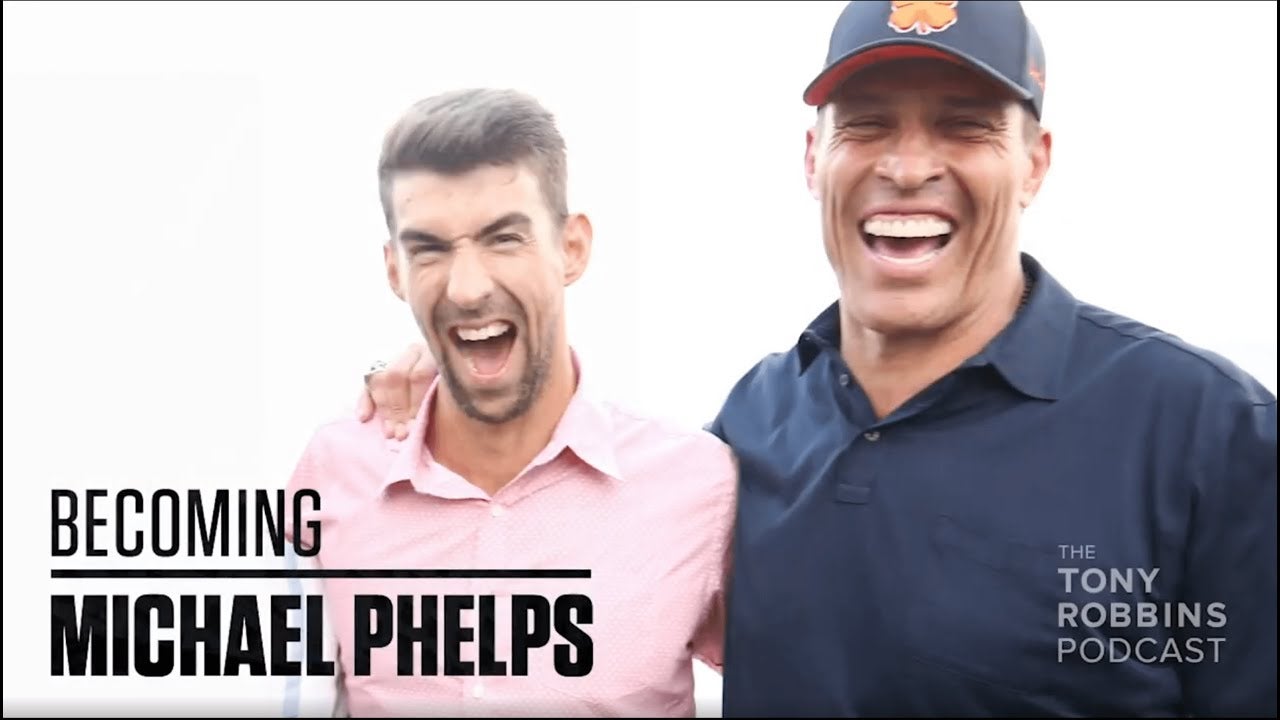
American swimmer Michael Phelps knows about paving the road to greatness. As the most decorated Olympian of all time, Phelps holds 28 medals. Additionally, he holds all-time records for Olympic gold medals, Olympic gold medals in individual events and Olympic medals in individual events. Uploaded 28-06-20 But getting to the top, and staying there, wasn’t easy. In this episode, Phelps sits down with Tony Robbins to discuss becoming one of the most successful athletes of all time. They talk about his training schedule, the highs of being an Olympic athlete and the let down that happens after the Olympics are over. Phelps also discusses the depressive states he would fall into because he wasn’t sure who he was outside of swimming. Raised mostly by his mother after his parents’ divorce, he had a lot of unresolved anger toward his father. These feelings of hurt and rejection played a big role in his decision to ask for help for his mental health struggles in 2012. During in-patient treatmen
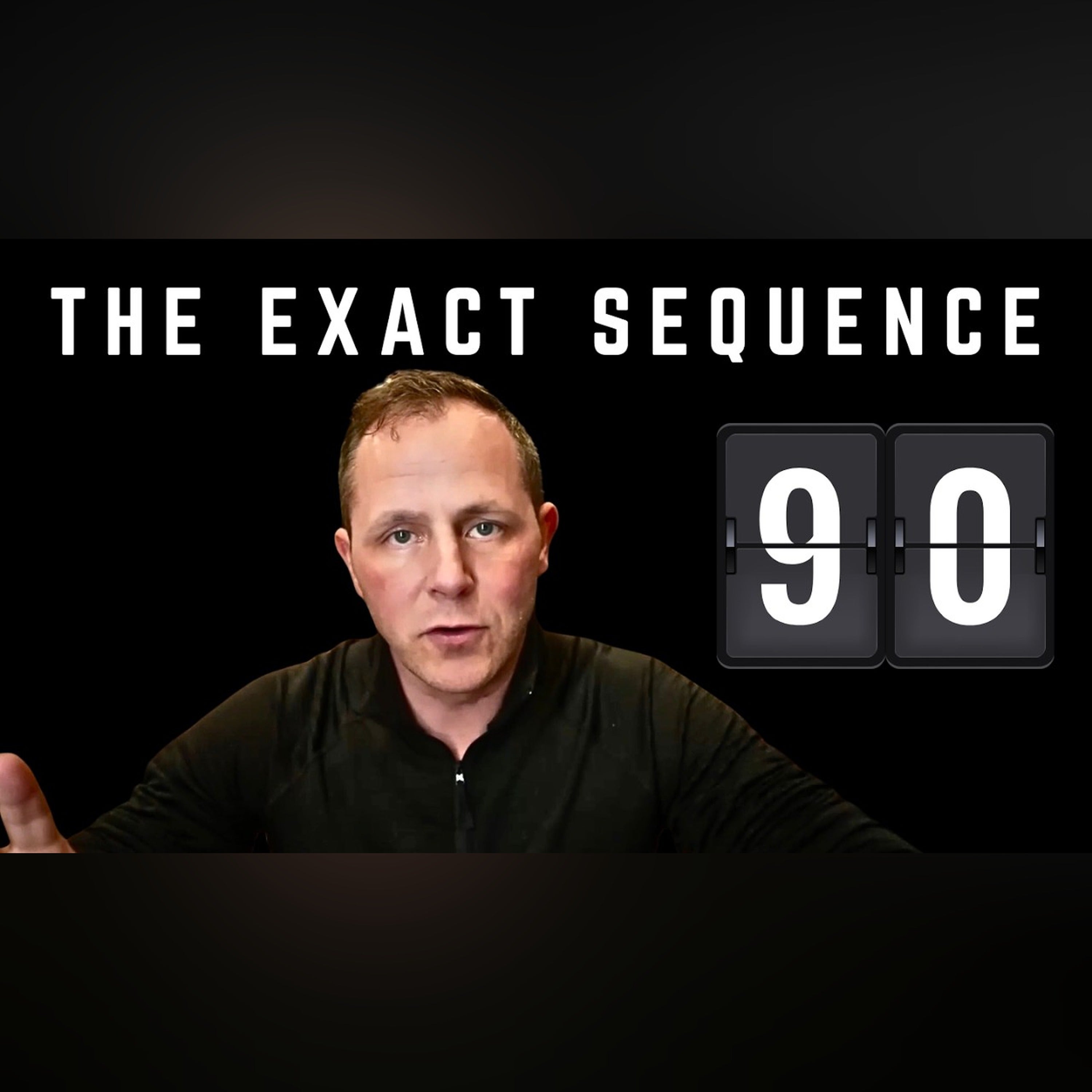
Master the skills that change lives — enroll in your free human behavior course today: https://nci.university/learn Uploaded 14-03-26 During the first ninety seconds of any interaction, a window opens in the human brain that most people never notice. A specific sequence of neurological events unfolds — predictable, exploitable, and almost never taught outside of military and intelligence training. Very few people alive understand the full mechanics of what happens inside that window. Only operators, interrogators, and behavioral scientists with the right access have ever had this mapped out for them. Someone made sure it stayed that way. Every interaction you've ever had — every negotiation, every first impression, every moment you walked into a room — was governed by this sequence. You were either running it or it was being run on you. Most people spend their entire lives on the receiving end without ever knowing it. Language is the delivery system. But language isn't where it starts.
What if your AI agent could find the people you should know before you even start looking? Cosign is building a professional network around reputation and trusted recommendations, and now agents can use that network too. MTS host Sophia Dew sits down with a16z’s David Booth and Cosign’s Bella Nazzari to discuss what they’ve learned since launching Cosign, why traditional profiles often miss the operators doing the most important work, and how the Cosign Awards are surfacing talent through the people willing to vouch for them. They also explore an emerging behavior: people connecting their agents to Cosign to continuously find relevant people, lists, and opportunities, and what professional networking could look like when both humans and their agents participate. Resources: Follow David Booth: https://x.com/davidbooth Follow Bella Nazzari: https://x.com/nazzari Follow Sophia Dew: https://x.com/sophiadew Learn more about Cosign:https://cosign.co/ Connect your agent to Cosign:https://cosi
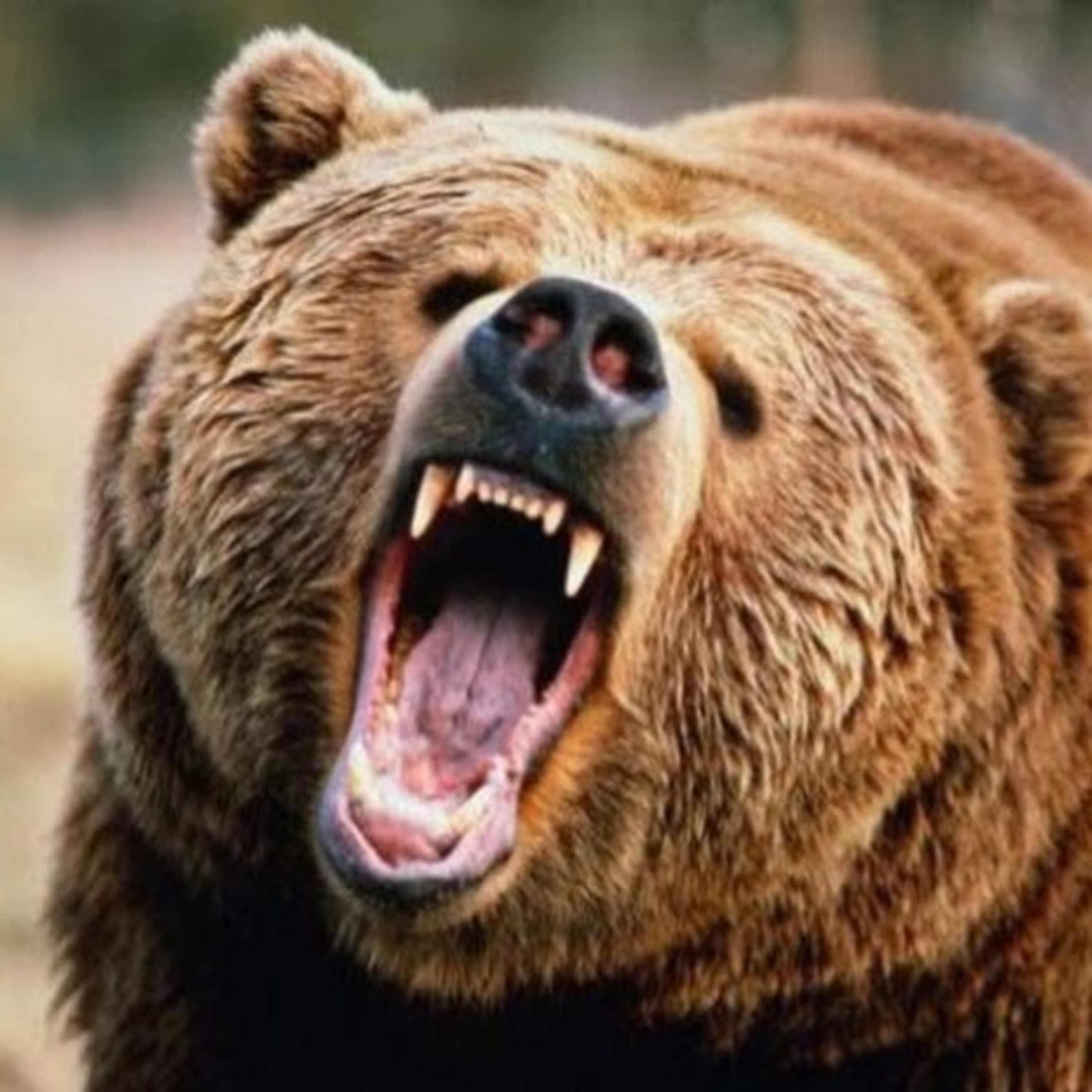
For some reason, it did not stop him.Now I just want to ask you something real quick to put you in the mind of a bear. If you found some of your favorite food just left out and you somehow, like me most of the time, just couldn’t resist the temptation. Bears live and eat by what is detected by their noses, so logically, after eating its fill, a proper expectation would be that the bear would go sleep off a large meal upwind of where its food was cached. The wind carries both scent and sound to the bear as it rests and acts as an alarm to it to defend its cache. The hide was still up in the birch, untouched. He dropped his packboard at the base of the tree and glanced up to see where he would need to climb. Movement in the brush, some three hundred feet away, caught his eye. Two bears, roughly thirty feet apart, moved through the brush. From their color and build, he identified them as grizzlies, also called coastal brown bears.Up to that day, every bear he had met in the wild had chose
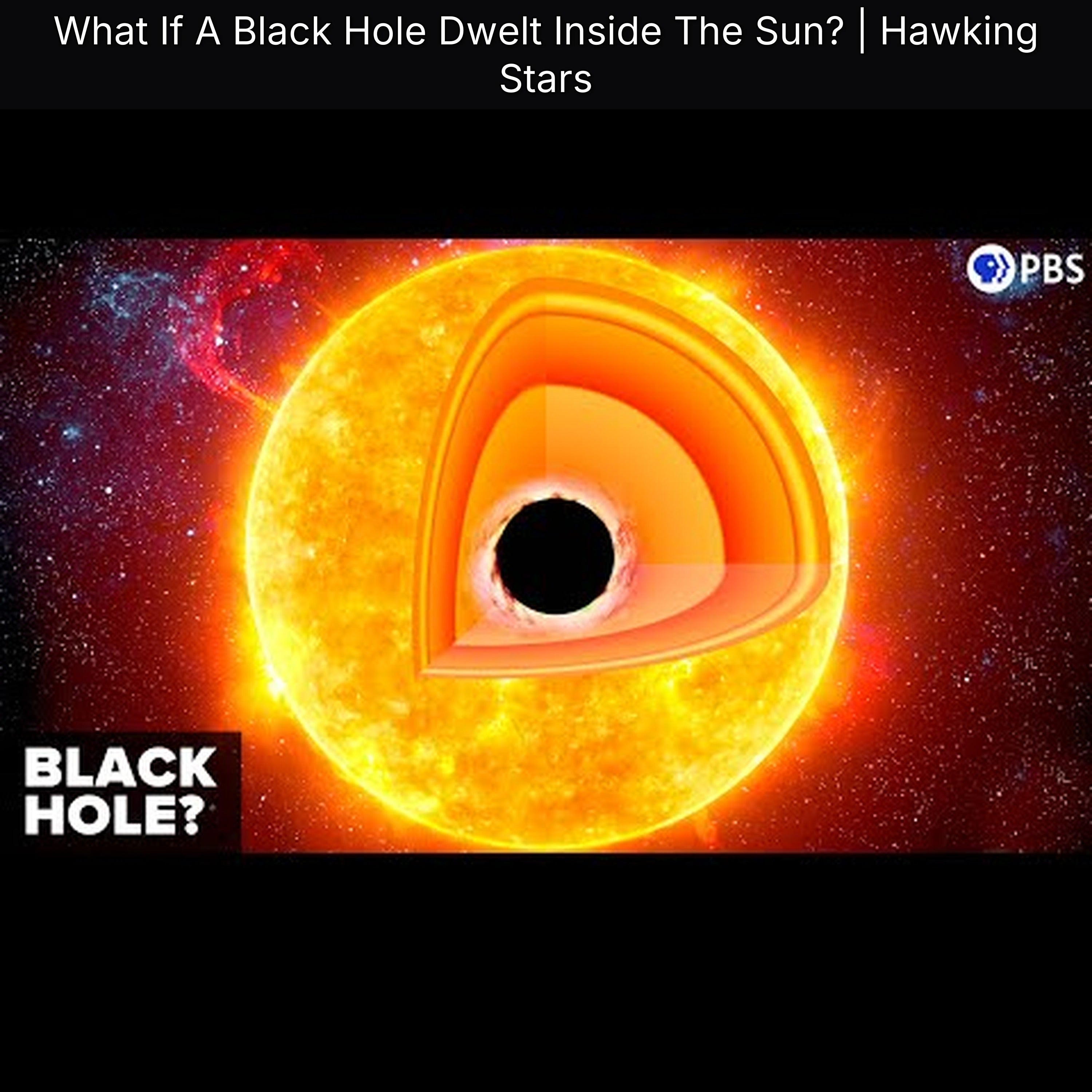
PBS Member Stations rely on viewers like you. To support your local station, go to:http://to.pbs.org/DonateSPACE Sign Up on Patreon to get access to the Space Time Discord! A fun nightmare sci-fi scenario is the sun being consumed by a black hole. Fortunately the chance of a black hole randomly wandering into our solar system is pretty tiny. That’s good news. But what if it’s already here, hiding in the core of the Sun and slowly eating it from the inside out? Hawking Stars Journal Papers: Search the Entire Space Time Library Here: https://search.pbsspacetime.com/ Hosted by Matt O'Dowd Written by Matt Caplan & Matt O'Dowd Post Production by Leonardo Scholzer, Yago Ballarini & Stephanie Faria Directed by Andrew Kornhaber Associate Producer: Bahar Gholipour Executive Producers: Eric Brown & Andrew Kornhaber Executive in Charge for PBS: Maribel Lopez Director of Programming for PBS: Gabrielle Ewing Assistant Director of Programming for PBS: John Campbell Spacetime is produced by Kornhaber
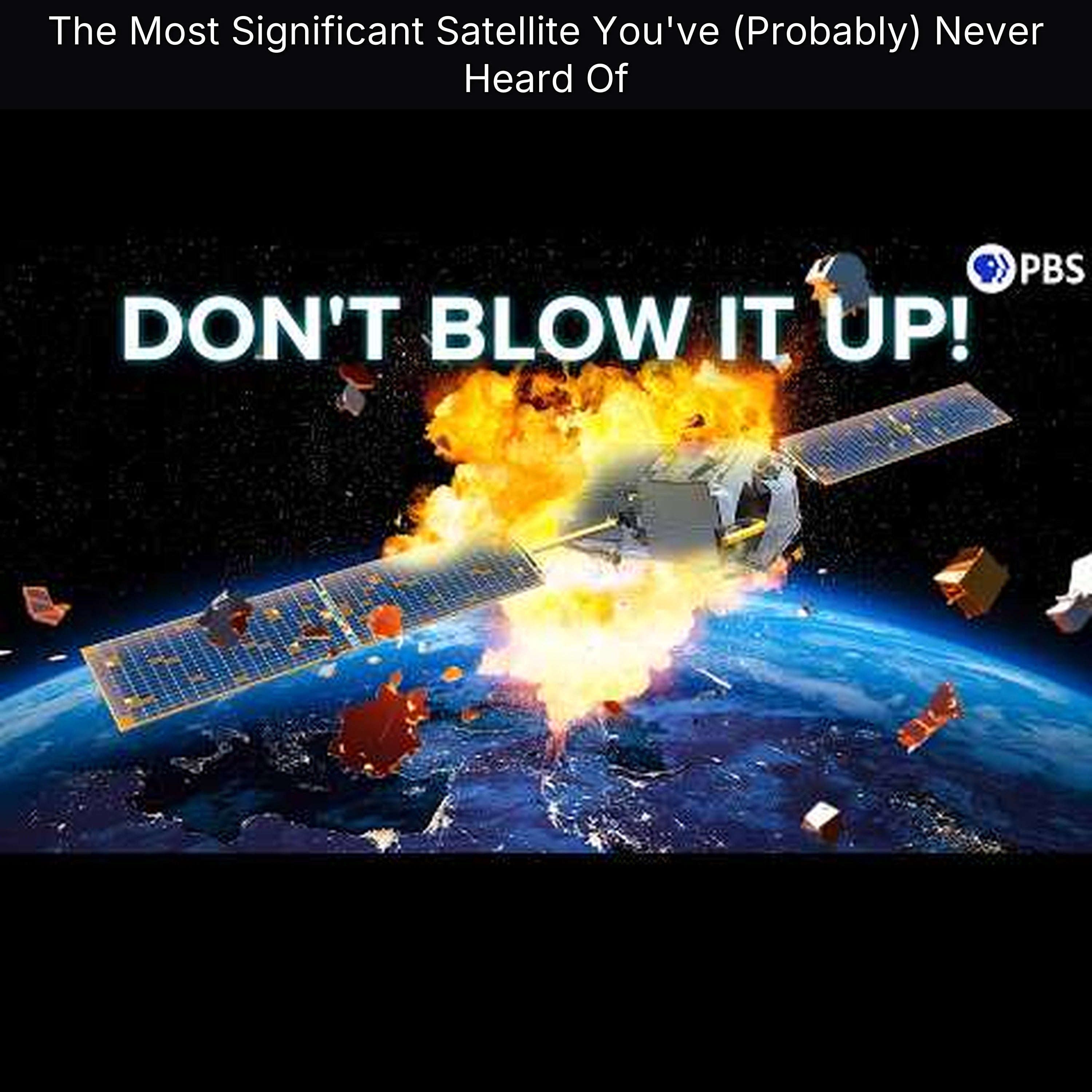
Remove your personal information from the web at https://joindeleteme.com/SPACETIME One of the most important reasons we go to space is to know our own planet better. Today I'm going to tell you about an orbiting facility that literally watches Earth's biosphere breath and grow and die with incredible resolution. I'll talk about its profound existential and economic importance, and about why it's in danger of being lost. PBS Member Stations rely on viewers like you. To support your local station, go to:http://to.pbs.org/DonateSPACE Sign Up on Patreon to get access to the Space Time Discord! Check out the Space Time Merch Store Pale Blue Dot By Carl Sagan Search the Entire Space Time Library Here: https://search.pbsspacetime.com/ Hosted by Matt O'Dowd Written by Fernando Franco Félix & Matt O'Dowd Post Production by Leonardo Scholzer, Yago Ballarini & Stephanie Faria Directed by Andrew Kornhaber Associate Producer: Bahar Gholipour Executive Producer: Andrew Kornhaber Executive in Charge
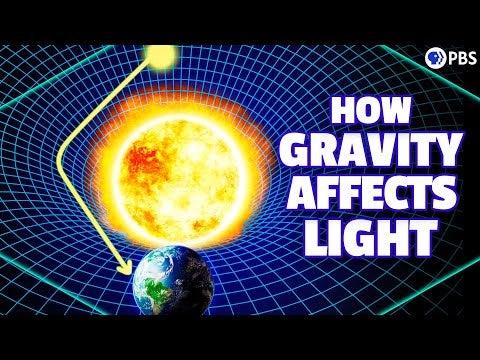
PBS Member Stations rely on viewers like you. To support your local station, go to: http://to.pbs.org/DonateSPACE ↓ More info below ↓ Uploaded 09-03-21 We know that gravity exerts its pull on light, and we have an explanation for why. Actually, we have multiple explanations that all predict the same thing. And at first glance, these explanations seem to describe completely different causes. So what is the true connection between light and gravity, or is truth, in fact, entirely relative? Sabine Hossenfelder's episode "Do we travel through time at the speed of light?" Check out the Space Time Merch Store Hosted by Matt O'Dowd Written by Matt O'Dowd Graphics by Leonardo Scholzer, Yago Ballarini, Pedro Osinski, Adriano Leal and Stephanie Faria GFX Visualizations: Katherine Kornei Directed by Andrew Kornhaber Assistant Producer: Setare Gholipour Executive Producers: Eric Brown and Andrew Kornhaber "FREE GMC Motorhome reimagined low poly" (https://skfb.ly/6XxAN) by Karol Miklas is licensed
The public should normally know who owns businesses that affect community life.
Share your view, then see how readers voted. No sign-in required. This poll is shared across stories.
Do you agree or disagree?
Common Quandary
A Common Quandary to discuss
Another conversation to explore, separate from this news story.
You make a hilarious deepfake of a friend for their birthday. Must you ask first?
For a private birthday party, someone creates a convincing video of a mutual friend delivering an absurd speech. Everyone, including the subject, will immediately understand that it is fake.
Does obvious fiction eliminate the need for consent?