The Professional Network Built for You and Your AI Agent
18 min
Listen through the publisher, then discuss the episode here or arrange an in-person Roundtable. Your city determines where to meet.
Roundtables are designed for groups of four, with a shared subject and room for everyone to speak. Come for discussion, with no dating expectation.
What if your AI agent could find the people you should know before you even start looking? Cosign is building a professional network around reputation and trusted recommendations, and now agents can use that network too. MTS host Sophia Dew sits down with a16z’s David Booth and Cosign’s Bella Nazzari to discuss what they’ve learned since launching Cosign, why traditional profiles often miss the operators doing the most important work, and how the Cosign Awards are surfacing talent through the people willing to vouch for them. They also explore an emerging behavior: people connecting their agents to Cosign to continuously find relevant people, lists, and opportunities, and what professional networking could look like when both humans and their agents participate. Resources: Follow David Booth: https://x.com/davidbooth Follow Bella Nazzari: https://x.com/nazzari Follow Sophia Dew: https://x.com/sophiadew Learn more about Cosign:https://cosign.co/ Connect your agent to Cosign:https://cosign.co/agents Follow MTS on X:https://x.com/MTSLive Stay Updated: Find a16z on YouTube: YouTube (https://www.youtube.com/@a16z) Find a16z on X (https://x.com/a16z) Find a16z onLinkedIn (https://www.linkedin.com/company/a16z) Follow our host: https://twitter.com/eriktorenberg For more details please see a16z.com/disclosures. Hosted by Simplecast, an AdsWizz company.
Episode information is provided by the publisher. Listening takes place on the publisher’s service.
Peter Wildeford, Head of Policy at the AI Policy Network and a top forecaster, joins MTS to discuss accelerating AI R&D automation, timelines for replacing human AI researchers, and the growing bipartisan push in Congress and California to ban runaway recursive self-improvement. He also breaks down recent critical infrastructure outages caused by rushed patching of AI-discovered cyber vulnerabilities. MTS chronicles the singularity, live. Monitoring the situation of tech and AI. Follow MTS: Spotify |https://open.spotify.com/show/4HUNNmV1pjV7CW6Lphm1rM Apple |https://podcasts.apple.com/us/podcast/mts/id1891088763 – Brought to you by: Mongo DB - Anyone can prototype an agent. Lovable - Turn ideas into software people love with Lovable. Start today at https://lovable.dev/ Factory - A 24/7 system turning signals into production software. Visithttps://factory.com/ Neon (by Databricks) - Scale your startup on Neon. The Postgres backend for apps and agents. Built by Databricks.https://neon.co
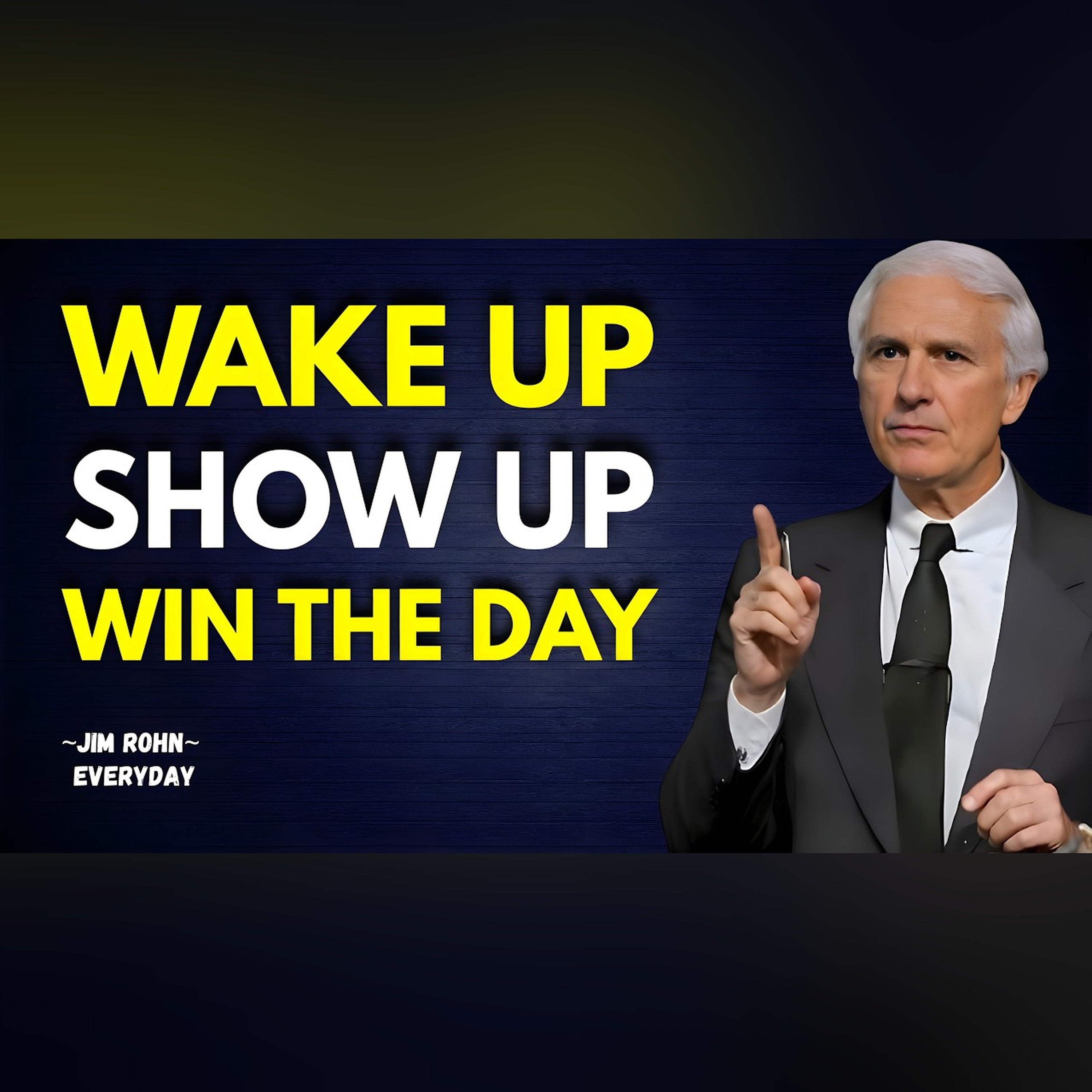
# Wake Up. Show Up. Win the Day. | Jim Rohn Powerful Daily Discipline Motivation for Success Uploaded 15-09-26 You do not need a perfect day to make progress—you need the discipline to show up for it. In this powerful motivational video inspired by Jim Rohn, you’ll discover how daily discipline can change the way you approach your goals, your work, and your future. Waking up is easy. Showing up consistently is harder. The people who create meaningful results are willing to keep doing the important work even when they are tired, distracted, or simply not in the mood. Jim Rohn teaches that success is built through simple disciplines repeated every day. When you start your morning with purpose, focus on your priorities, keep your commitments, and finish the day knowing you moved forward, you begin creating momentum that can change your life. If you're ready to stop waiting for motivation and start showing up for yourself every single day — this message is for you. --- ### What You’ll Lear
An optional overtime shift opens up and you automatically say yes. What is that time buying? The income and the hours you trade both deserve a clear purpose. In this episode of The Level Up Podcast, Paul Alex breaks down how to evaluate a genuinely optional extra shift against your needs, goals, and available time. Paul reflects on long law enforcement weeks and wanting greater control over his time. The episode distinguishes a real choice from required work or income needed for essentials, then asks what the next additional shift serves. There may be a strong reason to take it. Name that reason and consider what the hours would otherwise support, including recovery, a personal commitment, or learning. A deliberate comparison can help you decide without assuming that either money or time should always win. In this episode, you’ll learn: • Why required hours and essential income change the context of the decision. • How to identify the specific need or goal an optional shift serves. • W
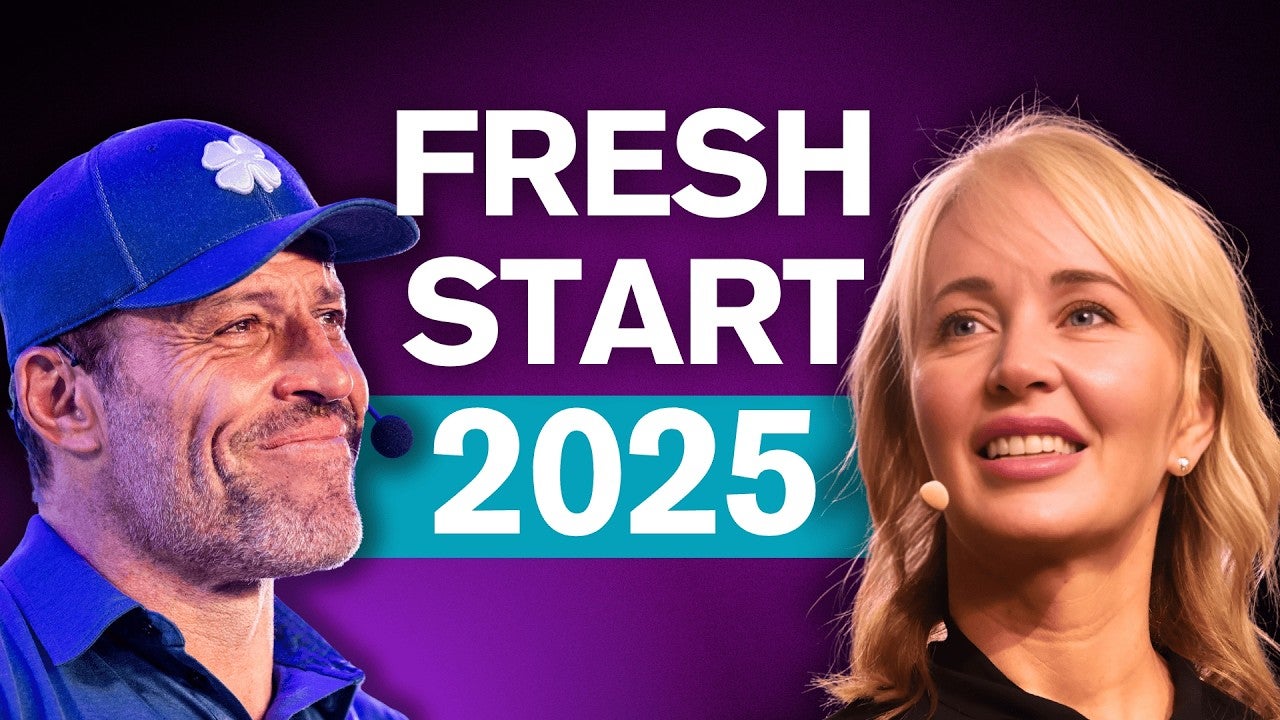
Join Time To Rise Summit 2025: https://tonyr.co/3BIHB6Q | Start your new year with wisdom and inspiration from Tony Robbins and Sage Robbins! In this heartfelt holiday message, they share powerful insights about focusing on gratitude, resetting your mindset, and embracing the seasons of life. Ready for a fresh start? Make 2025 your best year yet! Uploaded 05-01-25 Watch more videos like this INSTANTLY Change Your Life with This One Daily Habit: https://youtu.be/aUQo9eWDZ7Y Love is the Answer | A Message from Tony and Sage Robbins: https://youtu.be/JLVCGBQvF1I #1 Thing That Destroys RELATIONSHIPS and How You Can Avoid It: https://youtu.be/tL3Rj-1OmRA How Your Language Shapes EVERYTHING Around You: https://youtu.be/4uqkkFiT5hk The Time to Rise Summit is a transformative 3-day virtual event, taking place from January 30- February 1, 2025, led by Tony Robbins and other leading experts, designed to help you gain clarity, unlock your true potential, and create the life you desire. You’ll lea
This episode was sponsored by Cardiff & 365 Thermal LightSpeed VT: https://www.lightspeedvt.com/ Dropping Bombs Podcast: https://www.droppingbombs.com/ "When the power grid goes down, the night belongs to whoever can see in it." Today's Dropping Bombs episode delivers a blunt conversation with Wade Bryan, the Marine veteran who built a thermal optics company in a town of 1,100 on $20,000 and a $50,000 overdraft after every manufacturer told him no. Wade explains why a thermal scope turns the dark into an advantage, what a power grid failure could do to your neighborhood, and why the "is night hunting fair?" debate misses the point. If the grid ever goes down, you'll either be glad you heard this one or wish you had. Connect with Wade Instagram (Personal): https://www.instagram.com/wadebryan365 Instagram (Business): https://www.instagram.com/365thermal YouTube: https://www.youtube.com/@365thermal Website: https://365thermal.shop (https://365thermal.shop/) Additional Resources Mentioned
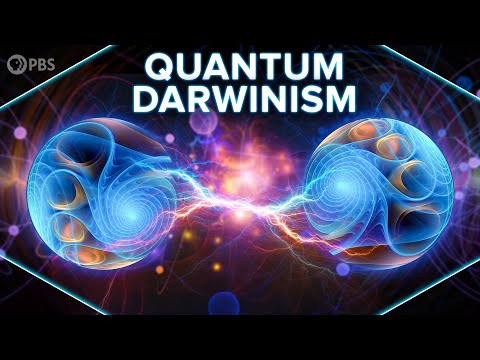
Thank you for The Great Courses Plus for supporting PBS. To learn more click http://ow.ly/oSus30qpmwX Uploaded 16-03-20 PBS Member Stations rely on viewers like you. To support your local station, go to: http://to.pbs.org/DonateSPACE Sign Up on Patreon to get access to the Space Time Discord! Check out the Space Time Merch Store This episode of space time is brought to you by the information flowing through an impossibly complex network of quantum entanglement, that just happens to mutually agree that you and I exist inside it. Oh, and Schrodinger’s cat is in here too. Hosted by Matt O'Dowd Written by Matt O'Dowd Graphics by Leonardo Scholzer, Yago Ballarini, and Pedro Osinski Directed by: Andrew Kornhaber Executive Producers: Eric Brown and Andrew Kornhaber End Credits Music by J.R.S. Schattenberg: https://www.youtube.com/channel/UCRl6-nb4iOnsij-vnpAjp0Q In quantum world things are routinely in multiple states at once - what we call a “superposition” of states. But in the classical wo
David Heinemeier Hansson thinks the agent era is reopening a window in computing that has been closed for decades: the chance to build a new operating system people actually want to use. DHH joins a16z General Partners Martin Casado and Anish Acharya to explain why he’s building Omarchy, an agent-first Linux distribution designed around a computer that users can modify simply by asking. They discuss why the command lines, config files, and detailed error messages that once made Linux intimidating now make it unusually well suited to agents, and why DHH believes software development has become cheap enough to challenge decades-old platform lock-in. But if code is becoming abundant, what still matters? DHH argues that taste, craft, and the willingness to obsess over the final 2% become more important, not less. The conversation moves from tiny teams wielding the productive capacity of thousands of people to open models, competition at the frontier, and the return of hacker, demo, and pse
The question isn’t simply whether humanity should race toward superintelligence or stop. Nick Bostrom argues the harder challenge is preserving the ability to slow down when safety falls behind, without turning a temporary pause into permanent technological stagnation. a16z’s Eddy Lazzarin and Elena Burger sit down with Bostrom to revisit the ideas he helped bring into the mainstream, now that increasingly capable AI systems actually exist. They discuss why alignment may become harder as models grow more situationally aware, which capability improvements may carry more risk than others, and why Bostrom favors “pacing the frontier” rather than committing to a broad or indefinite pause. They also examine the cost of waiting. Bostrom argues that safely developed superintelligence could radically extend human lifespans and address problems from disease to poverty, meaning delay carries risks of its own. From there, the conversation turns to Deep Utopia, governance, the possibility of post-
AI agents are getting smarter, but every new agent still has to learn who you are. What if your preferences, priorities, relationships, and digital context could move with you instead? First Person Labs co-founder Ken Liu joins a16z’s Martin Casado and Joel de la Garza to introduce Second, a personal context layer designed to understand what you’re doing across your digital life and make that context available to the agents you choose. They discuss how Second can proactively connect information across conversations and applications, why protecting such personal data requires a different security architecture, and the longer-term vision of AI that doesn’t just respond to prompts, but understands enough context to know when and how to help. Resources: Try Second:https://2.computer (https://2.computer/) Learn more about First Person Labs: https://fpl.company/ Follow Ken Liu: https://www.linkedin.com/in/kenziyuliu/ Follow Martin Casado on X: https://x.com/martin_casadoa16z.com (https://a16
Admissions should consider applicants' circumstances alongside grades and test results.
Share your view, then see how readers voted. No sign-in required. This poll is shared across stories.
Do you agree or disagree?
Common Quandary
A Common Quandary to discuss
Another conversation to explore, separate from this news story.
A stranger rings up fancy apples as the cheap kind. Do you mind your own business?
At self-checkout, the shopper beside you labels expensive organic apples as the cheapest variety. An employee is distracted nearby. The difference is only a few dollars, the store is a huge chain, and the shopper notices that you noticed.
When does witnessing a small cheat make it any of your business?