So we've been talking about civil rights for the last few episodes now, and we're finally going to wrap this discussion up with the rather controversial topic of affirmative action. We'll explain what exactly affirmative action is, who it is for, and why it still exists. Now, affirmative action is a pretty problematic concept. So we'll get into the court's rationalization for it in the 70s as well as its fall from favor in more recent years. Now, people tend to have pretty strong, and varying opinions, about this stuff - so we'll start talking about how these opinions are informed next week when we start our discussion on politics. Produced in collaboration with PBS Digital Studios: http://youtube.com/pbsdigitalstudios Support is provided by Voqal: http://www.voqal.org (http://www.voqal.org/) All attributed images are licensed under Creative Commons by Attribution 4.0 Want to find Crash Course elsewhere on the internet? Facebook - http://www.facebook.com/YouTubeCrashCourse Twitter - ht
Tonight, we’re joined by Derek Condit in Washington State, a U.S. Army veteran and retired correctional officer whose unusual experiences have followed him from the forests of the Pacific Northwest to the grounds of a maximum-security prison. On his way to work one night, Derek watched an enormous figure cross Highway 2 in just three strides. Years later, while hiking near Mount Baker, he describes the forest falling completely silent before a face appeared from behind a cedar tree. What followed left him wondering whether the encounter had involved more than simply being watched, and whether an object left on the trail was intended for him. During overnight patrols at the Washington State Reformatory in Monroe, Derek also witnessed a strange white spiral forming near the prison. Then came three low-flying, unmarked helicopters. He could hear the first and the third, but says the aircraft between them passed overhead in complete silence. Inside the prison, a locked gate and a terrified
What would you do? Tell us (https://www.buzzsprout.com/2563598/fan_mail/new) What happens when the career you’ve worked so hard for leaves you feeling like you’ve got nothing left to give? We know how you feel, but don't worry, it's not all doom and gloom! This week, Brendan and Charlotte are joined by Dr James Greenwood for an honest conversation about burnout, compassion fatigue and juggling veterinary life with parenthood—and where pottery fits into it all! We talk about stepping away from vet med for family or health reasons, the feelings that can come with taking a break, and how daunting it can be to get back on the bike again. From rebuilding confidence to finding space for life outside the consulting room, we explore what a sustainable career in this profession might look like. Expect humour, some difficult conversations and a reminder that you don’t have to have everything figured out to take your next step. Whether you’re feeling stretched, considering time out or finding you
Why aren’t commercial flights getting faster? Dig into the technological and environmental problems facing supersonic flight. Uploaded 15-04-21 -- In 1996, a British Airways plane flew from New York to London in a record-breaking two hours and fifty-three minutes. Today, however, passengers flying the same route can expect to spend no less than six hours in the air — twice as long. So why, in a world where everything seems to be getting faster, have commercial flights lagged behind? Alex Gendler details the problems facing supersonic flight. Lesson by Alex Gendler, directed by Zedem Media. Support Our Non-Profit Mission ---------------------------------------------- Support us on Patreon: http://bit.ly/TEDEdPatreon Check out our merch: http://bit.ly/TEDEDShop ---------------------------------------------- Connect With Us ---------------------------------------------- Sign up for our newsletter: http://bit.ly/TEDEdNewsletter Find us on Twitter: http://bit.ly/TEDEdTwitter Peep us on Inst
The Battle of the Alamo has become one of the most enduring legends of American history. Remembered as a heroic last stand against overwhelming odds, the 1836 siege occupies a powerful place in the story of Texas independence. Yet behind the familiar image of brave defenders surrounded by a vast army lies a much more complicated history. Travel back to Mexican Texas, when political tensions, competing visions of government, and growing conflicts over slavery and immigration pushed the region toward rebellion. Discover why American settlers and Tejano residents joined the fight for independence, how the Alamo became a strategic stronghold, and why figures such as William Barret Travis, James Bowie, and Davy Crockett became part of its enduring legend. Explore the thirteen-day siege, the Mexican army under General Antonio López de Santa Anna, and the events that led to the fortress's fall in March 1836. Beyond the battlefield, examine how the defeat became a rallying cry for the Texan re
Fall asleep to this quiet science story. A Boring Science For Sleep episode about Why Mars Missions Take Months to Reach Their Goal. Why Mars Missions Take Months to Reach Their Goal Settle in for a quiet exploration of Why Mars Missions Take Months to Reach Their Goal. This episode follows Halfway and Still Curving; The Ring, the Shield, the Watchers; Aiming Where Mars Will Be; Missed Windows and Quiet Recoveries; Braking Into a New Home. Listen closely or let the details drift past. If you enjoy this quiet science bedtime pace, you might also like Psalms for Sleep on Spotify — same quiet rhythm, different night. Search Spotify for Psalms for Sleep.
Why spend all that effort chasing after prey when you could just convince them to come to you? This episode, we explore the many and varied ways that predators lure their prey, from dangling lights to strategically-placed bait. And we’ll discuss the evolutionary pros and cons of this life strategy, and how all sorts of animals – and plants – make the most of it. In the news: big Jurassic bugs, big Jurassic belemnites, ocean amphibians, and aquatic anatomy. Time Markers: Intro & Announcements: 00:00:00 News: 00:05:35 Main discussion, Part 1: 00:38:50 Main discussion, Part 2: 01:29:25 Patron question: 01:55:20 Submit your question for the End of the Year Q&A! Got a topic you want to hear about? Submit your episode request here: https://commondescentpodcast.com/request-a-topic/ Lots more ways to connect with us: https://linktr.ee/common_descent The Intro and Outro music is “On the Origin of Species” by Protodome. More music like this at http://ocremix.org Musical Interludes are "Professor
If cells and organs never talked to each other, an animal would fall apart faster than a boy band after the popular one goes solo. Thankfully, that’s where the nervous and endocrine systems come in! In this episode of Crash Course Biology, we’ll learn how they use neurons, hormones, and more to keep animals’ bodies coordinated. Introduction: Internal communication in animals 00:00 Why communication matters 01:01 The nervous system 01:58 What happens when you step on a Lego? 03:48 Hormones 06:19 Fight or Flight 08:01 Review & Credits 09:07 This series was produced in collaboration with HHMI BioInteractive, committed to empowering educators and inspiring students with engaging, accessible, and quality classroom resources. Visit https://BioInteractive.org/CrashCourse (https://biointeractive.org/CrashCourse) for more information. Are you an educator looking for what NGSS Standards are covered in this episode? Check out our Educator Standards Database for Biology here: https://www.thecrashc
To order Suicidal Empathy: https://lnk.to/SuicidalEmpathy _______________________________________ If you appreciate my work and would like to support it: _______________________________________ This clip was posted on November 7, 2026 on my YouTube channel as THE SAAD TRUTH_2121: https://youtu.be/Svs50vlM2PE _______________________________________ I count on my fans to support my efforts. You can donate via Patreon, PayPal, and/or SubscribeStar. _______________________________________ Dr. In addition to his scientific work, Dr. _______________________________________ Note: The use of the three embedded clips falls under the Fair Use clause (for critique/educational purposes).
View full lesson: http://ed.ted.com/lessons/why-are-manhole-covers-round-marc-chamberland Uploaded 13-04-15 Why are most manhole covers round? Sure it makes them easy to roll, and slide into place in any alignment. But there’s another, more compelling reason, involving a peculiar geometric property of circles and other shapes. Marc Chamberland explains curves of constant width and Barbier’s theorem. Lesson by Marc Chamberland, animation by Pew36 Animation Studios.
On October 1, 2016, Todd Orr was scouting for elk in Montana's Madison Range when a sow grizzly with two cubs charged him from a ridge. He emptied his bear spray, survived the first attack, and started walking out. A few minutes later, the same bear came back.This episode covers both attacks, the 45-minute walk to his truck, the drive to the hospital in Ennis, and the one-minute video he recorded along the way that went on to reach more than thirty-nine million views. We also look at why the bear spray didn't stop the charge and what survival guidance says about both attacks.
Four bizarre bear attacks, and every single victim survived. From the attack that inspired Troy Hurtubise to build a bear-proof suit, to Justin Bieber music that stopped a brown bear attack, two wrestlers who fought off a grizzly bear, and a zoo attack that shows why you never tease a bear, these are some of the strangest survival stories we've covered.Chapters:0:00 Intro0:18 The Bear Attack That Inspired Troy Hurtubise's Bear-Proof Suit9:30 Justin Bieber Music Stops Brown Bear Attack14:48 Two Wrestlers Fight a Grizzly Bear22:52 Why You Never Tease a Bear Get new stories early and ad-free on Patreon: https://www.patreon.com/8650258/join ▶️ Watch on YouTube: https://www.youtube.com/@scarybearattacks
We couldn't have language without the brain, but our brains are a bit harder to study than other parts of the body that we use to make languages like our mouths and hands. In this episode of Crash Course Linguistics, we'll learn about the field that studies where and how language happens in the brain, called psycholinguistics. We'll cover old and new research in the field, classic studies, and the methods psycholinguistics use to uncover the connections between language and the brain. Acknowledgment: Suzy Styles Want even more linguistics? Check out the Lingthusiasm podcast, hosted by the writers of Crash Course Linguistics: https://lingthusiasm.com/ *** Watch our videos and review your learning with the Crash Course App! Download here for Apple Devices: https://apple.co/3d4eyZo Download here for Android Devices: https://bit.ly/2SrDulJ Crash Course is on Patreon! Thanks to the following patrons for their generous monthly contributions that help keep Crash Course free for everyone forev
Julie and Alan will be coming on. Julie writes "In 1989, I married a service member, and he received a TAD school assignment to 29 Palms, California. In October of that year, when I was about five months pregnant, we left the East Coast and moved to California. We rented a house on the hill going into the Yucca Valley National Monument. It was a beautiful house, and we thought we were very lucky to find such a nice place at a reasonable price. The house had two bedrooms and a really large, open den filled with windows that offered an amazing view of 29 Palms and the surrounding area at night. We put our five-year-old daughter in one bedroom. The other bedroom had a terrible coldness to it, so we basically used it as a cooler. We set up our bedroom in the open den area instead. We had been there about a month when things took a crazy turn. The desert gets cold at night, so we had the natural gas tank filled to use for heat and bought wood for the fireplace, which we kept on the adjoinin
View full lesson: http://ed.ted.com/lessons/what-s-below-the-tip-of-the-iceberg-camille-seaman Uploaded 24-07-13 It's a well-known fact that the majority of an iceberg lies below the surface -- but just as stealthily hidden are their fascinating qualities. Traveling the seas, teeming with life, and sometimes even making a noise called "bergie seltzer," there's so much more than meets the eye. Camille Seaman gives homage to these icy isles. Lesson by Camille Seaman, animation by Bottomless Well Films.
After a mother of four died suddenly from an aggressive illness, her daughters and their father were left trying to make sense of an unimaginable loss. A close family friend helped them settle into a hotel for the night, where everyone was physically and emotionally exhausted. Later that evening, while sitting outside with the girls' father, the friend noticed someone enter the room where the youngest daughter was sleeping. She recognized the figure as one of the older sisters and assumed she'd come to check on her little sister. But when the father went inside, he discovered that all four girls were sound asleep. The witness was certain she'd seen someone standing near the bed. And there was one detail she couldn't ignore: the daughter she thought she'd seen looked remarkably like her mother. Could a mother's love have brought her back to check on her children one last time? #RealGhostStoriesOnline #TrueGhostStories #AfterDeathCommunication #SpiritVisitation #MothersLove #SignsFromBey
This is a Grave Talks CLASSIC EPISODE! PART TWO Do Ouija boards hold power on their own, or do they only become something more when we engage with them? For Chris Garcia, the question of connection goes far deeper than any single tool. Chris’s relationship with the unseen began at the age of five, when he first became aware of his spirit guides. That early sensitivity never faded. Instead, it quietly shaped the course of his life, influencing his choices and eventually leading him to help others recognize and communicate with their own guides and loved ones beyond the physical world. Rather than focusing on fear or spectacle, this conversation explores the role of spirit guides, how communication with them works, and why intention matters far more than objects like Ouija boards. Chris offers a grounded perspective on spiritual connection—one rooted in awareness, responsibility, and understanding. Whether you approach the subject with skepticism or belief, this discussion challenges com
Send us Fan Mail (https://www.buzzsprout.com/2432378/fan_mail/new) On a grey, still November morning in Fox’s Grove, Chris Skinner finally turns his attention to a mammal he has somehow omitted for years — the grey squirrel. One races up an oak as they arrive, and the floor is littered with sweet chestnuts. Chris recalls the red squirrels that still lived here through his childhood in the 1950s and 60s, half the size of the greys, with ear tufts, before they faded away. He explains the multiple introductions from North America from the 1870s onwards (including a wedding-present release at Woburn), the role of squirrel pox, the football-sized drays of twigs and soft grasses in which the females raise two broods of kittens each year, and the heavy damage the animals do by stripping bark from sycamore and young oaks. Foresters nickname them tree rats; an early-20th-century bounty on tails was abandoned after gamekeepers began cutting tails and releasing the animals. Roughly a hundred grey
In which John Green teaches you about Vikings! That's right, one of our most requested subjects, the Vikings, right here on Crash Course. So what's the deal with Vikings? Well, the stuff you've heard about them may not be true. The Vikings weren't just pagan raiders striking terror into the hearts of defenseless European Christendom. They were some of the greatest travelers of their time, and they weren't always traveling to steal. In a lot of cases, they were traveling to trade. John will teach you about Viking trade goods, Norse Mythology, and yes, there will be blood, guts, and dragons. OK? Crash Course is on Patreon! Want to find Crash Course elsewhere on the internet? Facebook - http://www.facebook.com/YouTubeCrashCourse Twitter - http://www.twitter.com/TheCrashCourse Instagram - https://www.instagram.com/thecrashcourse/ CC Kids: http://www.youtube.com/crashcoursekids
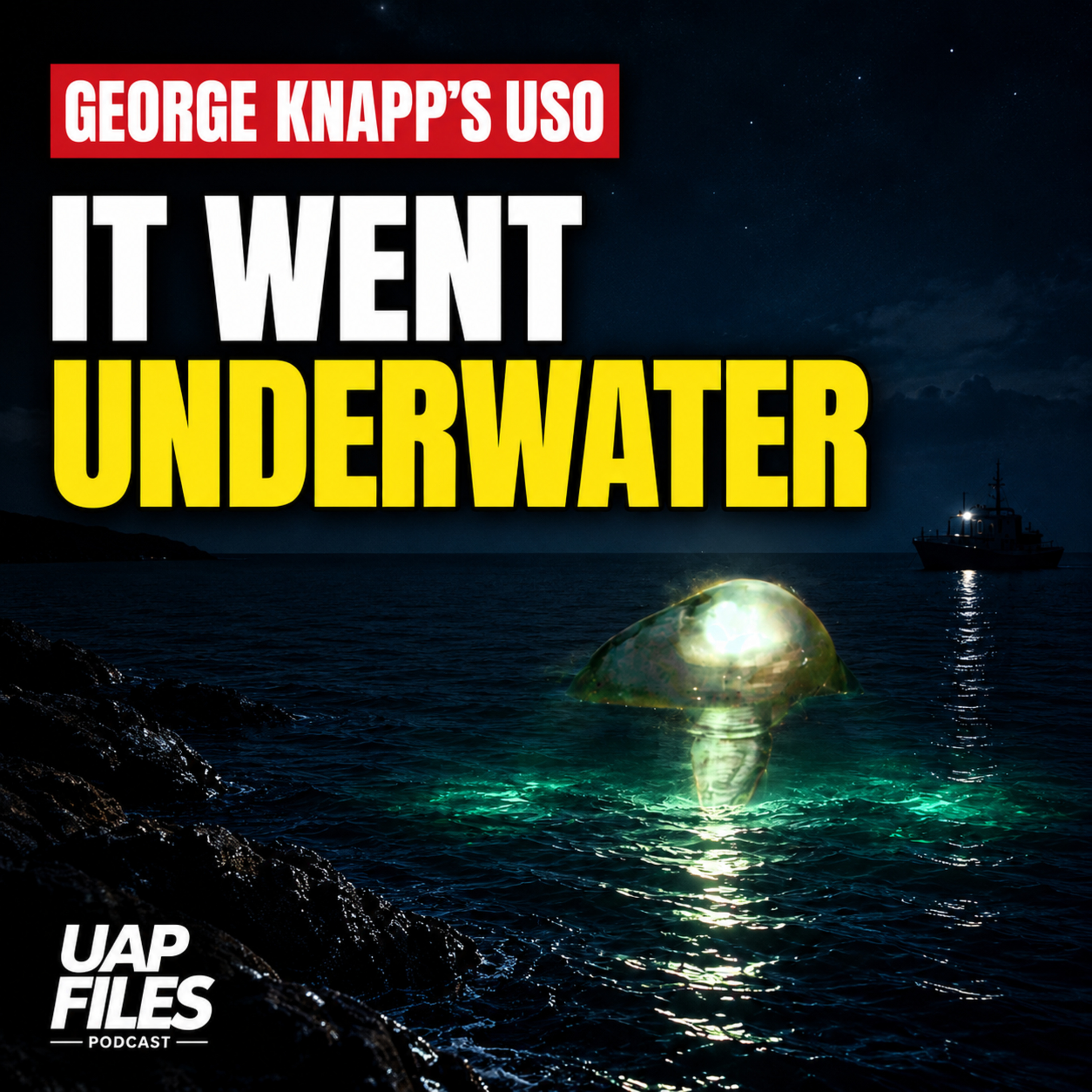
In George Knapp’s Netflix series Investigation Alien, a night watchman films an orb coming down from the sky and going into the sea, turning into a USO. Image specialist Peter Osborne (Truth In Focus UFO) split the footage into around 17,000 frames and enhanced it, and what he found surprised even him: a translucent, jelly-like edge around the light, and more lights under the water that he says aren’t reflections. In this clip: • The night watchman’s footage from Investigation Alien: an orb going into the water • How Peter broke the clip into around 17,000 frames and enhanced them • The milky, jelly-like edge and the shape moving inside the light, and how it compares to his Houston lights enhancement • More lights under the water, which Peter says are not reflections or moonlight on the ripples • Lights joining together before going under, and the plasma vs gravitational lensing question • “It can’t be, but it is”: why Peter says the full set of images is going to blow your mind Watch
We’ve covered a lot of incredible stuff, but this week we’re talking about the weirdest objects in space: BLACK HOLES. Stellar-mass black holes form when a very massive star dies, and its core collapses. The core has to be more than about 2.8 times the Sun’s mass to form a black hole. Black holes come in different sizes, but for all of them, the escape velocity is greater than the speed of light, so nothing can escape, not matter or light. They don’t wander the Universe gobbling everything down around them; their gravity is only really intense very close to them. Tides near a stellar mass black hole will spaghettify you, and time slows down when you get near a black hole — not that this helps much if you’re falling in. Check out the Crash Course Astronomy solar system poster here: http://store.dftba.com/products/crashcourse-astronomy-poster -- Chapters: Introduction 00:00 How Black Holes Are Formed 1:03 Misconceptions About Black Holes 3:05 Stellar Mass Black Holes 5:03 Spaghettificati
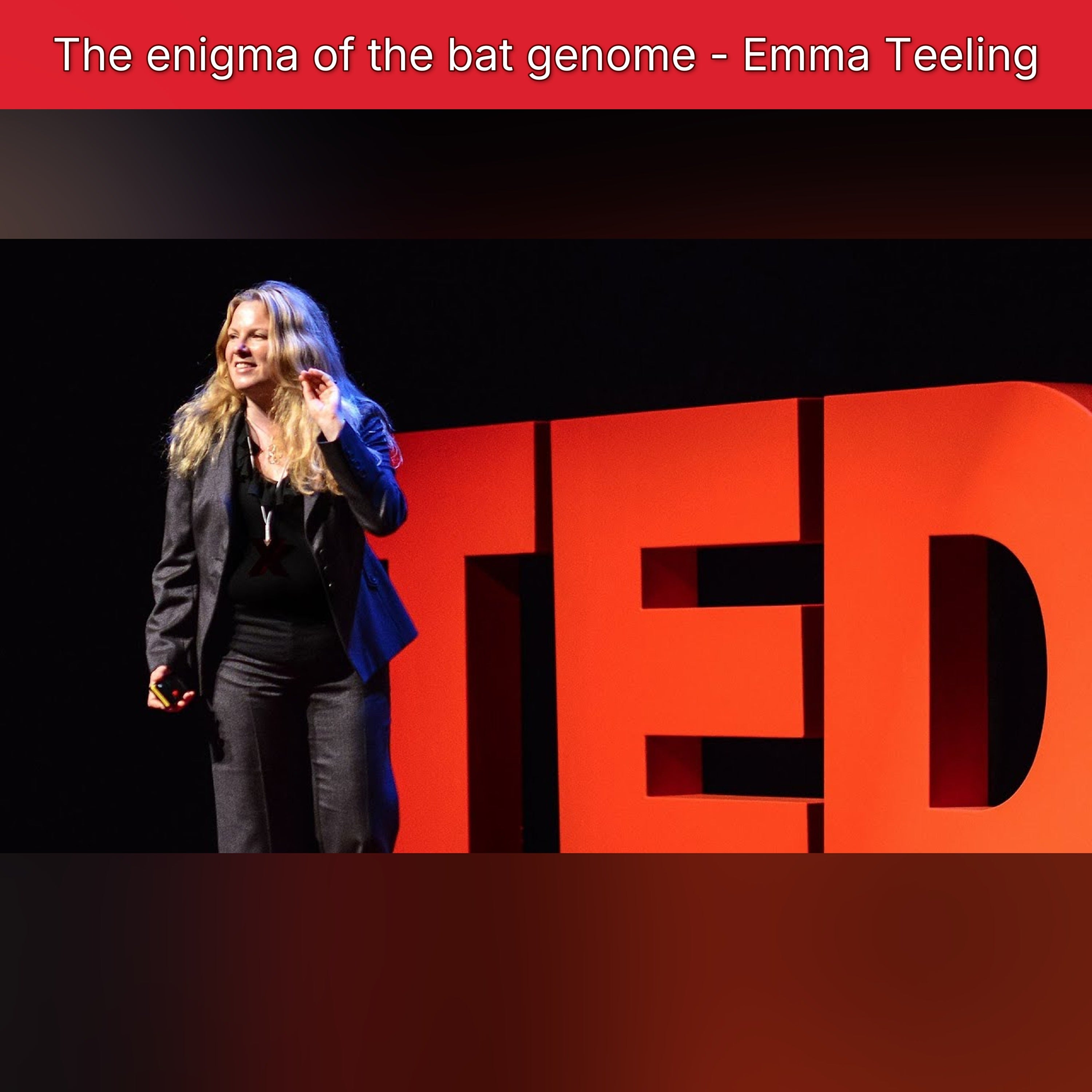
In Western society, bats are often characterized as creepy, even evil. Zoologist Emma Teeling encourages us to rethink our attitude toward bats, whose unique and fascinating biology gives us insight into our own genetic makeup. (Filmed at TEDxDublin.) Talk by Emma Teeling.
Stan Muller teaches you a few things about copyright enforcement and talks about the exceptions to copyright enforcement. While there are several, the one you've probably heard of is Fair Use, and it's a pretty tricky one. We'll try to explain it and teach you just why fair use is so loosey-goosey. Citation1: 17 USC 503 Citation 2: Hargreaves, Ian. Digital Opportunity: A Review of Intellectual Property and Growth. UK Intellectual Property Office. P 5 Citation 3: Iowa State Univ. Research Found., Inc. v. American Broadcasting Cos., 621 F.2d 57 (2d Cir. 1980) Citation 4: Harper & Row, Publishers, Inc. v. Nation Enters., 471 U.S. 539, 551, 105 S. Ct. 2218, 85 L. Ed. 2d 588 (1985) (quoting) Joseph McDonald, Non-Infringing Uses, 9 Bull. Copyright Soc'y 466, 467 No. 355 (1962) Links We Promised: Copyright Office Fair Use Index: http://copyright.gov/fair-use/ Best Practices Documents: http://infringementnation.com (http://infringementnation.com/) *** Thanks to the following Patrons for their
Babies have to learn a lot of language stuff before they can even say their first word. Exposure to language as infants doesn’t just help us say those first words but gives us the tools we need to acquire advanced language skills and learn more languages later on in life. In this episode of Crash Course Linguistics, we’ll learn about language acquisition and how the process differs for babies and adults. Want even more linguistics? Check out the Lingthusiasm podcast, hosted by the writers of Crash Course Linguistics: https://lingthusiasm.com/ *** Watch our videos and review your learning with the Crash Course App! Download here for Apple Devices: https://apple.co/3d4eyZo Download here for Android Devices: https://bit.ly/2SrDulJ Crash Course is on Patreon! Thanks to the following patrons for their generous monthly contributions that help keep Crash Course free for everyone forever: Eric Prestemon, Mark, DAVID MORTON HUDSON, Perry Joyce, Isaac Liu, Scott Harrison, Mark & Susan Billian, J