English-language podcasts

TED-Ed

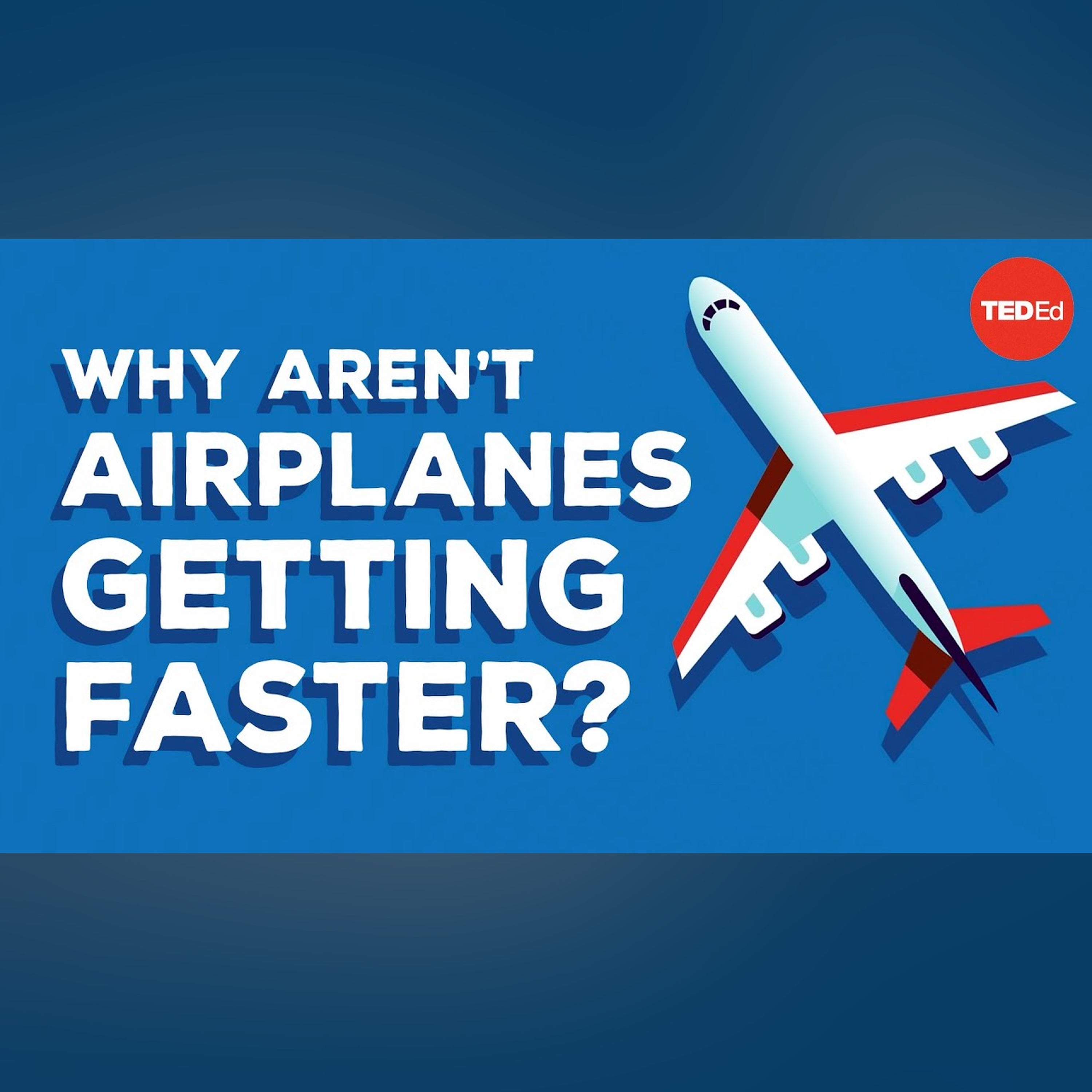
Why are airplanes slower than they used to be? - Alex Gendler
7 min

Listen through the publisher, then discuss the episode here or arrange an in-person Roundtable. Your city determines where to meet.

Roundtables are designed for groups of four, with a shared subject and room for everyone to speak. Come for discussion, with no dating expectation.

Why aren’t commercial flights getting faster? Dig into the technological and environmental problems facing supersonic flight. Uploaded 15-04-21 -- In 1996, a British Airways plane flew from New York to London in a record-breaking two hours and fifty-three minutes. Today, however, passengers flying the same route can expect to spend no less than six hours in the air — twice as long. So why, in a world where everything seems to be getting faster, have commercial flights lagged behind? Alex Gendler details the problems facing supersonic flight. Lesson by Alex Gendler, directed by Zedem Media. Support Our Non-Profit Mission ---------------------------------------------- Support us on Patreon: http://bit.ly/TEDEdPatreon Check out our merch: http://bit.ly/TEDEDShop ---------------------------------------------- Connect With Us ---------------------------------------------- Sign up for our newsletter: http://bit.ly/TEDEdNewsletter Find us on Twitter: http://bit.ly/TEDEdTwitter Peep us on Instagram: http://bit.ly/TEDEdInstagram ---------------------------------------------- Keep Learning ---------------------------------------------- View full lesson: https://ed.ted.com/lessons/why-are-airplanes-slower-than-they-used-to-be-alex-gendler Dig deeper with additional resources: https://ed.ted.com/lessons/why-are-airplanes-slower-than-they-used-to-be-alex-gendler#digdeeper (https://ed.ted.com/lessons/why-are-airplanes-slower-than-they-used-to-be-alex-gendler) Animator's website: https://www.zedemanimations.com/ ---------------------------------------------- Thank you so much to our patrons for your support! Without you this video would not be possible! Eric Braun, Denka Wee, Daru Bhargav, Sonja Worzewski, Amy, Michael Clement, Ghaith Tarawneh, Nathan Milford, Tomas Beckett, Alice Ice, Eric Berman, Kurt Paolo Sevillano, Xavi Ramos, Ron Kakar, Jennifer Heald, flóra lili donáti, Megulo Abebe, TAO7 HORUS, isolwi, Vedasheersh, Michael Chang, Waqar Sheikh, Alexander Gruber, Irene Y., Kate Sem, VPpurplebelt, Ujjwal Dasu, Theunis Groenewald, Minh Quan Dinh, Sylvain, Can Aydogmus, JasonD, Terran Gimpel, Gareth Thomas, Talia Sari, Phan Quang Lam, Katie McDowell, Allen, Sarat Chandra Vegunta, Mahina Bachiller, Bruce Vieira Lopes, Charmaine Hanson, Paul Aldred-Bann, Thawsitt, Jezabel, Abdullah Abdulaziz, Adriano Fontes, Xiao Yu and Melissa Suarez.

Episode information is provided by the publisher. Listening takes place on the publisher’s service.

Listen at the source ↗

Featured places to meet in Palo Alto, CA

Explore these places and arrange a conversation through ThinkMatch.

City guide for Palo Alto, CA

More from TED-Ed

TED-Ed

Withstanding a nuclear attack - Irwin Redlener

33 min

View full lesson: http://ed.ted.com/lessons/surviving-a-nuclear-attack-irwin-redlener The face of nuclear terror has changed since the Cold War, but disaster-medicine expert Irwin Redlener reminds us the threat is still real. He looks at some of history's farcical countermeasures and offers practical advice on how to survive an attack. Talk by Irwin Redlener.

Discuss this episode

TED-Ed

The true reason polio poses such a threat

10 min

Explore what makes polio so dangerous, what is causing the 21st century resurgence of cases, and how we can eradicate the disease. -- In 1952, polio was everywhere: killing or paralyzing roughly half a million people annually. Yet just 10 years later, paralytic polio cases in the US dropped by 96% and we were on track to get rid of polio for good. But in recent years, the virus started striking back. So, what’s behind these recent spikes? Explore the dangers of poliovirus and the possibility of eradicating this deadly disease. Directed by Anton Bogaty. This video made possible in collaboration with Gates Ventures Learn more about how TED-Ed partnerships work: https://bit.ly/TEDEdPartner A special thanks to Ananda Bandyopadhyay, Amber Zeddies, and Kathleen O'Reilly who provided information and insights for the development of this video. Support Our Non-Profit Mission ---------------------------------------------- Support us on Patreon: http://bit.ly/TEDEdPatreon Check out our merch: htt

Discuss this episode

TED-Ed

How to fool a GPS - Todd Humphreys

21 min

Todd Humphreys forecasts the near-future of geolocation when millimeter-accurate GPS "dots" will enable you to find pin-point locations, index-search your physical possessions ... or to track people without their knowledge. And the response to the sinister side of this technology may have unintended consequences of its own. (Filmed at TEDxAustin.) Uploaded 26-06-13 Talk by Todd Humphreys.

Discuss this episode

Community Poll

Financial products should present potential losses as prominently as potential gains.

Share your view, then see how readers voted. No sign-in required. This poll is shared across stories.

Do you agree or disagree?

Choose one answer

Common Quandary

A Common Quandary to discuss

Another conversation to explore, separate from this news story.

You scratched a borrowed heirloom and repaired it perfectly. Do you confess?

You borrow a family heirloom for an event and accidentally leave a small scratch. A careful repair makes it almost invisible, and its owner happily accepts it back without noticing anything.

What is confession for when the harm has already been repaired?

Explore this quandary