Today, Craig is going to wrap up our discussion of discrimination by looking more closely at those “discrete and insular minorities” referenced in the 14th Amendment. We’ll talk about instances of discrimination of Asian, European, and Latino immigrants, Native Americans, non-English speakers, people with disabilities, and LGBT people. We’ll also talk about federal and state responses to this discrimination. It’s a lot to cover, and we’ll only scratch the surface of the battles these groups fought (and are still fighting) for equality, but we will give you some historical context for the discrimination that has occurred and the court decisioned made to help defend these groups. Produced in collaboration with PBS Digital Studios: http://youtube.com/pbsdigitalstudios Support is provided by Voqal: http://www.voqal.org (http://www.voqal.org/) All attributed images are licensed under Creative Commons by Attribution 4.0 Want to find Crash Course elsewhere on the internet? Facebook - http://w
Find out whether a honeybee, a tarantula hawk wasp, or a bullet ant has the most painful insect sting, and what each of their stings feel like. Uploaded 19-04-21 -- One of these three creatures is thought to possess the world’s most painful insect sting: there’s an ant that forages in rainforest canopies, a bee that protects a hive of delectable honey, and a wasp that paralyzes tarantulas. So which has the nastiest sting? Justin Schmidt describes and ranks the pain inflicted by each insect. Lesson by Justin Schmidt, directed by Nicholas Paim, Alopra Studio. Support Our Non-Profit Mission ---------------------------------------------- Support us on Patreon: http://bit.ly/TEDEdPatreon Check out our merch: http://bit.ly/TEDEDShop ---------------------------------------------- Connect With Us ---------------------------------------------- Sign up for our newsletter: http://bit.ly/TEDEdNewsletter Find us on Twitter: http://bit.ly/TEDEdTwitter Peep us on Instagram: http://bit.ly/TEDEdInstagr
By the summer of 1945, Japan's cities were burning, its people were starving, and its military leaders were preparing for a final battle on home soil. Even the destruction of Hiroshima did not bring an immediate surrender. Historian James Scott, author of Empire of Ashes, talks with Michael Shermer about why Japan kept fighting and why he believes Nagasaki was decisive. Could the war have ended without the atomic bombs? A Pulitzer Prize finalist and New York Times bestseller, James M. Scott is the author Black Snow, Rampage, Target Tokyo, The War Below, and The Attack on the Liberty, and co-author, with Jack Carr, of Targeted: Beirut. In addition, Scott, a former Nieman Fellow at Harvard, is a sought-after public speaker who leads battlefield tours and lectures at institutions around the world. His new book is Empire of Ashes.
View full lesson: http://ed.ted.com/lessons/the-science-of-static-electricity-anuradha-bhagwat Uploaded 09-04-15 We’ve all had the experience: you’re walking across a soft carpet, you reach for the doorknob and … ZAP. But what causes this trademark jolt of static electricity? Anuradha Bhagwat sheds light on the phenomenon by examining the nature of matter. Lesson by Anuradha Bhagwat, animation by Artrake Studio.
Life is chaos and the universe tends toward disorder. But why? If you think about it, there are only a few ways for things to be arranged in an organized manner, but there are nearly infinite other ways for those same things to be arranged. Simple rules of probability dictate that it's much more likely for stuff to be in one of the many disorganized states than in one of the few organized states. This tendency is so unavoidable that it's known as the 2nd Law of Thermodynamics. Obviously, disorder is a pretty big deal in the universe and that makes it a pretty big deal in chemistry - it's such a big deal that scientists have a special name for it: entropy. In chemistry, entropy is the measure of molecular randomness or disorder. For the next thirteen minutes, Hank hopes you will embrace the chaos as he teaches you about entropy. Pssst... we made flashcards to help you review the content in this episode! Find them on the free Crash Course App! Download it here for Apple Devices: https://
Language is constantly changing. Today’s small changes could lead to entirely new dialects or languages in the future. We can’t predict how these changes will occur, but we can better understand the path a language has taken through historical linguistics. In this episode of Crash Course Linguistics, we’ll learn about how and why languages change, what happens when languages come into contact with each other, how linguists piece together the history of a language, and more! Acknowledgment: Kirby Conrod Want even more linguistics? Check out the Lingthusiasm podcast, hosted by the writers of Crash Course Linguistics: https://lingthusiasm.com/ *** Watch our videos and review your learning with the Crash Course App! Download here for Apple Devices: https://apple.co/3d4eyZo Download here for Android Devices: https://bit.ly/2SrDulJ Crash Course is on Patreon! Thanks to the following patrons for their generous monthly contributions that help keep Crash Course free for everyone forever: Eric P
Explore the incredible adaptations of Elysia chlorotica, a species of sea slug that can photosynthesize food. -- The species of slug known as Elysia chlorotica may not look like much— it resembles a bright green leaf— but it’s one of the most extraordinary creatures on our planet. Living in marshes along the coast of North America, it can go about a year without eating. During that time, it lives like a plant. How is this possible? Luka Seamus Wright digs into the incredible adaptations of these mixotrophs. Lesson by Luka Seamus Wright, directed by Denis Chapon. Support Our Non-Profit Mission ---------------------------------------------- Support us on Patreon: http://bit.ly/TEDEdPatreon Check out our merch: http://bit.ly/TEDEDShop ---------------------------------------------- Connect With Us ---------------------------------------------- Sign up for our newsletter: http://bit.ly/TEDEdNewsletter Find us on Twitter: http://bit.ly/TEDEdTwitter Peep us on Instagram: http://bit.ly/TEDEdIn
Throughout this series, and in our real lives, we've seen the chaos and devastation that outbreaks can cause. But there's good news! Eventually, outbreaks come to an end. In this episode, we'll look at some of the important tools of outbreak response, particularly vaccines, and also discuss the important work that happens in the aftermath of an outbreak. This episode of Crash Course Outbreak Science was produced by Complexly in partnership with Operation Outbreak and the Sabeti Lab at the Broad Institute of MIT and Harvard—with generous support from the Gordon and Betty Moore Foundation. Episode Sources: https://www.cdc.gov/foodsafety/outbreaks/investigating-outbreaks/investigations/decision.html#:~:text=An%20outbreak%20is%20over%20when,the%20investigation%20continues%20or%20restarts. (https://www.cdc.gov/foodsafety/outbreaks/investigating-outbreaks/investigations/decision.html) https://www.lung.org/lung-health-diseases/lung-disease-lookup/severe-acute-respiratory-syndrome-sars#:~:text
In the aftermath of an 8-20 solar mass star’s demise, we find a weird little object known as a neutron star. Neutron stars are incredibly dense, spin rapidly, and have very strong magnetic fields. Some of them we see as pulsars, flashing in brightness as they spin. Neutron stars with the strongest magnetic fields are called magnetars and are capable of colossal bursts of energy that can be detected over vast distances. Check out the Crash Course Astronomy solar system poster here: http://store.dftba.com/products/crashcourse-astronomy-poster -- Chapters: Introduction: Neutron Stars 00:00 Electron Degeneracy 0:51 Neutron Degeneracy 1:28 Neutron Star Characteristics 2:24 Pulsars 5:56 Magnetars 8:15 Review 11:48 -- PBS Digital Studios: http://youtube.com/pbsdigitalstudios Follow Phil on Twitter: https://twitter.com/badastronomer Want to find Crash Course elsewhere on the internet? Facebook - http://www.facebook.com/YouTubeCrashCourse Twitter - http://www.twitter.com/TheCrashCourse Tumblr -
Could Viking mythology preserve memories of ancient technology, flying machines, and encounters with beings from beyond Earth? On this episode of Earth Ancients, Cliff Dunning welcomes Australian author, artist, and researcher David Lovegrove to explore his book, Viking Superpowers—Way of Asgard, and his unconventional interpretations of the Norse gods and their mysterious homeland. Drawing on his study of Old Norse and Icelandic, Lovegrove reexamines the Icelandic sagas, the Eddas, Bronze Age Scandinavian rock carvings, and unusual artifacts. He proposes that descriptions of Asgard, celestial bridges, and powerful supernatural beings could reflect encounters with advanced civilizations. We explore his interpretations of apparent flying craft, orbital stations, ancient artificial intelligence, and humanoid robotics—and ask how these readings compare with familiar understandings of Viking mythology. Who were the Aesir, and why did medieval historian Snorri Sturluson connect their origin
Dig into how scientists are attempting to revive the functionally extinct northern white rhino through artificial reproduction. Uploaded 13-08-20 -- In the savannahs of Kenya, two female northern white rhinos, Nájin and Fatu, munch contentedly on grass. They are the last two known northern white rhinos left on Earth. Their species is functionally extinct— without a male, they can’t reproduce. And yet, there’s still hope to revive the northern white rhino. How can that be? Jan Stejskal dives into the science of reviving a dying species. Lesson by Jan Stejskal, directed by Denis Chapon. Animator's website: http://denischapon.com/ Producer's website: https://animationworkshop.via.dk/ Sign up for our newsletter: http://bit.ly/TEDEdNewsletter Support us on Patreon: http://bit.ly/TEDEdPatreon Find us on Twitter: http://bit.ly/TEDEdTwitter Peep us on Instagram: http://bit.ly/TEDEdInstagram View full lesson: https://ed.ted.com/lessons/the-last-living-members-of-an-extinct-species-jan-stejskal
Today we're going to talk about how and why floods happen both in spite of, and because of, us. Specifically, we'll take a closer look at the island of Java, and its largest city, Jakarta, and explain the factors that lead to serious flooding almost annually. We'll also show you how mangroves can help protect us from flooding, and how wetlands along floodplains act like the kidneys of the Earth filtering out impurities and pollutants. Watch our videos and review your learning with the Crash Course App! Download here for Apple Devices: https://apple.co/3d4eyZo Download here for Android Devices: https://bit.ly/2SrDulJ Crash Course is on Patreon! Thanks to the following patrons for their generous monthly contributions that help keep Crash Course free for everyone forever: Toni Miles, Oscar Pinto-Reyes, Erin Nicole, Steve Segreto, Michael M. Varughese, Kyle & Katherine Callahan, Laurel A Stevens, Evan Lawrence Henderson, Vincent, Michael Wang, Krystle Young, Michael Dowling, Alexis B, Rene
Today we're going to talk about SPAAAAAACE, but not like stars and satellites and stuff. Instead, we're going to talk about geographic space. In geography, we can look at the world and the places and spaces we inhabit with four distinct lenses: space as a container, topologically, socially, and how we perceive it. On this journey, we'll make stops in Antarctica, Haiti, and China as we introduce the tools you'll need from surveying and remote sensing to community-created maps to help us better understand and navigate our world. If you want to help create maps for your community visit: https://www.openstreetmap.org (https://www.openstreetmap.org/) https://tasks.hotosm.org (https://tasks.hotosm.org/) Watch our videos and review your learning with the Crash Course App! Download here for Apple Devices: https://apple.co/3d4eyZo Download here for Android Devices: https://bit.ly/2SrDulJ Crash Course is on Patreon! Thanks to the following patrons for their generous monthly contributions that he
In this episode of Crash Course Astronomy, Phil takes you through the cause and name of the Moon's phases. Check out the Crash Course Astronomy solar system poster here: http://store.dftba.com/products/crashcourse-astronomy-poster -- Chapters: Why does the Moon Have Phases? 00:00 New Moon 2:26 Waxing Crescent 4:17 First Quarter 4:35 Waxing Gibbous 5:15 Full Moon 5:32 Waning Gibbous, Third Quarter, and Waning Crescent 6:26 Earthshine 7:20 Review 8:58 -- PBS Digital Studios: http://youtube.com/pbsdigitalstudios Follow Phil on Twitter: https://twitter.com/badastronomer Crash Course is on Patreon! Want to find Crash Course elsewhere on the internet? Facebook - http://www.facebook.com/YouTubeCrashCourse Twitter - http://www.twitter.com/TheCrashCourse Instagram - https://www.instagram.com/thecrashcourse/ CC Kids: http://www.youtube.com/crashcoursekids -- PHOTOS http://en.wikipedia.org/wiki/Moon#mediaviewer/File:FullMoon2010.jpg (http://en.wikipedia.org/wiki/Moon) http://en.wikipedia.org/wiki
Discover how alcohol impacts your body’s processes and causes hangovers, and find out what causes the most common hangover symptoms. -- The molecule responsible for hangovers is ethanol, which we colloquially refer to as alcohol. Ethanol is present in all alcoholic beverages, and generally speaking, the more ethanol, the greater the potential for a hangover. So, how exactly does alcohol cause a hangover— and is there any way to prevent one? Judy Grisel explores the surprising ways that alcohol affects the body. Lesson by Judy Grisel, directed by Anton Bogaty. Support Our Non-Profit Mission ---------------------------------------------- Support us on Patreon: http://bit.ly/TEDEdPatreon Check out our merch: http://bit.ly/TEDEDShop ---------------------------------------------- Connect With Us ---------------------------------------------- Sign up for our newsletter: http://bit.ly/TEDEdNewsletter Find us on Twitter: http://bit.ly/TEDEdTwitter Peep us on Instagram: http://bit.ly/TEDEdInsta
In this second of three conversations, Jiang and Robinson discuss secret societies, conspiracy theories, and the relationship between money and political power. They talk about Donald Trump, Elon Musk, Mark Zuckerberg, and Sam Altman, as well as capitalism, the Opium Wars, the Spanish conquest of Mexico, and Sabbatean Frankism. Throughout the conversation, Robinson challenges Jiang on the evidence for his claims, the limits of historical analogies and thought experiments, and what would distinguish a plausible story from an established explanation.Jiang’s YouTube: https://www.youtube.com/@PredictiveHistoryJiang’s Substack: https://predictivehistory.substack.com/OUTLINE00:00 Introduction09:10 Who Can Tell the President No?18:50 The Bank of England and the British Empire26:20 Conquistadors and the Opium Wars36:09 What Counts as Historical Evidence?43:33 Elites and Counterelites48:25 Secret Societies and the Rothschilds55:54 Jiang’s Account of the Sabbatean Frankists1:05:35 Sabbatai Zevi
"The Big Sink" In this episode, John and Katie take a break from talking through the universe's timeline to focus on a mystery of our cosmos: black holes. Head to https://policygenius.com/crashcourse to get your free life insurance quotes and see how much you could save. *** Support us for $5/month on Patreon to keep Crash Course free for everyone forever! https://www.patreon.com/crashcourse Or support us directly: https://complexly.com/support Join our Crash Course email list to get the latest news and highlights: https://mailchi.mp/crashcourse/email Get our special Crash Course Educators newsletter: http://eepurl.com/iBgMhY Thanks to the following patrons for their generous monthly contributions that help keep Crash Course free for everyone forever: Forrest Langseth, Emily Beazley, Neeloy Gomes, oranjeez, Rie Ohta, Jack Hart, UwU, Leah H., David Fanska, Andrew Woods, Stephen Akuffo, Ken Davidian, Toni Miles, AmyL, Steve Segreto, Kyle & Katherine Callahan, Laurel Stevens, Krystle Youn
In which Jacob and Adriene teach you about the evils of fiscal policy and stimulus. Well, maybe the policies aren't evil, but there is an evil lair involved. In this episode we learn how government use taxes and spending influence the economy. Sometimes the government gives, and sometimes it takes. And the giving and the taking can have a profound effect on how economies behave. Crash Course is on Patreon! Thanks to the following Patrons for their generous monthly contributions that help keep Crash Course free for everyone forever: Mark , Elliot Beter, Moritz Schmidt, Jeffrey Thompson, Ian Dundore, Jacob Ash, Jessica Wode, Today I Found Out, Christy Huddleston, James Craver, Chris Peters, SR Foxley, Steve Marshall, Simun Niclasen, Eric Kitchen, Robert Kunz, Avi Yashchin, Jason A Saslow, Jan Schmid, Daniel Baulig, Christian , Anna-Ester Volozh Want to find Crash Course elsewhere on the internet? Facebook - http://www.facebook.com/YouTubeCrashCourse Twitter - http://www.twitter.com/TheCr
Another "slow news week" Originally streamedLive on YouTube! (https://www.youtube.com/live/Na1_oPL8Jyk) The blue tsunami: why the election results were a surprise, and why incumbents tend to lose The political pendulum: voters keep choosing “shake it up” candidates who can’t deliver Obamacare as a Heritage Foundation blueprint that expanded access but never tackled cost Tariffs, the war with Iran and whether Hegseth should be impeached or resign Impeachment fatigue and why divided government may let Trump make deals RFK Jr., food system reform and special interests Populism on both sides: Abdul El-Sayed and Talarico Doctors who go into politics, including Amy Acton, Nirav Shah and Richard Pan Why healthcare is unsolvable inside its current paradigm Peptides, drug approval and the FDA approving things that don’t work Whether AI and drug discovery could be the paradigm shift Pluto, new dwarf planets and Neil deGrasse Tyson Better doctors or better technology? Why outcomes improved since
In this episode of Crash Course Art History, we’ll keep digging into the myth of the Great Artist, with whether we can—or should—separate artists’ personal actions and beliefs from the art they create. Art historians are exploring new ways to think about artists’ relationship to their work and how to talk about controversial art. Introduction: Great Artists or Monsters? 00:00 "Great Artists" 00:48 The Romantics & Self-Portraits 01:53 The Avant-garde & Surrealism 03:10 Van Gogh & Gaugin 04:59 Artistic Collaboration 06:39 Separating Art from the Artist 07:48 Review & Credits 10:07 Image Descriptions: https://docs.google.com/document/d/1ETiCxe4GrVzFii7dBhF42oHx1EUCCh5y12wbtUjsH8A/edit Sources: https://docs.google.com/document/d/1GW2NKzhpMNMmRyAFJVhFJG9cSfUOMRL-QrcWuHcWcIA/edit?usp=sharing *** Crash Course is on Patreon! Thanks to the following patrons for their generous monthly contributions that help keep Crash Course free for everyone forever: Leah H., David Fanska, Andrew Woods, DL Sin
View full lesson: http://ed.ted.com/lessons/why-does-ice-float-in-water-george-zaidan-and-charles-morton Uploaded 22-10-13 Water is a special substance for several reasons, and you may have noticed an important one right in your cold drink: ice. Solid ice floats in liquid water, which isn't true for most substances. But why? George Zaidan and Charles Morton explain the science behind how how hydrogen bonds keep the ice in your glass (and the polar ice caps) afloat. Lesson by George Zaidan and Charles Morton, animation by Powerhouse Animation Studios Inc.
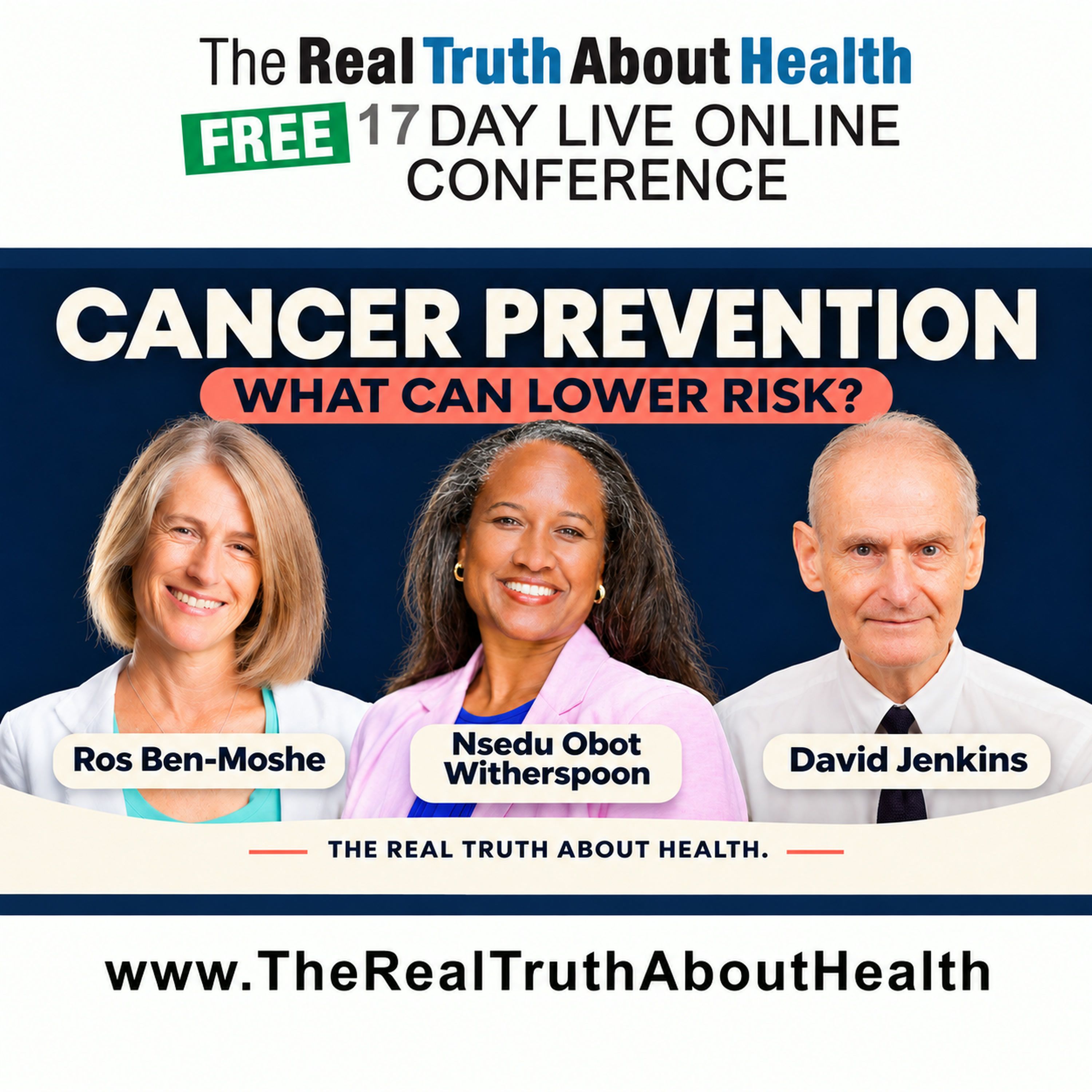
Cancer Prevention: What the Evidence Says About Lowering Risk Ros Ben-Moshe, MPH, Nsedu Obot Witherspoon, MPH, and David Jenkins, M.D., explore what the evidence says about lowering cancer risk. Learn how lifestyle, nutrition, environment, stress, and prevention-focused choices may help support healthier outcomes. #CancerPrevention #LifestyleMedicine #Health
A man from the Office of Naval Intelligence crashed the premiere party for Dark Skies, told Bryce Zabel and Brent Friedman "you got a lot right," and drew something on the back of a bank envelope he called "the secrets of the universe: sound, light and frequency." They kept it in a safe deposit box for nearly 30 years. This year, they released it. Emmy-winning television creator, former CNN investigative correspondent, and former Chairman of the Television Academy Bryce Zabel joins Ty Roberts in person at The Safehouse (Waltham, MA) to talk about the ONI approach and the formula, the 1995 "WE ARE WATCHING YOU" postcard, why he believes the U.S. government has craft and bodies, the former Secretary of Energy who said he'd seen the aliens and cried himself to sleep, Dr. Phil's box of UFO documents from President Trump, A.D. After Disclosure with Richard Dolan, near-death experiences — including his own... Bryce Zabel: brycezabel.com (https://www.brycezabel.com/) • hollywoodufos.com (http
In which John Green ACTUALLY teaches about the Civil War. In part one of our two-part look at the US Civil War, John looks into the causes of the war, and the motivations of the individuals who went to war. The overarching causes and the individual motivations were not always the same, you see. John also looks into why the North won, and whether that outcome was inevitable. The North's industrial and population advantages are examined, as are the problems of the Confederacy, including its need to build a nation at the same time it was fighting a war. As usual, John doesn't get much into the actual battle-by-battle breakdown. He does talk a little about the overarching strategy that won the war, and Grant's plan to just overwhelm the South with numbers. Grant took a lot of losses in the latter days of the war, but in the end, it did lead to the surrender of the South. If you want to learn more about the Civil War, we recommend these books: Battle Cry of Freedom by James McPherson: https