Uploaded 01-05-18 View full lesson: https://ed.ted.com/lessons/how-to-build-a-dark-matter-detector-jenna-saffin More than 2 kilometers below the surface of northern Ontario, suspended in 345,000 liters of ultra-pure water, there’s a perfect sphere. Scientists continuously monitor this chamber, looking for a glimmer of light in the darkness. Why? Because that light would indicate the presence of one of the universe’s greatest mysteries: dark matter. Jenna Saffin describes how this dark matter detector works. Lesson by Jenna Saffin, animation by TED-Ed. Thank you so much to our patrons for your support! Without you this video would not be possible! Jordan Tang, Christopher Jimenez, Juan, Tracey Tobkin, Sid, emily lam, Elliot Poulin, Noel Situ, Oyuntsengel Tseyen-Oidov, Latora Slydell, Sydney Evans, Victor E Karhel, Bernardo Paulo, Eysteinn Guðnason, Andrea Feliz, Natalia Rico, Josh Engel, Bárbara Nazaré, Gustavo Mendoza, Zhexi Shan, Hugo Legorreta, PnDAA, Marcel Trompeter-Petrovic, Sandr
Throughout this series we’ve mostly talked about pairs of electrons, but electrons don’t always have a buddy. An atom or group of atoms with a single unpaired electron is called a radical. In this episode of Crash Course Organic Chemistry, we’ll learn all about radicals including the three key steps in a radical reaction and Hammond’s Postulate, an important tool to help us understand these reactions. We’ll also see ways radicals can react with alkanes, alkenes, and alkynes. Episode Sources: Davies, K. J., & Doroshow, J. H. (1986). Redox cycling of anthracyclines by cardiac mitochondria. I. Anthracycline radical formation by NADH dehydrogenase. Journal of Biological Chemistry, 261(7), 3060-3067. Ball, P. (Interview with Nick Lane) Yes, life in the fast lane kills you. May 5, 2016. Bond Dissociation Energies https://chem.libretexts.org/Bookshelves/Physical_and_Theoretical_Chemistry_Textbook_Maps/Supplemental_Modules_(Physical_and_Theoretical_Chemistry)/Chemical_Bonding/Fundamentals_of_C
In which John Green teaches you about the Industrial Economy that arose in the United States after the Civil War. You know how when you're studying history, and you're reading along and everything seems safely in the past, and then BOOM you think, "Man, this suddenly seems very modern." For me, that moment in US History is the post-Reconstruction expansion of industrialism in America. After the Civil War, many of the changes in technology and ideas gave rise to this new industrialism. You'll learn about the rise of Captains of Industry (or Robber Barons) like Cornelius Vanderbilt, Andrew Carnegie, John D Rockefeller, and JP Morgan. You'll learn about trusts, combinations, and how the government responded to these new business practices. All this, plus John will cover how workers reacted to the changes in society and the early days of the labor movement. You'll learn about the Knights of Labor and Terence Powderly, as well as Samuel Gompers and the AFL. Chapters: Introduction: American
As winter approaches, many people wonder which plants they should move inside and which should be left out. Don’t worry, we’ve got you! Learn the do’s and don’ts of bringing plants inside, which plants to move in and which to leave out, and how best to care for your new roommates.
View full lesson: http://ed.ted.com/lessons/the-cancer-gene-we-all-have-michael-windelspecht Uploaded 19-05-14 Within every cell in our body, two copies of a tumor suppressor gene called BRCA1 are tasked with regulating the speed at which cells divide. Michael Windelspecht explains how these genes can sometimes mutate, making those cells less specialized and more likely to develop into cancer. Lesson by Michael Windelspecht, animation by Zedem Media.
A young couple with a baby needed a place to live, and an isolated house on the outskirts of town seemed like an opportunity they couldn't pass up. But the owner had an unusual question before they moved in: Were they sure they wanted to live there? It didn't take long for the family to understand why he might have asked. The mother reported seeing an angry stranger outside and hearing people arguing in the house when nobody else was there. Other relatives experienced strange activity, too, and the atmosphere became so frightening that she was afraid to leave her husband's side at night. Then, during a violent thunderstorm, the father went to check on their crying baby and discovered something he couldn't explain. What he saw moments later sent the family running into the storm. Whatever happened in that house, they refused to spend another night there. #RealGhostStoriesOnline #TrueGhostStories #HauntedHouse #FamilyHaunting #GhostlyApparitions #ShadowFigures #ParanormalEncounters #Terr
This is a Grave Talks CLASSIC EPISODE! PART TWO Growing up surrounded by paranormal books and ghost stories, Tim Woolworth never viewed the unseen world with fear. Instead, curiosity took hold early, pushing him to question what spirits are, where they exist, and why they remain. That fascination followed him into adulthood, shaping years of research and firsthand experiences in the paranormal. Rather than focusing on isolated hauntings, Tim has spent his time examining patterns—how spirits behave, what draws them to certain places, and what their continued presence might suggest about the nature of death itself. Along the way, his work led him to a deeply unsettling question: what if not all ghosts ever truly “die”? In this classic episode of The Grave Talks, Tim shares the path that led him from childhood curiosity to serious paranormal research, along with the conclusions he’s reached about the spirits that may still be walking among us. It’s a conversation that challenges assumptio
Mark visits Mar Lodge on Deeside to take a look at work that has been done on the river bank to restore the natural floodplain. Rachel is in Fife at Reediehill Deer Farm, where owners John and Nichola Fletcher have launched a major nature restoration project involving SSEN Transmission and Scotland: The Big Picture which will see 18 hectares of the farm transformed. In our Scotland Outdoors podcast this week, Helen Needham meets author Rosie Steer to chat about her latest book, Gloaming, a cosy guide to winter which has been inspired by stories and traditions from Scottish folklore. Recently, the Cairngorm National Park launched a consultation on the next five-year National Park Partnership Plan. Mark chats to park convenor Sandy Bremner about what they want to hear from people and what kind of thing the plan covers. We are joined live by Ellie Owen, a senior seabird officer at the National Trust for Scotland, to talk about a major project which has seen 40 Manx Shearwaters moved from
From sunsets to double rainbows, nature’s full of beautiful things. So it’s not surprising that artists have found inspiration in Mother Nature for millennia. What is surprising is the wide variety of human concerns that nature art has been used to convey. In this episode of Crash Course Art History, we’ll learn about the ways artists use nature to make arguments about the world around us, and our place within it. Introduction: The Nazca Plateau 00:00 The Hidden Meanings in Nature Art 01:04 Social Issues in Nature Art 03:39 Humans & the Environment 07:33 Review & Credits 10:16 Image Descriptions: https://docs.google.com/document/d/1ETiCxe4GrVzFii7dBhF42oHx1EUCCh5y12wbtUjsH8A/edit Sources: https://docs.google.com/document/d/1GW2NKzhpMNMmRyAFJVhFJG9cSfUOMRL-QrcWuHcWcIA/edit?usp=sharing *** Support us for $5/month on Patreon to keep Crash Course free for everyone forever! https://www.patreon.com/crashcourse Or support us directly: https://complexly.com/support Join our Crash Course email
Nearly 200 years ago, Alexis St. Martin was shot in the stomach. He was saved by local army doctor William Beaumont but had to live out his remaining years with a gaping hole in the stomach -- allowing Beaumont to learn a lot about how human digestion works. So today we're going to walk you through that process. We'll cover how mechanical and chemical digestion starts in the mouth and continues in the stomach, where it’s pummeled by acids and enzymes and turned into chyme. We will also go over the stomach’s cephalic, gastric, and intestinal phases of digestive regulation. Pssst... we made flashcards to help you review the content in this episode! Find them on the free Crash Course App! Download it here for Apple Devices: https://apple.co/3d4eyZo Download it here for Android Devices: https://bit.ly/2SrDulJ Chapters: Introduction: Alexis St. Martin's Stomach Hole 00:00 Digestion Starts in the Mouth 2:45 The Stomach 4:37 Stomach Acid 5:38 Phases of Digestive Regulation: Cephalic, Gastric,
What makes some art valuable enough to hang in museums? In this episode of Crash Course Art History, we’ll look at different ways we can figure out the value of art beyond the number on the price tag, and we’ll examine how culture, society, history, and storytelling influence how we evaluate artwork. Introduction: What Is "Good" Art? 00:00 Art & Beauty 00:57 Art & Innovation 02:09 Art & Lore: The Mona Lisa 04:27 Art Criticism 05:48 Clement Greenberg 07:26 Art & Museums 08:31 Review & Credits 10:23 Image Descriptions: https://docs.google.com/document/d/1ETiCxe4GrVzFii7dBhF42oHx1EUCCh5y12wbtUjsH8A/edit Sources: https://docs.google.com/document/d/1GW2NKzhpMNMmRyAFJVhFJG9cSfUOMRL-QrcWuHcWcIA/edit?usp=sharing *** Crash Course is on Patreon! Thanks to the following patrons for their generous monthly contributions that help keep Crash Course free for everyone forever: Leah H., David Fanska, Andrew Woods, DL Singfield, Ken Davidian, Stephen Akuffo, Toni Miles, Steve Segreto, Kyle & Katherine C
View full lesson: http://ed.ted.com/lessons/time-travel-and-einstein-s-special-relativity-colin-stuart Uploaded 21-10-13 Time travel is a staple of science fiction stories, but is it actually possible? It turns out nature does allow a way of bending time, an exciting possibility suggested by Albert Einstein when he discovered special relativity over one hundred years ago. Colin Stuart imagines where (or, when) this fascinating phenomenon, time dilation, may one day take us. Lesson by Colin Stuart, animation by TED-Ed.
What actually matters if you want to stay healthy as you age? Dr. Mark Hyman argues it isn’t the most extreme longevity intervention. It’s the small investments you make every day in strength, nutrition, sleep, and stress. Mark joins a16z Partner Daisy Wolf to walk through what he actually does, from meditation and strength training to protein, supplements, sleep, sauna, cold plunges, and the occasional ice cream. He explains why preserving muscle becomes increasingly important with age and how he uses testing to understand what’s happening inside his body. They also discuss the idea behind Function Health: combining blood tests, imaging, wearables, medical records, and eventually AI to move healthcare from treating disease toward understanding and preventing it earlier. Resources: Follow Mark Hyman: https://x.com/drmarkhyman Learn more about Function Health: https://www.functionhealth.com (https://www.functionhealth.com/?gad_campaignid=20800990020&gad_source=1&gbraid=0AAAAAqiw_KG3TXvO
Today's episode dives into the HOW of enthalpy. How we calculate it, and how we determine it experimentally...even if our determinations here at Crash Course Chemistry are somewhat shoddy. Pssst... we made flashcards to help you review the content in this episode! Find them on the free Crash Course App! Download it here for Apple Devices: https://apple.co/3d4eyZo Download it here for Android Devices: https://bit.ly/2SrDulJ -- Table of Contents Hess' Law 2:30 Calorimeter 3:12 Calorimetry 3:07 Specific Heat Capacity 5:08 Calorimetry Sources of Error 10:21 Crash Course is on Patreon! Want to find Crash Course elsewhere on the internet? Facebook - http://www.facebook.com/YouTubeCrashCourse Twitter - http://www.twitter.com/TheCrashCourse Instagram - https://www.instagram.com/thecrashcourse/ CC Kids: http://www.youtube.com/crashcoursekids
If you ask a linguist “How many languages are there in the world?” the answer most will give you is “around 7000”. We say “around” because there are several factors that make it difficult to determine what exactly counts as a language, including the difficulty of distinguishing between languages and dialects, various political factors, and the fact that not all languages have the same degree of resources and records. In this episode of Crash Course Linguistics, we’ll explore these 3 factors to learn about world languages and linguistic diversity, as well as the inequities that these factors can create. Want even more linguistics? Check out the Lingthusiasm podcast, hosted by the writers of Crash Course Linguistics: https://lingthusiasm.com/ *** Watch our videos and review your learning with the Crash Course App! Download here for Apple Devices: https://apple.co/3d4eyZo Download here for Android Devices: https://bit.ly/2SrDulJ Crash Course is on Patreon! Thanks to the following patrons
Molecules come in infinite varieties, so in order to help the complicated chemical world make a little more sense, we classify and categorize them. One of the most important of those classifications is whether a molecule is polar or non-polar, which describes a kind of symmetry - not just of the molecule, but of the charge. In this edition of Crash Course Chemistry, Hank comes out for Team Polar and describes why these molecules are so interesting to him. You'll learn that molecules need to have both charge asymmetry and geometric asymmetry to be polar, and that charge asymmetry is caused by a difference in electronegativities. You'll also learn how to notate a dipole moment (or charge separation) of a molecule, the physical mechanism behind like dissolves like, and why water is so dang good at fostering life on Earth. Pssst... we made flashcards to help you review the content in this episode! Find them on the free Crash Course App! Download it here for Apple Devices: https://apple.co/
Sam Stafford (https://linktr.ee/samuel_stafford) was in Birmingham recently and caught up whilst there with old friends of the podcast Myles Wild-Smith (https://www.linkedin.com/in/myleswildsmith/), Kathryn Ventham (https://www.linkedin.com/in/kathryn-ventham-7ba66a76/) and Jacob Bonehill (https://www.linkedin.com/in/jacob-bonehill-6b6089167/). Myles is a Director at Lichfields, Kathryn is a Senior Director at Twenty5 Planning and Jacob is a Director at Carney Sweeney. In a conversation recorded at the Podcast Room (https://podcast-room.com/studios/birmingham), they talked about what was then the soon-to-be, but is now the mandatory, National Scheme of Delegation; they talked about appealing against non-determination rather than waiting to be called-in; they talked about the extension of the deadline for the submission of local plans under the legacy system; and they talked about SDSs, LGR, Solihull’s Regulation 19 local plan and the West Midland Combined Authority’s Housing & Employme
Sleep better with Pillow: https://pillow.app/bettersleep Immerse yourself in soothing remote thunderstorm and gentle rain sounds, perfect for deep sleep, meditation, and relaxation. Let this calming ambient nature audio help you unwind, focus, and drift into peaceful rest. This episode includes AI-generated content.
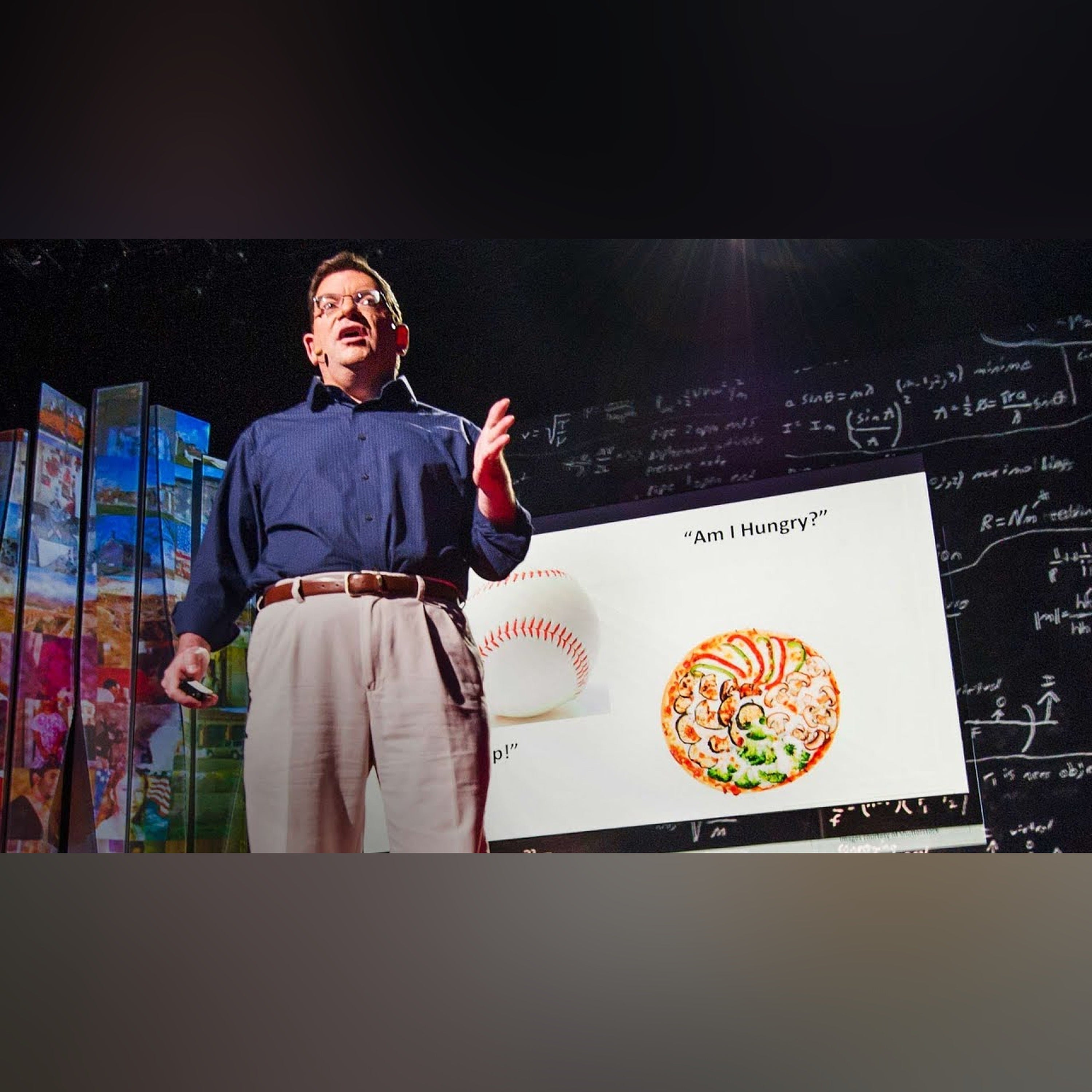
For some reason, says educator Al Vernacchio, the metaphors for talking about sex in the US all come from baseball -- scoring, getting to first base, etc. The problem is, this frames sex as a competition, with a winner and a loser. Instead, he suggests a new metaphor, one that's more about shared pleasure, discussion and agreement, fulfillment and enjoyment. Let's talk about ... pizza. Uploaded 16-08-13 Talk by Al Vernacchio.
Today we have a special bonus treat for you: A look back at episode 98 about the most famous of all the world’s crystal skulls. This December, Skeptoid Adventures is taking you into the jungles of Belize, where a 20th century British adventurer claims to have found the mystical skull carved from pure quartz crystal inside a Maya temple. It’s said to have all kinds of metaphysical powers. And so, if you’re coming with us, you’ll want to know all about the history of this rare and valuable artifact. Visit skeptoid.com/adventures to learn all about the trip, and attend now to learn all about the Crystal Skull.
This episode I am reading from Maria Cuccia's book 'His Name is Elijah' A story of family, resilience, and forces beyond our understanding. His Name is Elijah is the unforgettable memoir of Maria Cuccia, who shares her family’s story of love, loss, and resilience—woven with experiences that challenge everything we think we know about reality. What begins as everyday family life soon collides with visions, mysterious visitations, and phenomena that defy explanation. At the center of it all is Elijah, a presence both enigmatic and deeply personal, whose appearance reshapes Maria’s understanding of life, love, and the unseen forces that guide us. Told with raw honesty and emotional depth, this memoir is more than one woman’s story. It’s a reminder of the power of truth, the courage it takes to speak it, and the hope that comes from realizing we are never as alone as we think. For those who follow Whitley Strieber, Budd Hopkins, and the search for the unknown. Bio Maria Cuccia is an author
The world is full of microbes and viruses that can get us sick, but we’ve got an Avengers-style defense system ready to take them on. In this episode of Crash Course Biology, we’ll learn about an animal’s immune system, from their skin to inflammatory responses, to the adaptive immune system and all the special cells and antibodies that come with it. Introduction: Defending Against Pathogens 00:00 The Integumentary System 01:09 Internal Defenses 02:29 Asymptomatic Infections 05:52 Healing 06:31 Adaptive Immunity & Vaccines 07:05 The Lymphatic System 09:25 Review & Credits 10:32 This series was produced in collaboration with HHMI BioInteractive, committed to empowering educators and inspiring students with engaging, accessible, and quality classroom resources. Visit https://BioInteractive.org/CrashCourse (https://biointeractive.org/CrashCourse) for more information. Are you an educator looking for what NGSS Standards are covered in this episode? Check out our Educator Standards Database
ANI Pharmaceuticals made a recommended cash offer of about 5.3 billion kronor for Egetis Therapeutics, maker of Emcitate (tiratricol); the acceptance period is expected to open around November 20. Braveheart and Hengrui reported 52-week open-label data, with no comparison group, for oral BHB-1893 in adults with symptomatic obstructive HCM: 33 of 42 had a provoked gradient below 30 mmHg and 24 ended on the starting dose. Also: Amgen's real-world Repatha (evolocumab) vs. ezetimibe study; Lilly and Hims & Hers on Zepbound (tirzepatide) and Foundayo (orforglipron) self-pay access; Agios R&D role cuts; Moderna's norovirus cohort decision; and its Q3 revenue and raised outlook. This is the original Friday, November 6 edition, released late.
In which Adriene and Jacob teach you about how and why prices rise. Sometimes prices rise as a result of inflation, which is a pretty normal thing for economies to do. We'll talk about how across the board prices rise over time, and how economists track inflation. Bubbles are a pretty normal thing for humans to do. One item, like tulips or beanie babies or houses or tech startups experience a rapid rise in prices. This is often accompanied by speculation, a bunch of outrageous profits, and then a nasty crash when the bubble bursts. People get excited about rising prices, and next thing you know, people are trading their life savings for a tulip bulb. Crash Course is on Patreon! Thanks to the following Patrons for their generous monthly contributions that help keep Crash Course free for everyone forever: Mark , Elliot Beter, Moritz Schmidt, Jeffrey Thompson, Ian Dundore, Jacob Ash, Jessica Wode, Today I Found Out, Christy Huddleston, James Craver, Chris Peters, SR Foxley, Steve Marshall