We tend to think life fits in two tidy categories: male or female, XX or XY. But it’s so much more diverse and complicated! In this episode of Crash Course Biology, we’ll discover sex and sexuality as a continuum across life. We’ll learn why humans are the only species with gender, and why same-sex mating is more common than you might think. Introduction: Sex & Gender in Humans 00:00 How Sex and Gender are different 01:15 Sex development 04:42 Differences in sex development 06:02 What is sexuality 07:46 Non-human diversity in sexuality 08:50 Review & Credits 12:12 This series was produced in collaboration with HHMI BioInteractive, committed to empowering educators and inspiring students with engaging, accessible, and quality classroom resources. Visit https://BioInteractive.org/CrashCourse (https://biointeractive.org/CrashCourse) for more information. Are you an educator looking for what NGSS Standards are covered in this episode? Check out our Educator Standards Database for Biology h
Scientists in Japan have used quantum sensing to map microscopic stress around an atomic defect inside a diamond. Their findings confirm a decades-old theory and could help engineers develop more reliable quantum technologies and advanced electronic devices. This episode includes AI-generated content.
New research on interstellar object 3I/ATLAS has uncovered an intriguing chemical clue: unusually heavy hydrogen in its methane. This finding offers a glimpse into the object's origins and suggests it formed in an exceptionally cold region of space. This episode includes AI-generated content.
View full lesson: http://ed.ted.com/lessons/mysteries-of-vernacular-venom-jessica-oreck-and-rachael-teel How did venom get its poisonous meaning? Jessica Oreck and Rachael Teel follow venom from something to desire to explicit reasons for avoiding a snake. Lesson by Jessica Oreck and Rachael Teel, animation by Jessica Oreck.
Today, we’re going to take a closer look at borders and the stories they tell. When we look at a map, the shapes we’re seeing can seem so permanent, but a map is just a snapshot of the Earth at a particular time, and by looking a countries shape (and how it has changed across time) we can learn so much about how power moves and the ebb and flow of conflict. We’ll talk about the different types of borders, and power dynamics at play in Armenia and Azerbaijan and even look to the oceans as we explore conflict in the South China Sea. SOURCES General CIA Factbook: https://www.cia.gov/library/publications/resources/the-world-factbook/docs/one_page_summaries.html Getis, Bjelland, and Getis. Introduction to Geography, 15 ed. McGraw-Hill Education. 2017. ISBN: 978-1-259-57000-1 Gregory, Derek, Ron Johnston, Geraldine Pratt, Michael Watts, and Sarah Whatmore, eds. 2009. The Dictionary of Human Geography. 5th ed. Willey-Blackwell. ISBN: 978-1-4051-3288-6 For a free and open source option for Int
View full lesson: http://ed.ted.com/lessons/how-brass-instruments-work-al-cannon Uploaded 07-04-15 What gives the trumpet its clarion ring and the tuba its gut shaking oompah-pah? And what makes the trombone so jazzy? Al Cannon shows how these answers lie not in the brass the instruments are made of, but in the journey that air takes from the musician’s lungs to the instrument’s bell. Lesson by Al Cannon, animation by TED-Ed.
Traditionally, geography is studied as two interconnected parts: physical geography and human geography. For the first half of this series, we will be focusing on physical geography, which is all about recognizing the characteristics of the environment and the processes that create, modify, and destroy those environments. But remember, human-environment interactions are fundamental to studying geography so we won't be ignoring human impact, it just won't be the primary lens we're using to view the world. Today, we'll explore erosional gullies in Madagascar as we discuss the world's dynamic landscape, the Great Barrier Reef as we introduce the four major earth system (the atmosphere, hydrosphere, lithosphere, and biosphere), and we'll finish with a deep dive into Iceland as we introduce the major realms of physical geography. (These are geographer specializations that you may have heard about like topography, geomorphology, pedology, hydrology, climatology, oceanography, meteorology, an
Crash Course Anatomy & Physiology continues the journey through sensory systems with a look at how your sense of hearing works. We follow sounds as they work their way into the ear where they are registered and transformed into action potentials. This mechanism not only helps you hear but also helps maintain your equilibrium. Pssst... we made flashcards to help you review the content in this episode! Find them on the free Crash Course App! Download it here for Apple Devices: https://apple.co/3d4eyZo Download it here for Android Devices: https://bit.ly/2SrDulJ Chapters: Introduction 00:00 How Sound Works 1:17 External Ear Structure & Function 2:18 Middle Ear Structure & Function 3:06 Inner Ear Labyrinth 4:12 Cochlea: Basilar Membrane 5:00 Cochlea: Organ of Corti 6:33 Equilibrium: Vestibular Apparatus 7:34 What Causes Motion Sickness? 9:04 Review 9:39 Credits 10:13 *** Crash Course is now on Patreon! Thanks to the following Patrons for their generous monthly contributions that help keep
Would you have won in the shark-baby thunderdome? It’s common for siblings to fight – for food, for attention, or to establish dominance. In many cases, parents step in to make sure the rivalry doesn’t go too far – not just out of, you know, love and whatnot, but because the more babies you have, the more genes you pass on. But the Sand Tiger Shark takes sibling rivalry to an extreme. A mama shark can incubate as many as 20 eggs at a time in her uterus, so theoretically, she could birth 20 babies at once, but all those babies would be way too small to thrive: they couldn't hunt or escape predators. So instead, female sand tiger sharks have evolved reproductive systems that trap their babies inside after hatching, forcing them to snack on their own siblings to survive. After several months, the sole survivor is born: it’s now a meter long, with a full mouth of razor-teeth – and ready to take on the open ocean. MinuteEarth is produced by Neptune Studios LLC https://neptunestudios.info (h
Having friends is great. Paying for friendships? Not so great. Between lunches, dinners, drinks, and other get-togethers, maintaining a social life can get surprisingly expensive. And research suggests the rising cost of friendship is changing how often people see their friends and even which friendships they maintain. Listen as I explain what's happening and why it matters. https://www.badcredit.org/studies/friendship-spending-statistics/ What separates people who are remarkably successful from everyone else? Is it talent, intelligence, luck — or something much simpler? William Vanderbloemen set out to find out by studying the habits and behaviors of highly successful people. What he discovered were some surprisingly practical things almost anyone can do to stand out and get ahead. William is founder and CEO of Vanderbloemen Search Group and author of Be the Unicorn: 12 Data-Driven Habits that Separate the Best Leaders from the Rest (https://amzn.to/3CD1MD5) (https://amzn.to/3CD1MD5).
Scientists at Northwestern University have developed an extraordinary way to study a single positron, a particle of antimatter, by trapping it in an ultra-cold quantum device for months. The breakthrough could enable unprecedented tests of fundamental physics, bringing researchers closer to answering one of the biggest questions about the universe: do matter and antimatter truly obey the same laws? This episode includes AI-generated content.
Astronomers using the James Webb Space Telescope have discovered that the scorching exoplanet TOI-561 b may retain a surprisingly reflective atmosphere despite its extreme proximity to its star. Silicate clouds could be playing an unexpected role, challenging existing theories about how rocky planets lose and preserve their atmospheres. This episode includes AI-generated content.
Get to know the story of how truck driver Malcom McLean invented the shipping container, and how it transformed the global economy. -- Sometimes a single unlikely idea can have massive impact across the world. Sir Harold Evans, the author of "They Made America," describes how frustration drove Malcom McLean, a small-town truck driver, to invent the shipping container. Containerization was born, and it transformed the modern global economy. Lesson by Sir Harold Evans, directed by Sunni Brown. Support Our Non-Profit Mission ---------------------------------------------- Support us on Patreon: http://bit.ly/TEDEdPatreon Check out our merch: http://bit.ly/TEDEDShop ---------------------------------------------- Connect With Us ---------------------------------------------- Sign up for our newsletter: http://bit.ly/TEDEdNewsletter Find us on Twitter: http://bit.ly/TEDEdTwitter Peep us on Instagram: http://bit.ly/TEDEdInstagram ---------------------------------------------- Keep Learning ---
I’m delighted to connect with academic physician-scientist Dr. Majid Fotuhi today. Dr. Fotuhi is a professor of neuroscience at Johns Hopkins Mind Brain Institute, an adjunct professor of psychological and brain sciences at GW, and the medical director of NeuroGrow Brain Fitness Center. He is a Harvard- and Hopkins-trained physician and researcher and is making great strides in changing how we think about brain health. In our conversation, we explore purpose in life as a factor in brain resilience, how our belief systems and function can help lower cortisol, and why middle-aged people, especially women going through perimenopause and menopause, forget things. We discuss the impact of hormone replacement therapy, common types of cognitive impairment, the dynamic polygon hypothesis, the influence of proper labeling in medicine, and the 2024 Lancet Commission study that demonstrated 45% of dementia is preventable, looking at why the hippocampus truly matters for learning and memory, how s
On October 5, 2026, Brazil had elections for the president, governors, and congressmen. On October 25, 2026 Luiz Inácio Lula da Silva or Lula won the presidency of Brazil. He won during the run-off election after coming in second in the first election. Afro-Brazilians played a decisive role in Lula's electoral win as well as in securing their own wins during the election. This conversation examines the raced and gendered contours of the 2026 election and electoral politics in Brazil. Dr. Gladys Mitchell-Walthour is the Dan T. Blue Endowed Chair at North Carolina Central University. Dr. Mitchell-Walthour is a political scientist whose research examines race and politics in Brazil. She is the author of The Politics of Survival: The Political Opinions of Social Welfare Beneficiaries in Brazil and the USA (Columbia University Press) as well as numerous articles and books. Dr. Kia Lilly Caldwell is the Dean's Distinguished Professorial Scholar in Arts & Sciences in the Department of African
Zion’s Last Frontier: LDS Ranchers, Federal Regulators, and the Clash of the New West in Capitol Reef Country, Utah (https://bookshop.org/a/12343/9780816557608) (U Arizona Press, 2026) is a historical ethnography that documents the uniquely Latter-Day Saints (Mormon) ranching community around Capitol Reef National Park in south-central Utah over the last 150 years. From the arrival of the first LDS pioneers in the 1870s to fifth- and sixth-generation descendants of those pioneers today, anthropologist Thomas E. Sheridan documents their ongoing struggles with the federal and state agencies that control 96 percent of the land they ranch. Changing policies and management philosophies profoundly impact the ranchers’ livelihoods and ways of life. Sheridan argues that the ranchers should qualify as Traditionally Associated People. Only one allotment on the Park remains, but the Park still allows ranchers to drive their cattle on horseback along the few canyons that cut through the Waterpocke
Around this time of year, Common Mergansers cross the U.S.-Canadian border on their way to wintering grounds in the Lower 48. But how do they know when to go? Ducks are well insulated against frigid winter temperatures, but mergansers can find their fishy prey only by diving below the surface of open water. So they’re doing just fine, resting and feeding in southern Canada, until a thin veneer of ice forms on their lake, signaling the time has arrived to head south! More info and transcript at BirdNote.org (https://www.birdnote.org/podcasts/birdnote-daily/common-mergansers-pushed-ice). Want more BirdNote? BirdNote is a nonprofit. Hosted by Simplecast, an AdsWizz company.
When one hears about needs in the context of politics, one might imagine that they are dealing with facts that simply cannot be circumvented. Moving from this idea, Boss sees a tension, one in which politics, a field of negotiated agency, might find itself strangled by a closed concept. Without wanting to contend that people can actually live without having certain basic needs met, Boss wants to ensure that politics itself remains a realm of freedom, and finds in his own reading of Karl Marx a thread of thinking that slowly unwinds social and economic theories that unwittingly create situations they imagine themselves to be mirroring. Reading Marx in dialogue with economics, critical theory and contemporary political theory, Boss seeks to interrogate the ways in which our thinking about politics may not be best thought of as detached reflections on reality but active forms of participation in and creation of reality, a process that locks down what we should be trying to keep open. Marx
Musk's hint at a 500-ton Raptor 4 could unlock greater deep-space capability for Starship. Top News Elon Musk Hints at 500-Ton Raptor 4 Engine to Boost Starship’s Deep-Space Liftoff Power Business Upturn reports that Elon Musk has hinted at development of a 500-ton Raptor 4 variant aimed at increasing Starship booster power for deeper space missions. ... Sources: businessupturn.com (https://businessupturn.com/world/spacex-eyes-500-ton-raptor-4-as-musk-hints-at-bigger-starship-booster-power/) · mezha.net (https://mezha.net/eng/news/mezha-8704fb0846e148ab81790e6e_xai_installs_eight/) · nasaspaceflight.com (https://www.nasaspaceflight.com/2026/11/stoke-expansion-cape-second-nova/) · klfy.com (https://www.klfy.com/spacex/faa-rolls-back-regulations-on-commercial-rocket-launches-ahead-of-starbase-louisiana/) · migflug.com (https://migflug.com/afterburner/it/starship-heat-shield-tiles-reentry-flight-13/) · shattered.io (https://shattered.io/cursor-rules-linter-agents-md-cursorignore-12-steps-
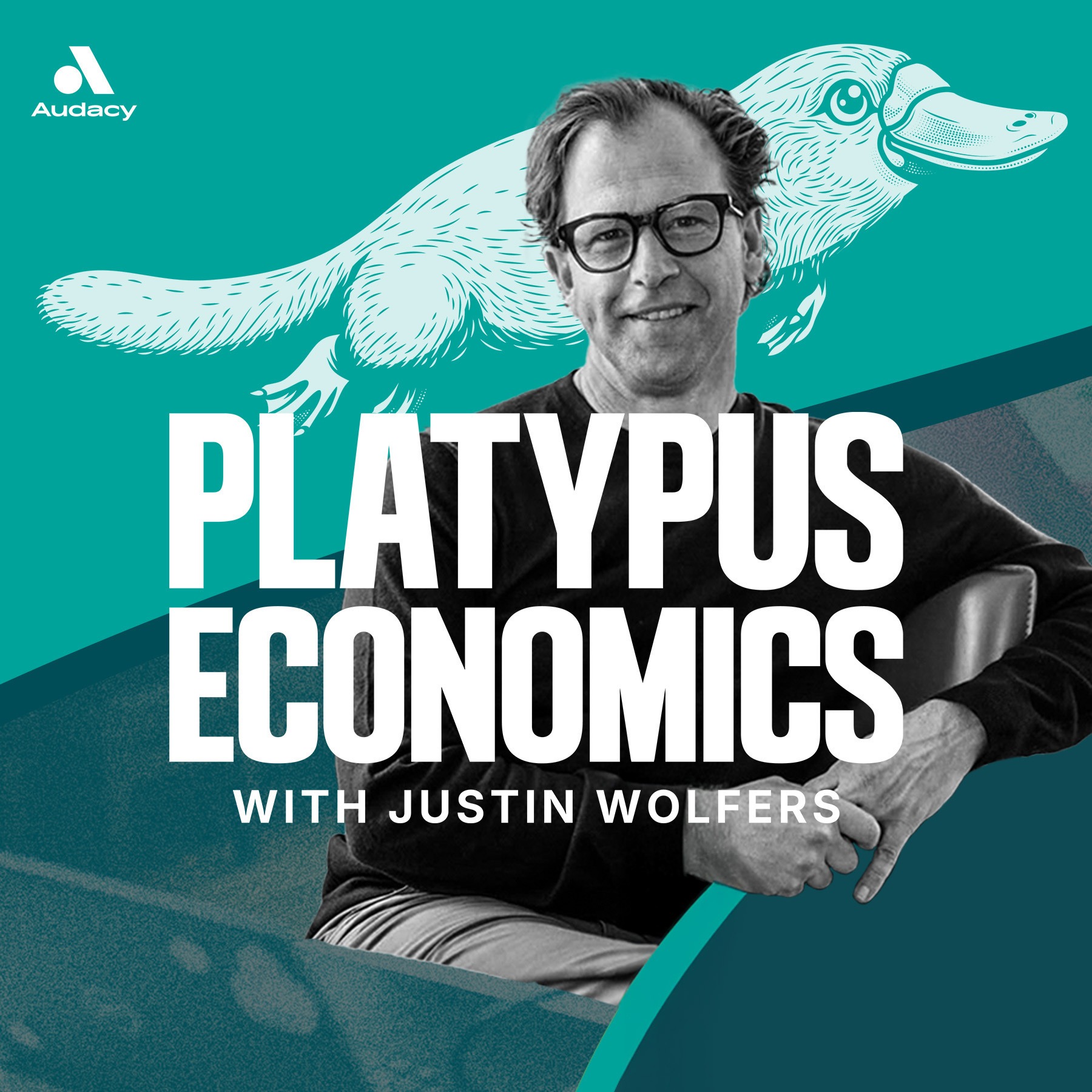
What does the October jobs report mean for your paycheck and your next career move? Your next raise may depend on your alternatives, not just your loyalty. Justin shows how outside offers create bargaining power, why employers can reward good work without waiting for a resignation threat, and how scarce AI skills can give you leverage. If your employer isn’t valuing you, his advice is to look elsewhere. No outside offer needed to get more economics—subscribe: on YouTube on Substack the Podcast Follow on Social Media @PlatypusEconomics and @JustinWolfers
Disclaimer: This is very different than the usual Crash Course US History episode. In which John Green lists a whole lot of the battles of the US Civil War in seven and a half minutes. We get a lot of requests for military history, so we offer a list of battle names, with some commentary about outcomes, and lots of really interesting pictures. This is a bit of a departure for Crash Course as we leave behind the world of thoughtful analysis and just list some facts. Don't worry though. We've already got our brains turned back on for the next episode. Hey teachers and students - Check out CommonLit's free collection of reading passages and curriculum resources to learn more about the events of this episode. The Battle of Gettysburg remains one of the most infamous battles of the Civil War: https://www.commonlit.org/texts/the-battle-of-gettysburg The Civil War pitted brother against brother and friend against friend, as was the case for the two warring generals in the Siege of Vicksburg:
Show notes Light from newborn stars may have blown the fog out of the early universe. A new study by Shyam Menon (Flatiron Institute, ANU PhD) and Aaron Smith (UT Dallas) finds that Lyman-alpha radiation — ultraviolet light that bounces from hydrogen atom to hydrogen atom — can clear diffuse gas and dust out of young galaxies while leaving their dense star clusters free to keep forming stars, helping explain why JWST sees so many bright galaxies so early. Also: LOFAR's sharpest and deepest low-frequency radio image yet (almost 63,000 sources, 200 hours of observing); Blue Origin's new GS3 third stage and Northstar engine; and Sandia simulations showing that an asteroid's shape and orientation can change a nuclear stand-off deflection by up to five times. Quick hits: the space station's final roll-out solar array is installed, sunspot region AR4566 fires an M3 flare as October's sunspot number falls, and Earth picks up a tiny temporary mini-moon, 2026 QQ8. Skywatch for both hemispheres:
In which John Green teaches you about Reconstruction. After the divisive, destructive Civil War, Abraham Lincoln had a plan to reconcile the country and make it whole again. Then he was shot, Andrew Johnson took over, and the disagreements between Johnson and Congress ensured that Reconstruction would fail. The election of 1876 made the whole thing even more of a mess, and the country called it off, leaving the nation still very divided. John will talk about the gains made by African-Americans in the years after the Civil War, and how they lost those gains almost immediately when Reconstruction stopped. You'll learn about the Freedman's Bureau, the 14th and 15th amendments, and the disastrous election of 1876. John will explore the goals of Reconstruction, the successes and ultimate failures, and why his alma mater Kenyon College is better than Raoul's alma mater NYU. Hey teachers and students - Check out CommonLit's free collection of reading passages and curriculum resources to learn
“Bear! Bear! Bear!” shouted one of the Schwimmers neighbors. Rachel quickly glanced around and directed Joseph and Chaya into the house. She was in too much of a hurry to know that she was being followed very closely by a dangerous visitor. Rachel managed to get Joseph and Chaya inside before turning around to dash back to the porch to retrieve Esther within a few seconds. Upon returning to the porch Rachel could see Esther’s stroller had been tipped over, but Esther was no where to be found. While searching for her daughter, Rachel observed a black bear slowly walking away with Esther dangling from its mouth, like a little doll. That is when the rest of the community began to get involved in a big way. A small crowd of neighbors mustered the bravery to confront the black bear. They yelled and threw sticks and stones at the bear, trying to scare it into dropping baby Esther from its jaws. Pincus ran to cut the bear off from its intended retreat into the forest. He angled his way betwee