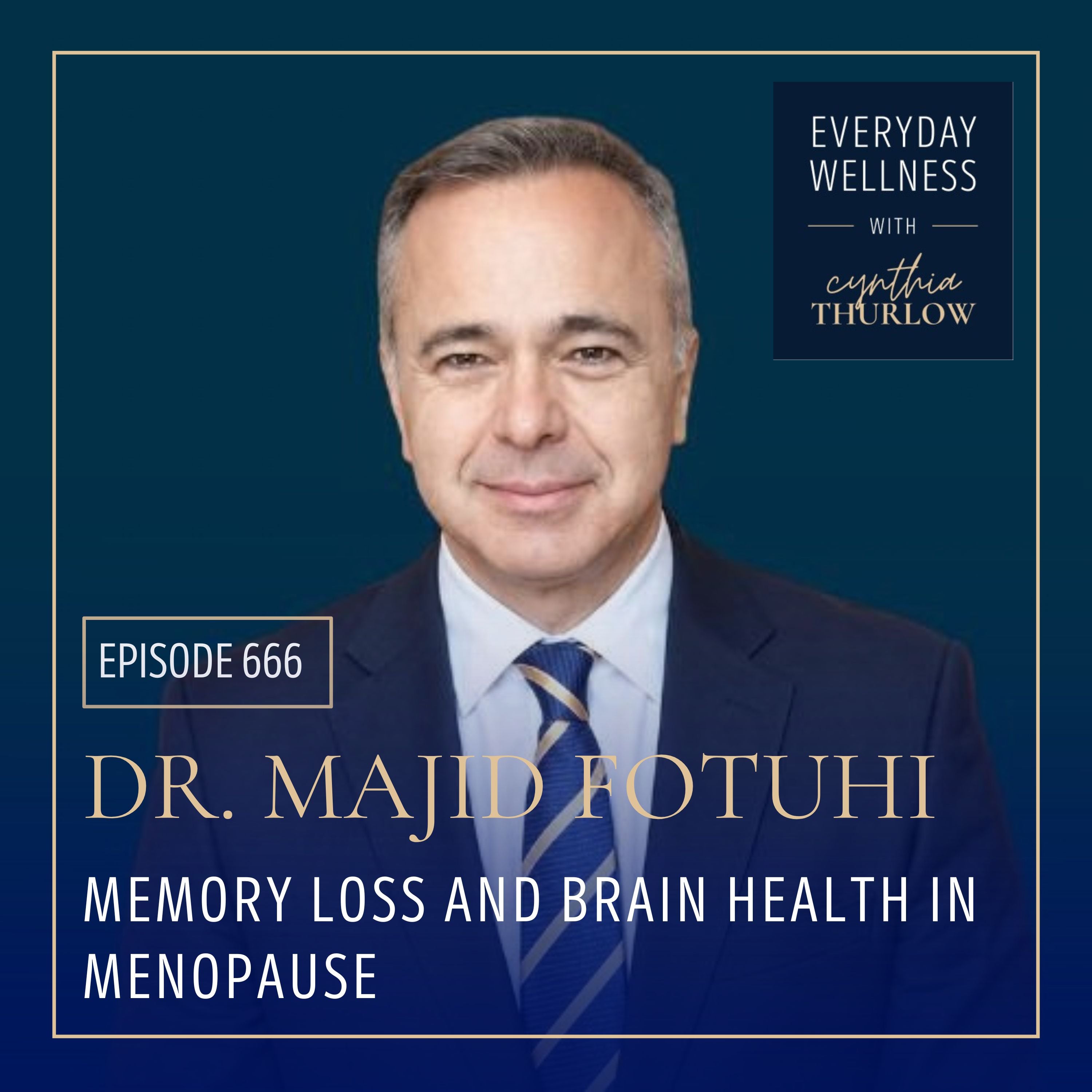
Ep. 666 Memory Loss and Brain Health in Menopause with Dr. Majid Fotuhi | Brain Health, Memory Loss, Cognitive Decline
Listen through the publisher, then discuss the episode here or arrange an in-person Roundtable. Your city determines where to meet.
Roundtables are designed for groups of four, with a shared subject and room for everyone to speak. Come for discussion, with no dating expectation.
I’m delighted to connect with academic physician-scientist Dr. Majid Fotuhi today. Dr. Fotuhi is a professor of neuroscience at Johns Hopkins Mind Brain Institute, an adjunct professor of psychological and brain sciences at GW, and the medical director of NeuroGrow Brain Fitness Center. He is a Harvard- and Hopkins-trained physician and researcher and is making great strides in changing how we think about brain health. In our conversation, we explore purpose in life as a factor in brain resilience, how our belief systems and function can help lower cortisol, and why middle-aged people, especially women going through perimenopause and menopause, forget things. We discuss the impact of hormone replacement therapy, common types of cognitive impairment, the dynamic polygon hypothesis, the influence of proper labeling in medicine, and the 2024 Lancet Commission study that demonstrated 45% of dementia is preventable, looking at why the hippocampus truly matters for learning and memory, how stress is cumulative over time, how high A scores can create epigenetic changes, and how the liver and brain are connected, especially for metabolic health. We also explore the importance of parasympathetic tone, anti-inflammatory foods, and brain-supportive supplements, and Dr. Fotuhi shares his personal opinion on GLP-1 drugs. Stay tuned for today’s fascinating conversation with Dr. Majid Fotuhi, one of the USA’s leading neuroscientists. IN THIS EPISODE, YOU WILL LEARN: How having a sense of purpose or feeling passionate about something can reduce stress and lower cortisol Factors that may contribute to memory-related issues in midlife women How the 2002 Women’s Health Initiative changed the conversation around HRT How Dr. Fotuhi evaluates patients for cognitive impairment What motivated Dr. Fotuhi to develop his Brain Fitness program? Modifiable risk factors that can contribute to cognitive decline Why the hippocampus is so critically important for learning and memory How years of high stress can contribute to hippocampus shrinkage How liver health is connected to brain health Dr. Fotuhi shares his thoughts about GLP-1s Bio: Dr. Majid Fotuhi earned his PhD in Neuroscience from Johns Hopkins University in 1992 and his Medical Degree from Harvard Medical School in 1997. He currently serves as an adjunct professor at the Mind/Brain Institute at Johns Hopkins University and teaches at George Washington University and Harvard Medical School. With 37 years of experience in teaching, clinical practice, and neuroscience research, Dr. Fotuhi has pioneered a multidisciplinary approach to enhancing brain vitality and cognitive performance at any age. His groundbreaking “Brain Fitness Program” combines a comprehensive baseline “Brain Portfolio” assessment with 12 bi-weekly brain training sessions. This program targets lifestyle optimization and cognitive stimulation to improve memory, focus, and overall brain health. Dr. Fotuhi’s program has delivered measurable success for patients dealing with memory loss due to aging, concussions, and ADHD, as documented in several peer-reviewed journals. He has also authored three books, including the highly acclaimed Boost Your Brain: The New Art and Science Behind Enhanced Brain Performance. Recognized as a leading expert in memory and successful aging, Dr. Fotuhi has delivered lectures at academic institutions and major organizations in over 20 countries, including a TEDx presentation in the Philippines. Passionate about sharing the latest discoveries in brain rehabilitation and neuroplasticity, he has been featured in interviews with more than 50 prominent media outlets in the United States and around the globe. Connect with Cynthia Thurlow Cynthia’swebsite (https://cynthiathurlow.com/). Submit your questions to [email protected] The Midlife Pause Supplement Line (https://themidlifepause.com/) Connect with Dr. Majid Fotuhi On hiswebsite (https://drfotuhi.com/) Instagram (https://www.instagram.com/dr_fotuhi/),LinkedIn (https://www.linkedin.com/in/majid-fotuhi-md-phd/) The Invincible Brain (https://invincible.drfotuhi.com/) (Free app) Dr. Fotuhi’s latest book, The Invincible Brain (https://www.amazon.com/Invincible-Brain-Clinically-Proven-Age-Proof/dp/0063435713/) Dr. Fotuhi’s books (https://drfotuhi.com/)
Episode information is provided by the publisher. Listening takes place on the publisher’s service.
Listen at the source ↗